


Global Gas Calorimeter Market Segmentation, By Type (Flow-through calorimeters, Continuous-flow calorimeters, and Others) Product Type (Portable Gas Calorimeter and Stationary Gas Calorimeter), Application (Natural Gas Pipeline Industry, Town Gas Industry, Gas Engine Industry, Petroleum Industry, Thermal Powerhouses, Research Labs/Institutes, Steel Plants and Others) – Industry Trends and Forecast to 2032
Gas Calorimeter Market Analysis
The gas calorimeter market is experiencing notable advancements driven by new technologies and innovative methods. One significant development is the integration of digital sensors and IoT (Internet of Things), enabling precise measurements and real-time data tracking. These systems allow for better energy efficiency and provide more accurate heat value determinations, essential for industries such as natural gas and fuel testing. In addition, smart gas calorimeters now offer remote monitoring capabilities, further optimizing their use in energy consumption management.
Advancements in microcalorimetry and adiabatic calorimeters have enhanced measurement accuracy and sample throughput, making these tools more useful in the chemical, energy, and environmental sectors. Furthermore, the adoption of automated gas calorimeters has increased efficiency in laboratories, reducing human error and improving consistency in test results.
The gas calorimeter market is expected to continue growing, driven by rising demand in industries such as oil and gas, power generation, and environmental monitoring. The push for cleaner energy solutions and more efficient energy use will further accelerate the adoption of these technologies, contributing to the market's expansion.
Gas Calorimeter Market Size
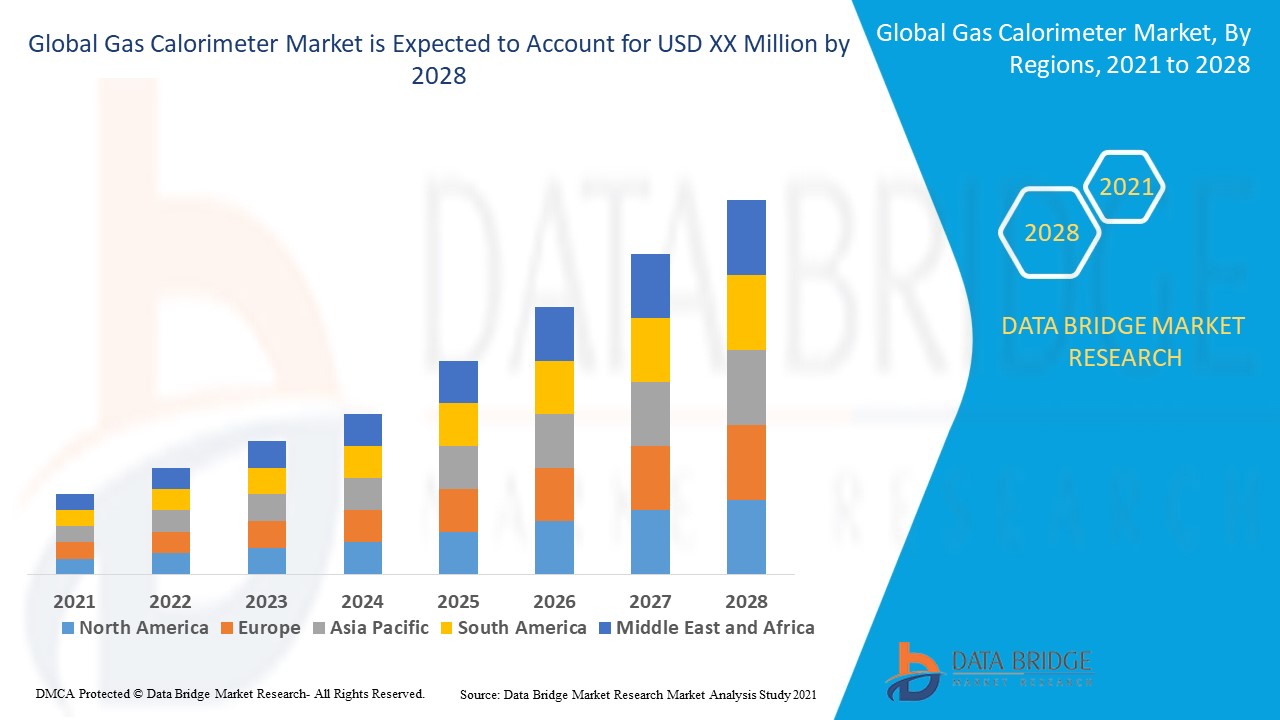
The global gas calorimeter market size was valued at USD 1.21 billion in 2024 and is projected to reach USD 1.80 billion by 2032, with a CAGR of 5.10% during the forecast period of 2025 to 2032. In addition to the insights on market scenarios such as market value, growth rate, segmentation, geographical coverage, and major players, the market reports curated by the Data Bridge Market Research also include in-depth expert analysis, geographically represented company-wise production and capacity, network layouts of distributors and partners, detailed and updated price trend analysis and deficit analysis of supply chain and demand.
Gas Calorimeter Market Trends
“Integration of Digital Technologies”
A significant trend in the gas calorimeter market is the integration of digital technologies and IoT connectivity. This advancement allows real-time data collection, monitoring, and remote calibration, improving the precision and efficiency of gas calorimetry. For instance, companies such as GE Analytical Instruments have incorporated cloud-based data logging and analytics into their gas calorimeters. This innovation enables users to access detailed performance metrics remotely, increasing operational flexibility and reducing the need for manual intervention. Such technological advancements are driving the market’s growth, as industries such as energy, chemical processing, and research increasingly demand more efficient and automated calorimetric solutions for analyzing fuel and combustion properties.
Report Scope and Gas Calorimeter Market Segmentation
|
Attributes |
Gas Calorimeter Key Market Insights |
|
Segments Covered |
|
|
Countries Covered |
U.S., Canada and Mexico in North America, Germany, France, U.K., Netherlands, Switzerland, Belgium, Russia, Italy, Spain, Turkey, Rest of Europe in Europe, China, Japan, India, South Korea, Singapore, Malaysia, Australia, Thailand, Indonesia, Philippines, Rest of Asia-Pacific (APAC) in the Asia-Pacific (APAC), Saudi Arabia, U.A.E, South Africa, Egypt, Israel, Rest of Middle East and Africa (MEA) as a part of Middle East and Africa (MEA), Brazil, Argentina and Rest of South America as part of South America |
|
Key Market Players |
MKS Instruments, Inc. (U.S.), Orbital Insight (U.S.), Elster GmbH (Germany), Yokogawa Electric Corporation (Japan), UNION Instruments GmbH (Germany), Cosa Xentaur Corp. (U.S.), Shimadzu Corporation (Japan), Azbil Corporation (Japan), RIKEN KEIKI CO., LTD. (Japan), ABB (Switzerland), Hobré Instruments B.V. (Netherlands), and HOVERLABS (U.S.) |
|
Market Opportunities |
|
|
Value Added Data Infosets |
In addition to the insights on market scenarios such as market value, growth rate, segmentation, geographical coverage, and major players, the market reports curated by the Data Bridge Market Research also include in-depth expert analysis, geographically represented company-wise production and capacity, network layouts of distributors and partners, detailed and updated price trend analysis and deficit analysis of supply chain and demand. |
Gas Calorimeter Market Definition
A gas calorimeter is a scientific instrument used to measure the heat of combustion of gaseous fuels. It determines the energy released when a specific amount of gas undergoes complete combustion. Typically, the gas is burned in a controlled environment, and the resulting heat is absorbed by a known amount of water or another substance. By measuring the temperature change in the absorbing medium, the calorimeter calculates the heat produced. Gas calorimeters are crucial in industries such as energy production, environmental science, and research, providing precise data on fuel efficiency and energy content for various applications.
Gas Calorimeter Market Dynamics
Drivers
- Rising Demand for Energy Efficiency
The rising demand for energy efficiency is a key driver for the gas calorimeter market. As industries and governments worldwide push for sustainability, accurately measuring the energy content of fuels becomes essential for optimizing combustion processes. Gas calorimeters play a pivotal role in determining fuel efficiency, reducing energy wastage, and ensuring better resource management. For instance, in the power generation sector, gas calorimeters help in evaluating the calorific value of coal, natural gas, and other fuels, allowing operators to select the most energy-efficient options for combustion. Similarly, in the industrial sector, they ensure that equipment runs at optimal efficiency, which helps lower energy consumption and operational costs, driving demand for these precision instruments.
- Expansion of the Automotive Industry s
The automotive industry's push for greater fuel efficiency is a significant driver for the gas calorimeter market. As electric vehicles (EVs) and hybrid technologies gain momentum, the need to optimize fuel use in traditional combustion engines and analyze energy output in hybrid systems is crucial. Gas calorimeters help in accurately measuring the energy content of fuels, enabling manufacturers to design more efficient engines and energy systems. For instance, leading automotive companies such as Toyota and Tesla use advanced calorimetry in research and development to improve fuel efficiency and reduce emissions. This rising focus on energy-efficient technologies is propelling the demand for gas calorimeters in the automotive sector, stimulating market growth.
Opportunities
- Adoption in Food and Beverage Industry
The adoption of gas calorimeters in the food and beverage industry is creating significant opportunities in the market. These devices play a crucial role in accurately measuring the calorific value of food products, which is essential for compliance with nutritional labeling regulations. For instance, manufacturers of energy drinks and packaged snacks use calorimeters to verify their products' energy content and ensure that labels reflect accurate nutritional information. With growing consumer demand for transparency in food ingredients, this adoption enhances product consistency and helps manufacturers meet regulatory standards. This trend is expected to drive the demand for gas calorimeters as companies focus on quality assurance and precise nutritional claims.
- Advancements in Gas Calorimeter Technology
Recent innovations in gas calorimeter technology have significantly expanded market opportunities. Portable and compact models have made these devices more accessible to industries with space constraints or those requiring on-site measurements. In addition, the development of more accurate calorimeters ensures precise fuel quality analysis, which is crucial for industries such as energy production, automotive, and food processing. For instance, portable gas calorimeters used in the field for testing biogas and natural gas have become indispensable in the renewable energy sector. These advancements not only improve operational efficiency but also enhance compliance with environmental regulations, fueling further growth in demand across diverse sectors.
Restraints/Challenges
- High Initial Investment
High initial investment is a significant restraint in the gas calorimeter market. Advanced models, which offer enhanced accuracy and features, come with substantial upfront costs, including the price of the equipment and installation. Smaller companies, particularly those with limited budgets, may find it difficult to justify such an expensive investment. This financial burden can discourage their adoption of gas calorimeters, slowing down the market's growth. In addition, the need for specialized personnel for operation and calibration further adds to the overall cost, creating a barrier for smaller players. This high cost structure limits the widespread adoption of these devices across various industries, particularly in developing economies.
- Maintenance and Calibration Costs
Maintenance and calibration costs significantly hinder the growth of the gas calorimeter market. These devices require frequent servicing to ensure precision, which can be costly and time-consuming for organizations. The need for specialized technical knowledge to maintain and calibrate these instruments further adds complexity, particularly for businesses with limited expertise or resources. For small or medium-sized enterprises, the continuous financial burden of maintaining and calibrating gas calorimeters can be a considerable challenge. As a result, many organizations may opt to avoid or delay investing in such technologies, ultimately stalling market expansion. These ongoing costs serve as a significant restraint, especially in price-sensitive industries.
This market report provides details of new recent developments, trade regulations, import-export analysis, production analysis, value chain optimization, market share, impact of domestic and localized market players, analyses opportunities in terms of emerging revenue pockets, changes in market regulations, strategic market growth analysis, market size, category market growths, application niches and dominance, product approvals, product launches, geographic expansions, technological innovations in the market. To gain more info on the market contact Data Bridge Market Research for an Analyst Brief, our team will help you take an informed market decision to achieve market growth.
Gas Calorimeter Market Scope
The market is segmented on the basis of type, product type and application. The growth amongst these segments will help you analyze meagre growth segments in the industries and provide the users with a valuable market overview and market insights to help them make strategic decisions for identifying core market applications.
Type
- Flow-through calorimeters
- Continuous-flow calorimeters
- Others
Product Type
- Portable Gas Calorimeter
- Stationary Gas Calorimeter
Application
- Natural Gas Pipeline Industry
- Town Gas Industry
- Gas Engine Industry
- Petroleum Industry
- Thermal Powerhouses
- Research Labs/Institutes
- Steel Plants
- Others
Gas Calorimeter Market Regional Analysis
The market is analyzed and market size insights and trends are provided by type, product type and application as referenced above.
The countries covered in the market report are U.S., Canada, Mexico in North America, Germany, Sweden, Poland, Denmark, Italy, U.K., France, Spain, Netherland, Belgium, Switzerland, Turkey, Russia, Rest of Europe in Europe, Japan, China, India, South Korea, New Zealand, Vietnam, Australia, Singapore, Malaysia, Thailand, Indonesia, Philippines, Rest of Asia-Pacific (APAC) in Asia-Pacific (APAC), Brazil, Argentina, Rest of South America as a part of South America, U.A.E, Saudi Arabia, Oman, Qatar, Kuwait, South Africa, Rest of Middle East and Africa (MEA) as a part of Middle East and Africa (MEA).
North America region dominates the gas calorimeter market and will continue to flourish its trend of dominance during the forecast period. This is because of the increasing expenditure for research and development proficiencies in this region and earliest adoption of advanced technologies.
Asia-Pacific is expected to dominate the gas calorimeter market, driven by rising shale and oil gas exploration activities and an increasing demand for petroleum and natural gas. This growth is expected to result in the highest CAGR in the coming years for the region.
The country section of the report also provides individual market impacting factors and changes in market regulation that impact the current and future trends of the market. Data points such as down-stream and upstream value chain analysis, technical trends and porter's five forces analysis, case studies are some of the pointers used to forecast the market scenario for individual countries. Also, the presence and availability of global brands and their challenges faced due to large or scarce competition from local and domestic brands, impact of domestic tariffs and trade routes are considered while providing forecast analysis of the country data.
Gas Calorimeter Market Share
The market competitive landscape provides details by competitor. Details included are company overview, company financials, revenue generated, market potential, investment in research and development, new market initiatives, global presence, production sites and facilities, production capacities, company strengths and weaknesses, product launch, product width and breadth, application dominance. The above data points provided are only related to the companies' focus related to market.
Gas Calorimeter Market Leaders Operating in the Market Are:
- MKS Instruments, Inc. (U.S.)
- Orbital Insight (U.S.)
- Elster GmbH (Germany)
- Yokogawa Electric Corporation (Japan)
- UNION Instruments GmbH (Germany)
- Cosa Xentaur Corp. (U.S.)
- Shimadzu Corporation (Japan)
- Azbil Corporation (Japan)
- RIKEN KEIKI CO., LTD. (Japan)
- ABB (Switzerland)
- Hobré Instruments B.V. (Netherlands)
- HOVERLABS (U.S.)
SKU-
Obtenha acesso online ao relatório sobre a primeira nuvem de inteligência de mercado do mundo

- Painel interativo de análise de dados
- Painel de análise da empresa para oportunidades de elevado potencial de crescimento
- Acesso de analista de pesquisa para personalização e customização. consultas
- Análise da concorrência com painel interativo
- Últimas notícias, atualizações e atualizações Análise de tendências
- Aproveite o poder da análise de benchmark para um rastreio abrangente da concorrência
Metodologia de Investigação
A recolha de dados e a análise do ano base são feitas através de módulos de recolha de dados com amostras grandes. A etapa inclui a obtenção de informações de mercado ou dados relacionados através de diversas fontes e estratégias. Inclui examinar e planear antecipadamente todos os dados adquiridos no passado. Da mesma forma, envolve o exame de inconsistências de informação observadas em diferentes fontes de informação. Os dados de mercado são analisados e estimados utilizando modelos estatísticos e coerentes de mercado. Além disso, a análise da quota de mercado e a análise das principais tendências são os principais fatores de sucesso no relatório de mercado. Para saber mais, solicite uma chamada de analista ou abra a sua consulta.
A principal metodologia de investigação utilizada pela equipa de investigação do DBMR é a triangulação de dados que envolve a mineração de dados, a análise do impacto das variáveis de dados no mercado e a validação primária (especialista do setor). Os modelos de dados incluem grelha de posicionamento de fornecedores, análise da linha de tempo do mercado, visão geral e guia de mercado, grelha de posicionamento da empresa, análise de patentes, análise de preços, análise da quota de mercado da empresa, normas de medição, análise global versus regional e de participação dos fornecedores. Para saber mais sobre a metodologia de investigação, faça uma consulta para falar com os nossos especialistas do setor.
Personalização disponível
A Data Bridge Market Research é líder em investigação formativa avançada. Orgulhamo-nos de servir os nossos clientes novos e existentes com dados e análises que correspondem e atendem aos seus objetivos. O relatório pode ser personalizado para incluir análise de tendências de preços de marcas-alvo, compreensão do mercado para países adicionais (solicite a lista de países), dados de resultados de ensaios clínicos, revisão de literatura, mercado remodelado e análise de base de produtos . A análise de mercado dos concorrentes-alvo pode ser analisada desde análises baseadas em tecnologia até estratégias de carteira de mercado. Podemos adicionar quantos concorrentes necessitar de dados no formato e estilo de dados que procura. A nossa equipa de analistas também pode fornecer dados em tabelas dinâmicas de ficheiros Excel em bruto (livro de factos) ou pode ajudá-lo a criar apresentações a partir dos conjuntos de dados disponíveis no relatório.











