Segmentação do Mercado Global de Medicamentos Hematológicos por Classe de Medicamento (Anticoagulantes, Antiplaquetários, Suplementos de Ferro, Globulinas Antitimócitos e Outros), Via de Administração (Oral, Parenteral e Outras), Usuários Finais (Hospitais, Clínicas Especializadas e Outros), Canal de Distribuição (Farmácia Hospitalar, Farmácia de Varejo e Outros) - Tendências e Previsões do Setor até 2033
O que é o tamanho do mercado de drogas hematologia e taxa de crescimento
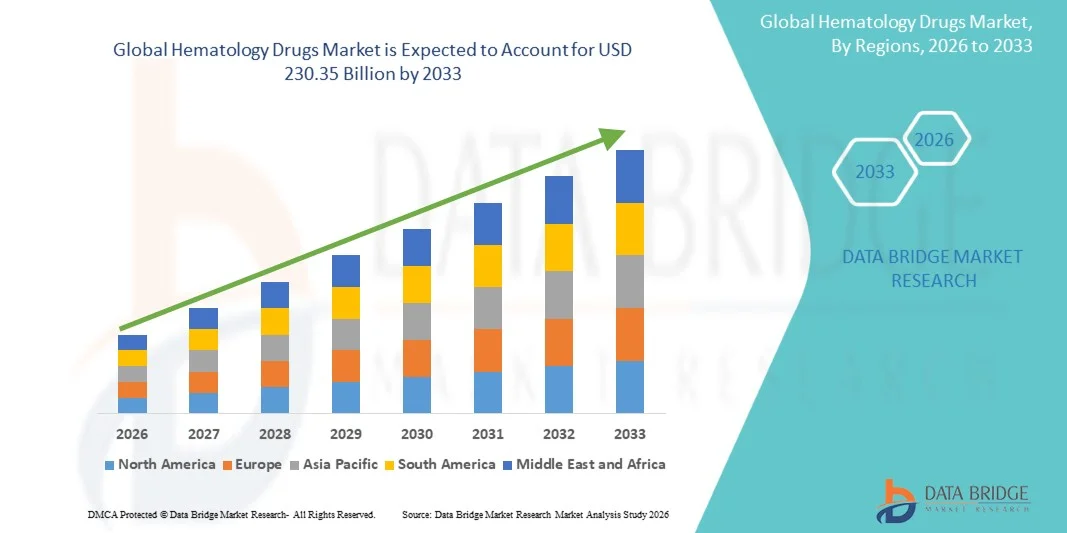
- De acordo com a Data Bridge Market Research Analysis, o tamanho global do mercado de medicamentos hematológicos foi avaliado em119,06 mil milhões de USD em 2025e espera-se alcançar230,35 mil milhões de USD até 2033, em umaCAGR de 8,60%durante o período de previsão
- O crescimento do mercado é amplamente alimentado pela crescente prevalência de distúrbios relacionados ao sangue, como anemia, hemofilia, leucemia e linfoma, juntamente com o aumento da conscientização e avanços nas abordagens diagnósticas e de tratamento, levando a uma maior demanda de medicamentos hematológicos eficazes
- Além disso, crescentes investimentos em pesquisa e desenvolvimento, introdução de novas terapias, incluindo medicamentos direcionados e biológicos, e ampliação do acesso aos serviços de saúde estão acelerando a adoção de soluções de Hematologia Drogas, aumentando significativamente o crescimento da indústria
Tamanho e previsão do mercado
Valor de mercado global (2025):119,06 mil milhões de USD
Valor de mercado previsto (2033):230,35 mil milhões de USD
Previsões CAGR (2026-2033):8.60%
Quais são os principais takeaways do mercado de drogas de hematologia
- Os medicamentos hematológicos, usados para o tratamento de doenças do sangue, como anemia, leucemia, linfoma e hemofilia, estão se tornando cada vez mais essenciais na saúde moderna devido ao seu papel na melhoria das taxas de sobrevivência e melhoria da qualidade de vida dos pacientes através de abordagens terapêuticas direcionadas e avançadas
- A crescente demanda por medicamentos hematológicos é principalmente alimentada pelo aumento da carga global de distúrbios relacionados ao sangue, aumento da conscientização e diagnóstico precoce, e avanços contínuos em biológicos, terapias genéticas e medicina de precisão
- A América do Norte dominou o mercado de medicamentos hematológicos com a maior parcela de receita de 43,6% em 2025, impulsionada por forte infraestrutura de saúde, alta adoção de terapias avançadas e presença de empresas farmacêuticas líderes, com os EUA contribuindo significativamente através de pesquisas clínicas robustas e aprovação de medicamentos.
- Espera-se que a Ásia-Pacífico seja a região de crescimento mais rápido no mercado de medicamentos hematológicos durante o período previsto, registrando um CAGR de 13,8%, apoiado pelo aumento do gasto com saúde, melhorando o acesso ao tratamento e aumentando a prevalência de transtornos hematológicos
- O segmento oral dominou o mercado com receita de 55,4% em 2025, impulsionada pela facilidade de administração, conveniência do paciente e altas taxas de adesão.
Relatar Escopo e Segmentação do Mercado de Drogas de Hematologia
|
Atributos |
Hematologia Drogas Principais Perspectivas do Mercado |
|
Segmentos Cobertos |
|
|
Países abrangidos |
América do Norte
Europa
Ásia- Pacífico
Médio Oriente e África
América do Sul
|
|
Jogadores do mercado chave |
|
|
Oportunidades de Mercado |
|
|
Informações sobre o Valor Adicionado |
Além dos insights sobre cenários de mercado, como valor de mercado, taxa de crescimento, segmentação, cobertura geográfica e grandes atores, os relatórios de mercado curados pela Data Bridge Market Research também incluem análise de especialistas em profundidade, epidemiologia de pacientes, análise de pipelines, análise de preços e marco regulatório. |
Qual é a tendência chave no mercado de drogas de hematologia
“Avanços em terapias direcionadas e medicina de precisão“
- Uma tendência significativa e acelerada no mercado mundial de medicamentos hematológicos é o crescente foco em terapias direcionadas e abordagens de medicina de precisão, que estão transformando o cenário de tratamento de distúrbios relacionados ao sangue. Essas inovações estão possibilitando estratégias de tratamento mais eficazes e individualizadas, melhorando os resultados dos pacientes e reduzindo os efeitos adversos.
- Por exemplo, o desenvolvimento de biológicos direcionados e inibidores de pequenas moléculas melhorou significativamente o manejo de condições como leucemia, linfoma e hemofilia, abordando especificamente os mecanismos subjacentes da doença. Da mesma forma, os avanços no perfil genético estão permitindo aos clínicos adaptar terapias baseadas em características individuais do paciente.
- A integração do diagnóstico molecular com a tomada de decisão terapêutica está aumentando a acurácia do tratamento e possibilitando a intervenção precoce, o que é crucial nas condições hematológicas. Além disso, a pesquisa em curso em terapias genéticas e tratamentos baseados em células está abrindo novas vias para soluções de longo prazo e potencialmente curativas
- A crescente adoção de esquemas de tratamento personalizados em hospitais e clínicas especializadas está impulsionando a expansão do mercado, uma vez que essas abordagens oferecem maior eficácia em relação às terapias convencionais.
- Essa tendência de soluções de tratamento mais precisas, eficazes e centradas no paciente está reformulando as práticas clínicas e impulsionando a inovação contínua no mercado de medicamentos hematológicos. Consequentemente, as empresas farmacêuticas estão investindo fortemente em I&D para desenvolver terapias de próxima geração com melhores perfis de segurança e eficácia.
- A demanda por tratamentos avançados e direcionados para a hematologia está crescendo rapidamente em mercados desenvolvidos e emergentes, uma vez que os sistemas de saúde priorizam cada vez mais a melhoria dos cuidados aos pacientes e o manejo de longo prazo das doenças.
Dinâmica do Mercado de Drogas de Hematologia
Controlador
“Prevalência crescente de transtornos hematológicos e crescente demanda por terapias avançadas”
- A crescente incidência de distúrbios hematológicos, incluindo câncer de sangue e distúrbios hemorrágicos, é um fator importante para o crescimento do mercado de medicamentos hematológicos. A sensibilização crescente, a melhoria das capacidades de diagnóstico e a detecção precoce estão a contribuir para maiores taxas de tratamento a nível mundial
- Por exemplo, nos últimos anos, várias empresas farmacêuticas introduziram novas terapias e ampliaram as indicações de medicamentos existentes para atender às necessidades clínicas não atendidas em hematologia, acelerando assim o crescimento do mercado durante o período de previsão
- Como os pacientes e os prestadores de cuidados de saúde procuram opções de tratamento mais eficazes, terapias avançadas como anticorpos monoclonais, imunoterapias e tratamentos baseados em genes estão ganhando adoção generalizada devido à sua melhor eficácia e ação direcionada
- Além disso, o aumento das despesas com os cuidados de saúde e as iniciativas governamentais de apoio estão a facilitar o acesso a tratamentos inovadores, especialmente nas regiões desenvolvidas
- A expansão de ensaios clínicos e o desenvolvimento contínuo de dutos também está contribuindo para a disponibilidade de novas e melhores terapias para diversas condições hematológicas.
- Além disso, o crescente enfoque na melhoria da qualidade de vida dos pacientes e na redução da carga de doenças está incentivando a adoção de terapias de longo prazo e de manutenção, impulsionando ainda mais a demanda do mercado
Restrição/Desafio
“Custos de tratamento elevados e acessibilidade limitada em regiões emergentes“
- O alto custo associado aos medicamentos hematológicos avançados continua sendo um grande desafio, particularmente para pacientes de países de baixa e média renda. Regimes de tratamento caros e requisitos de terapia de longo prazo podem limitar o acesso e a acessibilidade dos pacientes
- Por exemplo, a carga de custos de novas terapias biológicas e genéticas pode ser substancial, criando restrições financeiras tanto para os pacientes quanto para os sistemas de saúde, dificultando assim a adoção generalizada.
- Além disso, a infraestrutura de saúde limitada e a falta de acesso a centros de tratamento especializados em determinadas regiões podem restringir a disponibilidade de terapias avançadas.
- A complexidade do desenvolvimento da droga, incluindo requisitos regulamentares rigorosos e processos de aprovação prolongados, aumenta ainda mais os custos e atrasa a entrada no mercado para novos tratamentos
- As pressões sobre os preços e os desafios em matéria de reembolso também colocam obstáculos, uma vez que nem todas as terapias são totalmente abrangidas pelos regimes de seguro, especialmente nos mercados em desenvolvimento
- Enfrentar estes desafios através da produção rentável, da expansão das infra-estruturas de saúde e da melhoria dos quadros de reembolso será crucial para garantir um acesso mais amplo e um crescimento sustentado no mercado de medicamentos hematológicos
Como é segmentado o mercado de drogas de hematologia
O mercado é segmentado com base na classe de drogas, via de administração, usuários finais e canal de distribuição.
• Por classe de drogas
Com base na classe de drogas, o mercado de medicamentos hematológicos é segmentado em Anticoagulantes, Antiplaquetários, Suplementos de Ferro, Globulinas Anti-timócitos e Outros. O segmento de anticoagulantes dominou o mercado com uma parcela de receita de 38,6% em 2025, impulsionada pelo aumento da prevalência de distúrbios trombóticos, doenças cardiovasculares e condições de coagulação sanguínea. Hospitais e clínicas especializadas prescrevem amplamente anticoagulantes para prevenção de AVCs, trombose venosa profunda e embolia pulmonar. O segmento se beneficia de fortes diretrizes clínicas e ampla aceitação do médico. O aumento da população geriátrica e o sedentarismo contribuem para maior incidência de doenças. As empresas farmacêuticas estão inovando continuamente medicamentos anticoagulantes mais seguros e eficazes. Políticas de reembolso favoráveis em mercados desenvolvidos estão apoiando a acessibilidade. O segmento também é impulsionado pelo aumento dos procedimentos cirúrgicos que requerem terapia anticoagulante. Aumentar a consciência sobre o diagnóstico precoce e cuidados preventivos está aumentando a demanda. Redes de distribuição fortes asseguram a disponibilidade de drogas em todas as regiões. O monitoramento contínuo e a terapia de longo prazo precisam de mais apoio ao crescimento. O segmento continua a ser um importante contribuinte para a receita global do mercado.
Espera-se que o segmento de suplementos de ferro testemunhe o CAGR mais rápido de 9,7% de 2026 a 2033, impulsionado pelo aumento da prevalência de anemia por deficiência de ferro em todo o mundo. Casos crescentes entre mulheres, crianças e populações geriátricas estão apoiando a demanda. Governos e organizações de saúde estão promovendo programas de suplementação de ferro, especialmente em regiões em desenvolvimento. O aumento da conscientização sobre as deficiências nutricionais está contribuindo para o diagnóstico e tratamento precoces. As empresas farmacêuticas estão desenvolvendo formulações avançadas com melhor absorção e menos efeitos colaterais. A expansão do acesso à saúde nos mercados emergentes está a impulsionar a adopção. O segmento beneficia da disponibilidade e da facilidade de uso. O crescente enfoque nos cuidados de saúde preventivos está a apoiar a procura a longo prazo. O aumento das iniciativas de cuidados de saúde maternos também está impulsionando o crescimento. Os avanços tecnológicos nas formulações de suplementos estão melhorando a eficácia. O aumento das despesas com os cuidados de saúde contribui ainda mais para a expansão. Espera-se que o segmento cresça de forma constante durante o período previsto.
• Por Via de Administração
Com base na via de administração, o mercado é segmentado em Oral, Parenteral e Outros. O segmento oral dominou o mercado com uma participação de receita de 55,4% em 2025, impulsionada pela facilidade de administração, conveniência do paciente e altas taxas de adesão. Medicamentos hematológicos orais, incluindo suplementos de ferro e certos anticoagulantes, são amplamente prescritos para terapia de longo prazo. Os pacientes preferem medicamentos orais devido à natureza não invasiva e facilidade de uso. O segmento beneficia de ampla disponibilidade através de farmácias de varejo. As empresas farmacêuticas se concentram fortemente em formulações orais devido à alta demanda. O aumento da prevalência de doenças crônicas do sangue está apoiando o uso a longo prazo. O segmento também é impulsionado por melhores formulações de medicamentos que aumentam a absorção e a eficácia. Aumentar a consciência sobre o tratamento precoce está aumentando a adoção. Fortes cadeias de suprimentos garantem acessibilidade entre regiões. Os profissionais de saúde preferem medicamentos orais para atendimento ambulatorial. Custo-efetividade em comparação com formas injetáveis é outra vantagem. O segmento continua a dominar o mercado.
Espera-se que o segmento parenteral testemunhe o CAGR mais rápido de 10,2% de 2026 a 2033, impulsionado pelo aumento da demanda por tratamento rápido e eficaz em condições agudas. Medicamentos hematológicos injetáveis são amplamente utilizados em hospitais para cuidados críticos e procedimentos cirúrgicos. O segmento beneficia de alta biodisponibilidade e ação terapêutica mais rápida. O aumento do número de internações hospitalares e de casos de emergência está apoiando a demanda. Os avanços tecnológicos nos dispositivos de injeção estão melhorando a segurança do paciente. O aumento do uso de biológicos e terapias especializadas está contribuindo para o crescimento. Os profissionais de saúde preferem vias parentéricas para condições graves que exijam intervenção imediata. A expansão das infra-estruturas de saúde nos mercados emergentes está a impulsionar a adopção. O segmento também é apoiado pelo aumento da prevalência de distúrbios sanguíneos complexos. As empresas farmacêuticas estão focadas no desenvolvimento de terapias injetáveis avançadas. Os melhores resultados dos pacientes com drogas parentéricas estão impulsionando o crescimento. Espera-se que o segmento se expanda significativamente.
• Por Usuários Finais
Com base nos usuários finais, o mercado é segmentado em Hospitais, Clínicas Especiais e Outros. O segmento hospitalar dominou o mercado com uma parcela de receita de 51,2% em 2025, impulsionada pelo alto fluxo de pacientes e disponibilidade de infraestrutura de saúde avançada. Os hospitais servem como centros primários de diagnóstico e tratamento de doenças hematológicas. O segmento beneficia de profissionais de saúde qualificados e acesso a ferramentas diagnósticas avançadas. O aumento do número de procedimentos cirúrgicos e de casos de emergência está apoiando a demanda. Os hospitais estão equipados para administrar terapias orais e injetáveis de forma eficaz. Sistemas de aquisição fortes e políticas de reembolso apoiam ainda mais o crescimento. As iniciativas governamentais de saúde estão aumentando as capacidades hospitalares. O segmento também é apoiado por ensaios clínicos em andamento e atividades de pesquisa. A alta confiança dos pacientes na assistência hospitalar contribui para a dominância. A integração de tecnologias avançadas melhora os resultados do tratamento. Aumentar as despesas com os cuidados de saúde está a impulsionar a procura. O segmento continua a ser o maior contribuinte.
Espera-se que o segmento de clínicas especializadas testemunhe o CAGR mais rápido de 9,9% de 2026 a 2033, impulsionado pelo aumento da preferência por atendimento especializado e tratamento ambulatorial. As clínicas especializadas se concentram em serviços de hematologia e oncologia, oferecendo soluções de tratamento direcionadas. Os pacientes preferem clínicas para atendimento personalizado e tempos de espera mais curtos. O segmento beneficia-se com o aumento da consciência sobre doenças do sangue. O aumento do número de centros de saúde especializados está apoiando a expansão. As clínicas oferecem tratamento custo-efetivo em relação aos hospitais. Os avanços tecnológicos estão possibilitando capacidades avançadas de diagnóstico e tratamento. A crescente demanda por atendimento ambulatorial está contribuindo para o crescimento. Iniciativas governamentais para melhorar o acesso à atenção especializada estão apoiando a adoção. O segmento também é impulsionado pelo aumento da conveniência e acessibilidade dos pacientes. A expansão das infra-estruturas de saúde urbana está a aumentar a procura. Espera-se que o segmento cresça de forma constante durante o período previsto.
• Por Canal de Distribuição
Com base no canal de distribuição, o mercado está segmentado em Farmácia Hospitalar, Farmácia Varejo, e Outros. O segmento de farmácia hospitalar dominou o mercado com receita de 49,5% em 2025, impulsionada pela administração direta de medicamentos em ambientes hospitalares. As farmácias hospitalares garantem o armazenamento, manuseio e dispensação adequados de medicamentos hematológicos. O segmento beneficia de fortes sistemas de cadeia de abastecimento e compras a granel. Os profissionais de saúde dependem de farmácias hospitalares para dosagem precisa e segurança do paciente. O aumento das internações hospitalares e os tratamentos de doenças crônicas estão apoiando a demanda. A cobertura de seguros está frequentemente ligada à distribuição de medicamentos hospitalares. Os programas governamentais de saúde fortalecem ainda mais o segmento. A infraestrutura avançada garante qualidade e disponibilidade de medicamentos. Os hospitais desempenham um papel fundamental no início do tratamento. O segmento é apoiado pela alta confiança e confiabilidade do paciente. A expansão contínua dos serviços de saúde contribui para o crescimento. O segmento continua dominante no mercado.
Espera-se que o segmento de farmácia de varejo testemunhe o CAGR mais rápido de 10,5% de 2026 a 2033, impulsionado pelo aumento da demanda por disponibilidade de medicamentos acessível e conveniente. Os pacientes preferem farmácias de varejo para fácil acesso a medicamentos orais e suplementos. O aumento da prevalência de doenças crônicas que necessitam de medicação a longo prazo está apoiando a demanda. As farmácias de retalho beneficiam de uma presença generalizada nas zonas urbanas e rurais. Aumentar a consciência sobre a automedicação e cuidados preventivos está aumentando o crescimento. As empresas farmacêuticas estão expandindo as redes de distribuição através de canais de varejo. Os preços competitivos e a disponibilidade de medicamentos genéricos apoiam a adopção. O segmento também é impulsionado pela melhoria da acessibilidade à saúde em mercados emergentes. Os avanços tecnológicos na gestão de farmácias estão aumentando a eficiência. Aumentar a preferência dos consumidores por conveniência está a contribuir para a expansão. Os regulamentos governamentais que apoiam as vendas de drogas a retalho também estão ajudando o crescimento. O segmento deverá crescer significativamente ao longo do período de previsão.
Que região detém a maior parte do mercado de drogas hematológicas
- A América do Norte dominou o mercado de medicamentos hematológicos com a maior parcela de receita de 43,6% em 2025, impulsionada por forte infraestrutura de saúde, alta adoção de terapêutica avançada e presença de empresas farmacêuticas líderes. A região beneficia de extensas atividades de pesquisa clínica, rápidas aprovações regulatórias e acesso precoce a opções de tratamento inovadoras, com os EUA contribuindo significativamente através de dutos de desenvolvimento de drogas robustos e aumentando as aprovações para novas terapias hematológicas
- Os sistemas de saúde da região enfatizam o diagnóstico precoce e protocolos de tratamento avançados, levando à maior adoção de terapias direcionadas, imunoterapias e biológicas para doenças como leucemia, linfoma e anemia. A presença de centros de hematologia especializados e profissionais de saúde qualificados reforça ainda mais a acessibilidade ao tratamento e os resultados dos pacientes
- Esse crescimento disseminado é ainda mais apoiado pelo alto gasto em saúde, políticas de reembolso favoráveis e aumento da conscientização sobre distúrbios sanguíneos, estabelecendo medicamentos hematológicos avançados como opção de tratamento preferencial em hospitais e clínicas especializadas.
U.S. Hematology Drugs Market Insight
O mercado de medicamentos hematológicos dos EUA capturou a maior parte de receita em 2025 na América do Norte, impulsionada por fortes capacidades de pesquisa e desenvolvimento e alta adoção de terapias inovadoras. O ecossistema de saúde bem estabelecido do país, aliado à presença de grandes empresas farmacêuticas, continua acelerando o desenvolvimento e comercialização de medicamentos hematológicos avançados. Além disso, o aumento da prevalência de transtornos hematológicos e a crescente demanda por abordagens de tratamento personalizadas contribuem significativamente para a expansão do mercado. Estruturas de reembolso favoráveis e ensaios clínicos em curso apoiam ainda mais o crescimento do mercado de medicamentos hematológicos nos EUA.
Informação sobre o mercado da droga na Europa
Prevê-se que o mercado europeu de medicamentos hematológicos se expanda num CAGR substancial durante todo o período previsto, impulsionado principalmente pelo aumento da prevalência de doenças do sangue e pelo forte apoio governamental aos sistemas de saúde. A região beneficia de quadros regulamentares bem estabelecidos e da adopção crescente de opções de tratamento avançadas, incluindo biológicos e terapias específicas. O aumento dos investimentos em infra-estruturas de saúde e iniciativas de investigação está a facilitar o desenvolvimento e a acessibilidade de medicamentos inovadores. Além disso, a crescente utilização de biossimilares está a melhorar a acessibilidade e o acesso dos doentes em todos os países europeus
U.K. Hematology Drugs Market Insight
Prevê-se que o mercado de medicamentos hematológicos do Reino Unido cresça em um notável CAGR durante o período de previsão, impulsionado pelo aumento da conscientização sobre as condições hematológicas e aumento da demanda por opções de tratamento eficazes. O forte sistema de saúde do país e as iniciativas apoiadas pelo governo estão permitindo um melhor acesso a terapias avançadas. Além disso, a adoção crescente de biossimilares e pesquisas clínicas em andamento estão aumentando a disponibilidade de tratamento. O foco no diagnóstico precoce e na melhoria do manejo da doença também está contribuindo para o crescimento sustentado do mercado
Alemanha Hematologia Drogas Introdução ao Mercado
Espera-se que o mercado alemão de medicamentos hematológicos se expanda em um considerável CAGR durante o período de previsão, alimentado por infraestrutura avançada de saúde e crescente investimento em pesquisa médica. A ênfase da Alemanha nos serviços de saúde de alta qualidade e na inovação apoia a adoção de novos tratamentos hematológicos. A crescente população de pacientes afetados por distúrbios sanguíneos está impulsionando a demanda por terapias eficazes e de longo prazo. Além disso, políticas favoráveis de reembolso e a presença de empresas farmacêuticas líderes contribuem ainda mais para a expansão do mercado
Visão do Mercado de Drogas Hematologia Ásia-Pacífico
O mercado de medicamentos hematológicos Ásia-Pacífico está pronto a crescer ao mais rápido possível no CAGR de 13,8% durante o período de previsão de 2026 a 2033, apoiado pelo aumento dos gastos com saúde, melhoria do acesso ao tratamento e aumento da prevalência de transtornos hematológicos. Os rápidos avanços na infraestrutura de saúde, juntamente com a crescente conscientização sobre o diagnóstico e tratamento precoces, estão impulsionando o crescimento do mercado na região. As iniciativas governamentais que visam ampliar a cobertura de saúde e aumentar o investimento na fabricação farmacêutica estão apoiando ainda mais a adoção de terapias avançadas. Além disso, a crescente disponibilidade de opções de tratamento rentáveis está a aumentar a acessibilidade nas economias emergentes
Visão do mercado de drogas da hematologia do Japão
O mercado de medicamentos hematológicos do Japão está ganhando força devido ao sistema avançado de saúde do país e forte foco na inovação em tratamentos médicos. A crescente prevalência de transtornos hematológicos, juntamente com o envelhecimento da população, está impulsionando a demanda por terapias eficazes. O ambiente regulatório bem estabelecido do Japão e a alta adoção de tecnologias avançadas apoiam ainda mais o crescimento do mercado. Além disso, pesquisas e colaborações em andamento entre empresas farmacêuticas estão contribuindo para a expansão da oferta de medicamentos hematológicos no país
China Hematologia Drogas Visão do Mercado
O mercado de medicamentos hematológicos da China representou a maior quota de receita de mercado na Ásia Pacífico em 2025, atribuída à grande população de pacientes do país e ao setor de saúde em rápida expansão. O aumento dos investimentos em saúde e a melhoria das capacidades diagnósticas estão a impulsionar a procura de medicamentos hematológicos. A China está também a assistir a um crescimento significativo da indústria farmacêutica doméstica, que está a melhorar a disponibilidade e a acessibilidade das opções de tratamento. Além disso, políticas governamentais de apoio e sensibilização crescente para as doenças do sangue são fatores fundamentais que impulsionam o crescimento do mercado na China
Quais são as principais empresas do mercado de drogas de hematologia
A indústria de medicamentos hematológicos é liderada principalmente por empresas bem estabelecidas, incluindo:
- Novartis (Suíça)
- Roche (Suíça)
- Pfizer (EUA)
- Bristol- Myers Squibb (EUA)
- Johnson & Johnson (EUA)
- Amgen (EUA)
- Eli Lilly and Company (EUA)
- Sanofi (França)
- Empresa Farmacêutica Takeda (Japão)
- Bayer (Alemanha)
- GlaxoSmithKline (U.K.)
- AstraZeneca (U.K.)
- AbbVie (EUA)
- Indústrias Farmacêuticas Teva (Israel)
- Astellas Pharma (Japão)
- Daiichi Sankyo (Japão)
- CSL Behring (Austrália)
- Grifols (Espanha)
- BioMarin Pharmaceutical (EUA)
- Biogénio (EUA)
Quais são as últimas evoluções no mercado de drogas de hematologia
- Em novembro de 2024, o FDA dos EUA aprovou Revuforj (revumenib) desenvolvido pela Syndax Pharmaceuticals para o tratamento da leucemia aguda com translocações do gene KMT2A, introduzindo uma terapia inibidora de menina de primeira classe que visa um fator chave de progressão do câncer de sangue. Esta aprovação marcou um avanço significativo na medicina de precisão para neoplasias hematológicas
- Em julho de 2025, o FDA dos EUA aprovou Lynozyfic por Regeneron para o tratamento de mieloma múltiplo em pacientes que haviam recebido múltiplas terapias anteriores. Esta aprovação proporcionou uma nova opção de tratamento para casos recidivados ou refratários, abordando necessidades não atendidas em cânceres hematológicos avançados.
- Em outubro de 2025, o FDA dos EUA aprovou Blenrep (belantamab mafodotina) pela GSK em terapia combinada para mieloma múltiplo recidivado ou refratário, marcando o retorno do medicamento ao mercado após a retirada anterior. A aprovação foi apoiada por dados clínicos que demonstraram redução significativa do risco de morte e melhora da sobrevida livre de progressão, destacando avanços em regimes de associação para cânceres hematológicos
SKU-
Obtenha acesso online ao relatório sobre a primeira nuvem de inteligência de mercado do mundo
- Painel interativo de análise de dados
- Painel de análise da empresa para oportunidades de elevado potencial de crescimento
- Acesso de analista de pesquisa para personalização e customização. consultas
- Análise da concorrência com painel interativo
- Últimas notícias, atualizações e atualizações Análise de tendências
- Aproveite o poder da análise de benchmark para um rastreio abrangente da concorrência
Metodologia de Investigação
A recolha de dados e a análise do ano base são feitas através de módulos de recolha de dados com amostras grandes. A etapa inclui a obtenção de informações de mercado ou dados relacionados através de diversas fontes e estratégias. Inclui examinar e planear antecipadamente todos os dados adquiridos no passado. Da mesma forma, envolve o exame de inconsistências de informação observadas em diferentes fontes de informação. Os dados de mercado são analisados e estimados utilizando modelos estatísticos e coerentes de mercado. Além disso, a análise da quota de mercado e a análise das principais tendências são os principais fatores de sucesso no relatório de mercado. Para saber mais, solicite uma chamada de analista ou abra a sua consulta.
A principal metodologia de investigação utilizada pela equipa de investigação do DBMR é a triangulação de dados que envolve a mineração de dados, a análise do impacto das variáveis de dados no mercado e a validação primária (especialista do setor). Os modelos de dados incluem grelha de posicionamento de fornecedores, análise da linha de tempo do mercado, visão geral e guia de mercado, grelha de posicionamento da empresa, análise de patentes, análise de preços, análise da quota de mercado da empresa, normas de medição, análise global versus regional e de participação dos fornecedores. Para saber mais sobre a metodologia de investigação, faça uma consulta para falar com os nossos especialistas do setor.
Personalização disponível
A Data Bridge Market Research é líder em investigação formativa avançada. Orgulhamo-nos de servir os nossos clientes novos e existentes com dados e análises que correspondem e atendem aos seus objetivos. O relatório pode ser personalizado para incluir análise de tendências de preços de marcas-alvo, compreensão do mercado para países adicionais (solicite a lista de países), dados de resultados de ensaios clínicos, revisão de literatura, mercado remodelado e análise de base de produtos . A análise de mercado dos concorrentes-alvo pode ser analisada desde análises baseadas em tecnologia até estratégias de carteira de mercado. Podemos adicionar quantos concorrentes necessitar de dados no formato e estilo de dados que procura. A nossa equipa de analistas também pode fornecer dados em tabelas dinâmicas de ficheiros Excel em bruto (livro de factos) ou pode ajudá-lo a criar apresentações a partir dos conjuntos de dados disponíveis no relatório.