


Global High performance insulation materials (HPIM), By Material Type (Ceramic Fiber, Insulating Firebrick, Calcium Silicate, Vacuum-Formed Insulating Products, Polyurethane Foam, Polystyrene, Others), Application (Insulation, Industrial Equipment, Others), End User (Petrochemicals, Ceramics, Glass, Cement, Iron and Steel, Refractory, Powder Metallurgy, Aluminum, Others), – Industry Trends and Forecast to 2029
Análise e Tamanho do Mercado de Materiais de Isolamento de Alto Desempenho (HPIM)
A mistura de óleo quente e gás flui da cabeça do poço e é roteada através de XMTs, variedades, vários instrumentos críticos, carretéis e linhas de fluxo antes de atingir a superfície através do riser. Para evitar a formação de plugues hidratados e acúmulo de cera, é necessário isolamento (parafina). Quando a composição óleo/gás é despressurizada e exposta à baixa temperatura da água do mar no fundo do mar, começa a formação de cera e hidratos. Os materiais de isolamento de alto desempenho estão em alta demanda na indústria de petróleo e gás, devido principalmente à crescente demanda por aplicações de dutos submarinos.
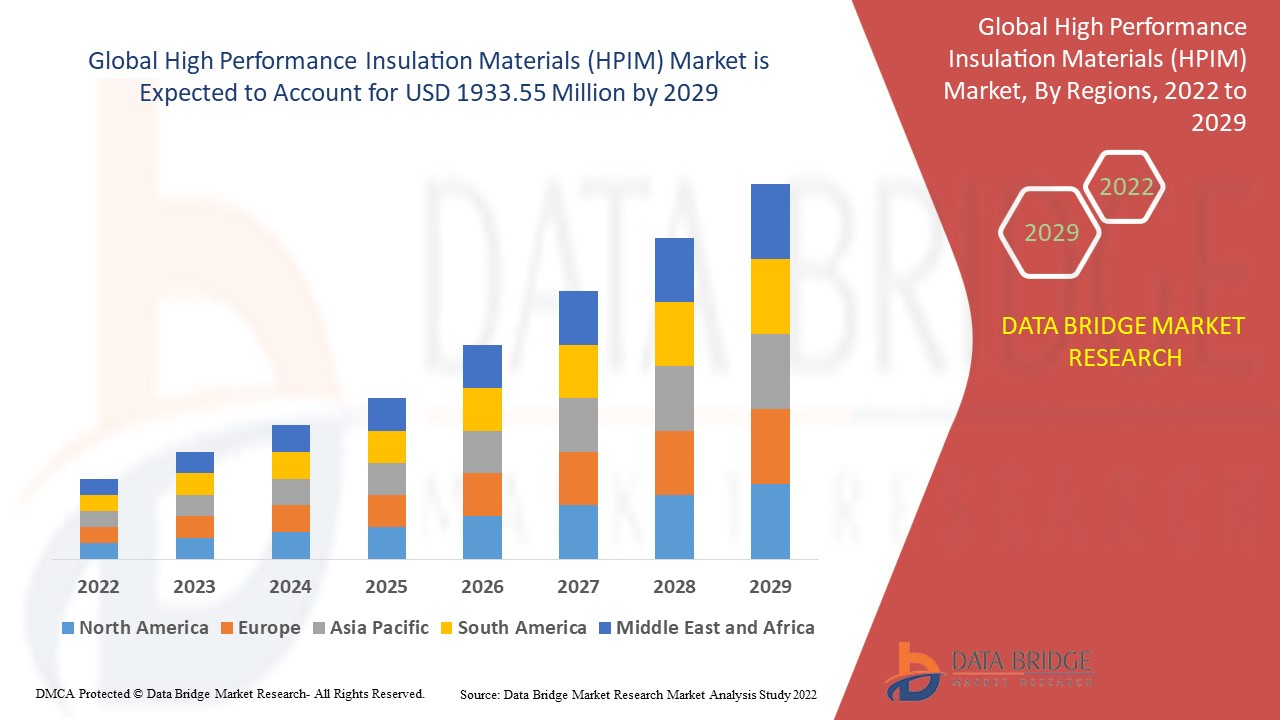
Data Bridge Market Research analisa que o mercado de materiais de isolamento de alto desempenho (HPIM) foi avaliado em USD 1546,66 milhões em 2021 e espera-se atingir um valor estimado de 1933,55 milhões em 2029 com um CAGR de 4,2% durante o período previsto. Data Bridge Market Research relatório sobre o mercado de materiais de isolamento de alto desempenho (HPIM) fornece análises e insights sobre os vários fatores esperados para ser prevalente ao longo do período previsto, proporcionando seus impactos no crescimento do mercado. Espera-se que a crescente procura de solventes nas indústrias automóvel e da construção abra novas oportunidades para este mercado.
Definição do mercado
Materiais de isolamento de alto desempenho são aqueles que podem operar em altas temperaturas. Esses materiais contribuem para melhorar o desempenho, consistência e segurança. Estes são usados em uma variedade de indústrias, incluindopetroquímicos, cerâmica, cimento, ferro e aço, metalurgia do pó, entre outros.
|
Metric de Relatório |
Detalhes |
|
Período de previsão |
2022 a 2029 |
|
Ano de base |
2021 |
|
Anos Históricos |
2020 (Alfândega até 2019 - 2014) |
|
Unidades quantitativas |
Receitas em USD Million, Volumes em Unidades, Preços em USD |
|
Segmentos Cobertos |
Por tipo de material (fibra cerâmica, firebrick isolante, silicato de cálcio, produtos isolantes formados a vácuo, espuma de poliuretano, poliestireno, outros), aplicação (Isolação, equipamentos industriais, outros), usuário final (petroquímica, cerâmica, vidro, cimento, ferro e aço, refractório, metalurgia do pó, alumínio, outros), |
|
Países abrangidos |
Estados Unidos, Canadá e México na América do Norte, Alemanha, França, Reino Unido, Holanda, Suíça, Bélgica, Rússia, Itália, Espanha, Turquia, Resto da Europa na Europa, China, Japão, Índia, Coreia do Sul, Singapura, Malásia, Austrália, Tailândia, Indonésia, Filipinas, Resto da Ásia-Pacífico (APAC) na Ásia-Pacífico (APAC), Arábia Saudita, EUA, África do Sul, Egito, Israel, Resto do Oriente Médio e África (MEA) como parte do Oriente Médio e África (MEA), Brasil, Argentina e Resto da América do Sul como parte da América do Sul. |
|
Jogadores de mercado cobertos |
BASF SE (Alemanha), Dow (EUA), INEOS (Suíça), SABIC (Arábia Saudita), LyondellBasell Industries Holdings B.V. (Países Baixos), DuPont (EUA), Royal Dutch Shell plc (Países Baixos), Bayer AG (Alemanha), Clariant (Suíça), Huntsman International LLC (EUA), Royal Dutch Shell plc (Países Baixos), Bayer AG (Alemanha), Clariant (Suíça), Huntsman International LLC (EUA). |
|
Oportunidades de Mercado |
|
Dinâmica de Mercado de Materiais de Isolamento de Alto Desempenho (HPIM)
Esta secção trata da compreensão dos condutores de mercado, vantagens, oportunidades, restrições e desafios. Tudo isto é discutido em detalhe como abaixo:
- Aumentar as preocupações ambientais
A crescente consciência ambiental sobre as emissões de gases com efeito de estufa está a conduzir a procura de materiais de isolamento de alto desempenho de indústrias de utilização final, tais como petróleo e gás, tintas e revestimentos, construção e construção, entre outros, porque o isolamento funciona como uma barreira ao fluxo de calor e, assim, ajuda a reduzir as emissões de gases com efeito de estufa.
Aumento da procura de vários utilizadores finais
Fibras cerâmicas, aerogel e isolamento microporoso são exemplos de isolamento de alto desempenho usado na indústria de petróleo e gás, geração de energia (geradores de energia), construção e construção, a indústria automotiva, e outras indústrias. Como resultado, a expansão dessas indústrias de uso final está impulsionando o mercado de materiais de isolamento de alto desempenho (HPIM).
Oportunidade
Prevê-se que o rápido desenvolvimento de materiais biopermanentes baixos, o surgimento de aplicações nas indústrias aeroespacial e automóvel e o aumento das preocupações com a conservação de energia e as emissões de gases com efeito de estufa em vários países proporcionem uma variedade de oportunidades de crescimento para o mercado de materiais de isolamento a alta temperatura durante o período previsto..
Restrições
No entanto, a natureza carcinogénica das fibras cerâmicas e a regulamentação rigorosa relativa à utilização de materiais de isolamento a alta temperatura são susceptíveis de actuar como restrições fundamentais à taxa de crescimento do mercado de materiais de isolamento a alta temperatura no período previsto de 2021 a 2028, enquanto os vários efeitos nocivos resultantes da exposição podem pôr em causa o crescimento do mercado de materiais de isolamento a alta temperatura no período previsto.
Este relatório de mercado de materiais de isolamento de alto desempenho (HPIM) fornece detalhes de novos desenvolvimentos recentes, regulamentos comerciais, análise importação-exportação, análise de produção, otimização da cadeia de valor, market share, impacto de atores de mercado nacionais e localizados, análises de oportunidades em termos de bolsas de receita emergentes, mudanças na regulamentação de mercado, análise estratégica do crescimento do mercado, tamanho do mercado, crescimentos de mercado categoria, nichos de aplicação e dominância, aprovações de produtos, lançamentos de produtos, expansões geográficas, inovações tecnológicas no mercado. Para obter mais informações sobre os materiais de isolamento de alto desempenho (HPIM) do mercado de contato Data Bridge Market Research for an Analyst Brief, nossa equipe irá ajudá-lo a tomar uma decisão de mercado informada para alcançar o crescimento do mercado.
Pós Impacto COVID-19 no Mercado de Materiais de Isolamento de Alto Desempenho (HPIM)
O mercado de materiais de isolamento de alto desempenho (HPIM) foi impactado de várias maneiras como resultado da pandemia de Covid-19. Várias restrições legais existiam em todo o mundo, que tiveram um impacto significativo na demanda e crescimento do mercado de materiais de isolamento de alto desempenho (HPIM). As atividades de produção e vendas foram significativamente interrompidas, atrasando o crescimento do mercado de materiais de isolamento de alto desempenho (HPIM). No entanto, o mercado de materiais de isolamento de alto desempenho (HPIM) cresceu constantemente até o final de 2020 e espera-se que cresça ainda mais e cubra a perda do setor até o final de 2022.
Âmbito global de mercado dos materiais de isolamento de alto desempenho (HPIM)
O mercado de materiais de isolamento de alto desempenho (HPIM) é segmentado com base no tipo de material, aplicação e usuário final. O crescimento entre esses segmentos irá ajudá-lo a analisar segmentos de crescimento escassos nas indústrias e fornecer aos usuários uma visão geral de mercado valiosa e insights de mercado para ajudá-los a tomar decisões estratégicas para identificar aplicações de mercado principais.
Tipo de material
- Fibras cerâmicas
- Dragão de fogo isolante
- silicato de cálcio
- Produtos isolantes formados a vácuo
- Espuma de poliuretano
- Poliestireno
- Outros
Aplicação
- Isolamento
- Máquinas industriais
- Outros
Utilizadores finais
- Petroquímicos
- cerâmicas
- Vidro
- Cimento
- Ferro e aço
- Refractário
- Metalurgia do pó
- Alumínio
- Outros
Análise/Insights Regionais de Mercado de Materiais de Isolamento de Alto Desempenho (HPIM)
O mercado de materiais de isolamento de alto desempenho (HPIM) é analisado e os insights e tendências de dimensão do mercado são fornecidos por tipo de país, aplicação como referido acima.
Os países abrangidos pelo relatório de mercado de materiais de isolamento de alto desempenho (HPIM) são EUA, Canadá, México, Brasil, Argentina, Resto da América do Sul, Alemanha, Itália, Reino Unido, França, Espanha, Países Baixos, Bélgica, Suíça, Turquia, Rússia, Resto da Europa, Japão, China, Índia, Coreia do Sul, Austrália, Singapura, Malásia, Tailândia, Indonésia, Filipinas, Resto da Ásia-Pacífico, Arábia Saudita, África do Sul, Egito, Israel, Resto do Oriente Médio e África.
A Ásia-Pacífico lidera o mercado de materiais de isolamento de alta temperatura devido a uma rápida mudança na base de fabricação de várias indústrias de uso final, aumento do investimento estrangeiro e um aumento no número de novos estabelecimentos de fabricação em vários setores. Espera-se que a América do Norte cresça a uma taxa significativa de 2022 para 2029 como resultado da rápida industrialização.
A secção «país» do relatório também fornece factores de impacto individuais no mercado e alterações na regulamentação do mercado que afectam as tendências actuais e futuras do mercado. Pontos de dados como análise de corrente descendente e a montante da cadeia de valor, tendências técnicas e análise de cinco forças de porter, estudos de caso são alguns dos indicadores usados para prever o cenário de mercado para cada país. Além disso, a presença e disponibilidade de marcas globais e seus desafios enfrentados devido à grande ou escassa concorrência de marcas locais e nacionais, o impacto das tarifas nacionais e rotas comerciais são considerados ao fornecer análise de previsão dos dados do país.
Análise competitiva da paisagem e dos materiais de isolamento de alto desempenho (HPIM)
A paisagem competitiva do mercado de materiais de isolamento de alto desempenho (HPIM) fornece detalhes pelo concorrente. Detalhes incluídos são visão geral da empresa, finanças da empresa, receita gerada, potencial de mercado, investimento em pesquisa e desenvolvimento, novas iniciativas de mercado, presença global, locais de produção e instalações, capacidades de produção, pontos fortes e fracos da empresa, lançamento do produto, largura e amplitude do produto, dominância da aplicação. Os pontos de dados acima fornecidos estão relacionados apenas com o foco das empresas relacionados ao mercado de materiais de isolamento de alto desempenho (HPIM).
Alguns dos principais atores que operam no mercado de materiais de isolamento de alto desempenho (HPIM) são:
- BASF SE (Alemanha)
- Dow (EUA)
- INEOS( Suíça)
- SABIC (Arábia Saudita)
- LyondellBasell Industries Holdings B.V. (Países Baixos)
- DuPont (EUA)
- Royal Dutch Shell plc (Países Baixos)
- Bayer AG (Alemanha)
- Clariant ( Suíça)
- Huntsman International LLC (EUA)
- Real Shell holandês plc (Países Baixos)
- Bayer AG (Alemanha)
- Clariant ( Suíça)
- Huntsman International LLC (EUA).
SKU-
Obtenha acesso online ao relatório sobre a primeira nuvem de inteligência de mercado do mundo

- Painel interativo de análise de dados
- Painel de análise da empresa para oportunidades de elevado potencial de crescimento
- Acesso de analista de pesquisa para personalização e customização. consultas
- Análise da concorrência com painel interativo
- Últimas notícias, atualizações e atualizações Análise de tendências
- Aproveite o poder da análise de benchmark para um rastreio abrangente da concorrência
Metodologia de Investigação
A recolha de dados e a análise do ano base são feitas através de módulos de recolha de dados com amostras grandes. A etapa inclui a obtenção de informações de mercado ou dados relacionados através de diversas fontes e estratégias. Inclui examinar e planear antecipadamente todos os dados adquiridos no passado. Da mesma forma, envolve o exame de inconsistências de informação observadas em diferentes fontes de informação. Os dados de mercado são analisados e estimados utilizando modelos estatísticos e coerentes de mercado. Além disso, a análise da quota de mercado e a análise das principais tendências são os principais fatores de sucesso no relatório de mercado. Para saber mais, solicite uma chamada de analista ou abra a sua consulta.
A principal metodologia de investigação utilizada pela equipa de investigação do DBMR é a triangulação de dados que envolve a mineração de dados, a análise do impacto das variáveis de dados no mercado e a validação primária (especialista do setor). Os modelos de dados incluem grelha de posicionamento de fornecedores, análise da linha de tempo do mercado, visão geral e guia de mercado, grelha de posicionamento da empresa, análise de patentes, análise de preços, análise da quota de mercado da empresa, normas de medição, análise global versus regional e de participação dos fornecedores. Para saber mais sobre a metodologia de investigação, faça uma consulta para falar com os nossos especialistas do setor.
Personalização disponível
A Data Bridge Market Research é líder em investigação formativa avançada. Orgulhamo-nos de servir os nossos clientes novos e existentes com dados e análises que correspondem e atendem aos seus objetivos. O relatório pode ser personalizado para incluir análise de tendências de preços de marcas-alvo, compreensão do mercado para países adicionais (solicite a lista de países), dados de resultados de ensaios clínicos, revisão de literatura, mercado remodelado e análise de base de produtos . A análise de mercado dos concorrentes-alvo pode ser analisada desde análises baseadas em tecnologia até estratégias de carteira de mercado. Podemos adicionar quantos concorrentes necessitar de dados no formato e estilo de dados que procura. A nossa equipa de analistas também pode fornecer dados em tabelas dinâmicas de ficheiros Excel em bruto (livro de factos) ou pode ajudá-lo a criar apresentações a partir dos conjuntos de dados disponíveis no relatório.











