Segmentação do Mercado Global de Infertilidade Hormonal por Glândula (Hipotálamo, Ovários, Hipófise e Outras), Hormônios (Hormônio Luteinizante, Kisspeptina e Outros), Doenças (Síndrome dos Ovários Policísticos, Tumores Hipofisários, Diabetes, Menopausa, Síndrome de Cushing, DSTs, Pólipos e Miomas e Outras), Diagnóstico (Ultrassom, Exames de Sangue e Urina, Histerossalpingografia, Teste de Reserva Ovariana e Outros), Tratamento (Medicamentos, Cirurgia, Técnicas de Reprodução Assistida e Outros), Via de Administração (Oral, Parenteral, Implantes e Outras), Usuários Finais (Hospitais, Atendimento Domiciliar, Clínicas Especializadas e Outros), Canal de Distribuição (Farmácia Hospitalar, Farmácia Online e Farmácia de Varejo) - Tendências e Previsões do Setor até 2033
O que é o tamanho do mercado de infertilidade hormonal e taxa de crescimento
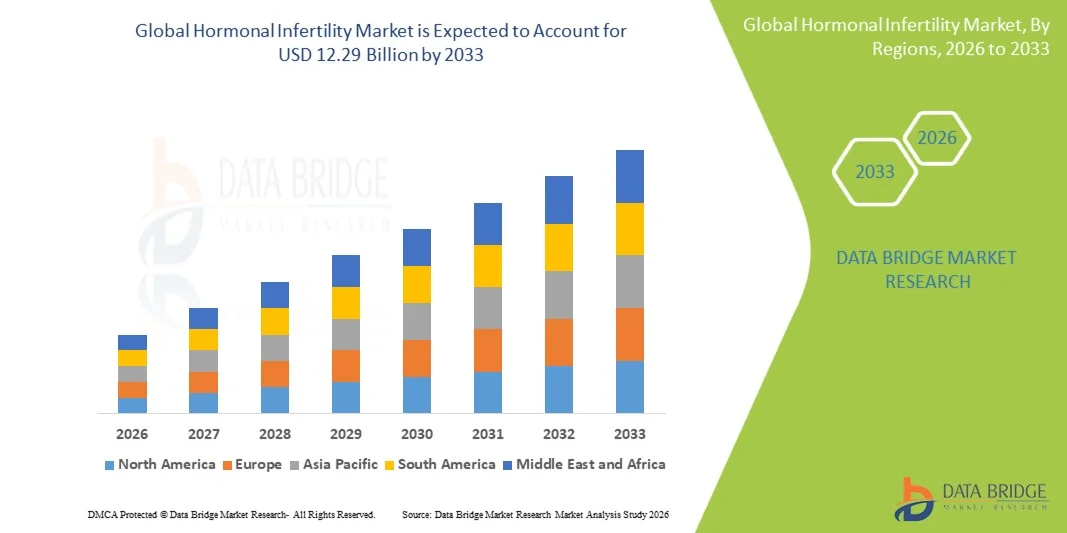
- Como por Data Bridge Market Research Analysis o tamanho global do mercado de infertilidade hormonal foi avaliado emUSD 8,32 mil milhões em 2025e espera-se alcançar12,29 mil milhões de USD até 2033, em umaCAGR de 5,00%durante o período de previsão
- O crescimento do mercado é amplamente alimentado pela crescente prevalência de distúrbios hormonais que afetam a fertilidade, como a síndrome do ovário policístico (SOP), disfunção tireoidiana e hiperprolactinemia, juntamente com o aumento das taxas de infertilidade em todo o mundo, levando ao aumento da demanda por soluções diagnósticas e terapêuticas na saúde reprodutiva
- Além disso, a crescente conscientização sobre a saúde da fertilidade, avanços em terapias baseadas em hormônios e adoção crescente de tecnologias reprodutivas assistidas (TAR) estão estabelecendo tratamentos de infertilidade hormonal como um componente crítico do manejo da fertilidade. Estes factores convergentes estão a acelerar a absorção de soluções de infertilidade hormonal, aumentando assim significativamente o crescimento da indústria
Tamanho e previsão do mercado
- Valor de mercado global (2025):8,32 mil milhões de USD
- Valor de mercado previsto (2033):12,29 mil milhões de USD
- Previsões CAGR (2026-2033):5.00%
Quais são as principais takeaways do mercado de infertilidade hormonal
- Soluções de tratamento de infertilidade hormonal, incluindo terapêutica hormonal, indução da ovulação ereprodução assistidaapoio, são componentes cada vez mais vitais dos modernos sistemas de saúde reprodutiva devido à sua eficácia na regulação dos desequilíbrios hormonais e melhoria dos resultados da concepção em ambientes de cuidados clínicos e fecund
- A crescente demanda por soluções de infertilidade hormonal é alimentada principalmente pelo aumento da prevalência de infertilidade, aumento de distúrbios hormonais como SOP e disfunção tireoidiana, atraso nas gestações, mudanças no estilo de vida e crescente conscientização sobre a saúde reprodutiva e tratamentos de fertilidade
- A América do Norte dominou o mercado de infertilidade hormonal com a maior parte de receita de 39,0% em 2025, impulsionado pela infraestrutura avançada de tratamento de fertilidade, alta consciência da saúde reprodutiva, forte presença de clínicas de fertilidade, e adoção generalizada de tecnologias de reprodução assistida nos EUA.
- Espera-se que a Ásia-Pacífico seja a região de crescimento mais rápido no mercado de infertilidade hormonal durante o período previsto, devido ao aumento das taxas de infertilidade, aumento dos gastos com cuidados de saúde, melhoria do acesso a tratamentos de fertilidade e crescente conscientização sobre soluções de saúde reprodutiva
- O segmento de hormônio luteinizante detinha a maior parcela de receita de mercado de cerca de 52,1% em 2025, impulsionada pelo seu papel crítico na ovulação e regulação do ciclo reprodutivo. Teste de LH é amplamente utilizado em diagnósticos de infertilidade e rastreamento de ovulação
Segmentação do Mercado de Infertilidade Hormonal
|
Atributos |
Insights sobre o Mercado-chave da Infertilidade Hormonal |
|
Segmentos Cobertos |
|
|
Países abrangidos |
América do Norte
Europa
Ásia- Pacífico
Médio Oriente e África
América do Sul
|
|
Jogadores do mercado chave |
|
|
Oportunidades de Mercado |
|
|
Informações sobre o Valor Adicionado |
Além dos insights sobre cenários de mercado, como valor de mercado, taxa de crescimento, segmentação, cobertura geográfica e grandes atores, os relatórios de mercado curados pela Data Bridge Market Research também incluem análise de especialistas em profundidade, epidemiologia de pacientes, análise de pipelines, análise de preços e marco regulatório. |
Qual é a tendência chave no mercado de infertilidade hormonal
“Avanços em tratamentos personalizados de hormônios e fertilidade“
- Uma tendência significativa e acelerada no mercado global de infertilidade hormonal é a rápida mudança para cuidados de fertilidade personalizados e baseados na precisão, apoiados por avanços na endocrinologia reprodutiva, diagnósticos hormonais e planejamento de tratamento específico do paciente
- Por exemplo, o uso crescente de painéis abrangentes de perfil hormonal, como o teste AMH (Hormone Anti-Müllerian) e triagem de fertilidade multi-hormona em mulheres submetidas à avaliação de infertilidade, permite aos clínicos avaliar melhor a reserva ovariana e projetar protocolos de tratamento individualizados
- A integração de tecnologias reprodutivas avançadas e avaliações de fertilidade orientadas por dados está a melhorar a precisão do diagnóstico e a aumentar as taxas de sucesso do tratamento em casos de infertilidade hormonal
- Aumentar a consciencialização do paciente sobre condições comosíndrome do ovário policístico(PCOS), desequilíbrio tireoidiano, e distúrbios de fase lútea está incentivando ainda mais o diagnóstico precoce e intervenção médica oportuna
- Esta mudança contínua para estratégias de tratamento personalizadas está melhorando significativamente os resultados clínicos e reformulando as modernas práticas de cuidado à fertilidade
Dinâmicas do Mercado de Infertilidade Hormonal
Controlador
“Prevalência crescente de distúrbios hormonais e tendências tardias de paternidade“
- A crescente incidência de distúrbios hormonais, tais como SOP, disfunção tireoidiana e níveis elevados de prolactina é uma grande demanda de combustível no mercado de Infertilidade Hormonal em regiões desenvolvidas e emergentes.
- Por exemplo, um número crescente de mulheres em populações urbanas está sendo diagnosticado com SOP em uma idade mais precoce devido à melhoria dos programas de triagem e exames ginecológicos de rotina, levando à maior adoção de tratamentos de infertilidade hormonal, como terapia de indução da ovulação
- Além disso, mudanças no estilo de vida, incluindo aumento dos níveis de estresse, comportamento sedentário, obesidade e atraso nas decisões de planejamento familiar, estão contribuindo significativamente para o aumento dos casos de infertilidade globalmente
- Melhor acesso a clínicas de fertilidade e maior sensibilização para a saúde reprodutiva estão apoiando ainda mais o diagnóstico precoce e a adoção do tratamento
- A expansão dos serviços especializados de saúde reprodutiva também está a desempenhar um papel fundamental na condução do crescimento do mercado
Restrição/Desafio
“Alta carga de custo e taxas de sucesso limitadas de tratamentos de fertilidade“
- A crescente incidência de distúrbios hormonais, tais como SOP, disfunção tireoidiana e níveis elevados de prolactina é uma grande demanda de combustível no mercado de Infertilidade Hormonal em regiões desenvolvidas e emergentes.
- Por exemplo, um número crescente de mulheres em populações urbanas está sendo diagnosticado com SOP em uma idade mais precoce devido à melhoria dos programas de triagem e exames ginecológicos de rotina, levando à maior adoção de tratamentos de infertilidade hormonal, como terapia de indução da ovulação
- Além disso, mudanças no estilo de vida, incluindo aumento dos níveis de estresse, comportamento sedentário, obesidade e atraso nas decisões de planejamento familiar, estão contribuindo significativamente para o aumento dos casos de infertilidade globalmente
- Melhor acesso a clínicas de fertilidade e maior sensibilização para a saúde reprodutiva estão apoiando ainda mais o diagnóstico precoce e a adoção do tratamento
- A expansão dos serviços especializados de saúde reprodutiva também está a desempenhar um papel fundamental na condução do crescimento do mercado
Como é o mercado de infertilidade hormonal segmentado
O mercado é segmentado com base na glândula, hormônios, doenças, diagnóstico, tratamento, via de administração, usuários finais e canal de distribuição.
• Por Gland
Com base na glândula, o mercado de Infertilidade Hormonal é segmentado em hipotálamo, ovários, hipófise, entre outros. O segmento de ovários dominou a maior parcela de receita de mercado de cerca de 46,8% em 2025, impulsionada pela alta prevalência de disfunção ovulatória e distúrbios como a SOP afetando a fertilidade feminina. O desequilíbrio hormonal relacionado ao ovário é uma das causas mais comuns de infertilidade mundial. Aumentar a consciência sobre o diagnóstico precoce de disfunção ovariana está apoiando a demanda. A adopção crescente de tratamentos de fertilidade à base de hormonas reforça ainda mais o crescimento do mercado. Os avanços na endocrinologia reprodutiva estão melhorando os resultados do tratamento. Expandir clínicas de fertilidade e centros de diagnóstico estão aumentando a acessibilidade. O crescente enfoque na saúde reprodutiva das mulheres está aumentando o domínio do mercado. A I&D contínua na avaliação da função ovariana está melhorando a acurácia clínica. As políticas assistenciais de tratamento da infertilidade estão aumentando o alcance do paciente. O aumento das alterações hormonais relacionadas com o estilo de vida está a acelerar ainda mais a procura. A expansão da utilização de tecnologias reprodutivas assistidas está a apoiar o tratamento da doença ovárica. O aumento da prevalência do desequilíbrio endócrino reforça ainda mais a dominância do segmento.
Espera-se que o segmento hipotálamo testemunhe o CAGR mais rápido de cerca de 8,4% de 2026 a 2033, impulsionado pelo aumento dos casos de amenorreia hipotalâmica funcional ligada às mudanças de estresse e estilo de vida. Melhoria das capacidades diagnósticas para distúrbios hormonais centrais estão apoiando a detecção precoce. A ampliação da pesquisa em regulação neuroendócrina está aumentando o desenvolvimento do tratamento. Aumentar a consciência da interação reprodutora cérebro-hormônio está apoiando a adoção clínica. O foco crescente na infertilidade induzida pelo estresse é o crescimento do segmento. A expansão do financiamento da investigação em endocrinologia está a reforçar o gasoduto de inovação. A adoção crescente de terapia hormonal personalizada está melhorando a precisão do tratamento. Aumentar a consciência de ligação saúde mental–fertilidade está aumentando as taxas de diagnóstico. A crescente disponibilidade de ensaios hormonais avançados está apoiando a expansão do mercado. As crescentes perturbações do estilo de vida entre as populações jovens estão a acelerar ainda mais a procura. Aumentar o conhecimento médico sobre a disfunção hipotalâmica está melhorando as vias de tratamento.
• Por Hormônios
Com base em hormônios, o mercado de Infertilidade Hormonal é segmentado em hormônio luteinizante, kispeptina, e outros. O segmento de hormônio luteinizante detinha a maior parcela de receita de mercado de cerca de 52,1% em 2025, impulsionada pelo seu papel crítico na ovulação e regulação do ciclo reprodutivo. O teste de LH é amplamente utilizado em diagnósticos de infertilidade e rastreamento de ovulação. O aumento do uso de ensaios hormonais na avaliação da fertilidade está apoiando a demanda. O aumento da prevalência de distúrbios ovulatórios é mais uma condução da adoção. A crescente utilização de tecnologias de reprodução assistida está a aumentar a confiança na monitorização da LH. A expansão da consciência clínica do desequilíbrio endócrino está a reforçar o crescimento do mercado. Kits diagnósticos melhorados estão aumentando a precisão e acessibilidade. A crescente integração de painéis hormonais em clínicas de fertilidade está aumentando ainda mais a demanda. Aumentar o rastreio preventivo da fertilidade está apoiando o diagnóstico precoce. Aumentar campanhas de conscientização sobre saúde reprodutiva está melhorando as taxas de testes. A crescente procura de kits de monitorização da fertilidade está a apoiar a adopção. Aumentar os gastos com saúde reprodutiva está fortalecendo a expansão do mercado.
Espera-se que o segmento de kispeptina testemunhe o CAGR mais rápido de cerca de 9,3% de 2026 a 2033, impulsionado por pesquisas emergentes sobre seu papel no início da liberação de hormônio reprodutivo. Ensaios clínicos crescentes visando terapias baseadas em kispeptina estão apoiando a inovação. O crescente foco nos novos biomarcadores de infertilidade está acelerando a adoção. A ampliação da pesquisa em endocrinologia reprodutiva está melhorando o potencial terapêutico. O aumento do investimento em terapias hormonais de próxima geração está a reforçar o crescimento. O aumento da colaboração entre empresas de biotecnologia e institutos de investigação está a impulsionar o desenvolvimento. O crescente foco nas vias de sinalização neuroendócrina está aumentando o interesse clínico. A crescente procura de soluções avançadas de fertilidade está a apoiar a inovação. A expansão do gasoduto de medicamentos experimentais para a fertilidade está a reforçar as perspectivas futuras. Aumentar o financiamento da pesquisa acadêmica está impulsionando a descoberta.
• Por Doenças
Com base em doenças, o mercado de Infertilidade Hormonal é segmentado em síndrome do ovário policístico, tumores de hipófise, diabetes, menopausa, síndrome de Cushing, DSTs, pólipos e fibroides, entre outros. O segmento da síndrome do ovário policístico dominou a maior parcela de receita de mercado de cerca de 38,6% em 2025, impulsionada por sua alta prevalência global e forte associação com desequilíbrio hormonal e infertilidade. A SOP é uma das principais causas de anovulação em mulheres em idade reprodutiva. O aumento do sedentarismo e as taxas de obesidade estão contribuindo para o aumento dos casos. A conscientização crescente e os programas de triagem precoce estão melhorando as taxas de diagnóstico. Aumentar a disponibilidade de terapias hormonais está apoiando a adoção do tratamento. As visitas crescentes às clínicas de fertilidade estão a reforçar a procura do mercado. Avanços contínuos no manejo do transtorno endócrino estão melhorando os resultados. Aumentar o foco da saúde pública nas questões de fertilidade das mulheres está aumentando a triagem. Expandir o uso de ultra-som e testes hormonais está apoiando a detecção precoce. Os distúrbios metabólicos crescentes estão a alimentar ainda mais a prevalência. Orientações clínicas melhoradas para o manejo da SOP estão melhorando a adoção do tratamento. O aumento das campanhas de sensibilização para a saúde reprodutiva está fortalecendo as taxas de diagnóstico.
O segmento da síndrome de Cushing é esperado para testemunhar o CAGR mais rápido de cerca de 8,9% de 2026 a 2033, impulsionado por melhores capacidades de diagnóstico por imagem e teste hormonal. O aumento do reconhecimento dos fatores de infertilidade relacionados à adrenal está apoiando o crescimento. A ampliação da pesquisa clínica sobre disfunção reprodutiva relacionada ao cortisol está aumentando as opções de tratamento. Aumentar a sensibilização dos médicos sobre as ligações endócrinas de infertilidade é melhorar as taxas de diagnóstico. A crescente disponibilidade de terapias específicas está apoiando a gestão. O aumento do rastreio de doenças endócrinas hospitalares está a acelerar ainda mais o crescimento. Os avanços nos diagnósticos endócrinos estão melhorando a detecção precoce. A adoção crescente de testes hormonais especializados está fortalecendo a precisão. Aumentar a consciência de causas raras de infertilidade está apoiando a identificação. Aumentar o financiamento da investigação para as doenças suprarrenais está a impulsionar a inovação.
• Por Diagnóstico
Com base no diagnóstico, o mercado de Infertilidade Hormonal é segmentado em ultra-som, exames de sangue e urina, histerosalpingografia, teste de reserva ovariana, entre outros. O segmento de exames de sangue e urina detinha a maior parcela de receita de mercado de cerca de 44,7% em 2025, impulsionada pelo seu uso generalizado na avaliação do nível hormonal e no rastreio da fertilidade. Esses testes são econômicos e altamente acessíveis em todos os ambientes de saúde. Aumentar as avaliações de fertilidade de rotina estão aumentando a demanda. A adoção crescente de painéis hormonais em laboratórios de diagnóstico está apoiando o crescimento do mercado. Aumentar a consciência sobre a detecção precoce da infertilidade está a reforçar a utilização. A expansão da infraestrutura clínica está melhorando a disponibilidade dos testes. O aumento do uso de exames preventivos de saúde reprodutiva está apoiando a adoção. Aumentar a demanda por métodos de diagnóstico rápido está aumentando a utilização. A expansão das redes de laboratórios nas economias emergentes está a aumentar o acesso. O aumento da preferência do médico por testes não invasivos está fortalecendo a adoção. Aumentar a cobertura do seguro para testes diagnósticos está apoiando a captação. As campanhas de sensibilização crescente sobre a saúde na fertilidade estão a melhorar as taxas de rastreio.
Espera-se que o segmento de teste de reserva ovariana teste teste teste teste mais rápido CAGR de cerca de 9,1% de 2026 a 2033, impulsionado pela crescente demanda por ferramentas avançadas de avaliação de fertilidade. Aumentar as tendências da idade materna estão aumentando a necessidade de predição de fertilidade. O uso crescente do teste de HAM e a avaliação da contagem de folículos antrais estão apoiando a adoção. Expandir os tratamentos de FIV é uma demanda ainda maior. Aumentar a preferência pelo planejamento personalizado de fertilidade é fortalecer o crescimento do segmento. Aumentar a consciência do envelhecimento reprodutivo está apoiando testes precoces. Expandir as tendências de preservação da fertilidade está impulsionando a adoção. O crescente foco na avaliação da qualidade dos ovos está aumentando o uso clínico. A crescente demanda dos centros de FIV está fortalecendo a penetração no mercado. Os avanços tecnológicos crescentes nos diagnósticos de fertilidade estão melhorando a precisão.
• Por Tratamento
Com base no tratamento, o mercado de Infertilidade Hormonal é segmentado em medicamentos, cirurgia, tecnologia reprodutiva assistida, entre outros. O segmento de tecnologia reprodutiva assistida dominou a maior parcela de receita de mercado de cerca de 49,3% em 2025, impulsionada pelo aumento das taxas de sucesso dos procedimentos IVF e ICSI. O aumento da prevalência de infertilidade está aumentando a demanda por serviços de TARV. Os avanços crescentes na cultura de embriões e no rastreio genético estão a melhorar os resultados. Expandir a infraestrutura clínica de fertilidade está apoiando a acessibilidade. Aumentar as gravidezes tardias está a aumentar a confiança na TARV. As políticas de apoio ao reembolso em algumas regiões estão a impulsionar ainda mais a adopção. Aumentar o conhecimento das taxas de sucesso da FIV é encorajador para os pacientes. Expandir o turismo de fertilidade está aumentando a demanda global. O crescente uso de técnicas de congelamento de embriões está melhorando a flexibilidade do tratamento. A crescente inovação clínica nas tecnologias reprodutivas está a reforçar as taxas de sucesso. O aumento do número de centros de fertilidade está aumentando a acessibilidade. A adoção crescente de procedimentos minimamente invasivos está apoiando a preferência do paciente.
Espera-se que o segmento medicamentoso testemunhe o CAGR mais rápido de cerca de 8,6% de 2026 a 2033, impulsionado pelo uso crescente de terapias hormonais e drogas indutoras de ovulação. A preferência crescente por opções de tratamento não invasivas é apoiar o crescimento. Aumentar a disponibilidade de medicamentos genéricos de fertilidade está melhorando a acessibilidade. Aumentar a adoção de tratamento de infertilidade em fase inicial está aumentando a demanda. O aumento das taxas de prescrição na atenção primária vem fortalecendo o uso. Aumentar a consciência das terapias de regulação hormonal está apoiando a captação. A ampliação do acesso ao tratamento ambulatorial está aumentando a conveniência. O aumento da I&D em fármacos de fertilidade está melhorando a eficácia. O uso crescente de terapias hormonais combinadas está aumentando os resultados. Aumentar o foco na medicação personalizada é fortalecer a adoção.
• Por Via de Administração
Com base na via de administração, o mercado de Infertilidade Hormonal é segmentado em oral, parenteral, implantes, entre outros. O segmento de via oral teve a maior parcela de receita de mercado de cerca de 41,9% em 2025, impulsionada pela conveniência e alta adesão dos pacientes. Medicamentos hormonais orais são amplamente prescritos para indução da ovulação e regulação endócrina. O aumento dos tratamentos ambulatoriais de fertilidade estão apoiando a demanda. Aumentar a disponibilidade através de lojas de varejo e farmácias online está melhorando o acesso. A preferência crescente por terapias autoadministradas está aumentando a adoção. A sensibilização crescente para a acessibilidade dos medicamentos de fertilidade está a apoiar a absorção. Aumentar a acessibilidade das formulações orais está fortalecendo o uso. A ampliação das prescrições de atenção primária está aumentando o alcance. A preferência crescente do paciente pela administração indolor é apoiar o crescimento. A crescente utilização no tratamento precoce da infertilidade está a aumentar a procura. O aumento da disponibilidade de medicamentos genéricos está a melhorar a acessibilidade.
Espera-se que o segmento parenteral testemunhe o CAGR mais rápido de cerca de 7,8% de 2026 a 2033, impulsionado pela alta eficácia das terapias hormonais injetáveis em tratamentos controlados de fertilidade. O aumento do uso em protocolos de FIV está apoiando o crescimento. Aumentar a preferência clínica pela dosagem precisa de hormonas está a impulsionar a adopção. A expansão dos procedimentos clínicos de fertilidade está a reforçar a procura. O uso crescente em tratamentos reprodutivos avançados está acelerando ainda mais o crescimento do segmento. Aumentar a administração hospitalar está apoiando o uso. Aumentar a procura de terapia hormonal de libertação controlada está a aumentar a eficácia. A expansão do uso em ciclos de reprodução assistida está melhorando os resultados. A crescente preferência do médico por hormônios injetáveis está fortalecendo a adoção. O aumento das taxas de sucesso nos ciclos de FIV está apoiando a demanda.
• Por Usuários Finais
Com base nos usuários finais, o mercado de Infertilidade Hormonal é segmentado em hospitais, homecare, clínicas especializadas, entre outros. O segmento hospitalar dominou o maior percentual de receita de mercado de cerca de 51,6% em 2025, impulsionado pelo alto fluxo de pacientes para diagnóstico, tratamento cirúrgico e cuidados de infertilidade. Os hospitais oferecem instalações avançadas de diagnóstico por imagem e endocrinologia reprodutiva. Casos crescentes de distúrbios hormonais que afetam a fertilidade estão aumentando as internações. A disponibilidade de especialistas em reprodução qualificados aumenta os resultados do tratamento. O aumento dos investimentos em infraestrutura de saúde apoia o domínio do mercado. A ampliação das iniciativas governamentais de saúde está melhorando o acesso. Os casos crescentes de encaminhamento da atenção primária estão impulsionando as consultas hospitalares. A sensibilização crescente para os tratamentos de infertilidade está a aumentar a dependência hospitalar. A integração laboratorial avançada está fortalecendo a eficiência diagnóstica. A expansão da infraestrutura de tratamento de fertilidade está aumentando a capacidade de serviço. Aumentar a cobertura de seguro para cuidados de infertilidade é apoiar o uso hospitalar.
Espera-se que o segmento de clínicas especializadas testemunhe o CAGR mais rápido de cerca de 8,1% de 2026 a 2033, impulsionado pela crescente preferência por cuidados de fertilidade focados e procedimentos ambulatoriais. A expansão dos centros de FIV e infertilidade está apoiando o crescimento. Aumentar a demanda por tratamento reprodutivo personalizado está impulsionando a adoção. Aumentar a consciência de procedimentos minimamente invasivos é apoiar o atendimento ambulatorial. Aumentar a conveniência de clínicas especializadas está melhorando a preferência do paciente. A expansão da infra-estrutura urbana de fertilidade está a reforçar o acesso. Aumentar as taxas de sucesso em clínicas especializadas está aumentando a confiança. Crescer o turismo médico para o tratamento da fertilidade é apoiar a expansão. Aumentar a acessibilidade em comparação com os hospitais é conduzir a procura. Aumentar a disponibilidade de tecnologias reprodutivas avançadas está aumentando os resultados.
• Por Canal de Distribuição
Com base no canal de distribuição, o mercado de Infertilidade Hormonal é segmentado em farmácia hospitalar, farmácia on-line e farmácia de varejo. O segmento de farmácia de varejo detinha a maior parcela de receita de mercado de cerca de 46,2% em 2025, impulsionada pelo fácil acesso à prescrição de fertilidade e medicamentos hormonais. Fortes redes de farmácia garantem ampla disponibilidade. Aumentar a demanda por suplementos de fertilidade e reguladores hormonais está apoiando as vendas. A crescente disponibilidade de medicamentos genéricos aumenta a acessibilidade. O aumento da prescrição ambulatorial está aumentando a distribuição do varejo. A expansão das redes de varejo em saúde está fortalecendo a acessibilidade. Aumentar a consciência dos tratamentos hormonais é melhorar a captação de drogas. Médicos crescentes prescrevendo padrões estão apoiando vendas de farmácia. Aumentar a penetração da farmácia rural é melhorar o acesso. A crescente procura de produtos de apoio à fertilidade de balcão está a aumentar o crescimento. O aumento do manejo crônico da infertilidade está fortalecendo a demanda.
Espera-se que o segmento de farmácia online testemunhe o CAGR mais rápido de cerca de 9,0% de 2026 a 2033, impulsionado pela adoção digital de saúde e crescente penetração no comércio eletrônico. Os pacientes preferem plataformas online para conveniência e compras discretas. Aumentar a integração da telemedicina está a aumentar as receitas. A expansão do acesso à Internet está a apoiar o crescimento da farmácia digital. Os preços competitivos e os benefícios da entrega em domicílio estão a atrair os consumidores. Aumentar a penetração do smartphone está fortalecendo a adoção. Aumentar a confiança nas plataformas de e-farmácia está aumentando o uso. O aumento dos sistemas de pagamentos digitais está a apoiar as transacções. A ampliação da digitalização em saúde está melhorando a acessibilidade. Aumentar a conscientização da disponibilidade de medicamentos online está impulsionando o crescimento.
Que região detém a maior parte do mercado de infertilidade hormonal
- A América do Norte dominou o mercado de infertilidade hormonal com a maior parte de receita de 39,0% em 2025, impulsionado pela infraestrutura avançada de tratamento de fertilidade, alta consciência da saúde reprodutiva, forte presença de clínicas de fertilidade, e adoção generalizada de tecnologias de reprodução assistida nos EUA.
- Pacientes da região se beneficiam do diagnóstico precoce de distúrbios hormonais, fácil acesso a endocrinologistas especializados e especialistas em fertilidade, e alta adoção de opções avançadas de tratamento, como FIV e hormonioterapia
- Essa adoção generalizada é ainda apoiada por políticas de reembolso favoráveis, alto gasto em saúde e forte disponibilidade de serviços avançados de saúde reprodutiva, estabelecendo a América do Norte como uma região líder na adoção do tratamento de infertilidade.
Visão do Mercado de Infertilidade Hormonal dos EUA
O mercado de infertilidade hormonal dos EUA capturou a maior participação de receita na América do Norte em 2025, impulsionada pela alta prevalência de casos de infertilidade relacionados ao desequilíbrio hormonal e forte acesso a serviços avançados de saúde reprodutiva. Os pacientes estão cada vez mais optando por tecnologias reprodutivas assistidas, como FIV, IUI e terapia hormonal, devido à melhora das taxas de sucesso e avanços tecnológicos. A crescente presença de clínicas especializadas de fertilidade, juntamente com a crescente conscientização da saúde reprodutiva, está apoiando ainda mais o crescimento do mercado. Além disso, inovações contínuas em técnicas de transferência de embriões e métodos de preservação da fertilidade estão aumentando os resultados do tratamento.
Visão do mercado da infertilidade hormonal na Europa
Prevê-se que o mercado europeu da infertilidade hormonal se expanda num CAGR substancial durante todo o período de previsão, impulsionado pelo aumento dos casos de infertilidade ligados a distúrbios hormonais e gravidezes tardias. A sensibilização para a saúde reprodutiva e os sistemas públicos de saúde fortes estão a apoiar o diagnóstico precoce e a adopção de tratamentos. Países de toda a região estão testemunhando crescente demanda por tratamentos de fertilidade, como FIV e terapias de regulação hormonal. Além disso, quadros de saúde governamentais de apoio e melhor acesso a clínicas de fertilidade estão fortalecendo a expansão do mercado.
Estudo de Infertilidade Hormonal do Mercado do Reino Unido
Prevê-se que o mercado de infertilidade hormonal do Reino Unido cresça em um CAGR estável durante o período de previsão, apoiado pelo aumento das taxas de infertilidade e aumento da demanda por tratamentos reprodutivos assistidos. Os pacientes estão cada vez mais buscando intervenção médica precoce para distúrbios hormonais que afetam os desfechos de fertilidade. A presença de centros de fertilidade bem estabelecidos e sistemas públicos de apoio à saúde está melhorando a acessibilidade ao tratamento. Além disso, a crescente conscientização em relação à saúde reprodutiva está incentivando mais indivíduos a optarem por avaliações clínicas de fertilidade.
Inquérito sobre o mercado da infertilidade hormonal na Alemanha
Espera-se que o mercado de infertilidade hormonal da Alemanha se expanda em um considerável CAGR durante o período de previsão, impulsionado por infraestrutura avançada de saúde e forte foco na medicina reprodutiva. Aumentar a conscientização sobre distúrbios hormonais, como SOP e infertilidade relacionada à tireoide, está contribuindo para maiores taxas de diagnóstico. A ênfase da Alemanha na medicina de precisão e tratamentos avançados de fertilidade está melhorando ainda mais os resultados dos pacientes. Além disso, a disponibilidade de especialistas qualificados em fertilidade e instalações clínicas bem desenvolvidas está apoiando o crescimento do mercado.
Asia Pacific Hormonal Infertilidade Mercado Visão
Espera-se que o mercado de infertilidade hormonal Ásia-Pacífico seja a região de crescimento mais rápido do mercado de infertilidade hormonal durante o período de previsão, devido ao aumento das taxas de infertilidade, aumento dos gastos com cuidados de saúde, melhoria do acesso a tratamentos de fertilidade e crescente conscientização sobre soluções de saúde reprodutiva. A rápida urbanização, a mudança dos padrões de estilo de vida e o atraso das tendências da gravidez em países como China, Índia e Japão estão contribuindo ainda mais para o aumento da demanda por tratamentos de infertilidade. Iniciativas governamentais para melhorar a saúde materna e expandir a infraestrutura de cuidados de fertilidade também estão apoiando a expansão do mercado em toda a região
Visão do mercado da infertilidade hormonal do Japão
O mercado japonês de infertilidade hormonal está ganhando ímpeto constante devido ao aumento da consciência da saúde reprodutiva e do envelhecimento da população. Casos crescentes de infertilidade relacionada com o desequilíbrio hormonal estão impulsionando a demanda por tratamentos avançados de fertilidade. A forte infraestrutura de saúde do país e a adoção precoce de tecnologias reprodutivas assistidas estão apoiando o crescimento do mercado. Além disso, melhorar o acesso a clínicas especializadas de fertilidade está melhorando os resultados do tratamento.
China Infertilidade Hormonal Mercado Visão
O mercado de infertilidade hormonal da China representou a maior parcela de receita da Ásia-Pacífico em 2025, apoiada por uma grande população de pacientes, aumento das taxas de infertilidade e expansão da infraestrutura de saúde. Aumentar a consciência da saúde reprodutiva e crescente disponibilidade de centros de tratamento de fertilidade estão impulsionando maior adoção de terapias de infertilidade hormonal. Além disso, a urbanização rápida, as mudanças no estilo de vida e o apoio governamental ao desenvolvimento da saúde estão fortalecendo ainda mais o crescimento do mercado.
Quais são as principais empresas no mercado de infertilidade hormonal
A indústria da infertilidade hormonal é liderada principalmente por empresas bem estabelecidas, incluindo:
- Merck & Co., Inc. (EUA)
- Ferring Pharmaceuticals (Suíça)
- Bayer AG (Alemanha)
- Novartis AG (Suíça)
- Pfizer Inc. (EUA)
- Sanofi S. A. (França)
- AbbVie Inc. (EUA)
- Teva Pharmaceutical Industries Ltd (Israel)
- Sun Pharmaceutical Industries Ltd. (Índia)
- Cipla Ltd. (Índia)
- Dr. Reddy’s Laboratories Ltd. (Índia)
- Lupin Limited (Índia)
- Organon & Co. (EUA)
- Vitrolife AB (Suécia)
- CooperSurgical Inc. (EUA)
- Bayer Zydus Pharma (índia)
- Endo International plc (Irlanda)
- Merck KGaA (Alemanha)
Quais são as últimas evoluções no mercado da infertilidade hormonal
- Em junho de 2021, a FDA dos EUA aprovou o Follistim AQ Cartridge ampliando a atualização das indicações e o uso contínuo em protocolos controlados de estimulação ovariana, fortalecendo seu papel no tratamento de infertilidade hormonal para tecnologia reprodutiva assistida (ART). Isto apoiou uma melhor gestão da resposta ovárica em ciclos de FIV
- Em agosto de 2022, Organon anunciou a continuação da implantação global de seu portfólio de fertilidade, incluindo terapias de infertilidade hormonal, como Puregon (folitropina beta), fortalecendo o acesso a tratamentos à base de gonadotropina usados na FIV e indução da ovulação. Esta expansão reforçou a posição da Organon na saúde da mulher e na endocrinologia reprodutiva
- Em novembro de 2022, a Ferring Pharmaceuticals apresentou dados clínicos atualizados sobre Rekovelle (follitropina delta) nas principais conferências de medicina reprodutiva, demonstrando melhores resultados de dosagem individualizados em estimulação ovárica controlada para pacientes com FIV. Isso destacou avanços na terapia hormonal de precisão
- Em março de 2023, Merck (MSD fora dos EUA e Canadá) expandiu a disponibilidade de Gonal-f (folitropina alfa) em várias regiões, suportando maior acesso à hormona folículo-estimulante recombinante usada em protocolos de tratamento de infertilidade hormonal. Isso ajudou a melhorar o acesso global aos tratamentos de fertilidade
- Em setembro de 2024, a CooperSurgical anunciou a expansão de seu portfólio de fertilidade e saúde reprodutiva, incluindo produtos de suporte à infertilidade hormonal e soluções endócrinas relacionadas à FIV, fortalecendo seu ecossistema de reprodução assistida global. Isso reflete a crescente integração de terapias hormonais com tecnologias reprodutivas avançadas
SKU-
Obtenha acesso online ao relatório sobre a primeira nuvem de inteligência de mercado do mundo
- Painel interativo de análise de dados
- Painel de análise da empresa para oportunidades de elevado potencial de crescimento
- Acesso de analista de pesquisa para personalização e customização. consultas
- Análise da concorrência com painel interativo
- Últimas notícias, atualizações e atualizações Análise de tendências
- Aproveite o poder da análise de benchmark para um rastreio abrangente da concorrência
Metodologia de Investigação
A recolha de dados e a análise do ano base são feitas através de módulos de recolha de dados com amostras grandes. A etapa inclui a obtenção de informações de mercado ou dados relacionados através de diversas fontes e estratégias. Inclui examinar e planear antecipadamente todos os dados adquiridos no passado. Da mesma forma, envolve o exame de inconsistências de informação observadas em diferentes fontes de informação. Os dados de mercado são analisados e estimados utilizando modelos estatísticos e coerentes de mercado. Além disso, a análise da quota de mercado e a análise das principais tendências são os principais fatores de sucesso no relatório de mercado. Para saber mais, solicite uma chamada de analista ou abra a sua consulta.
A principal metodologia de investigação utilizada pela equipa de investigação do DBMR é a triangulação de dados que envolve a mineração de dados, a análise do impacto das variáveis de dados no mercado e a validação primária (especialista do setor). Os modelos de dados incluem grelha de posicionamento de fornecedores, análise da linha de tempo do mercado, visão geral e guia de mercado, grelha de posicionamento da empresa, análise de patentes, análise de preços, análise da quota de mercado da empresa, normas de medição, análise global versus regional e de participação dos fornecedores. Para saber mais sobre a metodologia de investigação, faça uma consulta para falar com os nossos especialistas do setor.
Personalização disponível
A Data Bridge Market Research é líder em investigação formativa avançada. Orgulhamo-nos de servir os nossos clientes novos e existentes com dados e análises que correspondem e atendem aos seus objetivos. O relatório pode ser personalizado para incluir análise de tendências de preços de marcas-alvo, compreensão do mercado para países adicionais (solicite a lista de países), dados de resultados de ensaios clínicos, revisão de literatura, mercado remodelado e análise de base de produtos . A análise de mercado dos concorrentes-alvo pode ser analisada desde análises baseadas em tecnologia até estratégias de carteira de mercado. Podemos adicionar quantos concorrentes necessitar de dados no formato e estilo de dados que procura. A nossa equipa de analistas também pode fornecer dados em tabelas dinâmicas de ficheiros Excel em bruto (livro de factos) ou pode ajudá-lo a criar apresentações a partir dos conjuntos de dados disponíveis no relatório.