Lipoproteína Global(a) Segmentação do Mercado de Medicamentos por Tipo de Drogas (Oligonucleotídeos Antisense, Interferência de RNA (RNAi) Terapias, Inibidores de Síntese, Moduladores de Receptores de Pequenas Moléculas, Inibidores de CETP, Inibidores de Proteínas de Transferência de Colesterol, Moduladores de Metabolismo Lipídico, e Outros), Indicação (Doenças Cardiovasculares, Aterosclerose, Hiperlipidemia, Doença Arterial Coronariana, Doença Cardíaca Isquêmica do Coração, Prevenção de Estrofes, Doença Arterial Periférica e Outros), Usuário Final (Hospitales, Clínicas Especiais, Centros de Cardiologia, Centros Cirúrgicos Ambulatórios, Ajustes Homerais, Institutos de Pesquisa e Outros)- Tendências da Indústria
O que é a Lipoproteína(a) Baixando o Tamanho do Mercado de Drogas e Taxa de Crescimento
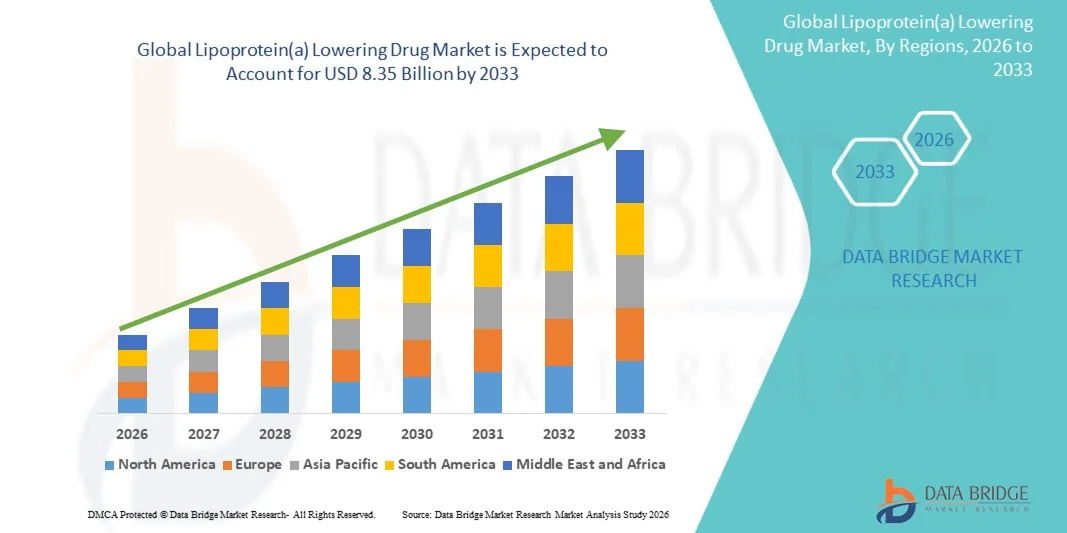
- De acordo com a Data Bridge Market Research Analysis a lipoproteína(a) global baixando o tamanho do mercado de drogas foi avaliada em1,93 mil milhões de dólares em 2025e espera-se alcançarUSD 8,35 mil milhões até 2033, emCAGR de 20,10%durante o período de previsão
- O crescimento do mercado é em grande parte impulsionado pelo aumento da prevalência de doenças cardiovasculares e foco clínico crescente em níveis elevados de lipoproteína(a) como um importante fator de risco independente para doenças ateroscleróticas e doenças cardíacas coronárias
- Além disso, os avanços contínuos em terapias direcionadas ao RNA, oligonucleotídeos antissenso e tecnologias de silenciamento genético, juntamente com a crescente demanda por tratamentos cardiovasculares de precisão e soluções preventivas de saúde, estão posicionando a lipoproteína(a) como uma promissora categoria terapêutica de próxima geração. Estes factores combinados estão a acelerar significativamente o crescimento do mercado mundial
Tamanho e previsão do mercado
- Valor de mercado global (2025):1,93 mil milhões de USD
- Valor de mercado previsto (2033):8,35 mil milhões de USD
- Previsões CAGR (2026-2033):20.10%
Quais são os principais takeaways da lipoproteína(a) Baixando o mercado de drogas
- As lipoproteínas(a) que baixam os fármacos, concebidas para reduzir os níveis elevados de lipoproteína(a) associados às doenças cardiovasculares e ateroscleróticas, estão a tornar-se componentes cada vez mais importantes das modernas estratégias de tratamento cardiovascular devido ao seu potencial para enfrentar o risco cardiovascular residual que permanece não gerido pelas terapias convencionais de redução de lipídios.
- A crescente demanda por lipoproteína(a) para diminuir os fármacos é impulsionada principalmente pela crescente carga global de doenças cardiovasculares, crescente conscientização sobre distúrbios lipídicos genéticos e a expansão de pesquisas clínicas focadas em terapias específicas baseadas em RNA e silenciamento genético
- A América do Norte dominou a (a) redução do mercado de drogas com a maior parcela de receita de 41,3% em 2025, caracterizada por infraestrutura de saúde avançada, forte investimento no desenvolvimento de drogas cardiovasculares e presença de liderançabiotecnologiae empresas farmacêuticas, com os EUA testemunhando crescimento substancial em ensaios clínicos e adoção de terapias inovadoras de redução de lipídios apoiadas por iniciativas regulatórias favoráveis e crescente conscientização preventiva em saúde
- Espera-se que a Ásia-Pacífico seja a região de crescimento mais rápido da lipoproteína(a) que reduz o mercado de medicamentos durante o período previsto, devido ao aumento da prevalência de doenças cardiovasculares, à melhoria do acesso aos cuidados de saúde e ao aumento dos investimentos na investigação em medicina de precisão e biotecnologia
- O segmento de terapias de interferência de RNA (RNAi) dominou o mercado de lipoproteína(a) com uma quota de mercado de 46,8% em 2025, impulsionada pela sua forte eficácia na redução dos níveis de lipoproteína(a), maiores intervalos de dosagem e crescente sucesso clínico no desenvolvimento terapêutico tardio
Relatar Escopo e Lipoproteína(a) Diminuir a Segmentação do Mercado de Medicamentos
|
Atributos |
Lipoproteína(a) Diminuição do Mercado de Drogas |
|
Segmentos Cobertos |
|
|
Países abrangidos |
América do Norte
Europa
Ásia- Pacífico
Médio Oriente e África
América do Sul
|
|
Jogadores do mercado chave |
|
|
Oportunidades de Mercado |
|
|
Informações sobre o Valor Adicionado |
Além dos insights sobre cenários de mercado, como valor de mercado, taxa de crescimento, segmentação, cobertura geográfica e principais atores, os relatórios de mercado curados pela Data Bridge Market Research também incluem análise de especialistas em profundidade, epidemiologia do paciente, análise de pipelines, análise de preços e marco regulatório |
Qual é a tendência chave na lipoproteína(a) baixar o mercado de drogas
“Avançamento crescente em Terapias Cardiovasculares Baseadas em RNA e Precisão”
- Uma tendência significativa e acelerada no mercado global de lipoproteína(a) para diminuir o consumo de drogas é o desenvolvimento crescente de terapias orientadas para o RNA e abordagens de medicina de precisão concebidas especificamente para reduzir níveis elevados de lipoproteína(a) associados ao risco cardiovascular. Este avanço na biotecnologia está a melhorar significativamente a eficácia e especificidade do tratamento das doenças cardiovasculares.
- Por exemplo, o pelocarsen e o olpasiran são terapias emergentes baseadas em RNA desenvolvidas para reduzir substancialmente as concentrações de lipoproteína(a) através de mecanismos de silenciamento de genes direcionados, demonstrando forte potencial clínico na redução de complicações cardiovasculares associadas a níveis elevados de lipoproteína(a)
- A integração terapêutica baseada em RNA nas drogas de redução da lipoproteína(a) permite características como eficácia de longa duração, alvo altamente seletivo da produção de apolipoproteína(a) e frequência de dosagem reduzida em comparação com terapias convencionais de redução de lipídios. Por exemplo, várias terapias de investigação em fase tardia utilizam tecnologia de pequeno RNA interferente (siRNA) para fornecer supressão sustentada da síntese de lipoproteína(a) enquanto minimiza efeitos colaterais sistêmicos. Além disso, as capacidades de medicina de precisão permitem que os clínicos forneçam estratégias de tratamento cardiovascular mais individualizadas com base em perfis de risco genético e avaliação de biomarcadores.
- A integração contínua de tecnologias genômicas avançadas com plataformas de desenvolvimento de drogas cardiovasculares facilita a estratificação de pacientes e a otimização do tratamento direcionado em populações de alto risco. Através de uma abordagem terapêutica mais personalizada, os prestadores de cuidados de saúde podem gerir melhor o risco cardiovascular residual, juntamente com as terapias existentes de redução do colesterol, criando um quadro de cuidados cardiovasculares mais abrangente
- Essa tendência para soluções de tratamento cardiovascular mais direcionadas, duráveis e geneticamente impulsionadas está fundamentalmente reformulando estratégias terapêuticas para distúrbios relacionados aos lipídios. Consequentemente, empresas como a Novartis
- estão desenvolvendo terapias avançadas de redução da lipoproteína(a) com perfis prolongados de eficácia e capacidade de direcionamento de precisão para pacientes cardiovasculares de alto risco
- A demanda por lipoproteína(a) para diminuir os medicamentos que oferecem metas eficazes baseadas em RNA e redução de risco cardiovascular a longo prazo está crescendo rapidamente em mercados de saúde desenvolvidos e emergentes, uma vez que os sistemas de saúde priorizam cada vez mais soluções de cardiologia preventiva e medicina de precisão
Lipoproteína(a) Diminuição da Dinâmica do Mercado de Medicamentos
Controlador
“Crescimento da necessidade devido ao aumento da carga de doenças cardiovasculares e adoção de medicina de precisão”
- A crescente prevalência global de doenças cardiovasculares e doenças lipídicas geneticamente herdadas, juntamente com a rápida adoção de abordagens de medicina de precisão, é um fator importante para o aumento da demanda por lipoproteína(a) para diminuir os fármacos
- Por exemplo, em março de 2025, Amgen Inc. anunciou o avanço contínuo em iniciativas de pesquisa cardiovascular focadas em terapias de redução de lipídios direcionadas destinadas a abordar o risco cardiovascular residual associado a níveis elevados de lipoproteína(a). Espera-se que tais estratégias das empresas-chave conduzam à redução do crescimento do mercado de drogas no período de previsão
- À medida que os prestadores de cuidados de saúde se tornam mais conscientes do papel da lipoproteína(a) elevada na doença cardiovascular aterosclerótica e no risco de acidente vascular cerebral, os fármacos de redução da lipoproteína(a) oferecem potencial terapêutico avançado através de mecanismos genéticos e moleculares específicos, proporcionando uma alternativa promissora às terapias tradicionais de tratamento lipídico.
- Além disso, a crescente popularidade da medicina personalizada e estratégias de tratamento cardiovascular orientadas por biomarcadores está fazendo da lipoproteína(a) terapias de redução um componente essencial de programas de cardiologia preventiva de próxima geração, oferecendo integração perfeita com protocolos mais amplos de manejo de doenças cardiovasculares
- A capacidade de obter reduções substanciais nos níveis de lipoproteína(a), intervalos de dosagem prolongados para melhoria da adesão do paciente e melhor manejo do risco cardiovascular através de tecnologias avançadas baseadas em RNA são fatores fundamentais que impulsionam a adoção de lipoproteína(a) para diminuir os medicamentos em ambientes de cuidados hospitalares e especializados. A tendência para a detecção precoce do risco cardiovascular e o aumento da disponibilidade de testes avançados de diagnóstico de lipídios contribuem ainda mais para o crescimento do mercado
Restrição/Desafio
“Custos de desenvolvimento elevados e complexidade de aprovação regulamentar”
- As preocupações em torno dos altos custos de desenvolvimento clínico e rigorosos requisitos de aprovação regulatória para novas terapias cardiovasculares baseadas em RNA representam um desafio significativo para uma expansão mais ampla do mercado. Uma vez que a lipoproteína(a) abaixamento de medicamentos depende de plataformas de biotecnologia avançadas e de estudos de resultados cardiovasculares extensivos, eles enfrentam longos prazos de desenvolvimento e avaliações regulatórias complexas, levantando preocupações entre os fabricantes quanto aos riscos de comercialização e retorno dos investimentos
- Por exemplo, as agências reguladoras exigem frequentemente ensaios de resultados cardiovasculares em larga escala para validar a segurança e eficácia a longo prazo da lipoproteína(a) emergente, reduzindo as terapias, aumentando a complexidade do desenvolvimento e atrasando as aprovações de produtos em vários mercados
- Enfrentar esses desafios clínicos e regulatórios através de colaborações de pesquisa aceleradas, projetos de testes simplificados e estratégias de validação de biomarcadores melhoradas é crucial para apoiar a expansão do mercado. Empresas como Silence Therapeutics plc e Ionis Pharmaceuticals, Inc. enfatizam parcerias estratégicas e plataformas tecnológicas avançadas de RNA em suas estratégias de desenvolvimento para fortalecer oleodutos terapêuticos e melhorar os resultados clínicos
- Além disso, os custos relativamente elevados de tratamento associados a terapias inovadoras de silenciamento genético podem limitar a acessibilidade dos pacientes em sistemas de saúde sensíveis aos custos, particularmente em economias ou regiões em desenvolvimento com cobertura de reembolso limitada. Enquanto se espera que a pesquisa em curso melhore a acessibilidade ao longo do tempo, preços premium para biológicos cardiovasculares avançados e terapias de RNA podem continuar a restringir a adoção generalizada
- Enquanto os avanços clínicos estão constantemente melhorando a eficácia terapêutica e os resultados cardiovasculares a longo prazo, a elevada carga de custos e a complexa paisagem regulatória ainda podem dificultar a penetração mais ampla do mercado, especialmente entre os sistemas de saúde com quadros de reembolso restritos.
- Superar estes desafios através de uma melhor coordenação regulamentar, de um maior apoio ao reembolso e do desenvolvimento de terapias orientadas para uma boa relação custo-eficácia será vital para um crescimento sustentado do mercado
Lipoproteína(a) Redução do âmbito do mercado de medicamentos
O mercado é segmentado com base no tipo de droga, mecanismo de ação, indicação e usuário final.
- Por tipo de droga
Com base no tipo de droga, a lipoproteína(a) que reduz o mercado de drogas é segmentada em oligonucleotídeos anti-sensíveis, terapias de interferência de RNA (RNAi), inibidores de PCSK9, drogas de pequenas moléculas, inibidores de CETP, terapias baseadas em niacina, biológicos, entre outros. O segmento de terapias de interferência do RNAi dominou o mercado com a maior quota de receita de mercado de 46,8% em 2025, impulsionada pela sua forte capacidade de alcançar reduções substanciais e sustentadas nos níveis de lipoproteína(a) através de mecanismos de silenciamento genético direcionados. Essas terapias estão ganhando atenção clínica significativa devido aos seus intervalos de dosagem prolongados, melhor adesão ao tratamento e promissor potencial de desfecho cardiovascular. As empresas farmacêuticas estão cada vez mais investindo em plataformas RNAi por causa de suas capacidades de precisão e benefícios terapêuticos de longo prazo. O segmento também está se beneficiando da expansão de ensaios clínicos tardios e colaborações estratégicas entre empresas de biotecnologia focadas na inovação cardiovascular. Além disso, a crescente preferência do médico por abordagens avançadas de medicina de precisão está fortalecendo ainda mais a adoção de terapias de redução da lipoproteína(a) baseada em RNAi em populações de pacientes cardiovasculares de alto risco.
O segmento de oligonucleotídeos antissenso é esperado para testemunhar a taxa de crescimento mais rápida de 2026 a 2033, alimentado por avanços crescentes na terapêutica do ácido nucleico e atividades crescentes de pesquisa visando inibição da síntese da apolipoproteína(a). Terapias com oligonucleotídeos antissense oferecem supressão altamente seletiva da produção de lipoproteína(a), tornando-os candidatos atraentes para estratégias de redução de risco cardiovascular a longo prazo. A crescente prevalência de distúrbios lipídicos herdados e o aumento da conscientização sobre o risco cardiovascular residual estão acelerando a demanda por essas terapias em ambientes especializados de tratamento cardiológico. Além disso, o apoio regulatório favorável à terapêutica inovadora de doenças raras e cardiovasculares está incentivando as empresas farmacêuticas a expandirem seus oleodutos antissenso terapêuticos. Espera-se também que o segmento se beneficie de melhorias tecnológicas nos sistemas de entrega de medicamentos e de perfis de segurança aprimorados, apoiando oportunidades de comercialização futuras mais amplas.
- Por mecanismo de ação
Com base no mecanismo de ação, o mercado de drogas de redução da lipoproteína(a) é segmentado em inibidores da síntese Apo(a), moduladores do receptor LDL, terapias de silenciamento do RNA, inibidores da proteína de transferência de colesterol, moduladores do metabolismo lipídico, entre outros. O segmento de terapias de silenciamento do RNA teve a maior participação de receita de mercado em 2025 impulsionada pela sua alta precisão terapêutica e capacidade de direcionar diretamente as vias genéticas responsáveis pela produção elevada de lipoproteína(a). Essas terapias são cada vez mais reconhecidas pela sua eficácia na redução do risco cardiovascular em pacientes com níveis de lipoproteína(a) geneticamente elevados. O segmento é apoiado por evidências clínicas crescentes que demonstram eficácia duradoura e efeitos prolongados de redução de lipídios com menor frequência de dosagem. As empresas de biotecnologia estão investindo ativamente em tecnologias silenciadoras de RNA devido ao seu forte potencial comercial e clínico na medicina cardiovascular. Além disso, a crescente integração da medicina de precisão e estratégias de tratamento baseadas em biomarcadores está contribuindo significativamente para a adoção generalizada de abordagens terapêuticas silenciadoras de RNA.
Espera-se que o segmento de inibidores da síntese Apo(a) testemunhe o CAGR mais rápido de 2026 a 2033, impulsionado pelo crescente foco em suprimir diretamente a produção de apolipoproteína(a) para alcançar a redução da lipoproteína(a) direcionada. Essas terapias estão ganhando tração devido à sua capacidade de abordar uma causa básica de risco cardiovascular associada a concentrações elevadas de lipoproteína(a). O aumento da atividade de ensaios clínicos e o aumento do investimento em terapias cardiovasculares inovadoras estão apoiando o rápido desenvolvimento de plataformas inibidoras de síntese Apo(a). O segmento também vem se beneficiando da crescente conscientização dos profissionais de saúde quanto à importância da intervenção precoce do transtorno lipídico e dos programas de cardiologia preventiva. Além disso, espera-se que a expansão do interesse regulatório em terapias cardiovasculares direcionadas e os avanços nas tecnologias de tratamento genético acelerem o crescimento do mercado dos inibidores da síntese Apo(a) durante o período previsto.
- Por Indicação
Com base na indicação, o mercado de lipoproteína(a) para diminuir o consumo de medicamentos segmenta-se em doenças cardiovasculares, aterosclerose, hiperlipidemia, doença arterial coronariana, cardiopatia isquêmica, prevenção do acidente vascular cerebral, doença arterial periférica, entre outros. O segmento de doenças cardiovasculares dominou o mercado com a maior participação de receita de mercado em 2025, impulsionado pelo aumento da carga global de distúrbios relacionados ao coração e pelo crescente reconhecimento da elevada lipoproteína(a) como fator de risco cardiovascular independente. Os profissionais de saúde estão cada vez mais incorporando o rastreamento de lipoproteína(a) em programas de avaliação de risco cardiovascular para melhorar os resultados do tratamento preventivo. O segmento também é apoiado pela crescente demanda por terapias avançadas de redução de lipídios capazes de abordar o risco cardiovascular residual além das abordagens convencionais de manejo do colesterol. Além disso, o crescente envelhecimento populacional e o aumento da prevalência de obesidade, hipertensão e diabetes estão contribuindo para maior demanda por terapias cardiovasculares direcionadas. Forte atividade clínica de pesquisa e desenvolvimento contínuo de soluções de tratamento cardiovascular de precisão estão apoiando ainda mais a dominância do segmento.
Prevê-se que o segmento de prevenção do AVC testemunhe a taxa de crescimento mais rápida de 2026 a 2033, alimentada pelo aumento da consciência quanto à associação entre níveis elevados de lipoproteína(a) e complicações cerebrovasculares. A incidência crescente de acidente vascular cerebral isquêmico e a crescente ênfase nas estratégias de neurologia preventiva e redução do risco cardiovascular estão criando forte demanda por terapias direcionadas para redução da lipoproteína(a). Os sistemas de saúde estão cada vez mais focados na identificação precoce de pacientes de alto risco através de testes genéticos e de biomarcadores lipídicos, acelerando ainda mais a adoção do tratamento. O segmento também está se beneficiando de avanços em terapias baseadas em RNA capazes de proporcionar redução lipídica sustentada e melhorar a proteção vascular a longo prazo. Além disso, espera-se que o aumento dos investimentos em saúde na medicina preventiva e a crescente conscientização do público sobre os riscos para a saúde relacionados ao AVC contribuam significativamente para a expansão do mercado durante o período previsto.
- Por Usuário Final
Com base no usuário final, a lipoproteína(a) que reduz o mercado de medicamentos é segmentada em hospitais, clínicas especializadas, centros de cardiologia, centros cirúrgicos ambulatoriais, locais de atendimento domiciliar, institutos de pesquisa, entre outros. O segmento hospitalar teve a maior participação de receita de mercado em 2025 impulsionada pela disponibilidade de infraestrutura diagnóstica cardiovascular avançada, profissionais de saúde especializados e acesso a opções de tratamento inovadoras para pacientes cardiovasculares de alto risco. Os hospitais continuam sendo os centros primários para o diagnóstico e manejo de distúrbios lipídicos complexos e doenças cardiovasculares que requerem intervenção terapêutica direcionada. O segmento também está se beneficiando do aumento dos programas de triagem cardiovascular hospitalar e da crescente integração das abordagens médicas de precisão no cuidado de rotina ao paciente. Além disso, fortes quadros de reembolso e crescente preferência dos pacientes por serviços de tratamento abrangentes com base hospitalar estão apoiando o crescimento do segmento. O número crescente de ensaios clínicos e a administração avançada de terapia cardiovascular no ambiente hospitalar reforça ainda mais a dominância do mercado.
Espera-se que o segmento de centros cardiológicos testemunhe o CAGR mais rápido de 2026 a 2033, impulsionado pela crescente demanda por cuidados cardiovasculares especializados e serviços de gerenciamento de distúrbios lipídicos direcionados. Os centros de cardiologia estão adotando cada vez mais avançadas tecnologias de triagem genética e tratamento de precisão para identificar e gerenciar pacientes com níveis elevados de lipoproteína(a) de forma mais eficaz. O segmento está se beneficiando da crescente preferência do paciente pela expertise cardiovascular focada, prazos de tratamento mais curtos e abordagens de cuidados personalizados. Além disso, a crescente colaboração entre centros de cardiologia e empresas de biotecnologia para pesquisa clínica e adoção de terapia inovadora está acelerando o crescimento do segmento. Espera-se também que a expansão dos serviços ambulatoriais de assistência cardiovascular e a crescente conscientização em relação à cardiologia preventiva apoiem o rápido desenvolvimento do mercado ao longo do período previsto.
Qual é a região que detém a maior parte da Lipoproteína(a) Baixando o Mercado de Drogas
- A América do Norte dominou a (a) redução do mercado de drogas com a maior parcela de receita de 41,3% em 2025, caracterizada por infraestrutura avançada de saúde, forte investimento no desenvolvimento de drogas cardiovasculares e presença de empresas líderes em biotecnologia e farmacêuticas
- Os prestadores de cuidados de saúde e os doentes da região valorizam fortemente o potencial terapêutico avançado, as capacidades de orientação de precisão e a redução do risco cardiovascular a longo prazo oferecida pela lipoproteína(a) que reduz os medicamentos, juntamente com as terapias de gestão de lipídios existentes
- Esta adoção generalizada é ainda apoiada pela infraestrutura avançada de saúde, fortes investimentos em pesquisa em biotecnologia e pela crescente preferência por abordagens de medicina de precisão, estabelecendo terapias de redução da lipoproteína(a) como uma solução promissora para populações de pacientes cardiovasculares de alto risco em ambientes de cuidados hospitalares e especiais
Lipoproteína(a) dos EUA Diminuindo a Perspectiva do Mercado de Drogas
A lipoproteína(a) dos EUA que baixaram o mercado de medicamentos capturou a maior participação de receita na América do Norte em 2025, impulsionada pela crescente prevalência de doenças cardiovasculares e pela crescente conscientização sobre a elevada lipoproteína(a) como fator de risco genético. O aumento da adoção de rastreamento diagnóstico avançado e forte investimento em medicina de precisão estão acelerando a demanda por terapias direcionadas. A presença de empresas farmacêuticas líderes, vias regulatórias de suporte e ensaios clínicos em curso para terapias baseadas em RNA estão apoiando ainda mais a expansão do mercado. Além disso, o crescente enfoque na cardiologia preventiva e nas estratégias de tratamento personalizado está contribuindo significativamente para o crescimento do mercado.
Europa Lipoproteína(a) Diminuição da Perspectiva do Mercado de Drogas
Prevê-se que o mercado europeu da lipoproteína(a) que reduza o consumo de droga se expanda com um CAGR substancial durante todo o período de previsão, impulsionado principalmente pela crescente carga das doenças cardiovasculares e pela ênfase crescente na avaliação precoce dos riscos. O aumento do gasto em saúde e as iniciativas governamentais favoráveis para melhorar a saúde cardiovascular estão incentivando a adoção de terapias inovadoras de redução de lipídios. Os prestadores de cuidados de saúde europeus estão a integrar cada vez mais as abordagens de rastreio genético e de tratamento preventivo nos cuidados de rotina. Além disso, as colaborações de investigação em curso e a presença de infra-estruturas de cuidados de saúde avançadas estão a apoiar a adopção de novas lipoproteínas(a) que reduzem os medicamentos em toda a região.
Lipoproteína(a) do Reino Unido
Prevê-se que a lipoproteína(a) do Reino Unido diminua o mercado de medicamentos num CAGR notável durante o período de previsão, impulsionado pelo aumento da sensibilização para os riscos cardiovasculares herdados e pela crescente procura de terapias avançadas de tratamento do colesterol. O aumento das incidências de doenças cardíacas e o maior enfoque nos cuidados de saúde preventivos estão a incentivar os doentes e os prestadores de cuidados de saúde a adoptarem opções de tratamento específicas. O forte ambiente de pesquisa clínica do país e a crescente participação em ensaios clínicos para terapia de RNA também estão apoiando o crescimento do mercado. Além disso, espera-se que a ampliação do acesso a cuidados cardiovasculares especializados continue estimulando a demanda por lipoproteína(a) para diminuir os fármacos no Reino Unido.
Alemanha Lipoproteína(a) Diminuição da Perspectiva do Mercado de Drogas
Prevê-se que o mercado da lipoproteína(a) da Alemanha que reduza o consumo de droga expanda-se durante o período de previsão, num período considerável de CAGR, impulsionado pelo aumento da sensibilização para as doenças lipídicas genéticas e pela forte procura de terapias cardiovasculares inovadoras. A infra-estrutura de cuidados de saúde avançada da Alemanha e a ênfase na inovação médica estão a promover a adopção de medicamentos de redução de lípidos da próxima geração. O uso crescente de medicina de precisão e diagnóstico baseado em biomarcadores está contribuindo ainda mais para o desenvolvimento do mercado. Além disso, o foco do país nas atividades de pesquisa e desenvolvimento, juntamente com crescentes colaborações entre empresas farmacêuticas e instituições de pesquisa, está acelerando a disponibilidade de opções de tratamento avançadas.
Lipoproteína Ásia-Pacífico(a) Diminuição da Perspectiva do Mercado de Drogas
A lipoproteína Ásia-Pacífico(a) que reduz o mercado de medicamentos está pronta para crescer no CAGR mais rápido durante o período de previsão de 2026 a 2033, impulsionado pelo aumento da prevalência de doenças cardiovasculares, ampliação do acesso à saúde e aumento da conscientização sobre distúrbios genéticos do colesterol em países como China, Japão e Índia. A rápida urbanização, os riscos à saúde relacionados com o estilo de vida e a melhoria da infraestrutura de saúde apoiam a adoção de terapias cardiovasculares avançadas. Além disso, os investimentos crescentes na investigação em biotecnologia e a participação crescente de empresas farmacêuticas regionais no desenvolvimento de novos medicamentos estão a aumentar a acessibilidade da lipoproteína(a) a reduzir os tratamentos em toda a região.
Japão Lipoproteína(a) Diminuição do mercado de drogas
A lipoproteína(a) do Japão está diminuindo o mercado de drogas está ganhando impulso devido ao envelhecimento da população do país, alta carga de doenças cardiovasculares e forte foco em tecnologias avançadas de saúde. O mercado japonês coloca significativa ênfase na medicina preventiva, incentivando a adoção de terapias inovadoras de redução de lipídios. O aumento da integração de testes genéticos e abordagens de medicina de precisão no tratamento cardiovascular está alimentando o crescimento do mercado. Além disso, espera-se que o aumento dos investimentos em terapias baseadas em RNA e a presença de sistemas de saúde tecnologicamente avançados apoiem a expansão da lipoproteína(a) na redução de medicamentos em ambientes hospitalares e especializados.
Índia Lipoproteína(a) Diminuição do mercado de drogas
A lipoproteína(a) indiana de redução do mercado de medicamentos representou a maior participação de receita de mercado na Ásia-Pacífico em 2025, atribuída à grande população de pacientes do país, crescente incidência de doenças cardiovasculares e crescente conscientização da saúde. A Índia está emergindo como um grande mercado de terapias cardiovasculares avançadas, apoiadas pela rápida urbanização e melhoria da acessibilidade à saúde. A crescente adoção de programas de rastreamento preventivo e a crescente disponibilidade de opções de tratamento acessíveis estão impulsionando a demanda por lipoproteína(a) para diminuir os medicamentos no país. Além disso, o forte crescimento no setor farmacêutico e a expansão das atividades de pesquisa clínica são fatores fundamentais para impulsionar o mercado na Índia.
Quais são as principais empresas na Lipoproteína(a) Baixando o Mercado de Drogas
A indústria da Lipoproteína(a) Lowering Drug é liderada principalmente por empresas bem estabelecidas, incluindo:
- Eli Lilly and Company (EUA)
- Novartis AG (Suíça)
- Amgen Inc. (EUA)
- Ionis Pharmaceuticals, Inc. (EUA)
- Silence Therapeutics plc (U.K.)
- Arrowhead Pharmaceuticals, Inc. (EUA)
- Alnylam Pharmaceuticals, Inc. (EUA)
- Pfizer Inc. (EUA)
- Regeneron Pharmaceuticals, Inc. (EUA)
- AstraZeneca (U.K.)
- F. Hoffmann-La Roche Ltd (Suíça)
- Sanofi (França)
- Merck & Co., Inc. (EUA)
- Bayer AG (Alemanha)
- Esperion Therapeutics, Inc. (EUA)
- Viking Therapeutics, Inc. (EUA)
- LIB Therapeutics Inc. (EUA)
- Sirius Therapeutics, Inc. (EUA)
- Argo Biopharma Co., Ltd. (China)
- Hygieia Pharmaceuticals Co., Ltd. (China)
Quais são os Desenvolvimentos Recentes na Lipoproteína Global(a) Baixando o Mercado de Drogas
- Em maio de 2025, pesquisadores publicaram uma grande revisão intitulada “Agentes Baixantes no Desenvolvimento: Uma Nova Era no Enfrentamento do Carga de Risco Cardiovascular?”, destacando o rápido avanço de terapias direcionadas, como o Pelacarsen, olpasiran, lepodisiran e zerlasiran. A publicação enfatizou que essas terapias anti- oligonucleotídeo e siRNA de próxima geração demonstraram a capacidade de reduzir os níveis de Lp(a) em até 80–100% em estudos clínicos. A revisão também observou que vários candidatos haviam avançado para ensaios de desfecho cardiovascular de Fase 3. Isto marcou um marco importante na validação da Lp(a) como principal alvo terapêutico na medicina cardiovascular
- Em março de 2025, Eli Lilly e Companhia anunciaram resultados positivos de ensaios ALPACA de Fase 2 para o lepodisiran, sua terapia de pequeno RNA interferente investigacional (siRNA) visando lipoproteína(a) [Lp(a)]. O estudo demonstrou que a dose mais elevada testada reduziu os níveis de Lp(a) em quase 94% durante o período de 60 a 180 dias após o tratamento. A terapêutica também demonstrou reduções sustentadas com duração próxima de 1, 5 anos em alguns doentes. Os achados foram apresentados no American College of Cardiology 2025 Scientific Sessions e publicados simultaneamente no New England Journal of Medicine. Este desenvolvimento reforçou a confiança em terapias baseadas em RNA para redução do risco cardiovascular
- Em junho de 2024, pesquisadores e especialistas em cardiovascular relataram um impulso crescente para programas de desenvolvimento de pelocarsen e olpasiran, pois os estudos de desfecho cardiovascular de Fase 3 progrediram globalmente. Essas terapias, projetadas especificamente para suprimir a produção de apolipoproteína(a), ganharam atenção devido ao seu potencial de abordar o risco cardiovascular residual não controlado por drogas convencionais de redução de lipídios. As evidências clínicas mostraram reduções substanciais nos níveis circulantes de Lp(a), aumentando as expectativas para as primeiras terapias aprovadas de Lp(a)-alvo. Os ensaios em fase tardia em curso representaram um passo importante para o tratamento cardiovascular de precisão
- Em agosto de 2023, Amgen continuou avançando o desenvolvimento de olpasiran após encorajadores resultados de ensaios de Fase 2 com OCEAN(a)-DOSE, que demonstraram que a terapia com siRNA investigacional poderia reduzir os níveis de lipoproteína(a) em mais de 90% dos pacientes com alto risco cardiovascular. Os dados de eficácia fortes aceleraram os preparativos para estudos mais amplos em fase tardia focados em desfechos cardiovasculares. O desenvolvimento destacou o aumento do investimento farmacêutico em terapias direcionadas ao RNA voltadas para distúrbios lipídicos herdados e prevenção cardiovascular
- Em setembro de 2021, Silence Therapeutics avançou no desenvolvimento clínico de SLN360, uma terapia de siRNA investigacional projetada para diminuir os níveis de lipoproteína(a) em pacientes com risco cardiovascular elevado. Foram iniciados estudos clínicos precoces para avaliar a segurança, tolerabilidade e eficácia do fármaco na redução da Lp(a) geneticamente herdada. O programa representou uma das primeiras abordagens dedicadas à interferência do RNA visando lipoproteína(a), contribuindo para o aumento do pipeline de novas terapias para prevenção de doenças cardiovasculares
SKU-
Obtenha acesso online ao relatório sobre a primeira nuvem de inteligência de mercado do mundo
- Painel interativo de análise de dados
- Painel de análise da empresa para oportunidades de elevado potencial de crescimento
- Acesso de analista de pesquisa para personalização e customização. consultas
- Análise da concorrência com painel interativo
- Últimas notícias, atualizações e atualizações Análise de tendências
- Aproveite o poder da análise de benchmark para um rastreio abrangente da concorrência
Metodologia de Investigação
A recolha de dados e a análise do ano base são feitas através de módulos de recolha de dados com amostras grandes. A etapa inclui a obtenção de informações de mercado ou dados relacionados através de diversas fontes e estratégias. Inclui examinar e planear antecipadamente todos os dados adquiridos no passado. Da mesma forma, envolve o exame de inconsistências de informação observadas em diferentes fontes de informação. Os dados de mercado são analisados e estimados utilizando modelos estatísticos e coerentes de mercado. Além disso, a análise da quota de mercado e a análise das principais tendências são os principais fatores de sucesso no relatório de mercado. Para saber mais, solicite uma chamada de analista ou abra a sua consulta.
A principal metodologia de investigação utilizada pela equipa de investigação do DBMR é a triangulação de dados que envolve a mineração de dados, a análise do impacto das variáveis de dados no mercado e a validação primária (especialista do setor). Os modelos de dados incluem grelha de posicionamento de fornecedores, análise da linha de tempo do mercado, visão geral e guia de mercado, grelha de posicionamento da empresa, análise de patentes, análise de preços, análise da quota de mercado da empresa, normas de medição, análise global versus regional e de participação dos fornecedores. Para saber mais sobre a metodologia de investigação, faça uma consulta para falar com os nossos especialistas do setor.
Personalização disponível
A Data Bridge Market Research é líder em investigação formativa avançada. Orgulhamo-nos de servir os nossos clientes novos e existentes com dados e análises que correspondem e atendem aos seus objetivos. O relatório pode ser personalizado para incluir análise de tendências de preços de marcas-alvo, compreensão do mercado para países adicionais (solicite a lista de países), dados de resultados de ensaios clínicos, revisão de literatura, mercado remodelado e análise de base de produtos . A análise de mercado dos concorrentes-alvo pode ser analisada desde análises baseadas em tecnologia até estratégias de carteira de mercado. Podemos adicionar quantos concorrentes necessitar de dados no formato e estilo de dados que procura. A nossa equipa de analistas também pode fornecer dados em tabelas dinâmicas de ficheiros Excel em bruto (livro de factos) ou pode ajudá-lo a criar apresentações a partir dos conjuntos de dados disponíveis no relatório.