


Global Liquid Hydroponics System Market Segmentation, By Equipment (HVAC, LED Grow Light, Control System, Irrigation System, Material Handling, and Others), Crop Type (Vegetables, Fruits, Flowers, and Others), Input Type (Nutrients and Grow Media) – Industry Trends and Forecast to 2032
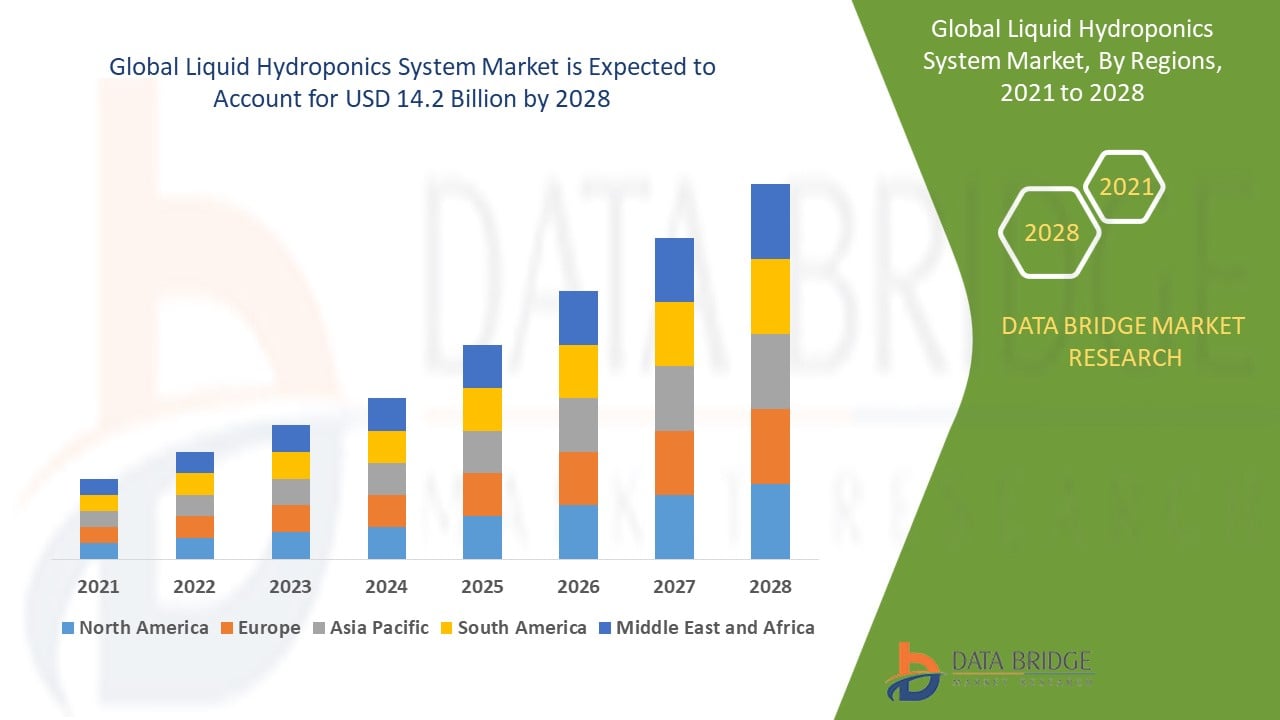
Liquid Hydroponics System Market Analysis
The liquid hydroponics system market has seen significant advancements in technology and methods, leading to enhanced crop yield and efficiency. One of the key technological advancements is the development of nutrient delivery systems, such as automated fertigation systems that precisely regulate water and nutrient concentrations, optimizing plant growth. In addition, the integration of sensors for monitoring environmental conditions, such as pH, temperature, and humidity, has enabled real-time adjustments for optimal plant health.
Another notable development is the use of artificial intelligence (AI) and machine learning (ML) to predict plant needs, optimize nutrient use, and automate the cultivation process. AI-driven algorithms can analyze vast amounts of data to improve crop management, reducing waste and improving resource efficiency.
These advancements are contributing to the growth of the liquid hydroponics market, as they reduce labor costs and resource consumption while increasing productivity. The trend toward sustainable and efficient agricultural practices, combined with urbanization and the need for space-efficient farming, is driving the market’s growth. This system is becoming an attractive solution for both large-scale farms and urban agriculture initiatives.
Liquid Hydroponics System Market Size
The global liquid hydroponics system market size was valued at USD 9.06 billion in 2024 and is projected to reach USD 22.26 billion by 2032, with a CAGR of 11.9% during the forecast period of 2025 to 2032. In addition to the insights on market scenarios such as market value, growth rate, segmentation, geographical coverage, and major players, the market reports curated by the Data Bridge Market Research also include import export analysis, production capacity overview, production consumption analysis, price trend analysis, climate change scenario, supply chain analysis, value chain analysis, raw material/consumables overview, vendor selection criteria, PESTLE Analysis, Porter Analysis, and regulatory framework.
Liquid Hydroponics System Market Trends
“Increased Adoption of Sustainable Farming Practices”
A key trend driving growth in the liquid hydroponics system market is the increased adoption of sustainable farming practices. Hydroponics, which uses nutrient-rich water to grow plants without soil, offers an eco-friendly alternative to traditional farming. With concerns over soil degradation and water scarcity, farmers and urban growers are turning to liquid hydroponic systems to reduce their environmental footprint. An instance of this is the rise of vertical farming in urban areas, such as the AeroFarms project in New Jersey, which utilizes hydroponics to grow crops efficiently in limited spaces. This trend is expected to continue as demand for sustainable, resource-efficient farming methods grows worldwide.
Report Scope and Liquid Hydroponics System Market Segmentation
|
Attributes |
Liquid Hydroponics System Key Market Insights |
|
Segments Covered |
|
|
Countries Covered |
U.S., Canada and Mexico in North America, Germany, France, U.K., Netherlands, Switzerland, Belgium, Russia, Italy, Spain, Turkey, Rest of Europe in Europe, China, Japan, India, South Korea, Singapore, Malaysia, Australia, Thailand, Indonesia, Philippines, Rest of Asia-Pacific (APAC) in the Asia-Pacific (APAC), Saudi Arabia, U.A.E, South Africa, Egypt, Israel, Rest of Middle East and Africa (MEA) as a part of Middle East and Africa (MEA), Brazil, Argentina and Rest of South America as part of South America |
|
Key Market Players |
Thanet Earth (U.K.), PEGASUS AGRITECH (U.S.), General Hydroponics (U.S.), Circle A Farms (U.S.), PONIC GREENS (Czech Republic), Terra Tech Corp (U.S.), Valoya (Finland), Village Farms (Canada), Hydrofarm LLC (U.S.), LOGIQS B.V. (Netherlands), Viscon Hydroponics (Netherlands), ROCKWOOL International A/S (Denmark), Koninklijke Philips NV (Netherlands), Hydrodynamics International (U.S.), BrightFarms (U.S.), AMHYDRO (U.S.), Growlife Inc. (U.S.), GreenTech Agro LLC (U.S.), Argus Control Systems Limited (Canada), and Hydrilla (U.S.) |
|
Market Opportunities |
|
|
Value Added Data Infosets |
In addition to the insights on market scenarios such as market value, growth rate, segmentation, geographical coverage, and major players, the market reports curated by the Data Bridge Market Research also include import export analysis, production capacity overview, production consumption analysis, price trend analysis, climate change scenario, supply chain analysis, value chain analysis, raw material/consumables overview, vendor selection criteria, PESTLE Analysis, Porter Analysis, and regulatory framework. |
Liquid Hydroponics System Market Definition
A liquid hydroponics system is a method of growing plants without soil, where nutrients are dissolved in water and delivered directly to the plant roots. The system typically uses a nutrient solution consisting of water and essential minerals to support plant growth. Plants are suspended in an inert medium, such as clay pellets or perlite, while the roots remain in direct contact with the nutrient-rich liquid. This system allows for efficient nutrient absorption, faster growth, and higher yields compared to traditional soil-based farming. It's commonly used in indoor farming, greenhouses, and urban agriculture, providing a sustainable and space-efficient growing method.
Liquid Hydroponics System Market Dynamics
Drivers
- Increased Demand for Fresh Produce
The growing demand for fresh, locally grown produce is a key driver of the liquid hydroponics system market. As consumers seek high-quality, nutritious vegetables with fewer chemicals, hydroponics presents a viable solution, especially in urban areas where traditional farming is not feasible. For instance, companies such as Bowery Farming in the U.S. have successfully utilized liquid hydroponics to grow fresh produce year-round in cities. This method reduces transportation costs and environmental impact by allowing farms to be located close to consumers. With urban populations rising and demand for fresh food increasing, liquid hydroponics provides a sustainable, efficient solution to meet consumer needs, thus driving market growth.
- Rising Interest in Organic Farming
The rising interest in organic farming is a significant driver for the liquid hydroponics market. Liquid hydroponics systems enable the cultivation of organic vegetables without the use of soil, which is often associated with the use of pesticides, herbicides, and chemical fertilizers. By controlling nutrient delivery through water, these systems allow for the production of pesticide-free and high-quality produce, meeting the growing consumer demand for organic food. This method not only supports sustainable farming practices but also ensures that the produce is free from harmful chemicals. As more consumers shift towards healthier, organic food options, liquid hydroponics is gaining momentum as a preferred farming solution.
Opportunities
- Urbanization and Space Constraints
As urbanization accelerates, space in densely populated areas becomes increasingly limited, making traditional farming methods impractical. Liquid hydroponics presents a space-efficient solution, enabling local food production in small, controlled environments such as rooftops, basements, or urban warehouses. This trend creates significant opportunities for the liquid hydroponics market, as it allows cities to meet the growing demand for fresh produce without relying on large agricultural plots. Moreover, the ability to grow crops in urban areas reduces transportation costs, lowers carbon footprints, and supports food security. This is attracting both commercial and residential sectors to invest in hydroponic systems, further driving market growth.
- Increase in Health-Conscious Consumers
The growing number of health-conscious consumers is creating significant opportunities in the liquid hydroponics system market. These consumers prioritize fresh, nutritious, and chemical-free produce, aligning perfectly with the benefits offered by hydroponic farming. Hydroponics allows for precise control over nutrient levels, ensuring optimal plant growth without the use of harmful pesticides or synthetic fertilizers. This appeal is particularly strong in urban and suburban areas where demand for locally grown, organic vegetables is rising. As awareness about the health benefits of clean, sustainable farming grows, businesses adopting hydroponic technologies can tap into this lucrative segment, meeting consumer needs while fostering market expansion.
Restraints/Challenges
- High Initial Investment
Setting up liquid hydroponic systems requires a substantial initial investment, including costs for advanced equipment, automation technologies, and specialized infrastructure. These expenses make the technology financially burdensome, particularly for small-scale farmers and growers with limited capital resources. In addition, the high costs discourage widespread adoption in emerging markets where budget constraints are prevalent. This economic barrier is further compounded by the ongoing maintenance expenses associated with running the systems efficiently. The requirement for such significant upfront financial commitment poses a major challenge, effectively hindering market expansion and adoption, especially among those who could benefit from hydroponics but cannot afford the entry costs.
- Technical Expertise Requirement
Operating liquid hydroponic systems demands significant technical knowledge, including nutrient solution preparation, water quality management, and system maintenance. Ensuring the correct balance of nutrients and monitoring pH levels require precision, which many growers lack without specialized training. In addition, troubleshooting equipment or addressing plant health issues can be daunting for those unfamiliar with hydroponic techniques. This steep learning curve discourages potential adopters, especially in regions with limited access to training or expertise. As a result, the adoption of these systems is hindered, creating a challenge for market growth. The complexity of operation thus acts as a substantial barrier to wider implementation.
This market report provides details of new recent developments, trade regulations, import-export analysis, production analysis, value chain optimization, market share, impact of domestic and localized market players, analyses opportunities in terms of emerging revenue pockets, changes in market regulations, strategic market growth analysis, market size, category market growths, application niches and dominance, product approvals, product launches, geographic expansions, technological innovations in the market. To gain more info on the market contact Data Bridge Market Research for an Analyst Brief, our team will help you take an informed market decision to achieve market growth.
Impact and Current Market Scenario of Raw Material Shortage and Shipping Delays
Data Bridge Market Research offers a high-level analysis of the market and delivers information by keeping in account the impact and current market environment of raw material shortage and shipping delays. This translates into assessing strategic possibilities, creating effective action plans, and assisting businesses in making important decisions.
Apart from the standard report, we also offer in-depth analysis of the procurement level from forecasted shipping delays, distributor mapping by region, commodity analysis, production analysis, price mapping trends, sourcing, category performance analysis, supply chain risk management solutions, advanced benchmarking, and other services for procurement and strategic support.
Expected Impact of Economic Slowdown on the Pricing and Availability of Products
When economic activity slows, industries begin to suffer. The forecasted effects of the economic downturn on the pricing and accessibility of the products are taken into account in the market insight reports and intelligence services provided by DBMR. With this, our clients can typically keep one step ahead of their competitors, project their sales and revenue, and estimate their profit and loss expenditures.
Liquid Hydroponics System Market Scope
The market is segmented on the basis of equipment, crop type and input type. The growth amongst these segments will help you analyze meagre growth segments in the industries and provide the users with a valuable market overview and market insights to help them make strategic decisions for identifying core market applications.
Equipment
- HVAC
- LED Grow Light
- Control System
- Irrigation System
- Material Handling
- Others
Crop Type
- Vegetables
- Fruits
- Flowers
- Others
Input Type
- Nutrients
- Grow Media
Liquid Hydroponics System Market Regional Analysis/Insights
The market is analysed and market size insights and trends are provided by country, equipment, crop type and input type as referenced above.
The countries covered in the market report are U.S., Canada and Mexico in North America, Germany, France, U.K., Netherlands, Switzerland, Belgium, Russia, Italy, Spain, Turkey, Rest of Europe in Europe, China, Japan, India, South Korea, Singapore, Malaysia, Australia, Thailand, Indonesia, Philippines, Rest of Asia-Pacific (APAC) in the Asia-Pacific (APAC), Saudi Arabia, U.A.E, South Africa, Egypt, Israel, Rest of Middle East and Africa (MEA) as a part of Middle East and Africa (MEA), Brazil, Argentina and Rest of South America as part of South America.
Asia-Pacific is expected to dominate the liquid hydroponics system market due to the significant adoption of advanced agricultural practices in countries such as South Korea, China, and Australia. The region's focus on sustainable farming, increasing urbanization, and the rising demand for fresh produce are driving market growth. Technological advancements and government support for hydroponic farming further enhance adoption. These factors position Asia-Pacific as a key player in the expansion of the liquid hydroponics system market.
Europe is expected to expand at a significant growth in the liquid hydroponics system market during the forecast period, driven by rapid industrialization and increasing land scarcity. The adoption of liquid hydroponics systems is growing as they offer efficient land use and sustainable farming practices. Countries such as the Netherlands and Germany are leading in technology integration, promoting urban farming and vertical agriculture to address food demand and environmental concerns effectively.
The country section of the report also provides individual market impacting factors and changes in regulation in the market domestically that impacts the current and future trends of the market. Data points such as down-stream and upstream value chain analysis, technical trends and porter's five forces analysis, case studies are some of the pointers used to forecast the market scenario for individual countries. Also, the presence and availability of global brands and their challenges faced due to large or scarce competition from local and domestic brands, impact of domestic tariffs and trade routes are considered while providing forecast analysis of the country data.
Liquid Hydroponics System Market Share
The market competitive landscape provides details by competitor. Details included are company overview, company financials, revenue generated, market potential, investment in research and development, new market initiatives, global presence, production sites and facilities, production capacities, company strengths and weaknesses, product launch, product width and breadth, application dominance. The above data points provided are only related to the companies' focus related to market.
Liquid Hydroponics System Market Leaders Operating in the Market Are:
- Thanet Earth (U.K.)
- PEGASUS AGRITECH (U.S.)
- General Hydroponics (U.S.)
- Circle A Farms (U.S.)
- PONIC GREENS (Czech Republic)
- Terra Tech Corp (U.S.)
- Valoya (Finland)
- Village Farms (Canada)
- Hydrofarm LLC (U.S.)
- LOGIQS B.V. (Netherlands)
- Viscon Hydroponics (Netherlands)
- ROCKWOOL International A/S (Denmark)
- Koninklijke Philips NV (Netherlands)
- Hydrodynamics International (U.S.)
- BrightFarms (U.S.)
- AMHYDRO (U.S.)
- Growlife Inc. (U.S.)
- GreenTech Agro LLC (U.S.)
- Argus Control Systems Limited (Canada)
- Hydrilla (U.S.)
Latest Developments in Liquid Hydroponics System Market
- In June 2022, Hydroponic Systems International (Spain) introduced the HS Evolution Pot, an innovative product that eliminates the need for packaging or plastic bags for the substrate. This sustainable approach not only enhances environmental friendliness but also allows the company to diversify its product portfolio, contributing to their overall growth and market appeal
- In June 2022, InFarm (Germany) formed a strategic partnership with IKEA to cultivate fresh, high-quality herbs within the restaurants of three IKEA stores in Germany. This collaboration enables InFarm to strengthen its market presence while promoting sustainable and locally grown produce, enhancing their brand image and meeting consumer demand for fresh, eco-friendly food options
- In January 2022, ScottsMiracle-Gro (US) acquired Luxx Lighting (US), a significant move that enhanced The Hawthorne Gardening Company’s lighting portfolio. This acquisition allows ScottsMiracle-Gro to expand its product offerings and better serve the growing demand for innovative horticultural lighting solutions. It reinforces the company's commitment to providing cutting-edge technologies to growers in the industry
SKU-
Obtenha acesso online ao relatório sobre a primeira nuvem de inteligência de mercado do mundo

- Painel interativo de análise de dados
- Painel de análise da empresa para oportunidades de elevado potencial de crescimento
- Acesso de analista de pesquisa para personalização e customização. consultas
- Análise da concorrência com painel interativo
- Últimas notícias, atualizações e atualizações Análise de tendências
- Aproveite o poder da análise de benchmark para um rastreio abrangente da concorrência
Metodologia de Investigação
A recolha de dados e a análise do ano base são feitas através de módulos de recolha de dados com amostras grandes. A etapa inclui a obtenção de informações de mercado ou dados relacionados através de diversas fontes e estratégias. Inclui examinar e planear antecipadamente todos os dados adquiridos no passado. Da mesma forma, envolve o exame de inconsistências de informação observadas em diferentes fontes de informação. Os dados de mercado são analisados e estimados utilizando modelos estatísticos e coerentes de mercado. Além disso, a análise da quota de mercado e a análise das principais tendências são os principais fatores de sucesso no relatório de mercado. Para saber mais, solicite uma chamada de analista ou abra a sua consulta.
A principal metodologia de investigação utilizada pela equipa de investigação do DBMR é a triangulação de dados que envolve a mineração de dados, a análise do impacto das variáveis de dados no mercado e a validação primária (especialista do setor). Os modelos de dados incluem grelha de posicionamento de fornecedores, análise da linha de tempo do mercado, visão geral e guia de mercado, grelha de posicionamento da empresa, análise de patentes, análise de preços, análise da quota de mercado da empresa, normas de medição, análise global versus regional e de participação dos fornecedores. Para saber mais sobre a metodologia de investigação, faça uma consulta para falar com os nossos especialistas do setor.
Personalização disponível
A Data Bridge Market Research é líder em investigação formativa avançada. Orgulhamo-nos de servir os nossos clientes novos e existentes com dados e análises que correspondem e atendem aos seus objetivos. O relatório pode ser personalizado para incluir análise de tendências de preços de marcas-alvo, compreensão do mercado para países adicionais (solicite a lista de países), dados de resultados de ensaios clínicos, revisão de literatura, mercado remodelado e análise de base de produtos . A análise de mercado dos concorrentes-alvo pode ser analisada desde análises baseadas em tecnologia até estratégias de carteira de mercado. Podemos adicionar quantos concorrentes necessitar de dados no formato e estilo de dados que procura. A nossa equipa de analistas também pode fornecer dados em tabelas dinâmicas de ficheiros Excel em bruto (livro de factos) ou pode ajudá-lo a criar apresentações a partir dos conjuntos de dados disponíveis no relatório.











