



Global Near-infrared Floorescence Imaging Systems Mercado de Segmentação, Por Tipo (Dispositivos e Reagentes), Aplicação (Imagem Pré-clínica, Cirurgias do Câncer, Cirurgias Gastrointestinais, Cirurgias Cardiovasculares, Cirurgias Plásticas/Reconstrutivas e Outras Aplicações), Usuário Final (Hospitais e Clínicas, Farmacêutica eBiotecnologiaEmpresas e Laboratórios de Pesquisa), Indicação (Cancero Cirurgias, Cirurgias Cardiovasculares, Cirurgias Gastrointestinais, Cirurgias Plásticas/Reconstrutivas e Outras)- Tendências e Previsão da Indústria para 2033
Mercado de sistemas de imagem de fluorescência infravermelho próximoVisão geral
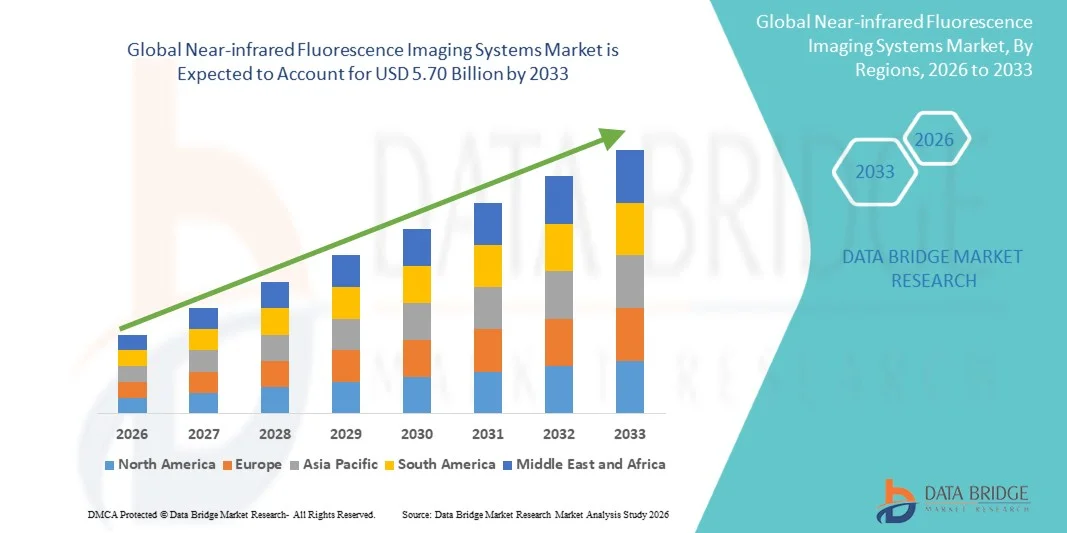
O mercado de sistemas de fluorescência por infravermelhos foi avaliado em2,51 mil milhões de dólares em 2025e é projetado para alcançarUSD 5,70 mil milhões até 2033, crescendo emCAGR de 10,80% de 2026 a 2033O mercado de sistemas de imagem de fluorescência de infravermelho próximo está experimentando crescimento consistente, impulsionado pela crescente demanda por tecnologias avançadas de visualização cirúrgica, aumentando a adoção de procedimentos minimamente invasivos e ampliando aplicações em oncologia, cirurgia cardiovascular, neurocirurgia e imagem diagnóstica.
A crescente prevalência de câncer e doenças crônicas, aliada à crescente necessidade de orientação intraoperatória precisa, está incentivando hospitais e profissionais de saúde a adotarem sistemas de imagem de fluorescência quase infravermelhos. Esses sistemas permitem a visualização em tempo real de tecidos, vasos sanguíneos e estruturas direcionadas usando agentes fluorescentes, melhorando a precisão cirúrgica e reduzindo os riscos processuais. Avanços nas tecnologias de imagem, desenvolvimento de sondas fluorescentes direcionadas e integração crescente da análise de imagem baseada em IA estão aumentando ainda mais as aplicações clínicas. Além disso, o aumento dos investimentos em saúde, a adoção crescente de cirurgias guiadas por imagens e o crescente foco na melhoria dos resultados dos pacientes estão acelerando a adoção de soluções de imagem de fluorescência quase infravermelha em mercados globais.
Principais tendências do mercado e perspectivas
- A América do Norte dominou o mercado de sistemas de imagem de fluorescência de infravermelhos próximos, com a maior parcela de receita de 39,18% em 2025, apoiada por infraestrutura de saúde avançada, alta adoção de tecnologias cirúrgicas minimamente invasivas, forte presença de empresas de dispositivos médicos e crescente demanda por soluções de imagem intraoperatórias em tempo real. A região se beneficia da crescente adoção de cirurgias guiadas pela fluorescência, do aumento dos investimentos em tecnologias avançadas de imagem e da crescente utilização de sistemas quase infravermelhos em procedimentos cirúrgicos oncológicos, cardiovasculares e reconstrutivos.
- O segmento Dispositivos dominou o mercado com uma parte de42% em 2025devido ao seu papel crítico em permitir a visualização intraoperatória em tempo real e orientação cirúrgica.
- Espera-se que a Ásia-Pacífico seja a região de crescimento mais rápido em um CAGR de 9,1% de 2026 a 2033, alimentado pela expansão da infraestrutura de saúde, aumento dos volumes cirúrgicos, aumento da adoção de tecnologias avançadas de imagem e crescente investimento em hospitais em toda a China, Índia, Japão e Coreia do Sul. A melhoria do acesso a procedimentos minimamente invasivos e o aumento das iniciativas de modernização dos cuidados de saúde apoiam ainda mais o crescimento do mercado regional.
- O segmento Indocianina Green (ICG)-Based Near-infrared Floorescence Imaging dominou a participação da receita da categoria de contraste em 2025, devido à sua ampla aplicação clínica, perfil de segurança estabelecido e uso extensivo em procedimentos como cirurgia hepática, imagem vascular, mapeamento linfático e intervenções relacionadas à oncologia.
- O segmento de aplicação de Cirurgia Oncológica foi responsável pela maior parcela de receita em 2025, impulsionada pelo aumento da adoção de imagens de fluorescência para visualização tumoral, detecção de linfonodos sentinelas e melhor avaliação da margem cirúrgica durante procedimentos oncológicos.
- Espera-se que as aplicações de Cirurgia Cardiovascular e Reconstrutiva testemunhem forte crescimento durante o período de previsão, apoiado pelo aumento da utilização de imagens de fluorescência quase infravermelha para avaliação do fluxo sanguíneo, monitoramento da perfusão tecidual e melhor tomada de decisão cirúrgica.
- Hospitais e Centros Cirúrgicos de Especialidade representam o principal segmento de usuários finais, apoiado pelo aumento dos investimentos em tecnologias avançadas de sala cirúrgica, aumento da adoção de plataformas cirúrgicas guiadas por imagens e crescente demanda por procedimentos cirúrgicos de precisão. Espera-se que a expansão da cirurgia minimamente invasiva e a integração de sistemas avançados de imagem em fluxos de trabalho cirúrgicos acelerem ainda mais a adoção do mercado globalmente.
Tamanho e previsão do mercado
- Valor de Mercado Global (2025): USD 2,51 bilhões
- Valor de mercado esperado (2033): USD 5,70 Bilhões
- Previsões CAGR (2026-2033): 10,80%
- Região líder em 2025: América do Norte
- Região de crescimento mais rápido: Ásia-Pacífico
Relatório Scope e próximo-infravermelho Fluorescence Systems MarketSegmentação
|
Atributos |
Chave de sistemas de imagem de fluorescência infravermelho próximoPerspectivas de mercado |
|
Segmentos Cobertos |
|
|
Países abrangidos |
América do Norte · U.S. · Canadá · México Europa · Alemanha · França · U.K. · Países Baixos · Suíça · Bélgica · Rússia · Itália · Espanha · Turquia · Resto da Europa Ásia- Pacífico · China · Japão · Índia · Coreia do Sul · Singapura · Malásia · Austrália · Tailândia · Indonésia · Filipinas · Resto da Ásia-Pacífico Médio Oriente e África · Arábia Saudita · U.A.E. · África do Sul · Egito · Israel · Resto do Oriente Médio e África América do Sul · Brasil · Argentina · Resto da América do Sul |
|
Jogadores do mercado chave |
• Stryker Corporation (EUA) |
|
Oportunidades de Mercado |
· Adoção crescente em cirurgias minimamente invasivas e guiadas por imagens · Expansão de Aplicações em Medicina de Oncologia e Precisão · Avanços tecnológicos em sistemas de imagem e agentes fluorescentes |
|
Informações sobre o Valor Adicionado |
Além dos insights sobre cenários de mercado, como valor de mercado, taxa de crescimento, segmentação, cobertura geográfica e principais atores, os relatórios de mercado curados pela Data Bridge Market Research também incluem análise de especialistas em profundidade, produção e capacidade em termos geográficos representadas pela empresa, layouts de redes de distribuidores e parceiros, análise detalhada e atualizada da tendência de preços e análise de déficit da cadeia de suprimentos e demanda. |
Tendências do mercado dos sistemas de imagem de fluorescência de infravermelho próximo
Tendência: Adoção crescente de imagens de fluorescência de infravermelho próximo em precisão e cirurgia guiada por imagemO mercado de sistemas de imagem por fluorescência de infravermelhos está testemunhando forte crescimento devido ao aumento da adoção de tecnologias cirúrgicas avançadas guiadas por imagens, crescente demanda por procedimentos minimamente invasivos e crescente ênfase na melhoria da acurácia cirúrgica. Hospitais e centros cirúrgicos estão cada vez mais usando sistemas de imagem por fluorescência quase-infravermelha para proporcionar visualização em tempo real de tecidos, vasos sanguíneos, estruturas linfáticas e margens tumorais durante procedimentos complexos.
O uso crescente de imagens de fluorescência à base de indocianina verde (ICG) em cirurgias oncológicas, cardiovasculares, gastrointestinais e reconstrutivas está contribuindo significativamente para a expansão do mercado. Esses sistemas permitem aos cirurgiões tomar decisões mais informadas no intraoperatório, melhorando a visualização anatômica e apoiando melhores resultados cirúrgicos. Avanços em sensores de imagem de alta resolução, plataformas de navegação guiadas por fluorescência e integração com sistemas cirúrgicos robóticos e minimamente invasivos estão fortalecendo ainda mais a adoção. Instituições de pesquisa e empresas de dispositivos médicos também estão expandindo estudos clínicos focados em cirurgia de câncer guiada por fluorescência, mapeamento linfático e avaliação de perfusão, criando novas oportunidades para tecnologias de imagem quase infravermelhos.
Sistemas de imagem de fluorescência quase infravermelhos
Motorista do Mercado Chave: Adoção crescente de Cirurgia Guiada por Imagem e Procedimentos Minimamente Invasivos
A crescente demanda por procedimentos cirúrgicos baseados em precisão é um dos principais motores do mercado de sistemas de imagem de fluorescência infravermelha. Os cirurgiões estão adotando cada vez mais tecnologias de imagem de fluorescência para melhorar a visualização durante as operações, particularmente em cirurgias oncológicas, cardiovasculares e reconstrutivas, onde a identificação precisa de tecidos e fluxo sanguíneo é fundamental. A crescente carga global de câncer vem apoiando ainda mais a adoção, pois a fluorescência por imagem auxilia na localização do tumor, detecção de linfonodo sentinela e avaliação da margem cirúrgica. Segundo estatísticas globais de câncer, milhões de novos casos de câncer são diagnosticados anualmente, aumentando a demanda por tecnologias cirúrgicas avançadas que possam melhorar os resultados do tratamento. Por exemplo, em2021, o Food and Drug Administration (FDA) dos EUA expandiu a aceitação clínica de abordagens de imagem baseadas em fluorescência envolvendo indocianina verde (ICG), apoiando o uso mais amplo de tecnologias de visualização de fluorescência em aplicações cirúrgicas.Esse apoio regulatório tem incentivado as empresas de tecnologia médica a continuar desenvolvendo plataformas avançadas de imagem quase infravermelho para salas de operação.
Além disso, os principais sistemas de saúde estão investindo em infraestrutura de sala de cirurgia digital, plataformas de cirurgia robótica e tecnologias avançadas de visualização, acelerando a adoção de sistemas de imagem de fluorescência quase infravermelhos.
Restrição/Desafio-chave: alto custo de sistemas avançados de imagem e adoção limitada no desenvolvimento de configurações de saúde
Um desafio significativo no mercado de sistemas de imagem por fluorescência de infravermelho próximo é o alto custo associado à aquisição e manutenção de plataformas de imagem avançadas. Esses sistemas requerem câmeras especializadas, equipamentos de imagem de fluorescência, infraestrutura cirúrgica compatível e profissionais médicos treinados, aumentando o investimento global necessário para hospitais. Hospitais menores e serviços de saúde em regiões sensíveis aos custos podem enfrentar dificuldades em adotar essas tecnologias devido a limitações orçamentárias e disponibilidade limitada de cirurgiões treinados com experiência em procedimentos guiados pela fluorescência. Além disso, o requisito de agentes fluorescentes compatíveis, aprovações regulatórias e atualizações tecnológicas contínuas pode aumentar os custos operacionais. Embora os benefícios clínicos das imagens de fluorescência quase infravermelha sejam bem reconhecidos, limitações de reembolso e variações na infraestrutura de saúde em todas as regiões podem retardar a adoção.
Oportunidade chave do mercado: integração da inteligência artificial e análise avançada da imagem
A integração de inteligência artificial (IA), aprendizado de máquina e tecnologias avançadas de análise de imagens apresenta uma oportunidade significativa para o mercado de sistemas de imagem de fluorescência infravermelha. Plataformas alimentadas por IA podem analisar imagens de fluorescência em tempo real, melhorar a identificação tecidual, aumentar a precisão de detecção de tumores e auxiliar cirurgiões durante procedimentos complexos. Espera-se que o desenvolvimento de plataformas cirúrgicas assistidas por IA, integração de cirurgia robótica e ferramentas automatizadas de análise de fluorescência expandam o escopo de aplicação de tecnologias de imagem de infravermelho próximo. Essas inovações podem apoiar a tomada de decisão mais rápida, melhorar a eficiência do fluxo de trabalho e permitir abordagens cirúrgicas mais personalizadas.
Por exemplo, em 2022, Stryker continuou expandindo suas tecnologias avançadas de visualização cirúrgica, incluindo soluções fluorescência habilitadas para suportar melhor visualização intraoperatória. Da mesma forma, as empresas que desenvolvem plataformas de imagem de fluorescência estão cada vez mais focadas na integração com a cirurgia minimamente invasiva e ecossistemas de salas cirúrgicas digitais. A crescente adoção de medicina de precisão, o aumento dos investimentos em pesquisas sobre câncer e a expansão de capacidades cirúrgicas avançadas em mercados emergentes, como China, Índia e Sudeste Asiático, devem criar oportunidades de crescimento significativas para sistemas de imagem de fluorescência quase infravermelhos globalmente.
Sistemas de imagem de fluorescência quase infravermelhos
O mercado Near-infrared Fluorescence Imaging Systems é segmentado com base no tipo, aplicação, usuário final e indicação.
- Por Tipo
Com base no tipo, o mercado de sistemas de imagem de fluorescência infravermelha é segmentado em dispositivos e reagentes. O segmento Dispositivos dominou o mercado com uma parte de73,42% em 2025devido ao seu papel crítico na visualização intraoperatória em tempo real e orientação cirúrgica. Hospitais e centros cirúrgicos dependem cada vez mais de dispositivos de imagem para câncer, cardiovascular e procedimentos minimamente invasivos, onde precisão e precisão são essenciais. Além disso, avanços tecnológicos contínuos na resolução de imagens, integração com sistemas cirúrgicos assistidos por robótica e crescentes investimentos em salas cirúrgicas avançadas estão fortalecendo ainda mais o domínio desse segmento em sistemas de saúde globais.
Espera-se que o segmento Reagents testemunhe o CAGR mais rápido9,1% de 2026 a 2033, impulsionado pela crescente demanda por corantes fluorescentes e contrastes utilizados em procedimentos de imagem cirúrgica. O crescimento é apoiado pela expansão das aplicações em cirurgias oncológicas, cardiovasculares e gastrointestinais, onde os reagentes aumentam a visualização dos tecidos e o fluxo sanguíneo. Além disso, o desenvolvimento contínuo de fluorophores biocompatíveis e direcionados, o aumento de ensaios clínicos para novos agentes de imagem e a adoção crescente em pesquisas pré-clínicas estão acelerando a expansão do mercado globalmente.
- Por Aplicação
Com base na aplicação, o Near-infrared Fluorescence Systems Market é segmentado em imagens pré-clínicas, cirurgias de câncer, cirurgias gastrointestinais, cirurgias cardiovasculares, cirurgias plásticas/reconstrutivas e outras aplicações. O segmento de Cirurgias do Câncer dominou o mercado com uma parcela de40,18% em 2025devido à alta prevalência global de câncer e à forte necessidade clínica de localização precisa do tumor durante a cirurgia. A fluorescência melhora significativamente a acurácia cirúrgica, permitindo a visualização em tempo real das margens tumorais, reduzindo os riscos de recorrência e melhorando os resultados dos pacientes. Além disso, a adoção crescente de procedimentos oncológicos minimamente invasivos e crescentes investimentos em tecnologias avançadas de imagem cirúrgica reforçam a dominância do segmento entre hospitais e centros de oncologia.
O segmento de imagem pré-clínica é projetado para testemunhar o CAGR mais rápido de9,3% de 2026 a 2033, impulsionado pelo aumento da procura por descoberta de drogas e aplicações de pesquisa translacional. As empresas farmacêuticas e de biotecnologia estão cada vez mais usando imagens quase infravermelhos para estudos de modelos animais, identificação de biomarcadores e avaliação terapêutica. Além disso, crescentes investimentos em I&D, expansão de pipelines de biotecnologia e adoção crescente de técnicas de imagem não invasivas em pesquisas em fase inicial estão acelerando o crescimento do segmento.
- Por Usuário Final
Com base no usuário final, o mercado de sistemas de imagem de fluorescência infravermelha está segmentado em hospitais e clínicas, empresas farmacêuticas e de biotecnologia e laboratórios de pesquisa. O segmento de Hospitais e Clínicas dominou o mercado com uma parcela de56,21% em 2025devido ao alto volume de procedimentos cirúrgicos e crescente adoção de tecnologias avançadas de imagem em salas de cirurgia. Os hospitais estão cada vez mais integrando sistemas de imagem por fluorescência para melhorar a precisão cirúrgica, reduzir complicações e melhorar a tomada de decisões em tempo real em procedimentos complexos, como oncologia e cirurgias cardiovasculares. Além disso, crescentes investimentos em infraestrutura de saúde e crescente demanda por cirurgias minimamente invasivas estão fortalecendo a dominância do segmento globalmente.
O segmento Farmacêutico e Empresas de Biotecnologia deverá testemunhar o CAGR mais rápido9,0% de 2026 a 2033, impulsionado pelo uso crescente de sistemas de imagem na descoberta de drogas, desenvolvimento de biomarcadores e pesquisa pré-clínica. Essas empresas estão investindo fortemente em tecnologias avançadas de imagem molecular para apoiar a medicina de precisão e o desenvolvimento de terapia direcionada. Além disso, a crescente atividade de ensaios clínicos, a expansão de instalações de I&D biotecnológicas e a crescente colaboração com fornecedores de tecnologia de imagem estão acelerando a adoção em todo o setor.
- Por Indicação
Com base na indicação, o mercado de sistemas de imagem de fluorescência infravermelha é segmentado em cirurgias de câncer, cirurgias cardiovasculares, cirurgias gastrointestinais, cirurgias plásticas/reconstrutivas e outras indicações. O segmento de Cirurgias do Câncer dominou o mercado com uma parcela de39.87% em 2025devido à crescente carga global de câncer e a necessidade crítica de visualização tumoral precisa durante procedimentos cirúrgicos. A fluorescência permite que os cirurgiões identifiquem os tecidos cancerosos em tempo real, melhorando a acurácia da ressecção e reduzindo as taxas de recorrência. Além disso, a adoção crescente de cirurgias minimamente invasivas guiadas por imagem e a forte validação clínica de procedimentos oncológicos baseados em fluorescência estão apoiando forte dominância de segmento.
O segmento de Cirurgias Plásticas/Reconstrutivas deverá testemunhar o CAGR mais rápido8,8% de 2026 a 2033, impulsionada pela crescente demanda por procedimentos estéticos e cirurgias de reconstrução de trauma. A fluorescência é amplamente utilizada para avaliar a perfusão tecidual e a viabilidade durante procedimentos reconstrutivos, melhorando os resultados cirúrgicos. Além disso, a crescente demanda por cirurgia estética, o crescente turismo médico e os avanços nas técnicas microcirúrgicas estão acelerando ainda mais o crescimento global dos segmentos.
Análise regional do mercado dos sistemas de fluorescência por infravermelho próximo
A América do Norte dominou o mercado de sistemas de imagem de fluorescência de infravermelhos próximos, com a maior parcela de receita de 39,18% em 2025, apoiada por infraestrutura de saúde avançada, alta adoção de tecnologias cirúrgicas minimamente invasivas, forte presença de empresas de dispositivos médicos e crescente demanda por soluções de imagem intraoperatórias em tempo real. A região se beneficia da adoção generalizada de cirurgia guiada por fluorescência, aumento dos investimentos em plataformas avançadas de imagem e crescente utilização de sistemas quase infravermelhos em procedimentos cirúrgicos oncológicos, cardiovasculares, gastrointestinais e reconstrutivos. A forte presença das principais instituições de saúde, a infraestrutura avançada da sala de operação e a adoção favorável de tecnologias cirúrgicas guiadas por imagens estão acelerando o crescimento do mercado. Aumentar o foco em melhorar a precisão cirúrgica, reduzir complicações e melhorar os resultados dos pacientes está incentivando hospitais e centros especializados a investir em sistemas de imagem por fluorescência quase infravermelhos
Sistemas de imagem de fluorescência quase infravermelhos dos EUA
AO mercado de sistemas de imagem de fluorescência de infravermelho próximo dos EUA está testemunhando forte crescimento, impulsionado pelo aumento da adoção de cirurgia guiada por fluorescência, aumento do número de procedimentos minimamente invasivos e crescente investimento em tecnologias avançadas de visualização cirúrgica. Hospitais e centros cirúrgicos em todo o país estão cada vez mais integrando plataformas de imagem quase-infravermelhas para apoiar a detecção de tumores, mapeamento linfático, avaliação vascular e tomada de decisão intraoperatória em tempo real. O ecossistema de saúde avançado do país, a forte presença de empresas de tecnologia médica e o aumento das atividades de pesquisa em oncologia e cirurgia de precisão estão apoiando a expansão do mercado. Além disso, a adoção crescente de cirurgia assistida por robótica e tecnologias de salas de operação digitais vem fortalecendo ainda mais a demanda por soluções de fluorescência de infravermelho próximo.
Europe Near-infrared Fluorescence Imaging Systems Market Insight
AEuropa Mercado dos sistemas de imagem por fluorescência por infravermelhos próximos continua a ser um importante contributo para as receitas globais, apoiado por sistemas avançados de saúde, fortes capacidades de pesquisa médica e crescente adoção de tecnologias cirúrgicas guiadas por imagens. A região está testemunhando crescente demanda por soluções de visualização baseadas em fluorescência em cirurgias oncológicas, cardiovasculares e reconstrutivas, devido à necessidade de melhora da acurácia cirúrgica e melhora dos resultados dos pacientes. O aumento dos investimentos em inovação em saúde, a expansão de procedimentos minimamente invasivos e a adoção crescente de plataformas avançadas de imagem cirúrgica apoiam o crescimento do mercado em todos os países europeus. A colaboração entre hospitais, institutos de pesquisa e empresas de dispositivos médicos está impulsionando o avanço tecnológico em aplicações de imagem quase infravermelhos.
U.K. Near-infrared Fluorescence Imaging Systems Market Insight
AO mercado de sistemas de imagem de fluorescência infravermelho próximo do Reino Unido está experimentando crescimento constante, apoiado pelo aumento da adoção de tecnologias avançadas de imagem cirúrgica, fortes atividades de pesquisa clínica e crescente foco em soluções de saúde baseadas em precisão. Hospitais e centros de pesquisa estão cada vez mais utilizando sistemas de fluorescência quase infravermelhos para aplicações como cirurgia de câncer, imagem vascular e avaliação da perfusão tecidual. A forte infraestrutura de saúde do país, o crescente investimento em inovação médica e a crescente adoção de abordagens cirúrgicas minimamente invasivas estão contribuindo para a expansão do mercado. Além disso, a crescente colaboração entre instituições acadêmicas e empresas de tecnologia em saúde vem apoiando avanços nas técnicas cirúrgicas guiadas pela fluorescência.
Germany Near-infrared Fluorescence Imaging Systems Market Insight
AAlemanha O mercado de sistemas de imagem por fluorescência de infravermelhos está se expandindo constantemente, impulsionado pela infraestrutura de saúde avançada do país, forte setor de tecnologia médica e crescente adoção de soluções de imagem cirúrgica de última geração. O foco da Alemanha na medicina de precisão, procedimentos cirúrgicos avançados e inovação em saúde está incentivando os hospitais a adotar tecnologias de imagem guiadas pela fluorescência.
Os crescentes investimentos em cuidados oncológicos, cirurgia minimamente invasiva e soluções de saúde digital estão apoiando o crescimento do mercado. A presença de instituições de investigação líderes e de fabricantes de dispositivos médicos reforça ainda mais a posição da Alemanha como um mercado europeu chave para sistemas de imagem por fluorescência quase infravermelhos.
Asia-Pacific Near-infrared Floorescence Imaging Systems Market Insight
Espera-se que a Ásia-Pacífico seja a região de crescimento mais rápido no mercado de sistemas de imagem por fluorescência de infravermelhos, registrando um CAGR de 9,1% de 2026 a 2033, alimentado pela expansão da infraestrutura de saúde, aumento dos volumes cirúrgicos, adoção crescente de tecnologias avançadas de imagem e crescentes investimentos em hospitais em toda a China, Índia, Japão e Coreia do Sul.
A região está testemunhando crescente demanda por procedimentos minimamente invasivos, melhor acesso a tecnologias cirúrgicas avançadas e modernização das unidades de saúde. O aumento da conscientização sobre a cirurgia de precisão, o aumento da prevalência de doenças crônicas e o aumento dos investimentos em tecnologia médica estão acelerando a adoção de sistemas de imagem por fluorescência quase infravermelha em hospitais e centros especializados.
Japão Near-infrared Fluorescence Imaging Systems Market Insight
AJapão O mercado de sistemas de fluorescência por infravermelhos está testemunhando crescimento consistente, apoiado pela infraestrutura de saúde avançada, crescente adoção de procedimentos cirúrgicos minimamente invasivos e forte foco na inovação da tecnologia médica. Hospitais japoneses e instituições de pesquisa estão cada vez mais adotando sistemas de imagem de fluorescência para aplicações em oncologia, cirurgia cardiovascular e reconstrutiva. O envelhecimento da população do país, a crescente demanda por cuidados cirúrgicos avançados e a forte ênfase na medicina de precisão estão impulsionando a expansão do mercado. Além disso, avanços contínuos na robótica cirúrgica, tecnologias de imagem e digitalização em saúde estão contribuindo para o aumento da adoção de sistemas de fluorescência quase infravermelhos.
China Sistemas de imagem de fluorescência quase infravermelhos
AChina O mercado de sistemas de fluorescência por infravermelhos está crescendo rapidamente, impulsionado pela ampliação da infraestrutura de saúde, aumento dos procedimentos cirúrgicos, crescente adoção de tecnologias minimamente invasivas e crescentes investimentos governamentais na modernização da saúde. Os hospitais estão cada vez mais implementando soluções avançadas de imagem para melhorar a precisão cirúrgica e melhorar os resultados dos pacientes. A crescente indústria de dispositivos médicos da China, o crescente investimento em hospitais terciários e a adoção crescente de técnicas cirúrgicas guiadas por imagens estão apoiando o crescimento do mercado. O uso crescente de imagens de fluorescência quase-infravermelha em cirurgias oncológicas, procedimentos vasculares e aplicações diagnósticas avançadas está posicionando a China como um dos mercados de crescimento mais rápido para os sistemas de imagem de fluorescência de infravermelho próximo globalmente.
Sistemas de fluorescência de infravermelho próximo Market Share
A indústria Near-infrared Floorescence Imaging Systems é liderada principalmente por empresas bem estabelecidas, incluindo:
- Moog Inc. (EUA)
- Dallara (Itália)
- Exail (França)
- IPG Automotive GmbH (Alemanha)
- aiMotive (Hungria)
- VI-grade GmbH (Alemanha)
- Cruden B.V. (Países Baixos)
- Dynisma Ltd. (UK)
- Intuição Aplicada Inc. (EUA)
- rFpro (rFpro Limited) (Inglaterra)
- Siemens AG (Alemanha)
- Dassault Systèmes SE (França)
- MTS Systems Corporation (EUA)
- CAE Inc. (Canadá)
- NVIDIA Corporation (EUA)
- AB Dynamics PLC (UK)
- Fórum8 (Japão)
- Mitsubishi Precision Co., Ltd. (Japão)
- FAAC Incorporated (EUA)
- DriveSafety (EUA)
- Simtec Simulation Technology GmbH (Alemanha)
- MB Dynamics Inc. (EUA)
- Simulação Sanlab (Índia)
- SimCraft (EUA)
- Simulações CXC (EUA)
- Simulação XPI (Reino Unido)
- Tecknotrove Simulator Systems Pvt. Ltd.
- Zhejiang Kechi Intelligent Technology Co., Ltd. (China)
- Shenzhen Zhongzhi Simulação (China)
- Hindustan Simulators (Índia)
- DriveSimSolutions (EUA)
- Tecnologias Teksim (Índia)
- iMVR Inc. (EUA)
- SimXperience (EUA)
Mais recentes desenvolvimentos no mercado de sistemas de fluorescência por infravermelhos
- Em março de 2021, a Stryker Corporation expandiu a adoção clínica de seu portfólio de imagens cirúrgicas guiadas por fluorescência, fortalecendo a integração das capacidades de imagem quase infravermelho (NIR) em seus sistemas de endoscopia e visualização cirúrgica. Esses sistemas suportam a avaliação da perfusão tecidual em tempo real e a visualização anatômica durante cirurgias minimamente invasivas, particularmente em oncologia e procedimentos gastrointestinais. A expansão reflete aumento da demanda por precisão cirúrgica guiada por imagem e melhoria da tomada de decisão intraoperatória
- Em setembro de 2021, hospitais e centros cirúrgicos em toda a América do Norte adotaram cada vez mais sistemas de imagem por fluorescência de infravermelho próximo à indocianina verde (ICG) baseados em indocianina para câncer e cirurgias vasculares, impulsionados pelo aumento da validação clínica e aceitação regulatória de técnicas cirúrgicas guiadas por fluorescência. Esses sistemas melhoraram a visualização em tempo real do fluxo sanguíneo e das estruturas linfáticas, melhorando os resultados em procedimentos oncológicos complexos e reconstrutivos.
- Em abril de 2022, a Olympus Corporation expandiu suas capacidades de imagem de fluorescência quase-infravermelha em plataformas de endoscopia cirúrgica avançada, apoiando a visualização aprimorada durante procedimentos minimamente invasivos e robóticos assistidos. O desenvolvimento focou na melhoria da precisão cirúrgica em oncologia e aplicações gastrintestinais, reforçando a posição do Olympus no mercado global de imagens cirúrgicas através da integração de imagens de fluorescência em ecossistemas cirúrgicos digitais
- Em outubro de 2022, KARL STORZ SE & Co. KG avançou seus sistemas cirúrgicos de imagem por fluorescência, integrando tecnologias de visualização quase infravermelho em plataformas cirúrgicas minimamente invasivas utilizadas em urologia, ginecologia e cirurgia geral. Este desenvolvimento apoiou a mudança mais ampla da indústria para sistemas de imagem híbridos combinando imagem padrão de luz branca com orientação de fluorescência em tempo real para uma melhor precisão intraoperatória
- Em abril de 2023, a adoção clínica de cirurgia guiada por fluorescência se expandiu globalmente com o aumento do uso de sistemas de imagem de infravermelho próximo baseados em indocianina verde (ICG) para localização tumoral, mapeamento linfonodal e avaliação de perfusão em ambiente cirúrgico em tempo real. Esse crescimento foi apoiado pelo aumento da integração da imagem por fluorescência em sistemas cirúrgicos robóticos assistidos, melhorando a precisão em oncologia e procedimentos reconstrutivos
- Em agosto de 2023, a Medtronic reforçou seu ecossistema de visualização cirúrgica, ampliando a integração de tecnologias avançadas de imagem e navegação utilizadas ao lado de procedimentos cirúrgicos guiados pela fluorescência. O desenvolvimento apoiou o aprimoramento da tomada de decisão intraoperatória em cirurgias complexas da coluna vertebral e neurológica, refletindo a maior convergência de imagens, navegação e tecnologias cirúrgicas minimamente invasivas.
- Em fevereiro de 2024, avanços na pesquisa por fluorescência quase infravermelha destacaram o papel crescente das técnicas de imagem NIR-II, melhorando a profundidade de penetração tecidual e a acurácia da visualização cirúrgica além dos limites convencionais de imagem. Essas inovações demonstraram potencial para navegação cirúrgica de última geração utilizando melhor desempenho de imagem sinal-ruído, acelerando a pesquisa acadêmica e clínica em cirurgia guiada por fluorescência
- Em julho de 2024, hospitais líderes na Europa e Ásia expandiram a adoção de sistemas de imagem cirúrgica guiados por fluorescência para oncologia e procedimentos cardiovasculares, apoiados pelo aumento dos investimentos em salas de cirurgia híbrida e infraestrutura cirúrgica digital. Essa expansão reflete a crescente demanda por tecnologias cirúrgicas de precisão e melhorias nas ferramentas de visualização intraoperatória
- Em março de 2025, o ecossistema global de imagens de fluorescência de infravermelho próximo continuou a evoluir com o desenvolvimento crescente de plataformas de imagem integradas com IA projetadas para melhorar a interpretação em tempo real de sinais de fluorescência durante a cirurgia. Esses sistemas estão sendo projetados para apoiar a diferenciação automatizada de tecidos, detecção de margens tumorais e melhoria da eficiência do fluxo de trabalho cirúrgico, marcando uma mudança para sistemas cirúrgicos inteligentes guiados por imagens.
- Em setembro de 2025, sistemas de imagem de fluorescência quase infravermelho de próxima geração, como o IC-Flow Imaging System 2.0, receberam liberação regulatória, suportando a visualização em tempo real do fluxo sanguíneo, estruturas linfáticas e perfusão tecidual usando imagens de fluorescência baseadas em indocianina verde (ICG). Esses avanços refletem a inovação contínua em sistemas de excitação baseados em LED e melhor integração de imagem digital para aplicações cirúrgicas
SKU-
Obtenha acesso online ao relatório sobre a primeira nuvem de inteligência de mercado do mundo

- Painel interativo de análise de dados
- Painel de análise da empresa para oportunidades de elevado potencial de crescimento
- Acesso de analista de pesquisa para personalização e customização. consultas
- Análise da concorrência com painel interativo
- Últimas notícias, atualizações e atualizações Análise de tendências
- Aproveite o poder da análise de benchmark para um rastreio abrangente da concorrência
Metodologia de Investigação
A recolha de dados e a análise do ano base são feitas através de módulos de recolha de dados com amostras grandes. A etapa inclui a obtenção de informações de mercado ou dados relacionados através de diversas fontes e estratégias. Inclui examinar e planear antecipadamente todos os dados adquiridos no passado. Da mesma forma, envolve o exame de inconsistências de informação observadas em diferentes fontes de informação. Os dados de mercado são analisados e estimados utilizando modelos estatísticos e coerentes de mercado. Além disso, a análise da quota de mercado e a análise das principais tendências são os principais fatores de sucesso no relatório de mercado. Para saber mais, solicite uma chamada de analista ou abra a sua consulta.
A principal metodologia de investigação utilizada pela equipa de investigação do DBMR é a triangulação de dados que envolve a mineração de dados, a análise do impacto das variáveis de dados no mercado e a validação primária (especialista do setor). Os modelos de dados incluem grelha de posicionamento de fornecedores, análise da linha de tempo do mercado, visão geral e guia de mercado, grelha de posicionamento da empresa, análise de patentes, análise de preços, análise da quota de mercado da empresa, normas de medição, análise global versus regional e de participação dos fornecedores. Para saber mais sobre a metodologia de investigação, faça uma consulta para falar com os nossos especialistas do setor.
Personalização disponível
A Data Bridge Market Research é líder em investigação formativa avançada. Orgulhamo-nos de servir os nossos clientes novos e existentes com dados e análises que correspondem e atendem aos seus objetivos. O relatório pode ser personalizado para incluir análise de tendências de preços de marcas-alvo, compreensão do mercado para países adicionais (solicite a lista de países), dados de resultados de ensaios clínicos, revisão de literatura, mercado remodelado e análise de base de produtos . A análise de mercado dos concorrentes-alvo pode ser analisada desde análises baseadas em tecnologia até estratégias de carteira de mercado. Podemos adicionar quantos concorrentes necessitar de dados no formato e estilo de dados que procura. A nossa equipa de analistas também pode fornecer dados em tabelas dinâmicas de ficheiros Excel em bruto (livro de factos) ou pode ajudá-lo a criar apresentações a partir dos conjuntos de dados disponíveis no relatório.











