



Segmentação do mercado global de bebidas de RTD não alcoólicas, por tipo de produto (bebidas fermentadas e bebidas não fermentadas), embalagem (bottles, latas/tins, Tetra Packs e outros), canal de distribuição (Supermercados/Hypermarkets, lojas de especialidades, lojas de conveniência, varejo on-line e outros)- Tendências da indústria e previsão para 2033
Qual é a dimensão e a taxa de crescimento do mercado de bebidas não alcoólicas RTD
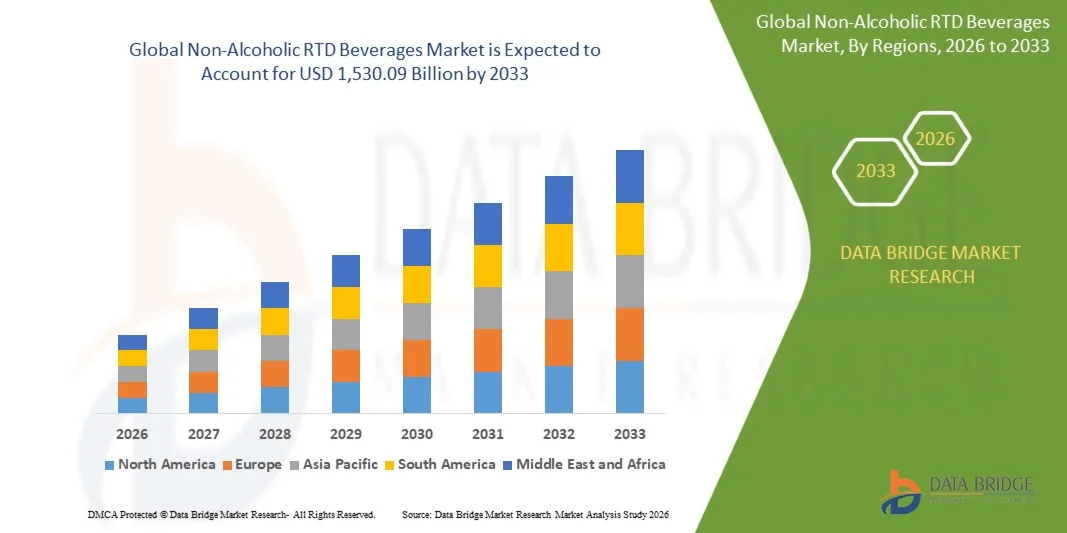
- Segundo a Data Bridge Market Research Analysis, a dimensão global do mercado de bebidas RTD não alcoólicas foi avaliada emUSD 1.005,36 mil milhões em 2025e espera-se alcançarUSD 1.530.09 mil milhões até 2033, em umaCAGR de 5,39%durante o período de previsão
- O crescimento do mercado é em grande parte alimentado pelo aumento da consciência de saúde, aumento da preferência por bebidas de baixo açúcar e funcionais, e crescente demanda por opções de bebida em curso convenientes
- Expansão das populações urbanas, estilos de vida movimentados e forte penetração dos canais modernos de varejo e comércio eletrônico estão apoiando ainda mais a expansão do mercado
Tamanho e previsão do mercado
Valor de mercado global (2025):1005,36 mil milhões de USD
Valor de mercado previsto (2033):1.530.09 mil milhões de USD
Previsões CAGR (2026-2033):5.39%
Análise de mercado das bebidas RTD não alcoólicas
- O mercado caracteriza-se pela contínua inovação de produtos em formulações funcionais, fortificadas e de bebidas naturais para atender às preferências do consumidor em evolução
- O aumento da demanda de economias emergentes, juntamente com a marca agressiva, diversificação de sabor e iniciativas de embalagem sustentáveis, está moldando dinâmica competitiva e oportunidades de crescimento a longo prazo
- O mercado de bebidas RTD não alcoólicas Ásia-Pacífico dominou o mercado de bebidas RTD não alcoólicas com a maior quota de receita em 2025, impulsionada pela urbanização rápida, mudança de hábitos alimentares e aumento dos rendimentos disponíveis em países como China, Japão e Índia
- A região da América do Norte deverá testemunhar a maior taxa de crescimento no mundobebidas RTD não alcoólicasmercado, impulsionado pelo aumento da consciencialização para a saúde, adoção crescente deBebidas à base de vegetais, e ampliação da disponibilidade através de canais de varejo e e-commerce
- O segmento de garrafas representou a maior parte de mercado em 2025, apoiada pelo seu amplo uso em sucos, bebidas RTD à base de leite e bebidas funcionais. Garrafas oferecem visibilidade do produto, resealabilidade e adequação para bebidas premium e de mercado de massa, tornando-as uma escolha preferencial para fabricantes e consumidores
Âmbito de aplicação do relatório e segmentação do mercado de bebidas não alcoólicas de IDT
|
Atributos |
Bebidas de IDT não-alcóolicas |
|
Segmentos Cobertos |
|
|
Países abrangidos |
América do Norte
Europa
Ásia- Pacífico
Médio Oriente e África
América do Sul
|
|
Jogadores do mercado chave |
|
|
Oportunidades de Mercado |
|
|
Informações sobre o Valor Adicionado |
Além dos insights sobre cenários de mercado, como valor de mercado, taxa de crescimento, segmentação, cobertura geográfica e principais atores, os relatórios de mercado curados pela Data Bridge Market Research também incluem análise de especialistas em profundidade, análise de preços, análise de compartilhamento de marca, inquérito ao consumidor, análise demografia, análise da cadeia de suprimentos, análise da cadeia de valor, visão geral da matéria-prima/consumíveis, critérios de seleção de fornecedores, Análise de PESTLE, Análise de Porter e marco regulatório. |
Qual é a tendência-chave no mercado de bebidas não alcoólicas de IDT
“Demanda crescente de bebidas orientadas para a saúde e funcionais”
• O crescente enfoque na saúde, bem-estar e estilos de vida equilibrados está moldando significativamente o mercado de bebidas RTD não alcoólicas, uma vez que os consumidores preferem cada vez mais bebidas com baixo teor de açúcar, isentas de aditivos artificiais e enriquecidas com ingredientes funcionais. As bebidas RTD não alcoólicas estão ganhando tração devido à sua conveniência, apelo refrescante e capacidade de oferecer hidratação, energia e benefícios nutricionais sem álcool, fortalecendo a adoção em ocasiões de consumo urbano e em curso
• Aumentar a sensibilização em relação aos cuidados de saúde preventivos, à aptidão física e ao consumo consciente acelerou a procura de bebidas RTD funcionais, tais como bebidas fortificadas com vitaminas, chás funcionais, kombucha e bebidas à base de plantas. Consumidores conscientes da saúde estão buscando ativamente produtos que suportem imunidade, digestão e energia, levando as marcas a investir em formulações mais limpas e misturas de ingredientes inovadores
• Tendências centradas na saúde e no rótulo limpo estão influenciando as decisões de compra, com fabricantes enfatizando ingredientes naturais, redução do teor de açúcar e rotulagem transparente. Esses fatores estão ajudando as marcas a diferenciar produtos em um mercado competitivo, construir confiança no consumidor e fortalecer a lealdade da marca, ao mesmo tempo que incentivam a adoção de embalagens sustentáveis e práticas de abastecimento responsáveis
• Por exemplo, em 2024, a PepsiCo nos EUA e a Nestlé na Suíça expandiram seus portfolios de bebidas RTD não alcoólicas com produtos funcionais e de baixo açúcar lançados em chás, sucos e bebidas de bem-estar. Esses produtos foram introduzidos em resposta à crescente demanda do consumidor por alternativas mais saudáveis, com forte distribuição por meio de varejo, lojas de conveniência e canais de comércio eletrônico, apoiando compras repetidas
• Embora a procura de bebidas RTD não alcoólicas esteja a aumentar, a expansão sustentada do mercado depende da inovação contínua dos produtos, da diversificação dos sabores e da manutenção dos perfis de sabor, juntamente com os benefícios para a saúde. Os fabricantes estão focados em melhorar a escalabilidade, eficiência da cadeia de suprimentos e otimização de custos para equilibrar a acessibilidade, funcionalidade e apelo ao consumidor
Dinâmicas de Mercado de Bebidas de IDT não Alcoólicas
Controlador
“Crescimento de Preferências para Opções de Bebidas Convenientes e Saudáveis”
• Aumentar a procura dos consumidores de bebidas convenientes e prontas para consumir, com benefícios para a saúde, é um importante motor do mercado de bebidas RTD não alcoólicas. Os fabricantes estão cada vez mais desenvolvendo produtos que combinam funcionalidade, gosto e portabilidade para atender a estilos de vida movimentados, apoiando o crescimento do mercado e diversificação de produtos
• Expandir aplicações através de hidratação diária, esportes e fitness, consumo no local de trabalho e ocasiões sociais estão influenciando o crescimento do mercado. As bebidas RTD não alcoólicas oferecem versatilidade, maior prazo de validade e facilidade de acesso, permitindo às marcas atingirem uma ampla base de consumidores em todas as faixas etárias
• As empresas de bebidas estão a promover activamente produtos de IDT não alcoólicos através de novos lançamentos, campanhas de marketing e parcerias estratégicas com retalhistas e fornecedores de serviços alimentares. Estes esforços são apoiados pelo aumento da preferência dos consumidores por alternativas mais saudáveis a refrigerantes carbonatados e bebidas açucaradas.
• Por exemplo, em 2023, a Coca-Cola nos EUA e a Suntory no Japão relataram o aumento das vendas de chás de RTD não alcoólicos e bebidas funcionais, impulsionados pelo aumento da demanda por bebidas com baixo teor calórico e bem-estar. Ambas as empresas enfatizaram benefícios à saúde e inovação de sabor para fortalecer o posicionamento do mercado
• Embora as tendências de conveniência e saúde apoiem o crescimento, a adoção mais ampla depende de preços competitivos, disponibilidade de ingredientes e processos de fabricação escaláveis. Investimentos em fornecimento sustentável, tecnologia avançada de formulação e redes de distribuição eficientes serão fundamentais para manter o crescimento e a competitividade a longo prazo
Restrição/Desafio
“Alta Competição e Sensibilidade a Preços em Mercados de Massa”
• A concorrência intensa de refrigerantes tradicionais, sucos e marcas de bebidas funcionais emergentes continua a ser um desafio fundamental para o mercado de bebidas RTD não alcoólicas. A sensibilidade dos preços entre os consumidores, em particular nas regiões em desenvolvimento, pode limitar a adopção de ofertas de IDT de prémios e funcionais
• A sensibilização dos consumidores e a aceitação de créditos funcionais variam entre as regiões, especialmente nos mercados orientados para os preços, onde o sabor e a acessibilidade continuam a ser factores de compra primários. A compreensão limitada dos benefícios adicionais para a saúde pode restringir a adoção de bebidas RTD de valor acrescentado
• Os desafios da cadeia de suprimentos também impactam o crescimento do mercado, pois o fornecimento de ingredientes naturais, aditivos funcionais e materiais de embalagem sustentáveis pode aumentar os custos de produção e logística. As flutuações dos preços das matérias-primas afectam ainda mais a rendibilidade e as estratégias de preços
• Por exemplo, em 2024, os distribuidores de bebidas no Sudeste Asiático e na América Latina relataram uma menor absorção de bebidas RTD não alcoólicas premium devido a preços mais elevados e forte concorrência dos refrigerantes convencionais. Espaço limitado de prateleira e altos custos promocionais também afetaram a visibilidade do produto e desempenho de vendas
• Superar estes desafios exigirá uma produção eficiente em termos de custos, uma forte diferenciação de marcas e iniciativas específicas de educação para os consumidores. A colaboração com retalhistas, operadores de serviços alimentares e plataformas digitais pode ajudar a desbloquear o potencial de crescimento a longo prazo no mercado global de bebidas RTD não alcoólicas, enquanto as ofertas de produtos a preços acessíveis e inovadores irão apoiar a adopção mais ampla
Âmbito do mercado das bebidas não alcoólicas de IDT
O mercado é segmentado com base no tipo de produto, embalagem e canal de distribuição
• Por tipo de produto
Com base no tipo de produto, o mercado global de bebidas RTD não alcoólicas é segmentado em bebidas fermentadas e bebidas não fermentadas. O segmento de bebidas não fermentadas teve a maior quota de receita de mercado em 2025, impulsionada pela alta preferência do consumidor por sucos prontos para beber, refrigerantes carbonatos, bebidas funcionais e bebidas energéticas que oferecem conveniência, maior vida útil e ampla variedade de sabores. Estes produtos são amplamente consumidos em todas as faixas etárias e beneficiam de forte presença de marca e ampla disponibilidade de varejo.
Espera-se que o segmento de bebidas fermentadas testemunhe a taxa de crescimento mais rápida de 2026 a 2033, impulsionada pela crescente conscientização da saúde intestinal, probióticos e nutrição funcional. O aumento da demanda por kombucha, chás fermentados e bebidas cultivadas entre consumidores conscientes da saúde está apoiando esse crescimento, particularmente nos mercados urbanos onde as bebidas premium e focadas no bem-estar estão ganhando força.
• Por Embalagem
Com base na embalagem, o mercado é segmentado em garrafas, latas/tins, embalagens de tetra, entre outros. O segmento de garrafas representou a maior parte de mercado em 2025, apoiada pelo seu amplo uso em sucos, bebidas RTD à base de leite e bebidas funcionais. Garrafas oferecem visibilidade do produto, ressealabilidade e adequação para bebidas premium e de mercado de massa, tornando-as uma escolha preferencial para fabricantes e consumidores.
Espera-se que o segmento de latas/tins testemunhe o crescimento mais rápido de 2026 para 2033, impulsionado pela crescente demanda por bebidas RTD carbonatadas, bebidas energéticas e soluções de embalagem sustentáveis. Natureza leve, reciclabilidade e vida útil melhorada estão incentivando as marcas a adotar cada vez mais latas, especialmente para o consumo em curso
• Por Canal de Distribuição
Com base no canal de distribuição, o mercado de bebidas RTD não alcoólicas é segmentado em supermercados/hipermercados, lojas especializadas, lojas de conveniência, varejo online, entre outros. Supermercados e hipermercados dominaram o mercado em 2025 devido à sua ampla variedade de produtos, preços competitivos e fortes atividades promocionais que atraem alto nível de consumo.
Espera-se que o segmento de varejo online testemunhe o crescimento mais rápido de 2026 para 2033, impulsionado pelo aumento da penetração no e-commerce, conveniência de entrega de porta e pela crescente preferência por compras de supermercado digital. Os modelos de assinatura, o agrupamento de produtos e a disponibilidade de nichos e bebidas de IDT premium estão a acelerar ainda mais a adopção de canais em linha.
Análise regional do mercado das bebidas não alcoólicas de IDT
- O mercado de bebidas RTD não alcoólicas Ásia-Pacífico dominou o mercado de bebidas RTD não alcoólicas com a maior quota de receita em 2025, impulsionada pela urbanização rápida, mudança de hábitos alimentares e aumento dos rendimentos disponíveis em países como China, Japão e Índia
- Aumentar a adoção de bebidas de conveniência de estilo ocidental, apoiadas por uma população jovem em crescimento e expansão da presença de varejo, está impulsionando o crescimento do mercado
- Além disso, inovações locais de sabor e acessibilidade estão aumentando a penetração do produto em áreas urbanas e semi-urbanas
Japão Informação sobre o mercado de bebidas não alcoólicas
Espera-se que o mercado japonês de bebidas RTD não alcoólicas testemunhe a taxa de crescimento mais rápida de 2026 a 2033, devido à forte demanda do país por bebidas convenientes, funcionais e de qualidade premium. Os consumidores dão grande importância aos benefícios para a saúde, à procura de chás fortificados, bebidas funcionais e opções de RTD com baixas calorias. A integração de sabores tradicionais com formulações modernas, juntamente com a avançada infraestrutura de venda e varejo do Japão, continua a apoiar o crescimento do mercado.
China Informação sobre o mercado de bebidas não alcoólicas de IDT
O mercado chinês de bebidas RTD não alcoólicas representou a maior quota de receita de mercado na Ásia-Pacífico em 2025, atribuída à urbanização rápida, a uma crescente população de classe média, e ao aumento da sensibilização para a saúde. A China representa um dos mercados de maior crescimento para bebidas prontas para beber, com forte demanda por bebidas funcionais, chás de ervas e produtos de RTD baseados em suco. A expansão do varejo moderno, marcas nacionais fortes e o foco do governo em hábitos de consumo saudáveis são fatores fundamentais para o mercado na China.
América do Norte Informação sobre o mercado de bebidas não alcoólicas RTD
O mercado de bebidas RTD não alcoólicas da América do Norte é esperado para testemunhar a taxa de crescimento mais rápida de 2026 para 2033, impulsionado pelo aumento da consciência de saúde, aumento da demanda por bebidas convenientes em curso, e uma mudança crescente longe de bebidas gaseificadas açucaradas. Os consumidores da região valorizam os benefícios funcionais, ingredientes de rótulo limpo e diversos perfis de sabor oferecidos por bebidas RTD não alcoólicas, como chás gelados, sucos funcionais, kombucha e bebidas à base de plantas. Esta forte adopção é ainda apoiada por elevados rendimentos disponíveis, uma rede de retalho bem estabelecida e inovação contínua dos produtos, posicionando as bebidas RTD não alcoólicas como uma escolha preferencial entre o consumo diário e os segmentos orientados para o estilo de vida
U.S. Não-Alcoholic RTD Beverages Market Insight
Espera-se que o mercado de bebidas RTD não alcoólicas dos EUA testemunhe a taxa de crescimento mais rápida de 2026 a 2033, alimentada por forte preferência do consumidor por bebidas focadas na saúde e funcionais. Aumentar a demanda por bebidas de baixo açúcar, orgânicas e fortificadas está incentivando os fabricantes a expandir seus portfólios. A crescente popularidade de cafés prontos para beber, chás e bebidas funcionais, combinada com forte penetração de lojas de conveniência e canais de comércio eletrônico, continua a impulsionar o crescimento do mercado. Além disso, a adopção crescente de estilos de vida activos e orientados para o bem-estar está a acelerar a procura de ofertas inovadoras de bebidas RTD.
Informação sobre o mercado das bebidas não alcoólicas
Espera-se que o mercado europeu de bebidas RTD não alcoólicas testemunhe a taxa de crescimento mais rápida de 2026 para 2033, impulsionada principalmente pelo aumento da sensibilização para a saúde e o bem-estar e pela tendência crescente do consumo consciente. Os consumidores de toda a região estão cada vez mais optando por opções de bebidas naturais, baixas calorias e funcionais. A procura de bebidas de IDT premium e embaladas de forma sustentável está a expandir-se, com um forte crescimento observado nos canais de consumo retalhista, alimentar e em curso.
U.K. Informação sobre o mercado de bebidas não alcoólicas de IDT
Espera-se que o mercado de bebidas RTD não alcoólicas do Reino Unido testemunhe a taxa de crescimento mais rápida entre 2026 e 2033, apoiada pela crescente procura de alternativas mais saudáveis aos refrigerantes tradicionais. O crescente interesse em bebidas à base de plantas, orgânicas e funcionais está moldando o comportamento de compra. Espera-se que a forte infraestrutura de varejo do país, aliada ao aumento da inovação em combinações de sabores e fortificação nutricional, sustente a expansão do mercado.
Alemanha Inquérito sobre o mercado de bebidas não alcoólicas de IDT
Espera-se que o mercado alemão de bebidas RTD não alcoólicas testemunhe a taxa de crescimento mais rápida entre 2026 e 2033, impulsionada pelo aumento da preferência por bebidas naturais e funcionais e pela forte concentração dos consumidores na qualidade e na sustentabilidade. A procura de bebidas RTD não alcoólicas, tais como águas funcionais, chás gelados e bebidas à base de sumo, está a aumentar constantemente. A ênfase da Alemanha nas embalagens ecológicas e nas formulações de rótulo limpo está a encorajar os fabricantes a introduzirem produtos premium e orientados para a saúde.
Quota de mercado das bebidas não alcoólicas de IDT
A indústria não-alcoólica de IDT Beverages é liderada principalmente por empresas bem estabelecidas, incluindo:
- PepsiCo, Inc.(EUA)
- A Companhia Coca-Cola(EUA)
- Nestlé S.A. (Suíça)
- Danone S.A. (França)
- Red Bull GmbH(Áustria)
- Suntory Holdings Limited(Japão)
- Keurig Dr Pepper Inc. (EUA)
- Asahi Group Holdings, Ltd. (Japão)
- Reed’s, Inc. (EUA)
- Monster Beverage Corp. (EUA)
Mais recentes desenvolvimentos no mercado global de bebidas não alcoólicas de IDT
- Em fevereiro de 2024, a Coca-Cola Company lançou a Coca-Cola Spiced na América do Norte, marcando uma inovação de produtos com o objetivo de expandir seu portfólio de cola saborosa. O lançamento inclui variantes de açúcar regular e zero para atender às preferências do consumidor em evolução para o sabor e redução da ingestão de açúcar. Este desenvolvimento foi concebido para atrair mais jovens demográficos e consumidores que procuram sabor. Fortalece o posicionamento competitivo da Coca-Cola no segmento de bebidas gaseificadas premium e aromatizadas. Prevê-se que o lançamento intensifique a concorrência e estimule a inovação orientada para o sabor no mercado de IDT
- Em janeiro de 2023, a PepsiCo, Inc. introduziu a nova e melhorada Pepsi Zero, com adoçantes reformulados e um perfil de sabor mais refrescante. A atualização do produto aborda a crescente demanda do consumidor por bebidas de açúcar zero sem comprometer o sabor. Este lançamento reflete o foco da PepsiCo em se manter relevante em meio a mudanças de tendências de saúde e bem-estar. Melhora o portfólio de bebidas com baixas calorias da empresa e apoia a lealdade da marca. O desenvolvimento contribui para uma maior concorrência no segmento de bebidas gaseificadas sem açúcar
- Em julho de 2025, a PepsiCo, Inc. lançou a Pepsi Prebiótico Cola, a primeira bebida prebiótica na categoria tradicional de cola. Esta inovação combina sabor cola clássico com benefícios funcionais de saúde intestinal. O lançamento tem como alvo consumidores conscientes da saúde que buscam maior funcionalidade nas bebidas diárias. Representa a primeira grande inovação da categoria cola em quase duas décadas. Espera-se que o produto crie um novo subsegmento de cola funcional e remodele a dinâmica do mercado
- Em maio de 2025, Milo’s Tea Company introduziu nova limonada refrigerada e bebidas de chá feitas com ingredientes naturais e livres de aditivos artificiais. O lançamento amplia as ofertas de produtos de marca limpa e sem cafeína da empresa para o consumo de verão. Visa reforçar a presença de Milo no segmento premium de IDT refrigerado. Os novos sabores atendem à crescente demanda do consumidor por bebidas naturais e minimamente processadas. Este desenvolvimento reforça a concorrência no mercado das bebidas RTD centradas na saúde
- Em janeiro de 2025, True Citrus expandiu seu portfólio True Lemon com novas variantes de limonada com sabores cítricos e exóticos misturados. A expansão se concentra em oferecer variedade, mantendo o posicionamento de ingredientes naturais. Apoia a estratégia da marca para crescer dentro do espaço de bebidas RTD limpo e conveniente. As novas variantes apelam para a experimentação de sabor e consumidores orientados para o bem-estar. Este movimento reforça a inovação e a diferenciação no segmento de IDT à base de citrinos
SKU-
Obtenha acesso online ao relatório sobre a primeira nuvem de inteligência de mercado do mundo

- Painel interativo de análise de dados
- Painel de análise da empresa para oportunidades de elevado potencial de crescimento
- Acesso de analista de pesquisa para personalização e customização. consultas
- Análise da concorrência com painel interativo
- Últimas notícias, atualizações e atualizações Análise de tendências
- Aproveite o poder da análise de benchmark para um rastreio abrangente da concorrência
Metodologia de Investigação
A recolha de dados e a análise do ano base são feitas através de módulos de recolha de dados com amostras grandes. A etapa inclui a obtenção de informações de mercado ou dados relacionados através de diversas fontes e estratégias. Inclui examinar e planear antecipadamente todos os dados adquiridos no passado. Da mesma forma, envolve o exame de inconsistências de informação observadas em diferentes fontes de informação. Os dados de mercado são analisados e estimados utilizando modelos estatísticos e coerentes de mercado. Além disso, a análise da quota de mercado e a análise das principais tendências são os principais fatores de sucesso no relatório de mercado. Para saber mais, solicite uma chamada de analista ou abra a sua consulta.
A principal metodologia de investigação utilizada pela equipa de investigação do DBMR é a triangulação de dados que envolve a mineração de dados, a análise do impacto das variáveis de dados no mercado e a validação primária (especialista do setor). Os modelos de dados incluem grelha de posicionamento de fornecedores, análise da linha de tempo do mercado, visão geral e guia de mercado, grelha de posicionamento da empresa, análise de patentes, análise de preços, análise da quota de mercado da empresa, normas de medição, análise global versus regional e de participação dos fornecedores. Para saber mais sobre a metodologia de investigação, faça uma consulta para falar com os nossos especialistas do setor.
Personalização disponível
A Data Bridge Market Research é líder em investigação formativa avançada. Orgulhamo-nos de servir os nossos clientes novos e existentes com dados e análises que correspondem e atendem aos seus objetivos. O relatório pode ser personalizado para incluir análise de tendências de preços de marcas-alvo, compreensão do mercado para países adicionais (solicite a lista de países), dados de resultados de ensaios clínicos, revisão de literatura, mercado remodelado e análise de base de produtos . A análise de mercado dos concorrentes-alvo pode ser analisada desde análises baseadas em tecnologia até estratégias de carteira de mercado. Podemos adicionar quantos concorrentes necessitar de dados no formato e estilo de dados que procura. A nossa equipa de analistas também pode fornecer dados em tabelas dinâmicas de ficheiros Excel em bruto (livro de factos) ou pode ajudá-lo a criar apresentações a partir dos conjuntos de dados disponíveis no relatório.











