



Mercado Global de Sistemas Pré-fabricados não Residenciais de Construção, por Tipo (Sistemas de Construção Metal, Sistemas Modulares de Construção, Sistemas de Concreto Pré-Construídos Panelizados, e Outros), Aplicação (Infraestrutura, Comercial e Industrial/Institucional), Dimensão (Sistema de Esqueleto, Sistema de Painel, Sistema Celular e Sistema Combinado) - Tendências e Previsão da Indústria para 2033
Mercado de sistemas de construção pré-fabricados não residenciaisVisão geral
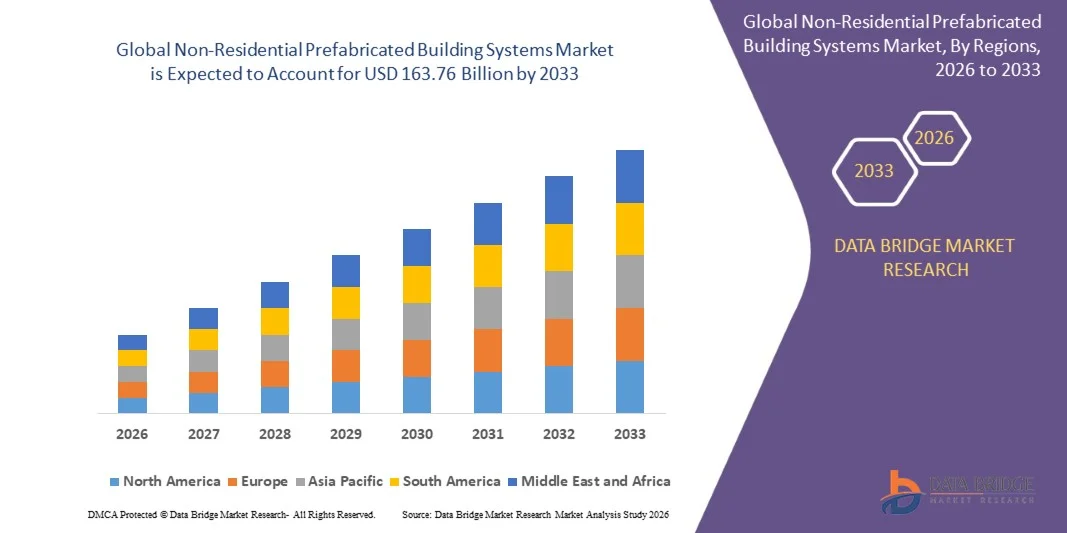
O mercado de sistemas de construção pré-fabricados não residenciais foi avaliado emUSD 101,20 Bilhões em 2025e é projetado para alcançarUSD 163.76 Bilhões até 2033, crescendo emCAGR de 6,2% de 2026 a 2033O mercado vive um crescimento consistente, impulsionado pela crescente demanda por métodos de construção mais rápidos, pela adoção crescente de técnicas de fabricação offsite e pelo crescente investimento no desenvolvimento de infraestrutura comercial, industrial e institucional. A expansão da urbanização, a escassez de mão-de-obra na construção tradicional e a necessidade de soluções de construção eficientes e economizadoras de tempo estão acelerando ainda mais o crescimento do mercado em regiões globais.
O crescente enfoque global nas práticas de construção sustentável e na redução do carbono está a reforçar ainda mais a adopção de sistemas de construção pré-fabricados em aplicações não residenciais. Governos e desenvolvedores privados estão promovendo cada vez mais a construção modular e panelizada para reduzir o desperdício de material, melhorar a eficiência energética e encurtar prazos de entrega do projeto. Avanços em tecnologias de design digital, modelagem de informações de construção (BIM) e processos de fabricação automatizados estão aumentando ainda mais a precisão e escalabilidade, apoiando uma maior integração de sistemas pré-fabricados em projetos de infraestrutura modernos.
Principais tendências do mercado e perspectivas
- A Ásia-Pacífico dominou o Mercado de Sistemas Pré-fabricados Não Residenciais com a maior parcela de receita de 49,1% em 2025, apoiada por urbanização rápida, desenvolvimento de infraestrutura em larga escala e forte demanda por soluções de construção eficientes em termos de custos entre os setores comercial e industrial
- O segmento comercial liderou o mercado com uma participação de 46,2% em 2025, impulsionado pelo aumento da construção de centros comerciais, complexos de escritórios, instalações de hospitalidade e desenvolvimentos de uso misto
- A América do Norte deve ser a região de crescimento mais rápido em um CAGR de 6,7% de 2026 a 2033, alimentado pelo aumento da adoção de construção modular em projetos comerciais, industriais e institucionais
- Sistema combinado é o tipo de dimensão de crescimento mais rápido, projetado para registrar um CAGR de 12,1% de 2026 a 2033, apoiado pelo aumento da demanda por soluções de construção versáteis que combinam as vantagens de múltiplas técnicas de pré-fabricação
- O segmento de sistemas de construção de metais dominou a categoria tipo com uma participação de 43,8% de receita em 2025, liderada pela adoção generalizada em projetos de construção comercial e industrial exigindo alta resistência estrutural e prazos de projeto mais curtos
- O sistema esquelético representou 40,7% do mercado em 2025, preferido pela sua ampla utilização em estruturas comerciais e industriais, exigindo elevada capacidade de carga e flexibilidade arquitectónica
- O segmento de infraestrutura é a categoria de aplicação de maior crescimento, com um CAGR de 11,5% de 2026 a 2033, impulsionado pelo aumento dos gastos governamentais em projetos de transporte, serviços públicos e infraestrutura social
Tamanho e previsão do mercado
- Valor global de mercado (2025): 101,20 bilhões de dólares
- Valor de Mercado esperado (2033): USD 163,76 Bilhões
- Previsões CAGR (2026-2033): 6,2%
- Região líder em 2025: Ásia-Pacífico
- Região de crescimento mais rápido: América do Norte
Alcance do relatório e mercado de sistemas de construção pré-fabricados não residenciaisSegmentação
|
Atributos |
Chave de sistemas de construção pré-fabricados não residenciaisPerspectivas de mercado |
|
Segmentos Cobertos |
|
|
Países abrangidos |
América do Norte · U.S. · Canadá · México Europa · Alemanha · França · U.K. · Países Baixos · Suíça · Bélgica · Rússia · Itália · Espanha · Turquia · Resto da Europa Ásia- Pacífico · China · Japão · Índia · Coreia do Sul · Singapura · Malásia · Austrália · Tailândia · Indonésia · Filipinas · Resto da Ásia-Pacífico Médio Oriente e África · Arábia Saudita · U.A.E. · África do Sul · Egito · Israel · Resto do Oriente Médio e África América do Sul · Brasil · Argentina · Resto da América do Sul |
|
Jogadores do mercado chave |
· Abtech Inc. (EUA) ·Argeco Scotsman(EUA) ·Edifícios Astron(Luxemburgo) ·Fabricação de mordomos(EUA) ·Sistemas de construção Kirby(EUA) · Lindal Cedar Homes Inc. (EUA) · Engenharia Modular (EUA) · Niko Prefab Building Systems Pvt Ltd (Índia) · Par-Kut International (EUA) ·Habitação do Mar Vermelho(Arábia Saudita) · Schulte Building Systems Inc. (EUA) · Alan Pré-Fab Building Corp (EUA) · Allied Modular Building Systems (EUA) · Brytex Building Systems Inc. (Canadá) · muve GmbH (Alemanha) · Flexator AB (Suécia) · LESTENET (França) · Madison Industries, Inc. (EUA) · Nucor Building Systems (EUA) · United Partition Systems Inc. (EUA) |
|
Oportunidades de Mercado |
· Expansão de Projetos de Cidade Inteligente e Infraestrutura Urbana · Crescente demanda por infraestrutura industrial e logística · Aumentar a adoção em serviços de saúde e de educação |
|
Informações sobre o Valor Adicionado |
Além dos insights sobre cenários de mercado, como valor de mercado, taxa de crescimento, segmentação, cobertura geográfica e principais atores, os relatórios de mercado curados pela Data Bridge Market Research também incluem análise de especialistas em profundidade, análise de preços, análise de compartilhamento de marca, inquérito ao consumidor, análise demografia, análise da cadeia de suprimentos, análise da cadeia de valor, visão geral da matéria-prima/consumíveis, critérios de seleção de fornecedores, Análise de PESTLE, Análise de Porter e marco regulatório. |
Tendências de mercado de sistemas de construção pré-fabricados não residenciais
Tendência: Adoção crescente de métodos de construção modular e offsite
Sistemas Pré-fabricados Não Residenciais estão testemunhando uma forte mudança para a construção modular e offsite como os desenvolvedores buscam entrega mais rápida do projeto, redução da dependência de trabalho e melhoria da qualidade da construção. Essa tendência está ganhando impulso em projetos comerciais e industriais onde o desenvolvimento de infraestrutura sensível ao tempo é crítico, como centros logísticos, complexos de escritórios e instalações institucionais. O uso crescente de componentes pré-fabricados padronizados e ferramentas de design digital, como a modelagem de informações de construção (BIM) está aumentando ainda mais a eficiência e precisão na construção não residencial.
Empresas como a Skanska AB promoveram ativamente métodos de construção offsite em grandes desenvolvimentos comerciais na Europa, incluindo projetos de escritórios modulares e infraestrutura que demonstram prazos de construção reduzidos e melhor desempenho em sustentabilidade.
Dinâmica de Mercado de Sistemas Pré-fabricados Não Residenciais
Motorista do mercado chave: aumento da demanda por construção mais rápida e eficiente em termos de custos
A crescente necessidade de rápida entrega de construção e otimização de custos está impulsionando significativamente a demanda por sistemas de construção pré-fabricados não residenciais em mercados globais. A industrialização de processos de construção permite a fabricação paralela fora do local e montagem no local, reduzindo os atrasos do projeto e os custos trabalhistas. O crescente desenvolvimento das infra-estruturas urbanas e a expansão dos imóveis comerciais estão a acelerar ainda mais a adopção de sistemas pré-fabricados em projectos sensíveis ao tempo.
Empresas como o Grupo Lendlease adotaram amplamente abordagens de construção modulares em desenvolvimentos comerciais e de uso misto, demonstrando reduções mensuráveis nos prazos de construção e melhoria da eficiência de custos em projetos de infraestrutura de grande escala.
Restrição/Desafio de Chave: Altas Restrições de Padronização de Investimento e Design Inicial
Um grande desafio no mercado de Sistemas Pré-fabricados Não Residenciais é o alto capital inicial necessário para estabelecer instalações de fabricação, sistemas de automação e logística de transporte para componentes pré-fabricados. Os requisitos limitados de flexibilidade e padronização do projeto também podem restringir a personalização em projetos arquitetônicos complexos, retardando a adoção em certos desenvolvimentos comerciais premium. Os desafios de integração com os métodos tradicionais de construção aumentam ainda mais a complexidade do projeto e os custos de planejamento.
Por exemplo, projectos modulares de grande escala executados por empresas como a Bouygues Construction in Europe salientam o investimento inicial significativo e a coordenação da engenharia necessária para alinhar módulos pré-fabricados com requisitos arquitectónicos e regulamentares específicos do local.
Oportunidade chave do mercado: crescente demanda por infraestrutura industrial e logística
Expandir a demanda global por armazéns, centros de distribuição, fábricas e centros logísticos está criando fortes oportunidades de crescimento para sistemas de construção pré-fabricados não residenciais. O aumento do comércio electrónico, da reestruturação global da cadeia de abastecimento e da expansão industrial está a aumentar a necessidade de soluções de infra-estruturas rapidamente implantáveis e escaláveis. Sistemas pré-fabricados oferecem vantagens em velocidade, eficiência de custo e escalabilidade, tornando-os altamente adequados para aplicações industriais e logísticas.
Empresas como a Nucor Building Systems têm fornecido soluções pré-fabricadas à base de aço para armazéns industriais e instalações logísticas em toda a América do Norte, apoiando a expansão rápida da infraestrutura impulsionada pelo comércio eletrônico e crescimento da fabricação.
Sistemas de construção pré-fabricados não residenciais
O mercado de sistemas de construção pré-fabricados não residenciais é segmentado com base no tipo, aplicação e dimensão.
- Por Tipo
Com base no tipo, o mercado de sistemas de construção pré-fabricados não residenciais é segmentado em sistemas de construção de metais, sistemas de construção modulares, sistemas de concreto pré-fabricados painéis e outros. O segmento Metal Building Systems dominou o mercado com a maior parcela de 43,8% em 2025, impulsionado pela adoção generalizada em projetos de construção comercial e industrial que exigem alta resistência estrutural e prazos de projeto mais curtos. Estes sistemas oferecem durabilidade superior, flexibilidade de projeto e requisitos de manutenção mais baixos, tornando-os adequados para armazéns, fábricas e instalações de varejo. A crescente demanda por métodos de construção sustentáveis e econômicos está apoiando a expansão do segmento. Capacidades rápidas de instalação ajudam a reduzir os custos de trabalho e minimizar os atrasos do projeto. O aumento dos investimentos em logística e infraestrutura de fabricação está fortalecendo ainda mais a posição de liderança do segmento.
O segmento Modular Building Systems é projetado para registrar o crescimento mais rápido em um CAGR de 10,8% de 2026 a 2033, impulsionado pela crescente preferência por técnicas de construção offsite que aumentam a produtividade e reduzem o desperdício de material. As soluções modulares proporcionam uma conclusão mais rápida do projeto e um melhor controle de qualidade em comparação com os métodos convencionais de construção. O aumento da adoção em saúde, educação e infraestrutura de escritório está criando forte demanda por estruturas modulares. Avanços em tecnologias de design digital e processos de fabricação automatizados estão melhorando as capacidades de personalização. A ênfase crescente nas normas de construção ecológica e nas práticas de construção eficientes em termos energéticos está a acelerar ainda mais o crescimento dos segmentos nas economias desenvolvidas e emergentes.
- Por Aplicação
Com base na aplicação, o mercado de sistemas de construção pré-fabricados não residenciais é segmentado em infraestrutura, comercial e industrial/institucional. O segmento comercial dominou o mercado com a maior parcela de 46,2% em 2025, impulsionada pelo aumento da construção de centros comerciais, complexos de escritórios, instalações de hospitalidade e desenvolvimentos de uso misto. A urbanização crescente e a expansão das indústrias de serviços estão gerando forte demanda por espaços comerciais modernos. Sistemas pré-fabricados permitem horários de construção mais rápidos e menores custos gerais do projeto, apoiando a adoção mais ampla. Os desenvolvedores estão cada vez mais focados em soluções de construção sustentáveis para atender aos regulamentos ambientais e melhorar a eficiência operacional. Os investimentos crescentes em edifícios comerciais inteligentes contribuem ainda mais para o domínio dos segmentos.
O segmento Infraestrutura é projetado para registrar o crescimento mais rápido em um CAGR de 11,5% de 2026 a 2033, impulsionado pelo aumento dos gastos governamentais em projetos de transporte, serviços públicos e infraestrutura social. Sistemas de construção pré-fabricados estão sendo amplamente adotados para acelerar a execução do projeto e melhorar a qualidade da construção. Investimentos crescentes em aeroportos, estações ferroviárias, serviços de saúde e instituições educacionais estão criando oportunidades de crescimento favoráveis. Os avanços tecnológicos nas técnicas de pré-fabricação estão aumentando o desempenho estrutural e reduzindo os resíduos de construção. A crescente ênfase no desenvolvimento de infra-estruturas resilientes e sustentáveis está a apoiar a rápida expansão de segmentos em todo o mundo.
- Por Dimensão
Com base na dimensão, o mercado de sistemas de construção pré-fabricados não residenciais é segmentado em Sistema Esqueleto, Sistema de Painel, Sistema Celular e Sistema Combinado. O segmento do Sistema Esqueleto dominou o mercado com a maior parcela de 40,7% em 2025, apoiada pelo seu amplo uso em estruturas comerciais e industriais, exigindo alta capacidade de carga e flexibilidade arquitetônica. Estes sistemas permitem a integração eficiente de diferentes componentes de construção, garantindo simultaneamente a estabilidade estrutural. A sua adaptabilidade a grandes projectos torna-os adequados para escritórios, instalações de fabrico e edifícios institucionais. A crescente demanda por soluções de construção durável e escalável está fortalecendo o crescimento do segmento. Aumentar a preferência por métodos de montagem mais rápidos está reforçando ainda mais a posição de liderança do segmento.
O segmento Sistema Combinado é projetado para registrar o crescimento mais rápido em um CAGR de 12,1% de 2026 a 2033, impulsionado pelo aumento da demanda por soluções de construção versáteis que combinam as vantagens de múltiplas técnicas de pré-fabricação. Sistemas combinados oferecem maior flexibilidade de projeto, maior eficiência energética e tempo de construção reduzido. A complexidade crescente dos projectos de construção não residenciais incentiva a utilização de abordagens estruturais integradas. Avanços em componentes projetados e tecnologias de modelagem digital estão melhorando a precisão e o desempenho do projeto. A crescente concentração nos métodos de construção sustentáveis e rentáveis está a acelerar significativamente a adopção em todos os mercados mundiais.
Análise regional do mercado de sistemas de construção pré-fabricados não residenciais
A Ásia-Pacífico dominou o mercado de sistemas de construção pré-fabricados não residenciais e representou a maior parcela de receita de 49,1% em 2025, apoiada pela urbanização rápida, desenvolvimento de infraestrutura em larga escala e forte demanda por soluções de construção eficientes em termos de custos entre os setores comercial e industrial. A região beneficia de ampla capacidade de fabricação, disponibilidade de mão-de-obra de baixo custo e forte adoção de tecnologias de construção fora do local em projetos residenciais e não residenciais. Os investimentos crescentes em cidades inteligentes, centros de transporte e parques industriais estão acelerando a expansão do mercado. Aumentar a preferência pela entrega mais rápida de projetos e por métodos de construção sustentáveis reforça ainda mais a dominância regional.
China Não Residential Pré-fabricados Sistemas de Construção Insight
A China teve a maior participação no mercado de Sistemas Pré-fabricados Pré-Fabricados Ásia-Pacíficos em 2025, impulsionado pela expansão maciça da infraestrutura, forte apoio do governo para construção modular e alta adoção de técnicas de construção industrializadas. O ecossistema produtivo avançado do país permite a produção em larga escala de componentes pré-fabricados para projetos comerciais, industriais e institucionais. O rápido crescimento de centros logísticos, complexos comerciais urbanos e infraestrutura pública está aumentando ainda mais a demanda. Além disso, a crescente ênfase nos padrões de construção verde e na eficiência da construção está reforçando a posição de liderança da China no mercado global.
Índia Não Residencial Pré-fabricados Sistemas de Construção Insight
A Índia está presenciando o crescimento mais rápido na região Ásia-Pacífico, impulsionado pelo aumento dos investimentos em infraestrutura, expansão do desenvolvimento imobiliário comercial e adoção crescente de modernas tecnologias de construção. A crescente demanda por soluções de construção acessíveis e eficientes no tempo em parques industriais, instituições de ensino e serviços de saúde está apoiando a expansão do mercado. Iniciativas governamentais como cidades inteligentes e projetos de corredores industriais estão acelerando ainda mais a adoção de pré-fabricação. Além disso, o aumento da sensibilização para as práticas de construção sustentável e o rápido desenvolvimento urbano contribuem significativamente para o crescimento do mercado a longo prazo.
Europa Não Residencial Sistemas Pré-fabricados de Construção
O mercado europeu de sistemas de construção pré-fabricados não residenciais está em constante expansão, apoiado pela forte ênfase na construção sustentável, edifícios eficientes em termos energéticos e regulamentos ambientais rigorosos. Aumentar a adoção de sistemas modulares e painéis em escritórios comerciais, infraestrutura pública e instalações industriais está impulsionando o crescimento regional. A região beneficia de capacidades avançadas de engenharia e forte demanda por métodos de construção de alta qualidade e baixo desperdício. Além disso, os investimentos crescentes na renovação e adaptação das infra-estruturas de envelhecimento estão a apoiar ainda mais a expansão do mercado nas principais economias europeias.
Alemanha Não Residencial Sistemas Pré-fabricados de Construção Insight
A Alemanha representou a maior parte do mercado europeu de sistemas de construção pré-fabricados não residenciais em 2025, impulsionado por fortes bases industriais, tecnologias avançadas de construção e alta adoção de sistemas pré-fabricados na indústria transformadora e infraestrutura comercial. O foco do país em práticas de construção sustentáveis e eficientes em termos energéticos está apoiando ainda mais a demanda por soluções modulares e panelizadas. Os crescentes investimentos em centros logísticos, instalações automotivas e edifícios institucionais estão acelerando o crescimento do mercado. Além disso, a experiência em engenharia bem estabelecida e o forte apoio regulamentar à construção ecológica reforçam a posição de liderança da Alemanha.
U.K. Não Residencial Pré-fabricados Sistemas de Construção Insight
O mercado do Reino Unido é apoiado pela crescente demanda de soluções de construção rápida em escritórios comerciais, instalações de saúde e projetos de infraestrutura pública. Aumentar a preferência por métodos de construção offsite está ajudando a reduzir prazos de projeto e dependência de trabalho. O país está também a assistir a uma adopção crescente de sistemas modulares de redesenvolvimento urbano e de infra-estruturas não residenciais de apoio à habitação. Além disso, uma forte concentração nos objectivos de sustentabilidade e nas iniciativas de redução do carbono está a impulsionar ainda mais a adopção de sistemas de construção pré-fabricados em todos os sectores.
América do Norte Não Residencial Sistemas Pré-fabricados de Construção Insight
A América do Norte é projetada para crescer no CAGR mais rápido de 6,7% de 2026 a 2033, impulsionado pela adoção crescente de construção modular em projetos comerciais, industriais e institucionais. O aumento da escassez de mão-de-obra no setor de construção está empurrando os desenvolvedores para soluções pré-fabricadas que oferecem uma execução mais rápida e eficiência de custo. Fortes investimentos em infraestrutura logística, centros de dados e serviços de saúde estão apoiando ainda mais a expansão do mercado. Além disso, a crescente ênfase nos edifícios sustentáveis e eficientes em termos energéticos está a acelerar a procura em toda a região.
U.S. Não Residencial Pré-fabricados Sistemas de Construção Insight
Os EUA representaram a maior parte do mercado de sistemas de construção pré-fabricados não residenciais da América do Norte em 2025, apoiado pela forte demanda de projetos de construção comercial, instalações industriais e infraestrutura pública. O país beneficia da adoção avançada de tecnologia de construção e de uma indústria de construção modular bem estabelecida. Aumentar os investimentos em armazéns, espaços de escritórios, instituições de ensino e infra-estruturas de saúde estão a aumentar ainda mais a procura. Além disso, o crescente foco na redução dos prazos de construção e na melhoria da eficiência de custos está reforçando a posição de liderança dos EUA no mercado regional.
Mercado de sistemas de construção pré-fabricados não residenciais
A indústria de sistemas de construção pré-fabricados não residenciais é liderada principalmente por empresas bem estabelecidas, incluindo:
- Abtech Inc. (EUA)
- Argeco Scotsman (EUA)
- Edifícios Astron (Luxemburgo)
- Indústria de Butler (EUA)
- Kirby Building Systems (EUA)
- Lindal Cedar Homes Inc. (EUA)
- Engenharia Modular (EUA)
- Niko Prefab Building Systems Pvt Ltd (Índia)
- Par-Kut International (EUA)
- Habitação do Mar Vermelho (Arábia Saudita)
- Schulte Building Systems Inc. (EUA)
- Alan Pré-Fab Building Corp (EUA)
- Sistemas de Construção Modular Aliados (EUA)
- Brytex Building Systems Inc. (Canadá)
- muve GmbH (Alemanha)
- Flexator AB (Suécia)
- LESTENET (França)
- Madison Industries, Inc. (EUA)
- Nucor Building Systems (EUA)
- United Partition Systems Inc. (EUA)
Mais recentes desenvolvimentos no mercado de sistemas de construção pré-fabricados não residenciais
- Em janeiro de 2025, a Sunbelt Modular Inc. adquiriu Estruturas BRITCO para melhorar significativamente sua capacidade de execução de projetos em construção modular complexa não residencial, fortalecendo sua posição competitiva em sistemas de construção industrial e comercial de grande escala. Espera-se que esta aquisição melhore a escalabilidade da produção e reduza os prazos de entrega para projetos de construção pré-fabricados em toda a América do Norte, intensificando assim a concorrência no mercado regional. O movimento também apoia a adoção mais ampla de soluções integradas de construção modular em segmentos de infraestrutura comercial de alto valor
- Em setembro de 2024, a ATCO Ltd. completou a aquisição da NRB Modular Solutions, ampliando suas capacidades de fabricação e reforçando sua pegada na construção pré-fabricada não residencial em todo o Canadá e nos EUA. Este desenvolvimento reforça a capacidade da ATCO de oferecer grandes projetos institucionais e comerciais modulares com maior eficiência e tempos de ciclo de projeto reduzidos. Contribui igualmente para uma maior consolidação do mercado, permitindo uma oferta integrada de serviços mais forte e uma maior capacidade de produção
- Em março de 2024, o Grupo Lendlease introduziu uma nova gama de soluções de construção modulares sustentáveis projetadas para atender padrões mais rigorosos de eficiência energética e construção de baixo carbono, influenciando a mudança para sistemas pré-fabricados ambientalmente compatíveis em aplicações não residenciais. Prevê-se que este lançamento acelere a procura de edifícios modulares com certificação ecológica nos sectores comercial e institucional. Além disso, reforça a diferenciação competitiva no mercado, alinhando o desenvolvimento de produtos com as regulamentações de sustentabilidade e os requisitos de construção orientados pela ESG
- Em abril de 2024, a Bouygues Construction avançou seu portfólio de desenvolvimento modular através de iniciativas de habitação e infraestrutura pré-fabricadas em larga escala, visando melhorar a velocidade de construção e reduzir a dependência laboral no local em projetos urbanos. Essa expansão está contribuindo para a adoção mais forte de métodos de construção fora do local em segmentos de infraestrutura pública e comercial. Ele também aumenta o impulso do mercado para modelos de entrega de projetos mais rápidos e frameworks de design modular padronizados
- Em março de 2025, a Skanska AB entrou em uma colaboração estratégica com a PrefabTech Solutions para co-desenvolver sistemas modulares de construção de última geração para aplicações não residenciais, com foco em melhorar a eficiência de construção e flexibilidade de projeto. Espera-se que esta parceria acelere a integração tecnológica na construção pré-fabricada, particularmente através de design digital e otimização de fabricação. Além disso, reforça a concorrência orientada para a inovação no mercado, apoiando a adopção mais ampla de tecnologias avançadas de construção modular nos projectos de infra-estruturas comerciais
SKU-
Obtenha acesso online ao relatório sobre a primeira nuvem de inteligência de mercado do mundo

- Painel interativo de análise de dados
- Painel de análise da empresa para oportunidades de elevado potencial de crescimento
- Acesso de analista de pesquisa para personalização e customização. consultas
- Análise da concorrência com painel interativo
- Últimas notícias, atualizações e atualizações Análise de tendências
- Aproveite o poder da análise de benchmark para um rastreio abrangente da concorrência
Metodologia de Investigação
A recolha de dados e a análise do ano base são feitas através de módulos de recolha de dados com amostras grandes. A etapa inclui a obtenção de informações de mercado ou dados relacionados através de diversas fontes e estratégias. Inclui examinar e planear antecipadamente todos os dados adquiridos no passado. Da mesma forma, envolve o exame de inconsistências de informação observadas em diferentes fontes de informação. Os dados de mercado são analisados e estimados utilizando modelos estatísticos e coerentes de mercado. Além disso, a análise da quota de mercado e a análise das principais tendências são os principais fatores de sucesso no relatório de mercado. Para saber mais, solicite uma chamada de analista ou abra a sua consulta.
A principal metodologia de investigação utilizada pela equipa de investigação do DBMR é a triangulação de dados que envolve a mineração de dados, a análise do impacto das variáveis de dados no mercado e a validação primária (especialista do setor). Os modelos de dados incluem grelha de posicionamento de fornecedores, análise da linha de tempo do mercado, visão geral e guia de mercado, grelha de posicionamento da empresa, análise de patentes, análise de preços, análise da quota de mercado da empresa, normas de medição, análise global versus regional e de participação dos fornecedores. Para saber mais sobre a metodologia de investigação, faça uma consulta para falar com os nossos especialistas do setor.
Personalização disponível
A Data Bridge Market Research é líder em investigação formativa avançada. Orgulhamo-nos de servir os nossos clientes novos e existentes com dados e análises que correspondem e atendem aos seus objetivos. O relatório pode ser personalizado para incluir análise de tendências de preços de marcas-alvo, compreensão do mercado para países adicionais (solicite a lista de países), dados de resultados de ensaios clínicos, revisão de literatura, mercado remodelado e análise de base de produtos . A análise de mercado dos concorrentes-alvo pode ser analisada desde análises baseadas em tecnologia até estratégias de carteira de mercado. Podemos adicionar quantos concorrentes necessitar de dados no formato e estilo de dados que procura. A nossa equipa de analistas também pode fornecer dados em tabelas dinâmicas de ficheiros Excel em bruto (livro de factos) ou pode ajudá-lo a criar apresentações a partir dos conjuntos de dados disponíveis no relatório.











