Global Pharmaceutical Blockchain Market, By Type (Private, Public, Hybrid), Application (Clinical Trials, Drug Traceability, Drug Development, Health Records and Data Security, Supply Chain Management, Claims Billing and Payment, Data Management - Monitoring and IOT Devices, Others), End-Users (Manufacturers, Distributors, Healthcare Providers) – Industry Trends and Forecast to 2030.
Análise e Tamanho do Mercado de Blockchain farmacêutico
A crescente incidência de fugas de informação e violações de dados e a necessidade crescente de restringir estas questões levam ao crescimento do mercado. Vários avanços tecnológicos estão moldando significativamente a blockchain no negócio da saúde. Espera-se que o aumento da incidência de doenças crie uma enorme quantidade de dados, aumentando a demanda por gerenciamento de dados. Além disso, o segmento de aplicação de gestão da cadeia de suprimentos resultou em uma grande participação de mercado da tecnologia blockchain no mercado de saúde em 2021.
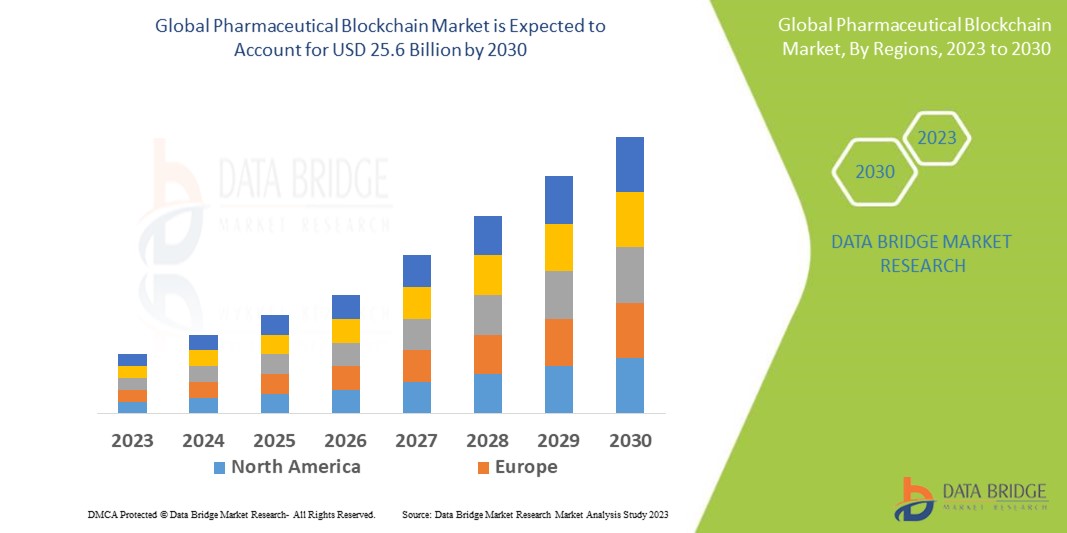
Data Bridge Market Research analisa que o mercado de blockchain farmacêutico, que era de US$ 0,76 bilhões em 2022, subiria para US$ 25,6 bilhões em 2030, e deverá passar por um CAGR de 55% de 2023 para 2030. Além dos insights sobre cenários de mercado, como valor de mercado, taxa de crescimento, segmentação, cobertura geográfica e principais atores, os relatórios de mercado curados pela Data Bridge Market Research também incluem análise de especialistas de profundidade, epidemiologia de pacientes, análise de pipelines, análise de preços e marco regulatório.
Âmbito e Segmentação do Mercado de Blockchain Farmacêutico
|
Metric de Relatório |
Detalhes |
|
Período de previsão |
2023 a 2030 |
|
Ano de base |
2022 |
|
Anos Históricos |
2021 (Personalizável até 2015 - 2020) |
|
Unidades quantitativas |
Receitas em USD Billion, Volumes em Unidades, Preços em USD |
|
Segmentos Cobertos |
Tipo (Private, Public, Hybrid), Aplicação (Clinical Trials, Drug Traceability, Drug Development, Health Records and Data Security, Supply Chain Management, Reclamações de Cobrança e Pagamento, Gerenciamento de Dados - Monitoramento e Dispositivos IOT, Outros), Usuários finais (Fabricantes, Distribuidores, Prestadores de Saúde) |
|
Países abrangidos |
EUA, Canadá e México na América do Norte, Alemanha, França, Reino Unido, Holanda, Suíça, Bélgica, Rússia, Itália, Espanha, Turquia, Resto da Europa na Europa, China, Japão, Índia, Coreia do Sul, Singapura, Malásia, Austrália, Tailândia, Indonésia, Filipinas, Resto da Ásia-Pacífico (APAC) na Ásia-Pacífico (APAC), Arábia Saudita, EUA, África do Sul, Egito, Israel, Resto do Oriente Médio e África (MEA) como parte do Oriente Médio e África (MEA), Brasil, Argentina e Resto da América do Sul como parte da América do Sul. |
|
Jogadores de mercado cobertos |
Nebula Genomics (EUA), Blockpharma (França), EncrypGen (EUA), Medicalchain SA (EUA)., iSolve, LLC (EUA)., PATIENTORY INC (EUA), GUARDTIME (EUA), HASHED SAÚDE (EUA), Blockchain AI Solutions Ltd (EUA), Medpace (EUA), Quanticate (Índia), Huawei Technologies Co., Ltd (China) |
|
Oportunidades de Mercado |
|
Definição do mercado
Blockchain é um banco de dados que armazena os dados coletados em blocos acorrentados juntos. Cada bloco é seguro e ligado entre si por causa de princípios criptográficos para a descentralização. A tecnologia utiliza técnicas criptográficas para acessar cada participante em uma rede interligada para armazenar, trocar ou ver as informações sem confiança entre as duas partes.
Dinâmica Global do Mercado de Blockchain Farmacêutico
Controladores
- Aumentando os Desenvolvimentos Estratégicos por Jogadores de Mercado
As inúmeras iniciativas estratégicas dos operadores do mercado, como lançamentos de produtos e aquisições, levam ao crescimento do mercado. Por exemplo, o MDS México lançou um serviço de teste COVID-19 baseado em tecnologia blockchain para garantir a autenticidade dos certificados de vacinação em 2021. A pandemia de COVID-19 aumentou a adoção e a demanda de soluções de blockchain pelo setor farmacêutico. Este factor impede o crescimento do mercado.
- Ampla utilização de Blockchain em hospitais
Os hospitais são uma parte importante que utiliza blockchain, impedindo o crescimento do mercado. As instituições de saúde e os hospitais estão agora trabalhando em manter os dados do paciente para proteger o bom funcionamento do sistema. Isso não só auxilia na diferenciação entre pacientes novos e idosos e alavanca os registros existentes para complementar a consulta médica. Além disso, a tecnologia impedirá a exposição de informações necessárias, como endereços, dados de pagamento e números de telefone, a violações de dados e ataques cibernéticos. Assim, esse fator leva ao crescimento do mercado.
Oportunidades
- Aumento do uso de Blockchain em ensaios clínicos e eConsent
O crescente uso da blockchain farmacêutica em ensaios clínicos e no segmento eConsent está impulsionando o crescimento do mercado. Inculcar a tecnologia em ensaios clínicos facilita o gerenciamento e segurança de dados eficientes. O uso da tecnologia blockchain também permite que os clínicos se conectem internamente com segurança. A ampla adoção da tecnologia blockchain nos prontuários garante a integridade dos dados. Essa blockchain pode ser utilizada em ensaios clínicos, onde os registros são parte importante das legalidades. Portanto, esse fator atua como um fator importante que aumenta o crescimento do mercado.
- Aumentar Parcerias por Jogadores de Mercado
Existem parcerias elevadas por parte dos intervenientes no mercado que conduzem ao crescimento do mercado. Por exemplo, a Synaptic Health Alliance é uma parceria das principais empresas de saúde focadas principalmente no desenvolvimento do compartilhamento de dados do provedor. A aliança envolve empresas de saúde estabelecidas, como Quest Diagnostics, Humana e Optum. Além disso, essa blockchain pode potencialmente aumentar a eficiência e reduzir os custos em muitas áreas da saúde. Assim, esse fator impulsiona o crescimento do mercado.
Restrições/Desafios
- Falta de profissionais qualificados
Há muita ausência de indivíduos experientes com a competência técnica necessária para gerenciar a tecnologia na indústria médica, o que impede o crescimento da indústria. Como a tecnologia farmacêutica e do setor de saúde é complicada, exigirá profissionais qualificados para gerenciar e supervisionar a tarefa. Assim, isso leva ao impedimento do mercado.
Este relatório de mercado de blockchain farmacêutico fornece detalhes de novos desenvolvimentos recentes, regulamentos comerciais, análise importação-exportação, análise de produção, otimização da cadeia de valor, market share, impacto de atores de mercado nacionais e localizados, análises de oportunidades em termos de bolsas de receita emergentes, mudanças na regulamentação de mercado, análise estratégica do crescimento do mercado, tamanho do mercado, crescimentos de mercado categoria, nichos de aplicação e dominância, aprovação de produtos, lançamentos de produtos, expansões geográficas, inovações tecnológicas no mercado. Para obter mais informações sobre o mercado de blockchain farmacêutico contato Data Bridge Market Research for an Analyst Brief, nossa equipe irá ajudá-lo a tomar uma decisão de mercado informada para alcançar o crescimento do mercado.
Desenvolvimento recente
- Em 2022, a Avaneer Health recebeu apoio adicional de inúmeras instituições de saúde de prestígio, fornecendo à rede de saúde 50 milhões de dólares em dinheiro inicial. A rede concentra-se principalmente no compartilhamento de dados entre pagadores, elegibilidade e autorização prévia ao utilizar a especificação FHIR do HL7 para aumentar o acesso de dados entre as empresas de saúde.
Âmbito global do mercado de Blockchain farmacêutico
O mercado de blockchain farmacêutico é segmentado com base no tipo, aplicação e usuários finais. O crescimento entre esses segmentos irá ajudá-lo a analisar segmentos de crescimento escassos nas indústrias e fornecer aos usuários uma visão geral de mercado valiosa e insights de mercado para ajudá-los a tomar decisões estratégicas para identificar aplicações de mercado principais.
Tipo
- Privado
- Público
- Híbrido
Aplicação
- Ensaios clínicos
- Rastreabilidade dos medicamentos
- Desenvolvimento de Drogas
- Registros de Saúde e Segurança de Dados
- Gestão da Cadeia de Suprimentos
- Cobrança e Pagamento
- Gestão de Dados - Monitoramento e IOT
- Outros
Utilizador Final
- Fabricante
- Distribuidores
- Prestadores de cuidados de saúde
Análise/Insights Regionais do Mercado de Blockchain Farmacêutico
O mercado de blockchain farmacêutico é analisado e insights e tendências de tamanho do mercado são fornecidos por tipo, aplicação e usuários finais como referenciado acima.
Os países abrangidos pelo relatório de mercado da cadeia de bloqueio farmacêutica são EUA, Canadá e México na América do Norte, Alemanha, França, Reino Unido, Holanda, Suíça, Bélgica, Rússia, Itália, Espanha, Turquia, Resto da Europa na Europa, China, Japão, Índia, Coreia do Sul, Singapura, Malásia, Austrália, Tailândia, Indonésia, Filipinas, Resto da Ásia-Pacífico (APAC) na Ásia-Pacífico (APAC), Arábia Saudita, EUA, África do Sul, Egito, Israel, Resto do Oriente Médio e África (MEA) como parte do Oriente Médio e África (MEA), Brasil, Argentina e Resto da América do Sul como parte da América do Sul.
A Europa domina o mercado da cadeia de bloqueios farmacêuticas devido às crescentes actividades de investigação e desenvolvimento destinadas a promover a tecnologia e a aumentar a operacionalidade do sector da saúde nesta região.
Espera-se que a Ásia-Pacífico cresça durante o período previsto devido às crescentes iniciativas governamentais para desenvolver tecnologia e inculcá-la no setor de saúde. A implementação da alta taxa de tecnologia blockchain deverá proporcionar às empresas mais oportunidades na região.
A secção «país» do relatório também fornece factores de impacto individuais no mercado e alterações na regulamentação no mercado nacional que afectam as tendências actuais e futuras do mercado. Pontos de dados como análise de corrente descendente e a montante da cadeia de valor, tendências técnicas e análise de cinco forças de porter, estudos de caso são alguns dos indicadores usados para prever o cenário de mercado para cada país. Além disso, a presença e disponibilidade de marcas globais e seus desafios enfrentados devido à grande ou escassa concorrência de marcas locais e nacionais, o impacto das tarifas nacionais e rotas comerciais são considerados ao fornecer análise de previsão dos dados do país.
Crescimento da infraestrutura de saúde Base instalada e nova penetração tecnológica
O mercado de blockchain farmacêutico também fornece uma análise detalhada do mercado para cada país crescimento da despesa em saúde para equipamentos de capital, base instalada de diferentes tipos de produtos para o mercado de blockchain farmacêutico, impacto da tecnologia usando curvas de linha de vida e mudanças nos cenários regulatórios de saúde e seu impacto no mercado de blockchain farmacêutico. Os dados estão disponíveis para o período histórico 2011-2021.
Análise competitiva da paisagem e mercado de blockchain farmacêutico
O cenário competitivo do mercado de blockchain farmacêutico fornece detalhes pelo concorrente. Detalhes incluídos são visão geral da empresa, finanças da empresa, receita gerada, potencial de mercado, investimento em pesquisa e desenvolvimento, novas iniciativas de mercado, presença global, locais de produção e instalações, capacidades de produção, pontos fortes e fracos da empresa, lançamento do produto, largura e amplitude do produto, dominância da aplicação. Os dados acima apresentados estão relacionados apenas ao foco das empresas no mercado de blockchain farmacêutico.
Alguns dos principais atores que operam no mercado de blockchain farmacêutico são:
- Nebulosa Genômica (EUA)
- Blockpharma (França)
- EncrypGen (EUA)
- Medicalchain SA (U.K.)
- iSolve, LLC (EUA).
- PATIENTORIA INC (EUA)
- TEMPO DE GUARDA (EUA)
- SAÚDE AUSTADA (EUA)
- Blockchain AI Solutions Ltd (U.K.)
- Medpace (EUA)
- Quanticato (Índia)
- Huawei Technologies Co., Ltd (China)
SKU-
Obtenha acesso online ao relatório sobre a primeira nuvem de inteligência de mercado do mundo
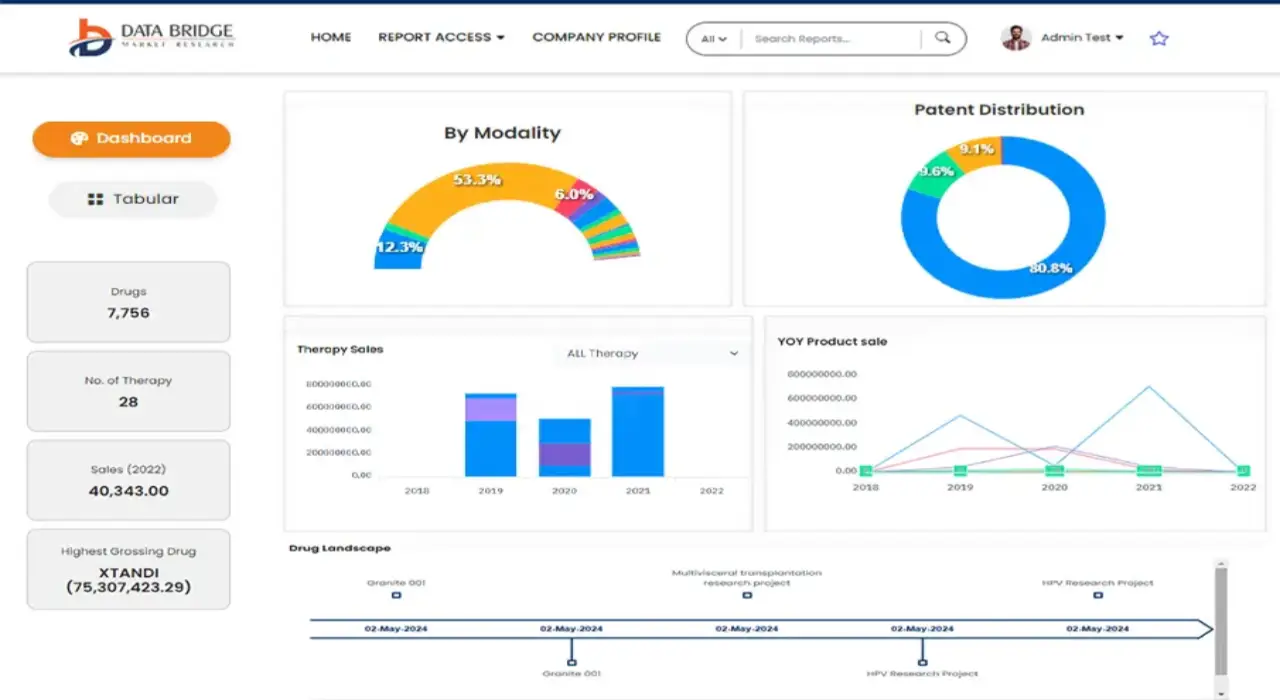
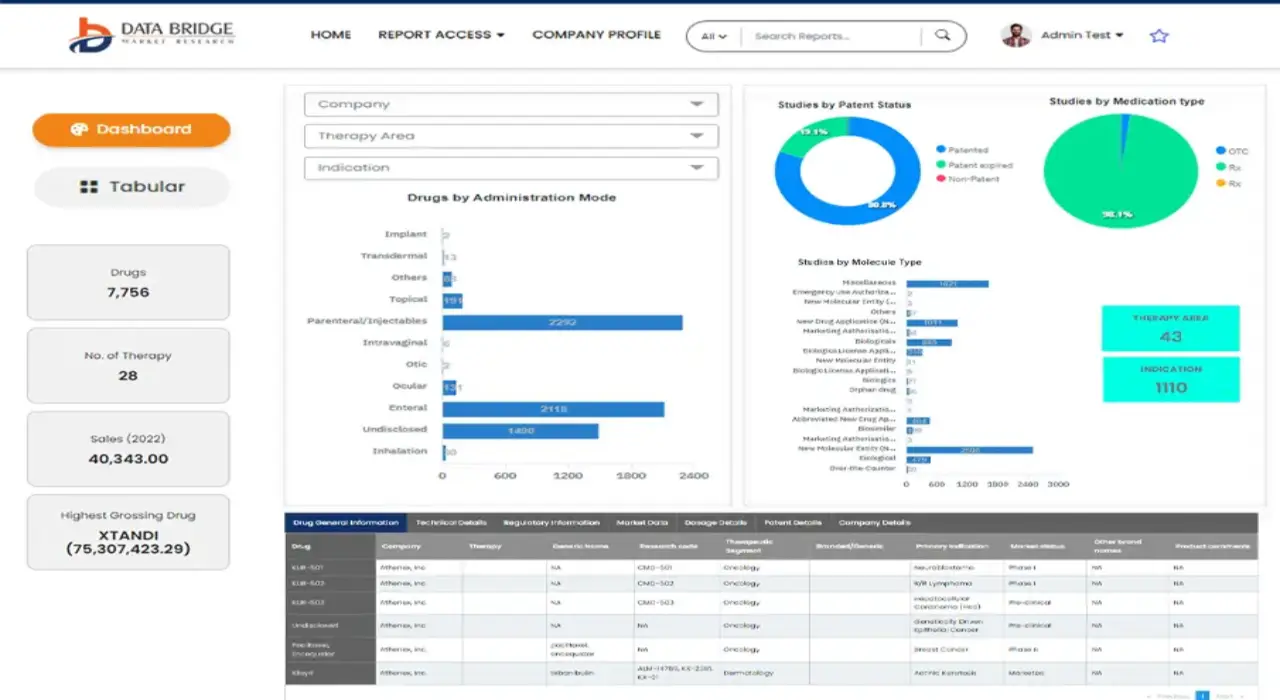
- Painel interativo de análise de dados
- Painel de análise da empresa para oportunidades de elevado potencial de crescimento
- Acesso de analista de pesquisa para personalização e customização. consultas
- Análise da concorrência com painel interativo
- Últimas notícias, atualizações e atualizações Análise de tendências
- Aproveite o poder da análise de benchmark para um rastreio abrangente da concorrência
Metodologia de Investigação
A recolha de dados e a análise do ano base são feitas através de módulos de recolha de dados com amostras grandes. A etapa inclui a obtenção de informações de mercado ou dados relacionados através de diversas fontes e estratégias. Inclui examinar e planear antecipadamente todos os dados adquiridos no passado. Da mesma forma, envolve o exame de inconsistências de informação observadas em diferentes fontes de informação. Os dados de mercado são analisados e estimados utilizando modelos estatísticos e coerentes de mercado. Além disso, a análise da quota de mercado e a análise das principais tendências são os principais fatores de sucesso no relatório de mercado. Para saber mais, solicite uma chamada de analista ou abra a sua consulta.
A principal metodologia de investigação utilizada pela equipa de investigação do DBMR é a triangulação de dados que envolve a mineração de dados, a análise do impacto das variáveis de dados no mercado e a validação primária (especialista do setor). Os modelos de dados incluem grelha de posicionamento de fornecedores, análise da linha de tempo do mercado, visão geral e guia de mercado, grelha de posicionamento da empresa, análise de patentes, análise de preços, análise da quota de mercado da empresa, normas de medição, análise global versus regional e de participação dos fornecedores. Para saber mais sobre a metodologia de investigação, faça uma consulta para falar com os nossos especialistas do setor.
Personalização disponível
A Data Bridge Market Research é líder em investigação formativa avançada. Orgulhamo-nos de servir os nossos clientes novos e existentes com dados e análises que correspondem e atendem aos seus objetivos. O relatório pode ser personalizado para incluir análise de tendências de preços de marcas-alvo, compreensão do mercado para países adicionais (solicite a lista de países), dados de resultados de ensaios clínicos, revisão de literatura, mercado remodelado e análise de base de produtos . A análise de mercado dos concorrentes-alvo pode ser analisada desde análises baseadas em tecnologia até estratégias de carteira de mercado. Podemos adicionar quantos concorrentes necessitar de dados no formato e estilo de dados que procura. A nossa equipa de analistas também pode fornecer dados em tabelas dinâmicas de ficheiros Excel em bruto (livro de factos) ou pode ajudá-lo a criar apresentações a partir dos conjuntos de dados disponíveis no relatório.