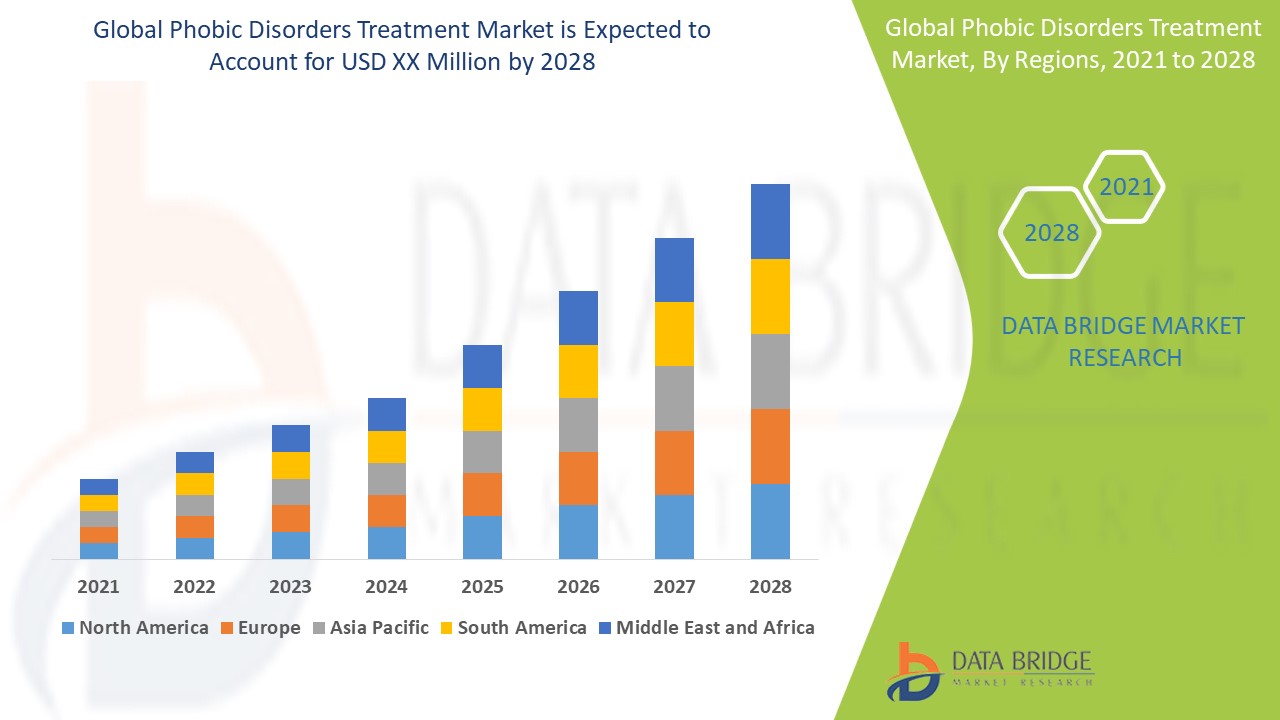
The Global Phobic Disorders Treatment Market size in 2023 is USD 127 million. The market share is projected to grow at a CAGR of 4.6% and reach USD 181.99 billion by 2031.
Phobic disorders, also known as specific phobias, are a type of anxiety disorder characterized by an intense, irrational fear of a particular object, situation, or activity. This fear is disproportionate to the actual threat posed and often leads to avoidance behavior. According to U.S. National Institute of Mental health, 9.1% of Americans, or more than 19 million people, have a specific phobia signifying the need for Phobic Disorders Treatment. With a growing focus on innovative and effective solutions for phobic disorders such as specific phobias, social anxiety, and agoraphobia, the market is propelled by breakthroughs in both pharmacological and psychological therapies, including advanced cognitive-behavioral therapy (CBT) and cutting-edge virtual reality exposure therapy (VRET), which offer immersive, controlled environments to confront fears.
Data Bridge Market Research Market Report provides details of new recent developments, market share, market trends on the basis of its segmentations and regional analysis, the impact of market players, analyses of opportunities in terms of emerging revenue pockets, changes in market regulations, strategic market growth analysis, market size, category market growths, application niches and dominance, product approvals, product launches, geographic expansions, technological innovations in the market. To gain more info on the market, contact Data Bridge Market Research’s team of expert analysts. Our team will help you make informed market decisions to achieve business growth.
Global Phobic Disorders Treatment Market Analysis and Market Size
|
Global Phobic Disorders Treatment Market Report Metric Details |
|
|
|
Report Metric |
Details |
|
|
Forecast Period |
2024-2031 |
|
|
Base Year |
2023 |
|
|
Historic Year |
2022 (Customizable 2016-2021) |
|
|
Measuring Unit |
USD Million |
|
|
Data Pointers |
Market value, growth rate, market segments, geographical coverage, market players, and market scenario, in-depth expert analysis, patient epidemiology, pipeline analysis, pricing analysis, and regulatory framework. |
|
The surge in digital health tools and personalized treatment approaches is transforming the landscape, providing tailored, accessible solutions for individuals reflecting a commitment to addressing the complex and varied needs of those affected by phobic disorders. As a result Databridge Market Research dived into comprehensively analyzing the market and unveiled that the Global Phobic Disorders Treatment Market is increasing at a CAGR of 5.30%. Our detailed analysis forecasts that the market is valued at USD 127 million in 2023 and is expected to grow upto USD 181.99 million by 2031. Our meticulously created report, developed through comprehensive research and analytics, is a distinguished paper that unveils eye-opening data about the market.
Global Phobic Disorders Treatment Market Dynamics
Global Phobic Disorders Treatment Market Growth Drivers
Rising Prevalence of Phobic Disorders
In the first year of the COVID-19 pandemic, global prevalence of anxiety and depression increased by a massive 25%, according to a scientific brief released by the World Health Organization (WHO). In response to rising numbers, pharmaceutical companies and mental health professionals are expanding their research and developing new therapies such as cognitive-behavioral therapy (CBT), pharmacological interventions, and innovative approaches like virtual reality exposure therapy (VRET) to address the complex and varied needs of individuals suffering from phobic conditions, thereby driving Global Phobic Disorders Treatment Market Growth.
Teletherapy and Virtual Counseling for remote areas
Teletherapy and virtual counseling are driving growth in the Global Phobic Disorders Treatment Market by expanding access to care through video conferencing and online platforms. For instance, platforms like BetterHelp and Talkspace facilitate remote therapy sessions, connecting patients with licensed therapists from their homes. Increased accessibility helps reach individuals in underserved or remote areas, contributing to the Global Phobic Disorders Treatment Market Growth.
Global Phobic Disorders Treatment Market Growth Opportunities
Integration of Mindfulness and Meditation
Mindfulness and meditation are increasingly being woven into phobia treatment protocols, offering a refreshing, drug-free complement to traditional therapies. For instance, those with arachnophobia might use virtual reality to face spiders while practicing mindfulness techniques to maintain calm, or individuals with social anxiety could participate in group meditation sessions that build confidence and social skills in a safe, supportive environment. By creating personalized, immersive experiences that blend therapeutic techniques with mindfulness, this approach not only enhances treatment effectiveness but also attracts patients who are seeking innovative, non-pharmacological solutions. As demand for comprehensive, personalized care grows, leveraging mindfulness and meditation within phobia treatment strategies can drive significant Global Phobic Disorders Treatment Market growth.
Advancing Next-Generation Neurostimulation
Advances in neurostimulation technologies, including transcranial magnetic stimulation (TMS) and deep brain stimulation (DBS), present a compelling growth opportunity for the global phobic disorders treatment market. Such cutting-edge therapies offer the potential to directly modulate brain activity associated with phobias, delivering rapid and targeted relief to patients who have not responded well to conventional treatments. By incorporating TMS and DBS into treatment regimens, the market can address a significant unmet need for effective therapies, attract a broader patient base, and position itself at the forefront of innovative mental health care solutions.
Global Phobic Disorders Treatment Market Growth Challenges
Stigma and Misconceptions
Despite growing awareness, stigma surrounding mental health issues remains a significant barrier in the global phobic disorders treatment market, especially in cultures where phobias are often trivialized or misunderstood. For instance, in many parts of Asia and the Middle East, mental health issues are frequently stigmatized, leading individuals to avoid seeking help due to fear of social repercussions or judgment. This can result in lower treatment rates and underreporting of phobias, thereby limiting the global phobic disorders treatment market growth.
Limited access to specialized care
Limited access to specialized care is a significant challenge in the global phobic disorders treatment market, particularly in low- and middle-income countries. For example, in sub-Saharan Africa, there is a severe shortage of mental health professionals, with only 1 psychiatrist per 1 million people compared to 20 per 1 million in high-income countries. This scarcity means that advanced therapies for phobias are often unavailable, leaving many patients without appropriate treatment.
Global Phobic Disorders Treatment Market Growth Restraints
Restraining regulations
The stringent and varied approval processes across regions, can delay the introduction of new therapies. In Japan, the Pharmaceuticals and Medical Devices Agency (PMDA) mandates that all new pharmaceuticals, including treatments for phobic disorders, undergo a comprehensive approval process under the Pharmaceuticals and Medical Devices Law (PMDL). Regulation Such as "Bridging Studies" which requires additional studies to confirm that the drug has the same safety and efficacy profiles in the Japanese population post clinical trial data from non-Japanese populations are submitted. Consequently hindering the Global Phobic Disorders Treatment Market Growth.
Global Phobic Disorders Treatment Market Scope and Trends
|
Global Phobic Disorders Treatment Market Segmentations Overview |
|
|
Market |
Sub-Segments |
|
Type |
Beta blockers (acebutolol, atenolol, bisoprolol, metoprolol, nadolol, nebivolol, propranolol), antidepressants (selective serotonin reuptake inhibitors (SSRIs)( fluoxetine, citalopram, paroxetine, sertraline), serotonin-noradrenaline reuptake inhibitors (SNRIs)( duloxetine, venlafaxine), noradrenaline and specific serotonergic antidepressants (NASSAs), tricyclic antidepressants (TCAs)( amitriptyline, clomipramine, imipramine, lofepramine, nortriptyline), Monoamine oxidase inhibitors (MAOIs)( tranylcypromine, phenelzine and isocarboxazid), benzodiazepines(phenobarbital, zolpidem, intermezzo, zaleplon, eszopiclone, others), others |
|
Population |
children, young, adults |
|
Gender |
Hospitals, Clinics, Academic and Research Institutes, and Others |
|
End-users |
Psychiatry clinics, hospitals, phobia treatment centres, others |
|
Distribution Channel |
Hospital Pharmacy, Retail Pharmacy, and Others |
- Propranolol, a Blood pressure drug could help lower anxiety for kids and young adults with ASD.
- According to a preliminary study presented at the American Stroke Association’s International Stroke Conference 2024. Among most ischemic (clot-caused) stroke survivors including those taking anticoagulant medications, use of antidepressants in the SSRI or SNRI class did not increase the risk of hemorrhagic (bleeds) stroke or other serious bleeding events.
- Amitriptyline, a tricyclic antidepressant used to treat nerve pain, may be one of the most effective pharmacologic treatments for irritable bowel syndrome (IBS).
Global Phobic Disorders Treatment Market Regional Analysis – Market Trends
|
Global Phobic Disorders Treatment Market Regional Overview |
|
|
|
Region |
Countries |
|
|
Europe |
Germany, France, U.K., Netherlands, Switzerland, Belgium, Russia, Italy, Spain, Turkey, Rest of Europe |
|
|
APAC |
China, Japan, India, South Korea, Singapore, Malaysia, Australia, Thailand, Indonesia, Philippines, Rest of Asia-Pacific |
|
|
North America |
U.S., Canada, and Mexico |
|
|
MEA |
Saudi Arabia, U.A.E., South Africa, Egypt, Israel, Rest of Middle East, and Africa |
|
|
South America |
Brazil, Argentina, and Rest of South America |
|
Key Insights
- North America, particularly the United States, dominates the phobic disorders treatment market due to the availability of specialized therapies, such as cognitive-behavioral therapy (CBT) and exposure therapy, along with a wide range of pharmacological options, supports market growth.
- Europe is a dynamic and significant market for phobic disorders treatment, bolstered by robust healthcare systems and a growing focus on mental health. The UK's National Health Service (NHS) continues to expand its mental health services, with initiatives like the Improving Access to Psychological Therapies (IAPT) program enhancing treatment availability for phobic disorders.
- The Asia-Pacific region is witnessing a significant surge in demand for phobic disorders treatment, driven by increasing mental health awareness and substantial improvements in access to care. In Japan, government-backed initiatives like the “Five-Year Plan for Promoting Mental Health” have prioritized early diagnosis and treatment, contributing to robust market growth.
- The Middle East and Africa are rapidly emerging markets for phobic disorders treatment, characterized by significant untapped potential and promising growth prospects. In the Middle East, countries like the United Arab Emirates and Saudi Arabia are leading the way with substantial investments in mental health infrastructure. For instance, Saudi Arabia’s Vision 2030 includes key initiatives to expand mental health services, which is already leading to increased availability of specialized treatments for phobic disorders.
Global Phobic Disorders Treatment Market Leading Players
- Sanofi
- Cambrex Corporation
- HIKAL
- Teva Pharmaceuticals USA, Inc.
- Midas Pharma GmbH
- Harman Finochem Ltd
- Pfizer Inc.
- Lannett
- AstraZeneca
- Reddy’s Laboratories Ltd.
- HEMA PHARMACEUTICALS PVT. LTD.
- Allergan
- LUPIN
- Eli Lilly and Company
- PALAM PHARMA PVT. LTD.
- Bristol Laboratories Ltd
- Lundbeck Australia Pty Ltd
- GlaxoSmithKline Inc.
- Sandoz AG
- Adroit Pharmachem Pvt Ltd
- Aurobindo Pharma USA
- Sun Pharmaceutical Industries Ltd.
- Mallinckrodt
Global Phobic Disorders Treatment Market Recent Developments
- In February, 2024 In Bhadradri Kothagudem district India, the authorities have launched toll free number 14416 or 1800914416 for addressing exam phobia. Trained counsellors will be available on the phones to listen to students. Psychiatrists who will also be available throughout the day on the phone will give advice to students if they are suffering examination phobia
- In February, 2022, AbbVie submitted a supplemental New Drug Application (sNDA) to the US Food and Drug Administration (FDA) for cariprazine (VRAYLAR) as an adjuvant treatment for major depressive disorder (MDD) in patients undergoing continuous antidepressant therapy.
- In March, 2022 HMNC Brain Health announced positive top-line results from the Phase 2 Proof-of-Concept investigator-initiated trial of their oral prolonged-release ketamine formulation (KET01) in Treatment-Resistant Depression (TRD).
SKU-
Obtenha acesso online ao relatório sobre a primeira nuvem de inteligência de mercado do mundo
- Painel interativo de análise de dados
- Painel de análise da empresa para oportunidades de elevado potencial de crescimento
- Acesso de analista de pesquisa para personalização e customização. consultas
- Análise da concorrência com painel interativo
- Últimas notícias, atualizações e atualizações Análise de tendências
- Aproveite o poder da análise de benchmark para um rastreio abrangente da concorrência
Metodologia de Investigação
A recolha de dados e a análise do ano base são feitas através de módulos de recolha de dados com amostras grandes. A etapa inclui a obtenção de informações de mercado ou dados relacionados através de diversas fontes e estratégias. Inclui examinar e planear antecipadamente todos os dados adquiridos no passado. Da mesma forma, envolve o exame de inconsistências de informação observadas em diferentes fontes de informação. Os dados de mercado são analisados e estimados utilizando modelos estatísticos e coerentes de mercado. Além disso, a análise da quota de mercado e a análise das principais tendências são os principais fatores de sucesso no relatório de mercado. Para saber mais, solicite uma chamada de analista ou abra a sua consulta.
A principal metodologia de investigação utilizada pela equipa de investigação do DBMR é a triangulação de dados que envolve a mineração de dados, a análise do impacto das variáveis de dados no mercado e a validação primária (especialista do setor). Os modelos de dados incluem grelha de posicionamento de fornecedores, análise da linha de tempo do mercado, visão geral e guia de mercado, grelha de posicionamento da empresa, análise de patentes, análise de preços, análise da quota de mercado da empresa, normas de medição, análise global versus regional e de participação dos fornecedores. Para saber mais sobre a metodologia de investigação, faça uma consulta para falar com os nossos especialistas do setor.
Personalização disponível
A Data Bridge Market Research é líder em investigação formativa avançada. Orgulhamo-nos de servir os nossos clientes novos e existentes com dados e análises que correspondem e atendem aos seus objetivos. O relatório pode ser personalizado para incluir análise de tendências de preços de marcas-alvo, compreensão do mercado para países adicionais (solicite a lista de países), dados de resultados de ensaios clínicos, revisão de literatura, mercado remodelado e análise de base de produtos . A análise de mercado dos concorrentes-alvo pode ser analisada desde análises baseadas em tecnologia até estratégias de carteira de mercado. Podemos adicionar quantos concorrentes necessitar de dados no formato e estilo de dados que procura. A nossa equipa de analistas também pode fornecer dados em tabelas dinâmicas de ficheiros Excel em bruto (livro de factos) ou pode ajudá-lo a criar apresentações a partir dos conjuntos de dados disponíveis no relatório.