



Global Plastic Flexible Display Market Segmentation, By Display Type (OLEDLCD, and EPD (Electronic Paper Display), Form (Curved Display, Bendable and Foldable Display, and Rollable Display), Panel Size (Up to 6”, Above 50”, 20-50”, and 6-20”), Application (Smartphone and Tablets, Smart Wearable, Televisions and Digital Signage Systems, Personal Computers and Laptops, Monitors, Vehicle and Public Transport, and Smart Home Appliances) – Industry Trends and Forecast to 2032
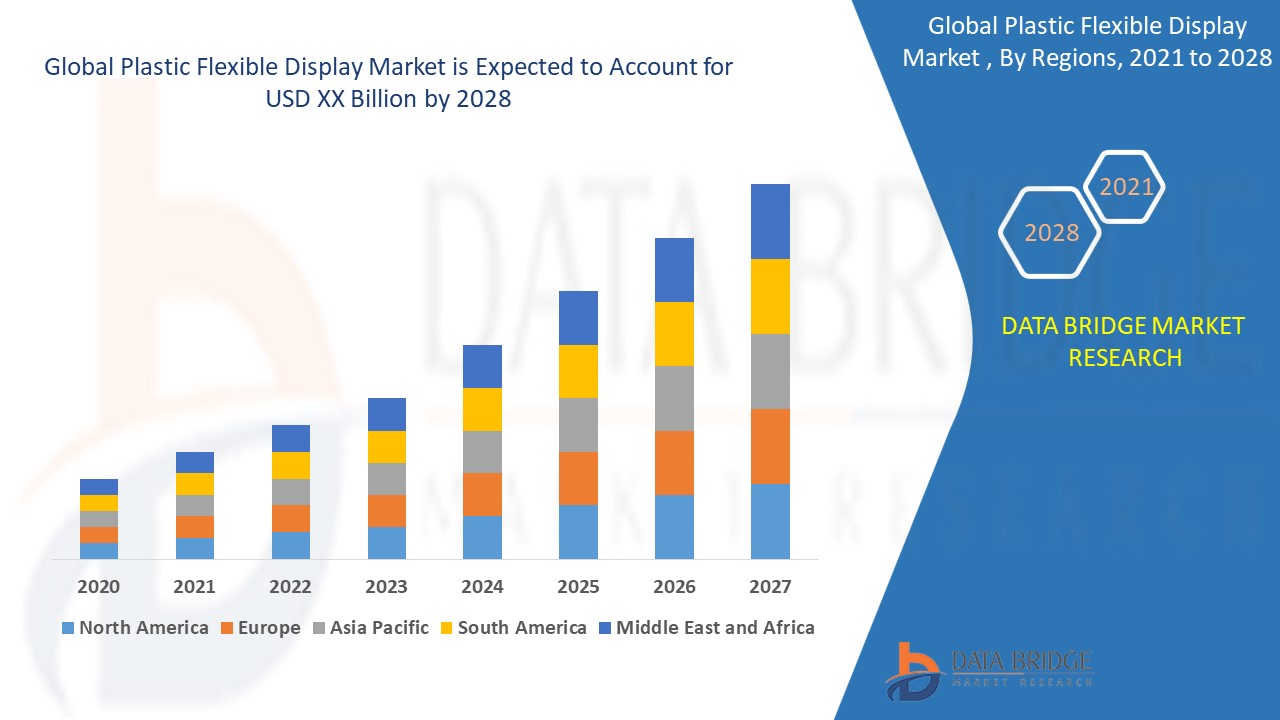
Plastic Flexible Display Market Analysis
The plastic flexible display market is experiencing significant growth, driven by advancements in technology and increasing demand for innovative display solutions across various industries. Plastic flexible displays are lightweight, thin, and durable, making them ideal for applications in smartphones, wearable devices, automotive displays, and digital signage. Unlike traditional glass-based screens, these displays are made using flexible substrates such as polyimide, which allows for unique form factors such as foldable, rollable, and curved designs. This adaptability is revolutionizing device design and enabling new user experiences. Technological advancements, such as the integration of OLED (Organic Light-Emitting Diode) technology, have significantly enhanced the performance of plastic flexible displays, offering superior image quality, energy efficiency, and flexibility. Companies such as LG Display and Samsung are leading innovation with products such as foldable smartphones and rollable televisions, while emerging players explore applications in healthcare and industrial sectors. The growing adoption of these displays is also bolstered by the increasing demand for smart, connected devices and government initiatives promoting advanced electronics. As more industries recognize the potential of plastic flexible displays, the market is expected to witness substantial growth, transforming how consumers interact with technology.
Plastic Flexible Display Market Size
The global plastic flexible display market size was valued at USD 14.12 billion in 2024 and is projected to reach USD 88.04 billion by 2032, with a CAGR of 25.70% during the forecast period of 2025 to 2032. In addition to the market insights such as market value, growth rate, market segments, geographical coverage, market players, and market scenario, the market report curated by the Data Bridge Market Research team includes in-depth expert analysis, import/export analysis, pricing analysis, production consumption analysis, and pestle analysis.
Plastic Flexible Display Market Trends
“Rising Adoption of Foldable and Rollable OLED Displays”
One significant trend in the plastic flexible display market is the rising adoption of foldable and rollable OLED displays in consumer electronics, particularly smartphones and televisions. These innovative displays, constructed from lightweight and durable plastic substrates, are transforming device designs by enabling compact, portable, and versatile products. For instance, Samsung’s Galaxy Z Fold series and LG’s rollable OLED TVs showcase the potential of flexible displays to redefine user experiences by combining cutting-edge technology with sleek aesthetics. The increasing demand for foldable smartphones, driven by consumer preference for multitasking and enhanced viewing experiences, has accelerated the adoption of plastic flexible displays. In addition, advancements in roll-to-roll manufacturing processes are reducing production costs, making these displays more accessible for mass-market applications. This trend is further fueled by the growing integration of smart displays in automotive and wearable devices, highlighting the expanding scope of plastic flexible display technology across diverse industries.
Report Scope and Plastic Flexible Display Market Segmentation
|
Attributes |
Plastic Flexible Display Key Market Insights |
|
Segments Covered |
|
|
Countries Covered |
U.S., Canada and Mexico in North America, Germany, France, U.K., Netherlands, Switzerland, Belgium, Russia, Italy, Spain, Turkey, Rest of Europe in Europe, China, Japan, India, South Korea, Singapore, Malaysia, Australia, Thailand, Indonesia, Philippines, Rest of Asia-Pacific (APAC) in the Asia-Pacific (APAC), Saudi Arabia, U.A.E, South Africa, Egypt, Israel, Rest of Middle East and Africa (MEA) as a part of Middle East and Africa (MEA), Brazil, Argentina and Rest of South America as part of South America |
|
Key Market Players |
LG Display Co., Ltd. (South Korea), BOE Technology Group Co., Ltd. (China), Japan Display Inc. (Japan), Koninklijke Philips N.V. (Netherlands), Samsung (South Korea), Apple Inc. (U.S.), Corning Incorporated (U.S.), Sharp HealthCare (U.S.), FlexEnable (U.K.), ASUSTeK Computer Inc. (Taiwan), Kateeva (U.S.), AUO Corporation (Taiwan), Bolymin Inc. (Taiwan), Casio India Co., Pvt. Ltd. (India), Innolux Optoelectronics Co., Ltd. (Taiwan), JOLED Inc. (Japan), Chunghwa Picture Tubes, Ltd. (Taiwan), Visionox Company (China), Planar Systems, Inc. (U.S.), and TOSHIBA CORPORATION (Japan) |
|
Market Opportunities |
|
|
Value Added Data Infosets |
In addition to the market insights such as market value, growth rate, market segments, geographical coverage, market players, and market scenario, the market report curated by the Data Bridge Market Research team includes in-depth expert analysis, import/export analysis, pricing analysis, production consumption analysis, and pestle analysis. |
Plastic Flexible Display Market Definition
A plastic flexible display is an advanced type of electronic screen made using lightweight and durable plastic substrates, such as polyimide, instead of traditional glass. These displays are designed to be bendable, rollable, or foldable, offering greater flexibility and durability.
Plastic Flexible Display Market Dynamics
Drivers
- Rising Demand for Wearable Devices
The rising demand for wearable devices is a key driver in the plastic flexible display market, as these displays are increasingly being integrated into smartwatches, fitness trackers, and other portable gadgets. Wearable devices require screens that are lightweight and durable and capable of withstanding regular bending and movement, making plastic flexible displays an ideal solution. Their ergonomic and compact design enhances user comfort while enabling manufacturers to innovate with unique form factors. For instance, the Amazfit X smartwatch features a curved AMOLED flexible display, providing an immersive viewing experience while maintaining a sleek, futuristic design. Similarly, fitness trackers equipped with flexible displays offer clearer visuals and better durability for active lifestyles. With consumers seeking multifunctional and aesthetically appealing wearables, the adoption of plastic flexible displays is set to grow, further driving advancements and opportunities in this rapidly evolving market.
- Increasing Adoption of Foldable Smartphones
The increasing adoption of foldable smartphones is a major driver for the plastic flexible display market, as these devices leverage the unique properties of flexible displays to deliver innovative designs and enhanced functionality. Foldable smartphones, such as the Samsung Galaxy Z Fold series, utilize plastic OLED displays that allow screens to fold without damage, enabling compact portability combined with a large, immersive display experience. These devices cater to consumer preferences for multitasking, offering the convenience of a smartphone and the expanded screen size of a tablet in a single device. In addition, manufacturers such as Huawei and Motorola have also introduced foldable models, highlighting the growing competition and innovation in this segment. The durability, lightweight nature, and adaptability of plastic flexible displays are key to these advancements, making them a crucial component in the evolution of smartphones and driving their adoption across global markets.
Opportunities
- Increasing Innovations in OLED and AMOLED Technologies
Innovations in OLED and AMOLED technologies are creating significant opportunities in the plastic flexible display market, as these advancements have enhanced display performance by offering vibrant colors, superior contrast, energy efficiency, and ultra-thin designs. These attributes make plastic flexible displays increasingly appealing to industries beyond consumer electronics, such as automotive and healthcare. For instance, the integration of flexible OLED displays in automotive dashboards enables the creation of curved, ergonomic interfaces that enhance driver experience and vehicle aesthetics. In the healthcare sector, wearable medical devices equipped with AMOLED screens provide clear, real-time health data on compact and durable displays, improving patient monitoring and care. Companies such as LG Display are actively investing in flexible OLED technologies to address the diverse demands of these industries. As these innovations continue to evolve, they open doors for novel applications and broaden the market potential for plastic flexible displays across various sectors.
- Growing Focus on Lightweight and Durable Displays
The growing focus on lightweight and durable displays is driving the adoption of plastic flexible displays across a variety of sectors, including consumer electronics, automotive, and industrial applications. These displays are particularly appealing due to their ability to withstand bending, impact, and extreme conditions, making them far superior to traditional glass-based screens. For instance, smartphones such as the Samsung Galaxy Z Flip use plastic flexible displays to maintain durability while offering a compact, foldable form factor that traditional glass screens cannot achieve. In the automotive sector, flexible displays are increasingly being incorporated into dashboards and infotainment systems, where they can be bent to fit curved surfaces without compromising screen integrity. In addition, industrial applications benefit from the ruggedness of these displays in harsh environments, where glass screens may break easily. This focus on lightweight and durable designs presents a significant market opportunity as industries seek innovative solutions that offer enhanced functionality, longevity, and user experience.
Restraints/Challenges
- Durability Concerns
Durability concerns pose a significant challenge in the plastic flexible display market, as these displays, while offering flexibility, tend to be more susceptible to scratches, pressure damage, and degradation over time compared to traditional glass-based displays. For instance, flexible OLED screens used in smartphones and wearables, though lightweight and bendable, can suffer from surface scratches or even pixel failure when exposed to excessive pressure. This reduces the overall lifespan of the product and can lead to a diminished user experience. Consumers may be hesitant to adopt flexible displays if they perceive them as less durable or reliable than glass alternatives, impacting the widespread acceptance of this technology. As a result, manufacturers must invest in enhancing the durability of plastic flexible displays through better materials and protective coatings, or face the challenge of limited market adoption.
- High Production Costs
High production costs are a significant challenge in the plastic flexible display market, as the development and manufacturing of these displays require advanced materials and technologies, such as OLED panels, flexible substrates, and specialized manufacturing processes. For instance, the production of flexible OLED displays, commonly used in smartphones and wearable devices, involves expensive materials and precision engineering to ensure flexibility without compromising performance. These high costs can make it difficult for manufacturers to offer competitively priced products, especially when competing with more established display technologies such as LCDs or rigid glass-based displays. As a result, the high production costs of plastic flexible displays limit their adoption, particularly in price-sensitive markets or among smaller manufacturers, thus slowing the overall growth and scalability of this technology.
This market report provides details of new recent developments, trade regulations, import-export analysis, production analysis, value chain optimization, market share, impact of domestic and localized market players, analyses opportunities in terms of emerging revenue pockets, changes in market regulations, strategic market growth analysis, market size, category market growths, application niches and dominance, product approvals, product launches, geographic expansions, technological innovations in the market. To gain more info on the market contact Data Bridge Market Research for an Analyst Brief, our team will help you take an informed market decision to achieve market growth.
Plastic Flexible Display Market Scope
The market is segmented on the basis of display type, form, panel size, and application. The growth amongst these segments will help you analyse meagre growth segments in the industries, and provide the users. The growth amongst these segments will help you analyze meagre growth segments in the industries and provide the users with a valuable market overview and market insights to help them make strategic decisions for identifying core market applications.
Display Type
- OLED
- LCD
- EPD (Electronic Paper Display)
Form
- Curved Display
- Bendable and Foldable Display
- Rollable Display
Panel Size
- Up to 6”
- 6-20”
- 20-50”
- Above 50”
Application
- Smartphone and Tablets
- Smart Wearable
- Televisions and Digital Signage Systems
- Personal Computers and Laptops
- Monitors
- Vehicle and Public Transport
- Smart Home Appliances
Plastic Flexible Display Market Regional Analysis
The market is analyzed and market size insights and trends are provided by country, display type, form, panel size, and application. The growth amongst these segments will help you analyse meagre growth segments in the industries, and provide the users as referenced above.
The countries covered in the market report are U.S., Canada, Mexico in North America, Germany, Sweden, Poland, Denmark, Italy, U.K., France, Spain, Netherland, Belgium, Switzerland, Turkey, Russia, Rest of Europe in Europe, Japan, China, India, South Korea, New Zealand, Vietnam, Australia, Singapore, Malaysia, Thailand, Indonesia, Philippines, Rest of Asia-Pacific (APAC) in Asia-Pacific (APAC), Brazil, Argentina, Rest of South America as a part of South America, U.A.E, Saudi Arabia, Oman, Qatar, Kuwait, South Africa, Rest of Middle East and Africa (MEA) as a part of Middle East and Africa (MEA).
Asia-Pacific dominates the plastic flexible display market, driven by the rising demand for compact, lightweight electronic devices. The region's robust smartphone production further fuels this growth, as manufacturers seek to incorporate flexible display technologies. In addition, the increasing adoption of advanced technologies such as 3D displays and augmented reality in Asia-Pacific is propelling market expansion. This combination of factors positions the region as a key leader in the development and application of plastic flexible displays.
Europe is anticipated to experience highest growth in the plastic flexible display market between 2025 and 2032, primarily driven by the growing demand from the automotive sector. The region's automotive industry is increasingly integrating flexible display technologies for advanced dashboards, in-vehicle entertainment systems, and smart windows. As automakers prioritize innovation and user experience, the need for flexible, lightweight, and durable displays continues to rise. This trend is expected to significantly contribute to the market's expansion in Europe during the forecast period.
The country section of the report also provides individual market impacting factors and changes in market regulation that impact the current and future trends of the market. Data points such as down-stream and upstream value chain analysis, technical trends and porter's five forces analysis, case studies are some of the pointers used to forecast the market scenario for individual countries. Also, the presence and availability of global brands and their challenges faced due to large or scarce competition from local and domestic brands, impact of domestic tariffs and trade routes are considered while providing forecast analysis of the country data.
Plastic Flexible Display Market Share
The market competitive landscape provides details by competitor. Details included are company overview, company financials, revenue generated, market potential, investment in research and development, new market initiatives, global presence, production sites and facilities, production capacities, company strengths and weaknesses, product launch, product width and breadth, application dominance. The above data points provided are only related to the companies' focus related to market.
Plastic Flexible Display Market Leaders Operating in the Market Are:
- LG Display Co., Ltd. (South Korea)
- BOE Technology Group Co., Ltd. (China)
- Japan Display Inc. (Japan)
- Koninklijke Philips N.V. (Netherlands)
- Samsung (South Korea)
- Apple Inc. (U.S.)
- Corning Incorporated (U.S.)
- Sharp HealthCare (U.S.)
- FlexEnable (U.K.)
- ASUSTeK Computer Inc. (Taiwan)
- Kateeva (U.S.)
- AUO Corporation (Taiwan)
- Bolymin Inc. (Taiwan)
- Casio India Co., Pvt. Ltd. (India)
- Innolux Optoelectronics Co., Ltd. (Taiwan)
- JOLED Inc. (Japan)
- Chunghwa Picture Tubes, Ltd. (Taiwan)
- Visionox Company (China)
- Planar Systems, Inc. (U.S.)
- TOSHIBA CORPORATION (Japan)
Latest Developments in Plastic Flexible Display Market
- In September 2023, LG announced its entry into the foldable laptop market with the launch of the LG Gram Fold. This laptop features a 17-inch OLED touchscreen display with QXGA+ resolution (2560 x 1920 pixels), and it can be used as both a tablet and a computer when fully unfolded. It also supports stylus pens, making it ideal for applications in art, architecture, and calligraphy
- In May 2022, LG Display showcased its next-generation OLED technology at the 2022 Society for Information Display (SID) in San Jose, California. The company introduced products such as OLED.EX and bendable/foldable OLED panels, emphasizing the ongoing evolution of OLED technology to maintain its competitive position in the market
- In March 2022, Stanford chemical engineers revealed the development of a high-brightness, stretchable display that could revolutionize human interaction with electronics, offering significant advancements in the flexibility and durability of display technology
- In January 2021, TCL CSOT introduced two flexible displays: the 17-inch Printed OLED Display and the 6.7-inch AMOLED Rollable Display. These innovative displays are part of TCL's lineup of touch modules and display panels, used in various applications such as interactive whiteboards, gaming monitors, automotive displays, and video walls
- In August 2020, Nubia launched a new smart wearable device with a flexible AMOLED display. The curved smartwatch features a 4.01" color display and offers multiple functions, including health and sports tracking, phone notifications, and more, providing users with enhanced visual experiences
SKU-
Obtenha acesso online ao relatório sobre a primeira nuvem de inteligência de mercado do mundo

- Painel interativo de análise de dados
- Painel de análise da empresa para oportunidades de elevado potencial de crescimento
- Acesso de analista de pesquisa para personalização e customização. consultas
- Análise da concorrência com painel interativo
- Últimas notícias, atualizações e atualizações Análise de tendências
- Aproveite o poder da análise de benchmark para um rastreio abrangente da concorrência
Metodologia de Investigação
A recolha de dados e a análise do ano base são feitas através de módulos de recolha de dados com amostras grandes. A etapa inclui a obtenção de informações de mercado ou dados relacionados através de diversas fontes e estratégias. Inclui examinar e planear antecipadamente todos os dados adquiridos no passado. Da mesma forma, envolve o exame de inconsistências de informação observadas em diferentes fontes de informação. Os dados de mercado são analisados e estimados utilizando modelos estatísticos e coerentes de mercado. Além disso, a análise da quota de mercado e a análise das principais tendências são os principais fatores de sucesso no relatório de mercado. Para saber mais, solicite uma chamada de analista ou abra a sua consulta.
A principal metodologia de investigação utilizada pela equipa de investigação do DBMR é a triangulação de dados que envolve a mineração de dados, a análise do impacto das variáveis de dados no mercado e a validação primária (especialista do setor). Os modelos de dados incluem grelha de posicionamento de fornecedores, análise da linha de tempo do mercado, visão geral e guia de mercado, grelha de posicionamento da empresa, análise de patentes, análise de preços, análise da quota de mercado da empresa, normas de medição, análise global versus regional e de participação dos fornecedores. Para saber mais sobre a metodologia de investigação, faça uma consulta para falar com os nossos especialistas do setor.
Personalização disponível
A Data Bridge Market Research é líder em investigação formativa avançada. Orgulhamo-nos de servir os nossos clientes novos e existentes com dados e análises que correspondem e atendem aos seus objetivos. O relatório pode ser personalizado para incluir análise de tendências de preços de marcas-alvo, compreensão do mercado para países adicionais (solicite a lista de países), dados de resultados de ensaios clínicos, revisão de literatura, mercado remodelado e análise de base de produtos . A análise de mercado dos concorrentes-alvo pode ser analisada desde análises baseadas em tecnologia até estratégias de carteira de mercado. Podemos adicionar quantos concorrentes necessitar de dados no formato e estilo de dados que procura. A nossa equipa de analistas também pode fornecer dados em tabelas dinâmicas de ficheiros Excel em bruto (livro de factos) ou pode ajudá-lo a criar apresentações a partir dos conjuntos de dados disponíveis no relatório.











