


Global Polypropylene Compounds Market, By Product (Mineral Filled Polypropylene, Compound TPOs/TPVs, Additive Concentrates, Glass Reinforced, and Others), Polymer Type (Homopolymers and Copolymers), Application (Fiber, Film & Sheet, Raffia, and Others), End Use (Automotive, Packaging, Building and Construction, Electrical and Electronics, Consumer Goods, Medical, Textile, and Others) - Industry Trends and Forecast to 2030.
Compostos de polipropileno Análise de mercado e tamanho
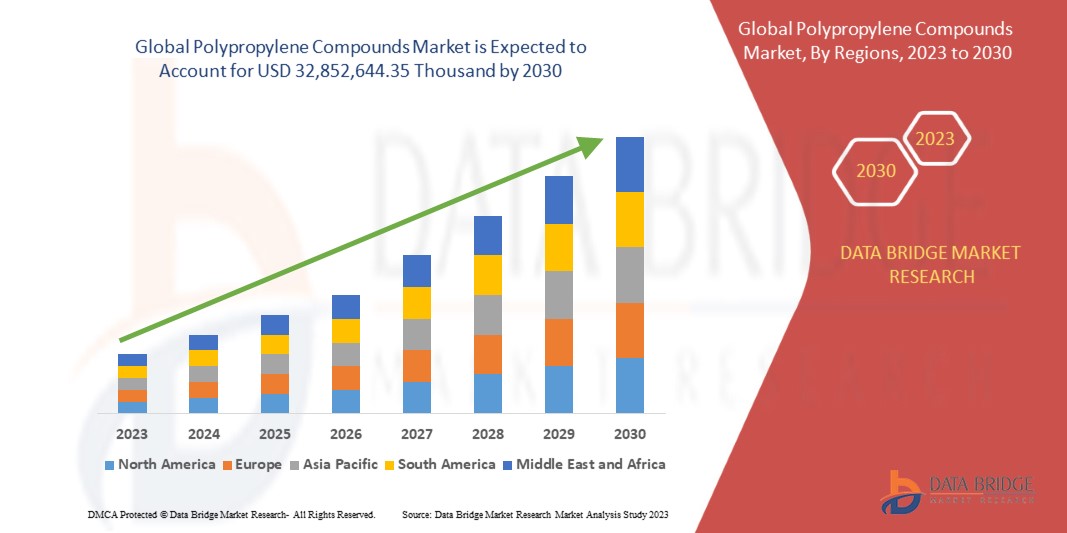
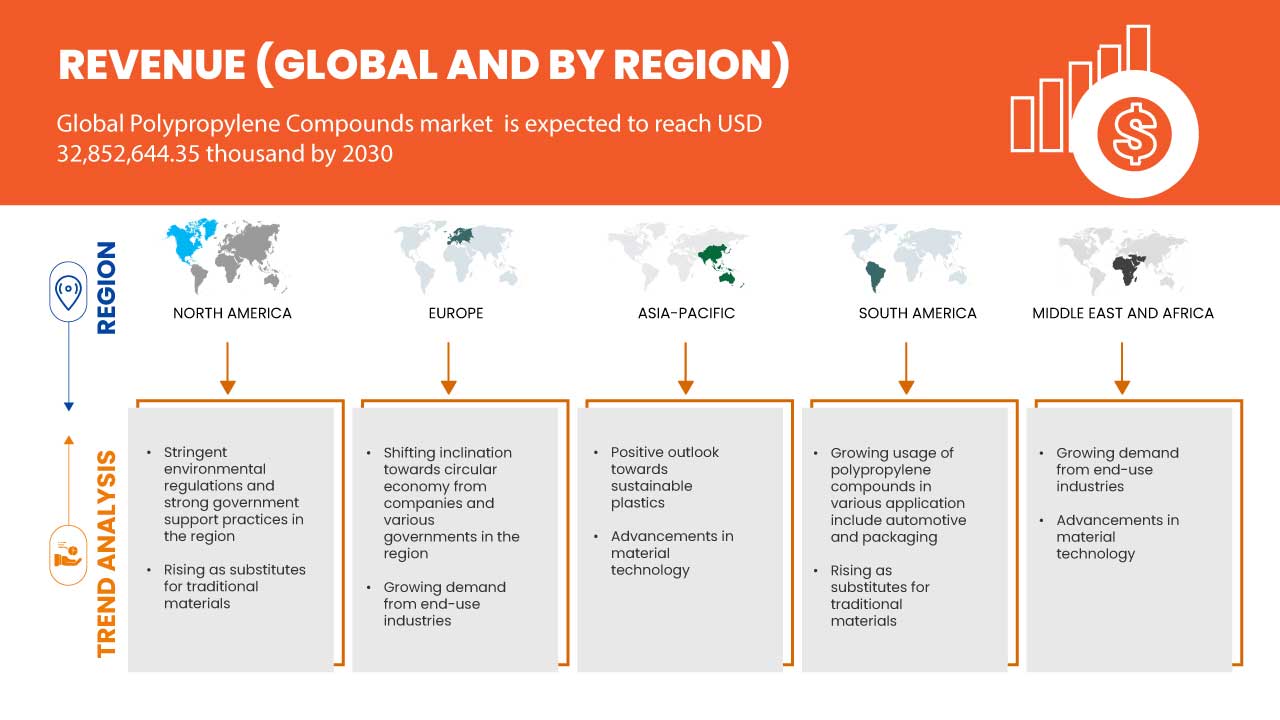
O mercado mundial de compostos de polipropileno deverá crescer significativamente no período de previsão de 2023 a 2030. Pesquisa de mercado de ponte de dados analisa que o mercado está crescendo com um CAGR de 4,6% no período de previsão de 2023 a 2030 e espera-se atingir US$ 32.852.644,35 mil até 2030. O principal fator que impulsiona o crescimento do mercado global de polipropileno é a crescente demanda das indústrias de uso final.
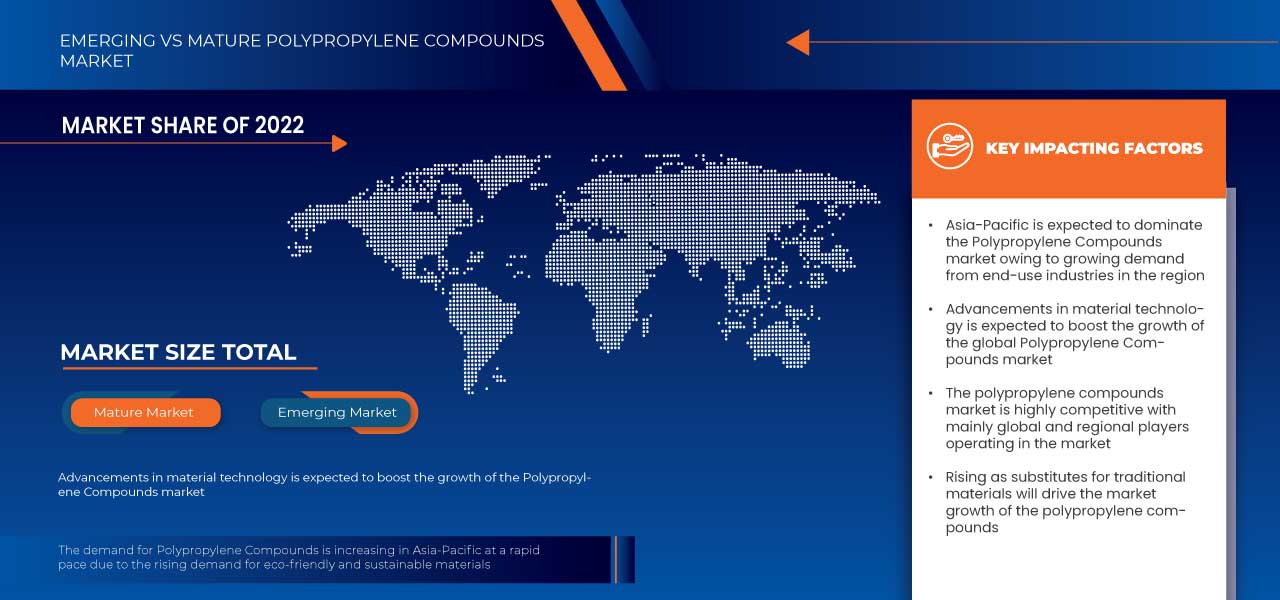
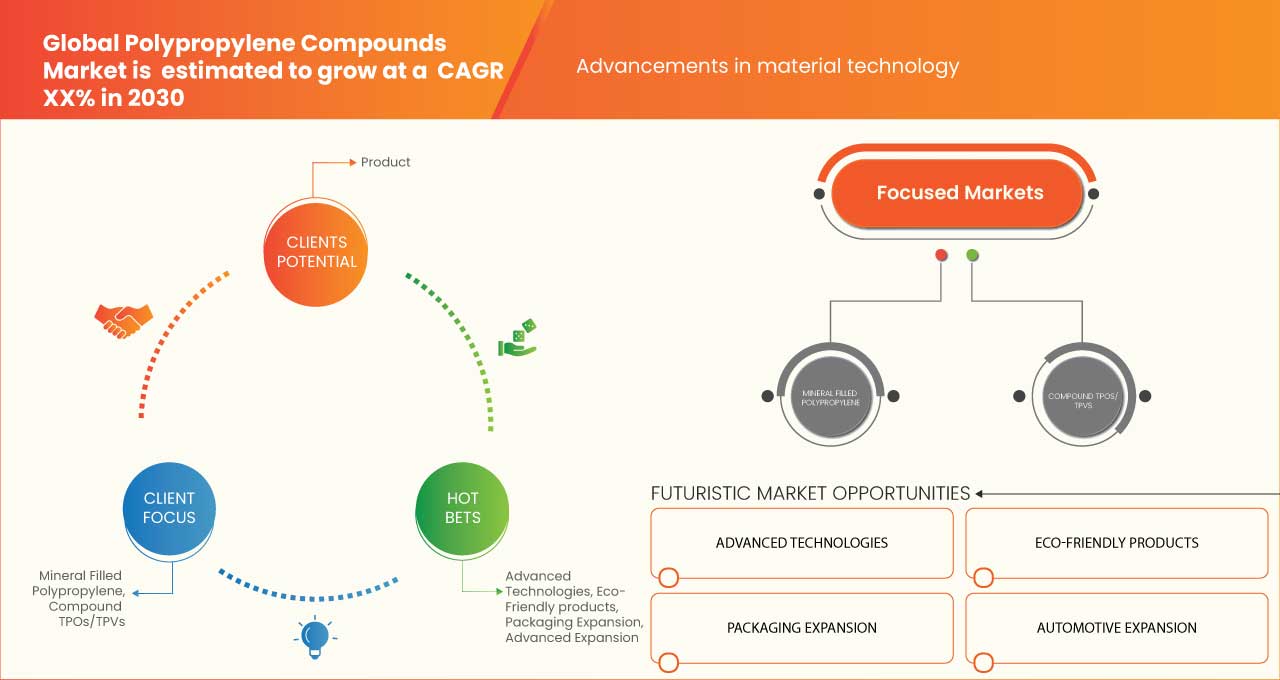
A crescente procura de compostos de polipropileno em várias indústrias de utilização final é um factor fundamental para o crescimento do mercado. Os compostos de polipropileno são materiais altamente versáteis que oferecem uma combinação de propriedades desejáveis, incluindo alta resistência, baixo peso, resistência química e custo-efetividade. Essas propriedades as tornam adequadas para uma ampla gama de aplicações em diferentes setores, impulsionando sua adoção em indústrias como automotiva, embalagem, construção e eletrônica.
O relatório de mercado global de compostos de polipropileno fornece detalhes de market share, novos desenvolvimentos e o impacto de atores de mercado nacionais e localizados, analisa oportunidades em termos de bolsas de receita emergentes, mudanças na regulamentação de mercado, aprovações de produtos, decisões estratégicas, lançamentos de produtos, expansões geográficas e inovações tecnológicas no mercado. Para entender a análise e o cenário de mercado, entre em contato conosco para um breve analista. Nossa equipe irá ajudá-lo a criar uma solução de impacto de receita para alcançar seu objetivo desejado.
|
Metric de Relatório |
Detalhes |
|
Período de previsão |
2023 a 2030 |
|
Ano de base |
2022 |
|
Anos Históricos |
2021 (Personalizável até 2015 - 2020) |
|
Unidades quantitativas |
Receitas em milhares de dólares |
|
Segmentos Cobertos |
Produto (polipropileno recheado mineral, TPOs/TVPs compostos, concentrados aditivos, reforçados com vidro e outros), tipo de polímero (homopolímeros e copolímeros), aplicação (fibra, filme e folha, ráfia e outros), uso final (automotivo, embalagem, construção e construção, elétrica e eletrônica, bens de consumo, medicina, têxtil e outros |
|
Países abrangidos |
EUA, Canadá, México, Alemanha, Reino Unido, Itália, França, Espanha, Suíça, Rússia, Turquia, Bélgica, Holanda, Suécia, Dinamarca, Noruega, Finlândia, Resto da Europa, China, Índia, Japão, Coreia do Sul, Austrália, Nova Zelândia, Malásia, Singapura, Tailândia, Taiwan, Indonésia, Filipinas, Hong Kong, Resto da Ásia- Pacífico, Brasil, Argentina, Resto da América do Sul, África do Sul, Emirados Árabes Unidos, Arábia Saudita, Kuwait, Egito, Israel, Omã Catar, Bahrein Resto do Oriente Médio e África |
|
Jogadores de mercado cobertos |
Mitsui Chemicals, Inc., Exxon Mobil Corporation, SABIC, Borealis AG, Braskem, China Petrochemical Corporation (SINOPEC), Celanese Corporation, BASF SE, Formosa Plastics Group, LyondellBasell Industries Holdings B.V., Avient Corporation, Reliance Industries Limited, Sasol, SCG Chemicals Public Company Limited, Trinseo, TotalEnergies, GS GLOBAL CORP, LG Chem, Repsol e INEOS, entre outros |
Definição do mercado
Os compostos de polipropileno (PP) são resinas termoplásticas constituídas por uma ou mais poliolefinas de base e componentes adicionais, tais como:modificadores de impacto, enchimentos e fortalecedores (por exemplo, enchimentos minerais e fibra de vidro), cores e aditivos. Estes compostos de polipropileno têm várias vantagens e são utilizados em uma ampla gama de indústrias, incluindo automotivos, embalagens, têxteis, produtos de consumo, entre outros. O composto PP é um termoplástico robusto, rígido e cristalino. O monômero de propeno é usado para o fazer.
Global Polypropilene Compounds Mercado Dinâmico
Controladores
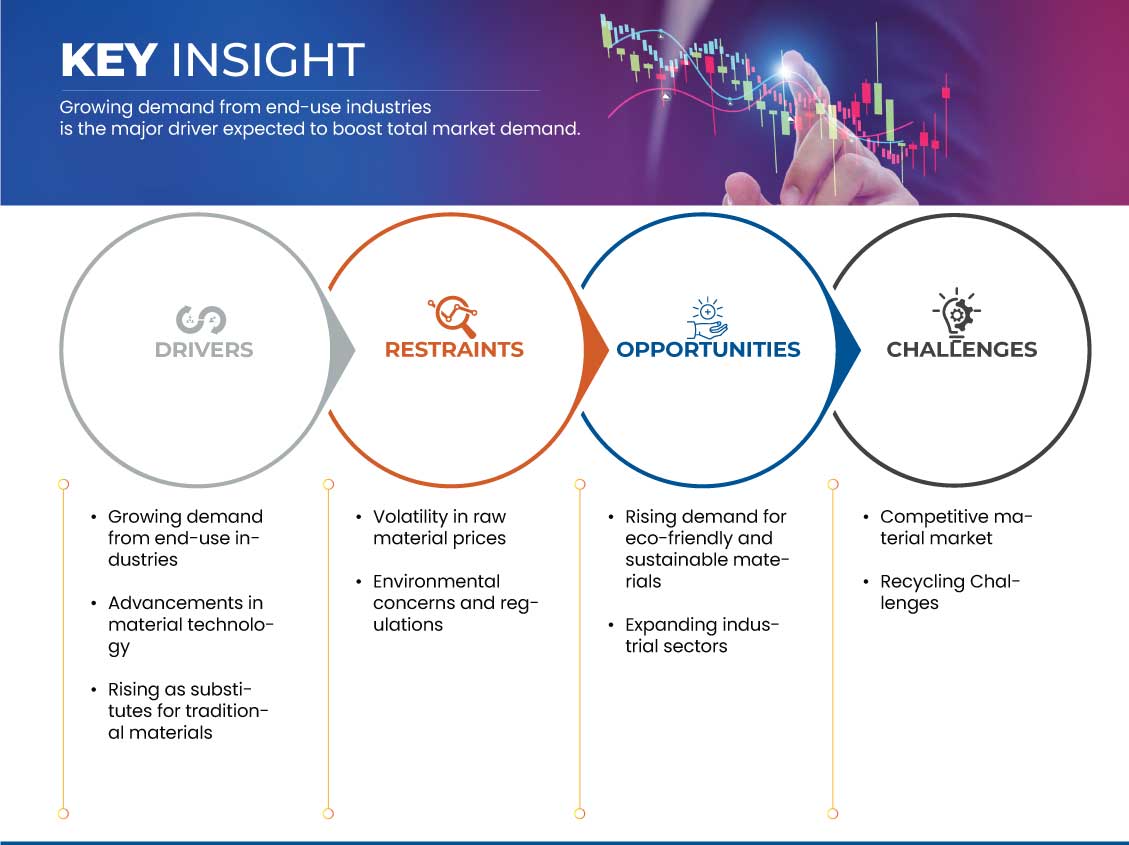
- Aumento da demanda das indústrias de uso final
A crescente procura de compostos de polipropileno em várias indústrias de utilização final é um factor fundamental para o crescimento do mercado. Os compostos de polipropileno são materiais altamente versáteis que oferecem uma combinação de propriedades desejáveis, incluindo alta resistência, baixo peso, resistência química e custo-efetividade.
Na indústria automóvel, os fabricantes estão cada vez mais incorporando compostos de polipropileno na produção de vários componentes devido à sua natureza leve. O setor automotivo está focado na sustentabilidade e eficiência de combustível, levando a uma crescente demanda de materiais leves que podem ajudar a reduzir o peso do veículo e melhorar a economia de combustível. Os compostos de polipropileno, com a sua capacidade de satisfazer os requisitos de desempenho enquanto mais leves do que os materiais tradicionais, são bem adaptados para este fim.
- Avanços na tecnologia de materiais
Os avanços tecnológicos nas técnicas de formulação e processamento de materiais têm sido fundamentais no desenvolvimento de compostos de polipropileno de alto desempenho. Estas inovações permitiram aos fabricantes adaptar as propriedades dos compostos de polipropileno para satisfazer necessidades e requisitos específicos da indústria.
Os esforços de investigação e desenvolvimento no domínio dos compostos de polipropileno resultaram na criação de formulações novas e melhoradas. Esses compostos avançados atendem a nichos de mercado e aplicações de alto valor, ampliando o potencial do mercado e atraindo novos clientes. Por exemplo, a demanda por compostos de polipropileno com maior resistência mecânica e resistência química está aumentando em indústrias como automotiva e eletrônica.
- Subindo como substitutos de materiais tradicionais
Compostos de polipropileno estão sendo cada vez mais usados como substitutos de materiais tradicionais, como metais, vidro e outros plásticos em várias aplicações. A mudança para materiais leves em indústrias como automotivo, aeroespacial e bens de consumo é impulsionada pela necessidade de melhorar a eficiência do combustível, reduzir as emissões e melhorar o desempenho global.
Na indústria automotiva, a substituição de peças metálicas por compostos de polipropileno tornou-se mais comum devido ao seu menor peso e resistência comparável. Componentes mais leves contribuem para reduzir o consumo de combustível e reduzir as emissões, alinhando-se com os esforços da indústria para a sustentabilidade.
Em conclusão, as propriedades versáteis dos compostos de polipropileno, juntamente com avanços tecnológicos contínuos, tornam-nos cada vez mais atraentes para várias indústrias que buscam soluções leves, duráveis e econômicas. À medida que a demanda continua aumentando e a inovação impulsiona o desenvolvimento de variantes de alto desempenho, espera-se que os compostos de polipropileno desempenhem um papel ainda mais significativo na formação do futuro dos materiais utilizados em diversas aplicações e na promoção da sustentabilidade em vários setores. Prevê-se que a utilização crescente de compostos de polipropileno como substituto conduza ao crescimento do mercado
OPORTUNIDADES
- Aumento da procura de materiais eco-amigos e sustentáveis
A crescente procura de materiais ecológicos e sustentáveis tornou-se um motor proeminente para a inovação e o desenvolvimento de produtos entre as indústrias. À medida que as preocupações ambientais aumentam, os consumidores, as empresas e os governos estão a mostrar uma maior preferência por produtos com reduzido impacto ambiental. Em resposta a essa demanda, o desenvolvimento e comercialização de compostos de polipropileno sustentáveis e bio-baseados apresentam oportunidades significativas para o mercado.
Os compostos de polipropileno bio-baseados são derivados de recursos renováveis, como matérias-primas à base de plantas. Ao contrário do polipropileno convencional, que se baseia no propileno derivado de combustíveis fósseis, o polipropileno à base de bio-base é fabricado utilizando fontes de biomassa renováveis. Ao substituir uma porção de matérias-primas à base de petróleo por alternativas renováveis, o polipropileno à base de bio-base pode reduzir significativamente a pegada de carbono e a dependência de recursos fósseis finitos.
- Expansão dos setores industriais
A expansão dos setores industriais nas economias em desenvolvimento apresenta oportunidades de crescimento emocionantes para o mercado global de compostos de polipropileno. Como essas economias experimentam rápida urbanização e industrialização, a demanda por materiais avançados, incluindo compostos de polipropileno, está em ascensão.
Nos países em desenvolvimento, a indústria da construção civil é um grande consumidor de compostos de polipropileno devido ao desenvolvimento de infraestrutura e expansão urbana em curso. A demanda por tubos, acessórios e materiais de isolamento de alta qualidade cresceu significativamente, proporcionando amplas oportunidades para os operadores do mercado atenderem a esses mercados emergentes.
Na agricultura, os compostos de polipropileno estão sendo empregados de formas inovadoras. São utilizados em aplicações comofilmes em estufa, materiais de proteção de culturas e sistemas de irrigação. Como o setor agrícola busca soluções mais eficientes e sustentáveis para enfrentar os desafios da segurança alimentar, espera-se que a demanda por materiais avançados, como os compostos de polipropileno, cresça, o que deve criar oportunidades para o crescimento do mercado.
Restrições/Desafios
- Volatilidade em preços de matérias-primas
O custo dos compostos de polipropileno é fortemente influenciado pelos preços das matérias-primas, nomeadamente o monômero de propileno. O propileno é uma matéria-prima fundamental para a produção de polipropileno, e a sua disponibilidade e preços podem ter um impacto significativo no custo global de produção de compostos de polipropileno.
Flutuações nos preços das matérias-primas podem resultar de vários fatores, incluindo mudanças na dinâmica global de oferta e demanda, tensões geopolíticas, desastres naturais que afetam as instalações de produção e flutuações monetárias. Tal volatilidade de preços coloca desafios aos fabricantes e usuários finais, pois afeta estruturas de custos, gestão de estoques e margens de lucro.
Em conclusão, as flutuações de preços e a disponibilidade de matérias-primas podem afetar a disponibilidade de substitutos. As alterações de preços ou as perturbações na oferta de produtos substitutos podem afectar a procura de polipropileno e dificultar a sua expansão do mercado.
- Mercado de materiais competitivos
Compostos de polipropileno enfrentam concorrência de uma ampla gama de plásticos de engenharia e materiais avançados que oferecem propriedades semelhantes ou mesmo melhoradas. Como as indústrias buscam materiais com características de desempenho específicas, os fabricantes de compostos de polipropileno devem inovar continuamente e melhorar seus produtos para permanecer competitivos no mercado.
Um dos principais concorrentes dos compostos de polipropileno é o polietileno (PE), outro polímero termoplástico popular. Embora os compostos de polipropileno ofereçam melhor resistência mecânica, o polietileno é conhecido por sua resistência ao impacto superior e flexibilidade. Dependendo da aplicação, os utilizadores finais podem optar por polietileno em vez de compostos de polipropileno.
Além disso, os fabricantes podem alavancar a versatilidade de compostos de polipropileno para desenvolver formulações personalizadas que atendem a aplicações de nicho. Ao colaborar estreitamente com os clientes e compreender as suas necessidades específicas, os fabricantes podem criar soluções personalizadas, reforçando a sua posição competitiva no mercado, o que deverá constituir um desafio para o crescimento do mercado.
Desenvolvimento recente
- Em maio de 2023, a LyondellBasell anunciou que a Alujain National Industrial Company (Alujain) escolheu a tecnologia de processo de polipropileno LyondellBasell para uma nova linha de tecnologia de processo Spherizone. A National Petrochemical Industrial Co. (NatPet), que opera uma linha de tecnologia de processo Spheripol, pertence à Alujain. Essa liderança tecnológica é um facilitador crítico do crescimento.
- Em junho de 2023, Borealis concordou em adquirir Rialti, um dos principais fabricantes europeus de compostos de polipropileno (PP) mecanicamente recuperados para moldagem por injeção e extrusão. O projeto expandirá a gama circular de Borealis adicionando 50.000 toneladas de capacidade de compostagem reciclada e satisfazendo a crescente demanda dos clientes por soluções ambientalmente amigáveis.
Global Polypropilene Compounds Market Scope
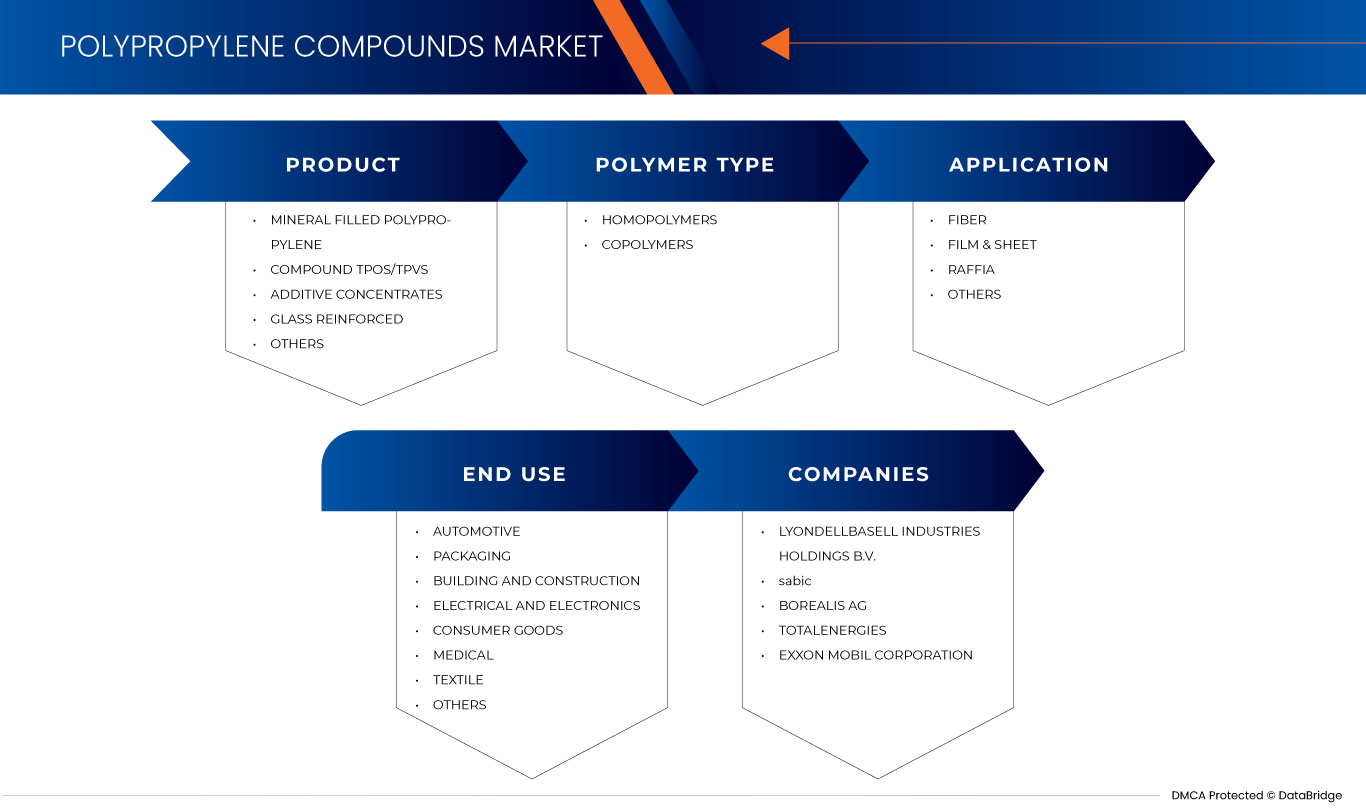
O mercado global de compostos de polipropileno é categorizado com base em produto, tipo de polímero, aplicação e uso final. O crescimento entre esses segmentos irá ajudá-lo a analisar os principais segmentos de crescimento nas indústrias e fornecer aos usuários uma visão geral de mercado valiosa e insights de mercado para tomar decisões estratégicas para identificar as principais aplicações do mercado.
Produto
- Polipropileno mineral preenchido
- TPOS/TPVS compostos
- Concentrados aditivos
- Vidro Reforçado
- Outros
Com base no produto, o mercado é segmentado em polipropileno mineral preenchido, compostos tpos/tpvs, aditivos concentrados de vidro reforçado, entre outros.
Tipo de polímero
- Homopolímeros
- Copolímeros
Com base no tipo de polímero, o mercado é segmentado em homopolímeros e copolímeros.
Aplicação
- Fibra
- Folha de filme
- Raffia
- Outros
Com base na aplicação, o mercado é segmentado em fibra, filme & folha, ráfia, entre outros.
Uso Final
- Automóvel
- Embalagem
- Construção e construção
- Elétrica e Eletrônica
- Bens de consumo
- Médico
- Tecidos
- Outros
Com base no utilizador final, o mercado é segmentado em automóveis, embalagens, construção e construção, eléctricos e electrónicos, bens de consumo, médicos, têxteis, entre outros.
Global Polypropilene Compounds Market Regional Analysis/Insights
O mercado global de compostos de polipropileno é segmentado com base no produto, tipo de polímero, aplicação e uso final.
Os países do mercado global de compostos de polipropileno são EUA, Canadá, México, Alemanha, Reino Unido, Itália, França, Espanha, Suíça, Rússia, Turquia, Bélgica, Holanda, Suécia, Dinamarca, Noruega, Finlândia, Resto da Europa, China, Índia, Japão, Coreia do Sul, Austrália, Nova Zelândia, Malásia, Singapura, Tailândia, Taiwan, Indonésia, Filipinas, Hong Kong, Resto da Ásia- Pacífico, Brasil, Argentina, Resto da América do Sul, África do Sul, Emirados Árabes Unidos, Arábia Saudita, Kuwait, Egito, Israel, Omã Catar, Bahrain Resto do Oriente Médio e África.
A China está dominando o mercado de compostos de polipropileno Ásia-Pacífico em termos de market share e receita de mercado devido à crescente demanda das indústrias de uso final nesta região. A crescente procura das indústrias de utilização final também contribui para o crescimento do mercado.
A Alemanha está dominando os países da Europa do mercado de compostos de polipropileno devido à crescente demanda nos setores automotivo, de embalagens e eletrônicos. Os EUA estão dominando na América do Norte devido à expansão dos setores industriais. A secção «país» do relatório também fornece factores individuais de impacto no mercado e alterações na regulamentação do mercado que afectam as tendências actuais e futuras do mercado. Análise de dados a jusante e a montante da cadeia de valor, análise de cinco forças porter tendências técnicas e estudos de caso são alguns dos indicadores usados para prever o cenário de mercado para cada país. Além disso, a presença e disponibilidade de marcas globais e seus desafios enfrentados devido à grande ou escassa concorrência de marcas locais e nacionais, o impacto das tarifas nacionais e rotas comerciais são considerados ao fornecer análise de previsão dos dados do país.
Paisagem competitiva e análise de mercado de compostos de polipropileno global
Os compostos globais de polipropileno A paisagem competitiva do mercado fornece detalhes dos concorrentes. Detalhes incluídos são visão geral da empresa, finanças da empresa, receita gerada, potencial de mercado, investimento em pesquisa e desenvolvimento, novas iniciativas de mercado, locais e instalações de produção, pontos fortes e fracos da empresa, lançamento de produtos, testes de produtos pipelines, aprovações de produtos, patentes, largura e amplitude do produto, dominância de aplicação, curva de linha de vida tecnológica. Os dados acima apresentados estão relacionados apenas com o foco das empresas relacionado com o mercado global de compostos de polipropileno.
Alguns dos principais participantes que operam no mercado global de compostos de polipropileno são Mitsui Chemicals, Inc., Exxon Mobil Corporation, SABIC, Borealis AG, Braskem, China Petrochemical Corporation (SINOPEC), Celanese Corporation, BASF SE, Formosa Plastics Group, LyondellBasell Industries Holdings B.V., Avient Corporation, Reliance Industries Limited, Sasol, SCG Chemicals Public Company Limited, Trineo, TotalEnergies, GS GLOBAL CORP, LG Chem, Repsol e INEOS, entre outros.
SKU-
Obtenha acesso online ao relatório sobre a primeira nuvem de inteligência de mercado do mundo

- Painel interativo de análise de dados
- Painel de análise da empresa para oportunidades de elevado potencial de crescimento
- Acesso de analista de pesquisa para personalização e customização. consultas
- Análise da concorrência com painel interativo
- Últimas notícias, atualizações e atualizações Análise de tendências
- Aproveite o poder da análise de benchmark para um rastreio abrangente da concorrência
Índice
1 INTRODUÇÃO
1.1 OBJETIVOS DO ESTUDO
1.2 DEFINIÇÃO DE MERCADO
1.3 VISÃO GERAL
1.4 LIMITAÇÕES
1,5 MERCADOS COBERTOS
2 SEGMENTAÇÃO DE MERCADO
2.1 MERCADOS COBERTOS
2.2 ÂMBITO GEOGRÁFICO
2,3 ANOS CONSIDERADOS PARA O ESTUDO
2.4 MOEDA E PREÇOS
2.5 MODELO DE VALIDAÇÃO DE DADOS TRIPÉ DBMR
2.6 CURVA DE VIDA DO PRODUTO
2.7 MODELAGEM MULTIVARIADA
2.8 ENTREVISTAS PRINCIPAIS COM PRINCIPAIS LÍDERES DE OPINIÃO
2.9 GRADE DE POSIÇÃO DE MERCADO DBMR
2.1 GRADE DE COBERTURA DE APLICAÇÃO DE MERCADO
2.11 MATRIZ DE DESAFIOS DO MERCADO DBMR
2.12 ANÁLISE DE PARTICIPAÇÃO DE FORNECEDORES DBMR
2.13 FONTES SECUNDÁRIAS
2.14 PREMISSAS
3 RESUMO EXECUTIVO
4 INSIGHTS PREMIUM
4.1 ANÁLISE PESTLE
4.1.1 FATORES POLÍTICOS
4.1.2 FATORES ECONÔMICOS
4.1.3 FATORES SOCIAIS
4.1.4 FATORES TECNOLÓGICOS
4.1.5 FATORES LEGAIS
4.1.6 FATORES AMBIENTAIS
4.2 AS CINCO FORÇAS DE PORTER:
4.2.1 AMEAÇA DE NOVOS ENTRADANTES:
4.2.2 A AMEAÇA DOS SUBSTITUTOS:
4.2.3 PODER DE BARGANHA DO CLIENTE:
4.2.4 PODER DE BARGANHA DO FORNECEDOR:
4.2.5 CONCORRÊNCIA INTERNA (RIVALIDADE):
4.3 CENÁRIO DE IMPORTAÇÃO E EXPORTAÇÃO
4.4 ANÁLISE DE CONSUMO DE PRODUÇÃO ESTIMADA
4.5 CRITÉRIOS DE SELEÇÃO DE FORNECEDORES
4.6 CENÁRIO DE MUDANÇAS CLIMÁTICAS
4.6.1 PREOCUPAÇÕES AMBIENTAIS
4.6.2 RESPOSTA DA INDÚSTRIA
4.6.3 PAPEL DO GOVERNO
4.6.4 RECOMENDAÇÃO DO ANALISTA
4.7 ANÁLISE DE PREÇOS
4.8 COBERTURA DE MATÉRIA-PRIMA
4.8.1 PROPILENO
4.8.2 ADITIVOS
4.8.3 ENCHIMENTOS
4.8.4 LUBRIFICANTES
4.8.5 RETARDANTES DE CHAMA
4.8.6 AGENTES ANTIESTÁTICOS
4.9 CADEIA DE SUPRIMENTOS DO MERCADO GLOBAL DE COMPOSTOS DE POLIPROPILENO
4.9.1 VISÃO GERAL:
4.9.2 CENÁRIO DE CUSTOS LOGÍSTICOS
4.9.3 IMPORTÂNCIA DOS PRESTADORES DE SERVIÇOS LOGÍSTICOS:
4.1 AVANÇO TECNOLÓGICO DOS FABRICANTES
5 COBERTURA REGULAMENTAR
6 VISÃO GERAL DO MERCADO
6.1 MOTORISTAS
6.1.1 DEMANDA CRESCENTE DAS INDÚSTRIAS DE USO FINAL
6.1.2 AVANÇOS NA TECNOLOGIA DE MATERIAIS
6.1.3 SURGIRAM COMO SUBSTITUTOS PARA MATERIAIS TRADICIONAIS
6.2 RESTRIÇÕES
6.2.1 VOLATILIDADE NOS PREÇOS DAS MATÉRIAS-PRIMAS
6.2.2 PREOCUPAÇÕES E REGULAMENTAÇÕES AMBIENTAIS
6.3 OPORTUNIDADES
6.3.1 CRESCENTE DEMANDA POR MATERIAIS ECOLÓGICOS E SUSTENTÁVEIS
6.3.2 EXPANSÃO DOS SETORES INDUSTRIAIS
6.4 DESAFIOS
6.4.1 MERCADO DE MATERIAIS COMPETITIVOS
6.4.2 DESAFIOS DA RECICLAGEM
7 MERCADOS GLOBAIS DE COMPOSTOS DE POLIPROPILENO POR GEOGRAFIA
7.1 VISÃO GERAL
7.2 AMÉRICA DO NORTE
7.3 EUROPA
7.4 ÁSIA-PACÍFICO
7,5 AMÉRICA DO SUL
7.6 ORIENTE MÉDIO E ÁFRICA
8 MERCADO GLOBAL DE COMPOSTOS DE POLIPROPILENO: PANORAMA DA EMPRESA
8.1 ANÁLISE DE AÇÕES DA EMPRESA: GLOBAL
8.2 ANÁLISE DE AÇÕES DA EMPRESA: AMÉRICA DO NORTE
8.3 ANÁLISE DE AÇÕES DA EMPRESA: ÁSIA-PACÍFICO
8.4 ANÁLISE DE AÇÕES DA EMPRESA: EUROPA
8.5 LANÇAMENTO DO PRODUTO
8.6 INVESTIMENTO
8.7 PRÊMIO
8.8 EXPANSÃO
8.9 NOVAS INSTALAÇÕES
8.1 COLABORAÇÃO
8.11 AQUISIÇÃO
9 ANÁLISE SWOT
10 PERFIS DE EMPRESAS
10.1 LYONDELLBASELL INDUSTRIES HOLDINGS BV
10.1.1 RESUMO DA EMPRESA
10.1.2 ANÁLISE DE RECEITA
10.1.3 ANÁLISE DE AÇÕES DA COPANY
10.1.4 PORTFÓLIO DE PRODUTOS
10.1.5 DESENVOLVIMENTO RECENTE
10.2 SABIC
10.2.1 RESUMO DA EMPRESA
10.2.2 ANÁLISE DE RECEITA
10.2.3 ANÁLISE DE AÇÕES DA COPANY
10.2.4 PORTFÓLIO DE PRODUTOS
10.2.5 DESENVOLVIMENTO RECENTE
10.3 BOREALIS AG
10.3.1 RESUMO DA EMPRESA
10.3.2 ANÁLISE DE RECEITA
10.3.3 ANÁLISE DE AÇÕES DA COPANY
10.3.4 PORTFÓLIO DE PRODUTOS
10.3.5 DESENVOLVIMENTO RECENTE
10.4 ENERGIAS TOTAIS
10.4.1 RESUMO DA EMPRESA
10.4.2 ANÁLISE DE RECEITA
10.4.3 ANÁLISE DE AÇÕES DA COPANY
10.4.4 PORTFÓLIO DE PRODUTOS
10.4.5 DESENVOLVIMENTO RECENTE
10.5 EXXON MOBIL CORPORATION
10.5.1 RESUMO DA EMPRESA
10.5.2 ANÁLISE DE RECEITA
10.5.3 ANÁLISE DE AÇÕES DA COPANY
10.5.4 PORTFÓLIO DE PRODUTOS
10.5.5 DESENVOLVIMENTO RECENTE
10.6 AVIENT CORPORATION
10.6.1 RESUMO DA EMPRESA
10.6.2 ANÁLISE DE RECEITA
10.6.3 PORTFÓLIO DE PRODUTOS
10.6.4 DESENVOLVIMENTO RECENTE
10.7 BASF SE
10.7.1 RESUMO DA EMPRESA
10.7.2 ANÁLISE DE RECEITA
10.7.3 PORTFÓLIO DE PRODUTOS
10.7.4 DESENVOLVIMENTO RECENTE
10.8 BRASKEM
10.8.1 RESUMO DA EMPRESA
10.8.2 ANÁLISE DE RECEITA
10.8.3 PORTFÓLIO DE PRODUTOS
10.8.4 DESENVOLVIMENTO RECENTE
10.9 CORPORAÇÃO CELANESE
10.9.1 RESUMO DA EMPRESA
10.9.2 ANÁLISE DE RECEITA
10.9.3 PORTFÓLIO DE PRODUTOS
10.9.4 DESENVOLVIMENTO RECENTE
10.1 CORPORAÇÃO PETROQUÍMICA DA CHINA (SINOPEC)
10.10.1 RESUMO DA EMPRESA
10.10.2 ANÁLISE DE RECEITA
10.10.3 PORTFÓLIO DE PRODUTOS
10.10.4 DESENVOLVIMENTO RECENTE
10.11 GRUPO DE PLÁSTICOS FORMOSA
10.11.1 RESUMO DA EMPRESA
10.11.2 ANÁLISE DE RECEITA
10.11.3 PORTFÓLIO DE PRODUTOS
10.11.4 DESENVOLVIMENTO RECENTE
10.12 GS GLOBAL CORP
10.12.1 RESUMO DA EMPRESA
10.12.2 ANÁLISE DE RECEITA
10.12.3 PORTFÓLIO DE PRODUTOS
10.12.4 DESENVOLVIMENTO RECENTE
10.13 INEOS
10.13.1 RESUMO DA EMPRESA
10.13.2 ANÁLISE DE RECEITA
10.13.3 PORTFÓLIO DE PRODUTOS
10.13.4 DESENVOLVIMENTO RECENTE
10.14 LG QUÍMICA
10.14.1 RESUMO DA EMPRESA
10.14.2 ANÁLISE DE RECEITA
10.14.3 PORTFÓLIO DE PRODUTOS
10.14.4 DESENVOLVIMENTO RECENTE
10.15 MITSUI CHEMICALS, INC.
10.15.1 RESUMO DA EMPRESA
10.15.2 ANÁLISE DE RECEITA
10.15.3 PORTFÓLIO DE PRODUTOS
10.15.4 DESENVOLVIMENTOS RECENTES
10.16 RELIANCE INDUSTRIES LIMITADA
10.16.1 RESUMO DA EMPRESA
10.16.2 ANÁLISE DE RECEITA
10.16.3 PORTFÓLIO DE PRODUTOS
10.16.4 DESENVOLVIMENTO RECENTE
10.17 REPSOL
10.17.1 RESUMO DA EMPRESA
10.17.2 ANÁLISE DE RECEITA
10.17.3 PORTFÓLIO DE PRODUTOS
10.17.4 DESENVOLVIMENTO RECENTE
10.18 SASOL
10.18.1 RESUMO DA EMPRESA
10.18.2 ANÁLISE DE RECEITA
10.18.3 PORTFÓLIO DE PRODUTOS
10.18.4 DESENVOLVIMENTO RECENTE
10.19 SCG CHEMICALS PUBLIC COMPANY LIMITADA
10.19.1 RESUMO DA EMPRESA
10.19.2 ANÁLISE DE RECEITA
10.19.3 PORTFÓLIO DE PRODUTOS
10.19.4 DESENVOLVIMENTO RECENTE
10.2 TRINSEO
10.20.1 RESUMO DA EMPRESA
10.20.2 ANÁLISE DE RECEITA
10.20.3 PORTFÓLIO DE PRODUTOS
10.20.4 DESENVOLVIMENTO RECENTE
11 QUESTIONÁRIO
12 RELATÓRIOS RELACIONADOS
Lista de Figura
FIGURA 1 MERCADO GLOBAL DE COMPOSTOS DE POLIPROPILENO
FIGURA 2 MERCADO GLOBAL DE COMPOSTOS DE POLIPROPILENO: TRIANGULAÇÃO DE DADOS
FIGURA 3 MERCADO GLOBAL DE COMPOSTOS DE POLIPROPILENO: ANÁLISE DROC
FIGURA 4 MERCADO GLOBAL DE COMPOSTOS DE POLIPROPILENO: ANÁLISE DE MERCADO GLOBAL VS. REGIONAL
FIGURA 5 MERCADO GLOBAL DE COMPOSTOS DE POLIPROPILENO: ANÁLISE DE PESQUISA DA EMPRESA
FIGURA 6 MERCADO GLOBAL DE COMPOSTOS DE POLIPROPILENO: A CURVA DA LINHA DE VIDA DO PRODUTO
FIGURA 7 MERCADO GLOBAL DE COMPOSTOS DE POLIPROPILENO: MODELAGEM MULTIVARIADA
FIGURA 8 MERCADO GLOBAL DE COMPOSTOS DE POLIPROPILENO: DEMOGRAFIA DA ENTREVISTA
FIGURA 9 MERCADO GLOBAL DE COMPOSTOS DE POLIPROPILENO: GRADE DE POSIÇÃO DE MERCADO DBMR
FIGURA 10 MERCADO GLOBAL DE COMPOSTOS DE POLIPROPILENO: GRADE DE COBERTURA DE APLICAÇÃO DE MERCADO
FIGURA 11 MERCADO GLOBAL DE COMPOSTOS DE POLIPROPILENO: A MATRIZ DE DESAFIOS DO MERCADO
FIGURA 12 MERCADO GLOBAL DE COMPOSTOS DE POLIPROPILENO: ANÁLISE DA PARTICIPAÇÃO DOS FORNECEDORES
FIGURA 13 MERCADO GLOBAL DE COMPOSTOS DE POLIPROPILENO: SEGMENTAÇÃO
FIGURA 14 ESPERA-SE QUE A ÁSIA-PACÍFICO DOMINE O MERCADO GLOBAL DE COMPOSTOS DE POLIPROPILENO, ENQUANTO A AMÉRICA DO NORTE DEVE CRESCER COM O MAIOR CAGR NO PERÍODO PREVISTO
FIGURA 15 A CRESCENTE DEMANDA DAS INDÚSTRIAS DE USO FINAL DEVE IMPULSIONAR O MERCADO GLOBAL DE COMPOSTOS DE POLIPROPILENO NO PERÍODO PREVISTO
FIGURA 16 O POLIPROPILENO COM CARGA MINERAL DEVE SER REPRESENTANTE DA MAIOR PARCIALIDADE DO MERCADO GLOBAL DE COMPOSTOS DE POLIPROPILENO EM 2023 E 2030
FIGURA 17 O ORIENTE MÉDIO E A ÁFRICA SÃO OS MERCADOS COM CRESCIMENTO MAIS RÁPIDO PARA OS FABRICANTES DE COMPOSTOS DE POLIPROPILENO NO PERÍODO PREVISTO
FIGURA 18 CENÁRIO DE IMPORTAÇÃO E EXPORTAÇÃO (MIL USD)
FIGURA 19 CRITÉRIOS DE SELEÇÃO DE FORNECEDORES
FIGURA 20 MOTIVADORES, RESTRIÇÕES, OPORTUNIDADES E DESAFIOS DO MERCADO GLOBAL DE COMPOSTOS DE POLIPROPILENO
FIGURA 21 MERCADO GLOBAL DE COMPOSTOS DE POLIPROPILENO: EM RESUMO (2022)
FIGURA 22 MERCADO GLOBAL DE COMPOSTOS DE POLIPROPILENO: POR REGIÃO (2022)
FIGURA 23 MERCADO GLOBAL DE COMPOSTOS DE POLIPROPILENO: POR REGIÃO (2023 E 2030)
FIGURA 24 MERCADO GLOBAL DE COMPOSTOS DE POLIPROPILENO: POR REGIÃO (2022 E 2030)
FIGURA 25 MERCADO GLOBAL DE COMPOSTOS DE POLIPROPILENO: POR PRODUTO (2023 - 2030)
FIGURA 26 MERCADO DE COMPOSTOS DE POLIPROPILENO DA AMÉRICA DO NORTE: EM RESUMO (2022)
FIGURA 27 MERCADO DE COMPOSTOS DE POLIPROPILENO DA AMÉRICA DO NORTE: POR PAÍS (2022)
FIGURA 28 MERCADO DE COMPOSTOS DE POLIPROPILENO DA AMÉRICA DO NORTE: POR PAÍS (2023 E 2030)
FIGURA 29 MERCADO DE COMPOSTOS DE POLIPROPILENO DA AMÉRICA DO NORTE: POR PAÍS (2022 E 2030)
FIGURA 30 MERCADO DE COMPOSTOS DE POLIPROPILENO DA AMÉRICA DO NORTE: POR PRODUTO (2023 - 2030)
FIGURA 31 MERCADO EUROPEU DE COMPOSTOS DE POLIPROPILENO: EM RESUMO (2022)
FIGURA 32 MERCADO EUROPEU DE COMPOSTOS DE POLIPROPILENO: POR PAÍS (2022)
FIGURA 33 MERCADO EUROPEU DE COMPOSTOS DE POLIPROPILENO: POR PAÍS (2023 E 2030)
FIGURA 34 MERCADO EUROPEU DE COMPOSTOS DE POLIPROPILENO: POR PAÍS (2022 E 2030)
FIGURA 35 MERCADO EUROPEU DE COMPOSTOS DE POLIPROPILENO: POR PRODUTO (2023 - 2030)
FIGURA 36 MERCADO DE COMPOSTOS DE POLIPROPILENO DA ÁSIA-PACÍFICO: EM RESUMO (2022)
FIGURA 37 MERCADO DE COMPOSTOS DE POLIPROPILENO DA ÁSIA-PACÍFICO: POR PAÍS (2022)
FIGURA 38 MERCADO DE COMPOSTOS DE POLIPROPILENO DA ÁSIA-PACÍFICO: POR PAÍS (2023 E 2030)
FIGURA 39 MERCADO DE COMPOSTOS DE POLIPROPILENO DA ÁSIA-PACÍFICO: POR PAÍS (2022 E 2030)
FIGURA 40 MERCADO EUROPEU DE COMPOSTOS DE POLIPROPILENO: POR PRODUTO (2023 - 2030)
FIGURA 41 MERCADO DE COMPOSTOS DE POLIPROPILENO DA AMÉRICA DO SUL: EM RESUMO (2022)
FIGURA 42 MERCADO DE COMPOSTOS DE POLIPROPILENO DA AMÉRICA DO SUL: POR PAÍS (2022)
FIGURA 43 MERCADO DE COMPOSTOS DE POLIPROPILENO DA AMÉRICA DO SUL: POR PAÍS (2023 E 2030)
FIGURA 44 MERCADO DE COMPOSTOS DE POLIPROPILENO DA AMÉRICA DO SUL: POR PAÍS (2022 E 2030)
FIGURA 45 MERCADO DE COMPOSTOS DE POLIPROPILENO DA AMÉRICA DO SUL: POR PRODUTO (2023 - 2030)
FIGURA 46 MERCADO DE COMPOSTOS DE POLIPROPILENO NO ORIENTE MÉDIO E ÁFRICA: EM RESUMO (2022)
FIGURA 47 MERCADO DE COMPOSTOS DE POLIPROPILENO NO ORIENTE MÉDIO E ÁFRICA: POR PAÍS (2022)
FIGURA 48 MERCADO DE COMPOSTOS DE POLIPROPILENO NO ORIENTE MÉDIO E ÁFRICA: POR PAÍS (2023 E 2030)
FIGURA 49 MERCADO DE COMPOSTOS DE POLIPROPILENO DA ÁFRICA E DO MÉDIO OESTE: POR PAÍS (2022 E 2030)
FIGURA 50 MERCADO DE COMPOSTOS DE POLIPROPILENO NO ORIENTE MÉDIO E ÁFRICA: POR PAÍS (2023 - 2030)
FIGURA 51 MERCADO GLOBAL DE COMPOSTOS DE POLIPROPILENO: PARTICIPAÇÃO DA EMPRESA EM 2022 (%)
FIGURA 52 MERCADO DE COMPOSTOS DE POLIPROPILENO DA AMÉRICA DO NORTE: PARTICIPAÇÃO DA EMPRESA EM 2022 (%)
FIGURA 53 MERCADO DE COMPOSTOS DE POLIPROPILENO DA ÁSIA-PACÍFICO: PARTICIPAÇÃO DA EMPRESA EM 2022 (%)
FIGURA 54 MERCADO EUROPEU DE COMPOSTOS DE POLIPROPILENO: PARTICIPAÇÃO DA EMPRESA EM 2022 (%)

Metodologia de Investigação
A recolha de dados e a análise do ano base são feitas através de módulos de recolha de dados com amostras grandes. A etapa inclui a obtenção de informações de mercado ou dados relacionados através de diversas fontes e estratégias. Inclui examinar e planear antecipadamente todos os dados adquiridos no passado. Da mesma forma, envolve o exame de inconsistências de informação observadas em diferentes fontes de informação. Os dados de mercado são analisados e estimados utilizando modelos estatísticos e coerentes de mercado. Além disso, a análise da quota de mercado e a análise das principais tendências são os principais fatores de sucesso no relatório de mercado. Para saber mais, solicite uma chamada de analista ou abra a sua consulta.
A principal metodologia de investigação utilizada pela equipa de investigação do DBMR é a triangulação de dados que envolve a mineração de dados, a análise do impacto das variáveis de dados no mercado e a validação primária (especialista do setor). Os modelos de dados incluem grelha de posicionamento de fornecedores, análise da linha de tempo do mercado, visão geral e guia de mercado, grelha de posicionamento da empresa, análise de patentes, análise de preços, análise da quota de mercado da empresa, normas de medição, análise global versus regional e de participação dos fornecedores. Para saber mais sobre a metodologia de investigação, faça uma consulta para falar com os nossos especialistas do setor.
Personalização disponível
A Data Bridge Market Research é líder em investigação formativa avançada. Orgulhamo-nos de servir os nossos clientes novos e existentes com dados e análises que correspondem e atendem aos seus objetivos. O relatório pode ser personalizado para incluir análise de tendências de preços de marcas-alvo, compreensão do mercado para países adicionais (solicite a lista de países), dados de resultados de ensaios clínicos, revisão de literatura, mercado remodelado e análise de base de produtos . A análise de mercado dos concorrentes-alvo pode ser analisada desde análises baseadas em tecnologia até estratégias de carteira de mercado. Podemos adicionar quantos concorrentes necessitar de dados no formato e estilo de dados que procura. A nossa equipa de analistas também pode fornecer dados em tabelas dinâmicas de ficheiros Excel em bruto (livro de factos) ou pode ajudá-lo a criar apresentações a partir dos conjuntos de dados disponíveis no relatório.











