



Global Quick Service Restaurant (QSR) Segmentação do Mercado de Abastecimento Ingrediente, Por Tipo de Ingrediente (Medidas e Aves, Ingredientes de Padaria, Molhos e Vestidos, Produtos lácteos, Vegetais e Frutos, Temperamentos e Temperamentos, Bebidas e Xaropes, Ingredientes Vegetais), Função (Enhance de sabor, Textura e Consistência, Estabilidade de prateleira, Enriquecimento Nutricional, Conveniência e Pronto para Uso, Otimização de Custos), Aplicação (Burgers & Sandwiches, Pizza & Pasta, Fried Chicken & Snacks, Bebidas, Sobremesa & Sorvete, Etnia & Regional Fast Food), Fonte (Baseada em animais, Base vegetal, Sintética/Processada, Fermentação-derivada), Forma (Fresh, Congelada, Seca/Deidrada, Líquida), Usuário Final (Alcanços de Restaurante, Cozinhas em Nuvem, Operadores, Franchise-derados, Distribuidores, Distribuidores de Compras Institucionais e Indústria
Serviço rápido Restaurante (QSR) IngredienteTamanho do Mercado
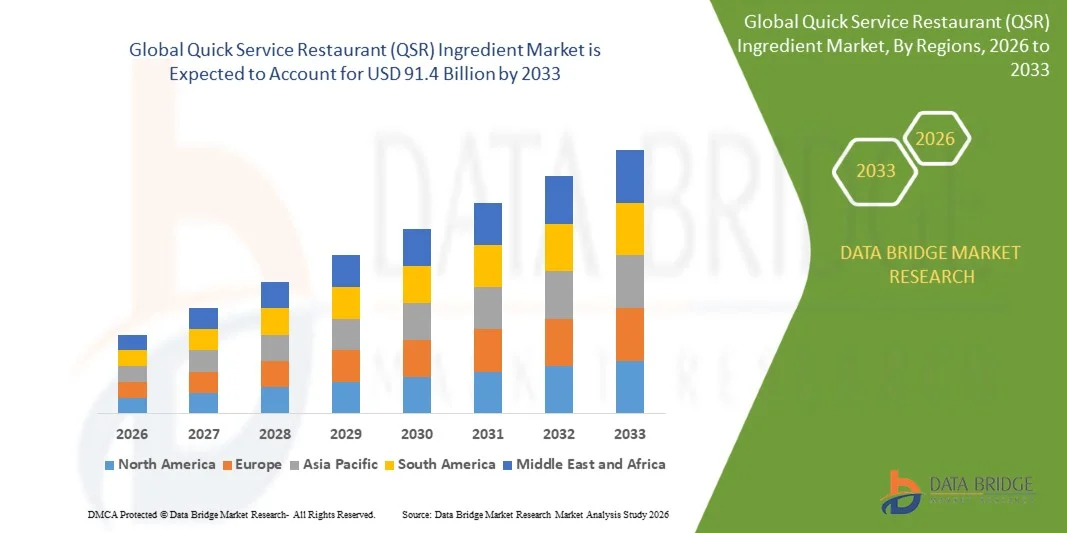
- O mundoServiço rápido Restaurante (QSR) Ingredientea dimensão do mercado foi avaliada emUSD 52,7 mil milhões em 2025e espera-se alcançar91,4 mil milhões de USD até 2033, emCAGR de 7,1%durante o período de previsão
- O mercado está testemunhando forte crescimento devido à rápida expansão das cadeias globais de QSR, crescente urbanização e crescente preferência do consumidor por opções de alimentos convenientes, acessíveis e prontos para comer
- O crescimento das marcas internacionais e regionais de QSR, juntamente com a crescente demanda por ingredientes padronizados, como molhos, pré-misturas de padaria, carne congelada e produtos lácteos, está impulsionando significativamente a demanda por sistemas organizados de fornecimento de ingredientes
Serviço rápido Restaurante (QSR) IngredienteAnálise de mercado
- Os sistemas de fornecimento de ingredientes QSR desempenham um papel fundamental na garantia de consistência, escalabilidade e controle de qualidade em cadeias de restaurantes globais
- Esses sistemas permitem o fornecimento padronizado de matérias-primas, como proteínas, ingredientes de padaria, molhos, temperos, bebidas e produtos lácteos para manter o sabor uniforme e eficiência operacional
- O mercado é impulsionado pelo aumento do consumo de fast food, expansão das plataformas de entrega e crescimento nas saídas de QSR franchisadas em economias emergentes
- A América do Norte dominou o mercado com uma parte de 36,8% em 2025, apoiada pela forte presença de cadeias globais de QSR e infraestrutura de abastecimento de serviços alimentares altamente desenvolvida
- Espera-se que a Ásia-Pacífico registre o crescimento mais rápido, impulsionado pelo aumento da renda disponível, urbanização e expansão de marcas internacionais de QSR em países como Índia, China e Indonésia
- O segmento de carne e ingredientes de aves dominou com uma participação de 31,5% em 2025, devido à alta demanda por hambúrgueres, frango frito e itens de menu processados à base de carne em cadeias QSR
Âmbito do relatório eServiço rápido Restaurante (QSR) IngredienteSegmentação do mercado
|
Atributos |
Serviço rápido Restaurante (QSR) IngredienteChavePerspectivas de mercado |
|
Segmentos Cobertos |
|
|
Países abrangidos |
América do Norte · U.S. · Canadá · México Europa · Alemanha · França · U.K. · Países Baixos · Suíça · Bélgica · Rússia · Itália · Espanha · Turquia · Resto da Europa Ásia- Pacífico · China · Japão · Índia · Coreia do Sul · Singapura · Malásia · Austrália · Tailândia · Indonésia · Filipinas · Resto da Ásia-Pacífico Médio Oriente e África · Arábia Saudita · U.A.E. · África do Sul · Egito · Israel · Resto do Oriente Médio e África América do Sul · Brasil · Argentina · Resto da América do Sul |
|
Jogadores do mercado chave |
· Cargill, Incorporated (EUA) · Sysco Corporation (EUA) · Tyson Foods, Inc. (EUA) · McCain Foods Limited (Canadá) · Nestlé Professional (Suíça) · JBS S.A. (Brasil) · Kerry Group plc (Irlanda) · Ingredion Incorporated (EUA) · Archer Daniels Midland Company (EUA) · Ingredientes Alimentares de Olam (Cingapura) · Lamb Weston Holdings, Inc. (EUA) · Hormel Foods Corporation (EUA) · Conagra Brands, Inc. (EUA) · BRF S.A. (Brasil) · Ajinomoto Co., Inc. (Japão) · US Foods Holding Corp. (EUA) · Lineage Logistics (EUA) · Americold Realty Trust (EUA) · Döhler GmbH (Alemanha) · Symrise AG (Alemanha) |
|
Oportunidades de Mercado |
· Expansão de cadeias de QSR globais e regionais em mercados emergentes · Aumento da procura de ingredientes proteicos vegetais e alternativos · Crescimento de cozinhas em nuvem e modelos de restaurante apenas para entrega |
|
Informações sobre o Valor Adicionado |
Além dos insights sobre cenários de mercado, como valor de mercado, taxa de crescimento, segmentação, cobertura geográfica e principais atores, os relatórios de mercado curados pela Data Bridge Market Research também incluem análise de especialistas em profundidade, análise de preços, análise de compartilhamento de marca, inquérito ao consumidor, análise demografia, análise da cadeia de suprimentos, análise da cadeia de valor, visão geral da matéria-prima/consumíveis, critérios de seleção de fornecedores, Análise de PESTLE, Análise de Porter e marco regulatório. |
Restaurante de serviço rápido (QSR) Ingredient mercado tendências
“Adoção crescente de cadeias de abastecimento centralizadas e integradas digitalmente”
- O mercado global de fornecimento de ingredientes do Quick Service Restaurant (QSR) está cada vez mais presenciando uma transição para sistemas de compras centralizados. Os operadores de QSR estão consolidando atividades de fornecimento para garantir consistência na qualidade dos ingredientes, simplificar as operações e reduzir complexidades de aquisição em várias saídas que operam em diversas regiões geográficas com padrões de demanda e condições de oferta variáveis.
- As cadeias de abastecimento centralizadas permitem a compra a granel de ingredientes essenciais, como carne, produtos de padaria, molhos e temperos, ajudando as empresas a obter eficiências de custo e manter perfis de sabor uniformes. Essa abordagem é particularmente crítica para as marcas globais QSR que priorizam menus padronizados e experiências consistentes de clientes em mercados internacionais e redes de franquias.
- A integração digital desempenha um papel crucial no reforço da eficiência da cadeia de abastecimento. Tecnologias como o rastreamento de estoques em tempo real, previsão automática de demanda e sistemas de aquisição de dados estão permitindo uma melhor coordenação entre fornecedores, distribuidores e operadores de restaurantes, reduzindo atrasos, minimizando desperdícios e melhorando a visibilidade e responsividade da cadeia de suprimentos.
- O surgimento de cozinhas e de modelos de distribuição de hub-and-speak está ainda apoiando sistemas centralizados de fornecimento de ingredientes. Estes modelos permitem pré-processamento e preparação em massa de ingredientes em instalações centrais antes da distribuição para as tomadas, melhorando a eficiência operacional, reduzindo a carga de trabalho na loja e garantindo a consistência na preparação de alimentos em todos os locais.
- À medida que as cadeias QSR continuam a expandir-se nos mercados emergentes, a necessidade de soluções escaláveis e eficientes na cadeia de abastecimento está a tornar-se cada vez mais importante. Sistemas de fornecimento de ingredientes centralizados e integrados digitalmente estão ajudando as empresas a otimizar a logística, gerenciar custos e atender à crescente demanda do consumidor por produtos alimentares de alta qualidade, acessíveis e rápidos em todas as regiões.
Quick Service Restaurant (QSR) Ingredient Market Dynamics
Controlador
“Expansão rápida de cadeias QSR e crescente demanda por consumo de alimentos conveniência”
- O consumo crescente de fast food e refeições prontas para comer, impulsionado pela urbanização, estilos de vida movimentados e mudança de hábitos alimentares, é um fator fundamental para o crescimento do mercado de fornecimento de ingredientes do Quick Service Restaurant (QSR) globalmente.
- Para a instância, organismos reguladores como a Autoridade de Segurança Alimentar e Normas da Índia e Autoridade Europeia de Segurança Alimentar enfatizam o uso de ingredientes seguros, padronizados e rastreáveis para garantir a qualidade, consistência e segurança dos alimentos em cadeias de suprimentos QSR.
- Como os operadores QSR se concentram em oferecer sabor, textura e qualidade uniformes em várias saídas, sistemas centralizados de fornecimento de ingredientes fornecem benefícios essenciais, como padronização, controle de porções e eficiência operacional.
- Além disso, a crescente demanda por opções de fast-food limpas, baseadas em plantas e saudáveis está incentivando os fornecedores a expandir suas carteiras com soluções de ingredientes sustentáveis e alternativas.
- A capacidade de sistemas de abastecimento organizados para garantir escalabilidade, eficiência de custos e distribuição perfeita está apoiando sua adoção generalizada em cadeias QSR globais e regionais.
- A rápida expansão das marcas QSR em mercados emergentes, juntamente com o crescimento das plataformas de entrega de alimentos e cozinhas em nuvem, está acelerando ainda mais a demanda por sistemas de fornecimento de ingredientes confiáveis e de alto volume
Restrição/Desafio
“Complexidade da cadeia de suprimentos e volatilidade do preço do material bruto”
- A flutuação dos preços das principais matérias-primas, como carne, laticínios, óleos comestíveis e grãos, continua a ser um grande desafio, especialmente para os operadores de QSR que operam em mercados sensíveis aos custos.
- A obtenção de ingredientes padronizados e de alta qualidade em várias geografias pode criar complexidades na cadeia de suprimentos devido a variações sazonais, fatores geopolíticos e restrições logísticas.
- Manter a qualidade e o desempenho de ingredientes consistentes em diferentes regiões, condições de armazenamento e métodos de preparação pode ser um desafio, especialmente para grandes redes globais de QSR.
- Enfrentar esses desafios através da diversificação de fornecedores, otimização de cadeias frias e sistemas avançados de gerenciamento de inventários é essencial para melhorar a resiliência da cadeia de suprimentos e a eficiência operacional.
- A disponibilidade limitada de determinados ingredientes, em especial de produtos de base vegetal e de especialidades, juntamente com perturbações nas cadeias de abastecimento globais, pode ter impacto na estabilidade da aquisição e nas estratégias de preços.
- O cumprimento de normas rigorosas de segurança alimentar e rastreabilidade em todas as regiões aumenta a complexidade operacional e requer investimento contínuo em tecnologias de controle de qualidade, logística e cadeia de suprimentos para sustentabilidade a longo prazo.
Quick Service Restaurant (QSR) Ingredient Market Scope
O mercado é segmentado com base no tipo de ingrediente, função, aplicação, fonte, forma e usuário final.
- Por tipo de ingrediente
Com base no tipo de ingrediente, o mercado global de fornecimento de ingredientes Quick Service Restaurant (QSR) é segmentado em carnes e aves, ingredientes de padaria, molhos e curativos, produtos lácteos, legumes e frutas, temperos e especiarias, bebidas e xaropes, e ingredientes à base de plantas. O segmento de carne e aves representou a maior parcela de receita de 31,5% em 2025, devido ao seu uso extensivo em hambúrgueres, frango frito e outros itens de menu QSR de alta demanda. Seu alto volume de consumo e requisitos de processamento padronizados fazem dele um segmento dominante globalmente.
O segmento de ingredientes à base de plantas é projetado para testemunhar o crescimento mais rápido durante o período de previsão, impulsionado pelo aumento da demanda por opções alimentares vegan e flexitária. A sensibilização dos consumidores para a sustentabilidade e a saúde está a incentivar as cadeias QSR a incorporar proteínas à base de plantas e ingredientes alternativos nos seus menus.
- Por função
Com base na função, o mercado é segmentado em melhoria de sabor, textura e consistência, estabilidade de vida útil, enriquecimento nutricional, conveniência e pronto para uso, e otimização de custos. O segmento de aprimoramento de sabor dominou o mercado com uma participação de 27,2% em 2025, apoiado pela importância crítica de manter perfis de sabor consistentes em cadeias QSR globalmente. A padronização do sabor desempenha um papel fundamental na retenção do cliente e na identidade da marca.
Espera-se que o segmento de conveniência e pronto a usar cresça em um ritmo significativo, impulsionado pelo aumento da demanda por ingredientes pré-processados e fáceis de manusear que melhorem a eficiência operacional e reduzam o tempo de preparação em cozinhas QSR.
- Por Aplicação
Com base na aplicação, o mercado é segmentado em hambúrgueres e sanduíches, pizza e macarrão, frango frito e lanches, bebidas, sobremesas e sorvete, e fast food étnico & regional. O segmento de hambúrgueres e sanduíches teve a maior participação de 34,8% em 2025, atribuída à popularidade global das cadeias de hambúrgueres e alta frequência de consumo entre os consumidores urbanos.
Prevê-se que o segmento de bebidas registe o crescimento mais rápido, apoiado pelo aumento da procura de bebidas especiais, bebidas frias e ofertas de refeições combinadas nas lojas QSR.
- Por Fonte
Com base na fonte, o mercado é segmentado em base animal, vegetal, sintético/processado e derivado da fermentação. O segmento de base animal liderou o mercado com uma parcela de 45,6% em 2025, impulsionada pela forte demanda por carne, laticínios e ingredientes à base de aves em menus QSR.
Espera-se que o segmento baseado em plantas cresça rapidamente, apoiado pelo aumento da adoção de fontes de proteína sustentáveis e alternativas entre consumidores conscientes da saúde e inovações de menu QSR em evolução.
- Pelo Formulário
Com base na forma, o mercado é segmentado em fresco, congelado, seco/desidratado e líquido. O segmento congelado dominou o mercado com uma parcela de 38,9% em 2025, devido ao seu maior tempo de vida útil, facilidade de transporte e adequação para armazenamento a granel e fornecimento padronizado em vários locais.
O segmento fresco é projetado para crescer de forma constante, impulsionado pelo aumento da demanda por ingredientes de alta qualidade, minimamente processados em ofertas QSR premium.
- Por Usuário Final
Com base no usuário final, o mercado é segmentado em cadeias de restaurantes de serviço rápido, cozinhas em nuvem, operadores de franquias, distribuidores de serviços alimentares e compradores institucionais. O segmento cadeias de restaurantes de serviço rápido representou a maior parcela de 41,3% em 2025, apoiada por sistemas de aquisição em larga escala e estratégias de abastecimento centralizado.
Espera-se que o segmento de cozinhas em nuvem testemunhe o crescimento mais rápido, impulsionado pela rápida expansão das plataformas de entrega de alimentos online e aumentando a preferência do consumidor por opções de refeições convenientes.
Quick Service Restaurant (QSR) Análise regional do mercado de ingredientes
- A América do Norte dominou o mercado com uma parte de 36,8% em 2025, apoiada por um ecossistema QSR bem estabelecido, forte demanda por ingredientes de alta qualidade e rótulo limpo, e avançado processamento de alimentos e infraestrutura da cadeia de suprimentos em todos os principais países, como Alemanha, França e Reino Unido.
- Operadores de QSR e fornecedores de ingredientes em toda a região estão cada vez mais focados em produtos padronizados, eficiência na cadeia de suprimentos e aquisição de ingredientes sustentáveis, o que está acelerando a adoção de sistemas centralizados de fornecimento de ingredientes para garantir consistência, qualidade e eficiência operacional em várias saídas
- Esta posição dominante é ainda reforçada por investimentos significativos em inovação alimentar e logística em cadeias frias, juntamente com a forte presença de intervenientes importantes da indústria, como a Givaudan SA e a Symrise AG. Além disso, quadros regulamentares rigorosos em toda a União Europeia garantem elevados padrões de segurança alimentar, rastreabilidade e transparência dos ingredientes, tornando os sistemas de abastecimento de ingredientes organizados essenciais para as operações de QSR
U.S. Quick Service Restaurant (QSR) Ingredient Market Insight
O mercado de fornecimento de ingredientes dos EUA Quick Service Restaurant (QSR) representou a maior parte de 78,96% em 2025 dentro da América do Norte, impulsionado pelo alto consumo de produtos de fast food através de hambúrgueres, frango frito, padaria e bebidas. Os operadores QSR estão enfatizando cada vez mais sistemas centralizados de fornecimento de ingredientes e padronizados para manter a consistência e eficiência operacional. A crescente demanda por alimentos de conveniência, apoiada pela infraestrutura avançada da cadeia fria e por redes bem estabelecidas de distribuição de alimentos, está acelerando a expansão do mercado. Além disso, a presença de grandes fornecedores como Cargill, Incorporated e Archer Daniels Midland Company continua a reforçar as capacidades de fornecimento e inovação na região
Europe Quick Service Restaurant (QSR) Ingredient Market Insight
Espera-se que o mercado europeu de fornecimentos de serviços rápidos (QSR) cresça de forma constante ao longo do período de previsão, apoiado por rigorosas normas de segurança alimentar e forte demanda por ingredientes de alta qualidade, rótulo limpo e fonte sustentável. Aumentar a expansão das cadeias QSR e focar no fornecimento de ingredientes padronizados estão impulsionando a adoção de sistemas de fornecimento organizados. A ênfase da região na rastreabilidade, sustentabilidade e oferta de alimentos premium incentiva ainda mais os investimentos em infraestrutura eficiente da cadeia de suprimentos e inovação de ingredientes
França Quick Service Restaurant (QSR) Ingredient Market Insight
O mercado de Ingredient Supply France Quick Service Restaurant (QSR) é projetado para expandir a um ritmo notável, impulsionado pelo aumento da demanda por ofertas premium de fast food e ingredientes de alta qualidade. Aumentar a consciência do consumidor sobre a qualidade dos alimentos, transparência dos ingredientes e nutrição está incentivando os fornecedores a fornecer soluções de ingredientes padronizados e de rótulo limpo. Além disso, a forte herança culinária do país está apoiando a inovação em molhos, insumos de padaria e ingredientes que melhoram o sabor dentro de menus QSR
Itália Quick Service Restaurant (QSR) Ingredient Market Insight
Prevê-se que o mercado italiano de fornecimentos de serviços rápidos (QSR) testemunhe um crescimento considerável, apoiado por um sector de processamento de alimentos bem estabelecido e uma procura crescente de ingredientes autênticos e de alta qualidade. O foco do país na frescura, consistência do produto e fornecimento natural está impulsionando a adoção de sistemas estruturados de fornecimento de ingredientes. Os avanços na logística alimentar e o aumento da penetração da QSR apoiam ainda mais a expansão do mercado nas regiões urbanas
Asia-Pacific Quick Service Restaurant (QSR) Ingredient Market Insight
O mercado Ingredient Supply da Asia-Pacific Quick Service Restaurant (QSR) está projetado para crescer na taxa mais rápida durante o período de previsão de 2026 a 2033, impulsionado pela urbanização rápida, mudanças nas preferências alimentares e aumento do consumo de fast food em países como China, Índia e Coreia do Sul. A expansão das marcas internacionais e regionais de QSR, juntamente com o aumento do rendimento disponível, está acelerando a demanda por sistemas de fornecimento de ingredientes eficientes e escaláveis. Melhorar as infra-estruturas e as redes de abastecimento da cadeia fria estão a apoiar o crescimento regional
Japão Quick Service Restaurant (QSR) Ingredient Market Insight
O mercado de fornecimento de ingredientes Japan Quick Service Restaurant (QSR) está ganhando força devido à forte demanda por produtos alimentares de alta qualidade, consistente e visualmente atraentes. As capacidades avançadas de processamento e logística de alimentos do país estão incentivando a adoção de sistemas padronizados de fornecimento de ingredientes. O aumento do consumo de refeições prontas para consumo e de produtos alimentares de conveniência contribui ainda mais para a expansão do mercado
Índia Quick Service Restaurant (QSR) Ingredient Market Insight
O mercado India Quick Service Restaurant (QSR) Ingredient Supply teve uma participação significativa na Ásia-Pacífico em 2025, apoiado pela urbanização rápida e crescente demanda por opções de fast food acessíveis e convenientes. A expansão de cadeias QSR internacionais e domésticas está impulsionando a necessidade de fornecimento confiável e padronizado de ingredientes. O aumento da adoção de cozinhas em nuvem e plataformas de entrega de alimentos, juntamente com o apoio do governo para indústrias de processamento de alimentos e desenvolvimento da cadeia de suprimentos, está contribuindo para o crescimento sustentado do mercado
Quick Service Restaurant (QSR) Ingredient Market Share
A indústria de ingredientes Quick Service Restaurant (QSR) é liderada principalmente por empresas bem estabelecidas, incluindo:
- Cargill, Incorporated (EUA)
- Sysco Corporation (EUA)
- Tyson Foods, Inc. (EUA)
- McCain Foods Limited (Canada)
- Nestlé Professional (Suíça)
- JBS S.A. (Brasil)
- Kerry Group plc (Irlanda)
- Ingredion Incorporated (EUA)
- Archer Daniels Midland Company (EUA)
- Ingredientes alimentares de Olam (Cingapura)
- Lamb Weston Holdings, Inc. (EUA)
- Hormel Foods Corporation (EUA)
- Conagra Brands, Inc. (EUA)
- BRF S.A. (Brasil)
- Ajinomoto Co., Inc. (Japão)
- US Foods Holding Corp. (EUA)
- Lineage Logistics (EUA)
- Americold Realty Trust (EUA)
- Döhler GmbH (Alemanha)
- Symrise AG (Alemanha)
Quais são os recentes desenvolvimentos no Global Quick Service Restaurant (QSR) Ingredient Market
- Em março de 2025, os principais operadores da cadeia de suprimentos QSR aumentaram os investimentos em cozinhas commissárias centralizadas e unidades de processamento de ingredientes a granel para aumentar a consistência, reduzir os custos operacionais e apoiar a expansão rápida de redes de restaurantes multi-localização em mercados globais
- Em janeiro de 2025, os principais fornecedores de ingredientes introduziram novas soluções de proteína à base de plantas e ingredientes alternativos adaptados para menus QSR, abordando a crescente demanda por opções de fast food vegan, sustentável e orientadas para a saúde entre os consumidores
- Em novembro de 2024, os distribuidores de serviços alimentares expandiram a logística da cadeia fria e a infraestrutura de armazenamento controlada pela temperatura para melhorar a eficiência do fornecimento de ingredientes congelados e perecíveis, garantindo melhor qualidade do produto e desperdício reduzido em operações QSR
- Em agosto de 2024, as cadeias QSR colaboraram cada vez mais com fornecedores de ingredientes para desenvolver molhos personalizados, temperos e sistemas de sabor, apoiando a inovação de menus e diferenciação em meio à crescente concorrência e evoluindo as preferências de gosto do consumidor
- Em junho de 2024, a integração de tecnologias digitais, como sistemas de gerenciamento de estoque, ferramentas de previsão de demanda e plataformas de compras automatizadas ganhou impulso, permitindo visibilidade em tempo real da cadeia de suprimentos e melhoria da eficiência operacional em todas as redes de fornecimento de ingredientes QSR
SKU-
Obtenha acesso online ao relatório sobre a primeira nuvem de inteligência de mercado do mundo

- Painel interativo de análise de dados
- Painel de análise da empresa para oportunidades de elevado potencial de crescimento
- Acesso de analista de pesquisa para personalização e customização. consultas
- Análise da concorrência com painel interativo
- Últimas notícias, atualizações e atualizações Análise de tendências
- Aproveite o poder da análise de benchmark para um rastreio abrangente da concorrência
Metodologia de Investigação
A recolha de dados e a análise do ano base são feitas através de módulos de recolha de dados com amostras grandes. A etapa inclui a obtenção de informações de mercado ou dados relacionados através de diversas fontes e estratégias. Inclui examinar e planear antecipadamente todos os dados adquiridos no passado. Da mesma forma, envolve o exame de inconsistências de informação observadas em diferentes fontes de informação. Os dados de mercado são analisados e estimados utilizando modelos estatísticos e coerentes de mercado. Além disso, a análise da quota de mercado e a análise das principais tendências são os principais fatores de sucesso no relatório de mercado. Para saber mais, solicite uma chamada de analista ou abra a sua consulta.
A principal metodologia de investigação utilizada pela equipa de investigação do DBMR é a triangulação de dados que envolve a mineração de dados, a análise do impacto das variáveis de dados no mercado e a validação primária (especialista do setor). Os modelos de dados incluem grelha de posicionamento de fornecedores, análise da linha de tempo do mercado, visão geral e guia de mercado, grelha de posicionamento da empresa, análise de patentes, análise de preços, análise da quota de mercado da empresa, normas de medição, análise global versus regional e de participação dos fornecedores. Para saber mais sobre a metodologia de investigação, faça uma consulta para falar com os nossos especialistas do setor.
Personalização disponível
A Data Bridge Market Research é líder em investigação formativa avançada. Orgulhamo-nos de servir os nossos clientes novos e existentes com dados e análises que correspondem e atendem aos seus objetivos. O relatório pode ser personalizado para incluir análise de tendências de preços de marcas-alvo, compreensão do mercado para países adicionais (solicite a lista de países), dados de resultados de ensaios clínicos, revisão de literatura, mercado remodelado e análise de base de produtos . A análise de mercado dos concorrentes-alvo pode ser analisada desde análises baseadas em tecnologia até estratégias de carteira de mercado. Podemos adicionar quantos concorrentes necessitar de dados no formato e estilo de dados que procura. A nossa equipa de analistas também pode fornecer dados em tabelas dinâmicas de ficheiros Excel em bruto (livro de factos) ou pode ajudá-lo a criar apresentações a partir dos conjuntos de dados disponíveis no relatório.











