


Segmentação do Mercado Global de Veículos Solares por Componente (Células e Pacotes de Baterias para Veículos Elétricos, Carregador de Bordo, Sistema de Infotainment e Painel de Instrumentos), Tendências da Indústria (Táxi Elétrico, Robô-Táxi, Veículo Solar Leve, Troca de Baterias e Veículos Elétricos Autônomos), Tipo de Infraestrutura de Carregamento (Carregamento Normal, CCS, CHAdeMO e Supercharger da Tesla), Tipo de Veículo (Carros de Passageiros e Veículos Comerciais), Painel Solar (Painel Solar Monocristalino e Painel Solar Policristalino), Tipo de Veículo Elétrico (HEV, BEV e PHEV) - Tendências e Previsões da Indústria até 2033
Qual é o tamanho do mercado do veículo solar e taxa de crescimento
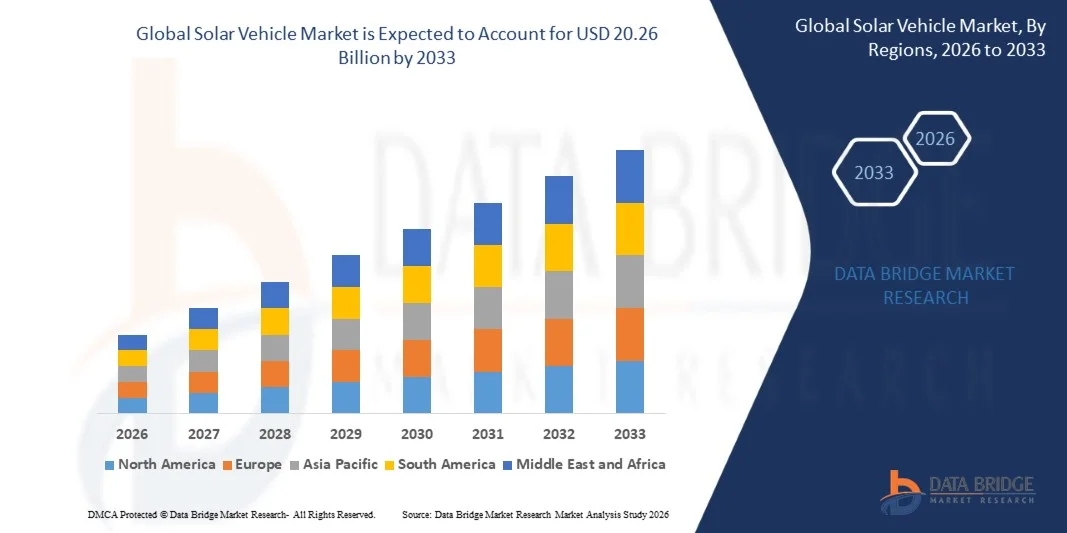
- Como por Data Bridge Market Research Analysis o tamanho global do mercado de veículos solares foi avaliado em1,53 mil milhões de dólares em 2025e espera-se alcançar20,26 mil milhões de USD até 2033, em umaCAGR de 38,09%durante o período de previsão
- O crescimento do mercado é em grande medida impulsionado pela crescente adoção de veículos elétricos e pela crescente integração de tecnologias de energia renovável no setor automotivo, incentivando o desenvolvimento de soluções de mobilidade assistidas por energia solar em veículos de passageiros e comerciais
- Além disso, preocupações crescentes sobre os custos de combustível, emissões de carbono e eficiência energética estão empurrando os consumidores e fabricantes para veículos solares, uma vez que esses sistemas ajudam a reduzir a dependência de cobrança e despesas operacionais, apoiando assim a expansão sustentada do mercado
Tamanho e previsão do mercado
- Valor de mercado global (2025):USD 1,53 Bilhões
- Valor de mercado previsto (2033):USD 20,26 Bilhões
- Previsões CAGR (2026-2033): 38.09%
Quais são as principais rotas do mercado de veículos solares
- Veículos solares são veículos elétricos ou híbridos integrados com painéis fotovoltaicos que convertem a luz solar em energia elétrica para suportar o carregamento de bateria e funções auxiliares do veículo, aumentando o alcance de condução e eficiência energética global
- A crescente demanda por veículos solares é principalmente alimentada por iniciativas globais de descarbonização, avanços na tecnologia de painéis solares leves e crescentes investimentos de fabricantes automotivos para melhorar a sustentabilidade dos veículos e reduzir o consumo de energia a longo prazo
- América do Norte dominou o mercado de veículos solares com uma parte decerca de 35% em 2025, devido à adoção precoce de veículos elétricos, fortes investimentos em energias renováveis e crescente interesse em soluções de mobilidade energeticamente eficientes
- A Ásia-Pacífico deverá ser a região de crescimento mais rápido no mercado de veículos solares durante o período de previsão devido à urbanização rápida, adoção crescente de EV e iniciativas de expansão de energias renováveis
- O segmento de automóveis de passageiros dominou o mercado com uma quota de mercado de 62,5% em 2025, devido ao crescente interesse do consumidor pela mobilidade pessoal sustentável. A integração solar em veículos de passageiros ajuda a reduzir a dependência de combustível e a frequência de carregamento. Aumento da adoção urbana de carros elétricos assistidos por energia solar movimenta volume de vendas. Automakers se concentram em modelos de passageiros para mostrar viabilidade de tecnologia solar. Políticas favoráveis e sensibilização ambiental crescente reforçam a procura
Segmentação do Mercado de Veículos Solares
|
Atributos |
Visão do mercado chave do veículo solar |
|
Segmentos Cobertos |
|
|
Países abrangidos |
América do Norte
Europa
Ásia- Pacífico
Médio Oriente e África
América do Sul
|
|
Jogadores do mercado chave |
|
|
Oportunidades de Mercado |
|
|
Informações sobre o Valor Adicionado |
Além dos insights de mercado, como valor de mercado, taxa de crescimento, segmentos de mercado, cobertura geográfica, atores de mercado e cenário de mercado, o relatório de mercado curado pela equipe de Pesquisa do Mercado da Ponte de Dados inclui análise de especialistas em profundidade, análise de importação/exportação, análise de preços, análise de consumo de produção e análise de pilão. |
Qual é a tendência chave no mercado de veículos solares
“Integração crescente de painéis solares com plataformas de veículos elétricos”
- Uma tendência proeminente no mercado de veículos solares é a crescente integração de painéis fotovoltaicos em plataformas de veículos elétricos para aumentar a eficiência energética e estender o alcance de condução. Os fabricantes de automóveis estão explorando ativamente telhados solares e painéis integrados ao corpo para complementar o carregamento de bateria e reduzir a dependência da infraestrutura de carregamento baseada em grade. Esta integração está a reforçar o posicionamento dos veículos solares como uma solução viável para a mobilidade sustentável, especialmente em regiões com elevada irradiância solar
- Por exemplo, a Lightyear desenvolveu veículos elétricos integrados à luz solar que incorporam painéis solares montados no corpo projetados para suportar diretamente as necessidades diárias de condução. Esta abordagem demonstra como a integração solar pode contribuir significativamente para a gama de veículos e para a autonomia energética, reforçando a confiança nas plataformas EV assistidas por energia solar
- A adoção de painéis solares em veículos elétricos está ganhando tração como avanços em materiais fotovoltaicos leves e flexíveis melhorar a eficiência sem aumentar significativamente o peso do veículo. Estas melhorias tecnológicas estão a permitir uma integração mais suave no projecto do veículo, mantendo simultaneamente o desempenho aerodinâmico
- Os veículos de passageiros estão cada vez mais sendo usados como plataformas piloto para integração solar, permitindo que os fabricantes testem o desempenho, durabilidade e contribuição energética no mundo real. Esta tendência está acelerando as curvas de aprendizagem e apoiando a comercialização gradual em categorias de veículos mais amplas
- As soluções de mobilidade urbana estão também a adoptar veículos assistidos por energia solar para apoiar aplicações de mobilidade partilhada e de curta distância. A integração solar alinha-se bem com iniciativas de sustentabilidade centradas na cidade e ajuda a reduzir os custos de energia operacional
- No geral, a crescente integração de painéis solares com plataformas de veículos elétricos está reforçando a transição para sistemas de transporte mais limpos. Esta tendência está moldando estratégias de inovação a longo prazo e apoiando a evolução de arquiteturas automotivas eficientes em termos energéticos
Dinâmica do mercado de veículos solares
Controlador
“Aumentar a procura de mobilidade sustentável e energética”
- A crescente procura de soluções de mobilidade sustentáveis e eficientes em termos energéticos é um motor fundamental do mercado dos veículos solares, uma vez que os consumidores e os governos procuram reduzir as emissões de carbono e a dependência dos combustíveis fósseis. Veículos solares oferecem uma oportunidade de complementar acionamentos elétricos com energia renovável, melhorando a eficiência geral e desempenho ambiental
- Por exemplo, a Toyota Motor Corporation explorou tecnologias de telhado solar em modelos híbridos e elétricos selecionados para apoiar a geração de energia auxiliar e melhorar a eficiência de combustível. Tais iniciativas destacam como as montadoras estabelecidas estão respondendo às preferências de consumo focadas na sustentabilidade
- Aumentar os preços dos combustíveis e as preocupações com os custos energéticos a longo prazo são ainda mais encorajadores para os veículos que podem gerar energia parcialmente autogerada. Carregamento assistido solar ajuda a reduzir as despesas de operação e aumenta a independência energética para os proprietários de veículos
- As políticas governamentais que promovem o transporte limpo e a adoção de energias renováveis também reforçam este motor. Os incentivos para veículos eléctricos e de baixa emissão apoiam indirectamente o desenvolvimento de veículos solares, melhorando a aceitação do mercado
- Esta ênfase sustentada na sustentabilidade e eficiência continua a reforçar a dinâmica do mercado, posicionando os veículos solares como um componente emergente dos futuros ecossistemas de mobilidade
Restrição/Desafio
“Alto custo e eficiência limitada de painéis solares automotivos”
- O mercado de veículos solares enfrenta um desafio significativo devido ao alto custo e eficiência limitada dos painéis solares de classe automotiva. Integrar sistemas fotovoltaicos duráveis, leves e eficientes em veículos requer materiais avançados e processos de fabricação, aumentando os custos gerais do veículo
- Por exemplo, a Sono Motors destacou desafios relacionados com a integração de painéis solares, mantendo a acessibilidade em seus programas de veículos elétricos solares. Equilibrar custo, durabilidade e desempenho continua sendo um obstáculo crítico para a comercialização
- Painéis solares automotivos geram energia limitada devido à área de superfície restrita, o que restringe a sua capacidade de carregar totalmente baterias do veículo. Esta limitação afecta as expectativas dos consumidores relativamente à extensão da gama e à contribuição energética
- Garantir a confiabilidade a longo prazo em condições automotivas severas, como vibração, calor e exposição ao tempo, complica ainda mais o projeto do painel e aumenta a complexidade da produção. Esses fatores contribuem para maiores custos de desenvolvimento e manutenção
- Coletivamente, altos custos e restrições de eficiência continuam a desafiar a expansão do mercado, exigindo inovação tecnológica contínua e otimização de custos para desbloquear todo o potencial dos veículos solares
Como é o mercado de veículos solares segmentado
O mercado é segmentado com base em componentes, tendências da indústria, tipo de infraestrutura de carregamento, tipo de veículo, painel solar e tipo EV.
- Por Componente
Com base no componente, o mercado de veículos solares é segmentado em pilhas e embalagens de bateria EV, carregador de bordo, sistema de infotainment e cluster de instrumentos. O segmento de pilhas e embalagens da EV dominou a maior quota de receita de mercado em 2025, impulsionada pelo seu papel crítico no armazenamento de energia e desempenho do veículo. Veículos solares dependem fortemente de sistemas de bateria de alta capacidade e eficientes para armazenar energia gerada a partir de painéis solares e fontes de carregamento externas. Avanços contínuos nas farmácias de lítio e bateria de última geração melhoraram a densidade de energia, durabilidade e eficiência de carregamento. A elevada contribuição dos pacotes de baterias para os preços globais dos veículos reforça ainda mais o domínio das receitas deste segmento. Os investimentos crescentes dos fabricantes automotivos para aumentar a eficiência da bateria para condução assistida por energia solar continuam a reforçar esta posição de liderança.
Espera-se que o segmento do sistema de infotainment testemunhe o crescimento mais rápido de 2026 para 2033, apoiado pelo aumento da demanda do consumidor por experiências de veículos conectadas, inteligentes e centradas no usuário. Os veículos solares integram cada vez mais monitoramento de energia em tempo real, otimização de navegação e análise de eficiência solar através de plataformas de infotainment avançadas. A convergência de painéis digitais com interfaces orientadas por IA aumenta o engajamento do usuário e a transparência operacional. Automakers estão priorizando monitores inteligentes para diferenciar veículos solares em mercados EV competitivos. A adoção crescente de soluções de mobilidade conectadas acelera ainda mais o crescimento neste segmento.
- Tendências da indústria
Com base nas tendências da indústria, o mercado de veículos solares é segmentado em táxi elétrico, robo-taxi, veículo solar leve, troca de bateria e veículos elétricos autônomos. O segmento de táxi elétrico representou a maior parcela de receita em 2025, impulsionada por altas taxas de utilização e pela necessidade de soluções de mobilidade urbana econômicas. Táxis elétricos assistidos por energia solar beneficiam de custos operacionais reduzidos através de carregamento solar suplementar. Os operadores de frota adotam cada vez mais veículos solares para melhorar as credenciais de eficiência energética e sustentabilidade. Os incentivos governamentais que apoiam os transportes públicos eléctricos reforçam ainda mais a procura. Alta quilometragem diária torna táxis elétricos uma aplicação ideal para integração solar.
O segmento robo-taxi é projetado para crescer na taxa mais rápida durante o período de previsão, alimentado por avanços na condução autônoma e tecnologias inteligentes de otimização de energia. A integração solar suporta uma ampla gama operacional e uma maior autonomia energética para frotas sem condutor. Empresas de tecnologia e provedores de mobilidade estão investindo fortemente em plataformas elétricas autônomas com aumento solar. A dependência reduzida da carga manual se alinha bem com os requisitos de operação contínua. A rápida evolução dos ecossistemas de mobilidade autónoma partilhada acelera a expansão deste segmento.
- Por tipo de infraestrutura de carregamento
Com base no tipo de infraestrutura de carregamento, o mercado de veículos solares é segmentado em carga normal, CCS, Chademo e Tesla Supercharger. O segmento de carga normal dominou a receita do mercado em 2025 devido à sua ampla disponibilidade e compatibilidade com as configurações de recarga residencial e comercial. Os proprietários de veículos solares frequentemente combinam painéis solares no telhado com sistemas de carregamento CA padrão para maximizar o uso de energia renovável. Menores custos de instalação e facilidade de acesso tornam o carregamento normal uma opção preferencial. Esta infra-estrutura apoia a cobrança noturna e a gestão de energia localizada. Sua forte presença nos mercados emergentes de veículos solares sustenta o domínio.
Prevê-se que o segmento CCS registre o crescimento mais rápido de 2026 para 2033, impulsionado pela crescente demanda por soluções de carregamento rápido compatíveis com EVs solares de longo alcance. A infraestrutura CCS permite maior fornecimento de energia, reduzindo o tempo de inatividade de carregamento para veículos comerciais e da frota. Os fabricantes de automóveis padronizam cada vez mais o CCS para suportar redes de carregamento escaláveis. A integração com carregadores rápidos renováveis aumenta ainda mais o apelo. Expansão de corredores de carregamento de rodovias suporta adoção acelerada.
- Por tipo de veículo
Com base no modelo de veículo, o mercado dos veículos solares é segmentado em automóveis de passageiros e veículos comerciais. O segmento de automóveis de passageiros detinha o maior market share de 62,5% em 2025, apoiado pelo crescente interesse do consumidor pela mobilidade pessoal sustentável. A integração solar em veículos de passageiros ajuda a reduzir a dependência de combustível e a frequência de carregamento. Aumento da adoção urbana de carros elétricos assistidos por energia solar movimenta volume de vendas. Automakers se concentram em modelos de passageiros para mostrar viabilidade de tecnologia solar. Políticas favoráveis e sensibilização ambiental crescente reforçam a procura.
Espera-se que o segmento de veículos comerciais cresça ao ritmo mais rápido durante o período de previsão, impulsionado por operadores de logística, entrega e frota buscando economia de custos a longo prazo. Veículos solares ajudam a reduzir as despesas operacionais através da autogeração de energia parcial. Alta utilização de veículos amplifica os benefícios do aumento solar. As iniciativas de electrificação da frota apoiam a rápida implantação. Os mandatos de sustentabilidade aceleram ainda mais a adoção em aplicações comerciais.
- Por Painel Solar
Com base no painel solar, o mercado do veículo solar é segmentado em painel solar monocristalino e painel solar policristalino. O segmento monocristalino de painéis solares dominou a participação de receita em 2025 devido à sua maior eficiência e potência superior. A área de superfície limitada do veículo requer painéis de alta eficiência para geração de energia significativa. Painéis monocristalinos funcionam melhor em condições de baixa luz e alta temperatura. Sua vida útil mais longa suporta exigências de durabilidade automotiva. Modelos de veículo premium adotam cada vez mais este tipo de painel.
O segmento de painel solar policristalino é projetado para testemunhar o crescimento mais rápido de 2026 para 2033, impulsionado por vantagens de custo e melhorando os níveis de eficiência. Os fabricantes de veículos solares de mercado de massa favorecem painéis policristalinos para reduzir os custos de produção. Os avanços tecnológicos estão diminuindo as lacunas de desempenho. A sua acessibilidade apoia uma adopção mais ampla em modelos de nível de entrada. Aumentar a capacidade de produção e aumentar o crescimento dos combustíveis.
- Por Tipo EV
Com base no tipo EV, o mercado de veículos solares é segmentado em HEV, BEV e PHEV. O segmento BEV dominou o mercado em 2025, impulsionado pela eletrificação total e maior compatibilidade com sistemas de energia solar. Os painéis solares suportam diretamente as necessidades de energia auxiliar e de tração em BEVs. O aumento da disponibilidade de infraestruturas de tarifação reforça a adoção do BEV. Automakers priorizam BEVs para redução máxima de emissões. A integração solar aumenta o alcance de condução e a eficiência.
Espera-se que o segmento PHEV cresça ao ritmo mais rápido de 2026 a 2033, apoiado pela sua flexibilidade dual de transmissão. A energia solar complementa a condução elétrica, reduzindo a dependência de combustível convencional. Os consumidores encaram os PHEVs como uma solução de transição para a eletrificação total. A carga solar melhora a economia de combustível e o desempenho das emissões. A crescente demanda por flexibilidade híbrida acelera o crescimento do segmento.
Que região detém a maior parte do mercado de veículos solares
- A América do Norte dominou o mercado de veículos solares com a maior parcela de receita de cerca de 35% em 2025, impulsionada pela adoção precoce de veículos elétricos, fortes investimentos em energias renováveis e crescente interesse em soluções de mobilidade eficientes em termos energéticos
- Os consumidores da região valorizam cada vez mais a extensão da gama de condução, a redução da dependência de tarifação e os custos operacionais mais baixos oferecidos pelos veículos integrados à luz solar
- Incentivos governamentais de apoio, infraestrutura EV bem desenvolvida e forte presença de jogadores avançados de tecnologia automotiva posicionaram veículos solares como uma solução emergente entre os segmentos de passageiros e comerciais
U.S. Solar Vehicle Market Insight
O mercado de veículos solares dos EUA capturou a maior parte de receita na América do Norte em 2025, alimentada pela rápida adoção de EV e crescente integração de tecnologias solares no projeto automotivo. Os consumidores estão priorizando a sustentabilidade e economia de custos a longo prazo, incentivando as montadoras a explorar telhados solares e sistemas auxiliares de carregamento. Fortes incentivos federais e estaduais para veículos de energia limpa continuam apoiando a expansão do mercado. A presença de grandes fabricantes de EV e startups orientadas para a inovação acelera ainda mais o desenvolvimento de veículos solares.
Perspectiva do mercado dos veículos solares na Europa
Prevê-se que o mercado europeu de veículos solares cresça num CAGR substancial durante o período de previsão, impulsionado por regulamentações rigorosas em matéria de emissões e metas agressivas de descarbonização. A crescente procura de mobilidade renovável e a forte concentração na sustentabilidade encorajam a adopção de veículos assistidos por energia solar. As montadoras europeias investem activamente em tecnologias de integração solar leves. O crescimento é evidente em automóveis de passageiros e soluções de mobilidade urbana, apoiadas pela expansão da infraestrutura EV.
U.K. Solar Vehicle Market Insight
Espera-se que o mercado de veículos solares do Reino Unido testemunhe um crescimento constante, apoiado pelo aumento da adoção de veículos elétricos e forte compromisso do governo com as emissões líquidas zero. Os consumidores estão a mostrar crescente interesse em soluções inovadoras de mobilidade ecológica que reduzam os custos energéticos. Urbanização e investimentos em transporte inteligente estão apoiando a adoção de veículos solares. A presença de projetos-piloto e ensaios solares de EV contribui ainda mais para o desenvolvimento do mercado.
Alemanha Solar Vehicle Market Insight
Prevê-se que o mercado alemão de veículos solares se expanda em um notável CAGR durante o período de previsão, impulsionado pela liderança do país em engenharia automotiva e adoção de energia renovável. Forte ênfase na inovação, sustentabilidade e eficiência energética apoia o desenvolvimento de veículos solares. Automakers alemães estão explorando ativamente a integração solar para melhorar o desempenho de EV. As infra-estruturas avançadas e a preferência dos consumidores por soluções de mobilidade ecológica continuam a reforçar o crescimento do mercado.
Visão do mercado de veículos solares Ásia-Pacífico
O mercado de veículos solares Ásia-Pacífico está preparado para crescer no CAGR mais rápido de 2026 para 2033, impulsionado pela urbanização rápida, adoção crescente de EV e iniciativas de expansão de energia renovável. Os governos de toda a região estão a promover uma mobilidade limpa através de incentivos e apoio político. A crescente capacidade de fabrico e a produção rentável estão a melhorar a acessibilidade ao mercado. Aumentar a demanda por soluções de transporte acessíveis e eficientes acelera ainda mais a adoção.
Japão Visão do mercado de veículos solares
O mercado japonês de veículos solares está ganhando força devido à forte perícia tecnológica e um alto foco na eficiência energética. Os consumidores valorizam soluções de mobilidade compactas e inovadoras adequadas para ambientes urbanos. Veículos assistidos por energia solar se alinham bem com a ênfase do Japão na sustentabilidade e na redução da dependência energética. A integração de sistemas avançados de gerenciamento de energia eletrônica e inteligente apoia o crescimento do mercado.
China Solar Vehicle Market Insight
O mercado de veículos solares da China representou a maior parte da receita da Ásia-Pacífico em 2025, impulsionada pela adoção maciça de EV, urbanização rápida e forte apoio do governo para energias renováveis. O domínio da China na fabricação de EV e produção de bateria suporta o desenvolvimento em larga escala de veículos solares. A crescente demanda por transporte limpo e econômico e iniciativas de cidades inteligentes continua impulsionando a expansão do mercado nos segmentos de passageiros e veículos comerciais.
Quais são as principais empresas no mercado de veículos solares
A indústria de veículos solares é liderada principalmente por empresas bem estabelecidas, incluindo:
- Ford Motor Company (EUA)
- General Motors (EUA)
- Kia Motors Corporation (Coreia do Sul)
- SAIC Motor Corporation Limited (China)
- BMW AG (Alemanha)
- Hyundai Motor Company (Coreia do Sul)
- BYD Company Ltd. (China)
- Continental AG (Alemanha)
- CORPORAÇÃO DO MOTOR DE TOYOTA (Japão)
- Nissan Motor Co., LTD. (Japão)
- Volkswagen AG (Alemanha)
- Honda Motor Co., Ltd (Japão)
Quais são as últimas evoluções no mercado de veículos solares
- Em janeiro de 2023, o Sono Group N.V., um destacado player em soluções de mobilidade solar, garantiu financiamento de 1,61 milhões de dólares da Agência Europeia do Clima, Infraestrutura e Meio Ambiente para acelerar o desenvolvimento de tecnologias solares avançadas. Este financiamento reforçou a capacidade da empresa de comercializar a integração solar para veículos, reforçando a confiança dos investidores na mobilidade assistida por energia solar. O desenvolvimento apoiou progressos mais amplos no mercado, incentivando a inovação e a validação das tecnologias dos veículos solares em toda a Europa
- Em dezembro de 2022, a Sono Motors avançou no mercado de veículos solares, projetando e desenvolvendo o Sion, um veículo elétrico de bateria totalmente integrado com painéis solares montados no corpo. A empresa registrou aproximadamente 42.000 pré-vendas de empresas e consumidores, destacando forte aceitação do mercado e demanda por veículos movidos a energia solar. Este marco demonstrou a viabilidade comercial de EVs solares e aumentou significativamente a consciência do mercado e o momento de adoção
- Em junho de 2022, a Universidade de Nova Gales do Sul introduziu o Sunswift 7, um carro movido a energia solar de alto desempenho capaz de viajar até 1.000 km em uma única carga. Esta conquista mostrou avanços tecnológicos em design leve e eficiência solar, fortalecendo a confiança no potencial de longo alcance dos veículos solares. O projeto contribuiu para a inovação da indústria ao provar a viabilidade de soluções de mobilidade solar de alta eficiência
- Em junho de 2022, Bridgestone fez parceria com a Lightyear para desenvolver um veículo elétrico solar de longo alcance, combinando experiência em tecnologia de pneus e engenharia automotiva a energia solar. Esta colaboração sublinhou o crescimento das parcerias interindustriais centradas na sustentabilidade e na mobilidade renovável. A parceria reforçou o desenvolvimento tecnológico no mercado de veículos solares e apoiou esforços de comercialização mais amplos
- Em janeiro de 2022, a Sono Motors anunciou planos de expansão para o segmento de trailer refrigerado usando sua tecnologia solar Sono proprietária. Este movimento estratégico destacou a aplicabilidade da tecnologia solar para além dos veículos de passageiros, abrindo novas oportunidades comerciais e logísticas. O desenvolvimento apoiou a expansão do mercado, atendendo às necessidades de redução de emissões nos segmentos de transporte pesados e controlados pela temperatura
SKU-
Obtenha acesso online ao relatório sobre a primeira nuvem de inteligência de mercado do mundo

- Painel interativo de análise de dados
- Painel de análise da empresa para oportunidades de elevado potencial de crescimento
- Acesso de analista de pesquisa para personalização e customização. consultas
- Análise da concorrência com painel interativo
- Últimas notícias, atualizações e atualizações Análise de tendências
- Aproveite o poder da análise de benchmark para um rastreio abrangente da concorrência
Metodologia de Investigação
A recolha de dados e a análise do ano base são feitas através de módulos de recolha de dados com amostras grandes. A etapa inclui a obtenção de informações de mercado ou dados relacionados através de diversas fontes e estratégias. Inclui examinar e planear antecipadamente todos os dados adquiridos no passado. Da mesma forma, envolve o exame de inconsistências de informação observadas em diferentes fontes de informação. Os dados de mercado são analisados e estimados utilizando modelos estatísticos e coerentes de mercado. Além disso, a análise da quota de mercado e a análise das principais tendências são os principais fatores de sucesso no relatório de mercado. Para saber mais, solicite uma chamada de analista ou abra a sua consulta.
A principal metodologia de investigação utilizada pela equipa de investigação do DBMR é a triangulação de dados que envolve a mineração de dados, a análise do impacto das variáveis de dados no mercado e a validação primária (especialista do setor). Os modelos de dados incluem grelha de posicionamento de fornecedores, análise da linha de tempo do mercado, visão geral e guia de mercado, grelha de posicionamento da empresa, análise de patentes, análise de preços, análise da quota de mercado da empresa, normas de medição, análise global versus regional e de participação dos fornecedores. Para saber mais sobre a metodologia de investigação, faça uma consulta para falar com os nossos especialistas do setor.
Personalização disponível
A Data Bridge Market Research é líder em investigação formativa avançada. Orgulhamo-nos de servir os nossos clientes novos e existentes com dados e análises que correspondem e atendem aos seus objetivos. O relatório pode ser personalizado para incluir análise de tendências de preços de marcas-alvo, compreensão do mercado para países adicionais (solicite a lista de países), dados de resultados de ensaios clínicos, revisão de literatura, mercado remodelado e análise de base de produtos . A análise de mercado dos concorrentes-alvo pode ser analisada desde análises baseadas em tecnologia até estratégias de carteira de mercado. Podemos adicionar quantos concorrentes necessitar de dados no formato e estilo de dados que procura. A nossa equipa de analistas também pode fornecer dados em tabelas dinâmicas de ficheiros Excel em bruto (livro de factos) ou pode ajudá-lo a criar apresentações a partir dos conjuntos de dados disponíveis no relatório.











