


Global Wireless Medical Device Connectivity Market, By Component (Wi-Fi Hardware, Wireless Medical Telemetry Hardware e Bluetooth Hardware), Tipo de Dispositivo (Dispositivos de Monitorização de Pacientes, Bombas de Infusão, Ventiladores, Dispositivos de Imagem, Dispositivos Médicos Usados, e Outros), Aplicação (Monitoramento de Pacientes Remotos, Monitoramento Clínico, Monitoramento de Ativos e Gestão, Telemedicina, Gerenciamento de Dados de Saúde e Outros), Usuário Final (Hospitais, Home Healthcare, Centros de Diagnóstico e Ambulatórios)– Tendências e Previsão da Indústria para 2033
O que é a Conectividade de Dispositivo Médico Sem Fios Tamanho e Visão Geral do Mercado
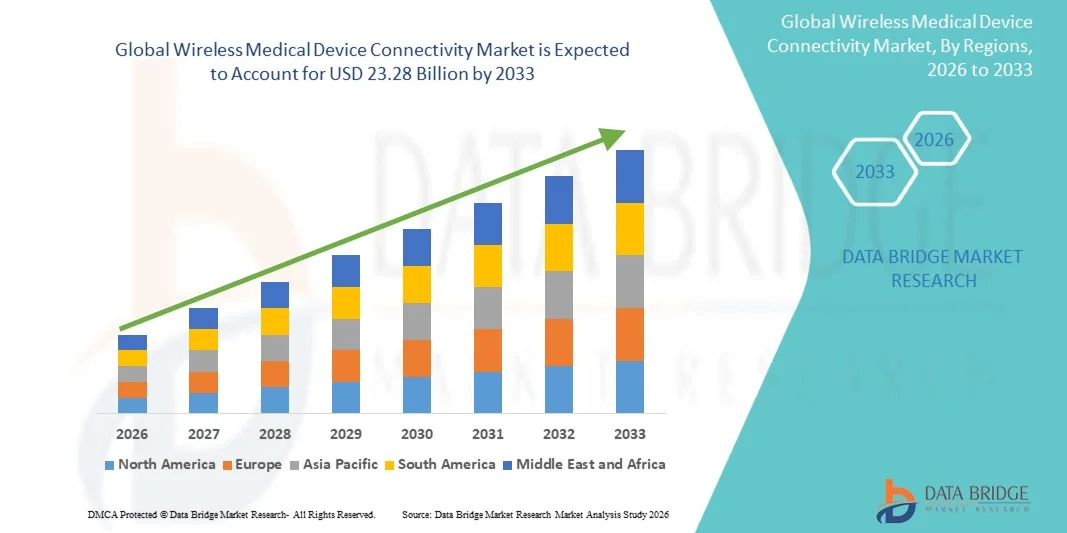
De acordo com a Data Bridge Market Research Analysis, o mercado de conectividade de dispositivos médicos sem fio foi avaliado emUSD 4,11 mil milhões em 2025e é projetado para alcançarUSD 23,28 mil milhões até 2033, crescendo emCAGR de 24,21% de 2026 a 2033O mercado está testemunhando um crescimento constante impulsionado pelo aumento da adoção de tecnologias de saúde conectadas, aumento da demanda por monitoramento de pacientes em tempo real e crescente integração de soluções de comunicação sem fio em hospitais, clínicas e ambientes de saúde domiciliar.
A expansão da prevalência de doenças crônicas, juntamente com a necessidade de fluxos de trabalho clínicos eficientes e melhores resultados dos pacientes, está incentivando os provedores de saúde a implantar plataformas avançadas de conectividade que permitam o intercâmbio de dados entre dispositivos médicos e sistemas de informação em saúde. Tecnologias como Wi-Fi, Bluetooth, redes celulares e conectividade baseada em nuvem estão cada vez mais sendo integradas em monitores de pacientes, bombas de infusão, dispositivos wearable e soluções de monitoramento remoto, suporte à prestação de cuidados contínuos, maior interoperabilidade e tomada de decisões clínicas orientadas por dados.
Tamanho e previsão do mercado
- Valor de Mercado Global (2025): USD 4.11 Bilhões
- Valor de mercado esperado (2033): USD 23.28 Bilhões
- Previsões CAGR (2026-2033): 24,21%
- Região líder em 2025: América do Norte
- Região de crescimento mais rápido: Ásia Pacífico
Principais tendências do mercado e perspectivas
- A América do Norte dominou o Mercado de Conectividade de Dispositivos Médicos sem Fios com a maior parcela de receita de 38,42% em 2025, apoiada por infraestrutura avançada de TI em saúde, alta adoção de dispositivos médicos conectados e iniciativas regulatórias favoráveis promovendo a interoperabilidade.
- O segmento Wi-Fi Hardware liderou o mercado com uma participação de 46,82% em 2025, impulsionada pela sua implantação generalizada em hospitais, clínicas e redes de saúde para transmissão de dados médicos de alta velocidade e confiáveis.
- Espera-se que a Ásia-Pacífico seja a região de crescimento mais rápido em um CAGR de 8,1% de 2026 a 2033, alimentada pela expansão de programas de digitalização de saúde, crescente investimento em hospitais inteligentes e adoção crescente de soluções de monitoramento remoto de pacientes.
- O Bluetooth Hardware é o componente de crescimento mais rápido, projetado para registrar um CAGR de 9,1%, refletindo o aumento na adoção de dispositivos médicos wearable e soluções remotas de monitoramento de pacientes.
- O segmento de Dispositivos de Monitoramento de Pacientes dominou a categoria tipo dispositivo com uma participação de 39,85% de receita em 2025, liderada pela crescente necessidade de monitoramento contínuo dos sinais vitais em hospitais, unidades de atenção crítica e ambientes de saúde domiciliar.
- O Monitoramento Clínico foi responsável por 34,72% do mercado, preferido pela ampla utilização de dispositivos médicos conectados entre hospitais e serviços de saúde.
- O segmento Monitoramento Remoto de Pacientes é a categoria de aplicação de maior crescimento, com CAGR de 9,4%, impulsionada pela mudança global para a prestação descentralizada de cuidados de saúde.
Alcance de relatório e conectividade de dispositivos médicos sem fio Segmentação de mercado
|
Atributos |
Conectividade de dispositivos médicos sem fio |
|
Segmentos Cobertos |
|
|
Países abrangidos |
América do Norte
Europa
Ásia- Pacífico
Médio Oriente e África
América do Sul
|
|
Jogadores do mercado chave |
|
|
Oportunidades de Mercado |
|
|
Informações sobre o Valor Adicionado |
Além dos insights sobre cenários de mercado, como valor de mercado, taxa de crescimento, segmentação, cobertura geográfica e grandes atores, os relatórios de mercado curados pela Data Bridge Market Research também incluem análise de especialistas em profundidade, epidemiologia de pacientes, análise de pipelines, análise de preços e marco regulatório. |
Qual é a tendência chave no mercado de conectividade de dispositivos médicos sem fio
Tendência: Adoção crescente de monitoramento remoto do paciente e cuidados conectados
Os profissionais de saúde estão adotando cada vez mais soluções de conectividade de dispositivos médicos sem fio para apoiar o monitoramento contínuo do paciente, melhorar a coordenação dos cuidados e reduzir as reinternações hospitalares sem necessidade de visitas presenciais frequentes. A integração de wearables conectados, monitores de pacientes sem fio e plataformas de saúde baseadas em nuvem permite a transmissão contínua de dados clínicos para intervenção oportuna e tomada de decisão informada. Hospitais, provedores de saúde domiciliar e redes de telessaúde estão igualmente alavancando tecnologias de conectividade para fornecer caminhos de cuidados baseados em dados, enquanto os avanços nas redes Wi-Fi, Bluetooth e celular criam ambientes confiáveis que suportam de perto os requisitos de monitoramento clínico do mundo real. Por exemplo, em janeiro de 2025, Masimo expandiu as capacidades de monitoramento de pacientes conectados através de soluções de integração de dados sem fio aprimoradas, apoiando a vigilância de pacientes em tempo real em configurações de cuidados agudos e remotos.
Dinâmica de mercado de conectividade de dispositivos médicos sem fio
Motorista do mercado chave: crescente demanda por intercâmbio de dados de saúde interoperáveis e em tempo real
A rápida digitalização dos sistemas de saúde e a crescente adoção de registros eletrônicos de saúde têm criado uma demanda substancial por plataformas de conectividade de dispositivos médicos sem fio que permitem o compartilhamento de dados, a interoperabilidade dos dispositivos e a visibilidade clínica em tempo real em ambientes de cuidados. Hospitais, redes de saúde e fornecedores de tecnologia estão implantando soluções de conectividade como um componente central de suas estratégias de transformação digital, reduzindo ineficiências no fluxo de trabalho, acelerando a tomada de decisões clínicas e melhorando a segurança do paciente através do acesso contínuo a informações de saúde acionáveis. Por exemplo, em fevereiro de 2025, a GE HealthCare reforçou seu ecossistema de cuidados conectados, aumentando as capacidades de interoperabilidade entre dispositivos médicos sem fio e sistemas de informação hospitalar, apoiando operações clínicas simplificadas.
Chave de restrição/desafio: Riscos de Cibersegurança e requisitos complexos de conformidade regulamentar
Uma restrição significativa no mercado de conectividade de dispositivos médicos sem fio é a crescente preocupação em torno das vulnerabilidades de segurança cibernética e o cumprimento das normas de saúde em evolução. Os ecossistemas modernos de conectividade integram vários dispositivos, protocolos de comunicação sem fio, plataformas de nuvem e bancos de dados de saúde, exigindo investimento substancial em infraestrutura de segurança, gerenciamento de riscos e monitoramento contínuo. A complexidade de manter a transmissão segura de dados, proteger as informações dos pacientes e atender as normas regulatórias regionais pode criar desafios de adoção para os profissionais de saúde, fabricantes de dispositivos e organizações de saúde de menor porte.
Por exemplo, em 2024, as agências reguladoras em toda a América do Norte e Europa aumentaram o escrutínio dos requisitos de cibersegurança de dispositivos médicos conectados, destacando o desafio mais amplo de garantir ecossistemas de saúde sem fio seguros e compatíveis.
Oportunidade chave do mercado: expansão da saúde domiciliar e ecossistemas médicos conectados
A expansão dos serviços de saúde domiciliar e dos ecossistemas médicos conectados apresenta uma significativa oportunidade de mercado. Plataformas avançadas de conectividade sem fio podem suportar monitoramento remoto contínuo, permitir a integração perfeita de vários dispositivos médicos e fornecer acesso em tempo real às informações de saúde do paciente através de configurações de cuidados distribuídos. O desenvolvimento de infra-estruturas de saúde equipadas com nuvens e de tecnologias sem fios de última geração está a expandir ainda mais o acesso a soluções de cuidados ligadas, abrindo oportunidades de crescimento em mercados de saúde emergentes e carentes em todo o mundo. Por exemplo, em março de 2025, a Philips expandiu iniciativas de cuidado conectadas focadas em soluções remotas de gerenciamento de pacientes e monitoramento domiciliar, reforçando a crescente oportunidade de plataformas de conectividade de dispositivos médicos sem fio.
Como é segmentado o mercado de conectividade de dispositivos médicos sem fio
O mercado de conectividade de dispositivos médicos sem fio é segmentado com base em componentes, tipo de dispositivo, aplicação e usuário final.
- Por Componente
Com base no componente, o Wireless Medical Device Connectivity Market é segmentado em hardware Wi-Fi, hardware de telemetria médica sem fio e hardware bluetooth. O segmento Wi-Fi Hardware dominou o mercado com uma participação estimada em 46,28% em 2025, devido à sua ampla implantação em hospitais, clínicas e redes de saúde para transmissão de dados médicos de alta velocidade e confiáveis. A conectividade Wi-Fi suporta integração perfeita entre dispositivos médicos, registros de saúde eletrônicos e sistemas de informação hospitalar. Os serviços de saúde preferem a infraestrutura Wi-Fi devido à sua escalabilidade e capacidade de lidar com grandes volumes de dados de pacientes. A tecnologia permite o monitoramento em tempo real e o acesso rápido a informações clínicas críticas. Os investimentos crescentes em hospitais inteligentes e em ecossistemas de saúde ligados apoiam ainda mais a adopção. Sua ampla compatibilidade com a infraestrutura de TI em saúde continua fortalecendo sua liderança no mercado.
O segmento Bluetooth Hardware é projetado para registrar o crescimento mais rápido em um CAGR de 9,1% de 2026 para 2033, impulsionado pelo aumento da adoção de dispositivos médicos wearable e soluções de monitoramento remoto do paciente. A tecnologia Bluetooth oferece baixo consumo de energia, tornando-o ideal para dispositivos de saúde operados por bateria. Avanços contínuos nos padrões Bluetooth Low Energy (BLE) estão melhorando o desempenho da conectividade e a confiabilidade do dispositivo. A crescente preferência pelas aplicações de cuidados de saúde domiciliares e móveis está a acelerar a procura. Os profissionais de saúde estão cada vez mais utilizando dispositivos Bluetooth habilitados para apoiar o engajamento e monitoramento contínuo do paciente. Espera-se que o aumento da adoção pelos consumidores de tecnologias de saúde conectadas aumente a expansão do segmento de combustível.
- Por Tipo de Dispositivo
Com base no tipo de dispositivo, o Wireless Medical Device Connectivity Market é segmentado em dispositivos de monitoramento de pacientes, bombas de infusão, ventiladores, dispositivos de imagem, dispositivos médicos wearable, entre outros. O segmento de Dispositivos de Monitoramento de Pacientes liderou o mercado com uma participação estimada em 39,85% em 2025, impulsionada pela crescente necessidade de monitoramento contínuo de sinais vitais em hospitais, unidades de cuidados críticos e ambientes de saúde domiciliar. Esses dispositivos geram dados clínicos em tempo real que requerem conectividade sem fio confiável para um gerenciamento eficaz do paciente. O aumento da prevalência de doenças crônicas e do envelhecimento populacional está aumentando significativamente a demanda. Os profissionais de saúde dependem de sistemas de monitoramento conectados para melhorar os resultados clínicos e reduzir os tempos de resposta. A integração de análises avançadas e plataformas de nuvem está melhorando os recursos de monitoramento. A forte demanda por cuidados remotos e serviços de saúde conectados continua apoiando o domínio do segmento.
Espera-se que o segmento Wearable Medical Devices testemunhe o crescimento mais rápido em um CAGR de 8,8% de 2026 a 2033, impulsionado pelo aumento da adoção pelos consumidores de tecnologias de saúde e fitness conectadas. Os dispositivos de uso permitem o rastreamento contínuo dos parâmetros de saúde, apoiando iniciativas de monitoramento remoto do paciente. Avanços em tecnologias de sensores e comunicação sem fio estão melhorando a precisão e funcionalidade do dispositivo. As organizações de saúde estão cada vez mais incorporando vestíveis em programas de manejo de doenças crônicas. A sensibilização crescente para os cuidados de saúde preventivos e a medicina personalizada está a acelerar ainda mais a adopção. O segmento beneficia também de investimentos crescentes em infraestrutura digital de saúde e telessaúde.
- Por Aplicação
Com base na aplicação, o Wireless Medical Device Connectivity Market é segmentado em monitoramento remoto de pacientes, monitoramento clínico, rastreamento e gerenciamento de ativos, telemedicina, gerenciamento de dados de saúde e outros. O segmento de Monitoramento Clínico dominou o mercado com uma participação estimada de 34,72% em 2025, devido à ampla utilização de dispositivos médicos conectados entre hospitais e serviços de saúde. A conectividade sem fio permite a transmissão contínua de informações do paciente para clínicos, apoiando decisões oportunas de diagnóstico e tratamento. O aumento dos volumes de pacientes e o aumento da digitalização em saúde estão impulsionando a demanda por sistemas de monitoramento eficientes. Os hospitais estão investindo fortemente em soluções integradas de conectividade para melhorar a eficiência do fluxo de trabalho e a qualidade da assistência. O segmento também se beneficia de iniciativas regulatórias de promoção da interoperabilidade em saúde. Os avanços contínuos nas tecnologias de monitoramento conectadas reforçam ainda mais sua posição de mercado.
O segmento Monitoramento Remoto de Pacientes é projetado para registrar o crescimento mais rápido em um CAGR de 9,4% de 2026 a 2033, impulsionado pela mudança global para a prestação descentralizada de cuidados de saúde. Soluções de monitoramento remoto permitem que os profissionais de saúde rastreiem as condições de saúde dos pacientes fora dos ambientes clínicos tradicionais. O aumento da prevalência de doenças crônicas está gerando forte demanda de monitoramento domiciliar contínuo. Os avanços nas tecnologias de comunicação sem fio estão melhorando a acessibilidade dos dados e a coordenação dos cuidados. Os sistemas de saúde estão cada vez mais adotando soluções de MPR para reduzir as taxas de internação e os custos de saúde. Prevê-se que a crescente aceitação dos serviços de telessaúde acelere ainda mais o crescimento dos segmentos.
- Por Usuário Final
Com base no usuário final, o mercado de conectividade de dispositivos médicos sem fio é segmentado em hospitais, serviços de saúde domiciliar, centros de diagnóstico e atendimento ambulatorial. O segmento de Hospitais representou o maior market share de 57,24% em 2025, apoiado pela extensa implantação de dispositivos médicos conectados e sistemas de TI em saúde. Os hospitais exigem soluções robustas de conectividade para gerenciar grandes volumes de dados dos pacientes e suportar operações clínicas críticas. O aumento dos investimentos em infraestrutura de saúde digital está impulsionando a adoção em todos os serviços de saúde. A conectividade sem fio melhora a eficiência do fluxo de trabalho, melhora a segurança do paciente e suporta a interoperabilidade entre sistemas médicos. A crescente implementação de iniciativas hospitalares inteligentes está a reforçar a procura. O segmento continua se beneficiando dos altos gastos com saúde e dos esforços de modernização tecnológica.
Espera-se que o segmento de Home Health seja a categoria de usuário final de crescimento mais rápido em um CAGR de 9,0% de 2026 a 2033, impulsionado pela crescente demanda por modelos de cuidado centrados no paciente e custo-efetivos. Tecnologias de conectividade sem fio permitem que os profissionais de saúde monitorem os pacientes remotamente, reduzindo a necessidade de visitas hospitalares. O aumento da população idosa e a prevalência de doenças crônicas estão gerando forte demanda por soluções de cuidados domiciliares. Dispositivos médicos conectados suportam monitoramento contínuo e intervenção oportuna em ambientes não clínicos. Os avanços tecnológicos estão melhorando a confiabilidade e acessibilidade dos sistemas de saúde domiciliar. A expansão do apoio ao reembolso e a crescente aceitação dos serviços de cuidados remotos contribuem ainda mais para o rápido crescimento do segmento.
Qual região detém a maior parte do mercado de conectividade de dispositivos médicos sem fio
A América do Norte dominou o Mercado de Conectividade de Dispositivos Médicos sem Fios com a maior parcela de receita de 38,42% em 2025, apoiada por infraestrutura avançada de TI em saúde, alta adoção de dispositivos médicos conectados e iniciativas regulatórias favoráveis promovendo a interoperabilidade. A região também se beneficia de iniciativas favoráveis de interoperabilidade, alta utilização de soluções remotas de monitoramento de pacientes e a presença de principais fabricantes de dispositivos médicos e fornecedores de tecnologia de saúde. A crescente demanda por troca de dados clínicos em tempo real, expansão dos serviços de telessaúde e crescente integração da conectividade sem fio entre hospitais, serviços de saúde domiciliar e ambientes de cuidados clínicos continuam a fortalecer a posição de liderança da América do Norte no mercado global.
U.S. Wireless Medical Device Connectivity Market Insight
O mercado de conectividade de dispositivos médicos sem fio dos EUA está testemunhando um forte crescimento devido ao aumento dos investimentos em infraestrutura de saúde digital, programas de monitoramento remoto de pacientes e tecnologias médicas conectadas. O ecossistema avançado de saúde do país, juntamente com a adoção crescente de soluções de conectividade compatíveis com nuvem, IoT e interoperáveis, está impulsionando a demanda em hospitais, clínicas e ambientes de saúde domiciliar. Além disso, a crescente ênfase na melhoria dos resultados dos pacientes e no aumento da eficiência clínica do fluxo de trabalho está acelerando a adoção de conectividade sem fio em provedores de saúde e fabricantes de dispositivos médicos.
Europe Wireless Medical Device Connectivity Market Insight
O mercado europeu de conectividade de dispositivos médicos sem fios continua a ser um dos principais contribuintes para as receitas globais, impulsionado por fortes iniciativas de digitalização dos cuidados de saúde, inovação tecnológica e elevada procura de soluções de cuidados ligados. O uso generalizado de dispositivos médicos sem fio em hospitais, programas de monitoramento remoto e sistemas de informação em saúde está apoiando a expansão do mercado em toda a região. O aumento dos investimentos em tecnologias de interoperabilidade no domínio dos cuidados de saúde, juntamente com regulamentos rigorosos de gestão de dados e uma infra-estrutura de cuidados de saúde altamente desenvolvida, continua a reforçar a adopção de conectividade de dispositivos médicos sem fios em toda a Europa.
U.K. Wireless Medical Device Connectivity Market Insight
O mercado de conectividade de dispositivos médicos sem fio do Reino Unido está experimentando um crescimento constante, apoiado pelo aumento da adoção de tecnologias de saúde conectadas, sistemas de monitoramento remoto e plataformas digitais de atendimento ao paciente. O aumento dos investimentos em infraestrutura avançada de TI em saúde e a crescente demanda por soluções eficientes de prestação de cuidados de saúde orientadas por dados estão contribuindo para o crescimento do mercado. Além disso, a integração de computação em nuvem, inteligência artificial e tecnologias de comunicação sem fio está melhorando o desempenho de conectividade e a eficiência clínica, posicionando o Reino Unido como um centro chave de inovação na indústria de tecnologia de saúde sem fio.
Alemanha Wireless Medical Device Connectivity Market Insight
O mercado de conectividade de dispositivos médicos sem fio da Alemanha está se expandindo constantemente devido à forte infraestrutura de saúde do país, capacidades avançadas de tecnologia médica e adoção crescente de soluções de saúde conectadas de próxima geração. Os profissionais de saúde, as empresas de dispositivos médicos e as instituições de pesquisa estão cada vez mais utilizando plataformas de conectividade sem fio para monitoramento de pacientes, intercâmbio de dados clínicos e atividades de gerenciamento de saúde. Avanços contínuos em soluções de interoperabilidade, integração de nuvem e tecnologias de comunicação sem fio, juntamente com forte foco do governo na modernização e inovação da saúde, estão impulsionando o crescimento do mercado na Alemanha.
Asia-Pacific Wireless Medical Device Connectivity Market Insight
Espera-se que o mercado de conectividade de dispositivos médicos sem fio Ásia-Pacífico testemunhe um rápido crescimento, impulsionado pelo aumento da digitalização da saúde, expansão da infraestrutura médica e aumento dos investimentos em tecnologias de saúde conectadas em países como China, Índia e Japão. A crescente conscientização sobre o monitoramento remoto dos pacientes, a adoção crescente de soluções avançadas de conectividade sem fio e a crescente demanda por sistemas de saúde escaláveis e econômicos estão apoiando a expansão regional do mercado. Além disso, a crescente presença de provedores de tecnologia em saúde e iniciativas de saúde digital está acelerando a adoção de conectividade sem fio em setores clínicos e domiciliares.
Japão Wireless Dispositivo Médico Conectividade Mercado Insight
O mercado de conectividade de dispositivos médicos sem fio do Japão está testemunhando um crescimento consistente devido ao aumento dos investimentos em tecnologias digitais de saúde, inovação médica e iniciativas de monitoramento de pacientes. Organizações de saúde, fabricantes de dispositivos médicos e institutos de pesquisa estão adotando cada vez mais soluções avançadas de conectividade sem fio para monitoramento clínico, gerenciamento de dados e aplicações de cuidados remotos. Além disso, a crescente integração de dispositivos de saúde habilitados para IoT e o foco do país em sistemas de prestação de cuidados de saúde eficientes e de alta qualidade estão contribuindo ainda mais para o crescimento do mercado.
China Wireless dispositivo médico Conectividade mercado Insight
O mercado de conectividade de dispositivos médicos sem fio da China está crescendo rapidamente, impulsionado pelo aumento da modernização da saúde, ampliação da infraestrutura de saúde e aumento do foco do governo na transformação digital em saúde. A adoção crescente de plataformas de conectividade baseadas em nuvem e IoT em hospitais, clínicas e ambientes de saúde domiciliar está aumentando significativamente a demanda do mercado. Além disso, o aumento dos investimentos em tecnologia de saúde, o aumento da conscientização sobre soluções de cuidados conectados e avanços tecnológicos rápidos estão posicionando a China como um dos mercados de maior crescimento de conectividade de dispositivos médicos sem fio globalmente.
Quais são as principais empresas no mercado de conectividade de dispositivos médicos sem fio
A indústria de conectividade de dispositivos médicos sem fio é liderada principalmente por empresas bem estabelecidas, incluindo:
- GE HealthCare(EUA)
- Medtrónico(Irlanda)
- Masimo Corporation (EUA)
- Drägerwerk AG & Co. KGaA(Alemanha)
- CORPORAÇÃO DE NIHON KOHDEN(Japão)
- Baxter (EUA)
- Stryker (EUA)
- Mindray Medical International Limited (China)
- Centros de Saúde do Espaço (EUA)
- OSI Systems, Inc. (EUA)
- ZOLL Medical Corporation (EUA)
- Fukuda Denshi Co., Ltd. (Japão)
- SISTEMAS MÉDICOS DE CONTEC, LTD. (China)
- OMRON Healthcare Co., Ltd. (Japão)
- iRhythm Technologies, Inc. (EUA)
- Biotronik SE & Co. KG (Alemanha)
- Abbott (EUA)
- Hoffmann-La Roche Ltd (Suíça)
- Koninklijke Philips N.V. (Países Baixos)
Quais são os últimos desenvolvimentos no mercado de conectividade de dispositivos médicos sem fio
- Em abril de 2024, a GE HealthCare anunciou a liberação da FDA para seu monitor de sinais vitais conectados ao Retrato VSM, projetado para fortalecer seu portfólio de monitoramento de pacientes sem fio. O dispositivo portátil permite que os clínicos capturem, visualizem e gerenciem sinais vitais do paciente através de uma plataforma de conectividade integrada que suporta fluxos de trabalho clínicos eficientes. O monitor aumenta a mobilidade do paciente, garantindo o acesso contínuo a informações críticas de saúde. Este lançamento reforça o compromisso da GE HealthCare com o avanço das tecnologias de cuidados de saúde conectados e sem fio
- Em fevereiro de 2024, a GE HealthCare anunciou a autorização da FDA para o seu Novii+ Solução Wireless Patch, expandindo a elegibilidade para aproximadamente 95% de todos os nascimentos elegíveis nos Estados Unidos. O sistema de monitoramento sem fio permite o rastreamento contínuo da frequência cardíaca fetal, frequência cardíaca materna e atividade uterina, permitindo maior mobilidade do paciente durante o trabalho de parto. A solução melhora a transmissão de dados sem fio e a capacidade de monitoramento clínico em ambientes de assistência à maternidade. Esse desenvolvimento destaca a crescente adoção de tecnologias de monitoramento conectadas para melhorar a experiência do paciente e os resultados da assistência à saúde
- Em fevereiro de 2024, a GE HealthCare e a Biofourmis anunciaram uma colaboração estratégica para expandir soluções de cuidado em casa conectadas através de tecnologias avançadas de monitoramento remoto de pacientes. A parceria combina dispositivos de monitoramento sem fio com plataformas de cuidados virtuais para apoiar o gerenciamento contínuo de pacientes além dos ambientes hospitalares tradicionais. A iniciativa visa melhorar a continuidade do cuidado, reduzir as reinternações hospitalares e aumentar a acessibilidade à saúde. Essa colaboração reflete o papel crescente da conectividade sem fio na prestação descentralizada de cuidados de saúde
- Em outubro de 2023, a Philips anunciou novos recursos de interoperabilidade entre sua Plataforma de Informação de Dispositivos Médicos Cápsula (MDIP) e o Centro de Informação do Paciente iX (PIC iX). A integração permite conectividade neutra do fornecedor e troca de dados contínua de vários dispositivos médicos em um ambiente de monitoramento unificado. Os profissionais de saúde podem acessar informações abrangentes do paciente em tempo real, melhorando a coordenação do cuidado e a tomada de decisão clínica. Este desenvolvimento reforça a importância da interoperabilidade no ecossistema de conectividade de dispositivos médicos sem fio
- Em agosto de 2022, a Medtronic anunciou uma parceria com a BioIntelliSense para a distribuição exclusiva dos EUA do dispositivo de monitoramento wearable BioButton. O wearable conectado suporta monitoramento contínuo multiparâmetros em ambientes hospitalares e domiciliares, possibilitando a transmissão em tempo real de dados de saúde do paciente. A solução complementa a plataforma inteligente de gerenciamento de pacientes da Medtronic e amplia as capacidades de cuidados remotos. Essa parceria demonstra a crescente adoção de tecnologias sem fio wearable para monitoramento contínuo do paciente e serviços de saúde conectados
SKU-
Obtenha acesso online ao relatório sobre a primeira nuvem de inteligência de mercado do mundo

- Painel interativo de análise de dados
- Painel de análise da empresa para oportunidades de elevado potencial de crescimento
- Acesso de analista de pesquisa para personalização e customização. consultas
- Análise da concorrência com painel interativo
- Últimas notícias, atualizações e atualizações Análise de tendências
- Aproveite o poder da análise de benchmark para um rastreio abrangente da concorrência
Metodologia de Investigação
A recolha de dados e a análise do ano base são feitas através de módulos de recolha de dados com amostras grandes. A etapa inclui a obtenção de informações de mercado ou dados relacionados através de diversas fontes e estratégias. Inclui examinar e planear antecipadamente todos os dados adquiridos no passado. Da mesma forma, envolve o exame de inconsistências de informação observadas em diferentes fontes de informação. Os dados de mercado são analisados e estimados utilizando modelos estatísticos e coerentes de mercado. Além disso, a análise da quota de mercado e a análise das principais tendências são os principais fatores de sucesso no relatório de mercado. Para saber mais, solicite uma chamada de analista ou abra a sua consulta.
A principal metodologia de investigação utilizada pela equipa de investigação do DBMR é a triangulação de dados que envolve a mineração de dados, a análise do impacto das variáveis de dados no mercado e a validação primária (especialista do setor). Os modelos de dados incluem grelha de posicionamento de fornecedores, análise da linha de tempo do mercado, visão geral e guia de mercado, grelha de posicionamento da empresa, análise de patentes, análise de preços, análise da quota de mercado da empresa, normas de medição, análise global versus regional e de participação dos fornecedores. Para saber mais sobre a metodologia de investigação, faça uma consulta para falar com os nossos especialistas do setor.
Personalização disponível
A Data Bridge Market Research é líder em investigação formativa avançada. Orgulhamo-nos de servir os nossos clientes novos e existentes com dados e análises que correspondem e atendem aos seus objetivos. O relatório pode ser personalizado para incluir análise de tendências de preços de marcas-alvo, compreensão do mercado para países adicionais (solicite a lista de países), dados de resultados de ensaios clínicos, revisão de literatura, mercado remodelado e análise de base de produtos . A análise de mercado dos concorrentes-alvo pode ser analisada desde análises baseadas em tecnologia até estratégias de carteira de mercado. Podemos adicionar quantos concorrentes necessitar de dados no formato e estilo de dados que procura. A nossa equipa de analistas também pode fornecer dados em tabelas dinâmicas de ficheiros Excel em bruto (livro de factos) ou pode ajudá-lo a criar apresentações a partir dos conjuntos de dados disponíveis no relatório.











