



Global Women’s Footwear Market, By Product Type (Casual Shoes, Heels and Pumps, Boots, Sandals, Flip Flops and Slippers, Sports Shoes, and Safety Shoes), Material (Rubber, Leather, Velvet, Plastic, Textiles, and Others), Distribution Channel (Hypermarkets/Supermarkets, Independent Retailers, Specialty Stores, Multi-Brand Stores, Company Websites, and 3rd Party Online Sales) – Industry Trends and Forecast to 2031.
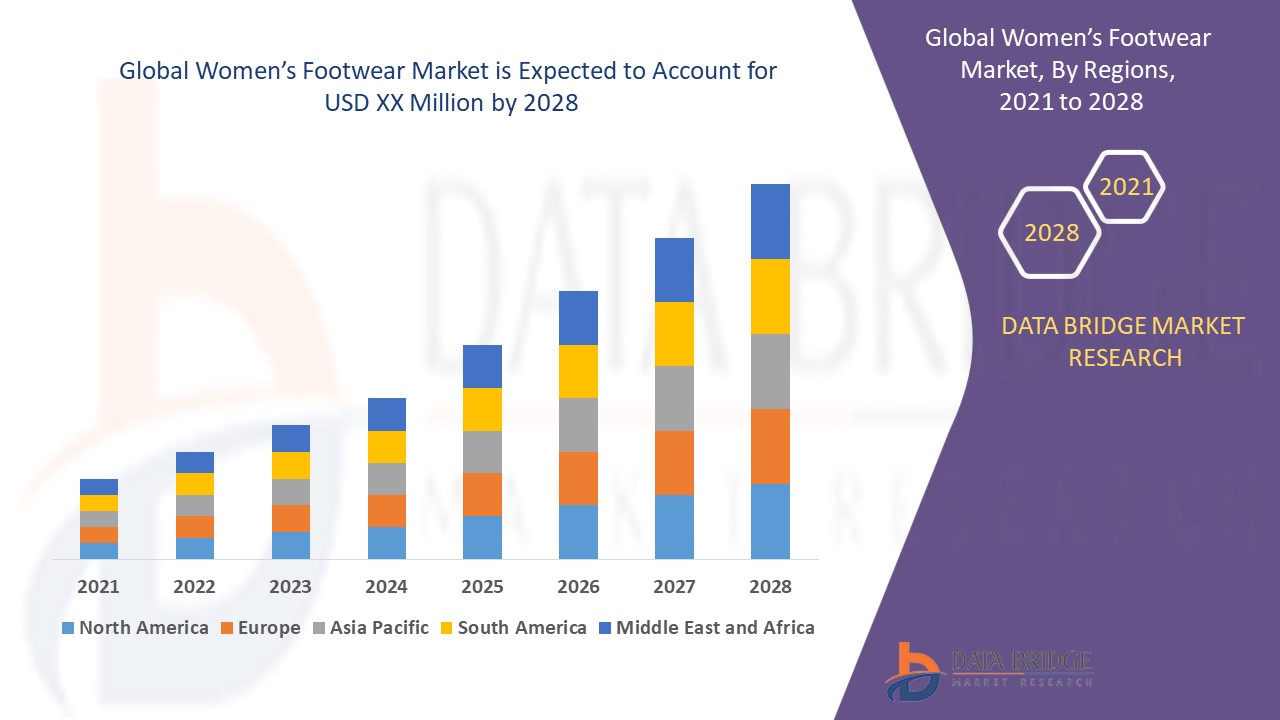
Women’s Footwear Market Analysis and Size
In residential settings, the sanitary ware market serves as the cornerstone of modern living spaces, providing essential fixtures for bathrooms and kitchens. Homeowners depend on top manufacturers' sanitary ware products such as toilets, sinks, showers, and bathtubs to support their daily hygiene rituals and improve comfort and convenience in their residences. The market caters to diverse consumer preferences, offering a wide range of designs, styles, and functionalities to suit various tastes and space constraints. Space-saving solutions for compact apartments to luxurious spas, such as amenities for upscale residences and sanitaryware products play a pivotal role in shaping the aesthetics and functionality of residential interiors.
The global women’s footwear market size was valued at USD 30.5 billion in 2023 and is projected to reach USD 44.04 billion by 2031, with a CAGR of 4.70% during the forecast period of 2024 to 2031. In addition to the market insights such as market value, growth rate, market segments, geographical coverage, market players, and market scenario, the market report curated by the Data Bridge Market Research team includes in-depth expert analysis, import/export analysis, pricing analysis, production consumption analysis, and consumer behaviour.
Report Scope and Market Segmentation
|
Report Metric |
Details |
|
Forecast Period |
2024-2031 |
|
Base Year |
2023 |
|
Historic Years |
2022 (Customizable to 2016 - 2021) |
|
Quantitative Units |
Revenue in USD Billion, Volumes in Units, Pricing in USD |
|
Segments Covered |
Product Type (Casual Shoes, Heels and Pumps, Boots, Sandals, Flip Flops and Slippers, Sports Shoes, and Safety Shoes), Material (Rubber, Leather, Velvet, Plastic, Textiles, and Others), Distribution Channel (Hypermarkets/Supermarkets, Independent Retailers, Specialty Stores, Multi-Brand Stores, Company Websites, and 3rd Party Online Sales) |
|
Countries Covered |
U.S., Canada, Mexico, Germany, France, U.K., Netherlands, Switzerland, Belgium, Russia, Italy, Spain, Turkey, China, Japan, India, South Korea, Singapore, Malaysia, Australia, Thailand, Indonesia, Philippines, Saudi Arabia, U.A.E, Israel, Egypt, South Africa, Brazil, and Argentina. |
|
Market Players Covered |
PUMA SE (Germany), ADIDAS AG (Germany), Alpinestars (Italy), Dainese S.p.A (Italy), Nike, Inc. (U.S.), BATA INDIA LIMITED (India), Guccio Gucci S.p.A. (Italy), ZARA (Spain), Louis Vuitton Malletier SAS (France), C&J Clark International (U.K.), ASICS Asia Pte. Ltd. (Singapore), Wolverine World Wide, Inc. (U.S.), DECKERS BRANDS (U.S.), Under Armour, Inc. (U.S.), Michael Kors (U.S.), The ALDO Group Inc. (Canada), SKECHERS USA, Inc. (U.S.), Hush Puppies (U.S.), FILA Luxembourg, S.a.r.l. (Luxembourg), and SPARCO S.P.A. (Italy) |
|
Market Opportunities |
|
Market Definition
Women's footwear refers to shoes specifically designed and manufactured for women. This category encompasses a wide range of styles, including heels, flats, sneakers, boots, sandals, and more, tailored to meet the diverse needs and preferences of female consumers. Women's footwear serves both functional and fashion purposes, providing comfort, support, and style for various occasions and activities.
Women’s Footwear Market Dynamics
Drivers
- Growing Consumer Preferences
Customers prioritize comfort, style, and functionality, which significantly impact their buying choices. They desire shoes that are both fashionable and comfortable for long-term wear. Trends such as athleisure and sustainability have also become important factors, with consumers increasingly opting for sneakers and eco-friendly footwear options. As women's lifestyles evolve, preferences for versatile footwear that can transition from work to leisure activities also drive market demand. Brands that can effectively anticipate and respond to these shifting preferences stand to capture a larger share of the market and foster customer loyalty.
- Rise in Effective Marketing Strategies
Brands that employ compelling advertising, social media engagement, influencer partnerships, and experiential marketing campaigns can effectively communicate their brand message, showcase product features, and create emotional connections with their target audience. It highlights unique selling points such as comfort, style, durability, and sustainability, and brands can differentiate themselves in a competitive market landscape, driving brand awareness, loyalty, and, ultimately, sales. In addition, strategic pricing, promotions, and distribution strategies can further enhance a brand's visibility and accessibility, expanding its reach and market share within the women's footwear segment.
Opportunities
- Growing Advancements in Materials
Innovations such as lightweight and breathable fabrics, eco-friendly materials, and advanced cushioning technologies enhance the comfort, durability, and sustainability of women's footwear. Manufacturers persistently endeavor to engineer materials boasting superior moisture-wicking capabilities and enhanced support, and flexibility to meet the evolving needs and preferences of consumers. These advancements elevate the quality and functionality of women's footwear and contribute to brand differentiation, market competitiveness, and consumer loyalty, driving overall growth and innovation in the industry.
- Rise of E-Commerce
Online platforms provide a wide selection of footwear choices, enabling female consumers to conveniently explore and acquire products from the convenience of their residences or while on the move. E-commerce eliminates geographical barriers, enabling brands to reach a global audience and expand their customer base. Moreover, online retailers often offer competitive prices, discounts, and personalized recommendations, enhancing the shopping experience and driving sales. As a result, the growth of e-commerce has significantly contributed to the expansion and evolution of the women's footwear market, reshaping how consumers shop for shoes and influencing market trends and dynamics.
Restraints/Challenges
- Growing Supply Chain Disruptions
Events such as natural disasters, political instability, or global health crises can disrupt manufacturing processes, transportation networks, and distribution channels, leading to delays in production and delivery. These disruptions can result in inventory shortages, increased lead times, and higher production costs for footwear companies. Moreover, supply chain interruptions may affect the quality and consistency of products, eroding consumer trust and brand reputation.
- Fluctuations in Currency Exchange Rates
When exchange rates are volatile, the cost of importing raw materials and finished goods can increase unpredictably, leading to higher production costs. In addition, companies may face challenges in maintaining stable pricing for their products in different markets, which can impact their competitiveness and profit margins. These financial uncertainties can make it difficult for footwear brands to plan long-term investments and pricing strategies, ultimately affecting their market performance and growth prospects.
This market report provides details of new recent developments, trade regulations, import-export analysis, production analysis, value chain optimization, market share, impact of domestic and localized market players, analyses opportunities in terms of emerging revenue pockets, changes in market regulations, strategic market growth analysis, market size, category market growths, application niches and dominance, product approvals, product launches, geographic expansions, technological innovations in the market. To gain more info on the market contact Data Bridge Market Research for an Analyst Brief, our team will help you take an informed market decision to achieve market growth.
Women’s Footwear Market Scope
The market is segmented on the basis of product type, material, and distribution channel. The growth amongst these segments will help you analyze meagre growth segments in the industries and provide the users with a valuable market overview and market insights to help them make strategic decisions for identifying core market applications.
Product Type
- Casual Shoes
- Heels and Pumps
- Boots
- Sandals
- Flip Flops and Slippers
- Sports Shoes
- Safety Shoes
Material
- Rubber
- Leather
- Velvet
- Plastic
- Textiles
- Others
Distribution Channel
- Hypermarkets/Supermarkets
- Independent Retailers
- Specialty Stores
- Multi-Brand Stores
- Company Websites
- 3rd Party Online Sales
Women’s Footwear Market Regional Analysis/Insights
The market is analyzed and market size, volume information is provided by country, product type, and material, and distribution channel as referenced above.
The countries covered in the market report are U.S., Canada, Mexico, Germany, France, U.K., Netherlands, Switzerland, Belgium, Russia, Italy, Spain, Turkey, China, Japan, India, South Korea, Singapore, Malaysia, Australia, Thailand, Indonesia, Philippines, Saudi Arabia, U.A.E., Israel, Egypt, South Africa, Brazil, and Argentina.
Asia-Pacific dominates the market due to significant increases in disposable income and evolving consumer preferences towards trendier options. With rising prosperity, more women are inclined to spend on fashionable footwear, contributing to the market's growth. This region experiences a rapid adoption of new trends, fostering a dynamic market environment where women seek to stay updated with the latest styles, driving demand for diverse footwear offerings.
Europe is expected to have significant growth in the market due to increasing consumer purchasing power and a heightened focus on personal grooming and appearance. With disposable incomes on the rise, consumers are more inclined to invest in clothing, accessories, and grooming products, driving demand for these goods across the continent. This trend reflects a cultural emphasis on self-presentation and style, fueling expansion opportunities for fashion brands and retailers operating within Europe. As consumer preferences evolve and economic conditions improve, the region is poised for sustained growth in the fashion sector.
The country section of the report also provides individual market impacting factors and changes in market regulation that impact the current and future trends of the market. Data points such as down-stream and upstream value chain analysis, technical trends and porter's five forces analysis, case studies are some of the pointers used to forecast the market scenario for individual countries. Also, the presence and availability of global brands and their challenges faced due to large or scarce competition from local and domestic brands, impact of domestic tariffs and trade routes are considered while providing forecast analysis of the country data.
Competitive Landscape and Women’s Footwear Market Share Analysis
The market competitive landscape provides details by competitor. Details included are company overview, company financials, revenue generated, market potential, investment in research and development, new market initiatives, global presence, production sites and facilities, production capacities, company strengths and weaknesses, product launch, product width and breadth, application dominance. The above data points provided are only related to the companies' focus related to market.
Some of the major players operating in the market are
- PUMA SE (Germany)
- ADIDAS AG (Germany)
- Alpinestars (Italy)
- Dainese S.p.A (Italy)
- Nike, Inc. (U.S.)
- BATA INDIA LIMITED (India)
- Guccio Gucci S.p.A. (Italy)
- ZARA (Spain)
- Louis Vuitton Malletier SAS (France)
- C&J Clark International (U.K.)
- ASICS Asia Pte. Ltd. (Singapore)
- Wolverine World Wide, Inc. (U.S.)
- DECKERS BRANDS (U.S.)
- Under Armour, Inc. (U.S.)
- Michael Kors (U.S.)
- The ALDO Group Inc. (Canada)
- SKECHERS USA, Inc. (U.S.)
- Hush Puppies (U.S.)
- FILA Luxembourg, S.a.r.l. (Luxembourg)
- SPARCO S.P.A. (Italy)
SKU-
Obtenha acesso online ao relatório sobre a primeira nuvem de inteligência de mercado do mundo

- Painel interativo de análise de dados
- Painel de análise da empresa para oportunidades de elevado potencial de crescimento
- Acesso de analista de pesquisa para personalização e customização. consultas
- Análise da concorrência com painel interativo
- Últimas notícias, atualizações e atualizações Análise de tendências
- Aproveite o poder da análise de benchmark para um rastreio abrangente da concorrência
Metodologia de Investigação
A recolha de dados e a análise do ano base são feitas através de módulos de recolha de dados com amostras grandes. A etapa inclui a obtenção de informações de mercado ou dados relacionados através de diversas fontes e estratégias. Inclui examinar e planear antecipadamente todos os dados adquiridos no passado. Da mesma forma, envolve o exame de inconsistências de informação observadas em diferentes fontes de informação. Os dados de mercado são analisados e estimados utilizando modelos estatísticos e coerentes de mercado. Além disso, a análise da quota de mercado e a análise das principais tendências são os principais fatores de sucesso no relatório de mercado. Para saber mais, solicite uma chamada de analista ou abra a sua consulta.
A principal metodologia de investigação utilizada pela equipa de investigação do DBMR é a triangulação de dados que envolve a mineração de dados, a análise do impacto das variáveis de dados no mercado e a validação primária (especialista do setor). Os modelos de dados incluem grelha de posicionamento de fornecedores, análise da linha de tempo do mercado, visão geral e guia de mercado, grelha de posicionamento da empresa, análise de patentes, análise de preços, análise da quota de mercado da empresa, normas de medição, análise global versus regional e de participação dos fornecedores. Para saber mais sobre a metodologia de investigação, faça uma consulta para falar com os nossos especialistas do setor.
Personalização disponível
A Data Bridge Market Research é líder em investigação formativa avançada. Orgulhamo-nos de servir os nossos clientes novos e existentes com dados e análises que correspondem e atendem aos seus objetivos. O relatório pode ser personalizado para incluir análise de tendências de preços de marcas-alvo, compreensão do mercado para países adicionais (solicite a lista de países), dados de resultados de ensaios clínicos, revisão de literatura, mercado remodelado e análise de base de produtos . A análise de mercado dos concorrentes-alvo pode ser analisada desde análises baseadas em tecnologia até estratégias de carteira de mercado. Podemos adicionar quantos concorrentes necessitar de dados no formato e estilo de dados que procura. A nossa equipa de analistas também pode fornecer dados em tabelas dinâmicas de ficheiros Excel em bruto (livro de factos) ou pode ajudá-lo a criar apresentações a partir dos conjuntos de dados disponíveis no relatório.











