


Middle East and Africa Pharmacy Automation Market, By Product (Systems, Software, and Services), Pharmacy Type (Independent, Chain, and Federal), Pharmacy Size (Large Size Pharmacy, Medium Size Pharmacy, and Small Size Pharmacy), Application (Drug Dispensing and Packaging, Drug Storage, and Inventory Management), End User (Inpatient Pharmacies, Outpatient Pharmacies, Retail Pharmacies, Online Pharmacies, Central Fill/Mail Order Pharmacies, Pharmacy Benefit Management Organizations, and Others), Distribution Channel (Direct Tender and Third Party Distributor) - Industry Trends and Forecast to 2030.
Análise e Insights do Mercado de Automação de Farmácia do Oriente Médio e África
O aumento da incidência de acidentes e mortes devido a erros de medicamentos médicos coloca tremenda pressão sobre o setor de saúde geral. Tanto os profissionais de saúde como os farmacêuticos procuram soluções mais eficazes e precisas para evitar tais frequentes disfunções médicas. Além disso, com o aumento do número de pacientes, visitantes e suas respectivas necessidades de segurança, o sistema de entrega de medicamentos se torna mais complicado a cada dia que passa. A fim de resolver este grave problema, tecnologias avançadas, como sistemas de automação de farmácia estão agora emergindo como as ferramentas mais poderosas. O objetivo desses instrumentos é reduzir erros de prescrição médica e maximizar a segurança do paciente. Portanto, a implementação de tais sistemas de automação de farmácia ajuda os prestadores de serviços de saúde e farmacêuticos a minimizar suas perdas e melhorar a qualidade e produtividade.
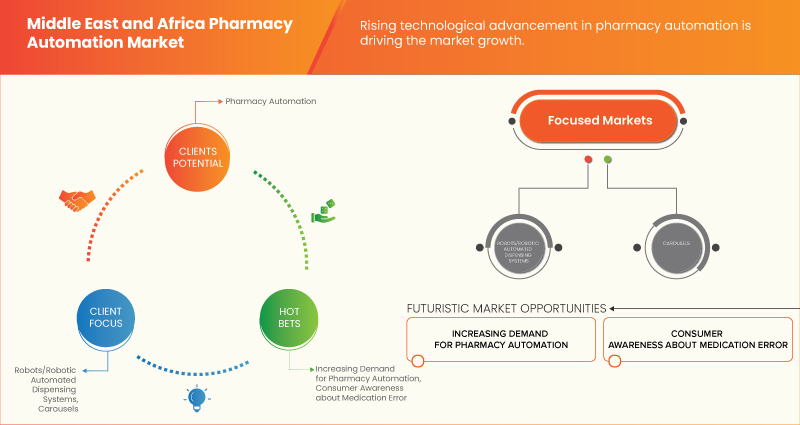
Além disso, a implementação de inovações tecnológicas e o avanço de sistemas automatizados com sistemas de automação de farmácia melhorados levam a maiores taxas de sucesso e novas aplicações de dispositivos com maior demanda por produtos inovadores para medicamentos prescritos para composição, dispensação, armazenamento e rotulagem estão impulsionando o crescimento do mercado ao longo do período de previsão. No entanto, antecipa-se que fatores como a relutância em implementar sistemas de automação de farmácia devido ao seu alto custo restringiriam sua adoção, o que é esperado para restringir o crescimento do mercado.
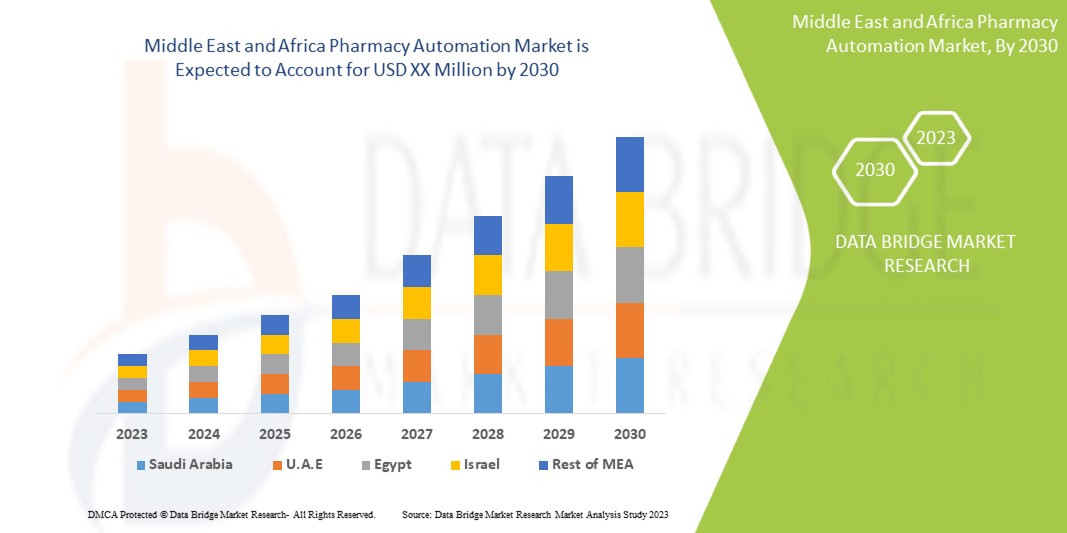
O mercado de automação de farmácias do Oriente Médio e África é de apoio e visa reduzir erros de dispensação de medicamentos e melhorar a segurança do paciente. Data Bridge Market Research analisa que o mercado de automação de farmácias do Oriente Médio e África crescerá em um CAGR de 7,7% durante o período de previsão de 2023 a 2030.
|
Metric de Relatório |
Detalhes |
|
Período de previsão |
2023 a 2030 |
|
Ano de base |
2022 |
|
Ano Histórico |
2021 (Personalizável até 2015 - 2020) |
|
Unidades quantitativas |
Receitas em Milhões e Preços em USD |
|
Segmentos Cobertos |
Produto (Sistemas, Software e Serviços), Tipo de Farmácia (Independente, Cadeia e Federal), Tamanho da Farmácia (Família de Tamanho Grande, Farmácia de Tamanho Médio e Farmácia de Tamanho Pequeno), Aplicação (Dispensação e Embalagem, Armazenamento de Drogas e Gestão de Inventário), Usuário Final (Famácias de Pacientes, Farmácias Ambulatoriais, Farmácias de Varejo, Farmácias Online, Farmácias de Pedido Central de Fill/Mail, Organizações de Gestão de Benefícios Farmacêuticos, e Outros), Canal de Distribuição (Tender direto e distribuidor de terceiros) |
|
Países abrangidos |
Arábia Saudita, África do Sul, U.A.E., Israel, Egito e restante Oriente Médio e África |
|
Jogadores de mercado cobertos |
ARXIUM, OMNICELL INC., Cerner Corporation, Capsa Healthcare, ScriptPro LLC, RxSafe, LLC., MedAvail Technologies, Inc., Asteres Inc., InterLink AI, Inc., BD, Baxter, Fullscript, McKesson Corporation, Innovation Associates, AmerisourceBergen Corporation, UNIVERSAL LOGISTICS HOLDINGS, INC, Takazono Corporation, TOSHO Inc., Willach Group, BIQHS, Synergy Medical, Yuyama, APD Algoritmos Procesos y Diseños S.A, JVM Europe BV, Genesis Automation LTD, myPak Solutions Pty Ltd., Demodeks Pharma Shelving, Deenova S.r.l., KUKUKA AG e KLS Pharma Robotics GmbH entre outros |
Definição do mercado
A automação farmacêutica desempenha um papel significativo na saúde moderna, pois permite que a medicina seja convenientemente entregue e distribuída na farmácia hospitalar ou farmácia de varejo. Automação da farmácia ajuda a reduzir o erro na medicação. Ela evita erros como falta de informação sobre medicamentos, falta de informação do paciente, dispensação de formulações, erros de prescrição, terapia de rastreamento e outros que podem ocorrer durante o processo manual. Um dos tipos mais comuns de erros são informações e instruções de rotulagem incorretas. Para melhorar as instalações e serviços de saúde e garantir a segurança do paciente, é vital reduzir o erro de prescrição, razão pela qual o sistema de automação de farmácia é usado de maneiras muito importantes para eliminar o armazenamento, inventário, uso e erro de recuperação. O uso da automação de farmácia é altamente aceitável e benéfico no aumento da eficiência e precisão das farmácias. Além disso, a necessidade de prevenir erros de medicação e o aumento da população geriátrica em todo o mundo provavelmente impulsionará o crescimento do mercado no período previsto.
Dinâmica do Mercado de Automação de Farmácia do Oriente Médio e África
Esta seção trata da compreensão dos motoristas de mercado, vantagens, oportunidades, restrições e desafios. Tudo isso é discutido em detalhes abaixo:
CONDUTORES
- Necessidade crescente de minimizar erros de medicação
Os erros médicos são a principal causa de morte em países, levando ainda mais ao aumento da hospitalização em todo o mundo. Os erros de medicação são de diversos tipos que incluem erros na cadeia de cuidados farmacológicos e farmacêuticos ao paciente: erros de prescrição, erros de dispensação, erros de administração, erros de transcrição, falhas de prescrição e erros de ‘cross settings’.
Um erro de medicação pode ocorrer devido a uma série de variáveis, tais como coordenação de ordem inadequada entre médico e farmacêutico, práticas inadequadas de armazenamento em farmácias e mal-entendidos decorrentes do uso de rótulos idênticos.
Os erros de dispensação incluem quaisquer anomalias ou desvios da ordem de prescrição, tais como dispensação da dose errada, medicamento, tipo de dosagem, quantidade incorreta, ou rotulagem insuficiente, incorreta ou inadequada. A instrução enganosa ou insuficiente para uso, planejamento inadequado, embalagem ou armazenamento de medicamentos antes da dispensação também é considerada um erro de medicação.
Em uma farmácia que preenche 250 prescrições por dia, erros ocorrem a uma taxa de 4 por dia, totalizando uma estimativa de 51,5 milhões de erros de 3 bilhões de prescrições preenchidos anualmente em todo o país.
- Aumento da demanda por medicamentos
A crescente demanda por medicamentos é observada em todo o mundo devido à crescente incidência de doenças crônicas, como câncer, diabetes, obesidade, asma, entre outras. As pessoas que sofrem dessas doenças são dependentes de um ou outro medicamento prescrito por seus médicos.
Além disso, o envelhecimento da população está aumentando o Oriente Médio e África devido à disponibilidade de melhores serviços de saúde. Aumento da pesquisa e desenvolvimento que leva ao lançamento de medicamentos eficazes e novos orientados para doenças específicas mais ajuda na demanda crescente de medicamentos.
Além disso, o surgimento do COVID-19 também aumentou a demanda por vários medicamentos em todo o mundo, que incluem comprimidos de vitamina C e hidroxicloroquina, entre outros, levando a um aumento significativo da demanda por medicamentos.
OPORTUNIDADE
- Necessidade de aumentar a eficiência do trabalho nas farmácias
Cada farmácia está tentando fazer as mesmas coisas que incluem o preenchimento correto e eficiente de prescrições, prestação de cuidados de alta qualidade do paciente, e manutenção de um modelo de negócio sustentável em que os trabalhadores têm boa satisfação no trabalho e os consumidores são satisfeitos.
A fim de melhorar a eficácia das suas actividades farmacêuticas em apoio de estratégias e prioridades hospitalares globais para prestar cuidados centrados no doente de alta qualidade, muitos líderes hospitalares e farmacêuticos começaram a adoptar sistemas de automação de farmácia.
A adoção de software e sistema aprimorado de automação de fluxo de trabalho e farmácia tem potencialmente aumentado a eficiência das farmácias. Assim, a necessidade de aumentar a eficiência do trabalho dentro das farmácias atua como uma oportunidade para o crescimento do mercado.
RESTRAINT
- Investimento de Alto Capital
Os sistemas de automação de farmácia são mais caros do que os sistemas manuais. O preço de um sistema de automação de farmácia média começa em USD 59.198.45, mas para versões mais exóticas, pode ser tão alto quanto USD 591.984.50.
Como o investimento de capital necessário para a implementação do sistema de automação de farmácia é significativamente elevado, torna difícil a adoção desses sistemas em hospitais e farmácias em países em desenvolvimento, juntamente com pequenas farmácias em todo o mundo. Assim, o alto investimento em capital leva à diminuição da taxa de adoção de sistemas de automação de farmácia. Por conseguinte, actua como uma restrição ao crescimento do mercado.
DESAFIO
- Procedimentos Regulatórios Stringent
Os hospitais e farmácias são obrigados a desempenhar um papel crucial na cadeia de abastecimento de drogas da nação: a distribuição de medicamentos ao público. Entre os diversos regulamentos – estaduais e federais – que regulam as práticas de dispensação de medicamentos, há três leis importantes relacionadas à proteção e segurança do público em geral e dos profissionais da indústria.
Essas leis se aplicam à proteção da cadeia de suprimentos de drogas, à regulação e segurança de substâncias controladas e ao gerenciamento de resíduos farmacêuticos perigosos — e são implementadas pela FDA, DEA e EPA.
Os fabricantes de sistemas farmacêuticos automatizados, portanto, têm que cumprir várias regulamentações; manter tal conformidade é um trabalho tedioso e pode atrasar o lançamento do produto. Dessa forma, o rigor dos procedimentos regulatórios atua como um desafio ao crescimento do mercado.
Evolução recente
- Em janeiro de 2023, a AmerisourceBergen Corporation anunciou a conclusão de sua aquisição da PharmaLex Holding GmbH. A aquisição da PharmaLex melhora a estratégia de crescimento da AmerisourceBergen Corporation, avançando sua liderança em serviços especializados e plataforma do Oriente Médio e África de recursos de serviços de fabricantes de produtos farmacêuticos.
- Em fevereiro de 2022, Baxter anunciou que recebeu autorização do programa Common Vulnerability and Exposures (CVE) para ser uma Autoridade de Numeração CVE.
Mercado de Automação de Farmácia do Oriente Médio e África
O mercado de automação de farmácia do Oriente Médio e África é segmentado em seis segmentos notáveis com base em produto, tipo de farmácia, tamanho da farmácia, aplicação, usuário final e canal de distribuição.
PRODUTO
- SISTEMAS
- SOFTWARE
- SERVIÇOS
Com base no produto, o mercado é segmentado em sistemas, software e serviços.
TIPO DE FARMÁCIA
- INDEPENDENTE
- CHAIN
- FEDERAL
Com base no tipo de farmácia, o mercado é segmentado em independente, cadeia e federal.
DIMENSÃO DA FARMÁCIA
- FARMÁCIA DE DIMENSÃO GRANDE
- FARMÁCIA DE DIMENSÃO MÉDIO
- FARMACIA DE PEQUENO DIMENSÃO
Com base no tamanho da farmácia, o mercado é segmentado em farmácia de grande porte, farmácia de tamanho médio e farmácia de pequeno porte.
PEDIDO
- DISPENSO E ACONDICIONAMENTO DAS DROGAS
- CONSERVAÇÃO DE DROGAS
- GESTÃO DOS INVESTIMENTOS
Com base na aplicação, o mercado é segmentado em dispensação e embalagem de medicamentos, armazenamento de medicamentos e gestão de inventário.
FIM DO UTILIZADOR
- FARMÁCIAS INPATIENTES
- FARMÁCIAS EXTRAPATIENTES
- FARMÁCIES DE RETALHO
- FARMÁCIAS ONLINE
- FARMÁCIES CENTRAL DE FILHO/MÁQUINAS
- ORGANIZAÇÕES DE GESTÃO DOS BENEFICIÁRIOS DA FARMácia
- OUTRAS
Com base no usuário final, o mercado é segmentado em farmácias de internação, ambulatórios, farmácias de varejo, farmácias on-line, farmácias centrais de preenchimento/e-mail, organizações de gestão de benefícios de farmácia, entre outras.
CANAL DE DISTRIBUIÇÃO
- PROTEÇÃO DIRECTA
- DISTRIBUTOR DE TERCEIROS
Com base no canal de distribuição, o mercado é segmentado em concurso direto e distribuidor de terceiros.
Análise/Insights Regionais do Mercado de Automação de Farmácia do Oriente Médio e África
O mercado de automação de farmácia do Oriente Médio e África é segmentado em seis segmentos notáveis com base em produto, tipo de farmácia, tamanho da farmácia, aplicação, usuário final e canal de distribuição.
Os países abrangidos neste relatório de mercado são a Arábia Saudita, a África do Sul, a U.A.E., Israel, o Egito e o resto do Oriente Médio e da África.
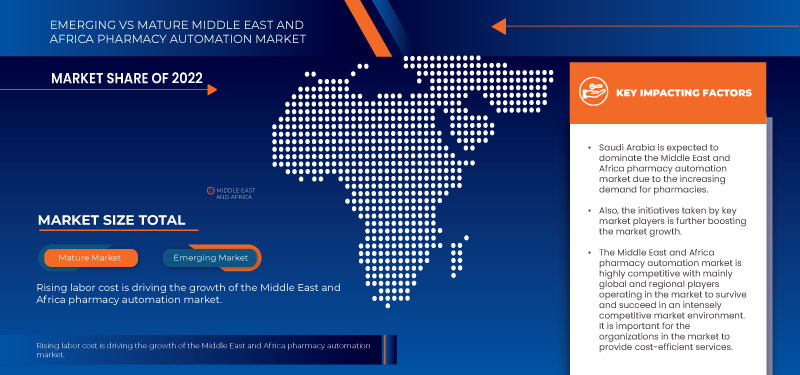
Em 2023, a Arábia Saudita deve dominar o mercado devido à crescente conscientização sobre as vantagens dos sistemas de automação de farmácia sobre os métodos manuais.
A secção «país» do relatório também fornece factores individuais de impacto no mercado e alterações da regulamentação no mercado nacional que afectam as tendências actuais e futuras do mercado. Pontos de dados como novas vendas, vendas de substituição, dados demográficos dos países, atos regulatórios e tarifas de importação-exportação são alguns dos principais indicadores usados para prever o cenário de mercado para cada país. Além disso, a presença e disponibilidade de marcas do Oriente Médio e África e os desafios enfrentados devido à grande ou escassa concorrência de marcas locais e nacionais, e o impacto dos canais de vendas são considerados ao fornecer análise de previsão dos dados do país.
Paisagem competitiva e Oriente Médio e África Farmácia Automation Market Share Analysis
O mercado competitivo de automação de farmácia do Oriente Médio e África fornece detalhes dos concorrentes. Detalhes incluídos são visão geral da empresa, finanças da empresa, receita gerada, potencial de mercado, investimento em I&D, novas iniciativas de mercado, presença no Oriente Médio e África, locais e instalações de produção, capacidades de produção, pontos fortes e fracos da empresa, lançamento de produto, largura e amplitude do produto, e dominância de aplicação. Os pontos de dados acima fornecidos estão relacionados apenas com o foco das empresas no mercado.
Alguns dos principais operadores do mercado que operam no Oriente Médio e África mercado de automação farmácia são Cerner Corporation, Capsa Healthcare, ScriptPro LLC, RxSafe, LLC., MedAvail Technologies, Inc., Asteres Inc., InterLink AI, Inc., BD, Baxter, Fullscript, McKesson Corporation, Innovation Associates, AmerisourceBergen Corporation, UNIVERSAL LOGISTICS HOLDINGS, INC
SKU-
Obtenha acesso online ao relatório sobre a primeira nuvem de inteligência de mercado do mundo

- Painel interativo de análise de dados
- Painel de análise da empresa para oportunidades de elevado potencial de crescimento
- Acesso de analista de pesquisa para personalização e customização. consultas
- Análise da concorrência com painel interativo
- Últimas notícias, atualizações e atualizações Análise de tendências
- Aproveite o poder da análise de benchmark para um rastreio abrangente da concorrência
Índice
1 INTRODUÇÃO
1.1 OBJECTIVOS DO ESTUDO
1.2 DEFINIÇÃO DE MERCADO
1.3 VISÃO GERAL DO MERCADO DE AUTOMAÇÃO DA FARMAÇÃO DO MÉDIO ORIENTE & ÁFRICA
1.4 MOEDA E PREÇOS
1.5 LIMITAÇÕES
1.6 MERCADOS COBERTOS
2 SEGMENTAÇÃO DO MERCADO
2.1 MERCADOS COBERTOS
2.2 ÂMBITO GEOGRÁFICO
2.3 ANOS CONSIDERADOS PARA O ESTUDO
2.4 MODELO DE VALIDAÇÃO DE DADOS TRIPOD DBRR
2.5 INTERVENÇÕES PRIMÁRIAS COM OPINIÕES-CHAVE
2.6 MODELIZAÇÃO MULTIVARIADA
2.7 PEDIDO DE RECUPERAÇÃO DO MERCADO
2.8 Curva da linha de vida do produto
2.9 GRIDE DE POSIÇÃO DO MERCADO DE BMO
2.1 ANÁLISE DOS PARTICIPANTES
2.11 FONTES SEGUNDÁRIAS
2.12 ASSUNTOS
3 RESUMO
4 MERCADO DE AUTOMAÇÃO DA FARMACY DO MÉDIO ORIENTE & ÁFRICA: REGULAMENTOS
4.1 LEGISLAÇÕES ESTATAIS EXISTENTES E REGULAMENTOS PARA A UTILIZAÇÃO DE SISTEMAS DE DISPENSÃO AUTOMADOS (ADS) NOS EUA.
5 VISÃO GERAL DO MERCADO
5. 1 CONDUTORES
5.1.1 CRESCIMENTO DE ERRORES DE MEDICAÇÃO
5.1.2 RISING DEMANDA PARA OS FARMACÊUTICOS
5.1.3 CUSTO DO TRABALHO DE RISCO
5.1.4 VANTAGENS DOS SISTEMAS DE AUTOMAÇÃO FARMÁTICA SOBRE MÉTODOS MANUAIS
5.1.5 ACONSELHAMENTOS TECNOLÓGICOS E FERRAMENTAS ROBÓTICAS
5.2 RESTRUÇÕES
5.2.1 RELUIÇÃO ENTRE AS ORGANIZAÇÕES DE SAÚDE PARA A APROVAÇÃO DOS SISTEMAS DE AUTOMAÇÃO DA FARMácia
5.2.2 ALTO INVESTIMENTO DE CAPITAL
5.2.3 PROBLEMAS DE INTEROPERABILIDADE NA AUTOMAÇÃO FARMÁCIA
5.3 OPORTUNIDADES
5.3.1 NECESSIDADE DE AUMENTAR A EFICIÊNCIA DO TRABALHO NAS FARMÁCIAS
5.3.2 DESPESAS DE RISCO DE SAÚDE NAS NAÇÕES DE EMERGÊNCIA
5.3.3 INICIATIVAS ESTRATÉGICAS DOS JOGOS-CHAVE DO MERCADO
5.4 DESAFIOS
5.4.1 RETINGÊNCIA DOS PROCEDIMENTOS REGULAMENTARES
5.4.2 DESAFIOS FUNCIONAIS
5.4.3 LIMITAÇÕES DOS SISTEMAS DE AUTOMAÇÃO DA FARMácia
6 MERCADO DE AUTOMAÇÃO DA FARMACY DO MÉDIO ORIENTE & ÁFRICA, POR PRODUTO
6.1 VISÃO GERAL
6. 2 SISTEMAS
6. 3 SOFTWARE
6.4 SERVIÇOS
7 MERCADO DE AUTOMAÇÃO FARMÁCIA DO MÉDIO ORIENTE & ÁFRICA, POR TIPO DE FARMÁCIA
7.1 VISÃO GERAL
7.2 INDEPENDENTES
7.3 CHAIN
7.4 FEDERAL
8 MERCADO DE AUTOMAÇÃO DA FARMACY DO MÉDIO ORIENTE & ÁFRICA, POR DIMENSÃO DA FARMACY
8.1 VISÃO GERAL
8.2 FARMÁCIA DE DIMENSÃO GRANDE
FARMÁCIA DE DIMENSÃO MÉDIA
8.4 FARMACIA DE PEQUENO DIMENSÃO
9 MERCADO DE AUTOMAÇÃO DA FARMACY DO MÉDIO ORIENTE & ÁFRICA, PELO PEDIDO
9.1 VISÃO GERAL
9.2 DISPESA E ACONDICIONAMENTO DAS DROGAS
9.3 ARMAZENAMENTO DE DROGA
9.4 GESTÃO DOS INVENTÁRIOS
10 MERCADO DE AUTOMAÇÃO DA FARMACY DO MÉDIO ORIENTE E DA ÁFRICA, PELO UTILIZADOR FINAL
10.1 VISÃO GERAL
10.2 FARMACIAS INPATIENTES
10.3 FARMÁCIAS PROPOSTAS
10.4 FARMÁCIES DE RETALHO
10. 5 FARMÁCIAS ONLINE
10,6 FARMACIAS CENTRAL DE FILHO/MÁQUINAS
10.7 ORGANIZAÇÕES DE GESTÃO DO BENEFICIÁRIO DE FARMácia
10,8 OUTRAS
11 MERCADO DE AUTOMAÇÃO DA FARMácia DO MÉDIO ORIENTE & ÁFRICA, POR CANAL DE DISTRIBUIÇÃO
11.1 VISÃO GERAL
11.2 PROTEÇÃO DIRECTA
11.3 DISTRIBUTOR DE TERCEIROS
12 MERCADO DE AUTOMAÇÃO DA FARMácia DO MÉDIO ORIENTE & ÁFRICA, POR REGIÃO
12,1 MÉDIO ORIENTE & ÁFRICA
12.1.1 SAUDI ARÁBIA
12.1.2 ÁFRICA DO SUL
12.1.3 U.A.E.
12.1.4 ISRAEL
12.1.5 EGITO
12.1.6 RESTO DO MÉDIO ORIENTE & ÁFRICA
13 MERCADO DE AUTOMAÇÃO DA FARMACY DO MÉDIO ORIENTE & ÁFRICA, PAISCAPE DA EMPRESA
13.1 ANÁLISE DA COMPANHIA: MÉDIO ORIENTE & ÁFRICA
14 ANÁLISE SWOT
15 PERFIL DA EMPRESA
15.1 OMNICELL, INC.
15.1.1 EMPRESA SNAPSHOT
15.1.2 ANÁLISE DAS RECEITAS
15.1.3 ANÁLISE PARTICIPAL
15.1.4 PRODUTO PORTFÓLIO
15.1.5 EVOLUÇÃO RECENTE
15.2 CORPORAÇÃO DE MCKESSON
15.2.1 EMPRESA SNAPSHOT
15.2.2 ANÁLISE DAS RECEITAS
15.2.3 ANÁLISE PARTICIPAL
15.2.4 PRODUTO PORTFÓLIO
15.2.5 EVOLUÇÃO RECENTE
15.3 CORPORAÇÃO AMERISOURCEBERGÉNICA
15.3.1 EMPRESA SNAPSHOT
15.3.2 ANÁLISE DE RECEITAS
15.3.3 ANÁLISE PARTICIPAL
15.3.4 PRODUTO PORTFÓLIO
15.3.5 EVOLUÇÃO RECENTE
15.4 BAXTER
15.4.1 EMPRESA SNAPSHOT
ANÁLISE DAS RECEITAS
15.4.3 ANÁLISE PARTICIPAL
15.4.4 PRODUTO PORTFOLIO
15.4.5 EVOLUÇÃO RECENTE
15.5 TOSHO CO., INC.
15.5.1 EMPRESA SNAPSHOT
15.5.2 ANÁLISE PARTICIPAL
15.5.3 PRODUTO PORTFÓLIO
15.5.4 EVOLUÇÃO RECENTE
15.6 APD ALGORITMOS PROCESSOS Y DISEÑOS S.A.
15.6.1 EMPRESA SNAPSHOT
15.6.2 PRODUTO PORTFÓLIO
15.6.3 EVOLUÇÃO RECENTE
15.7 ASTERES INC.
15.7.1 EMPRESA SNAPSHOT
15.7.2 PRODUTO PORTFÓLIO
15.7.3 EVOLUÇÃO RECENTE
15.8 ARXIUM
15.8.1 EMPRESA SNAPSHOT
15.8.2 PRODUTO PORTFÓLIO
15.8.3 EVOLUÇÃO RECENTE
15,9 BD
15.9.1 EMPRESA SNAPSHOT
15.9.2 ANÁLISE DE RECEITAS
15.9.3 ANÁLISE DA COMPANHIA
15.9.4 PRODUTO PORTFÓLIO
15.9.5 EVOLUÇÃO RECENTE
15.1 BIQHS
15.10.1 EMPRESA SNAPSHOT
15.10.2 PRODUTO PORTFÓLIO
15.10.3 EVOLUÇÃO RECENTE
15.11 CAPSA SAÚDE
15.11.1 EMPRESA SNAPSHOT
15.11.2 PRODUTO PORTFÓLIO
15.11.3 EVOLUÇÃO RECENTE
15.12 CORPORAÇÃO CERNER
15.12.1 EMPRESA SNAPSHOT
ANÁLISE DAS RECEITAS
15.12.3 PRODUTO PORTFOLIO
15.12.4 EVOLUÇÃO RECENTE
15.13 DEENOVA S.R.L.
15.13.1 EMPRESA SNAPSHOT
15.13.2 PRODUTO PORTFÓLIO
15.13.3 EVOLUÇÃO RECENTE
15.14 DEMODEKS FARMACY SHELVING
15.14.1 EMPRESA SNAPSHOT
15.14.2 PRODUTO PORTFOLIO
15.14.3 DESENVOLVIMENTOS RECENTES
15.15 CULTURA
15.15.1 EMPRESA SNAPSHOT
15.15.2 PRODUTO PORTFÓLIO
15.15.3 DESENVOLVIMENTOS RECENTES
15.16 AUTOMAÇÃO DE GÊNESIS LTD
15.16.1 EMPRESA SNAPSHOT
15.16.2 PRODUTO PORTFOLIO
15.16.3 EVOLUÇÃO RECENTE
15.17 IA
15.17.1 EMPRESA SNAPSHOT
15.17.2 PRODUTO PORTFÓLIO
15.17.3 EVOLUÇÃO RECENTE
15.18 INTERLINK AI, INC
15.18.1 EMPRESA SNAPSHOT
15.18.2 PRODUTO PORTFÓLIO
15.18.3 EVOLUÇÃO RECENTE
15.19 JVM EUROPE BV
15.19.1 EMPRESA SNAPSHOT
15.19.2 PRODUTO PORTFÓLIO
15.19.3 EVOLUÇÃO RECENTE
15,2 KLS PHARMA ROBÓTICO GMBH
15.20.1 EMPRESA SNAPSHOT
15.20.2 PRODUTO PORTFÓLIO
15.20.3 EVOLUÇÃO RECENTE
15.21 KUKA AG
15.21.1 EMPRESA SNAPSHOT
15.21.2 ANÁLISE DAS RECEITAS
15.21.3 ANÁLISE PARTICIPAL
15.21.4 PRODUTO PORTFÓLIO
15.21.5 EVOLUÇÃO RECENTE
15.22 TECNOLOGIAS MEDAVAIL, INC.
15.22.1 EMPRESA SNAPSHOT
15.22.2 PRODUTO PORTFOLIO
15.22.3 EVOLUÇÃO RECENTE
15.23 MYPAK SOLUTIONS PTY LTD.
15.23.1 EMPRESA SNAPSHOT
15.23.2 PRODUTO PORTFOLIO
15.23.3 EVOLUÇÃO RECENTE
15.24 RXSAFE, LLC.
15.24.1 EMPRESA SNAPSHOT
15.24.2 PRODUTO PORTFOLIO
15.24.3 EVOLUÇÃO RECENTE
15. 25 SCRIPTPRO LLC
15.25.1 EMPRESA SNAPSHOT
15.25.2 ANÁLISE PARTICIPAL
15.25.3 PRODUTO PORTFÓLIO
15.25.4 EVOLUÇÃO RECENTE
15.26 SYNERGY MÉDICA
15.26.1 EMPRESA SNAPSHOT
15.26.2 PRODUTO PORTFOLIO
15.26.3 DESENVOLVIMENTOS RECENTES
15.27 CORPORAÇÃO DE TAKAZONO
15.27.1 EMPRESA SNAPSHOT
15.27.2 PRODUTO PORTFÓLIO
15.27.3 EVOLUÇÃO RECENTE
15.28 LOGÍSTICAS UNIVERSAIS
15.28.1 EMPRESA SNAPSHOT
ANÁLISE DAS RECEITAS
15.28.3 PRODUTO PORTFÓLIO
15.28.4 EVOLUÇÃO RECENTE
15.29 GRUPO WILLACH
15.29.1 EMPRESA SNAPSHOT
15.29.2 PRODUTO PORTFÓLIO
15.29.3 EVOLUÇÃO RECENTE
15.3 YUYAMA
15.30.1 EMPRESA SNAPSHOT
15.30.2 PRODUTO PORTFÓLIO
15.30.3 DESENVOLVIMENTOS RECENTES
16 QUESTIONÁRIO
17 RELATÓRIOS RELACIONADOS
Lista de Figura
FIGURA 1 MERCADO DE AUTOMAÇÃO DA FARMAÇÃO DO MÉDIO ORIENTE & ÁFRICA: SEGMENTAÇÃO
FIGURA 2 MERCADO DE AUTOMAÇÃO DA FARMACY DO MÉDIO ORIENTE E DA ÁFRICA: TRIANGULAÇÃO DE DADOS
FIGURA 3 MERCADO DE AUTOMAÇÃO DA FARMÁCIA DO MÉDIO ORIENTE & ÁFRICA: ANÁLISE DE DROCOS
FIGURA 4 MERCADO DE AUTOMAÇÃO DA FARMÁCIA MÉDIO ORIENTE & ÁFRICA VS ANÁLISE REGIONAL DO MERCADO
FIGURA 5 MERCADO DE AUTOMAÇÃO DA FARMÁCIA DO MÉDIO ORIENTE & ÁFRICA: ANÁLISE DA INVESTIGAÇÃO DA EMPRESA
FIGURA 6 MERCADO DE AUTOMAÇÃO DA FARMÁCIA DO MÉDIO ORIENTE & ÁFRICA: DEMOGRAFIAS DE ENTREVISTA
FIGURA 7 MÉDIO ORIENTE E MERCADO DE AUTOMAÇÃO DA FARMÁCIA DA ÁFRICA: GRIDE DE COBERTURA DE PEDIDO DE MERCADO
FIGURA 8 MERCADO DE AUTOMAÇÃO DA FARMAÇÃO DO MÉDIO ORIENTE & ÁFRICA: GRIDE DE POSIÇÃO DO MERCADO DA DBRM
FIGURA 9 MERCADO DE AUTOMAÇÃO DA FARMÁCIA DO MÉDIO ORIENTE E DA ÁFRICA: ANÁLISE DA PARTICIPAÇÃO DOS VENDANTES
FIGURA 10 MÉDIO ORIENTE & MERCADO DE AUTOMAÇÃO FARMÁTICA DA ÁFRICA: SEGMENTAÇÃO
FIGURA 11 A NECESSIDADE DE CRESCIMENTO DE ERRORES DE MEDICAÇÃO ESTÁ ESPERADA PARA DRIVER O MÉDIO ORIENTE & ÁFRICA DO MERCADO DE AUTOMAÇÃO DE FARMACIDADE NO PERÍODO PREVISTO DE 2023 A 2030
FIGURA 12 SEGMENTO DOS SISTEMAS ESPERA-SE PARA A CONTA DE LAGEST PARTICIPAÇÃO DO MERCADO DE AUTOMAÇÃO DA FARMAÇÃO DO MÉDIO ORIENTE & ÁFRICA EM 2023 E 2030
FIGURA 13 DIRECTORES, RESTRUMENTOS, OPORTUNIDADES E DESAFIOS DO MERCADO DE AUTOMAÇÃO DA FARMAÇÃO DO MÉDIO ORIENTE & ÁFRICA
FIGURA 14 MERCADO DE AUTOMAÇÃO DA FARMAÇÃO DO MÉDIO ORIENTE E DA ÁFRICA: POR PRODUTO, 2022
FIGURA 15 MERCADO DE AUTOMAÇÃO DA FARMÁCIA DO MÉDIO ORIENTE & ÁFRICA: POR PRODUTO, 2023-2030 (USD
FIGURA 16 MÉDIO ORIENTE & MERCADO DE AUTOMAÇÃO DA FARMACY ÁFRICA: POR PRODUTO, CAGR (2023-2030)
FIGURA 17 MERCADO DE AUTOMAÇÃO DA FARMÁCIA DO MÉDIO ORIENTE E DA ÁFRICA: PELO PRODUTO, CURVA LIVRE
FIGURA 18 MERCADO DE AUTOMAÇÃO DA FARMÁCIA DO MÉDIO ORIENTE & ÁFRICA: POR TIPO DE FARMÁCIA, 2022
FIGURA 19 MERCADO DE AUTOMAÇÃO DA FARMÁCIA DO MÉDIO ORIENTE & ÁFRICA: POR TIPO DE FARMÁCIA, 2023-2030 (USD MILHÃO)
FIGURA 20 MÉDIO ORIENTE & MERCADO DE AUTOMAÇÃO DA FARMÁCIA ÁFRICA: POR TIPO DE FARMÁCIA, CAGR (2023-2030)
FIGURA 21 MERCADO DE AUTOMAÇÃO DA FARMÁCIA DO MÉDIO ORIENTE & ÁFRICA: POR TIPO DE FARMÁCIA, CURVA VIDA
FIGURA 22 MÉDIO ORIENTE & MERCADO DE AUTOMAÇÃO DA FARMácia ÁFRICA: POR DIMENSÃO DA FARMÁCIA, 2022
FIGURA 23 MÉDIO ORIENTE & MERCADO DE AUTOMAÇÃO DA FARMÁCIA ÁFRICA: POR DIMENSÃO DA FARMÁCIA, 2023-2030 (USD MILHÃO)
FIGURA 24 MÉDIO ORIENTE & MERCADO DE AUTOMAÇÃO DA FARMácia ÁFRICA: PELO DIMENSÃO DA FARMÁCIA, CAGR (2023-2030)
FIGURA 25 MÉDIO ORIENTE & MERCADO DE AUTOMAÇÃO FARMÁCIA ÁFRICA: PELO DIMENSÃO DA FARMÁCIA, CURVA LIVRE
FIGURA 26 MÉDIO ORIENTE & MERCADO DE AUTOMAÇÃO DA FARMÁCIA ÁFRICA: PEDIDO, 2022
FIGURA 27 MÉDIO ORIENTE & MERCADO DE AUTOMAÇÃO DA FARMácia ÁFRICA: POR PEDIDO, 2023-2030 (USD MILHÃO)
FIGURA 28 MERCADO DE AUTOMAÇÃO DA FARMACY DO MÉDIO ORIENTE & ÁFRICA: PEDIDO, CAGR (2023-2030)
FIGURA 29 MERCADO DE AUTOMAÇÃO DA FARMACY DO MÉDIO ORIENTE & ÁFRICA: PEDIDO, CURVA LIVRE
FIGURA 30 MÉDIO ORIENTE & MERCADO DE AUTOMAÇÃO DA FARMácia ÁFRICA: POR FIM DO UTILIZADOR, 2022
FIGURA 31 MÉDIO ORIENTE & MERCADO DA AUTOMAÇÃO DA FARMÁCIA ÁFRICA: POR FIM UTILIZADOR, 2023-2030 (USD MILHÃO)
FIGURA 32 MÉDIO ORIENTE & MERCADO DE AUTOMAÇÃO DA FARMÁCIA ÁFRICA: PELO UTILIZADOR FINAL, CAGR (2023-2030)
FIGURA 33 MERCADO DE AUTOMAÇÃO DA FARMACY DO MÉDIO ORIENTE E DA ÁFRICA: PELO UTILIZADOR FINAL, CURVA LIVRE
FIGURA 34 MERCADO DE AUTOMAÇÃO DA FARMAÇÃO DO MÉDIO ORIENTE & ÁFRICA: POR CANAL DE DISTRIBUIÇÃO, 2022
FIGURA 35 MÉDIO ORIENTE & MERCADO DE AUTOMAÇÃO DA FARMácia ÁFRICA: POR CANAL DE DISTRIBUIÇÃO, 2023-2030 (USD MILHÃO)
FIGURA 36 MÉDIO ORIENTE & MERCADO DE AUTOMAÇÃO DA FARMácia ÁFRICA: POR CANAL DE DISTRIBUIÇÃO, CAGR (2023-2030)
FIGURA 37 MÉDIO ORIENTE & MERCADO DE AUTOMAÇÃO DA FARMácia ÁFRICA: POR CANAL DE DISTRIBUIÇÃO, CURVA LIVRE
FIGURA 38 MERCADO DE AUTOMAÇÃO DA FARMÁCIA DO MÉDIO ORIENTE E DA ÁFRICA: SNAPSHOT (2022)
FIGURA 39 MERCADO DE AUTOMAÇÃO DA FARMACY DO MÉDIO ORIENTE E DA ÁFRICA: POR PAÍS (2022)
FIGURA 40 MERCADO DE AUTOMAÇÃO DA FARMACY DO MÉDIO ORIENTE E DA ÁFRICA: POR PAÍS (2023 e 2030)
FIGURA 41 MERCADO DE AUTOMAÇÃO DA FARMACY DO MÉDIO ORIENTE E DA ÁFRICA: POR PAÍS (2022 e 2030)
FIGURA 42 MERCADO DE AUTOMAÇÃO DA FARMACY DO MÉDIO ORIENTE E DA ÁFRICA: POR PRODUTO (2023-2030)
FIGURA 43 MÉDIO ORIENTE & MERCADO DE AUTOMAÇÃO DA FARMácia ÁFRICA: COMPANHIA COMPARTILHE 2022 (%)

Metodologia de Investigação
A recolha de dados e a análise do ano base são feitas através de módulos de recolha de dados com amostras grandes. A etapa inclui a obtenção de informações de mercado ou dados relacionados através de diversas fontes e estratégias. Inclui examinar e planear antecipadamente todos os dados adquiridos no passado. Da mesma forma, envolve o exame de inconsistências de informação observadas em diferentes fontes de informação. Os dados de mercado são analisados e estimados utilizando modelos estatísticos e coerentes de mercado. Além disso, a análise da quota de mercado e a análise das principais tendências são os principais fatores de sucesso no relatório de mercado. Para saber mais, solicite uma chamada de analista ou abra a sua consulta.
A principal metodologia de investigação utilizada pela equipa de investigação do DBMR é a triangulação de dados que envolve a mineração de dados, a análise do impacto das variáveis de dados no mercado e a validação primária (especialista do setor). Os modelos de dados incluem grelha de posicionamento de fornecedores, análise da linha de tempo do mercado, visão geral e guia de mercado, grelha de posicionamento da empresa, análise de patentes, análise de preços, análise da quota de mercado da empresa, normas de medição, análise global versus regional e de participação dos fornecedores. Para saber mais sobre a metodologia de investigação, faça uma consulta para falar com os nossos especialistas do setor.
Personalização disponível
A Data Bridge Market Research é líder em investigação formativa avançada. Orgulhamo-nos de servir os nossos clientes novos e existentes com dados e análises que correspondem e atendem aos seus objetivos. O relatório pode ser personalizado para incluir análise de tendências de preços de marcas-alvo, compreensão do mercado para países adicionais (solicite a lista de países), dados de resultados de ensaios clínicos, revisão de literatura, mercado remodelado e análise de base de produtos . A análise de mercado dos concorrentes-alvo pode ser analisada desde análises baseadas em tecnologia até estratégias de carteira de mercado. Podemos adicionar quantos concorrentes necessitar de dados no formato e estilo de dados que procura. A nossa equipa de analistas também pode fornecer dados em tabelas dinâmicas de ficheiros Excel em bruto (livro de factos) ou pode ajudá-lo a criar apresentações a partir dos conjuntos de dados disponíveis no relatório.











