


Middle East and Africa Transfection Reagent and Equipment Market, By Products (Reagent & Kits and Instruments), Stage (Research, Preclinical, Clinical Phases, and Commercial), Type (Transient Transfection Reagent and Equipment, Stable Transfection Reagent, and Equipment), Methods (Non-viral Methods and Viral Methods), Types of Molecule (Plasmid DNA, Small Interfering RNA (siRNA), Proteins, DNA Oligonucleotides, Ribonucleoprotein Complexes (RNPs), and Others), Organism (Mammalian Cells, Plants, Fungi, Virus, and Bacteria), Application (In Vitro Application, In Vivo Application, Bioproduction and Others), End User (Biopharma, CROs, (CMOs/CDMOs), Academia, Hospitals, Clinical Labs, and Others), Distribution Channel (Direct Tender, Retail Sales, and Others), Industry Trends and Forecast to 2030
Oriente Médio e África Transfecção Reagente e Equipamentos Análise e Insights do Mercado
A transfecção envolve a introdução do ácido nucleico em células eucarióticas por métodos virais e não virais. O método de transfecção pode superar o desafio de transferir a membrana carregada negativamente.Produtos químicoscomo o fosfato de cálcio e o dietilaminoetil (DEAE)-dextrano ou o reagente à base de lípidos catiónicos reagem com o revestimento exterior do ADN. Ele neutraliza a carga negativa global, transmite a quantidade positiva para a molécula, e portanto permite a entrega de DNA. Métodos físicos como a eletroporação criam poros minúsculos na membrana celular, aplicando tensão elétrica, permitindo a entrada de DNA diretamente no citoplasma. O DEAE-dextran é utilizado para a transfecção transitória; no entanto, a lipofecção pode alcançar uma transfecção estável e, portanto, pode ser utilizada para a expressão de proteínas a longo prazo. A transfecção mediada pelo fosfato de cálcio também pode ser utilizada para a transfecção estável. O método de transfecção viral atinge alta eficiência e é utilizado para várias fases do desenvolvimento do produto farmacêutico.
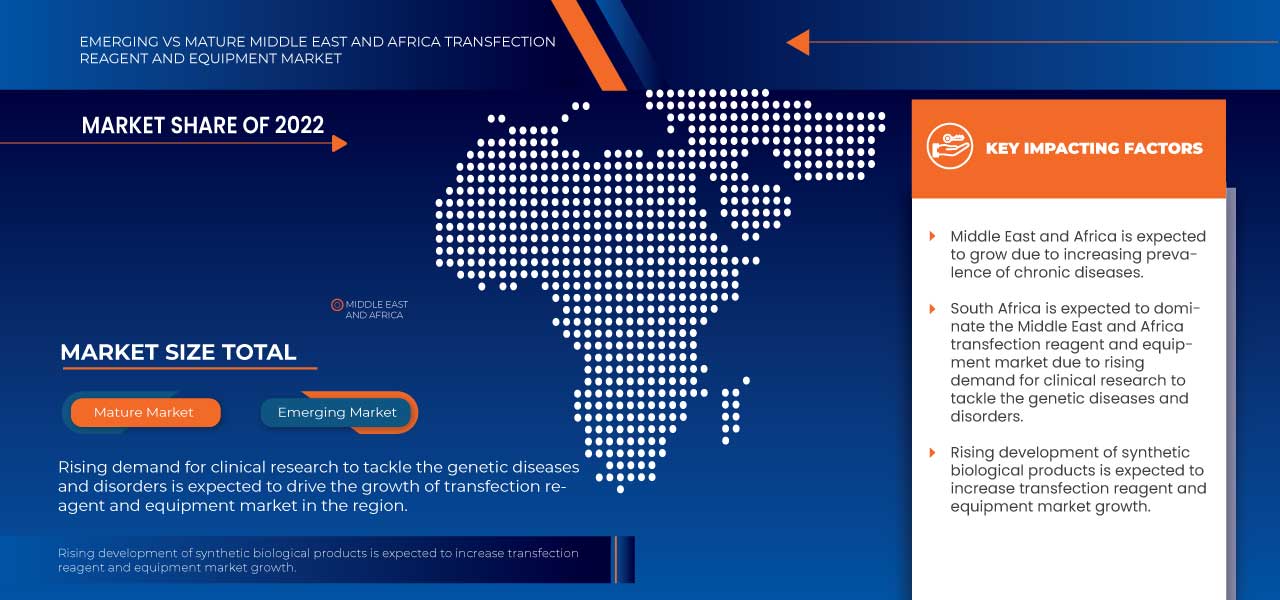
O método de transfecção é usado para várias aplicações que envolvem a agricultura para proteção de culturas e aumento do rendimento, para a produção de produtos de biologia sintética para melhorar sabores e fragrâncias, e para melhorar a proteína monocelular, entre outros. A demanda por transfecção tem aumentado nos países desenvolvidos e em desenvolvimento, e o motivo por trás disso é o aumento da ocorrência de doenças crônicas. O mercado da transfecção está crescendo devido à crescente demanda por genes quiméricos e à utilização debiofármacosna produção de proteínas. O mercado crescerá no período de previsão devido à exploração de mercados emergentes, iniciativas estratégicas por parte dos intervenientes no mercado e aumento do apoio governamental.
Prevê-se que o elevado custo dos instrumentos, a eficácia selectiva do reagente de transfecção e os danos celulares induzidos pelos métodos de transfecção impeçam o crescimento do mercado de reagentes e equipamentos de transfecção do Médio Oriente e África.
O mercado está crescendo devido a várias iniciativas estratégicas adotadas por atores de mercado envolvendo aquisição, colaboração e parceria.
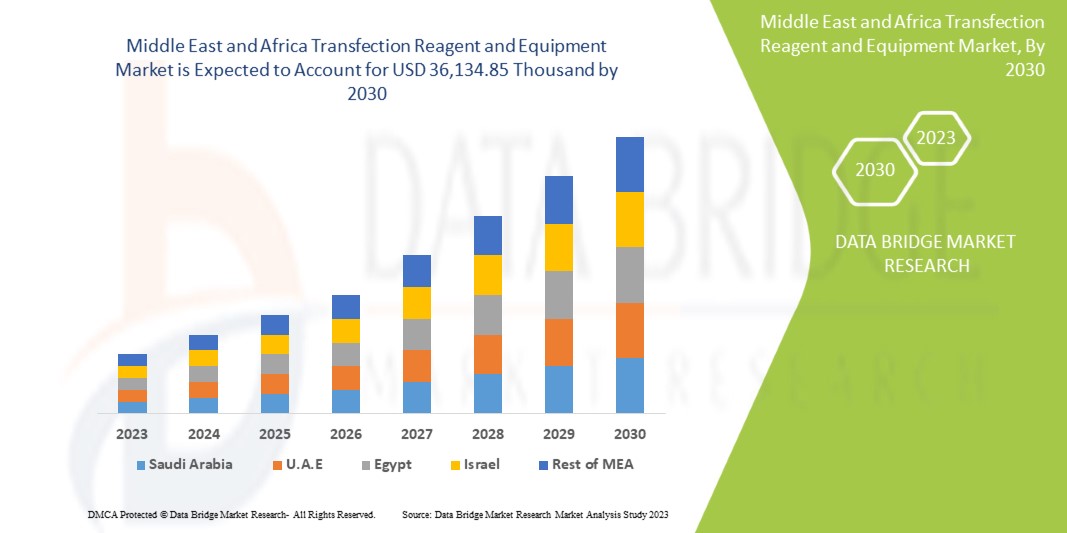
Data Bridge Market Research analisa que o mercado de reagentes e equipamentos de transfecção do Oriente Médio e África deverá atingir o valor de 36.134,85 mil dólares até 2030, em um CAGR de 7,0% durante o período de previsão.
|
Metric de Relatório |
Detalhes |
|
Período de previsão |
2023 a 2030 |
|
Ano de base |
2022 |
|
Anos Históricos |
2021 (Personalizável até 2020-2016) |
|
Unidades quantitativas |
Receitas em Mil, Volumes em Unidades, Preços em USD |
|
Segmentos Cobertos |
Por Produtos (Reagent & Kits and Instruments), Estágio (Pesquisa, Pré-clínica, Fases Clínicas e Comercial), Tipo (Reagente de Transfecção Transiente e Equipamentos, Reagente de Transfecção Estável e Equipamentos), Métodos (Métodos Não Virais e Métodos Virais), Tipos de Molecula (DNA Plasmídeo, RNA Pequeno Interferindo (siRNA), Proteínas, Oligonucleotídeos de DNA, Complexos Ribonucleoproteicos (RNPs) e Outros), Organismo (Células Mammalianas, Plantas, Fungi, Vírus e Bacteria), Aplicação (Aplicação In vitro, Aplicação Vivo, Bioprodução e Outros), Usuário Final (Biofarma, CROs, (CMOs/CDMOs), Academia, Hos, Laboratórios Clínicos e Outros), Canal de Distribuição (Direto Tender, Vendas Varejorias e Outros). |
|
Países abrangidos |
África do Sul, Arábia Saudita, Emirados Árabes Unidos, Israel, Egito e Resto do Oriente Médio e África. |
|
Jogadores de mercado cobertos |
Alguns dos principais atores que operam neste mercado são Mirus Bio LLC., Promega Corporation, Polyplus Transfection, Bio-Rad Laboratories, Inc., Merck KGaA, Lonza, MaxCyte, Inc., Altogen Biosystems, SBS Genetech, FUJIFILM Irvine Scientific (A Subsidiary of FUJIFILM Holdings Corporation), Avanti Polar Lipids (A Subsidiary of Croda International Plc., PerkinElmer chemagen Technologie GmbH (A Subsidiary of PerkinElmer Inc.), Cytiva, Geno Technology Inc., USA, R&D Systems, Inc., Takara Bio Inc., Thermofisher Scientific Inc., Roche Molecular Systems, Inc. (A Subsidiary of F. Hoffmann-La Roche Ltd), QIAGEN, OriGene Technologies, Inc., Applied Biological Materials Inc. (abman Coulter, Inc. |
MercadoDefinição
O método de transfecção é usado para introduzir RNA, DNA ou produtos proteicos nas células para alterar o fenótipo e genótipo do organismo. O método de transfecção envolve a nova transferência gênica ou transferência de um construto gênico, como Clustered regularmente interspaced curtos repetições palindrômicas (CRISPR) para fins de edição de genoma. A transfecção tem amplas aplicações no campo da imunoterapia, terapia genética, terapia celular, entre outras. A transfecção envolve tanto a transfecção não viral como a viral mediada. Os métodos químicos e físicos podem alcançar transfecção não-viral. O método químico mais utilizado para a transfecção é a transfecção de fosfato de cálcio, e a transfecção lipossomática, entre outros. A transfecção viral produz altas eficiências de transfecção, e vários tipos de métodos físicos empregados para a transfecção incluem microinjeção, entrega de partículas biolísticas e eletroporação, entre os quais a eletroporação proporciona alta eficiência de transfecção. A transfecção é de dois tipos ou pode ser transitória ou estável. Para estudos de expressão genética de curto prazo, como estudos de knock-out de genes, o método de transfecção transiente de produção em pequena escala é preferido; no entanto, estudos de longo prazo e métodos de transfecção estável de produção de proteínas de grande escala são amplamente adotados.
Oriente Médio e África Transfecção Reagente e Equipamento Mercado Dinâmica
Esta seção trata da compreensão dos motoristas de mercado, vantagens, oportunidades, restrições e desafios. Tudo isso é discutido em detalhes abaixo:
Controladores
- AUMENTO NA PREVALÊNCIA DAS DOENÇAS CRÓNICAS
A prevalência de doenças crônicas vem aumentando em todo o mundo, levando à demanda por tratamento efetivo e preciso. A transfecção é usada para entregar genes modificados direcionados para tratar várias doenças genéticas. O método de transfecção também é utilizado para a entrega do gene CRISPR, que pode aumentar a imunidade adaptativa e prevenir um indivíduo de diferentes doenças.
Os casos crescentes de doenças crônicas como COVID-19 e outras doenças infecciosas levaram à descoberta de produtos efetivos de terapia genética que podem substituir o gene defeituoso pelo gene correto. O método de transfecção é amplamente utilizado para terapia genética, entre outros. Como a demanda por tratamento eficaz e preciso está aumentando em todo o mundo, a demanda por terapia genética e método de transfeção também está aumentando. Além disso, várias pesquisas que comprovam o potencial da terapia genética para o tratamento de doenças crônicas também estão aumentando sua demanda entre médicos e pacientes. Isso significa, portanto, que o aumento da prevalência de doenças crônicas está agindo como um condutor para o Oriente Médio e África transfecção Reagente e crescimento do mercado de equipamentos.
- DESENVOLVIMENTO DOS PRODUTOS DA BIOLOGIA SINTÉTICA
A biologia sintética é uma nova era da biologia que incorpora o princípio da engenharia na biologia. A biologia sintética envolve a síntese química do DNA, combinando o conhecimento da genômica para remontar os genomas do DNA. A biologia sintética que se segue aos novos genes envolve a engenharia genética, que incorpora o método da transfecção, entre outros. Como a demanda por produtos de biologia sintética está aumentando em todo o mundo, o uso de produtos de transfecção também está aumentando.
A demanda por produtos de biologia sintética está aumentando devido à crescente demanda por produtos eficazes e inovadores. A fabricação de produtos sintéticos aumenta a demanda por produtos de transfecção, pois a transferência de genes pode ser acompanhada pelo método de transfecção, entre outros. Assim, isso significa que o desenvolvimento de produtos sintéticos impulsiona o Oriente Médio e África transfecção Reagente e crescimento do mercado de equipamentos.
Restrição
- DANOS DE CÉLULAS INDUCIDOS POR PROCEDIMENTO DE TRANSFEIÇÃO
Alguns métodos de transfecção têm sido relatados para causar danos celulares, reduzindo a reprodutibilidade do método global. Dentre os diversos tipos de procedimentos de transfecção, a eletroporação tem sido relatada como causadora de dano celular máximo conforme o aumento da tensão. Este dano celular reduz a taxa de eficiência e impacta o projeto em curso.
Um dos efeitos colaterais mais comuns do procedimento de transfecção é o dano celular que reduz os eventos metabólicos das células e leva à morte celular. Esta célula danificada pode aumentar a toxicidade média e, portanto, produz resultados inadequados. Assim, isso sugere que o dano celular induzido pelo procedimento de transfecção atua como uma restrição para o Oriente Médio e África transfecção Reagente e crescimento do mercado de equipamentos.
Oportunidade
-
EXPLORAÇÃO DO MERCADO DE EMERGÊNCIA
Os produtos de transfecção têm sido mostrados como ferramentas promissoras para a engenharia genética e indústria proteômica. O principal mercado de produtos de transfecção está na Europa e na América do Norte. Olhando para os resultados positivos desses produtos, muitos atores do mercado estão penetrando suas raízes em economias em crescimento envolvendo China e Índia, entre outros. O mercado emergente permite que estes intervenientes no mercado combatam as perdas decorrentes do mercado bem estabelecido.
Dado que os mercados emergentes permitem que os intervenientes no mercado superem a recessão económica especificada para determinados mercados estabelecidos, o investimento e a exploração de mercados emergentes permitem que os intervenientes no mercado se engajem no desenvolvimento e fabrico de produtos de transfecção para atingirem um crescimento lucrativo. Assim, isso significa que explorar mercados emergentes é uma oportunidade para crescer o Oriente Médio e África transfecção Reagente e mercado de equipamentos.
Desafio
- PROCEDIMENTO DE HOMOLOGAÇÃO LONGO
O longo procedimento de aprovação para o Reagente de Transfecção e instrumentos é um agente dificultador para o crescimento do mercado de transfecção. Os produtos de transfecção são submetidos a regulamentos extensivos e têm que monitorar sempre. Os produtos de transfecção são amplamente utilizados para a inserção de moléculas gênicas desejadas em uma linha celular específica para obter proteínas e outros compostos biológicos. Esse processo é, assim, investigado e aprovado pelos procedimentos regulatórios longos e rigorosos. O longo processo necessário para obter um resultado positivo de cada ensaio clínico conduzido levou a um maior consumo de tempo e ao investimento de lotes de dinheiro pelos operadores do mercado.
O reagente de transfecção é submetido, em sua maioria, às diretrizes 21CFR 210 e 211 da FDA, segundo as quais os fabricantes tiveram que garantir que o reagente fabricado atende às características de segurança, embalagem e processamento propostas pelas agências reguladoras. O proprietário ou fabricante tem de apresentar licenças nos termos da secção 351 do PHS (Serviços de Saúde Pública) Ato, que é um procedimento bastante tedioso. Assim, isso significa que os procedimentos de aprovação longa desafiam o Oriente Médio e África transfecção Reagente e crescimento do mercado de equipamentos.
Evolução recente
- Em agosto de 2021, a Mirus Bio expandiu a plataforma TransIT VirusGen para a produção de vetores virais de boas práticas de fabricação (GMP) para apoiar o desenvolvimento de terapia celular e genética, operações de processo e produção comercial. A extensão, referida como TransIT VirusGen GMP Transfection Reagent, foi concebida para melhorar a embalagem e a entrega de ADN vector para suspensão e adesão de tipos de células HEK 293 para melhorar a produção de vírus associados ao adeno recombinante e vectores lentivirais.
- Em abril de 2021, a BOC Sciences anunciou o lançamento de dois kits de transfecção in vivo de RNA, nomeadamente kits de transfeção in vivo de siRNA e kits de transfeção in vivo de mRNA, adequados para transfecção in vivo de siRNA e mRNA, respectivamente.
Médio Oriente e África Transfecção Reagente e Equipamentos Âmbito de mercado
O mercado de reagentes e equipamentos do Oriente Médio e África é segmentado em nove segmentos notáveis, como produtos, palco, métodos, tipo, tipos de molécula, aplicação, usuário final, organismo e canal de distribuição. O crescimento entre segmentos ajuda você a analisar nichos de crescimento e estratégias para se aproximar do mercado e determinar suas áreas de aplicação principais e a diferença em seus mercados-alvo.
PRODUTOS
- INSTRUMENTOS
- & KITS REAGENTES
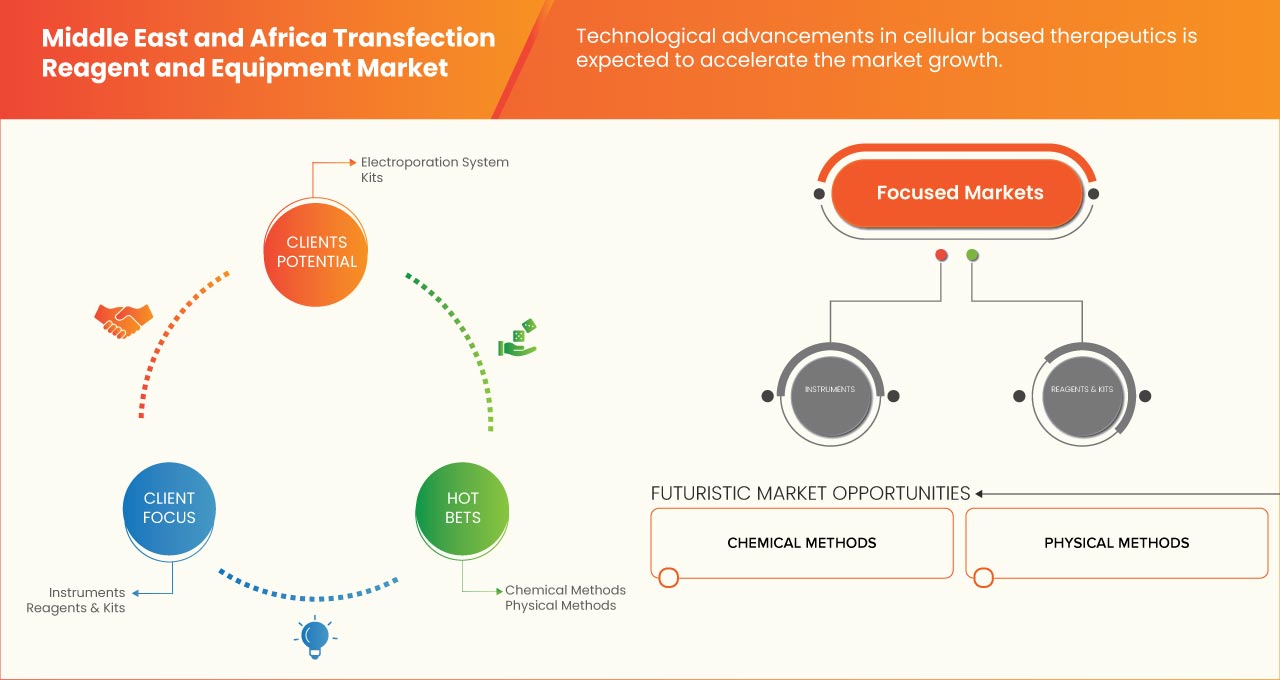
Com base em produtos, o mercado de reagentes e equipamentos de transfecção do Oriente Médio e África é segmentado em instrumentos e reagentes e kits.
FASE
- INVESTIGAÇÃO
- PRÁTICA
- FASES CLÍNICAS
- COMERCIAL
Com base no estágio, o mercado de reagentes e equipamentos de transfecção do Oriente Médio e África é segmentado em pesquisas, fases pré-clínicas, clínicas e comerciais.
TIPO
- REAGENTES E EQUIPAMENTOS DE TRANSFEIÇÃO TRANSITÓRIO
- REAGENTES E EQUIPAMENTOS DE TRANSFEIÇÃO ESTATAIS
Com base no tipo, o mercado de reagentes e equipamentos de transfecção do Oriente Médio e África é segmentado em reagentes e equipamentos de transfecção transientes e reagentes e equipamentos de transfecção estáveis.
MÉTODOS
- MÉTODOS NÃO VIRAL
- MÉTODOS VIRAL
Com base em métodos, o mercado de reagentes e equipamentos de transfecção do Oriente Médio e África é segmentado em métodos não virais e métodos virais.
TIPOS DE MOLECULO
- ADN PLASMID
- OLIGONUCLEOTIDAS DE ADN
- RNA INTERFERENTE PEQUENO (SIRNA)
- PROTEÍNAS
- COMPLEXOS DE RIBONUCLEOPROTEÍNA (RNPS)
- OUTRAS
Com base em tipos de moléculas, o mercado de reagentes e equipamentos de transfecção do Oriente Médio e África é segmentado em DNA plasmídeo, oligonucleotídeos de DNA, pequenos RNA interferente (siRNA), proteínas, complexos de ribonucleoproteína (RNPs) e outros.
ORGANISMO
- BACTÉRIAS
- CÉLULAS MAMÁLIANAS
- FUNGOS
- PLANTAS
- VIRUS
Com base no organismo, o mercado de reagentes e equipamentos de transfecção do Oriente Médio e África é segmentado em bactérias, células de mamíferos, fungos, plantas e vírus.
PEDIDO
- POR TIPO
- IN VITRO PEDIDO
- IN VIVO PEDIDO
- BIOPRODUÇÃO
- OUTRAS
- POR INDÚSTRIA
- AGRICULTURA
- BIOLOGIA SINTÉTICA
- OUTRAS
Com base na aplicação, o mercado de reagentes e equipamentos de transfecção do Oriente Médio e África é segmentado por tipo em aplicação in vitro, aplicação in vivo, bioprodução, outros e pela indústria na agricultura, biologia sintética, outros.
FIM DO UTILIZADOR
- BIOFARMA
- CROS
- CMOS/CDMOS
- ACADEMIA
- HOSPITAIS
- LABS CLÍNICOS
- OUTRAS
Com base no usuário final, o mercado de reagentes e equipamentos de transfecção do Oriente Médio e África é segmentado em biofármacos, CROs, CMOs/ CDMOs, academia, hospitais, laboratórios clínicos e outros.
CANAL DE DISTRIBUIÇÃO
- PROTEÇÃO DIRECTA
- VENDAS DE RETALHO
- OUTRAS
Com base no canal de distribuição, o Oriente Médio e África transfection Reagent e mercado de equipamentos é segmentado em concurso direto, vendas a retalho e outros.
Oriente Médio e África Transfecção Reagente e Equipamento Mercado Análise/Insights regionais
O mercado de reagentes e equipamentos de transfecção do Oriente Médio e África é categorizado em muitos segmentos notáveis, como geografia, produtos, etapas, métodos, tipo, tipos de molécula, aplicação, usuário final, organismo e canal de distribuição.
Os países abrangidos neste relatório de mercado são a África do Sul, Arábia Saudita, Emirados Árabes Unidos, Israel, Egito e Resto do Oriente Médio e África.
A África do Sul domina a região do Oriente Médio e África devido ao aumento das doenças raras e crônicas.
A secção «país» do relatório fornece igualmente factores de impacto individuais no mercado e alterações na regulamentação no mercado nacional que afectam as tendências actuais e futuras do mercado. Pontos de dados como novas vendas, vendas de substituição, dados demográficos dos países, atos regulatórios e tarifas de importação-exportação são alguns dos principais indicadores usados para prever o cenário de mercado para cada país. Além disso, a presença e disponibilidade de marcas do Oriente Médio e África e seus desafios enfrentados devido à grande ou escassa concorrência de marcas locais e nacionais, e o impacto dos canais de vendas são considerados ao fornecer análise de previsão dos dados do país.
Paisagem competitiva e Oriente Médio e África Transfecção Reagente e equipamentos Análise de mercado
Oriente Médio e África Transfection reagente e equipamento mercado paisagem competitiva fornece detalhes pelo concorrente. Detalhes incluídos são visão geral da empresa, finanças da empresa, receita gerada, potencial de mercado, investimento em I&D, novas iniciativas de mercado, locais e instalações de produção, pontos fortes e fracos da empresa, lançamento do produto, aprovações de produtos, largura e respiração do produto, dominância da aplicação, curva de linha de vida do tipo de produto. Os pontos de dados acima fornecidos estão relacionados apenas com o foco da empresa no mercado de reagentes e equipamentos de transfecção do Oriente Médio e África.
Alguns dos principais atores que operam neste mercado são Mirus Bio LLC., Promega Corporation, Polyplus Transfection, Bio-Rad Laboratories, Inc., Merck KGaA, Lonza, MaxCyte, Inc., Altogen Biosystems, SBS Genetech, FUJIFILM Irvine Scientific (A Subsidiary of FUJIFILM Holdings Corporation), Avanti Polar Lipids (A Subsidiary of Croda International Plc., PerkinElmer chemagen Technologie GmbH (A Subsidiary of PerkinElmer Inc.), Cytiva, Geno Technology Inc., USA, R&D Systems, Inc., Takara Bio Inc., Thermofisher Scientific Inc., Roche Molecular Systems, Inc. (A Subsidiary of F. Hoffmann-La Roche Ltd), QIAGEN, OriGene Technologies, Inc., Applied Biological Materials Inc. (abman Coulter, Inc.
SKU-
Obtenha acesso online ao relatório sobre a primeira nuvem de inteligência de mercado do mundo

- Painel interativo de análise de dados
- Painel de análise da empresa para oportunidades de elevado potencial de crescimento
- Acesso de analista de pesquisa para personalização e customização. consultas
- Análise da concorrência com painel interativo
- Últimas notícias, atualizações e atualizações Análise de tendências
- Aproveite o poder da análise de benchmark para um rastreio abrangente da concorrência
Índice
1 INTRODUÇÃO
1.1 OBJECTIVOS DO ESTUDO
1.2 DEFINIÇÃO DE MERCADO
1.3 REAGENTES E EQUIPAMENTOS DO MÉDIO ORIENTE & ÁFRICA
1.4 LIMITAÇÕES
1.5 MERCADOS ABRANGADOS
2 SEGMENTAÇÃO DO MERCADO
2.1 MERCADOS COBERTOS
2.2 ÂMBITO GEOGRÁFICO
2.3 ANOS CONSIDERADOS PARA O ESTUDO
2.4 MOEDA E PREÇOS
2.5 MODELO DE VALIDAÇÃO DE DADOS TRIPOD DBRR
2.6 MODELIZAÇÃO MULTIVARIADA
2.7 TRANSFEIÇÃO TRANSITÓRIA DA CURVA LIVRE DE TRANSFEIÇÃO
2.8 INTERVENÇÕES PRIMÁRIAS COM OPINIÇÕES-CHAVE
2.9 GRIDE DE POSIÇÃO DO MERCADO DE BMO
2.1 PEDIDO DE RECUPERAÇÃO DO MERCADO
2.11 ANÁLISE DA PARTICIPAÇÃO DOS VENDANTES
2.12 FONTES SEGUNDÁRIAS
2.13 ASSUNTOS
3 RESUMO
4 INSIGHT
4.1 PESTEL
4.2 MODELO DE 5 FORÇAS DO PORTRO
5 INSTITUIÇÕES INDÚSTRIAS:
6 REAGENTES DE TRANSFEIÇÃO DO MÉDIO ORIENTE & ÁFRICA E MERCADO DE EQUIPAMENTO, REGULAMENTOS
6.1 CENÁRIO REGULAMENTAR DA UNIÃO EUROPEIA
6.2 CENÁRIO REGULAMENTAR DOS EUA
6.3 CENÁRIO REGULAMENTAR JAPÃO
6.4 CENÁRIO REGULAMENTAR DA CHINA
7 VISÃO GERAL DO MERCADO
7.1 CONDUTORES
7.1.1 AUMENTO NA PREVALÊNCIA DAS DOENÇAS CRÓNICAS
7.1.2 DESENVOLVIMENTO DOS PRODUTOS DA BIOLOGIA SINTÉTICA
7.1.3 CRIAÇÃO DE GÉNEROS CÍMICOS
7.1.4 TRANSFECÇÕES DE GRANDE ESPAÇO USADAS NA INVESTIGAÇÃO CLÍNICA
7.1.5 UTILIZAÇÃO DOS BIOPHARMACEUTICOS NA PRODUÇÃO DE PROTEÍNAS
7.2 RESTRUÇÕES
7.2.1 CUSTO ALTO DOS PRODUTOS DE TRANSFECÇÃO
7.2.2 EFICÁCIA SELECTIVA DOS REAGENTES DE TRANSFEIÇÃO
7.2.3 DANOS CÉLULAS INDICADOS POR PROCEDIMENTO DE TRANSFEIÇÃO
7.3 OPORTUNIDADES
7.3.1 EXPLORAÇÃO DO MERCADO DE EMERGÊNCIA
7.3.2 INICIATIVAS ESTRATÉGICAS DOS JOGOS DE MERCADO
7.3.3 NÍVEL DE INVESTIMENTO
7.4 DESAFIOS
7.4.1 PROCEDIMENTO DE HOMOLOGAÇÃO LONGO
7.4.2 LOCALIZAÇÃO DO NÍVEL DE SEGURANÇA PARA TRANSFEIÇÃO ASSOCIADA A VIRUS
7.4.3 Escassez de profissionais formados
8 MERCADO DE REAGENTES E EQUIPAMENTOS DE TRANSFEIÇÃO DO MÉDIO ORIENTE & ÁFRICA, POR PRODUTOS
8.1 VISÃO GERAL
8.2 REAGENTES E KITS
8.3 INSTRUMENTOS
9 MERCADO DE REAGENTES E EQUIPAMENTOS DE TRANSFEIÇÃO DO MÉDIO ORIENTE & ÁFRICA, POR ESTADO
9.1 VISÃO GERAL
9.2 INVESTIGAÇÃO
9.3 PRECLÍNICA
9.4 FASES CLÍNICAS
9.5 COMERCIAL
10 MERCADO DE REAGENTES E EQUIPAMENTOS DE TRANSFEIÇÃO DO MÉDIO ORIENTE & ÁFRICA, POR TIPO
10.1 VISÃO GERAL
10.2 REAGENTES E EQUIPAMENTOS DE TRANSFEIÇÃO TRANSITÓRIO
10.3 REAGENTES E EQUIPAMENTOS DE TRANSECÇÃO ESTATAIS
11 MERCADO DE REAGENTES E EQUIPAMENTOS DE TRANSFEIÇÃO DO MÉDIO ORIENTE & ÁFRICA, POR MÉTODOS
11.1 VISÃO GERAL
11.2 MÉTODOS NÃO VIRAL
11.3 MÉTODOS VIRAL
12 MERCADO DE REAGENTES E EQUIPAMENTOS DE TRANSFEIÇÃO DO MÉDIO ORIENTE & ÁFRICA, POR TIPOS DE MOLECULO
12.1 VISÃO GERAL
12, 2 ADN PLASMID
12.3 RNA INTERFERENTE PEQUENO (SIRNA)
12,4 PROTEÍNAS
12, 5 OLIGONUCLEOTIDAS DE ADN
12.6 COMPLEXOS DE RIBONUCLEOPROTEÍNA (RNPS)
12,7 OUTRAS
13 MERCADO DE REAGENTES E EQUIPAMENTOS DE TRANSFEIÇÃO DO MÉDIO ORIENTE & ÁFRICA, POR ORGANISMO
13.1 VISÃO GERAL
13.2 CÉLULAS MAMÁLIANAS
13.3 PLANTAS
13.4 FUNGOS
13.5 VIRUS
13.6 BACTÉRIAS
14 MERCADO DE REAGENTES E EQUIPAMENTOS DE TRANSFEIÇÃO DO MÉDIO ORIENTE & ÁFRICA, POR APLICAÇÃO
14.1 VISÃO GERAL
14.2 IN VITRO PEDIDO
14.2.1 IN VIVO PEDIDO
14.2.2 BIOPRODUÇÃO
14.2.3 OUTROS
14.2.4 Biologia Sintética
14.2.5 AGRICULTURA
14.2.6 OUTROS
15 MERCADO DE REAGENTES E EQUIPAMENTOS DE TRANSFEIÇÃO DO MÉDIO ORIENTE & ÁFRICA, PELO UTILIZADOR FINAL
15.1 VISÃO GERAL
15.2 BIOFARMA
15.3 CROS
15.4 CMOS/CDMOS
15,5 ACADEMIA
15.6 HOSPITAIS
15.7 LABS CLÍNICOS
15.8 OUTRAS
16 MERCADO DE REAGENTES E EQUIPAMENTOS DE TRANSFEIÇÃO DO MÉDIO ORIENTE & ÁFRICA, POR CANAL DE DISTRIBUIÇÃO
16.1 VISÃO GERAL
16.2 ENCERRAMENTO DIRECTO
16.3 VENDAS DE RETALHO
16. 4 OUTRAS
17 MERCADO DE REAGENTES E EQUIPAMENTOS DE TRANSFEIÇÃO DO MÉDIO ORIENTE & ÁFRICA, POR REGIÃO
17.1 MÉDIO ORIENTE E ÁFRICA
17.1.1 ÁFRICA DO SUL
17.1.2 SAUDI ARÁBIA
17.1.3 U.A.E.
17.1.4 EGITO
17.1.5 ISRAEL
17.1.6 RESTO DO MÉDIO ORIENTE E ÁFRICA
18 REAGENTES DE TRANSFEIÇÃO E DE EQUIPAMENTO DO MÉDIO ORIENTE & ÁFRICA, PAÍSES DA EMPRESA
18.1 ANÁLISE DA PARTICIPAÇÃO DA EMPRESA: MÉDIO ORIENTE & ÁFRICA
19 ANÁLISE SWOT
20 PERFIL DA EMPRESA
20,1 THERMO PESCA CIENTÍFICA INC.
20.1.1 EMPRESA SNAPSHOT
ANÁLISE DAS RECEITAS
20.1.3 ANÁLISE PARTICIPAL
20.1.4 PRODUTO PORTFÓLIO
20.1.5 DESENVOLVIMENTO RECENTE
20.2 SISTEMAS MOLECULARES ROCHE, INC. (A SUBSIDIÁRIO DE F. HOFFMANN-LA ROCHE LTD)
20.2.1 EMPRESA SNAPSHOT
20.2.2 ANÁLISE DAS RECEITAS
20.2.3 ANÁLISE PARTICIPAL
20.2.4 PRODUTO PORTFÓLIO
20.2.5 DESENVOLVIMENTO RECENTE
20.3 CORPORAÇÃO PROMEGA
20.3.1 EMPRESA SNAPSHOT
20.3.2 ANÁLISE PARTICIPAL
20.3.3 PRODUTO PORTFÓLIO
20.3.4 DESENVOLVIMENTO RECENTE
20.4 TAKARA BIO INC.
20.4.1 EMPRESA SNAPSHOT
20.4.2 ANÁLISE DAS RECEITAS
20.4.3 ANÁLISE PARTICIPAL
20.4.4 PRODUTO PORTFOLIO
20.4.5 DESENVOLVIMENTO RECENTE
20,5 LABORATÓRIOS BIO-RAD, INC.
20.5.1 EMPRESA SNAPSHOT
ANÁLISE DE RECEITAS
20.5.3 ANÁLISE PARTICIPAL
20.5.4 PRODUTO PORTFÓLIO
20.5.5 DESENVOLVIMENTO RECENTE
20, 6 BIOSSISTEMAS DE ALTOGÊNIO
20.6.1 EMPRESA SNAPSHOT
20.6.2 PRODUTO PORTFÓLIO
20.6.3 DESENVOLVIMENTO RECENTE
20.7 MATERIAIS BIOLÓGICOS APLICÁVEIS INC. (ABM)
20.7.1 EMPRESA SNAPSHOT
20.7.2 PRODUTO PORTFÓLIO
20.7.3 DESENVOLVIMENTO RECENTE
20,8 LIPIDAS POLARES AVANTI (A SUBSIDIÁRIO DE CLC INTERNACIONAL CRODA)
20.8.1 EMPRESA SNAPSHOT
20.8.2 ANÁLISE DAS RECEITAS
20.8.3 PRODUTO PORTFÓLIO
20.8.4 DESENVOLVIMENTO RECENTE
20.9 BECKMAN COULTER, INC (A SUBSIDIÁRIO DE DANAHER)
20.9.1 EMPRESA SNAPSHOT
20.9.2 PRODUTO PORTFÓLIO
20.9.3 DESENVOLVIMENTO RECENTE
20, 1 CYTIVA
20.10.1 EMPRESA SNAPSHOT
20.10.2 PRODUTO PORTFÓLIO
20.10.3 DESENVOLVIMENTO RECENTE
20.11 FUJIFILM IRVINE CIENTÍFICO (SUBSIDIÁRIO DE CORPORAÇÃO DE FUJIFILM)
20.11.1 EMPRESA SNAPSHOT
ANÁLISE DE RECEITAS
20.11.3 PRODUTO PORTFOLIO
20.11.4 DESENVOLVIMENTO RECENTE
20.12 GENLANTIS INC.
20.12.1 EMPRESA SNAPSHOT
20.12.2 PRODUTO PORTFÓLIO
20.12.3 DESENVOLVIMENTO RECENTE
20.13 GENO TECNOLOGIA INC., EUA
20.13.1 EMPRESA SNAPSHOT
20.13.2 PRODUTO PORTFOLIO
20.13.3 DESENVOLVIMENTO RECENTE
20.14 BIOWORKS GINKGO
20.14.1 EMPRESA SNAPSHOT
20.14.2 PRODUTO PORTFÓLIO
20.14.3 DESENVOLVIMENTOS RECENTES
20.15 LONZA
20.15.1 EMPRESA SNAPSHOT
ANÁLISE DAS RECEITAS
20.15.3 PRODUTO PORTFOLIO
20.15.4 DESENVOLVIMENTO RECENTE
20.16 Maxcyte, INC.
20.16.1 EMPRESA SNAPSHOT
ANÁLISE DAS RECEITAS
20.16.3 PRODUTO PORTFOLIO
20.16.4 DESENVOLVIMENTO RECENTE
20.17 MERCK KGAA
20.17.1 EMPRESA SNAPSHOT
ANÁLISE DAS RECEITAS
20.17.3 PRODUTO PORTFÓLIO
20.17.4 DESENVOLVIMENTO RECENTE
20.18 MIRUS BIO LLC.
20.18.1 EMPRESA SNAPSHOT
20.18.2 PRODUTO PORTFÓLIO
20.18.3 DESENVOLVIMENTO RECENTE
20.19 TECNOLOGIAS ORIGENAS, INC.
20.19.1 EMPRESA SNAPSHOT
20.19.2 PRODUTO PORTFÓLIO
20.19.3 DESENVOLVIMENTO RECENTE
20.2 PERKINELMER CHEMAGEN TECHNOLOGIE GMBH (SUBSIDIÁRIO DE PERKINELMER INC.)
20.20.1 EMPRESA SNAPSHOT
20.20.2 ANÁLISE DE RECEITAS
20.20.3 PRODUTO PORTFÓLIO
20.20.4 DESENVOLVIMENTO RECENTE
20.21 TRANSFECÇÃO POLIPLUS
20.21.1 EMPRESA SNAPSHOT
20.21.2 PRODUTO PORTFOLIO
20.21.3 DESENVOLVIMENTO RECENTE
20.22 SISTEMAS DE I&D, INC.
20.22.1 EMPRESA SNAPSHOT
20.22.2 PRODUTO PORTFÓLIO
20.22.3 DESENVOLVIMENTO RECENTE
20.23 SBS GENETECH
20.23.1 EMPRESA SNAPSHOT
20.23.2 PRODUTO PORTFÓLIO
20.23.3 DESENVOLVIMENTO RECENTE
20.24 LABORATÓRIOS DE SINAGENS
20.24.1 EMPRESA SNAPSHOT
20.24.2 PRODUTO PORTFOLIO
20.24.3 DESENVOLVIMENTO RECENTE
21 QUESTIONÁRIO
22 RELATÓRIOS RELACIONADOS
Lista de Tabela
QUADRO 1 MÉDIO ORIENTE & ÁFRICA TRANSFEIÇÃO REAGENTE E MERCADO DE EQUIPAMENTO, POR PRODUTOS, 2021-2030 (USD MIL)
QUADRO 2 REAGENTE DO MÉDIO ORIENTE & ÁFRICA E KITS NO MERCADO DOS REAGENTES E EQUIPAMENTOS DE TRANSFEIÇÃO, POR REGIÃO, 2021-2030 (USD MIL)
QUADRO 3 INSTRUMENTOS MÉDIO-ORIENTE & ÁFRICA NO MERCADO DOS REAGENTES E EQUIPAMENTOS DE TRANSFEIÇÃO, POR REGIÃO, 2021-2030 (USD MILHOS)
QUADRO 4 ORIENTE DE TRANSFEIÇÃO E MERCADO DE EQUIPAMENTO DO MÉDIO E DA ÁFRICA, POR ESTADO, 2021-2030 (USD MILHOS)
QUADRO 5 INVESTIGAÇÃO MÉDIA E ÁFRICA NO MERCADO DE REAGENTES E EQUIPAMENTOS DE TRANSFEIÇÃO, POR REGIÃO, 2021-2030 (USD MILHOS)
QUADRO 6 MÉDIO ORIENTE & ÁFRICA PRECLÍNICO NO MERCADO DE REAGENTES E EQUIPAMENTO DE TRANSFEIÇÃO, POR REGIÃO, 2021-2030 (USD MILHÕES)
QUADRO 7 FASES CLÍNICAS DO MÉDIO ORIENTE & ÁFRICA NO MERCADO DE REAGENTES E EQUIPAMENTO DE TRANSFEIÇÃO, POR REGIÃO, 2021-2030 (MIL DE USD)
QUADRO 8 COMERCIAL MÉDIO ORIENTE & ÁFRICA NO MERCADO DE REAGENTES E EQUIPAMENTO DE TRANSFEIÇÃO, POR REGIÃO, 2021-2030 (USD MIL)
QUADRO 9 ORIENTE DE TRANSFEIÇÃO E MERCADO DE EQUIPAMENTO DO MÉDIO E DA ÁFRICA, POR TIPO, 2021-2030 (USD MIL)
QUADRO 10 REAGENTES E EQUIPAMENTO DE TRANSFEIÇÃO TRANSITÓRIOS DO MÉDIO ORIENTE E DA ÁFRICA NO MERCADO DE REAGENTES E EQUIPAMENTO DE TRANSFEIÇÃO, POR REGIÃO, 2021-2030 (USD mil)
QUADRO 11 REAGENTES E EQUIPAMENTOS DE TRANSFEIÇÃO ESTATAIS DO MÉDIO ORIENTE & ÁFRICA NO MERCADO DE REAGENTES E EQUIPAMENTOS DE TRANSFEIÇÃO, POR REGIÃO, 2021-2030 (USD mil)
QUADRO 12 REAGENTES DE TRANSFEIÇÃO E DE EQUIPAMENTO DO MÉDIO ORIENTE & ÁFRICA, POR MÉTODOS, 2021-2030 (USD MIL)
QUADRO 13 MÉDIO ORIENTE & ÁFRICA MÉTODOS NÃO-VIRAL NO MERCADO DE REAGENTES E EQUIPAMENTO DE TRANSFEIÇÃO, POR REGIÃO, 2021-2030 (MIL DE USD)
QUADRO 14 MÉTODOS VIRAL DO MÉDIO ORIENTE E DA ÁFRICA NO MERCADO DE REAGENTES E EQUIPAMENTO DE TRANSFEIÇÃO, POR REGIÃO, 2021-2030 (USD MIL)
QUADRO 15 MERCADO DE REAGENTES E EQUIPAMENTOS DE TRANSFEIÇÃO DO MÉDIO ORIENTE & ÁFRICA, POR TIPOS DE MOLECULO, 2021-2030 (USD MIL)
QUADRO 16 ORIENTE DO MÉDIO & ÁFRICA DNA PLASMIDO NO MERCADO DE REAGENTES E EQUIPAMENTO DE TRANSFEIÇÃO, POR REGIÃO, 2021-2030 (USD MIL)
QUADRO 17 MÉDIO ORIENTE & ÁFRICA RNA INTERFERENTE PEQUENO (SIRNA) NO MERCADO DE REAGENTES E EQUIPAMENTO DE TRANSFEIÇÃO, POR REGIÃO, 2021-2030 (USD MIL)
QUADRO 18 PROTEÍNAS DO MÉDIO ORIENTE & ÁFRICA NO MERCADO DOS REAGENTES E EQUIPAMENTOS DE TRANSFEIÇÃO, POR REGIÃO, 2021-2030 (USD MIL)
QUADRO 19 ORIGONUCLEOTIDAS DE ADN MÉDIO E ÁFRICA NO MERCADO DOS REAGENTES E EQUIPAMENTOS DE TRANSFEIÇÃO, POR REGIÃO, 2021-2030 (USD MIL)
QUADRO 20 COMPLEXOS DE RIBONUCLEOPROTEÍNA DO MÉDIO ORIENTE & ÁFRICA (RNPS) NO MERCADO DE REAGENTES E EQUIPAMENTO DE TRANSFEIÇÃO, POR REGIÃO, 2021-2030 (USD mil)
QUADRO 21 OUTROS MÉDIOS ORIENTAIS & ÁFRICA NO MERCADO DOS REAGENTES E EQUIPAMENTOS DE TRANSFEIÇÃO, POR REGIÃO, 2021-2030 (USD mil)
QUADRO 22 ORIENTE E MERCADO DE EQUIPAMENTO DA TRANSFEIÇÃO DO MÉDIO E DA ÁFRICA, POR ORGANISMO, 2021-2030 (USD MIL)
QUADRO 23 CÉLULAS MAMÁLIAS DO MÉDIO ORIENTE & ÁFRICA NO MERCADO DE REAGENTES E EQUIPAMENTO DE TRANSFEIÇÃO, POR REGIÃO, 2021-2030 (USD MIL)
QUADRO 24 PLANTAS ORIENTAIS E ÁFRICA NO MERCADO DOS REAGENTES E EQUIPAMENTOS DE TRANSFEIÇÃO, POR REGIÃO, 2021-2030 (USD mil)
QUADRO 25 FUNGIOS ORIENTAIS E ÁFRICA NO MERCADO DOS REAGENTES E EQUIPAMENTOS DE TRANSFEIÇÃO, POR REGIÃO, 2021-2030 (USD MIL)
QUADRO 26 VIRUS MÉDIO E ÁFRICA NO MERCADO DOS REAGENTES E EQUIPAMENTOS DE TRANSFEIÇÃO, POR REGIÃO, 2021-2030 (USD MIL)
QUADRO 27 BACTÉRIAS DO MÉDIO ORIENTE & ÁFRICA NO MERCADO DOS REAGENTES E EQUIPAMENTOS DE TRANSFEIÇÃO, POR REGIÃO, 2021-2030 (USD THOUSand)
QUADRO 28 MÉDIO ORIENTE & ÁFRICA TRANSFECÇÃO REAGENTE E MERCADO DE EQUIPAMENTO, POR PEDIDO, 2021-2030 (USD MILHÕES)
QUADRO 29 MÉDIO ORIENTE & ÁFRICA EM VITRO APLICAÇÃO NO MERCADO DE REAGENTES E EQUIPAMENTOS DE TRANSFEIÇÃO, POR REGIÃO, 2021-2030 (USD MIL)
QUADRO 30 MÉDIO ORIENTE & ÁFRICA EM VIVO APLICAÇÃO NO MERCADO DE REAGENTES E EQUIPAMENTO DE TRANSFEIÇÃO, POR REGIÃO, 2021-2030 (USD MIL)
QUADRO 31 BIOPRODUÇÃO DO MÉDIO ORIENTE & ÁFRICA NO MERCADO DOS REAGENTES E EQUIPAMENTOS DE TRANSFEIÇÃO, POR REGIÃO, 2021-2030 (USD MIL)
QUADRO 32 OUTROS MÉDIO-ORIENTE & ÁFRICA NO MERCADO DOS REAGENTES E EQUIPAMENTOS DE TRANSFEIÇÃO, POR REGIÃO, 2021-2030 (USD mil)
QUADRO 33 PEDIDO MÉDIO E ÁFRICA NO MERCADO DOS REAGENTES E EQUIPAMENTOS DE TRANSFEIÇÃO, POR INDÚSTRIA, 2021-2030 (USD mil)
QUADRO 34 MERCADO DE REAGENTES E EQUIPAMENTOS DE TRANSFEIÇÃO DO MÉDIO ORIENTE E DA ÁFRICA, PELO UTILIZADOR FINAL, 2021-2030 (USD MIL)
QUADRO 35 MÉDIO ORIENTE & ÁFRICA BIOPHARMA NO MERCADO DE REAGENTES E EQUIPAMENTO DE TRANSFEIÇÃO, POR REGIÃO, 2021-2030 (USD MILHÕES DE USD)
QUADRO 36 CROS MÉDIO ORIENTE & ÁFRICA NO MERCADO DOS REAGENTES E EQUIPAMENTOS DE TRANSFEIÇÃO, POR REGIÃO, 2021-2030 (USD MIL)
QUADRO 37 MÉDIO ORIENTE & ÁFRICA CMOS/CDMOS NO MERCADO DE REAGENTES E EQUIPAMENTO DE TRANSFEIÇÃO, POR REGIÃO, 2021-2030 (USD MIL)
QUADRO 38 ORIENTE E ÁFRICA ACADEMIA NO MERCADO DE REAGENTES E EQUIPAMENTOS DE TRANSFEIÇÃO, POR REGIÃO, 2021-2030 (USD MIL)
QUADRO 39 HOSPITAIS MÉDIO-ORIENTE & ÁFRICA NO MERCADO DE REAGENTES E EQUIPAMENTO DE TRANSFEIÇÃO, POR REGIÃO, 2021-2030 (USD MIL)
QUADRO 40 LAPOS CLÍNICOS MÉDIO-ORIENTE & ÁFRICA NO MERCADO DE REAGENTES E EQUIPAMENTO DE TRANSFEIÇÃO, POR REGIÃO, 2021-2030 (USD MIL)
QUADRO 41 OUTROS MÉDIOS ORIENTAIS & ÁFRICA NO MERCADO DOS REAGENTES E EQUIPAMENTOS DE TRANSFEIÇÃO, POR REGIÃO, 2021-2030 (USD mil)
QUADRO 42 CANAL DE DISTRIBUIÇÃO, 2021-2030 (USD MIL)
QUADRO 43 PROTEÇÃO DIRECTA DO MÉDIO ORIENTE & ÁFRICA NO MERCADO DE REAGENTES E EQUIPAMENTOS DE TRANSFEIÇÃO, POR REGIÃO, 2021-2030 (USD MIL)
QUADRO 44 VENDAS DE RETALHO DO MÉDIO ORIENTE & ÁFRICA NO MERCADO DE REAGENTES E EQUIPAMENTO DE TRANSFEIÇÃO, POR REGIÃO, 2021-2030 (USD MIL)
QUADRO 45 OUTROS MÉDIOS ORIENTAIS E ÁFRICA NO MERCADO DOS REAGENTES E EQUIPAMENTOS DE TRANSFEIÇÃO, POR REGIÃO, 2021-2030 (USD mil)
Lista de Figura
FIGURA 1 REAGENTES DE TRANSFEIÇÃO E EQUIPAMENTO DO MÉDIO ORIENTE E DA ÁFRICA: SEGMENTAÇÃO
FIGURA 2 REAGENTES DE TRANSFEIÇÃO E EQUIPAMENTO DO MÉDIO ORIENTE & ÁFRICA: TRIANGULAÇÃO DE DADOS
FIGURA 3 REAGENTES DE TRANSFEIÇÃO E EQUIPAMENTO DO MÉDIO ORIENTE & ÁFRICA: ANÁLISE DE DROC
FIGURA 4 REAGENTES DE TRANSFEIÇÃO E EQUIPAMENTO DO MÉDIO ORIENTE & ÁFRICA
FIGURA 5 REAGENTES DE TRANSFEIÇÃO E EQUIPAMENTO DO MÉDIO ORIENTE E DA ÁFRICA: ANÁLISE DE INVESTIGAÇÃO DA EMPRESA
FIGURA 6 REAGENTES DE TRANSFEIÇÃO E DE EQUIPAMENTO DO MÉDIO ORIENTE & ÁFRICA: MODELO MULTIVAR
FIGURA 7 MERCADO DE TRANSFEIÇÃO DO MÉDIO ORIENTE E DA ÁFRICA: DEMOGRAFIAS DE ENTREVISTAS
FIGURA 8 REAGENTES DE TRANSFEIÇÃO E DE EQUIPAMENTO DO MÉDIO ORIENTE & ÁFRICA: GRIDE DE POSIÇÃO DO MERCADO DA DBRM
FIGURA 9 REAGENTES DE TRANSFEIÇÃO E EQUIPAMENTO DO MÉDIO ORIENTE E DA ÁFRICA: GRIDE DE CAPA DE APLICAÇÃO DO MERCADO
FIGURA 10 REAGENTES DE TRANSFEIÇÃO E EQUIPAMENTO DO MÉDIO ORIENTE E DA ÁFRICA: ANÁLISE DE PARTICIPAÇÃO DE VEDOR
FIGURA 11 REAGENTES DE TRANSFEIÇÃO E EQUIPAMENTO DO MÉDIO ORIENTE & ÁFRICA: SEGMENTAÇÃO
FIGURA 12 AUMENTAR A OCURÊNCIA DE DOENÇAS CRÓNICAS E O DESENVOLVIMENTO DE PRODUTOS DA BIOLOGIA SINTÉTICA CONDUTA DOS REAGENTES E EQUIPAMENTOS DE TRANSFEIÇÃO DO MÉDIO ORIENTE & ÁFRICA NO PERÍODO PREVISTO DE 2022 A 2030
FIGURA 13 O SEGMENTO TRANSITÓRIO DE TRANSFEIÇÃO ESTÁ ESPERADO EM CONTA PARA A PARTICIPAÇÃO DOS REAGENTES E EQUIPAMENTOS DE TRANSFEIÇÃO DO MÉDIO ORIENTE & ÁFRICA EM 2022 E 2030
FIGURA 14 PROCESSO DE HOMOLOGAÇÃO PARA A TERAPIA GENA NA CHINA
FIGURA 15 DIRECTORES, RESTRUMENTOS, OPORTUNIDADES E DESAFIOS DO MERCADO DE TRANSFEIÇÃO DO MÉDIO ORIENTE & ÁFRICA
FIGURA 16 MERCADO DE REAGENTES E EQUIPAMENTO DE TRANSFEIÇÃO DO MÉDIO ORIENTE E DA ÁFRICA: PELOS PRODUTOS, 2023
FIGURA 17 MERCADO DE REAGENTES E EQUIPAMENTOS DE TRANSFEIÇÃO DO MÉDIO ORIENTE & ÁFRICA: POR PRODUTOS, 2023-2030 (USD MIL)
FIGURA 18 MERCADO DE REAGENTES E EQUIPAMENTO DE TRANSFEIÇÃO DO MÉDIO ORIENTE E DA ÁFRICA: PELOS PRODUTOS, CAGR (2023-2030)
FIGURA 19 MERCADO DE REAGENTES E EQUIPAMENTO DE TRANSFEIÇÃO DO MÉDIO ORIENTE E DA ÁFRICA: PELOS PRODUTOS, CURVA LIVRE
FIGURA 20 MERCADO DE REAGENTES E EQUIPAMENTOS DE TRANSFEIÇÃO DO MÉDIO ORIENTE E DA ÁFRICA: POR FASE, 2023
FIGURA 21 MÉDIO ORIENTE & MERCADO DE REAGENTES E EQUIPAMENTO DE TRANSFEIÇÃO ÁFRICA: POR FASE, 2023-2030 (USD MIL)
FIGURA 22 MERCADO DE REAGENTES E EQUIPAMENTOS DE TRANSFEIÇÃO DO MÉDIO ORIENTE E DA ÁFRICA: POR FASE, CAGR (2023-2030)
FIGURA 23 MÉDIO ORIENTE & MERCADO DE REAGENTES E EQUIPAMENTO DE TRANSFEIÇÃO ÁFRICA: POR ESTADO, CURVA DE LINHA DE VIDA
FIGURA 24 MERCADO DE REAGENTES E EQUIPAMENTOS DE TRANSFEIÇÃO MÉDIO E ÁFRICA: POR TIPO, 2023
FIGURA 25 MÉDIO ORIENTE E MERCADO DE REAGENTES DE TRANSFEIÇÃO DE ÁFRICA: POR TIPO, 2023-2030 (USD MIL)
FIGURA 26 MERCADO DE REAGENTES E DE EQUIPAMENTO DE TRANSFEIÇÃO DO MÉDIO ORIENTE E DA ÁFRICA: POR TIPO, CAGR (2023-2030)
FIGURA 27 MERCADO DE REAGENTES E EQUIPAMENTO DE TRANSFEIÇÃO DO MÉDIO ORIENTE E DA ÁFRICA: POR TIPO, CURVA DE LINHA DE VIDA
FIGURA 28 REAGENTES DE TRANSFEIÇÃO E DE EQUIPAMENTO DO MÉDIO ORIENTE & ÁFRICA: POR MÉTODOS, 2022
FIGURA 29 REAGENTES DE TRANSFEIÇÃO E DE EQUIPAMENTO DO MÉDIO ORIENTE & ÁFRICA: POR MÉTODOS, 2023-2030 (USD MIL)
FIGURA 30 REAGENTES DE TRANSFEIÇÃO E EQUIPAMENTO DO MÉDIO ORIENTE E DA ÁFRICA: POR MÉTODOS, CAGR (2023-2030)
FIGURA 31 REAGENTES DE TRANSFEIÇÃO E DE EQUIPAMENTO DO MÉDIO ORIENTE & ÁFRICA: POR MÉTODOS, CURVA DE LINHA DE VIDA
FIGURA 32 MERCADO DE REAGENTES E EQUIPAMENTOS DE TRANSFEIÇÃO DO MÉDIO ORIENTE & ÁFRICA: POR TIPOS DE MOLECULO, 2022
FIGURA 33 MÉDIO ORIENTE E MERCADO DE EQUIPAMENTO DE TRANSFEIÇÃO DA ÁFRICA: POR TIPOS DE MOLECULO, 2023-2030 (USD MIL)
FIGURA 34 MERCADO DE REAGENTES E EQUIPAMENTO DE TRANSFEIÇÃO DO MÉDIO ORIENTE E DA ÁFRICA: POR TIPOS DE MOLECULO, CAGR (2023-2030)
FIGURA 35 MERCADO DE REAGENTES E EQUIPAMENTOS DE TRANSFEIÇÃO DO MÉDIO ORIENTE & ÁFRICA: POR TIPOS DE MOLECULO, CURVA DE LINHA DE VIDA
FIGURA 36 MERCADO DE REAGENTES E EQUIPAMENTOS DE TRANSFEIÇÃO DO MÉDIO ORIENTE & ÁFRICA: POR ORGANISMO, 2022
FIGURA 37 MERCADO DE REAGENTES E EQUIPAMENTO DE TRANSFEIÇÃO DO MÉDIO ORIENTE & ÁFRICA: POR ORGANISMO, 2023-2030 (USD MIL)
FIGURA 38 MERCADO DE REAGENTES E EQUIPAMENTO DE TRANSFEIÇÃO DO MÉDIO ORIENTE E DA ÁFRICA: PELO ORGANISMO, CAGR (2023-2030)
FIGURA 39 MERCADO DE REAGENTES E EQUIPAMENTOS DE TRANSFEIÇÃO DO MÉDIO ORIENTE E DA ÁFRICA: POR ORGANISMO, CURVA LIVRE
FIGURA 40 MERCADO DE REAGENTES E EQUIPAMENTOS DE TRANSFEIÇÃO DO MÉDIO ORIENTE & ÁFRICA, POR PEDIDO, 2022
FIGURA 41 MERCADO DE REAGENTES E EQUIPAMENTOS DE TRANSFEIÇÃO DO MÉDIO ORIENTE & ÁFRICA, POR PEDIDO, 2023-2030 (USD MIL)
FIGURA 42 MÉDIO ORIENTE & MERCADO DE REAGENTES E EQUIPAMENTO DE TRANSFEIÇÃO ÁFRICA POR PEDIDO, CAGR (2023-2030)
FIGURA 43 MERCADO DE REAGENTES E EQUIPAMENTOS DE TRANSFEIÇÃO DO MÉDIO ORIENTE E DA ÁFRICA, PELO PEDIDO, CURVA LIVRE
FIGURA 44 MERCADO DE REAGENTES E EQUIPAMENTOS DE TRANSFEIÇÃO DO MÉDIO ORIENTE E DA ÁFRICA: POR UM UTILIZADOR FINAL, 2022
FIGURA 45 MÉDIO ORIENTE & MERCADO DE REAGENTES E EQUIPAMENTO DE TRANSFEIÇÃO ÁFRICA: POR FIM DO UTILIZADOR, 2023-2030 (USD MIL)
FIGURA 46 MERCADO DE REAGENTES E EQUIPAMENTOS DE TRANSFEIÇÃO DO MÉDIO ORIENTE E ÁFRICA: PELO UTILIZADOR FINAL, CAGR (2023-2030)
FIGURA 47 MERCADO DE REAGENTES E EQUIPAMENTOS DE TRANSFEIÇÃO DO MÉDIO ORIENTE E ÁFRICA DO MÉDIO: PELO UTILIZADOR FINAL, CURVA LIVRE
FIGURA 48 MERCADO DE REAGENTES E EQUIPAMENTO DE TRANSFEIÇÃO DO MÉDIO ORIENTE E DA ÁFRICA: POR CANAL DE DISTRIBUIÇÃO, 2022
FIGURA 49 MÉDIO ORIENTE & ÁFRICA TRANSFEIÇÃO REAGENTE E MERCADO DE EQUIPAMENTO: POR CANAL DE DISTRIBUIÇÃO, 2023-2030 (USD MIL)
FIGURA 50 MÉDIO ORIENTE E MERCADO DE EQUIPAMENTO DE TRANSFEIÇÃO DA ÁFRICA: POR CANAL DE DISTRIBUIÇÃO, CAGR (2023-2030)
FIGURA 51 MÉDIO ORIENTE & MERCADO DE REAGENTES E EQUIPAMENTO DE TRANSFEIÇÃO ÁFRICA: POR CANAL DE DISTRIBUIÇÃO, CURVA DE VIDA
FIGURA 52 MÉDIO ORIENTE E MERCADO DE REAGENTES E EQUIPAMENTO DE TRANSFEIÇÃO ÁFRICA: SNAPSHOT (2022)
FIGURA 53 MÉDIO ORIENTE E MERCADO DE REAGENTES E EQUIPAMENTO DE TRANSFEIÇÃO DE ÁFRICA: POR PAÍS (2022)
FIGURA 54 MÉDIO ORIENTE E MERCADO DE REAGENTES E EQUIPAMENTO DE TRANSFEIÇÃO DE ÁFRICA: POR PAÍS (2023 e 2030)
FIGURA 55 MÉDIO ORIENTE E MERCADO DE REAGENTES E EQUIPAMENTO DE TRANSFEIÇÃO DE ÁFRICA: POR PAÍS (2022 e 2030)
FIGURA 56 MÉDIO ORIENTE E MERCADO DE REAGENTES E EQUIPAMENTO DE TRANSFEIÇÃO DE ÁFRICA: PELOS PRODUTOS (2023-2030)
FIGURA 57 REAGENTES DE TRANSFEIÇÃO E DE EQUIPAMENTO DO MÉDIO ORIENTE & ÁFRICA: COMPANHIA PARTICIPAÇÃO 2022 (%)

Metodologia de Investigação
A recolha de dados e a análise do ano base são feitas através de módulos de recolha de dados com amostras grandes. A etapa inclui a obtenção de informações de mercado ou dados relacionados através de diversas fontes e estratégias. Inclui examinar e planear antecipadamente todos os dados adquiridos no passado. Da mesma forma, envolve o exame de inconsistências de informação observadas em diferentes fontes de informação. Os dados de mercado são analisados e estimados utilizando modelos estatísticos e coerentes de mercado. Além disso, a análise da quota de mercado e a análise das principais tendências são os principais fatores de sucesso no relatório de mercado. Para saber mais, solicite uma chamada de analista ou abra a sua consulta.
A principal metodologia de investigação utilizada pela equipa de investigação do DBMR é a triangulação de dados que envolve a mineração de dados, a análise do impacto das variáveis de dados no mercado e a validação primária (especialista do setor). Os modelos de dados incluem grelha de posicionamento de fornecedores, análise da linha de tempo do mercado, visão geral e guia de mercado, grelha de posicionamento da empresa, análise de patentes, análise de preços, análise da quota de mercado da empresa, normas de medição, análise global versus regional e de participação dos fornecedores. Para saber mais sobre a metodologia de investigação, faça uma consulta para falar com os nossos especialistas do setor.
Personalização disponível
A Data Bridge Market Research é líder em investigação formativa avançada. Orgulhamo-nos de servir os nossos clientes novos e existentes com dados e análises que correspondem e atendem aos seus objetivos. O relatório pode ser personalizado para incluir análise de tendências de preços de marcas-alvo, compreensão do mercado para países adicionais (solicite a lista de países), dados de resultados de ensaios clínicos, revisão de literatura, mercado remodelado e análise de base de produtos . A análise de mercado dos concorrentes-alvo pode ser analisada desde análises baseadas em tecnologia até estratégias de carteira de mercado. Podemos adicionar quantos concorrentes necessitar de dados no formato e estilo de dados que procura. A nossa equipa de analistas também pode fornecer dados em tabelas dinâmicas de ficheiros Excel em bruto (livro de factos) ou pode ajudá-lo a criar apresentações a partir dos conjuntos de dados disponíveis no relatório.











