


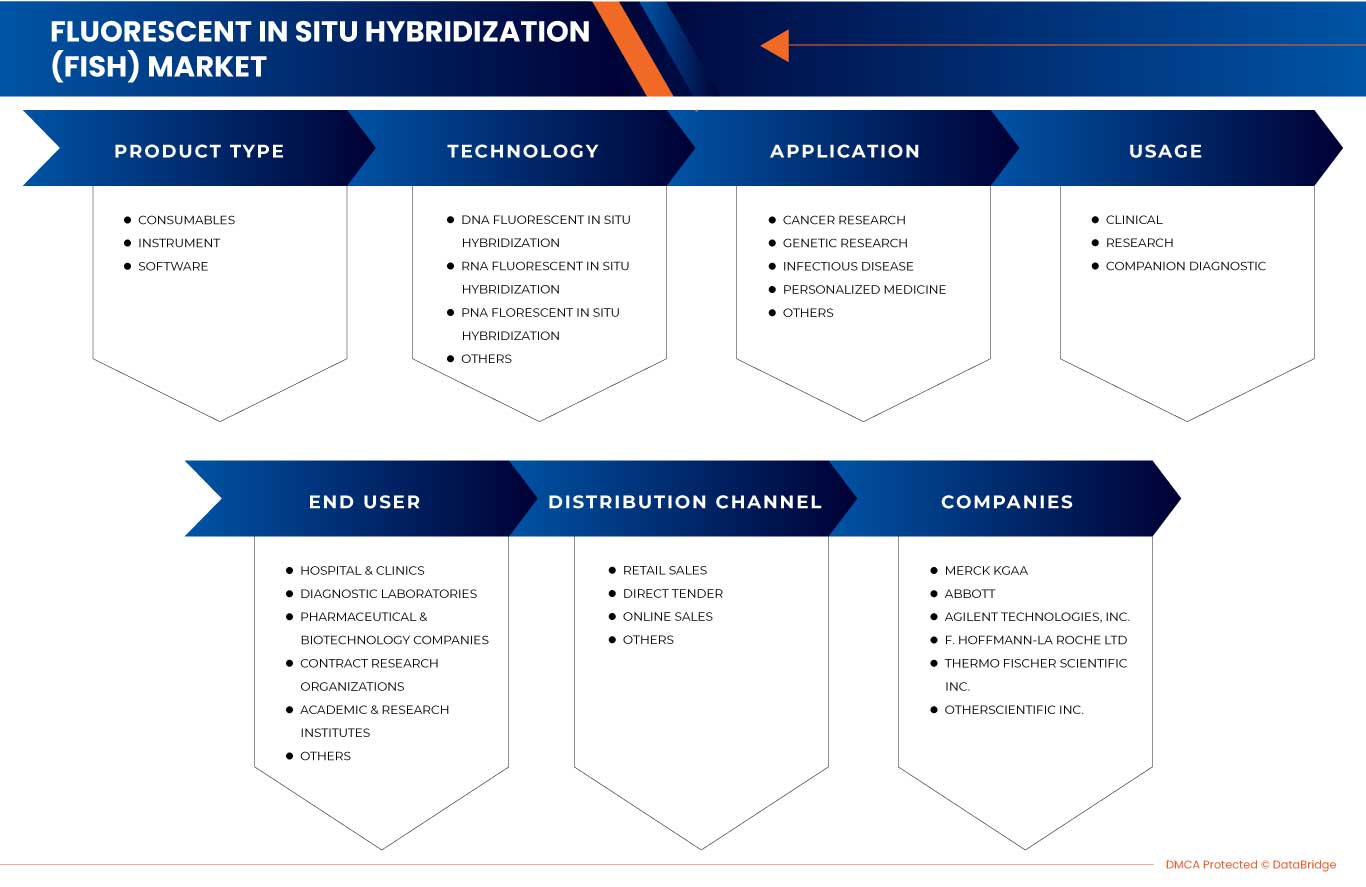
North America Fluorescent in Situ Hybridization (FISH) Market, By Product Type (Consumables, Instrument, and Software), Technology (DNA Fluorescent in Situ Hybridization, RNA Fluorescent in Situ Hybridization, PNA Fluorescent in Situ Hybridization, and Others), Application (Cancer Research, Genetic Research, Infectious Disease, Personalized Medicine, and Other), Usage (Clinical, Research, and Companion Diagnostic), End User (Hospitals & Clinics, Diagnostic Laboratories, Pharmaceuticals & Biotechnology Companies, Contract Research Organizations, Academic & Research Institutes, and Others), Distribution Channel (Retail Sales, Direct Tender, Online Sales, and Others) - Industry Trends and Forecast to 2030.
América do Norte Fluorescente em Hibridização Situ (FISH) Análise de Mercado e Insights
A crescente sensibilização do público para o cancro e as doenças genéticas aumentou a procura do mercado. Os principais operadores do mercado concentram-se em vários lançamentos de produtos e aprovações durante este período crucial. Além disso, o aumento dos procedimentos melhorados e avançados da PESC contribui também para a crescente procura do mercado.
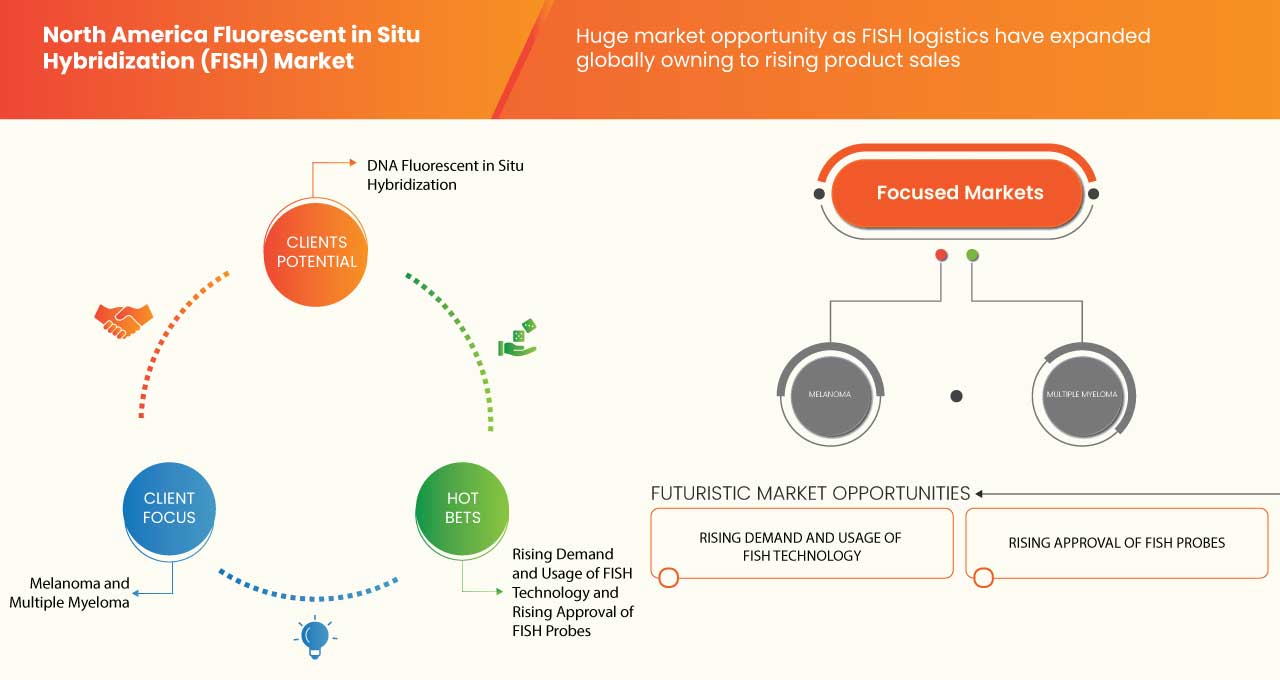
O mercado da América do Norte Fluorescente em Hibridização Situ (FISH) deverá crescer no período previsto de 2023 a 2030 devido ao aumento do câncer e outras doenças crônicas. Prevê-se também que o elevado financiamento das actividades de investigação por parte do governo e de outros organismos conduza ao crescimento do mercado. Juntamente com isso, os fabricantes estão envolvidos em atividades de I&D para lançar novos produtos no mercado. No entanto, espera-se que o elevado custo das técnicas FISH no processo de tratamento impeça o crescimento do mercado. Prevê-se que o aumento da procura de biomarcadores específicos e de várias sondas proporcione a oportunidade de o crescimento do mercado aumentar o tratamento. Espera-se que a crescente procura de cuidados de saúde de melhor qualidade para os distúrbios genéticos e a crescente adoção de medicamentos personalizados estimulem o crescimento do mercado. No entanto, as preocupações éticas associadas à tecnologia FISH e a falta de profissionais qualificados e certificados devem desafiar o crescimento do mercado.
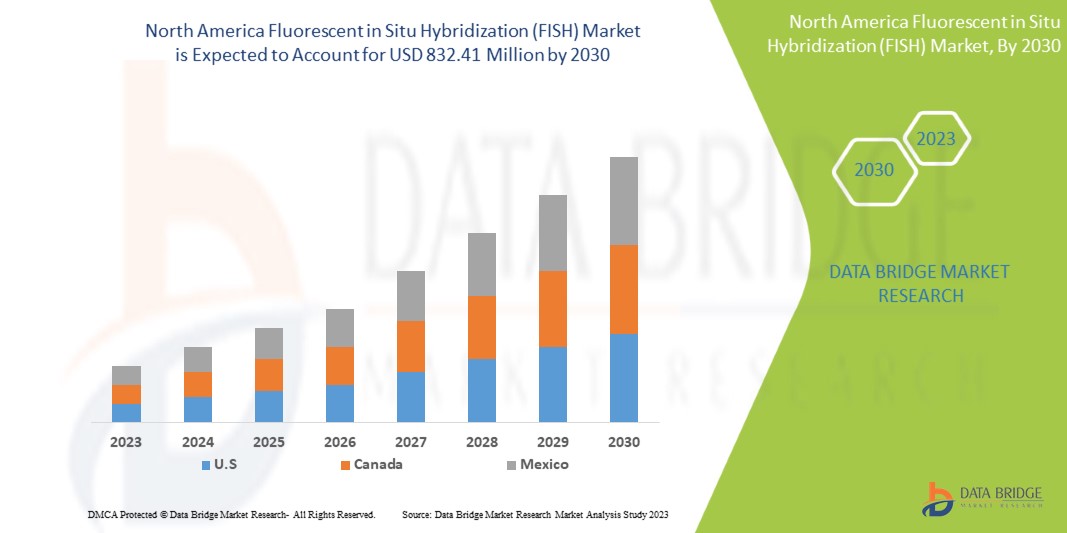
Data Bridge Market Research analisa que o mercado da América do Norte Fluorescente em Hibridização Situ (FISH) deverá atingir um valor de USD 832,41 milhões até 2030, em um CAGR de 8,7% durante o período de previsão. O segmento tipo produto é responsável pelo maior segmento do mercado devido ao aumento do número de câncer de mama e doenças genéticas entre as pacientes. Este relatório de mercado também abrange análises de preços, análises de patentes e avanços tecnológicos em profundidade.
|
Metric de Relatório |
Detalhes |
|
Período de previsão |
2023 a 2030 |
|
Ano de base |
2022 |
|
Ano Histórico |
2021 (Personalizável até 2015 – 2020) |
|
Unidades quantitativas |
Receitas em USD Million e Preços em USD |
|
Segmentos Cobertos |
Por Tipo de Produto (Consumíveis, Instrumento e Software), Tecnologia (DNA Fluorescente em Hibridização de Situ, Fluorescente de RNA em Hibridização de Situ, Fluorescente de PNA em Hibridização de Situ, e Outros), Aplicação (Pesquisa de Câncer, Pesquisa Genética, Doença Infecciosa, Medicina Personalizada e Outros), Uso (Clinical, Pesquisa e Diagnóstico de Companheiro), Usuário Final (Hospitais e Clínicas, Laboratórios Diagnósticos, Farmacêuticos e Empresas de Biotecnologia, Organizações de Pesquisa Contratual, Institutos Acadêmicos e de Pesquisa, e Outros), Canal de Distribuição (Vendas de Retail, Tender Direto, Vendas Online e Outros) |
|
Países abrangidos |
EUA, Canadá e México |
|
Jogadores de mercado cobertos |
Thermo Fisher Scientific Inc., Bio-Techne, Abbott, Agilent Technologies, Inc., Merck KGaA, F. Hoffmann-La Roche Ltd, Abnova Corporation, BioDot, Biocare Medical, LLC, Abbam plc., Sysmex Asia Pacific Pte Ltd (subsidiária da Sysmex Corporation), BIOZOL Diagnostics Vertrieb GmbH, Zytomed Systems GmbH, Genemed Biotechnologies, Inc., Bio SB, BioGenex, Excilone, MetaSystems, Kaneka Eurogenec S.A., BioCat GmbH e Leica Biosystems Nusssloch GmbH, entre outros |
MercadoDefinição
Uma técnica citogenética molecular chamada Fluorescence in Situ Hybridization (FISH) permite a localização de uma determinada sequência de ADN ou de um cromossoma inteiro numa célula. É usado para diagnosticar distúrbios genéticos, mapear genes, identificar anomalias cromossômicas, e também pode ser usado para comparar como os genes em diferentes cromossomos em espécies relacionadas são organizados. Ao realizar o FISH, a estrutura da hélice dupla é desfocada e todas as sondas conectadas a moléculas fluorescentes estão ligadas a uma sequência particular de DNA de amostra que pode ser visto sob um microscópio de fluorescência.
O FISH é frequentemente utilizado para fins de diagnóstico em oncologia, saúde preventiva e reprodutiva e pesquisa em biologia genômica e celular. É o método reconhecido pela indústria para encontrar doenças infecciosas e anormalidades cromossômicas. Contudo, prevê-se que regulamentos e normas rigorosos para a aprovação de produtos e sondas FISH impeçam o crescimento do mercado.
América do Norte Fluorescente em Situ Hybridization (FISH) Market Dynamics
Esta seção trata da compreensão dos motoristas de mercado, vantagens, oportunidades, restrições e desafios. Tudo isso é discutido em detalhes abaixo:
Controladores
- Aumentar a carga de distúrbios genéticos, bem como o câncer
As anormalidades genéticas são incomuns como um todo, mas são muito frequentes como doenças individuais. As alterações genéticas são a causa de todo o cancro. Apenas 5% a 10% dos cancros estão geneticamente predispostos. Não obstante, quando os mesmos tipos de câncer ocorrem em famílias, a hereditariedade pode ocasionalmente parecer ser a causa do câncer. Os cânceres hematológicos e sólidos são doenças heterogêneas com diversas anormalidades genéticas. Um número crescente de anormalidades genômicas, como ganho, perda ou rearranjo de fragmentos cromossômicos e mutações genéticas, são fatores impulsionadores na patogênese de várias neoplasias como resultado das extensas investigações sobre a relação entre instabilidade genômica e patogênese da doença realizadas nas últimas duas décadas. O diagnóstico clínico de diferentes anormalidades cromossômicas, incluindo deleções, duplicações e translocações, depende da FISH e de outras técnicas de hibridização in situ, que impulsionam o crescimento do mercado.
- Inovação e avanços em produtos da pesca
O método mais confiável para encontrar sequências de DNA específicas, diagnosticar doenças genéticas, mapear genes e descobrir novos oncogenes ou anormalidades genéticas que causam vários cânceres é o FISH. Avanços recentes na tecnologia tornaram possível rastrear todo o genoma utilizando simultaneamente métodos baseados em array, como hibridização genômica comparativa ou FISH multiplex com sondas cromossômicas inteiras multicoloridas. Na luta contra doenças genéticas, a FISH transformou fundamentalmente o campo da citogenética e agora é reconhecida como uma ferramenta confiável de diagnóstico e pesquisa, que impulsiona o crescimento do mercado.
Restrição
- Alto custo de testes de pesca
A técnica de reconhecimento de macromoléculas conhecida como FISH baseia-se na natureza complementar de fios duplos de DNA ou DNA/RNA. O teste FISH "mapas" o material genético presente em células humanas, incluindo genes particulares ou segmentos de genes. Um teste FISH é útil para diagnosticar alguns tipos de câncer porque pode encontrar anormalidades genéticas ligadas à doença. As questões de custo são de extrema relevância no moderno laboratório de diagnóstico molecular. Além de permitir a um laboratório lidar com o aumento dos volumes de teste e rendimento, a automação de ensaios moleculares complicados também reduz significativamente o custo dos testes do ponto de vista dos gastos com reagentes, o que limita o crescimento do mercado.
Oportunidade
- Conscientização do público sobre a detecção precoce de anomalias genéticas
Testes genéticos ajudam os pacientes a tomar decisões importantes na prevenção, tratamento ou detecção precoce de doenças hereditárias. A baixa consciência da importância dos testes genéticos contribui para o aumento da incidência de doenças hereditárias.
Uma desordem genética é uma condição de saúde que é herdada por uma pessoa, geralmente causada por mutações no DNA ou alterações no número ou estrutura geral dos cromossomos. Vários tipos de doenças comumente conhecidas têm sido determinadas como estando relacionadas a mutações genéticas hereditárias.
A partir de agora, a crescente conscientização sobre a detecção precoce de distúrbios genéticos utilizando a técnica FISH ajuda no diagnóstico de doenças genéticas, mapeamento genético e identificação de novos oncogenes ou aberrações genéticas que contribuem para vários tipos de cânceres e distúrbios genéticos, o que proporciona a oportunidade de crescimento do mercado.
Desafio
- Regulamentos do Governo para a aprovação de sondas de pesca
O uso de técnicas FISH em todo o mundo está aumentando rapidamente, com o crescimento da população idosa e várias doenças crônicas, que são evitáveis pelo diagnóstico precoce e tratamentos oportunos. Ao mesmo tempo, os operadores da tecnologia FISH no mercado têm de seguir certas regras para obter a aprovação das autoridades superiores para lançar o produto numa região. Estas orientações rigorosas têm de ser seguidas, e esta é uma das tarefas mais difíceis de todas as etapas. A aprovação pré-comercialização de vários dispositivos médicos varia de um país para outro.
Impacto pós-COVID-19 na América do Norte Fluorescente no mercado de hibridização Situ (FISH)
A pandemia teve impactos adversos sobre os fabricantes de FISH, bem como os usuários. O mercado tem sido significativamente influenciado pelo COVID-19, o que tem levado ao aumento de pesquisas utilizando o FISH. Um desses estudos, publicado em novembro de 2022 no PLOS One Journal, empregou um método baseado em FISH para detectar SARS-CoV-2 na saliva. O método utilizado foi uma sonda de DNA marcada com Cy3 específica para SARS-CoV-2, e a análise foi realizada manualmente utilizando microscopia de fluorescência como prova de conceito.
Os fabricantes estão tomando várias decisões estratégicas para recuperar pós-COVID-19. Os jogadores estão realizando várias atividades de P&D, lançamentos de produtos e parcerias estratégicas para melhorar a tecnologia e resultados de testes envolvidos no mercado FISH.
Evolução recente
- Em março de 2023, Abcam plc. anunciou que recebeu "Fornecedor Antibody do Ano" nos distintos prêmios da indústria anual da CiteAb. Isso vem depois que a Fast Company listou recentemente a Abcam plc. como uma das empresas mais inovadoras do mundo por seus esforços inovadores para aumentar a reprodutibilidade dos dados. O provedor com mais citações de produtos de anticorpos em 2022 recebe a honra de "Fornecedor Anticorpo do Ano" da CiteAb. Além disso, Abbam plc. recebeu uma classificação "altamente elogiada" na categoria de "Fornecedor Anticorpo de Modificação Pós-Translacional do Ano", reconhecendo a dificuldade em criar e validar anticorpos para esses alvos desafiadores. Isto tem ajudado o negócio em tornar-se conhecido em uma escala da América do Norte
- Em março de 2023, a BIOZOL Diagnostics Vertrieb GmbH anunciou a aquisição da AlphaScience GmbH. Ao realizar essa aquisição, a BIOZOL Diagnostics Vertrieb GmbH reforçou sua posição dominante no mercado norte-americano de pesquisa e diagnóstico. Com um número significativo de conexões de novos fornecedores, excelente conhecimento de produtos e pessoal que são bem treinados tecnicamente, a AlphaScience melhora a BIOZOL. Efeitos significativos de sinergia entre as duas organizações, melhorando suas ofertas para clientes e fornecedores
- Em julho de 2022, a Bio-Techne anunciou o lançamento do RNAscope ISH Probe High Risk HPV designado CE-IVD na Europa para ajudar pacientes com Carcinoma de Células Esquâmicas Orofaríngeas (OPSCC) a identificar Papilomavírus Humano de alto risco (HPV). Para a identificação qualitativa do mRNA do HPV E6/E7 em amostras de tecido FFPE, utiliza-se o RNAscópio ISH Probe High Risk HPV. Isso tem ajudado o negócio em oferecer melhores soluções em todo o mundo
América do Norte Fluorescente em Situ Hibridização (FISH) Âmbito de mercado
América do Norte O mercado Fluorescente em Hibridização Situ (FISH) é segmentado em seis segmentos notáveis com base no tipo de produto, tecnologia, aplicação, uso, usuário final e canal de distribuição. O crescimento entre segmentos ajuda você a analisar nichos de crescimento e estratégias para se aproximar do mercado e determinar seu núcleoaplicaçãoáreas e a diferença nos seus mercados-alvo.
POR TIPO DE PRODUTO
- CONSUMÍVEIS
- INSTRUMENTO
- SOFTWARE
Com base no tipo de produto, o mercado é segmentado em consumíveis, instrumentos e software.
POR TECNOLOGIA
- FLUORESCENTE DE DNA NA HIBRIDIZAÇÃO DE SITU
- RNA FLUORESCENTE NA HIBRIDIZAÇÃO DE SITU
- NA FLUORESCENTE NA HIBRIDIZAÇÃO DE SITU
- OUTRAS
Com base na tecnologia, o mercado é segmentado em hibridização in situ fluorescente DNA, hibridização in situ fluorescente RNA, hibridização in situ fluorescente PNA, entre outros.
PEDIDO
- INVESTIGAÇÃO DO CÂNCER
- INVESTIGAÇÃO GENÉTICA
- DOENÇA INFECTIVA
- MEDICINA PESSOALIZADA
- OUTRAS
Com base na aplicação, o mercado é segmentado em pesquisa de câncer, pesquisa genética, doenças infecciosas, medicina personalizada, entre outros.
POR USO
- CLÍNICA
- INVESTIGAÇÃO
- DIAGNÓSTICO DA COMPANHIA
Com base no uso, o mercado é segmentado em diagnóstico clínico, pesquisa e acompanhante.
POR FIM DO UTILIZADOR
- HOSPITAIS & CLÍNICOS
- LABORATÓRIOS DIAGNÓSTICOS
- EMPRESAS FARMACÊUTICAS E BIOTECNOLOGIA
- ORGANIZAÇÕES DE INVESTIGAÇÃO CONTRATA
- ORGANIZAÇÕES ACADEMICAS E DE INVESTIGAÇÃO
- OUTRAS
Com base no usuário final, o mercado é segmentado em hospitais e clínicas, laboratórios de diagnóstico, empresas farmacêuticas e de biotecnologia, organizações de pesquisa de contratos, institutos acadêmicos e de pesquisa, entre outros.
POR CANAL DE DISTRIBUIÇÃO
- VENDAS DE RETALHO
- PROTEÇÃO DIRECTA
- VENDAS ON-LINE
- OUTRAS
Com base no canal de distribuição, o mercado é segmentado em concurso direto, vendas de varejo, vendas on-line, entre outros.
América do Norte Fluorescente em Hibridização Situ (FISH) Análise Regional de Mercado/Insights
O mercado da América do Norte Fluorescente em Hibridização Situ (FISH) é analisado e informações de tamanho do mercado são fornecidas com base no tipo de produto, tecnologia, aplicação, uso, usuário final e canal de distribuição.
Os países abrangidos neste relatório de mercado são os EUA, Canadá e México.
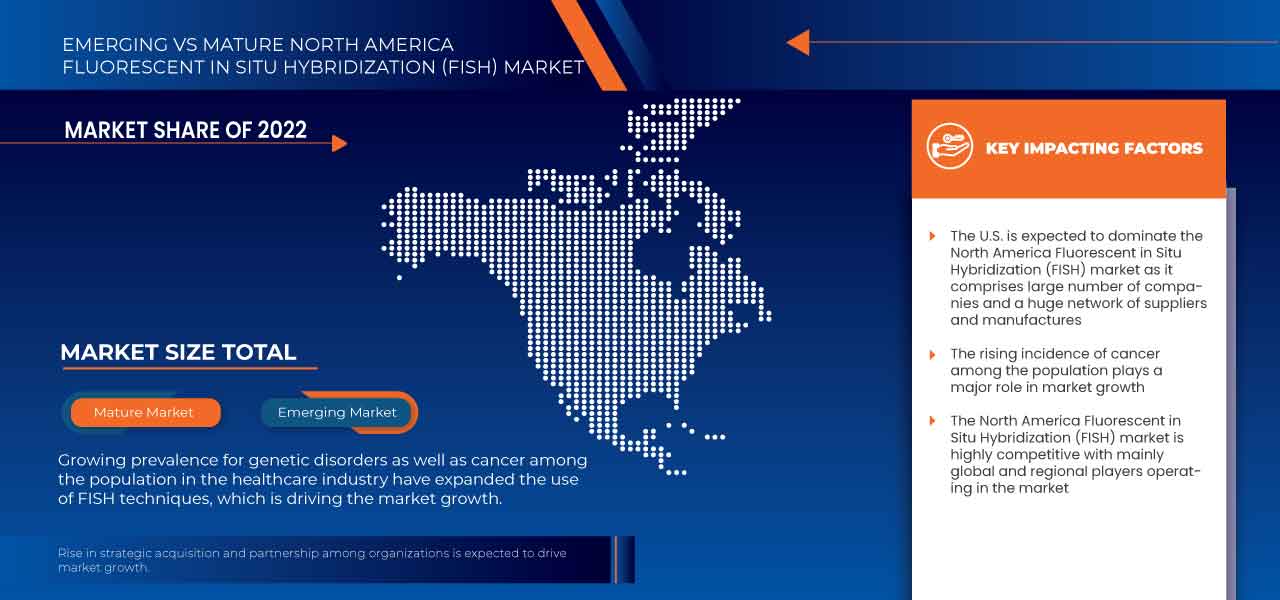
Espera-se que os EUA dominem a região da América do Norte devido à presença de atores-chave do mercado no maior mercado consumidor com elevado PIB e devido à sua tecnologia avançada mais recente e invenções no mercado FISH.
A secção «país» do relatório também fornece factores individuais de impacto no mercado e alterações da regulamentação no mercado nacional que afectam as tendências actuais e futuras do mercado. Pontos de dados como novas vendas, vendas de substituição, dados demográficos dos países, atos regulatórios e tarifas de importação-exportação são alguns dos principais indicadores usados para prever o cenário de mercado para cada país. Além disso, a presença e disponibilidade de marcas da América do Norte e seus desafios enfrentados devido à grande ou escassa concorrência de marcas locais e nacionais, e o impacto dos canais de vendas são considerados ao fornecer análise de previsão dos dados do país.
Paisagem competitiva e América do Norte Fluorescente em Hibridização Situ (FISH) Análise de market share
América do Norte Fluorescente em Situ Hybridization (FISH) mercado paisagem competitiva fornece detalhes dos concorrentes. Os detalhes incluídos são visão geral da empresa, finanças da empresa, receita gerada, potencial de mercado, investimento em P&D, novas iniciativas de mercado, locais e instalações de produção, pontos fortes e fracos da empresa, lançamento de produtos, testes de produtos pipelines, aprovações de produtos, patentes, largura e respiração do produto, dominância de aplicação e curva de linha de vida tecnológica. Os dados acima apresentados estão relacionados apenas com o foco da empresa no mercado.
Alguns dos principais operadores do mercado que operam na América do Norte Fluorescente em Situ Hybridization (FISH) mercado são Thermo Fisher Scientific Inc., Bio-Techne, Abbott, Agilent Technologies, Inc., Merck KGaA, F. Hoffmann-La Roche Ltd, Abnova Corporation, BioDot, Biocare Medical, LLC, Abscam plc., Sysmex Asia Pacific Pte Ltd (uma subsidiária da Sysmex Corporation), BIOZOL Diagnostics Vertrieb GmbH, Zytomed Systems GmbH, Genemed Biotechnologies, Inc., Bio SB, BioGenex, Excilone, MetaSystems, Kaneka Eurogentec S.A., BioCat GmbH e Leica Biosystems Nussloch GmbH entre outros.
SKU-
Obtenha acesso online ao relatório sobre a primeira nuvem de inteligência de mercado do mundo

- Painel interativo de análise de dados
- Painel de análise da empresa para oportunidades de elevado potencial de crescimento
- Acesso de analista de pesquisa para personalização e customização. consultas
- Análise da concorrência com painel interativo
- Últimas notícias, atualizações e atualizações Análise de tendências
- Aproveite o poder da análise de benchmark para um rastreio abrangente da concorrência
Índice
1 INTRODUÇÃO
1.1 OBJECTIVOS DO ESTUDO
1.2 DEFINIÇÃO DE MERCADO
1.3 VISÃO GERAL
1.4 MOEDA E PREÇOS
1.5 LIMITAÇÕES
1.6 MERCADOS COBERTOS
2 SEGMENTAÇÃO DO MERCADO
2.1 MERCADOS COBERTOS
2.2 ÂMBITO GEOGRÁFICO
2.3 ANOS CONSIDERADOS PARA O ESTUDO
2.4 MODELO DE VALIDAÇÃO DE DADOS TRIPOD DBRR
2.5 INTERVENÇÕES PRIMÁRIAS COM OPINIÕES-CHAVE
2.6 MODELIZAÇÃO MULTIVARIADA
2.7 PEDIDO DE RECUPERAÇÃO DO MERCADO
2.8 Curva da linha de vida do produto
2.9 GRIDE DE POSIÇÃO DO MERCADO DE BMO
2.1 ANÁLISE DOS PARTICIPANTES
2.11 FONTES SEGUNDÁRIAS
2.12 ASSUNTOS
3 RESUMO
4 INSIGHTS PRÉMIO
4.1 5 FORÇAS DO PORTRO
4. 2 ANÁLISE DO PESTEL
4.3 INSTITUIÇÕES DE INDÚSTRIA
4.4 CONCLUSÕES
5 FLUORESCENTE DA AMÉRICA DO NORTE NO MERCADO DA HIBRIDIZAÇÃO DE SITU (FISH): QUADRO REGULAMENTAR
6 VISÃO GERAL DO MERCADO
6. 1 CONDUTORES
6.1.1 CRESCIMENTO DE DESIGNANTES GENÉTICOS, COMO CÂNCER
6.1.2 INOVAÇÃO E AVANCAMENTOS DOS PRODUTOS PEIXES
6.1.3 ALTO FUNDAMENTO PARA AS ACTIVIDADES DE INVESTIGAÇÃO
6.1.4 RISING DEmand E USO DAS TÉCNICAS DE PESCA
6.2 RESTRUÇÕES
6.2.1 ELEVADO CUSTO DOS ENSAIOS DE PESCA
6.2.2 DISPOSIBILIDADE LIMITADA DOS PROFISSIONAIS KILLADOS
6.3 OPORTUNIDADES
6.3.1 CONSCIÊNCIAS PÚBLICAS SOBRE A DETECÇÃO ANTERIOR DAS ANORMALIDADES GENÉTICAS
6.3.2 AUMENTO NO DESENVOLVIMENTO DOS BIOMARCANTES ESPECÍFICOS E VÁRIOS PROBÉNS
6.4 DESAFIOS
6.4.1 REGULAMENTOS DO GOVERNO CONTENTO PARA A HOMOLOGAÇÃO DE PROBÉNS PEIXES
6.4.2 RELATIVOS ÉTICOS ASSOCIADOS À TECNOLOGIA DOS PEIXES
7 FLUORESCENTE DA AMÉRICA DO NORTE NO MERCADO DA HIBRIDIZAÇÃO DE SITU (FISH), POR TIPO DE PRODUTO
7.1 VISÃO GERAL
7.2 CONSUMÍVEIS
7.2.1 PROBLEMA DOS PEIXES
7.2.1 PROBLEMA DE PESCA, POR TIPO DE PROBLEMAS
7.2.1.1 PROBLEMA DE PESCA CROMOSOMÉMICA
7.2.1.1.2 PROBLEMAS ESPECÍFICOS
7.2.1.1.3 PROBLEMAS DE TRANSLOCAÇÃO DOS PEIXES
7.2.1.1.4 PROBÉNS DE PESCA SUBTELÓMERO
7.2.1.1.5 PROBÉNS PRENATAIS DE PESCA
7.2.1.1.6 OUTROS PROBÉNS
7.2.1.2 PROBLEMA DE PESCA, POR TECNOLOGIA
7.2.1.2.1 Fluorescente de Fluxos em HIBRIDIZAÇÃO SITU
7.2.1.2.2 C-ISH
7.2.1.2.3 D-ISH
7.2.1.2.4 Q-FLUORESCENTE NA HIBRIDIZAÇÃO SITU
7.2.1.2.5 OUTROS
PROBLEMA DE PESCA, POR TIPO
7.2.1.3.1 ARN
72.1.3.1.1 MRNA
72.1.3.1.2 MIRNA
7.2.1.3.1.3 OUTROS
7.2.1.3.2 ADN
7.2.2 KITS E REAGENTES ACESSÓRIOS
7.2.2.1 KITS
7.2.2.2 BUFER
7.2.2.3 DYES
7.2.2.4 OUTROS
7.3 INSTRUMENTO
7.3.1 STANDALONE
7.3.2 PORTÁVEIS
7.3.3 ARMAZENAMENTO
7.4 SOFTWARE
8 FLUORESCENTE DA AMÉRICA DO NORTE NO MERCADO DA HIBRIDIZAÇÃO DE SITU (FISH), POR TECNOLOGIA
8.1 VISÃO GERAL
8.2 RNA FLUORESCENTE NA HIBRIDIZAÇÃO DE SITU
8.3 FLUORESCENTE DE DNA NA HIBRIDIZAÇÃO DE SITU
8.4 FLUORESCENTE NA HIBRIDIZAÇÃO DE SITU
8.5 OUTRAS
9 FLUORESCENTE DA AMÉRICA DO NORTE NO MERCADO DA HIBRIDIZAÇÃO DE SITU (FISH), POR APLICAÇÃO
9.1 VISÃO GERAL
9.2 INVESTIGAÇÃO CÂNCER
9.2.1 INVESTIGAÇÃO CÂNCER, POR TIPO DE CÂNCER
9.2.1.1.1 MALIGNANCIAS NÃO-HEMATOPÉTICAS (TOMORES SÓLIDOS)
9.2.1.1 CÂNCER DE PESO
9.2.1.1.2 CÂNCER DE LUNG
9.2.1.1.3 MELANOMA
CÂNCER DE PROSTRUÇÃO
9.2.1.1.5 CÂNCER OVARIANO
9.2.1.1.6 OUTRAS
9.2.1.2 MALIGNANCIAS HEMATOPÓTICAS
9.2.1.2.1 LEUKEMIA
9.2.1.2.2 MIELOMA MÚLTIPLO
SÍNDROMOS MIELODISPLASTICOS (MDS)
9.2.2 INVESTIGAÇÃO CÂNCER, POR PRODUTO
9.2.2.1 CONSUMÍVEIS
9.2.2.2 INSTRUMENTOS
9.2.2.3 SOFTWARE
9.3 INVESTIGAÇÃO GENÉTICA
9.3.1 CITOGENÉTICA
9.3.2 ANORMALIDADES CROMOSOMAIS
9.3.3 OUTROS
9.4 DOENÇA INFECTIVA
9.4.1 CONSUMÍVEIS
9.4.2 INSTRUMENTOS
9.4.3 SOFTWARE
9.5 MEDICAMENTO PESSOALIZADO
9,6 OUTRAS
10 FLUORESCENTE DA AMÉRICA DO NORTE NO MERCADO DA HIBRIDIZAÇÃO DE SITU (FISH), POR USO
10.1 VISÃO GERAL
10.2 INVESTIGAÇÃO
10.2.1 INSTRUMENTOS
10.2.2 CONSUMÍVEIS
10.2.3 SOFTWARE
10.3 CLÍNICA
10.3.1 CONSUMÍVEIS
10.3.2 INSTRUMENTO
10.3.3 SOFTWARE
10.4 DIAGNÓSTICO DA COMPANHIA
10.4.1 CONSUMÍVEIS
10.4.2 INSTRUMENTO
10.4.3 SOFTWARE
11 FLUORESCENTE DA AMÉRICA DO NORTE NO MERCADO DA HIBRIDIZAÇÃO DE SITU (PEIXES), PELO UTILIZADOR FINAL
11.1 VISÃO GERAL
11.2 LABORATÓRIOS DIAGNÓSTICOS
11.3 HOSPITAIS & CLÍNICOS
11.4 EMPRESAS FARMACÊUTICAS E BIOTECNOLÓGICAS
11.5 INSTITUIÇÕES DE ACADEMIA E DE INVESTIGAÇÃO
11.6 ORGANIZAÇÕES DE INVESTIGAÇÃO CONTRATA
11,7 OUTRAS
12 FLUORESCENTE DA AMÉRICA DO NORTE NO MERCADO DA HIBRIDIZAÇÃO DE SITU (FISH), POR CANAL DE DISTRIBUIÇÃO
12.1 VISÃO GERAL
12.2 VENDAS DE RETALHO
12.3 VENDAS ON-LINE
12.4 ENCERRAMENTO DIRECTO
12,5 OUTRAS
13 FLUORESCENTE DA AMÉRICA DO NORTE NO MERCADO DA HIBRIDIZAÇÃO DE SITU (FISH), POR REGIÃO
13.1 AMÉRICA DO NORTE
13.1.1 Estados Unidos
13.1.2 CANADÁ
13.1.3 MÉXICO
14 FLUORESCENTE DA AMÉRICA DO NORTE NO MERCADO DA HIBRIDIZAÇÃO SITU (FISH), PAISCAPE DA EMPRESA
14.1 ANÁLISE DA PARTICIPAÇÃO DA EMPRESA: AMÉRICA DO NORTE
15 ANÁLISE SWOT
16 PERFIL DA EMPRESA
16.1 MERCK KGAA
16.1.1 EMPRESA SNAPSHOT
ANÁLISE DAS RECEITAS
16.1.3 ANÁLISE DA COMPANHIA
16.1.4 PRODUTO PORTFÓLIO
16.1.5 DESENVOLVIMENTO RECENTE
16.2 ABBOTT
16.2.1 EMPRESA SNAPSHOT
16.2.2 ANÁLISE DAS RECEITAS
16.2.3 ANÁLISE PARTICIPAL
16.2.4 PRODUTO PORTFÓLIO
16.2.5 DESENVOLVIMENTO RECENTE
16.3 TECNOLOGIAS AGILENTES, INC.
16.3.1 EMPRESA SNAPSHOT
ANÁLISE DAS RECEITAS 16.3.2
16.3.3 ANÁLISE PARTICIPAL
16.3.4 PRODUTO PORTFÓLIO
16.3.5 DESENVOLVIMENTO RECENTE
16, 4 F. HOFFMANN- LA ROCHE LTD.
16.4.1 EMPRESA SNAPSHOT
16.4.2 ANÁLISE DAS RECEITAS
16.4.3 ANÁLISE DA COMPANHIA
16.4.4 PRODUTO PORTFOLIO
16.4.5 DESENVOLVIMENTO RECENTE
16.5 Thermo Fischer CIENTÍFICO INC.
16.5.1 EMPRESA SNAPSHOT
ANÁLISE DAS RECEITAS
16.5.3 ANÁLISE DA COMPANHIA
16.5.4 PRODUTO PORTFÓLIO
16.5.5 DESENVOLVIMENTO RECENTE
16.6 ABCAM PLC.
16.6.1 EMPRESA SNAPSHOT
ANÁLISE DAS RECEITAS
16.6.3 ANÁLISE DA COMPANHIA
16.6.4 PRODUTO PORTFOLIO
16.6.5 EVOLUÇÃO RECENTE
16,7 CORPORAÇÃO DE ABNOVA
16.7.1 EMPRESA SNAPSHOT
16.7.2 PRODUTO PORTFÓLIO
16.7.3 DESENVOLVIMENTO RECENTE
16.8 BIO SB
16.8.1 EMPRESA SNAPSHOT
16.8.2 PRODUTO PORTFÓLIO
16.8.3 DESENVOLVIMENTO RECENTE
16.9 BIOCARE MÉDICA, LLC
16.9.1 EMPRESA SNAPSHOT
16.9.2 PRODUTO PORTFÓLIO
16.9.3 DESENVOLVIMENTO RECENTE
16.1 BIOCAT GMBH
16.10.1 EMPRESA SNAPSHOT
16.10.2 PRODUTO PORTFÓLIO
16.10.3 DESENVOLVIMENTO RECENTE
16.11 BIODOT
16.11.1 EMPRESA SNAPSHOT
16.11.2 PRODUTO PORTFÓLIO
16.11.3 DESENVOLVIMENTO RECENTE
16.12 BIOGENEX
16.12.1 EMPRESA SNAPSHOT
16.12.2 PRODUTO PORTFÓLIO
16.12.3 DESENVOLVIMENTO RECENTE
16.13 BIO-TECHNE
16.13.1 EMPRESA SNAPSHOT
16.13.2 ANÁLISE DAS RECEITAS
16.13.3 ANÁLISE PARTICIPAL
16.13.4 PRODUTO PORTFÓLIO
16.13.5 DESENVOLVIMENTO RECENTE
16.14 DIAGNÓSTICO DE BIOZOL VERTRIEB GMBH
16.14.1 EMPRESA SNAPSHOT
16.14.2 PRODUTO PORTFOLIO
16.14.3 DESENVOLVIMENTO RECENTE
16.15 EXCILONA
16.15.1 EMPRESA SNAPSHOT
16.15.2 PRODUTO PORTFOLIO
16.15.3 DESENVOLVIMENTO RECENTE
16.16 BIOTECNOLOGIA GENEMADA, INC.
16.16.1 EMPRESA SNAPSHOT
16.16.2 PRODUTO PORTFOLIO
16.16.3 DESENVOLVIMENTO RECENTE
16.17 KANEKA EUROGENTEC S.A.
16.17.1 EMPRESA SNAPSHOT
16.17.2 PRODUTO PORTFÓLIO
16.17.3 DESENVOLVIMENTO RECENTE
16.18 BIOSSISTEMAS DE LEICA NUSSLOCH GMBH
16.18.1 EMPRESA SNAPSHOT
16.18.2 PRODUTO PORTFÓLIO
16.18.3 DESENVOLVIMENTO RECENTE
16.19 METASSISTEMA
16.19.1 EMPRESA SNAPSHOT
16.19.2 PRODUTO PORTFÓLIO
16.19.3 DESENVOLVIMENTO RECENTE
16.2 SYSMEX ÁSIA PACIFIC PTE LTD (A SUBSIDIÁRIO DA CORPORAÇÃO SYSMEX)
16.20.1 EMPRESA SNAPSHOT
16.20.2 ANÁLISE DE RECEITAS
16.20.3 PRODUTO PORTFÓLIO
16.20.4 DESENVOLVIMENTO RECENTE
16.21 SISTEMAS ZYTOMED GMBH
16.21.1 EMPRESA SNAPSHOT
16.21.2 PRODUTO PORTFÓLIO
16.21.3 DESENVOLVIMENTO RECENTE
17 QUESTIONÁRIO
18 RELATÓRIOS RELACIONADOS
Lista de Tabela
QUADRO 1 FLUORESCENTE DA AMÉRICA DO NORTE NO MERCADO DA HIBRIDIZAÇÃO DE SITU (FISH), POR TIPO DE PRODUTO, 2021-2030 (USD MILHÃO)
QUADRO 2 CONSUMÍVEIS DA AMÉRICA DO NORTE EM FLUORESCENTE NO MERCADO DA HIBRIDIZAÇÃO SITU (PEIXE), POR REGIÃO, 2021-2030 (USD MILHÃO)
QUADRO 3 CONSUMÍVEIS DA AMÉRICA DO NORTE EM FLUORESCENTE NO MERCADO DA HIBRIDIZAÇÃO DE SITU (PEIXE), POR TIPO DE PRODUTO, 2021-2030 (USD MILHÃO)
QUADRO 4 PROBLEMA DE PESCA DA AMÉRICA DO NORTE EM FLUORESCENTE NO MERCADO DA HIBRIDIZAÇÃO DE SITU (PEIXE), POR TIPO PROBLEMA, 2021-2030 (USD MILHÃO)
QUADRO 5 PROBLEMA DE PESCA DA AMÉRICA DO NORTE EM FLUORESCENTE NO MERCADO DA HIBRIDIZAÇÃO DE SITU, POR TECNOLOGIA, 2021-2030 (USD MILHÃO)
QUADRO 6 PROBLEMA DE PESCA DA AMÉRICA DO NORTE EM FLUORESCENTE NO MERCADO DA HIBRIDIZAÇÃO DE SITU (PEIXE), POR TIPO, 2021-2030 (USD MILHÃO)
QUADRO 7 RNA DA AMÉRICA DO NORTE NO FLUORESCENTE NO MERCADO DA HIBRIDIZAÇÃO DE SITU (PEIXE), POR TIPO DE PRODUTO, 2021-2030 (MILION USD)
QUADRO 8 KITS E REAGENTES ACESSÓRIOS DA AMÉRICA DO NORTE NO MERCADO DA HIBRIDIZAÇÃO DE SITU, POR TIPO DE PRODUTO, 2021-2030 (USD MILHÃO)
QUADRO 9 INSTRUMENTO DA AMÉRICA NO NORTE NO FLUORESCENTE NO MERCADO DA HIBRIDIZAÇÃO SITU (PEIXE), POR REGIÃO, 2021-2030 (USD MILHÃO)
QUADRO 10 INSTRUMENTOS DA AMÉRICA DO NORTE NO FLUORESCENTE NO MERCADO DA HIBRIDIZAÇÃO SITU (PEIXE), POR TIPO DE PRODUTO, 2021-2030 (MILION USD)
QUADRO 11 AMÉRICA DO NORTE SOFTWARE NO FLUORESCENTE NO MERCADO DA HIBRIDIZAÇÃO SITU (PEIXE), POR REGIÃO, 2021-2030 (USD MILHÃO)
QUADRO 12 FLUORESCENTE DA AMÉRICA DO NORTE NO MERCADO DA HIBRIDIZAÇÃO DE SITU (FISH), POR TECNOLOGIA, 2021-2030 (USD MILHÃO)
QUADRO 13 FLUORESCENTE DE RNA AMERICA DO NORTE NA HIBRIDIZAÇÃO DE SITU NO FLUORESCENTE NO MERCADO DA HIBRIDIZAÇÃO DE SITU (FISH), POR REGIÃO, 2021-2030 (USD MILHÃO)
QUADRO 14 FLUORESCENTE DE ADN da América do Norte NA HIBRIDIZAÇÃO DE SITU NO FLUORESCENTE NO MERCADO DE HIBRIDIZAÇÃO DE SITU (FISH), POR REGIÃO, 2021-2030 (USD MILHÃO)
QUADRO 15 AMÉRICA DO NORTE FLUORESCENTE NA HIBRIDIZAÇÃO DE SITU NO MERCADO DA HIBRIDIZAÇÃO DE SITU, POR REGIÃO, 2021-2030 (USD MILHÃO)
QUADRO 16 OUTROS AMÉRICA DO NORTE EM FLUORESCENTE NO MERCADO DA HIBRIDIZAÇÃO DE SITU (FISH), POR REGIÃO, 2021-2030 (USD MILHÃO)
QUADRO 17 FLUORESCENTE DA AMÉRICA DO NORTE NO MERCADO DA HIBRIDIZAÇÃO DE SITU (FISH), POR PEDIDO, 2021-2030 (USD MILHÃO)
QUADRO 18 INVESTIGAÇÃO DO CÂNCER DA AMÉRICA DO NORTE EM FLUORESCENTE NO MERCADO DA HIBRIDIZAÇÃO DE SITU (FISH), POR REGIÃO, 2021-2030 (USD MILHÃO)
QUADRO 19 INVESTIGAÇÃO DO CÂNCER DA AMÉRICA DO NORTE EM FLUORESCENTE NO MERCADO DA HIBRIDIZAÇÃO DE SITU (PEIXE), POR TIPO DE CÂNCER, 2021-2030 (USD MILHÃO)
QUADRO 20 AMÉRICA NORDESTE MALIGNANCIAS NÃO-HEMATOPÉTICAS (Tumores Sólidos) EM FLUORESCENTE NO MERCADO DA HIBRIDIZAÇÃO SITU (PEIXE), PEDIDO, 2021-2030 (USD MILHÃO)
QUADRO 21 MALIGNANCIAS HEMATOPOÉTICAS DA AMÉRICA DO NORTE EM FLUORESCENTE NO MERCADO DA HIBRIDIZAÇÃO DE SITU (FISH), POR APLICAÇÃO, 2021-2030 (USD MILHÃO)
QUADRO 22 INVESTIGAÇÃO DO CÂNCER DA AMÉRICA DO NORTE EM FLUORESCENTE NO MERCADO DA HIBRIDIZAÇÃO DE SITU (PEIXE), POR TIPO DE PRODUTO, 2021-2030 (USD MILHÃO)
QUADRO 23 INVESTIGAÇÃO GENÉTICA DA AMÉRICA DO NORTE EM FLUORESCENTE NO MERCADO DA HIBRIDIZAÇÃO SITU (PEIXE), POR REGIÃO, 2021-2030 (USD MILHÃO)
QUADRO 24 INVESTIGAÇÃO GENÉTICA DA AMÉRICA DO NORTE EM FLUORESCENTE NO MERCADO DA HIBRIDIZAÇÃO SITU (PEIXE), POR APLICAÇÃO, 2021-2030 (USD MILHÃO)
QUADRO 25 DOENÇA INFECTIVA DA AMÉRICA DO NORTE NO FLUORESCENTE NO MERCADO DA HIBRIDIZAÇÃO SITU (FISH), POR REGIÃO, 2021-2030 (USD MILHÃO)
QUADRO 26 DOENÇA INFECTIVA DA AMÉRICA DO NORTE NO FLUORESCENTE NO MERCADO DA HIBRIDIZAÇÃO SITU (PEIXE), POR APLICAÇÃO, 2021-2030 (USD MILHÃO)
QUADRO 27
QUADRO 28 AMÉRICA NORTE OUTROS EM FLUORESCENTE NO MERCADO DA HIBRIDIZAÇÃO SITU (PEIXE), POR REGIÃO, 2021-2030 (USD MILHÃO)
QUADRO 29 FLUORESCENTE DA AMÉRICA DO NORTE NO MERCADO DA HIBRIDIZAÇÃO DE SITU (FISH), POR USO, 2021-2030 (USD MILHÃO)
QUADRO 30 INVESTIGAÇÃO DA AMÉRICA NO NORTE EM FLUORESCENTE NO MERCADO DA HIBRIDIZAÇÃO DE SITU (FISH), POR REGIÃO, 2021-2030 (USD MILHÃO)
QUADRO 31 INVESTIGAÇÃO DA AMÉRICA NO NORTE EM FLUORESCENTE NO MERCADO DA HIBRIDIZAÇÃO SITU (PEIXE), POR USO, 2021-2030 (USD MILHÃO)
QUADRO 32 CLÍNICA DA AMÉRICA DO NORTE EM FLUORESCENTE NO MERCADO DA HIBRIDIZAÇÃO DE SITU (FISH), POR REGIÃO, 2021-2030 (USD MILHÃO)
QUADRO 33
QUADRO 34 EMPRESA DA AMÉRICA NORTE DIAGNÓSTICA NO FLUORESCENTE NO MERCADO DA HIBRIDIZAÇÃO SITU (FISH), POR REGIÃO, 2021-2030 (USD MILHÃO)
QUADRO 35 EMPRESA DA AMÉRICA DO NORTE DIAGNÓSTICA NO FLUORESCENTE NO MERCADO DA HIBRIDIZAÇÃO DE SITU (FISH), POR USO, 2021-2030 (USD MILHÃO)
QUADRO 36 FLUORESCENTE DA AMÉRICA DO NORTE NO MERCADO DA HIBRIDIZAÇÃO DE SITU (FISH), POR FIM UTILIZADOR, 2021-2030 (USD MILHÃO)
QUADRO 37 LABORATÓRIOS DIAGNÓSTICOS DA AMÉRICA DO NORTE EM FLUORESCENTE NO MERCADO DA HIBRIDIZAÇÃO DE SITU (FISH), POR REGIÃO, 2021-2030 (USD MILHÃO)
QUADRO 38 HOSPITAIS E CLÍNICOS DA AMÉRICA DO NORTE NO FLUORESCENTE NO MERCADO DA HIBRIDIZAÇÃO DE SITU (FISH), POR REGIÃO, 2021-2030 (USD MILHÃO)
QUADRO 39 AMÉRICA DO NORTE EMPRESAS FARMACÊUTICAS E BIOTECNOLÓGICAS NO FLUORESCENTE NO MERCADO DA HIBRIDIZAÇÃO SITU, POR REGIÃO, 2021-2030 (USD MILHÃO)
QUADRO 40 ACADEMIA DA AMÉRICA DO NORTE E INSTITUIÇÕES DE INVESTIGAÇÃO NO FLUORESCENTE NO MERCADO DA HIBRIDIZAÇÃO SITU (PEIXE), POR REGIÃO, 2021-2030 (USD MILHÃO)
QUADRO 41 ORGANIZAÇÕES DE INVESTIGAÇÃO EM FLUORESCENTE NO MERCADO DA HIBRIDIZAÇÃO SITU (FISH), POR REGIÃO, 2021-2030 (USD MILHÃO)
QUADRO 42 OUTROS AMÉRICA DO NORTE EM FLUORESCENTE NO MERCADO DA HIBRIDIZAÇÃO SITU (PEIXE), POR REGIÃO, 2021-2030 (USD MILHÃO)
QUADRO 43
QUADRO 44 VENDAS DE RETALHO DA AMÉRICA DO NORTE EM FLUORESCENTE NO MERCADO DA HIBRIDIZAÇÃO DE SITU (FISH), POR REGIÃO, 2021-2030 (USD MILHÃO)
QUADRO 45 VENDAS ON-LINE DA AMÉRICA DO NORTE EM FLUORESCENTE NO MERCADO DA HIBRIDIZAÇÃO DE SITU (FISH), POR REGIÃO, 2021-2030 (USD MILHÃO)
QUADRO 46 ENTREGA DIRECTA DA AMÉRICA DO NORTE EM FLUORESCENTE NO MERCADO DA HIBRIDIZAÇÃO DE SITU (FISH), POR REGIÃO, 2021-2030 (USD MILHÃO)
QUADRO 47 OUTROS AMÉRICA DO NORTE EM FLUORESCENTE NO MERCADO DA HIBRIDIZAÇÃO DE SITU (FISH), POR REGIÃO, 2021-2030 (USD MILHÃO)
QUADRO 48 FLUORESCENTE DA AMÉRICA DO NORTE NO MERCADO DA HIBRIDIZAÇÃO SITU, POR PAÍS, 2021-2030 (USD MILHÃO)
QUADRO 49 FLUORESCENTE DA AMÉRICA DO NORTE NO MERCADO DA HIBRIDIZAÇÃO DE SITU (FISH), POR TIPO DE PRODUTO, 2021-2030 (USD MILHÃO)
QUADRO 50 CONSUMÍVEIS DA AMÉRICA DO NORTE EM FLUORESCENTE NO MERCADO DA HIBRIDIZAÇÃO DE SITU (PEIXE), POR TIPO DE PRODUTO, 2021-2030 (USD MILHÃO)
QUADRO 51 PROBLEMA DE PESCA DA AMÉRICA DO NORTE EM FLUORESCENTE NO MERCADO DA HIBRIDIZAÇÃO DE SITU (PEIXE), POR TIPO PROBLEMA, 2021-2030 (USD MILHÃO)
QUADRO 52 PROBLEMA DE PESCA DA AMÉRICA DO NORTE EM FLUORESCENTE NO MERCADO DA HIBRIDIZAÇÃO DE SITU, POR TECNOLOGIA, 2021-2030 (USD MILHÃO)
QUADRO 53 PROBLEMA DE PESCA DA AMÉRICA DO NORTE EM FLUORESCENTE NO MERCADO DA HIBRIDIZAÇÃO DE SITU (PEIXE), POR TIPO, 2021-2030 (USD MILHÃO)
QUADRO 54 ARN AMÉRICA DO NORTE NO FLUORESCENTE NO MERCADO DA HIBRIDIZAÇÃO DE SITU (PEIXE), POR TIPO DE PRODUTO, 2021-2030 (MILION USD)
QUADRO 55 KITS E REAGENTES ACESSÓRIOS DA AMÉRICA DO NORTE NO MERCADO DA HIBRIDIZAÇÃO DE SITU (PEIXE), POR TIPO DE PRODUTO, 2021-2030 (USD MILHÃO)
QUADRO 56 INSTRUMENTOS DA AMÉRICA DO NORTE NO FLUORESCENTE NO MERCADO DA HIBRIDIZAÇÃO DE SITU (PEIXE), POR TIPO DE PRODUTO, 2021-2030 (USD MILHÃO)
QUADRO 57 FLUORESCENTE DA AMÉRICA DO NORTE NO MERCADO DA HIBRIDIZAÇÃO DE SITU (FISH), POR TECNOLOGIA, 2021-2030 (USD MILHÃO)
QUADRO 58 FLUORESCENTE DA AMÉRICA DO NORTE NO MERCADO DA HIBRIDIZAÇÃO DE SITU (PEIXES), POR APLICAÇÃO, 2021-2030 (USD MILHÃO)
QUADRO 59 INVESTIGAÇÃO DO CÂNCER DA AMÉRICA DO NORTE EM FLUORESCENTE NO MERCADO DA HIBRIDIZAÇÃO DE SITU (PEIXE), POR TIPO DE CÂNCER, 2021-2030 (USD MILHÃO)
QUADRO 60 AMÉRICA NO NORTE MALIGNANCIAS NÃO-HEMATOPOIÉTICAS (TOMORAS SOLIDAS) EM FLUORESCENTE NO MERCADO DA HIBRIDIZAÇÃO SITU (PEIXE), POR PEDIDO, 2021-2030 (USD MILHÃO)
QUADRO 61 MALIGNANCIAS HEMATOPÓITICAS DA AMÉRICA DO NORTE EM FLUORESCENTE NO MERCADO DA HIBRIDIZAÇÃO SITU (FISH), POR APLICAÇÃO, 2021-2030 (USD MILHÃO)
QUADRO 62 INVESTIGAÇÃO DO CÂNCER DA AMÉRICA DO NORTE EM FLUORESCENTE NO MERCADO DA HIBRIDIZAÇÃO SITU (PEIXE), POR PRODUTO, 2021-2030 (USD MILHÃO)
QUADRO 63 INVESTIGAÇÃO GENÉTICA DA AMÉRICA DO NORTE EM FLUORESCENTE NO MERCADO DA HIBRIDIZAÇÃO DE SITU (PEIXE), POR APLICAÇÃO, 2021-2030 (USD MILHÃO)
QUADRO 64 AMÉRICA DO NORTE DOENÇA INFECTIVA NO FLUORESCENTE NO MERCADO DA HIBRIDIZAÇÃO DE SITU (FISH), POR APLICAÇÃO, 2021-2030 (USD MILHÃO)
QUADRO 65 FLUORESCENTE DA AMÉRICA DO NORTE NO MERCADO DA HIBRIDIZAÇÃO DE SITU (FISH), POR USO, 2021-2030 (USD MILHÃO)
QUADRO 66 INVESTIGAÇÃO DA AMÉRICA NO NORTE EM FLUORESCENTE NO MERCADO DA HIBRIDIZAÇÃO SITU (PEIXE), POR USO, 2021-2030 (USD MILHÃO)
QUADRO 67 CLÍNICA AMÉRICA DO NORTE EM FLUORESCENTE NO MERCADO DA HIBRIDIZAÇÃO DE SITU (PEIXE), POR USO, 2021-2030 (USD MILHÃO)
QUADRO 68 EMPRESA DA AMÉRICA NORTE DIAGNÓSTICA NO FLUORESCENTE NO MERCADO DA HIBRIDIZAÇÃO SITU (FISH), POR USO, 2021-2030 (USD MILHÃO)
QUADRO 69 FLUORESCENTE DA AMÉRICA DO NORTE NO MERCADO DA HIBRIDIZAÇÃO DE SITU (FISH), POR FIM UTILIZADOR, 2021-2030 (USD MILHÃO)
QUADRO 70 FLUORESCENTE DA AMÉRICA DO NORTE NO MERCADO DA HIBRIDIZAÇÃO SITU, POR CANAL DE DISTRIBUIÇÃO, 2021-2030 (USD MILHÃO)
QUADRO 71 FLUORESCENTE DOS EUA NO MERCADO DA HIBRIDIZAÇÃO SITU (PEIXE), POR TIPO DE PRODUTO, 2021-2030 (USD MILHÃO)
QUADRO 72 CONSUMÍVEIS DOS EUA EM FLUORESCENTE NO MERCADO DE HIBRIDIZAÇÃO DE SITU (PEIXE), POR TIPO DE PRODUTO, 2021-2030 (Milhares de USD)
QUADRO 73 PROBLEMA DE PESCA DOS EUA EM FLUORESCENTE NO MERCADO DA HIBRIDIZAÇÃO SITU (PEIXE), POR TIPO DE PROBLEMAS, 2021-2030 (USD MILHÃO)
QUADRO 74 PROBLEMAS DE PESCA DOS EUA EM FLUORESCENTE NO MERCADO DA HIBRIDIZAÇÃO DE SITU (PEIXES), POR TECNOLOGIA, 2021-2030 (USD MILHÃO)
QUADRO 75 PROBLEMA DE PESCA DOS EUA EM FLUORESCENTE NO MERCADO DA HIBRIDIZAÇÃO SITU (PEIXE), POR TIPO, 2021-2030 (USD MILHÃO)
QUADRO 76 ARN DOS EUA EM FLUORESCENTE NO MERCADO DA HIBRIDIZAÇÃO DE SITU (FISH), POR TIPO DE PRODUTO, 2021-2030 (MILION USD)
QUADRO 77 KITS & REAGENTES ACESSÓRIOS DOS EUA EM FLUORESCENTE NO MERCADO DA HIBRIDIZAÇÃO DE SITU (PEIXE), POR TIPO DE PRODUTO, 2021-2030 (USD MILHÃO)
QUADRO 78 INSTRUMENTOS DOS EUA EM FLUORESCENTE NO MERCADO DA HIBRIDIZAÇÃO DE SITU (PEIXE), POR TIPO DE PRODUTO, 2021-2030 (MILION USD)
QUADRO 79
QUADRO 80
QUADRO 81 INVESTIGAÇÃO CÂNCER DOS EUA EM FLUORESCENTE NO MERCADO DA HIBRIDIZAÇÃO DE SITU (PEIXE), POR TIPO DE CÂNCER, 2021-2030 (USD MILHÃO)
QUADRO 82 MALIGNANCIAS NÃO-HEMATOPOIÉTICAS DOS EUA (Tumores Sólidos) NO FLUORESCENTE NO MERCADO DA HIBRIDIZAÇÃO SITU (PEIXE), POR APLICAÇÃO, 2021-2030 (USD MILHÃO)
QUADRO 83 MALIGNANCIAS HEMATOPÓITICAS DOS EUA EM FLUORESCENTE NO MERCADO DA HIBRIDIZAÇÃO DE SITU (FISH), POR APLICAÇÃO, 2021-2030 (USD MILHÃO)
QUADRO 84
QUADRO 85 INVESTIGAÇÃO GENÉTICA DOS EUA EM FLUORESCENTE NO MERCADO DA HIBRIDIZAÇÃO SITU (PEIXE), PEDIDO, 2021-2030 (USD MILHÃO)
QUADRO 86 DOENÇA INFECTIVA DOS EUA EM FLUORESCENTE NO MERCADO DA HIBRIDIZAÇÃO SITU (FISH), POR APLICAÇÃO, 2021-2030 (USD MILHÃO)
QUADRO 87 FLUORESCENTE DOS EUA NO MERCADO DA HIBRIDIZAÇÃO SITU (FISH), POR USO, 2021-2030 (USD MILHÃO)
QUADRO 88 INVESTIGAÇÃO DOS EUA EM FLUORESCENTE NO MERCADO DA HIBRIDIZAÇÃO SITU (FISH), POR USO, 2021-2030 (USD MILHÃO)
QUADRO 89 CLÍNICA DOS EUA EM FLUORESCENTE NO MERCADO DA HIBRIDIZAÇÃO DE SITU (FISH), POR USO, 2021-2030 (USD MILHÃO)
QUADRO 90
QUADRO 91
QUADRO 92
QUADRO 93 FLUORESCENTE DE CANADA NO MERCADO DA HIBRIDIZAÇÃO SITU (PEIXE), POR TIPO DE PRODUTO, 2021-2030 (USD MILHÃO)
QUADRO 94 CONSUMÍVEIS DE CANADA EM FLUORESCENTE NO MERCADO DE HIBRIDIZAÇÃO DE SITU (PEIXE), POR TIPO DE PRODUTO, 2021-2030 (MILION USD)
QUADRO 95 PROBLEMA DE PEIXES DE CANADA EM FLUORESCENTE NO MERCADO DE HIBRIDIZAÇÃO DE SITU (PEIXE), POR TIPO DE PROBLEMAS, 2021-2030 (MILION USD)
QUADRO 96 PROBLEMA DE PESCA DO CANADÁ EM FLUORESCENTE NO MERCADO DE HIBRIDIZAÇÃO DE SITU (PEIXE), POR TECNOLOGIA, 2021-2030 (USD MILHÃO)
QUADRO 97 PROBLEMA DE PEIXES DO CANADÁ EM FLUORESCENTE NO MERCADO DE HIBRIDIZAÇÃO DE SITU (PEIXE), POR TIPO, 2021-2030 (USD MILHÃO)
QUADRO 98 ARN DE CANADA NO FLUORESCENTE NO MERCADO DA HIBRIDIZAÇÃO DE SITU (PEIXE), POR TIPO DE PRODUTO, 2021-2030 (MILION USD)
QUADRO 99 KITS E REAGENTES DE ACESSO DO CANADÁ NO MERCADO DA HIBRIDIZAÇÃO SITU, POR TIPO DE PRODUTO, 2021-2030 (USD MILHÃO)
QUADRO 100 INSTRUMENTOS DE CANADÁ NO FLUORESCENTE NO MERCADO DA HIBRIDIZAÇÃO DE SITU (PEIXE), POR TIPO DE PRODUTO, 2021-2030 (MILION USD)
QUADRO 101 FLUORESCENTE CANADÁ NO MERCADO DA HIBRIDIZAÇÃO SITU (FISH), POR TECNOLOGIA, 2021-2030 (USD MILHÃO)
QUADRO 102 FLUORESCENTE DE CANADA NO MERCADO DA HIBRIDIZAÇÃO SITU (FISH), POR PEDIDO, 2021-2030 (USD MILHÃO)
QUADRO 103 INVESTIGAÇÃO CÂNCER DO CÂNCER DO CÂNCER DO CÂNCER DO FLUORESCENTE NO MERCADO DA HIBRIDIZAÇÃO DO SITU (PEIXE), POR TIPO DE CÂNCER, 2021-2030 (USD MILHÃO)
QUADRO 104 MALIGNANCIAS NÃO-HEMATOPOIÉTICAS DO CANADÁ EM FLUORESCENTE NO MERCADO DA HIBRIDIZAÇÃO SITU, POR APLICAÇÃO, 2021-2030 (USD MILHÃO)
QUADRO 105 MALIGNANCIAS HEMATOPÓITICAS DO CANADÁ NO MERCADO DA HIBRIDIZAÇÃO SITU, POR APLICAÇÃO, 2021-2030 (USD MILHÃO)
QUADRO 106 INVESTIGAÇÃO DO CÂNCER DO CÂNCER DO CÂNCER DO FLUORESCENTE NO MERCADO DA HIBRIDIZAÇÃO SITU, POR PRODUTO, 2021-2030 (MILION USD)
QUADRO 107 INVESTIGAÇÃO GENÉTICA DO CANADÁ EM FLUORESCENTE NO MERCADO DA HIBRIDIZAÇÃO SITU (PEIXE), POR PEDIDO, 2021-2030 (USD MILHÃO)
QUADRO 108 DOENÇA INFECTIVA DO CANADÁ EM FLUORESCENTE NO MERCADO DA HIBRIDIZAÇÃO SITU (PEIXE), POR APLICAÇÃO, 2021-2030 (USD MILHÃO)
QUADRO 109 FLUORESCENTE DE CANADA NO MERCADO DA HIBRIDIZAÇÃO SITU (FISH), POR USO, 2021-2030 (USD MILHÃO)
QUADRO 110 INVESTIGAÇÃO DO CANADÁ NO FLUORESCENTE NO MERCADO DA HIBRIDIZAÇÃO DE SITU (FISH), POR USO, 2021-2030 (USD MILHÃO)
QUADRO 111 CÁNADA CLÍNICA NO FLUORESCENTE NO MERCADO DA HIBRIDIZAÇÃO SITU (PEIXE), POR USO, 2021-2030 (USD MILHÃO)
QUADRO 112 DIAGNÓSTICO DA COMPANHIA CANADÁ NO FLUORESCENTE NO MERCADO DA HIBRIDIZAÇÃO SITU (PEIXE), POR USO, 2021-2030 (USD MILHÃO)
QUADRO 113 FLUORESCENTE DE CANADA NO MERCADO DA HIBRIDIZAÇÃO SITU (PEIXE), POR FIM UTILIZADOR, 2021-2030 (USD MILHÃO)
QUADRO 114 FLUORESCENTE CANADÁ NO MERCADO DA HIBRIDIZAÇÃO SITU (FISH), POR CANAL DE DISTRIBUIÇÃO, 2021-2030 (USD MILHÃO)
QUADRO 115 FLUORESCENTE MEXICO NO MERCADO DA HIBRIDIZAÇÃO SITU (PEIXE), POR TIPO DE PRODUTO, 2021-2030 (USD MILHÃO)
QUADRO 116 CONSUMÍVEIS DE MÉXICO EM FLUORESCENTE NO MERCADO DA HIBRIDIZAÇÃO SITU (PEIXE), POR TIPO DE PRODUTO, 2021-2030 (Milhares de USD)
QUADRO 117 PROBLEMA DE PESCA MEXICO EM FLUORESCENTE NO MERCADO DA HIBRIDIZAÇÃO SITU (PEIXE), POR TIPO DE PROVA, 2021-2030 (USD MILHÃO)
QUADRO 118 PROBLEMAS DE PESCA MEXICO EM FLUORESCENTE NO MERCADO DA HIBRIDIZAÇÃO SITU (PEIXE), POR TECNOLOGIA, 2021-2030 (USD MILHÃO)
QUADRO 119 PROBLEMA DE PESCA MEXICO EM FLUORESCENTE NO MERCADO DA HIBRIDIZAÇÃO SITU (PEIXE), POR TIPO, 2021-2030 (USD MILHÃO)
QUADRO 120 ARN DE MÉXICO EM FLUORESCENTE NO MERCADO DE HIBRIDIZAÇÃO DE SITU (PEIXE), POR TIPO DE PRODUTO, 2021-2030 (MILION USD)
QUADRO 121 KITS E REAGENTES DE ACESSÓRIO DO MEXICO NO MERCADO DA HIBRIDIZAÇÃO SITU, POR TIPO DE PRODUTO, 2021-2030 (USD MILHÃO)
QUADRO 122 INSTRUMENTOS MEXICOS NO FLUORESCENTE NO MERCADO DA HIBRIDIZAÇÃO SITU (PEIXE), POR TIPO DE PRODUTO, 2021-2030 (MILION USD)
QUADRO 123 FLUORESCENTE MEXICO NO MERCADO DA HIBRIDIZAÇÃO SITU (FISH), POR TECNOLOGIA, 2021-2030 (USD MILHÃO)
QUADRO 124 FLUORESCENTE MÉXICO NO MERCADO DA HIBRIDIZAÇÃO SITU (FISH), POR PEDIDO, 2021-2030 (USD MILHÃO)
QUADRO 125 INVESTIGAÇÃO DO CÂNCER DO MÉXICO EM FLUORESCENTE NO MERCADO DA HIBRIDIZAÇÃO DE SITU (PEIXE), POR TIPO DE CÂNCER, 2021-2030 (USD MILHÃO)
QUADRO 126 MÉXICO NON-HEMATOPOIETIC MALIGNANCIES (Tumores Sólidos) EM FLUORESCENTE NO MERCADO DA HIBRIDIZAÇÃO SITU (FISH), POR PEDIDO, 2021-2030 (USD MILHÃO)
QUADRO 127 MALIGNÂNCIAS MEXICO-HEMATOPÓITICAS NO FLUORESCENTE NO MERCADO DA HIBRIDIZAÇÃO SITU, POR APLICAÇÃO, 2021-2030 (USD MILHÃO)
QUADRO 128 INVESTIGAÇÃO DO CÂNCER DO MÉXICO EM FLUORESCENTE NO MERCADO DA HIBRIDIZAÇÃO DE SITU (PEIXE), POR PRODUTO, 2021-2030 (USD MILHÃO)
QUADRO 129 INVESTIGAÇÃO GENÉTICA MEXICO NO FLUORESCENTE NO MERCADO DA HIBRIDIZAÇÃO SITU (PEIXE), POR PEDIDO, 2021-2030 (USD MILHÃO)
QUADRO 130 DOENÇA INFECTIVA DO MEXICO NO FLUORESCENTE NO MERCADO DA HIBRIDIZAÇÃO SITU (PEIXE), POR APLICAÇÃO, 2021-2030 (USD MILHÃO)
QUADRO 131 FLUORESCENTE MEXICO NO MERCADO DA HIBRIDIZAÇÃO SITU (PEIXE), POR USO, 2021-2030 (USD MILHÃO)
QUADRO 132 INVESTIGAÇÃO MEXICO EM FLUORESCENTE NO MERCADO DA HIBRIDIZAÇÃO SITU (FISH), POR USO, 2021-2030 (USD MILHÃO)
QUADRO 133 CLÍNICO-MÉXICO NO FLUORESCENTE NO MERCADO DA HIBRIDIZAÇÃO SITU (FISH), POR USO, 2021-2030 (USD MILHÃO)
QUADRO 134 DA EMPRESA MEXICO DIAGNÓSTICA NO FLUORESCENTE NO MERCADO DA HIBRIDIZAÇÃO SITU (FISH), POR USO, 2021-2030 (USD MILHÃO)
QUADRO 135 FLUORESCENTE MEXICO NO MERCADO DA HIBRIDIZAÇÃO SITU (FISH), POR FIM UTILIZADOR, 2021-2030 (USD MILHÃO)
QUADRO 136 FLUORESCENTE MEXICO NO MERCADO DA HIBRIDIZAÇÃO SITU (FISH), POR CANAL DE DISTRIBUIÇÃO, 2021-2030 (USD MILHÃO)
Lista de Figura
FIGURA 1 FLUORESCENTE DA AMÉRICA DO NORTE NO MERCADO DA HIBRIDIZAÇÃO DE SITU (PEIXE): SEGMENTAÇÃO
FIGURA 2 FLUORESCENTE DA AMÉRICA DO NORTE NO MERCADO DA HIBRIDIZAÇÃO DE SITU (FISH): TRIANGULAÇÃO DE DADOS
FIGURA 3 FLUORESCENTE DA AMÉRICA DO NORTE NO MERCADO DA HIBRIDIZAÇÃO DE SITU (FISH): ANÁLISE DE DROCOS
FIGURA 4 FLUORESCENTE DA AMÉRICA DO NORTE NO MERCADO DA HIBRIDIZAÇÃO DE SITU (FISH): ANÁLISE DO MERCADO REGIONAL DA AMÉRICA DO NORTE
FIGURA 5 FLUORESCENTE DA AMÉRICA DO NORTE NO MERCADO DA HIBRIDIZAÇÃO DE SITU (PEIXE): ANÁLISE DA INVESTIGAÇÃO DA EMPRESA
FIGURA 6 FLUORESCENTE DA AMÉRICA DO NORTE NO MERCADO DA HIBRIDIZAÇÃO DE SITU (FISH): DEMOGRAFIAS DE ENTREVISTAS
FIGURA 7 FLUORESCENTE DA AMÉRICA DO NORTE NO MERCADO DA HIBRIDIZAÇÃO DE SITU (PEIXES): GRIDE DE CAPA DE APLICAÇÃO DO MERCADO
FIGURA 8 FLUORESCENTE DA AMÉRICA DO NORTE NO MERCADO DA HIBRIDIZAÇÃO DE SITU (FISH): GRIDE DE POSIÇÃO DO MERCADO DA DBRM
FIGURA 9 FLUORESCENTE DA AMÉRICA DO NORTE NO MERCADO DA HIBRIDIZAÇÃO DE SITU (FISH): ANÁLISE DA PARTICIPAÇÃO DE VENDANTES
FIGURA 10 FLUORESCENTE DA AMÉRICA DO NORTE NO MERCADO DA HIBRIDIZAÇÃO DE SITU (FISH): SEGMENTAÇÃO
FIGURA 11 O CRESCIMENTO DE DESORDENTES GENÉTICOS, bem como DE CÂNCER E DE ALTO FUNDAMENTO PARA AS ACTIVIDADES DE INVESTIGAÇÃO, ESPERA-SE DE DRIVER O CRESCIMENTO DO FLUORESCENTE DA AMÉRICA DO NORTE NO MERCADO DA HIBRIDIZAÇÃO DE SITU (PEIXES) DE 2023 A 2030
FIGURA 12 SEGMENTO DO TIPO DE PRODUTO ESPEROU-SE PARA A PARTICIPAÇÃO LARGEST DO FLUORESCENTE DA AMÉRICA DO NORTE NO MERCADO DA HIBRIDIZAÇÃO DE SITU (PEIXE) EM 2023 E 2030
FIGURA 13 DRIVERSOS, RESTRUMENTOS, OPORTUNIDADES E DESAFIOS DO FLUORESCENTE DA AMÉRICA DO NORTE NO MERCADO DA HIBRIDIZAÇÃO SITU (FISH)
FIGURA 14 FLUORESCENTE DA AMÉRICA DO NORTE NO MERCADO DA HIBRIDIZAÇÃO DE SITU (PEIXE): POR TIPO DE PRODUTO, 2022
FIGURA 15 FLUORESCENTE DA AMÉRICA DO NORTE NO MERCADO DA HIBRIDIZAÇÃO DE SITU (PEIXE): POR TIPO DE PRODUTO, 2023-2030 (MILION USD)
FIGURA 16 FLUORESCENTE DA AMÉRICA DO NORTE NO MERCADO DA HIBRIDIZAÇÃO DE SITU (PEIXE): POR TIPO DE PRODUTO, CAGR (2023-2030)
FIGURA 17 FLUORESCENTE DA AMÉRICA DO NORTE NO MERCADO DA HIBRIDIZAÇÃO DE SITU (PEIXE): POR TIPO DE PRODUTO, CURVA LIVRE
FIGURA 18 FLUORESCENTE DA AMÉRICA DO NORTE NO MERCADO DA HIBRIDIZAÇÃO DE SITU (FISH): POR TECNOLOGIA, 2022
FIGURA 19 FLUORESCENTE DA AMÉRICA DO NORTE NO MERCADO DA HIBRIDIZAÇÃO DE SITU (FISH): POR TECNOLOGIA, 2023-2030 (USD MILHÃO)
FIGURA 20 FLUORESCENTE DA AMÉRICA DO NORTE NO MERCADO DA HIBRIDIZAÇÃO DE SITU (FISH): POR TECNOLOGIA, CAGR (2023-2030)
FIGURA 21 FLUORESCENTE DA AMÉRICA DO NORTE NO MERCADO DA HIBRIDIZAÇÃO DE SITU (PEIXE): POR TECNOLOGIA, CURVA DE VIDA
FIGURA 22 FLUORESCENTE DA AMÉRICA DO NORTE NO MERCADO DA HIBRIDIZAÇÃO DE SITU (FISH): PEDIDO, 2022
FIGURA 23 FLUORESCENTE DA AMÉRICA DO NORTE NO MERCADO DA HIBRIDIZAÇÃO DE SITU (PEIXE): POR APLICAÇÃO, 2023-2030 (USD MILHÃO)
FIGURA 24 FLUORESCENTE DA AMÉRICA DO NORTE NO MERCADO DA HIBRIDIZAÇÃO DE SITU (FISH): PEDIDO, CAGR (2023-2030)
FIGURA 25 FLUORESCENTE DA AMÉRICA DO NORTE NO MERCADO DA HIBRIDIZAÇÃO DE SITU (PEIXE): PEDIDO, CURVA VIDA
FIGURA 26 FLUORESCENTE DA AMÉRICA DO NORTE NO MERCADO DA HIBRIDIZAÇÃO DE SITU (PEIXES): POR USO, 2022
FIGURA 27 FLUORESCENTE DA AMÉRICA DO NORTE NO MERCADO DA HIBRIDIZAÇÃO DE SITU: POR USO, 2023-2030 (USD MILHÃO)
FIGURA 28 FLUORESCENTE DA AMÉRICA DO NORTE NO MERCADO DA HIBRIDIZAÇÃO DE SITU (FISH): POR USO, CAGR (2023-2030)
FIGURA 29 FLUORESCENTE DA AMÉRICA DO NORTE NO MERCADO DA HIBRIDIZAÇÃO DE SITU (PEIXE): POR USUÁRIO, CURVA LIVRE
FIGURA 30 FLUORESCENTE DA AMÉRICA DO NORTE NO MERCADO DA HIBRIDIZAÇÃO DE SITU (FISH): POR FIM DO UTILIZADOR, 2022
FIGURA 31 FLUORESCENTE DA AMÉRICA DO NORTE NO MERCADO DA HIBRIDIZAÇÃO DE SITU (FISH): POR FIM UTILIZADOR, 2023-2030 (USD MILHÃO)
FIGURA 32 FLUORESCENTE DA AMÉRICA DO NORTE NO MERCADO DA HIBRIDIZAÇÃO DE SITU (PEIXE): POR FIM UTILIZADOR, CAGR (2023-2030)
FIGURA 33 FLUORESCENTE DA AMÉRICA DO NORTE NO MERCADO DA HIBRIDIZAÇÃO DE SITU (PEIXE): POR UM UTILIZADOR FINAL, CURVA DE VIDA
FIGURA 34 FLUORESCENTE DA AMÉRICA DO NORTE NO MERCADO DA HIBRIDIZAÇÃO DE SITU (FISH): POR CANAL DE DISTRIBUIÇÃO, 2022
FIGURA 35 FLUORESCENTE DA AMÉRICA DO NORTE NO MERCADO DA HIBRIDIZAÇÃO DE SITU (FISH): POR CANAL DE DISTRIBUIÇÃO, 2023-2030 (USD MILHÃO)
FIGURA 36 FLUORESCENTE DA AMÉRICA DO NORTE NO MERCADO DA HIBRIDIZAÇÃO DE SITU (FISH): POR CANAL DE DISTRIBUIÇÃO, CAGR (2023-2030)
FIGURA 37 FLUORESCENTE DA AMÉRICA DO NORTE NO MERCADO DA HIBRIDIZAÇÃO DE SITU (PEIXE): POR CANAL DE DISTRIBUIÇÃO, CURVA DE VIDA
FIGURA 38 FLUORESCENTE DA AMÉRICA DO NORTE NO MERCADO DA HIBRIDIZAÇÃO DE SITU (FISH): SNAPSHOT (2022)
FIGURA 39 FLUORESCENTE DA AMÉRICA DO NORTE NO MERCADO DA HIBRIDIZAÇÃO DE SITU (FISH): POR PAÍS (2022)
FIGURA 40 FLUORESCENTE DA AMÉRICA DO NORTE NO MERCADO DA HIBRIDIZAÇÃO DE SITU (FISH): POR PAÍS (2023 e 2030)
FIGURA 41 FLUORESCENTE DA AMÉRICA DO NORTE NO MERCADO DA HIBRIDIZAÇÃO DE SITU (FISH): POR PAÍS (2022 e 2030)
FIGURA 42 FLUORESCENTE DA AMÉRICA DO NORTE NO MERCADO DA HIBRIDIZAÇÃO DE SITU (PEIXE): TIPO DE PRODUTO (2023-2030)
FIGURA 43 FLUORESCENTE DA AMÉRICA DO NORTE NO MERCADO DA HIBRIDIZAÇÃO DE SITU (FISH): COMPANHIA COMPARTILHE 2022 (%)

Metodologia de Investigação
A recolha de dados e a análise do ano base são feitas através de módulos de recolha de dados com amostras grandes. A etapa inclui a obtenção de informações de mercado ou dados relacionados através de diversas fontes e estratégias. Inclui examinar e planear antecipadamente todos os dados adquiridos no passado. Da mesma forma, envolve o exame de inconsistências de informação observadas em diferentes fontes de informação. Os dados de mercado são analisados e estimados utilizando modelos estatísticos e coerentes de mercado. Além disso, a análise da quota de mercado e a análise das principais tendências são os principais fatores de sucesso no relatório de mercado. Para saber mais, solicite uma chamada de analista ou abra a sua consulta.
A principal metodologia de investigação utilizada pela equipa de investigação do DBMR é a triangulação de dados que envolve a mineração de dados, a análise do impacto das variáveis de dados no mercado e a validação primária (especialista do setor). Os modelos de dados incluem grelha de posicionamento de fornecedores, análise da linha de tempo do mercado, visão geral e guia de mercado, grelha de posicionamento da empresa, análise de patentes, análise de preços, análise da quota de mercado da empresa, normas de medição, análise global versus regional e de participação dos fornecedores. Para saber mais sobre a metodologia de investigação, faça uma consulta para falar com os nossos especialistas do setor.
Personalização disponível
A Data Bridge Market Research é líder em investigação formativa avançada. Orgulhamo-nos de servir os nossos clientes novos e existentes com dados e análises que correspondem e atendem aos seus objetivos. O relatório pode ser personalizado para incluir análise de tendências de preços de marcas-alvo, compreensão do mercado para países adicionais (solicite a lista de países), dados de resultados de ensaios clínicos, revisão de literatura, mercado remodelado e análise de base de produtos . A análise de mercado dos concorrentes-alvo pode ser analisada desde análises baseadas em tecnologia até estratégias de carteira de mercado. Podemos adicionar quantos concorrentes necessitar de dados no formato e estilo de dados que procura. A nossa equipa de analistas também pode fornecer dados em tabelas dinâmicas de ficheiros Excel em bruto (livro de factos) ou pode ajudá-lo a criar apresentações a partir dos conjuntos de dados disponíveis no relatório.











