


North America Genetic Testing Market, By Type (Carrier Testing, Diagnostic Testing, Prenatal Testing, New Born Screening, Predictive And Presymptomatic Testing, Other Types), Technology (DNA Sequencing (NGS-Based Testing), Polymerase Chain Reaction, Microarrays, Whole Genome Sequencing, Fluorescence In Situ Hybridization (FISH), Others), Diseases (Rare Genetic Disorder, CancerCystic Fibrosis, Sickle Cell Anemia, Duchenne Muscular Dystrophy, Thalassemia, Huntington’s Disease, Fragile X Syndrome, Duchenne Muscular Dystrophy, Others) End User (Hospitals, Clinics, Diagnostic Centres, Private Clinics, Laboratory Service Providers, Private Laboratories) Industry Trends and Forecast to 2029
Market Analysis and Insights
North America genetic testing market is driven by the factors such as the high prevalence of genetic disorders, growing technological advancements in the genetic testing market which enhance its demand, as well as increasing investment in research and development, which leads to market growth. Currently, healthcare expenditure has increased across developed and emerging countries which is expected to create a competitive advantage for manufacturers to develop new and innovative genetic testing markets. However, the high cost associated with genetic testing and stringent regulatory frameworks for genetic testing.
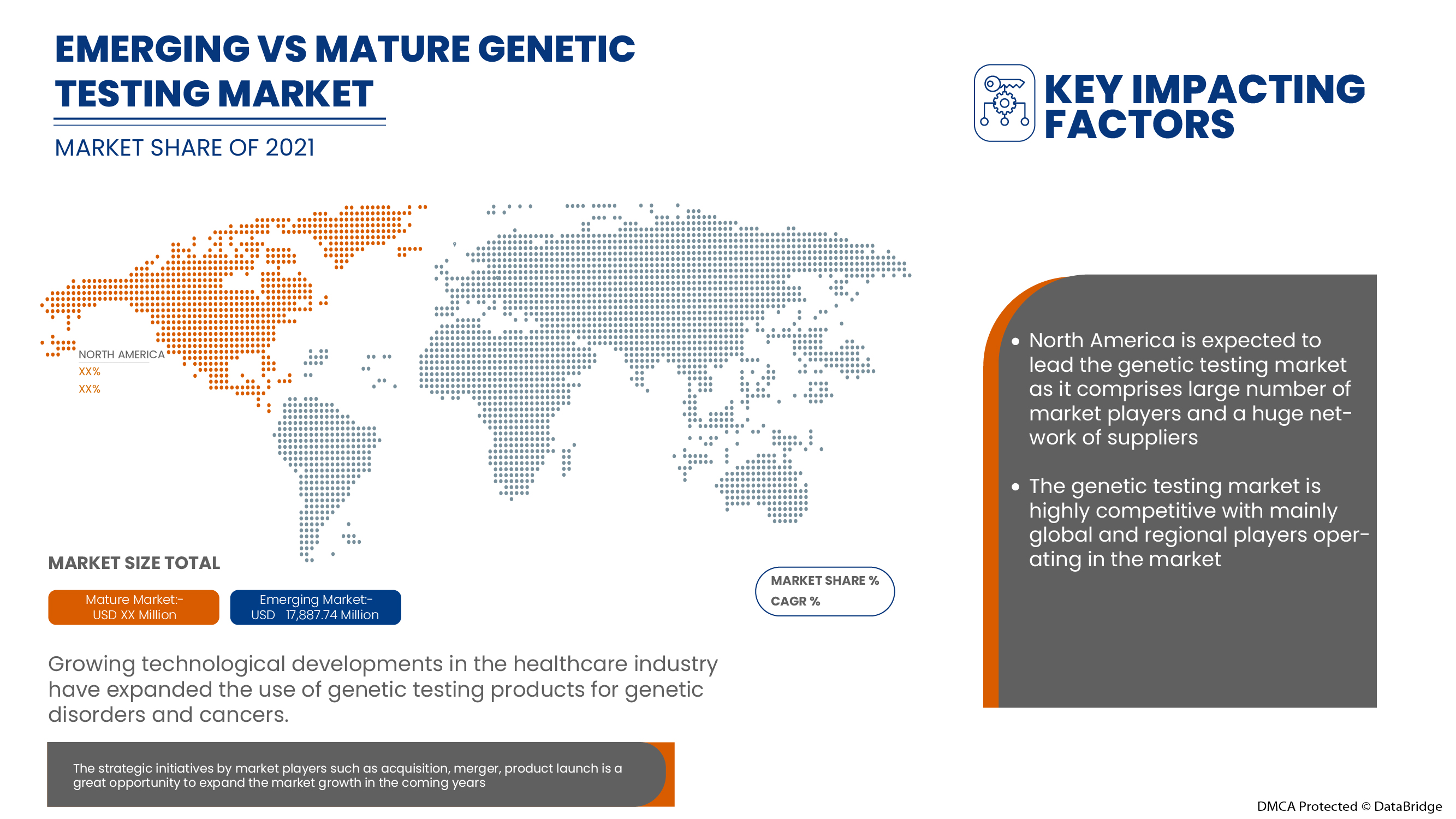
North America genetic testing market report provides details of market share, new developments, and product pipeline analysis, the impact of domestic and localized market players, analyses opportunities in terms of emerging revenue pockets, changes in market regulations, product approvals, strategic decisions, product launches, geographic expansions, and technological innovations in the market. To understand the analysis and the market scenario contact us for an analyst brief, our team will help you create a revenue impact solution to achieve your desired goal. The scalability and business expansion of the retail units in the developing countries of various region and partnership with suppliers for safe distribution of machine and drugs products are the major drivers which propelled the demand of the market in the forecast period.
Market Definition
Genetic testing is a kind of medical test that identifies changes in genes, chromosomes, or proteins. The outcome of a genetic test can confirm or rule out a suspected genetic condition or aid in determining a person’s chance of developing or passing on a genetic disorder. Over 77,000 genetic tests are currently in use, and others are being developed.
The increasing innovations and technologies and rising number of players in the market, and novel product launches are also propelling the growth of the North America genetic testing market.
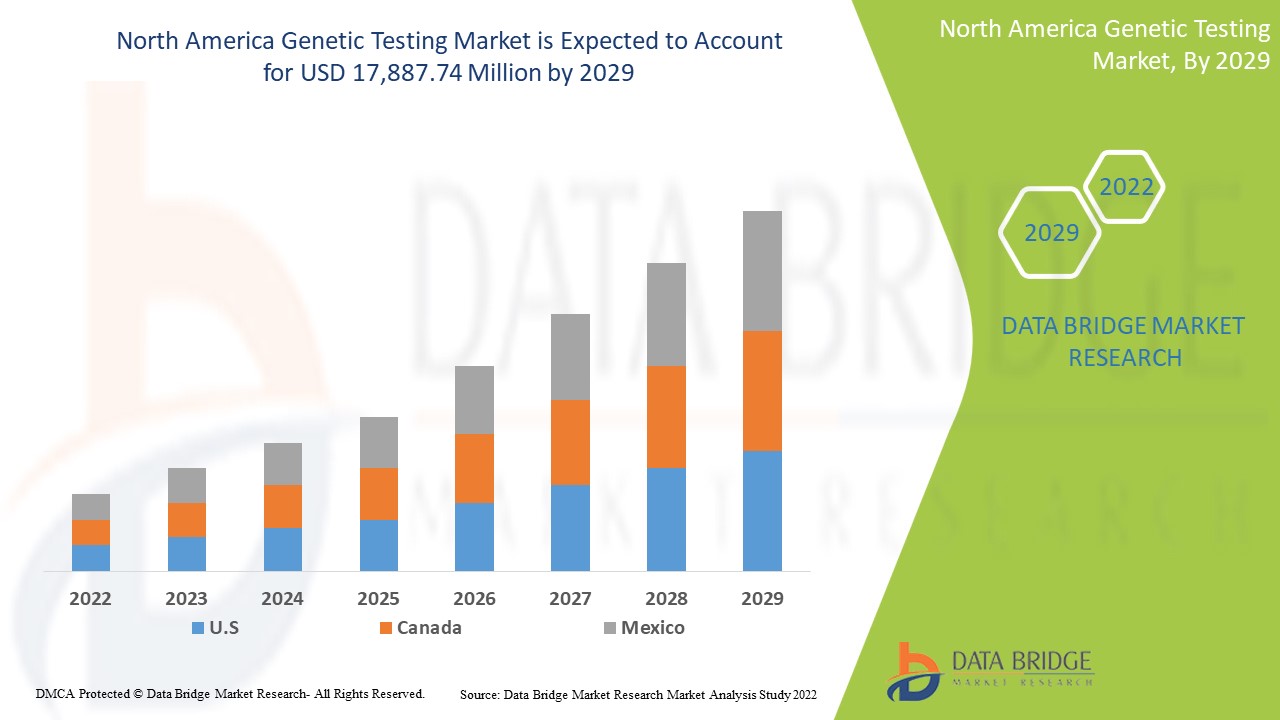
North America genetic testing market is expected to gain market growth in the forecast period of 2022 to 2029. Data Bridge Market Research analyses that the market is growing with a CAGR of 15.6% in the forecast period of 2022 to 2029 and is expected to reach USD 17,887.74 million by 2029 from USD 5,688.94 million in 2021.
|
Report Metric |
Details |
|
Forecast Period |
2022 to 2029 |
|
Base Year |
2021 |
|
Historic Years |
2020 |
|
Quantitative Units |
Revenue in USD Million |
|
Segments Covered |
By Type (Carrier Testing, Diagnostic Testing, Prenatal Testing, New Born Screening, Predictive And Presymptomatic Testing, Other Types), Technology (DNA Sequencing (NGS-Based Testing), Polymerase Chain Reaction, Microarrays, Whole Genome Sequencing, Fluorescence In Situ Hybridization (FISH), Others), Diseases (Rare Genetic Disorder, Cancer, Cystic Fibrosis, Sickle Cell Anemia, Duchenne Muscular Dystrophy, Thalassemia, Huntington’s Disease, Fragile X Syndrome, Duchenne Muscular Dystrophy, Others) End User (Hospitals, Clinics, Diagnostic Centres, Private Clinics, Laboratory Service Providers, Private Laboratories) |
|
Countries Covered |
U.S., Canada, Mexico |
|
Market Players Covered |
Thermo Fisher Scientific Inc., Invitae Corporation, Bio-Rad Laboratories, Inc., PerkinElmer Inc., Illumina, Inc., QIAGEN, F. Hoffmann-La Roche Ltd., Fulgent Genetics, Myriad Genetics, Inc., Abbott, Eurofins Scientific, Sorenson Genomics, Biocartis, Cepheid ( A subsidiary of Danaher), PacBio, Otogenetics, BioReference, Sema4 OpCo, Inc., Natera, Inc. among others |
North America Genetic Testing Market Dynamics
Drivers
-
Growing Prevalence Of Genetic Diseases
Genetic disorders may cause such severe health problems that they are incompatible with life. In the most severe cases, these conditions may cause a miscarriage of an affected embryo or fetus. The rising prevalence of genetic diseases and birth defects boosts the demand for genetic testing
As per the article, Genetic disorders and congenital abnormalities: strategies for reducing the burden in the Region, 2022,
-
Genetic disorders and congenital abnormalities occur in about 2%-5% of all live births, which accounts for up to 30% of pediatric hospital admissions and cause about 50% of childhood deaths in industrialized countries
Therefore, this is raising the demand for genetic testing market.
-
Increase In The Adoption Of Next Generation Sequencing
As genomics-focused pharmacology continues to play a greater role in the treatment of various chronic diseases, especially cancer, next-generation sequencing (NGS) is evolving as a powerful tool for providing a deeper and more precise insight into the molecular underpinnings of individual tumors and specific receptors.
NGS offers advantages in accuracy, sensitivity, and speed compared to traditional methods that have the potential to make a significant impact on the field of oncology. Because NGS can assess multiple genes in a single assay, the need to order multiple tests to identify the causative mutation is eliminated.
For instance,
-
NGS has been also explored for comprehensive profiling of pharmacogenetics with relevance to drug Pharmacokinetics and Pharmacodynamics, initial reports of 2017 suggest that this technology may represent a reliable and efficient tool to discover both common and rare genetic variations in these genes.
Thus, this is expected to act as a driver for the growth of the genetic testing market.
Opportunities
-
Rising Disposable Income
The expense of money used by a country on its healthcare and its growth rate over time is inclined by a wide variety of economic and social factors including the financing arrangements and structure of the organization of the health system. In particular, there is a strong association between the complete income level of a country and how much the population of that country spends on health care.
Also, the strategic initiatives taken by key market players will provide structural integrity and future opportunities for the genetic testing market in the forecast period of 2022-2029.
Restraints/Challenges
- High Cost Of Genetic Testing
Genetic testing can be expensive and may not be covered by some health insurance plans. The numerous genetic tests differ in costs as per the targeted disease for which it is tested.
According to Breastcancer.org, the cost of genetic testing for cancer can vary greatly and can be between $300 and $5,000. How much genetic testing costs can depend on the type of test as well as how complex it is.
Genetic testing can cost anywhere from $100 to more than $2,000, depending on the test's nature and complexity. If more than one test is required or numerous family members must be tested to acquire a significant result, the expense rises. The cost of neonatal screening varies by state.
Covid-19 Impact on the North America Genetic Testing Market
The COVID-19 has positively affected the market as many genetic and serological tests were conducted for COVID-19 which raises the demand for genetic testing during this period.
Recent Development
- In December 2021, Thermo Fisher Scientific Inc., announced that it has completed its acquisition of PPD, Inc., a leading global provider of clinical research services to the biopharma and biotech industry, for $17.4 billion. This acquisition helped to generate more revenue and boosted the market growth.
North America Genetic Testing Market Scope
North America genetic testing market is segmented into type, technology, diseases and end user. The growth amongst these segments will help you analyse meagre growth segments in the industries and provide the users with a valuable market overview and market insights to make strategic decisions to identify core market applications.
Type
- Diagnostic Testing
- Prenatal Testing
- New Born Screening
- Predictive and Presymptomatic Testing
- Carrier Testing
- Other Types
On the basis of type, the North America genetic testing market is segmented into diagnostic testing, prenatal testing, new born screening, predictive and presymptomatic testing, carrier testing and other types.
Technology
- Polymerase Chain Reaction
- DNA Sequencing (NGS-Based Testing)
- Whole Genome Sequencing
- Microarrays
- Fluorescence In Situ Hybridization (FISH)
- Others
On the basis of technology, the North America genetic testing market is segmented into DNA sequencing (NGS-based testing), polymerase chain reaction, microarrays, whole genome sequencing, fluorescence in situ hybridization (FISH), others.
Diseases
- Cancer
- Sickle Cell Anemia
- Thalassemia
- Rare Genetic Disorder
- Fragile X Syndrome
- Duchenne Muscular Dystrophy
- Huntington's Disease
- Cystic Fibrosis
- Others
On the basis of diseases, the North America genetic testing market is segmented into rare genetic disorder, cancer, cystic fibrosis, sickle cell anemia, duchenne muscular dystrophy, thalassemia, huntington’s disease, fragile X syndrome, other.
End User
- Hospitals
- Clinics
- Diagnostic Centers
- Private Clinics
- Laboratory Service Providers
- Private Laboratories
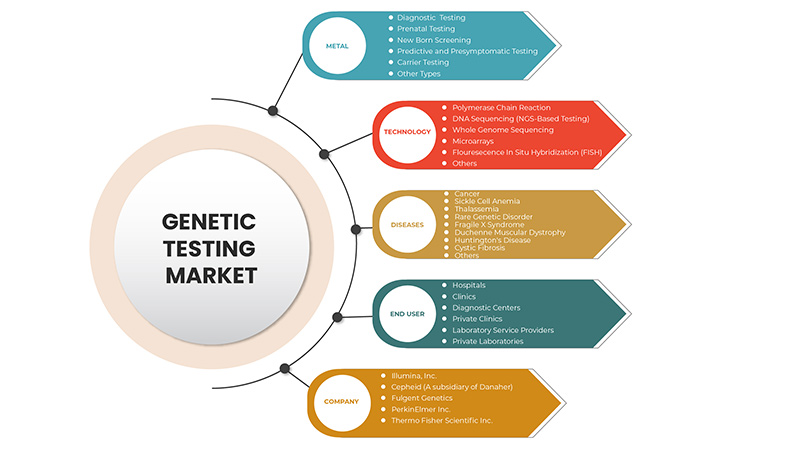
On the basis of end users, the North America genetic testing market is segmented into hospitals, clinics, diagnostic centers, private clinics, laboratory service providers, private laboratories.
Genetic Testing Market Regional Analysis/Insights
The genetic testing market is analysed and market size insights and trends are provided by country, type, technology, diseases and end user as referenced above.
The U.S. is the major dominating country in the market due to the growing prevalence of genetic disorders amongst the population in these countries. And they are dominating the genetic testing market in terms of market share and market revenue and will continue to flourish its dominance during the forecast period. This is due to genetic defects and chromosomal aberrations in the population in the regions and rapid research development is boosting the market.
The country section of the report also provides individual market impacting factors and changes in regulations in the market that impact the current and future trends of the market. Data points, such as new and replacement sales, country demographics, disease epidemiology, and import-export tariffs, are some of the major pointers used to forecast the market scenario for individual countries. In addition, the presence and availability of global brands and their challenges faced due to high competition from local and domestic brands, and impact of sales channels are considered while providing forecast analysis of the country data.
Competitive Landscape and Genetic Testing Market Share Analysis
The genetic testing market competitive landscape provides details about the competitors. Details included are company overview, company financials, revenue generated, market potential, investment in research and development, new market initiatives, global presence, production sites and facilities, production capacities, company strengths and weaknesses, product launch, product width and breadth, and application dominance. The above data points provided are only related to the companies' focus on the genetic testing market.
Some of the major players operating in the genetic testing market are Thermo Fisher Scientific Inc., Invitae Corporation, Bio-Rad Laboratories, Inc., PerkinElmer Inc., Illumina, Inc., QIAGEN, F. Hoffmann-La Roche Ltd., Fulgent Genetics, Myriad Genetics, Inc., Abbott, Eurofins Scientific, Sorenson Genomics, Biocartis, Cepheid (A subsidiary of Danaher), PacBio, Otogenetics, BioReference, Sema4 OpCo, Inc., Natera, Inc. among others
Research Methodology
Data collection and base year analysis are done using data collection modules with large sample sizes. The market data is analysed and estimated using market statistical and coherent models. In addition, market share analysis and key trend analysis are the major success factors in the market report. The key research methodology used by DBMR research team is data triangulation which involves data mining, analysis of the impact of data variables on the market, and primary (industry expert) validation. Apart from this, data models include Vendor Positioning Grid, Market Time Line Analysis, Market Overview and Guide, Company Positioning Grid, Company Market Share Analysis, Standards of Measurement, Global vs. Regional and Vendor Share Analysis. Please request analyst call in case of further inquiry.
SKU-
Obtenha acesso online ao relatório sobre a primeira nuvem de inteligência de mercado do mundo

- Painel interativo de análise de dados
- Painel de análise da empresa para oportunidades de elevado potencial de crescimento
- Acesso de analista de pesquisa para personalização e customização. consultas
- Análise da concorrência com painel interativo
- Últimas notícias, atualizações e atualizações Análise de tendências
- Aproveite o poder da análise de benchmark para um rastreio abrangente da concorrência
Metodologia de Investigação
A recolha de dados e a análise do ano base são feitas através de módulos de recolha de dados com amostras grandes. A etapa inclui a obtenção de informações de mercado ou dados relacionados através de diversas fontes e estratégias. Inclui examinar e planear antecipadamente todos os dados adquiridos no passado. Da mesma forma, envolve o exame de inconsistências de informação observadas em diferentes fontes de informação. Os dados de mercado são analisados e estimados utilizando modelos estatísticos e coerentes de mercado. Além disso, a análise da quota de mercado e a análise das principais tendências são os principais fatores de sucesso no relatório de mercado. Para saber mais, solicite uma chamada de analista ou abra a sua consulta.
A principal metodologia de investigação utilizada pela equipa de investigação do DBMR é a triangulação de dados que envolve a mineração de dados, a análise do impacto das variáveis de dados no mercado e a validação primária (especialista do setor). Os modelos de dados incluem grelha de posicionamento de fornecedores, análise da linha de tempo do mercado, visão geral e guia de mercado, grelha de posicionamento da empresa, análise de patentes, análise de preços, análise da quota de mercado da empresa, normas de medição, análise global versus regional e de participação dos fornecedores. Para saber mais sobre a metodologia de investigação, faça uma consulta para falar com os nossos especialistas do setor.
Personalização disponível
A Data Bridge Market Research é líder em investigação formativa avançada. Orgulhamo-nos de servir os nossos clientes novos e existentes com dados e análises que correspondem e atendem aos seus objetivos. O relatório pode ser personalizado para incluir análise de tendências de preços de marcas-alvo, compreensão do mercado para países adicionais (solicite a lista de países), dados de resultados de ensaios clínicos, revisão de literatura, mercado remodelado e análise de base de produtos . A análise de mercado dos concorrentes-alvo pode ser analisada desde análises baseadas em tecnologia até estratégias de carteira de mercado. Podemos adicionar quantos concorrentes necessitar de dados no formato e estilo de dados que procura. A nossa equipa de analistas também pode fornecer dados em tabelas dinâmicas de ficheiros Excel em bruto (livro de factos) ou pode ajudá-lo a criar apresentações a partir dos conjuntos de dados disponíveis no relatório.











