



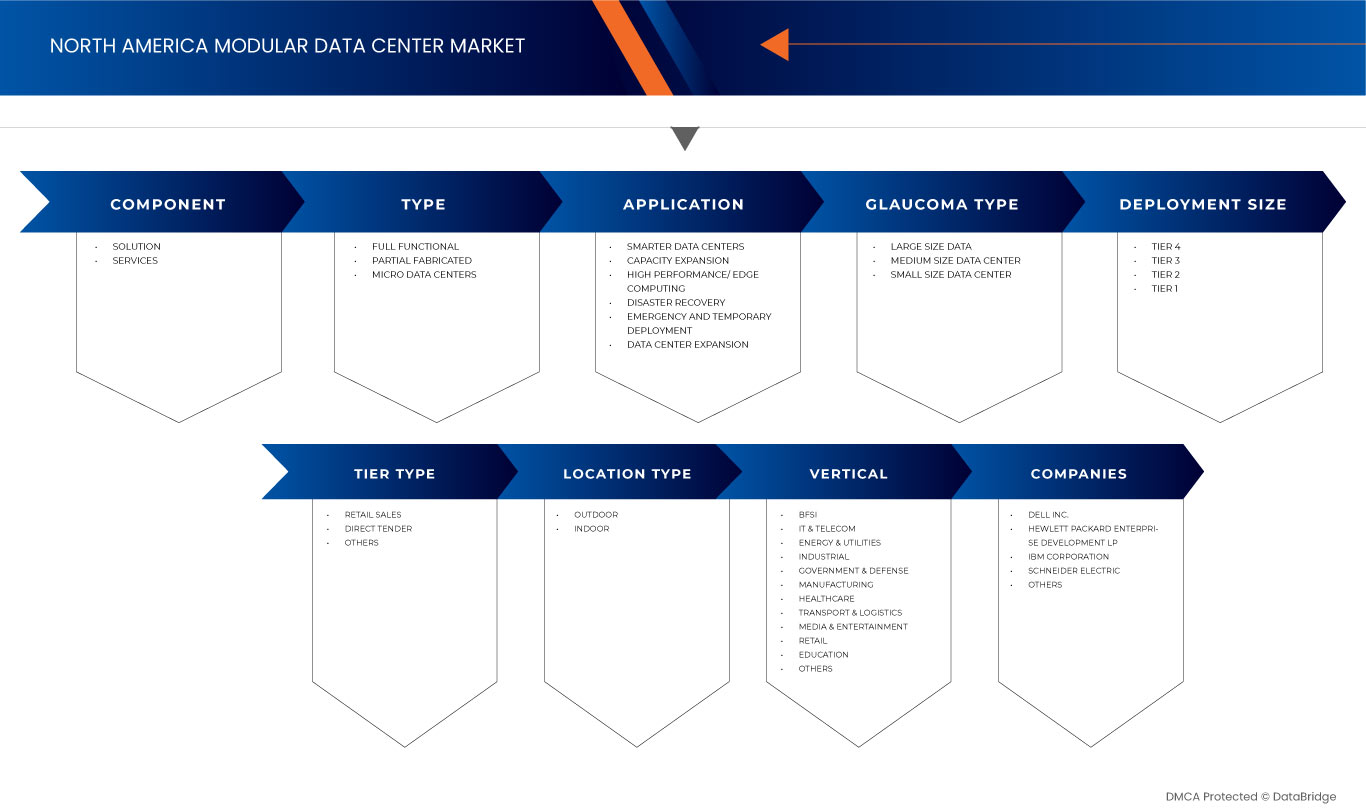
North America Modular Data Center Market, By Component (Solution and Services), Type (Full Functional, Partial Fabricated, and Micro Data Centers), Application (Smarter Data Centers, Capacity Expansion, High Performance/ Edge Computing, Disaster Recovery, Emergency and Temporary Deployment, and Data Center Expansion), Deployment Size (Large Size Data, Medium Size Data Center, and Small Size Data Center), Tier Type (Tier 4, Tier 3, Tier 2, and Tier 1), Location Type (Outdoor and Indoor), Vertical (BFSI, IT & Telecom, Energy & Utilities, Industrial, Government & Defense, Manufacturing, Healthcare, Transport & Logistics, Media & Entertainment, Retail, Education, and Others) – Industry Trends and Forecast to 2030.
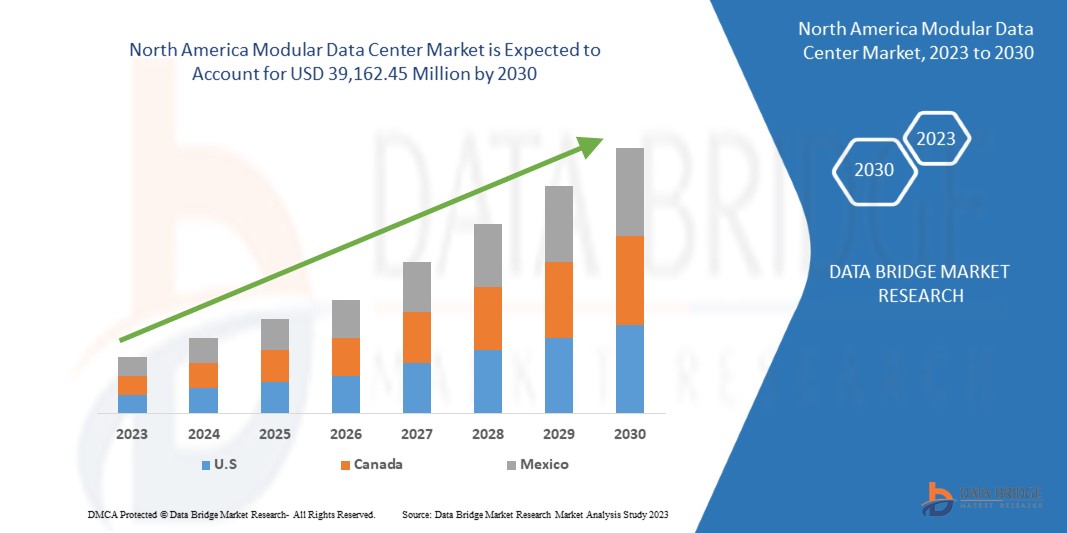
América do Norte Modular Data Center Análise de Mercado e Tamanho
Um data center modular é uma instalação pré-fabricada e pré-engenharia construída usando componentes padronizados. Ele pode ser facilmente transportado, implantado e escalado de acordo com os requisitos de uma organização. Ele é projetado para fornecer uma solução flexível e eficiente para a infraestrutura de data center de habitação, incluindo servidores, armazenamento, equipamentos de rede e sistemas de refrigeração.
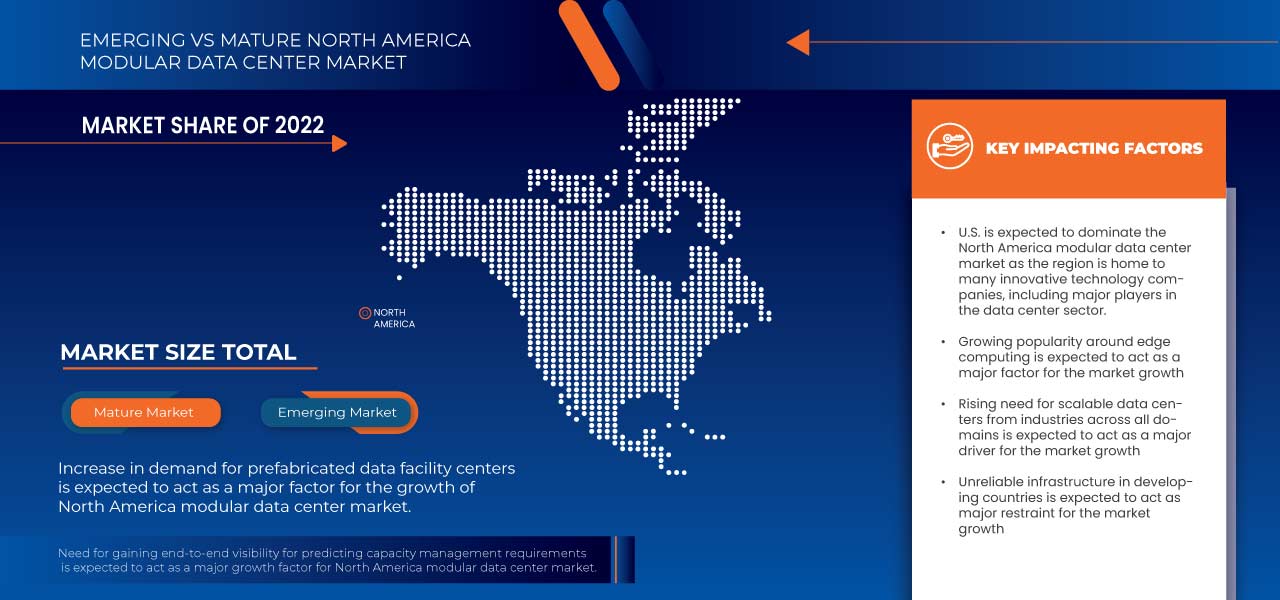
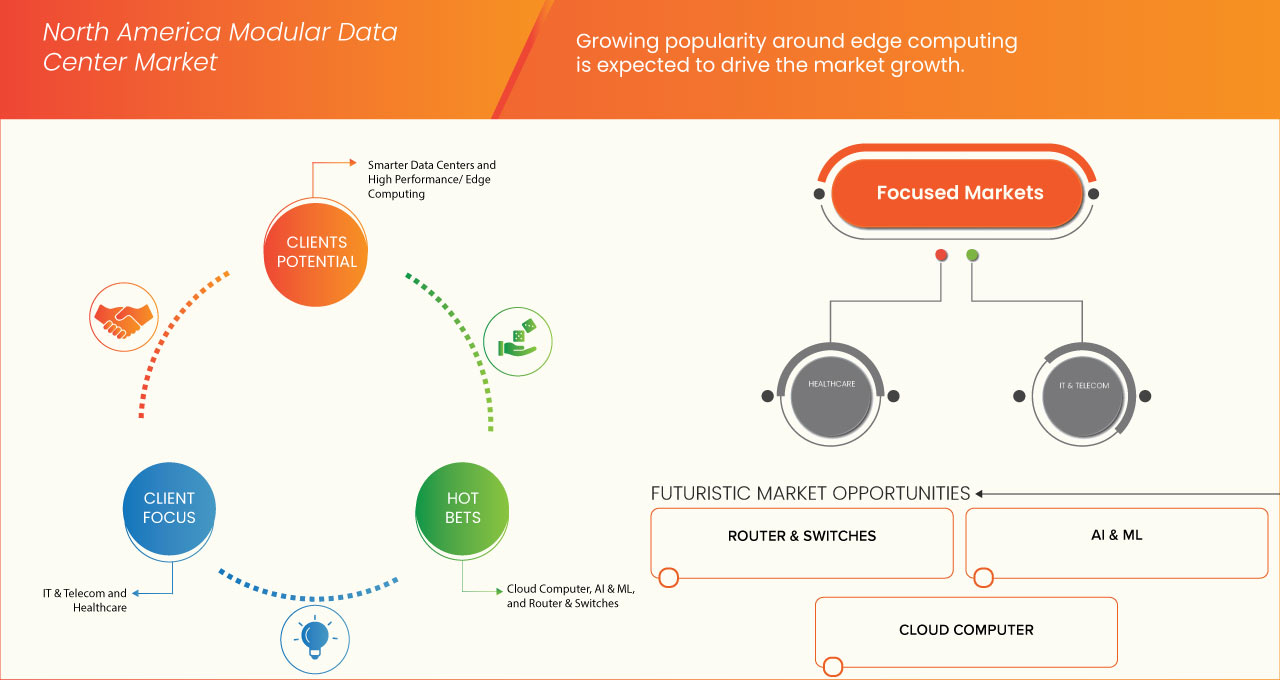
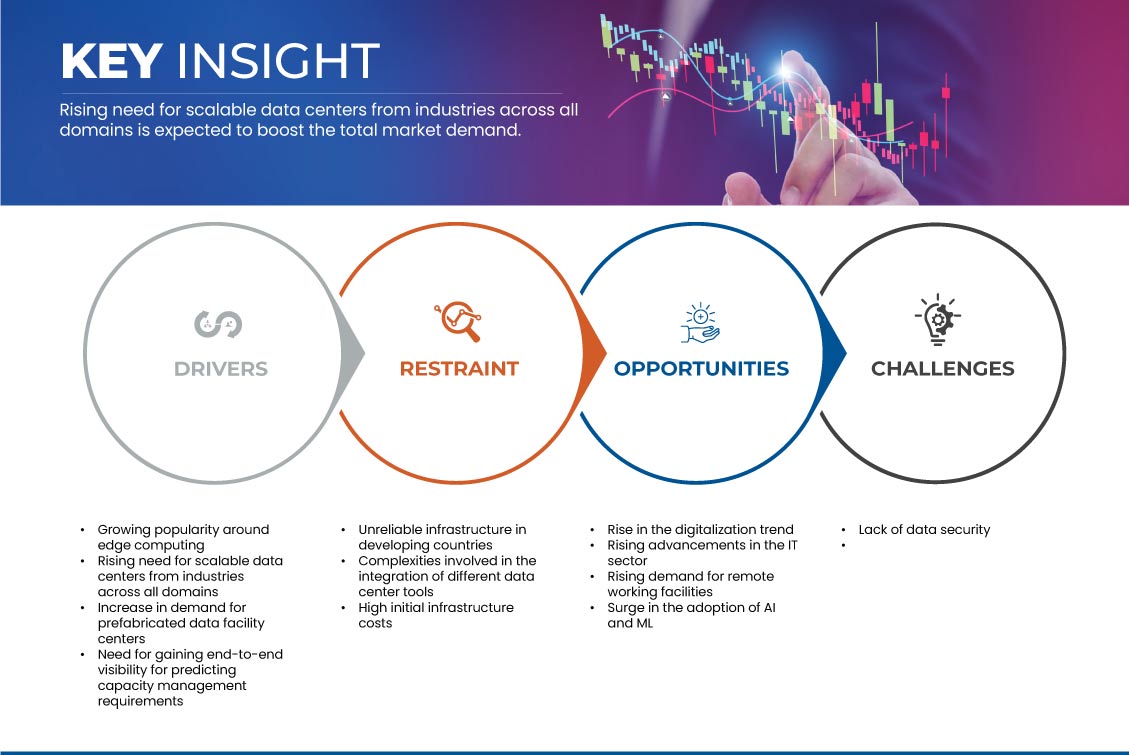
A crescente popularidade da computação de borda, a crescente necessidade de centros de dados escaláveis de indústrias em todos os domínios, o aumento da demanda por centros de instalação de dados pré-fabricados e a necessidade de ganhar visibilidade de ponta a ponta para prever requisitos de gerenciamento de capacidade são os principais fatores esperados para impulsionar o crescimento do mercado. No entanto, espera-se que infra-estrutura não confiável em países em desenvolvimento, complexidades envolvidas na integração de diferentes ferramentas de data center e altos custos iniciais de infraestrutura refreem o crescimento do mercado. O aumento das tendências de digitalização, os avanços no setor de TI, a crescente demanda por instalações de trabalho remotas e o aumento na adoção de IA e ML oferecem oportunidades para o crescimento do mercado. No entanto, espera-se que a falta de segurança dos dados crie um desafio para o crescimento do mercado.
Data Bridge Market Research analisa que o mercado modular de data centers da América do Norte deverá atingir US$ 39.162,45 milhões até 2030 de US$ 9.698,19 milhões em 2022, crescendo com um CAGR de 19,3% no período de previsão de 2023 a 2030. Vários atores do mercado estão envolvidos em exposições, prêmios e lançamentos de produtos para expandir seus negócios no mercado, que vem aumentando ao longo dos anos.
|
Metric de Relatório |
Detalhes |
|
Período de previsão |
2023 a 2030 |
|
Ano de base |
2022 |
|
Ano Histórico |
2021 (personalizável até 2015-2020) |
|
Unidades quantitativas |
Receitas em milhões de dólares |
|
Segmentos Cobertos |
Componente (Solução e Serviços), Tipo (Funcional Completo, Fabricado Parcial e Micro Data Centers), Aplicação (Centros de Dados Inteligentes, Expansão de Capacidade, Computação de Alta Performance/ Borda, Recuperação de Desastres, Implantação de Emergência e Temporária e Expansão de Data Center), Tamanho da Implantação (Dados de Tamanho Grande, Centro de Dados de Tamanho Médio e Centro de Dados de Tamanho Pequeno), Tipo de Nível (Tier 4, Tier 3, Tier 2, e Tier 1), Tipo de Localização (Exterior e Interior), Vertical (BFSI, IT & Telecom, Energia & Utilitários, Industrial, Governo & Defesa, Fabricação, Saúde, Transporte & Logística, Mídia & Entretenimento, Varejo, Educação e Outros) |
|
Países abrangidos |
EUA, Canadá e México |
|
Jogadores de mercado cobertos |
Dell Inc., Hewlett Packard Enterprise Development LP, IBM, Schneider Electric, Vertiv Group Corp., Cisco Systems, Inc., ZTE Corporation, Baselayer Technology, LLC., PCX Holding LLC, Box Modul, Eaton, Rittal GmbH & Co. KG, Cupertino Electric, Inc., Delta Electronics, Inc., Huawei Technologies Co., Ltd., e FiberHome, entre outros |
Definição do mercado
Os data centers modulares são projetados para oferecer flexibilidade, rápida implantação e eficiência de custo em comparação com os data centers tradicionais de tijolos e mortais. Eles são frequentemente usados quando as organizações exigem rápida expansão de sua capacidade de data center, soluções temporárias de data center ou em locais com espaço e infraestrutura limitados. O mercado de data centers modulares abrange vários aspectos, incluindo fabricação, distribuição, instalação e manutenção dessas unidades modulares e serviços relacionados, como consultoria, design e integração. Envolve vários participantes da indústria, incluindo fornecedores de soluções de data center, fabricantes de equipamentos, integradores de sistemas e prestadores de serviços.
América do Norte Modular Data Center Market Dynamics
Esta seção trata da compreensão dos motoristas de mercado, oportunidades, restrições e desafios. Tudo isso é discutido em detalhes abaixo:
Controladores
- A crescente popularidade da computação de bordas
A computação de borda é um paradigma de computação emergente que se refere a uma gama de redes e dispositivos. Esta tecnologia de computação aproxima a computação e o armazenamento de dados do dispositivo onde está sendo reunido. Além disso, as empresas que utilizam dados em tempo real não sofrem problemas de latência e podem economizar dinheiro.
À medida que as empresas alavancam cada vez mais a computação de bordas para suportar vários tipos de aplicações e sistemas, uma enorme quantidade de dados é gerada para a tomada de decisões. No entanto, enviar todos os dados para a nuvem pode resultar em latência. A computação de bordas pode direcionar respostas de subsegundos movendo tanto a computação quanto os dados mais próximos do usuário. Isso reduzirá a latência, minimizará as ameaças de dados e aumentará a largura de banda.
- Necessidade crescente de data centers escaláveis de indústrias em todos os domínios
Um data center na era da digitalização é muito importante, pois quase todos os negócios modernos e escritórios do governo precisam de seu data center. Dependendo das necessidades, cada instituição governamental e corporação pode optar por construir e gerenciar seu data center. Mesmo indústrias como educação, finanças, telecomunicações, varejistas e serviços de redes sociais que geram e processam toneladas de informações todos os dias, precisam de um data center. Portanto, essas indústrias precisam de data centers para executar suas operações. Se não conseguirem implantar, isso pode levar à perda de clientes e lucros. Existem quatro tipos de data centers, como data centers de localização, data centers empresariais, data centers de serviços gerenciados e data centers em nuvem.
Um data center eficaz deve ter sistemas que estão trabalhando juntos para alcançar melhores capacidades. A empresa pode funcionar eficientemente e contribuir para a economia quando sistemas como sistemas de combate a incêndios, gestão de integração, cabeamento integrado, sistemas de refrigeração, sistemas de alimentação, decorações de interiores, sistemas de gabinete e proteção contra surtos são todos combinados.
Oportunidade
- Aumento na tendência da digitalização
A digitalização ou o uso de processos digitais para melhorar as operações de negócios está aumentando com o uso de componentes relevantes para modernizar o negócio, levando à evolução do processo de trabalho e crescimento da receita para alcançar o sucesso futuro. Converter coisas não digitais em formatos digitais facilita o compartilhamento, a economia e a busca de informações, o que leva ainda mais à automação de operações de negócios, desenvolvendo fluxos de trabalho automáticos ou sequências de marketing.
A digitalização tem uma ampla gama de benefícios e requer manutenção adequada e equipamentos e infraestrutura adicionais para gerenciar o sistema de trabalho corretamente. Assim, esse processo inclui gerenciar dados coletados, salvar, processar, analisar, compartilhar e implementar muitas mais operações. No entanto, a digitalização simplifica e automatiza as principais operações de trabalho do negócio, mas cria uma necessidade de tecnologia avançada e infraestrutura.
Restrição/Desafio
- Infraestrutura não confiável em países em desenvolvimento
Um data center desempenha um papel significativo na TI precisa supervisionar e armazenar os tremendos ativos que são significativos para o trabalho consistente de qualquer associação. MDC é um item solitário, mas desempenha um papel colossal no presente negócio. Foi feito com vários componentes especializados. O trabalho principal de um data center é descobrir, guardar e organizar. A dependência, a eficácia, a segurança e o avanço consistente são os empregos significativos dos data centers.
Os volumes de investimento significativos e a qualidade e adequação dos serviços de infra-estrutura variam geralmente entre as nações. A experiência de milhões de indivíduos em todo o planeta mostra que apenas estar associado a redes de fundação não garante administrações confiáveis. Particularmente, as comunidades urbanas em rápido desenvolvimento em nações emergentes estão enfrentando os resultados difíceis de quadros inaceitáveis, muitas vezes a uma despesa maciça. O hardware maduro, o subfinanciamento, o suporte infeliz e a extensão rápida são uma parte das variáveis-chave que trazem frameworks de energia temperamental, água e desinfecção.
Evolução recente
- Em julho de 2023, a Digital Realty escolheu o software de sustentabilidade da IBM Corporation para revolucionar a análise de dados em seus data centers e escritórios globais. Este hub central facilitou a coleta, gerenciamento e extração de dados do ESG, auxiliando o rastreamento de progresso, identificação de melhorias, relatórios de desempenho e atender às necessidades de divulgação. A IBM ganhou uma vantagem valiosa ao ajudar clientes, como a Digital Realty a tomar decisões sustentáveis e orientadas por dados através do Envizi ESG Suite.
- Em junho de 2023, a Hewlett Packard Enterprise Development LP anunciou a parceria expandida com a Equinix para ampliar o portfólio de nuvem privada HPE GreenLake nos data centers da Equinix International Business Exchange (IBX). Essa parceria ajudará a empresa a trazer a melhor experiência em nuvem para data centers e melhorar o desempenho do sistema.
- Em maio de 2023, a Dell Inc. introduziu a plataforma de software Dell NativeEdge para garantir implantações de borda. Esta nova solução ajudará a empresa a simplificar, proteger e automatizar a infraestrutura de borda e a implantação de aplicativos. Além disso, isso ajudará a gerenciar os data centers e nuvens públicas.
América do Norte Modular Data Center Market Scope
O mercado de data center modular da América do Norte é segmentado em sete segmentos notáveis com base em componente, tipo, aplicação, tamanho de implantação, tipo de camada, tipo de localização e vertical. O crescimento entre esses segmentos irá ajudá-lo a analisar segmentos de crescimento escassos nas indústrias e fornecer aos usuários uma visão geral de mercado valiosa e insights de mercado para ajudá-los a tomar decisões estratégicas para identificar aplicações de mercado principais.
Componente
- Solução
- Serviços
Com base na componente, o mercado é segmentado em solução e serviços.
Tipo
- Funcional Pleno
- Fabricado parcial
- Micro Data Centers
Com base no tipo, o mercado é segmentado em pleno funcional, parcial fabricado e micro data centers.
Aplicação
- Centros de dados mais inteligentes
- Expansão de Capacidade
- Computação de Alto Desempenho/Edge
- Recuperação de desastres
- Implantação de emergência e temporária
- Expansão do Centro de Dados
Com base na aplicação, o mercado é segmentado em data centers mais inteligentes, expansão de capacidade, computação de alto desempenho / borda, recuperação de desastres, implantação de emergência e temporária, e expansão de data center.
Tamanho da implantação
- Dados de Tamanho Grande
- Centro de Dados de Tamanho Médio
- Centro de Dados de Tamanho Pequeno
Com base no tamanho da implantação, o mercado é segmentado em dados de tamanho grande, data center de tamanho médio e data center de tamanho pequeno.
Tipo de Nível
- Nível 1
- Nível 2
- Nível 3
- Nível 4
Com base no tipo de nível, o mercado é segmentado para o nível 4, para o nível 3, para o nível 2 e para o nível 1.
Tipo de Localização
- Exterior
- Interior
Com base no tipo de localização, o mercado é segmentado em exterior e interior.
Vertical
- BFSI
- TI & Telecom
- Energia e Utilitários
- Indústria
- Governo e Defesa
- Fabricação
- Cuidados de saúde
- Transporte e Logística
- Mídia e entretenimento
- Retalho
- Educação
- Outros
Com base na vertical, o mercado é segmentado em BFSI, TI e telecomunicações, energia e utilitários, industrial, governo e defesa, fabricação, saúde, transporte e logística, mídia e entretenimento, varejo, educação, entre outros.
América do Norte Modular Data Center Mercado Análise Regional/Insights
O mercado de data center modular da América do Norte é analisado e insights e tendências de tamanho do mercado são fornecidos pelo país, componente, tipo, aplicação, tamanho de implantação, tipo de camada, tipo de localização e vertical, como referenciado acima.
Os países abrangidos neste relatório de mercado são os EUA, Canadá e México.
Espera-se que os EUA dominem o mercado de data center modular da América do Norte devido à sua forte infraestrutura tecnológica, alta demanda por armazenamento de dados e a presença de grandes empresas de tecnologia. Sua economia digital em expansão, urbanização rápida e iniciativas governamentais apoiam a construção de data centers e o desenvolvimento de infraestrutura digital.
A secção «país» do relatório também fornece factores individuais de impacto no mercado e alterações na regulamentação do mercado que afectam as tendências actuais e futuras do mercado. Pontos de dados como análise de cadeia de valor a jusante e a montante, tendências técnicas, análise de cinco forças de Porter e estudos de caso são alguns dos indicadores usados para prever o cenário de mercado para cada país. Além disso, a presença e disponibilidade de marcas regionais e seus desafios enfrentados devido à grande ou escassa concorrência de marcas locais e nacionais, o impacto das tarifas nacionais e rotas comerciais são considerados ao fornecer análise de previsão dos dados da região.
Paisagem Competitiva e América do Norte Análise de mercado de data center modular
A paisagem competitiva do mercado de data center modular da América do Norte fornece detalhes dos concorrentes. Detalhes incluídos são visão geral da empresa, finanças da empresa, receita gerada, potencial de mercado, investimento em pesquisa e desenvolvimento, novas iniciativas de mercado, presença regional, locais de produção e instalações, capacidades de produção, pontos fortes e fracos da empresa, lançamento do produto, largura e amplitude do produto, e dominância da aplicação. Os dados fornecidos acima estão relacionados apenas com o foco das empresas relacionados com o mercado.
Alguns dos principais operadores de mercado que operam no mercado de data center modular da América do Norte são Dell Inc., Hewlett Packard Enterprise Development LP, IBM Corp., Schneider Electric, Vertiv Group Corp., Cisco Systems, Inc., ZTE Corporation, Baselayer Technology, LLC., PCX Holding LLC, Box Modul, Eaton, Rittal GmbH & Co. KG, Cupertino Electric, Inc., Delta Electronics, Inc., Huawei Technologies Co., Ltd., e FiberHome, entre outros.
SKU-
Obtenha acesso online ao relatório sobre a primeira nuvem de inteligência de mercado do mundo

- Painel interativo de análise de dados
- Painel de análise da empresa para oportunidades de elevado potencial de crescimento
- Acesso de analista de pesquisa para personalização e customização. consultas
- Análise da concorrência com painel interativo
- Últimas notícias, atualizações e atualizações Análise de tendências
- Aproveite o poder da análise de benchmark para um rastreio abrangente da concorrência
Índice
1 INTRODUÇÃO
1.1 OBJECTIVOS DO ESTUDO
1.2 DEFINIÇÃO DE MERCADO
1.3 VISÃO GERAL DO MERCADO MODULAR DE DADOS DA AMÉRICA DO NORTE
1.4 LIMITAÇÕES
1.5 MERCADOS ABRANGADOS
2 SEGMENTAÇÃO DO MERCADO
2.1 MERCADOS COBERTOS
2.2 ÂMBITO GEOGRÁFICO
2.3 ANOS CONSIDERADOS PARA O ESTUDO
2.4 MOEDA E PREÇOS
2.5 MODELO DE VALIDAÇÃO DE DADOS TRIPOD DBRR
2.6 INTERVENÇÕES PRIMÁRIAS COM OPINIÕES-CHAVE
2.7 GRIDE DE POSIÇÃO DO MERCADO DA DBRR
2.8 MODELIZAÇÃO MULTIVARIADA
2.9 CURVA COMPONENTE DA linha de vida
2.11 FONTES SEGUNDÁRIAS
2.12 ASSUNTOS
3 RESUMO
4 INSIGHTS PRÉMIO
5 VISÃO GERAL DO MERCADO
5. 1 CONDUTORES
5.1.1 CRIAÇÃO DA POPULARIDADE EM RELAÇÃO À COMPUTAÇÃO DE EDGE
5.1.2 NECESSIDADE DE RISE DE CENTROS DE DADOS ESCÁVEIS DE INDÚSTRIAS ATRAVÉS DE TODOS OS DOMÍNIOS
5.1.3 AUMENTO DA DEMANDA DOS CENTROS DE FABRICAÇÃO DE DADOS PREFABRICADOS
5.1.4 NECESSIDADE DE GANHO DE VISIBILIDADE FIM-TO-FIM PARA PREDICTAR REQUISITOS DE GESTÃO DA CAPACIDADE
5.2 RESTRUÇÕES
5.2.1 INFRA-ESTRUTURA INRELIÁVEL EM PAÍSES EM desenvolvimento
5.2.2 COMPLEXIDADES ENVOLVIDAS NA INTEGRAÇÃO DE FERRORIAS DE CENTRO DE DADOS
5.2.3 CUSTOS DE INFRA-ESTRUTURA INICIAIS ALTOS
5.3 OPORTUNIDADES
5.3.1 AUMENTO NA TREND DA DIGITALIZAÇÃO
5.3.2 RISING AVANCEMENTS NO SECTOR IT
5.3.3 DECISÕES DE RISCO PARA FACILIDADES DE TRABALHO REMOTAS
5.3.4 RELATIVO À APROVAÇÃO DE AI E ML
5.4 DESAFIOS
5.4.1 Escassez de segurança dos dados
6 MERCADO DO CENTRO DE DADOS MODULAR DA AMÉRICA DO NORTE, POR COMPONENTE
6.1 VISÃO GERAL
6. 2 SOLUÇÃO
6.2.1 TODOS EM UM
6.2.1.1 MÓDULO
MÓDULO ELÉCTICO
MÓDULO MECÂNICO 6.2.1.3
6.2.1.4 MÓDULO DE RECONHECIMENTO
MÓDULO DE PODER 6.2.1.5
6.2.2 INDIVIDUAL
6.2.2.1 20 FEET
6.2.2.2 20 a 40 pés
6.2.2.3 Mais de 40 pés
6.3 SERVIÇOS
6.3.1 INSTALAÇÃO E DESENVOLVIMENTO
6.3.2 MANUTENÇÃO E APOIO
6.3.3 CONSULTA
7 MERCADO MODULAR DE DADOS DA AMÉRICA DO NORTE, POR TIPO
7.1 VISÃO GERAL
7.2 FUNCIONAL TOTAL
7.3 PARCIAL FABRICADO
7.4 CENTROS DE DADOS MICRO
8 MERCADO DO CENTRO DE DADOS MODULAR DA AMÉRICA DO NORTE, POR APLICAÇÃO
8.1 VISÃO GERAL
8.2 CENTROS DE DADOS SMARTER
8.3 EXPANSÃO DE CAPACIDADE
8.4 ALTA DESEMPENHO/ COMPUTAÇÃO DE EDGE
8.5 RECUPERAÇÃO DE DESESTRECIMENTO
8.6 EMERGÊNCIA E DESENVOLVIMENTO TEMPORÁRIO
8.7 EXPANSÃO DO CENTRO DE DADOS
9 MERCADO DO CENTRO DE DADOS MODULAR DA AMÉRICA DO NORTE, POR DIMENSÃO DO DEPLOIMENTO
9.1 VISÃO GERAL
9.2 DADOS DE DIMENSÃO GERAL
9.3 CENTRO DE DADOS DE DIMENSÃO MÉDIO
9.4 CENTRO DE DADOS DE DIMENSÃO PEQUENAS
10 MERCADO DO CENTRO DE DADOS MODULAR DA AMÉRICA DO NORTE, POR TIPO TIER
10.1 VISÃO GERAL
10.2 TIER 4
10.3 TERCEIRO 3
10.4 TIER 2
10.5 TIER 1
11 MERCADO MODULAR DE DADOS DA AMÉRICA DO NORTE, POR TIPO DE LOCALIZAÇÃO
11.1 VISÃO GERAL
11.2 OUTDOOR
11.3 INDOOR
12 MERCADO MODULAR DE DADOS DA AMÉRICA DO NORTE, POR VERTICAL
12.1 VISÃO GERAL
12.2 BFSI
12.2.1 SOLUÇÃO
12.2.2 SERVIÇOS
12.3 IT & TELECOM
12.3.1 SOLUÇÃO
12.3.1.1 GRATUITO
12.3.1.2 SISTEMAS DE ÁGUA CHILADO
SISTEMA EVAPORATIVO AÉREO INDIRECTO
12.3.1.4 OUTROS
12.3.2 SERVIÇOS
12.4 ENERGIA E Utilidades
12.4.1 SOLUÇÃO
12.4.2 SERVIÇOS
12.5 INDUSTRIAL
12.5.1 SOLUÇÃO
12.5.2 SERVIÇOS
12.6 GOVERNO E DEFESA
12.6.1 SOLUÇÃO
12.6.2 SERVIÇOS
12,7 FABRICO
12.7.1 SOLUÇÃO
12.7.2 SERVIÇOS
12.8 SAÚDE
12.8.1 SOLUÇÃO
12.8.2 SERVIÇOS
12.9 LOGÍSTICAS E TRANSPORTES
12.9.1 SOLUÇÃO
12.9.2 SERVIÇOS
12.1 MEDIA & ENTERtainMENT
12.10.1 SOLUÇÃO
12.10.2 SERVIÇOS
12.11 RETALHO
12.11.1 SOLUÇÃO
12.11.2 SERVIÇOS
12.12 EDUCAÇÃO
12.12.1 SOLUÇÃO
12.12.2 SERVIÇOS
12.13 OUTRAS
13 MERCADO DO CENTRO DE DADOS MODULAR DA AMÉRICA DO NORTE, POR PAÍS
13.1 AMÉRICA DO NORTE
13.1.1 Estados Unidos
13.1.2 CANADÁ
13.1.3 MÉXICO
14 MERCADO DO CENTRO DE DADOS MODULAR DA AMÉRICA DO NORTE: PAISCAPE DA EMPRESA
14.1 ANÁLISE DA PARTICIPAÇÃO DA EMPRESA: AMÉRICA DO NORTE
15 ANÁLISE SWOT
16 PERFIL DA EMPRESA
16.1 PACKETT EMPRESA DE DESENVOLVIMENTO LP
16.1.1 EMPRESA SNAPSHOT
ANÁLISE DAS RECEITAS
16.1.3 PRODUTO PORTFÓLIO
16.1.4 DESENVOLVIMENTO RECENTE
16.2 GRUPO VERTIV CORP.
16.2.1 EMPRESA SNAPSHOT
16.2.2 ANÁLISE DAS RECEITAS
16.2.3 SOLUÇÃO PORTFÓlio
16.2.4 EVOLUÇÃO RECENTE
16,3 DELL INC.
16.3.1 EMPRESA SNAPSHOT
ANÁLISE DAS RECEITAS 16.3.2
16.3.3 SOLUÇÃO PORTFÓLIO
16.3.4 EVOLUÇÃO RECENTE
16.4 CORPORAÇÃO DA IBM
16.4.1 EMPRESA SNAPSHOT
16.4.2 ANÁLISE DAS RECEITAS
16.4.3 SOLUÇÃO PORTFÓLIO
16.4.4 EVOLUÇÃO RECENTE
16.5 SISTEMAS CISCO, INC.
16.5.1 EMPRESA SNAPSHOT
ANÁLISE DAS RECEITAS
16.5.3 PRODUTO PORTFÓLIO
16.5.4 EVOLUÇÃO RECENTE
16.6 TECNOLOGIA DE BASELAYER, LLC (A SUBSIDIÁRIO DE IE CORP.)
16.6.1 EMPRESA SNAPSHOT
16.6.2 PRODUTO PORTFÓLIO
16.6.3 DESENVOLVIMENTO RECENTE
16. 7 CAIXA MÓDULO
16.7.1 EMPRESA SNAPSHOT
16.7.2 SOLUÇÃO PORTFÓLIO
16.7.3 EVOLUÇÃO RECENTE
16,8 CUPERTINO ELECTRIC, INC.
16.8.1 EMPRESA SNAPSHOT
16.8.2 PRODUTO PORTFÓLIO
16.8.3 DESENVOLVIMENTO RECENTE
16,9 DELTA ELECTRONICS, INC.
16.9.1 EMPRESA SNAPSHOT
ANÁLISE DAS RECEITAS
16.9.3 SOLUÇÃO PORTFÓLIO
16.9.4 EVOLUÇÃO RECENTE
16.1 EATON
16.10.1 EMPRESA SNAPSHOT
ANÁLISE DAS RECEITAS
16.10.3 PRODUTO PORTFÓLIO
16.10.4 EVOLUÇÃO RECENTE
16.11 FIBERHOME
16.11.1 EMPRESA SNAPSHOT
16.11.2 PRODUTO PORTFÓLIO
16.11.3 DESENVOLVIMENTO RECENTE
16.12 TECNOLOGIAS HUAWEI CO., LTD.
16.12.1 EMPRESA SNAPSHOT
ANÁLISE DAS RECEITAS
16.12.3 PRODUTO PORTFOLIO
16.12.4 EVOLUÇÃO RECENTE
16.13 PCX Holding LLC
16.13.1 EMPRESA SNAPSHOT
16.13.2 PRODUTO PORTFÓLIO
16.13.3 EVOLUÇÃO RECENTE
16.14 RITTAL GMBH & CO. KG
16.14.1 EMPRESA SNAPSHOT
16.14.2 SOLUÇÃO PORTFÓLIO
16.14.3 DESENVOLVIMENTOS RECENTES
16.15 SCHNEIDER ELECTRIC
16.15.1 EMPRESA SNAPSHOT
ANÁLISE DAS RECEITAS
16.15.3 SOLUÇÃO PORTFÓLIO
16.15.4 EVOLUÇÃO RECENTE
16.16 CORPORAÇÃO ZTE
16.16.1 EMPRESA SNAPSHOT
ANÁLISE DAS RECEITAS
16.16.3 SOLUÇÃO PORTFÓLIO
16.16.4 DESENVOLVIMENTOS RECENTES
17 QUESTIONÁRIO
18 RELATÓRIOS RELACIONADOS
Lista de Tabela
QUADRO 1 DESPESAS DE COMPONENTES DE CENTRO DE DADOS DIFERENTES
QUADRO 2 MERCADO DO CENTRO DE DADOS MODULAR DA AMÉRICA DO NORTE, POR COMPONENTE, 2021-2030 (USD MILHÃO)
QUADRO 3 SOLUÇÃO DA AMÉRICA DO NORTE NO MERCADO DO CENTRO DE DADOS MODULAR, POR TIPO DE PRODUTO, 2021-2030 (MILION USD)
QUADRO 4 AMÉRICA DO NORTE TODOS NO MERCADO DO CENTRO DE DADOS MODULAR, POR TIPO DE PRODUTO, 2021-2030 (USD MILHÃO)
QUADRO 5 AMÉRICA DO NORTE INDIVIDUAL NO MERCADO DO CENTRO DE DADOS MODULAR, POR TIPO DE PRODUTO, 2021-2030 (USD MILHÃO)
QUADRO 6 SERVIÇOS DA AMÉRICA DO NORTE NO MERCADO DO CENTRO DE DADOS MODULAR, POR TIPO, 2021-2030 (USD MILHÃO)
QUADRO 7 MERCADO DO CENTRO DE DADOS MODULAR DA AMÉRICA DO NORTE, POR TIPO, 2021-2030 (USD MILHÃO)
QUADRO 8 MERCADO DO CENTRO DE DADOS MODULAR DA AMÉRICA DO NORTE, POR APLICAÇÃO, 2021-2030 (USD MILHÃO)
QUADRO 9 MERCADO DO CENTRO DE DADOS MODULAR DA AMÉRICA DO NORTE, POR DIMENSÃO DE DEPLOYMENT, 2021-2030 (USD MILHÃO)
QUADRO 10 MERCADO DO CENTRO DE DADOS MODULAR DA AMÉRICA DO NORTE, POR TIPO TIER, 2021-2030 (USD MILHÃO)
QUADRO 11 MERCADO DO CENTRO DE DADOS MODULAR DA AMÉRICA DO NORTE, POR TIPO DE LOCALIZAÇÃO, 2021-2030 (USD MILHÃO)
QUADRO 12 MERCADO DO CENTRO DE DADOS MODULAR DA AMÉRICA DO NORTE, POR VERTICAL, 2021-2030 (USD MILHÃO)
QUADRO 13 AMÉRICA DO NORTE BFSI NO MERCADO DO CENTRO DE DADOS MODULAR, POR COMPONENTE, 2021-2030 (USD MILHÃO)
QUADRO 14 AMÉRICA DO NORTE E TELECOM NO MERCADO DOS CENTROS DE DADOS MODULARES, POR COMPONENTE, 2021-2030 (USD MILHÃO)
QUADRO 15 SOLUÇÃO DA AMÉRICA DO NORTE NO MERCADO DO CENTRO DE DADOS MODULAR, POR TIPO DE RECOLORAÇÃO, 2021-2030 (USD MILHÃO)
QUADRO 16 ENERGIA E UtilidadeS DA AMÉRICA DO NORTE NO MERCADO DO CENTRO DE DADOS MODULAR, POR COMPONENTE, 2021-2030 (USD MILHÃO)
QUADRO 17 INDUSTRIAL DA AMÉRICA DO NORTE NO MERCADO DO CENTRO DE DADOS MODULAR, POR COMPONENTE, 2021-2030 (USD MILHÃO)
QUADRO 18
QUADRO 19 FABRICO DA AMÉRICA DO NORTE NO MERCADO DO CENTRO DE DADOS MODULAR, POR COMPONENTE, 2021-2030 (USD MILHÃO)
QUADRO 20 SAÚDE DA AMÉRICA DO NORTE NO MERCADO DO CENTRO DE DADOS MODULAR, POR COMPONENTE, 2021-2030 (USD MILHÃO)
QUADRO 21 TRANSPORTES E LOGÍSTICAS DA AMÉRICA DO NORTE NO MERCADO DO CENTRO DE DADOS MODULAR, POR COMPONENTE, 2021-2030 (USD MILHÃO)
QUADRO 22
QUADRO 23 RETALHO DA AMÉRICA DO NORTE NO MERCADO DO CENTRO DE DADOS MODULAR, POR COMPONENTE, 2021-2030 (USD MILHÃO)
QUADRO 24 EDUCAÇÃO DA AMÉRICA DO NORTE NO MERCADO DO CENTRO DE DADOS MODULAR, POR COMPONENTE, 2021-2030 (USD MILHÃO)
QUADRO 25 MERCADO DO CENTRO DE DADOS MODULAR DA AMÉRICA DO NORTE, POR PAÍS, 2021-2030 (USD MILHÃO)
QUADRO 26 MERCADO DO CENTRO DE DADOS MODULAR DA AMÉRICA DO NORTE, POR COMPONENTE, 2021-2030 (USD MILHÃO)
QUADRO 27 SOLUÇÃO DA AMÉRICA DO NORTE NO MERCADO DO CENTRO DE DADOS MODULAR, POR TIPO DE PRODUTO, 2021-2030 (USD MILHÃO)
QUADRO 28 AMÉRICA DO NORTE TODOS NO MERCADO DO CENTRO DE DADOS MODULAR, POR TIPO DE PRODUTO, 2021-2030 (USD MILHÃO)
QUADRO 29 AMÉRICA DO NORTE INDIVIDUAL NO MERCADO DO CENTRO DE DADOS MODULAR, POR TIPO DE PRODUTO, 2021-2030 (USD MILHÃO)
QUADRO 30 SERVIÇOS DA AMÉRICA DO NORTE NO MERCADO DO CENTRO DE DADOS MODULAR, POR TIPO DE PRODUTO, 2021-2030 (USD MILHÃO)
QUADRO 31 MERCADO DO CENTRO DE DADOS MODULAR DA AMÉRICA DO NORTE, POR TIPO, 2021-2030 (USD MILHÃO)
QUADRO 32 MERCADO DO CENTRO DE DADOS MODULAR DA AMÉRICA DO NORTE, POR APLICAÇÃO, 2021-2030 (USD MILHÃO)
QUADRO 33 MERCADO DO CENTRO DE DADOS MODULAR DA AMÉRICA DO NORTE, POR DIMENSÃO DE DEPLOYMENT, 2021-2030 (USD MILHÃO)
QUADRO 34 MERCADO DO CENTRO DE DADOS MODULAR DA AMÉRICA DO NORTE, POR TIPO TIER, 2021-2030 (USD MILHÃO)
QUADRO 35 MERCADO DO CENTRO DE DADOS MODULAR DA AMÉRICA DO NORTE, POR TIPO DE LOCALIZAÇÃO, 2021-2030 (USD MILHÃO)
QUADRO 36 MERCADO DO CENTRO DE DADOS MODULAR DA AMÉRICA DO NORTE, POR VERTICAL, 2021-2030 (USD MILHÃO)
QUADRO 37 AMÉRICA DO NORTE BFSI NO MERCADO DO CENTRO DE DADOS MODULAR, POR COMPONENTES, 2021-2030 (USD MILHÃO)
QUADRO 38
QUADRO 39: SOLUÇÃO DA AMÉRICA DO NORTE NO MERCADO DOS CENTROS DE DADOS MODULARES, POR TIPO DE COLOCAÇÃO, 2021-2030 (USD MILHÃO)
QUADRO 40 ENERGIA E UtilidadeS DA AMÉRICA DO NORTE NO MERCADO DO CENTRO DE DADOS MODULAR, POR COMPONENTES, 2021-2030 (USD MILHÃO)
QUADRO 41 INDUSTRIAL DA AMÉRICA DO NORTE NO MERCADO DO CENTRO DE DADOS MODULAR, POR COMPONENTES, 2021-2030 (USD MILHÃO)
QUADRO 42
QUADRO 43 FABRICAÇÃO DA AMÉRICA DO NORTE NO MERCADO DO CENTRO DE DADOS MODULAR, POR COMPONENTES, 2021-2030 (USD MILHÃO)
QUADRO 44 SAÚDE DA AMÉRICA DO NORTE NO MERCADO DO CENTRO DE DADOS MODULAR, POR COMPONENTES, 2021-2030 (USD MILHÃO)
QUADRO 45 TRANSPORTES E LOGÍSTICAS DA AMÉRICA DO NORTE NO MERCADO DO CENTRO DE DADOS MODULAR, POR COMPONENTES, 2021-2030 (USD MILHÃO)
QUADRO 46
QUADRO 47 RETALHO DA AMÉRICA DO NORTE NO MERCADO DO CENTRO DE DADOS MODULAR, POR COMPONENTES, 2021-2030 (USD MILHÃO)
QUADRO 48 EDUCAÇÃO DA AMÉRICA DO NORTE NO MERCADO DO CENTRO DE DADOS MODULAR, POR COMPONENTES, 2021-2030 (USD MILHÃO)
QUADRO 49 MERCADO DO CENTRO DE DADOS MODULAR DOS EUA, POR COMPONENTE, 2021-2030 (USD MILHÃO)
QUADRO 50 SOLUÇÃO DOS EUA NO MERCADO DO CENTRO DE DADOS MODULAR, POR TIPO DE PRODUTO, 2021-2030 (MILION USD)
QUADRO 51 TODOS OS EUA NO MERCADO DO CENTRO DE DADOS MODULAR, POR TIPO DE PRODUTO, 2021-2030 (USD MILHÃO)
QUADRO 52 INDIVIDUAL DOS EUA NO MERCADO DO CENTRO DE DADOS MODULAR, POR TIPO DE PRODUTO, 2021-2030 (MILION USD)
QUADRO 53 SERVIÇOS DOS EUA NO MERCADO DO CENTRO DE DADOS MODULAR, POR TIPO DE PRODUTO, 2021-2030 (USD MILHÃO)
QUADRO 54 MERCADO DE CENTRO DE DADOS MODULAR DOS EUA, POR TIPO, 2021-2030 (USD MILHÃO)
QUADRO 55 MERCADO DO CENTRO DE DADOS MODULAR DOS EUA, POR PEDIDO, 2021-2030 (USD MILHÃO)
QUADRO 56 MERCADO DOS CENTROS DE DADOS MODULAR DOS EUA, POR DIMENSÃO DO DEPLOYMENT, 2021-2030 (USD MILHÃO)
QUADRO 57 MERCADO DOS CENTROS DE DADOS MODULAR DOS EUA, POR TIPO TIER, 2021-2030 (USD MILHÃO)
QUADRO 58 MERCADO DOS CENTROS DE DADOS MODULAR DOS EUA, POR TIPO DE LOCALIZAÇÃO, 2021-2030 (USD MILHÃO)
QUADRO 59 MERCADO DOS CENTROS DE DADOS MODULAR DOS EUA, POR VERTICAL, 2021-2030 (USD MILHÃO)
QUADRO 60 BFSI DOS EUA NO MERCADO DO CENTRO DE DADOS MODULAR, POR COMPONENTES, 2021-2030 (USD MILHÃO)
QUADRO 61
QUADRO 62
QUADRO 63 ENERGIA E UtilidadeS DOS EUA NO MERCADO DO CENTRO DE DADOS MODULAR, POR COMPONENTES, 2021-2030 (USD MILHÃO)
QUADRO 64 INDUSTRIAL DOS EUA NO MERCADO DO CENTRO DE DADOS MODULAR, POR COMPONENTES, 2021-2030 (USD MILHÃO)
QUADRO 65
QUADRO 66
QUADRO 67
QUADRO 68 TRANSPORTES E LOGÍSTICAS DOS EUA NO MERCADO DOS CENTROS DE DADOS MODULARES, POR COMPONENTES, 2021-2030 (USD MILHÃO)
QUADRO 69
QUADRO 70 RETALHO DOS EUA NO MERCADO DO CENTRO DE DADOS MODULAR, POR COMPONENTES, 2021-2030 (USD MILHÃO)
QUADRO 71 EDUCAÇÃO DOS EUA NO MERCADO DO CENTRO DE DADOS MODULAR, POR COMPONENTES, 2021-2030 (USD MILHÃO)
QUADRO 72 MERCADO DO CENTRO DE DADOS MODULAR DO CANADÁ, POR COMPONENTE, 2021-2030 (USD MILHÃO)
QUADRO 73 SOLUÇÃO DO CANADA NO MERCADO DO CENTRO DE DADOS MODULAR, POR TIPO DE PRODUTO, 2021-2030 (USD MILHÃO)
QUADRO 74 CANADA TODOS NO MERCADO DO CENTRO DE DADOS MODULAR, POR TIPO DE PRODUTO, 2021-2030 (USD MILHÃO)
QUADRO 75 CANADA INDIVIDUAL NO MERCADO DO CENTRO DE DADOS MODULAR, POR TIPO DE PRODUTO, 2021-2030 (USD MILHÃO)
QUADRO 76 SERVIÇOS DO CANADA NO MERCADO DO CENTRO DE DADOS MODULAR, POR TIPO DE PRODUTO, 2021-2030 (USD MILHÃO)
QUADRO 77 MERCADO DO CENTRO DE DADOS MODULAR DO CANADÁ, POR TIPO, 2021-2030 (USD MILHÃO)
QUADRO 78 MERCADO DO CENTRO DE DADOS MODULAR DO CANADÁ, POR APLICAÇÃO, 2021-2030 (USD MILHÃO)
QUADRO 79 MERCADO DO CENTRO DE DADOS MODULAR DO CANADÁ, POR DIMENSÃO DE DEPLOYMENT, 2021-2030 (USD MILHÃO)
QUADRO 80 MERCADO DO CENTRO DE DADOS MODULAR DO CANADÁ, POR TIPO TIER, 2021-2030 (USD MILHÃO)
QUADRO 81 MERCADO DO CENTRO DE DADOS MODULAR DO CANADÁ, POR TIPO DE LOCALIZAÇÃO, 2021-2030 (USD MILHÃO)
QUADRO 82 MERCADO DO CENTRO DE DADOS MODULAR DO CANADÁ, POR VERTICAL, 2021-2030 (USD MILHÃO)
QUADRO 83 CANADA BFSI NO MERCADO DO CENTRO DE DADOS MODULAR, POR COMPONENTES, 2021-2030 (USD MILHÃO)
QUADRO 84 CANADA IT & TELECOM NO MERCADO DO CENTRO DE DADOS MODULAR, POR COMPONENTES, 2021-2030 (USD MILHÃO)
QUADRO 85 SOLUÇÃO DO CANADÁ NO MERCADO DO CENTRO DE DADOS MODULAR, POR TIPO DE RECOLORAÇÃO, 2021-2030 (USD MILHÃO)
QUADRO 86 ENERGIA E UtilidadeS DO CENTRAL DE DADOS MODULAR, POR COMPONENTES, 2021-2030 (USD MILHÃO)
QUADRO 87 INDUSTRIAL DO CANADA NO MERCADO DO CENTRO DE DADOS MODULAR, POR COMPONENTES, 2021-2030 (USD MILHÃO)
QUADRO 88 GOVERNO E DEFESA DO CENTRAL DE DADOS MODULAR, POR COMPONENTES, 2021-2030 (USD MILHÃO)
QUADRO 89 FABRICO DO CANADÁ NO MERCADO DO CENTRO DE DADOS MODULAR, POR COMPONENTES, 2021-2030 (USD MILHÃO)
QUADRO 90
QUADRO 91 TRANSPORTES E LOGÍSTICAS DO CENTRAL DE DADOS MODULAR, POR COMPONENTES, 2021-2030 (USD MILHÃO)
QUADRO 92
QUADRO 93 RETALHO DO CANADÁ NO MERCADO DO CENTRO DE DADOS MODULAR, POR COMPONENTES, 2021-2030 (USD MILHÃO)
QUADRO 94 EDUCAÇÃO DO CANADÁ NO MERCADO DO CENTRO DE DADOS MODULAR, POR COMPONENTES, 2021-2030 (USD MILHÃO)
QUADRO 95 MERCADO DO CENTRO DE DADOS MODULAR DO MÉXICO, POR COMPONENTE, 2021-2030 (USD MILHÃO)
QUADRO 96 SOLUÇÃO MEXICO NO MERCADO DO CENTRO DE DADOS MODULAR, POR TIPO DE PRODUTO, 2021-2030 (USD MILHÃO)
QUADRO 97 MEXICO TODOS NO MERCADO DO CENTRO DE DADOS MODULAR, POR TIPO DE PRODUTO, 2021-2030 (MILION USD)
QUADRO 98 MEXICO INDIVIDUAL NO MERCADO DO CENTRO DE DADOS MODULAR, POR TIPO DE PRODUTO, 2021-2030 (MILION USD)
QUADRO 99 SERVIÇOS MEXICO NO MERCADO DO CENTRO DE DADOS MODULAR, POR TIPO DE PRODUTO, 2021-2030 (USD MILHÃO)
QUADRO 100 MERCADO DO CENTRO DE DADOS MODULAR DO MÉXICO, POR TIPO, 2021-2030 (USD MILHÃO)
QUADRO 101 MERCADO DO CENTRO DE DADOS MODULAR DO MÉXICO, POR APLICAÇÃO, 2021-2030 (USD MILHÃO)
QUADRO 102 MERCADO DO CENTRO DE DADOS MODULAR DO MÉXICO, POR DIMENSÃO DE DEPLOYMENT, 2021-2030 (USD MILHÃO)
QUADRO 103 MERCADO DE CENTRO DE DADOS MÓDULOS DO MÉXICO, POR TIPO TIER, 2021-2030 (USD MILHÃO)
QUADRO 104 MERCADO DO CENTRO DE DADOS MODULAR DO MÉXICO, POR TIPO DE LOCALIZAÇÃO, 2021-2030 (USD MILHÃO)
QUADRO 105 MERCADO DO CENTRO DE DADOS MODULAR DO MÉXICO, POR VERTICAL, 2021-2030 (USD MILHÃO)
QUADRO 106 MEXICO BFSI NO MERCADO DO CENTRO DE DADOS MODULAR, POR COMPONENTES, 2021-2030 (USD MILHÃO)
QUADRO 107 MEXICO IT & TELECOM NO MERCADO DO CENTRO DE DADOS MODULAR, POR COMPONENTES, 2021-2030 (USD MILHÃO)
QUADRO 108 SOLUÇÃO DO MÉXICO NO MERCADO DO CENTRO DE DADOS MODULAR, POR TIPO DE RECOLORAÇÃO, 2021-2030 (USD MILHÃO)
QUADRO 109 ENERGIA E UtilidadeS MEXICO NO MERCADO DOS CENTROS DE DADOS MODULAR, POR COMPONENTES, 2021-2030 (USD MILHÃO)
QUADRO 110 INDUSTRIAL MEXICO NO MERCADO DE CENTRO DE DADOS MODULAR, POR COMPONENTES, 2021-2030 (USD MILHÃO)
QUADRO 111 GOVERNO E DEFESA MEXICO NO MERCADO DOS CENTROS DE DADOS MODULAR, POR COMPONENTES, 2021-2030 (USD MILHÃO)
QUADRO 112 FABRICAÇÃO MEXICO NO MERCADO DOS CENTROS DE DADOS MODULARES, POR COMPONENTES, 2021-2030 (USD MILHÃO)
QUADRO 113 CARE DE SAÚDE MEXICO NO MERCADO DO CENTRO DE DADOS MODULAR, POR COMPONENTES, 2021-2030 (USD MILHÃO)
QUADRO 114 TRANSPORTES E LOGÍSTICAS MEXICOS NO MERCADO DO CENTRO DE DADOS MODULAR, POR COMPONENTES, 2021-2030 (USD MILHÃO)
QUADRO 115 MEXICO MEDIA & ENTERTAINEMENT NO MERCADO DE CENTRO DE DADOS MODULAR, POR COMPONENTES, 2021-2030 (USD MILHÃO)
QUADRO 116 RETALHO MEXICO NO MERCADO DO CENTRO DE DADOS MODULAR, POR COMPONENTES, 2021-2030 (USD MILHÃO)
QUADRO 117 EDUCAÇÃO MEXICO NO MERCADO DO CENTRO DE DADOS MODULAR, POR COMPONENTES, 2021-2030 (USD MILHÃO)
Lista de Figura
FIGURA 1 MERCADO DO CENTRO DE DADOS MODULAR DA AMÉRICA DO NORTE: SEGMENTAÇÃO
FIGURA 2 MERCADO DO CENTRO DE DADOS MODULAR DA AMÉRICA DO NORTE: TRIANGULAÇÃO DE DADOS
FIGURA 3 MERCADO DO CENTRO DE DADOS MODULAR DA AMÉRICA DO NORTE: ANÁLISE DE DROCOS
FIGURA 4 MERCADO DO CENTRO DE DADOS MODULAR DA AMÉRICA DO NORTE: ANÁLISE REGIONAL DO MERCADO DOS PAÍSES VS
FIGURA 5 MERCADO DO CENTRO DE DADOS MODULAR DA AMÉRICA DO NORTE: ANÁLISE DE INVESTIGAÇÃO DA EMPRESA
FIGURA 6 MERCADO DO CENTRO DE DADOS MODULAR DA AMÉRICA DO NORTE: DEMOGRAFIAS DE ENTREVISTAS
FIGURA 7 MERCADO DO CENTRO DE DADOS MODULAR DA AMÉRICA DO NORTE: GRIDE DE POSIÇÃO DO MERCADO DA DBRM
FIGURA 8 MERCADO DO CENTRO DE DADOS MODULAR DA AMÉRICA DO NORTE: MODELIZAÇÃO MULTIVARIADA
FIGURA 9 MERCADO DO CENTRO DE DADOS MODULAR DA AMÉRICA DO NORTE: CURVA DE LINHA DE VIDA COMPONENTE
FIGURA 10 MERCADO DO CENTRO DE DADOS MODULAR DA AMÉRICA DO NORTE: PEDIDO DE MERCADO
FIGURA 11 MERCADO DO CENTRO DE DADOS MODULAR DA AMÉRICA DO NORTE: SEGMENTAÇÃO
FIGURA 12 NECESSIDADES DE RISE DE CENTROS DE DADOS CALÁVEIS DE INDÚSTRIAS ATRAVÉS DE TODOS OS DOMÍNIOS E AUMENTOS EM DEMÍNIO DE CENTROS DE FABRICAÇÃO DE DADOS PRÉ-FABRICADOS Estão a conduzir o mercado de CENTRO DE DADOS MODULAR NO PERÍODO ANTES DE 2023 A 2030
FIGURA 13 SEGMENTO DE SOLUÇÃO
FIGURA 14 DIRECTORES, RESTRUMENTOS, OPORTUNIDADES E DESAFIOS DO MERCADO MÓDULO GLOBAL DE DADOS
FIGURA 15 NÚMERO DE UTILIZADORES INTERNET GLOBALMENTE
FIGURA 16 MERCADO DO CENTRO DE DADOS MODULAR DA AMÉRICA DO NORTE: POR COMPONENTE, 2022
FIGURA 17 MERCADO DO CENTRO DE DADOS MODULAR DA AMÉRICA DO NORTE, POR TIPO, 2022
FIGURA 18 MERCADO DO CENTRO DE DADOS MODULAR DA AMÉRICA DO NORTE, POR PEDIDO, 2022
FIGURA 19 MERCADO DO CENTRO DE DADOS MODULAR DA AMÉRICA DO NORTE, POR DIMENSÃO DE DEPLOYMENT, 2022
FIGURA 20 MERCADO DO CENTRO DE DADOS MODULAR DA AMÉRICA DO NORTE: POR TIPO TIER, 2022
FIGURA 21 MERCADO DO CENTRO DE DADOS MODULAR DA AMÉRICA DO NORTE: POR TIPO DE LOCALIZAÇÃO, 2022
FIGURA 22 MERCADO DO CENTRO DE DADOS MODULAR DA AMÉRICA DO NORTE: POR VERTICAL, 2022
FIGURA 23 MERCADO DO CENTRO DE DADOS MODULAR DA AMÉRICA DO NORTE: SNAPSHOT (2022)
FIGURA 24 MERCADO DO CENTRO DE DADOS MODULAR DA AMÉRICA DO NORTE: POR PAÍS (2022)
FIGURA 25 MERCADO DO CENTRO DE DADOS MODULAR DO NORTE: POR PAÍS (2023 e 2030)
FIGURA 26 MERCADO DO CENTRO DE DADOS MODULAR DO NORTE: POR PAÍS (2022 e 2030)
FIGURA 27 MERCADO DO CENTRO DE DADOS MODULAR DA AMÉRICA DO NORTE: POR COMPONENTE (2023-2030)
FIGURA 28 MERCADO DO CENTRO DE DADOS MODULAR DA AMÉRICA DO NORTE: 2022 (%)

Metodologia de Investigação
A recolha de dados e a análise do ano base são feitas através de módulos de recolha de dados com amostras grandes. A etapa inclui a obtenção de informações de mercado ou dados relacionados através de diversas fontes e estratégias. Inclui examinar e planear antecipadamente todos os dados adquiridos no passado. Da mesma forma, envolve o exame de inconsistências de informação observadas em diferentes fontes de informação. Os dados de mercado são analisados e estimados utilizando modelos estatísticos e coerentes de mercado. Além disso, a análise da quota de mercado e a análise das principais tendências são os principais fatores de sucesso no relatório de mercado. Para saber mais, solicite uma chamada de analista ou abra a sua consulta.
A principal metodologia de investigação utilizada pela equipa de investigação do DBMR é a triangulação de dados que envolve a mineração de dados, a análise do impacto das variáveis de dados no mercado e a validação primária (especialista do setor). Os modelos de dados incluem grelha de posicionamento de fornecedores, análise da linha de tempo do mercado, visão geral e guia de mercado, grelha de posicionamento da empresa, análise de patentes, análise de preços, análise da quota de mercado da empresa, normas de medição, análise global versus regional e de participação dos fornecedores. Para saber mais sobre a metodologia de investigação, faça uma consulta para falar com os nossos especialistas do setor.
Personalização disponível
A Data Bridge Market Research é líder em investigação formativa avançada. Orgulhamo-nos de servir os nossos clientes novos e existentes com dados e análises que correspondem e atendem aos seus objetivos. O relatório pode ser personalizado para incluir análise de tendências de preços de marcas-alvo, compreensão do mercado para países adicionais (solicite a lista de países), dados de resultados de ensaios clínicos, revisão de literatura, mercado remodelado e análise de base de produtos . A análise de mercado dos concorrentes-alvo pode ser analisada desde análises baseadas em tecnologia até estratégias de carteira de mercado. Podemos adicionar quantos concorrentes necessitar de dados no formato e estilo de dados que procura. A nossa equipa de analistas também pode fornecer dados em tabelas dinâmicas de ficheiros Excel em bruto (livro de factos) ou pode ajudá-lo a criar apresentações a partir dos conjuntos de dados disponíveis no relatório.











