


亚太按级别(工业等级、医药等级)、纯度(90-99%、40-60%、其他)、生产工艺(乙炔甘醇、乙炔等的氧化物)、包装(瓶子、鼓子、杰瑞肯斯、复合中型散货箱、散货箱)、应用(Cross-Linking、化学中间体等)、最终用途化学品(二羟基乙烯铀(DHEU)、2-Imidazolidinone、多肽甘醇(GPAM)、谷氧酸、谷氧淀粉酸、谷氧苯醇还原、谷氧反应、谷氧氟化物、谷氧氟化物、谷氧氟化物、谷氧基、谷氧氟化物、谷氧氟化物、谷氧、谷氧氟化物、谷氧基、谷氧氟化物、谷氧、谷氧基、谷硫和谷氧基、谷硫、谷硫、谷硫化物、谷硫化物、谷硫和谷硫化物、谷硫化物、
亚太Glyoxal市场规模和概况是什么
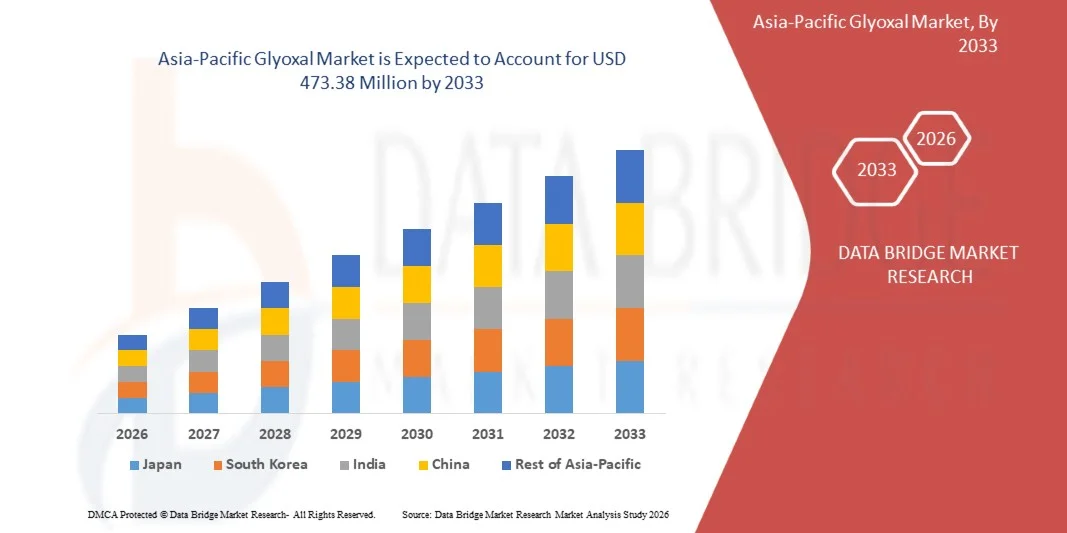
- 根据数据桥市场研究分析,亚太Glyoxal市场的规模被估价为:2025年27.48亿美元并可望达到4.7338亿美元, 以美元计CAGR为 6.1%.预测期间
- 在纺织业中,越来越多地使用甘醇作为交叉连接剂,这是推动整个区域需求的主要因素。
- 纸和包装越来越多地用于湿力和地表处理应用,进一步加强了市场覆盖面。
市场大小和预测
- 亚太市场价值(2025):(单位:千美元)
- 预期市场价值(2033年):4.7338亿美元
- 预测CAGR(2026-2033): 6.1%
亚太甘醇市场分析
- 亚太银河市场为各种行业提供服务,包括纺织品、纸张、树脂、药品、化妆品和水处理。 需求是由其强大的交叉性能和作为特有和性能化学制剂的关键中间体的作用所驱动的。
- 纺织品加工活动的增加、纸张包装消费的增加以及生态友好树脂的日益使用是需求的主要驱动力。 扩大制药制造和制定更严格的废水处理条例,进一步支持全世界持续的甘油消费。
- 市场由多国化学品生产商和区域制造商组成。 竞争的基础是产品纯度、具体应用等级、定价、供应可靠性以及关键最终用户行业遵守环境和安全条例。
- 中国主导了亚太胶原市场,拥有43.69%的市场份额,由大规模制造能力,低生产成本,丰富的原材料供给所驱动. 纺织,树脂,造纸,皮革等行业下游需求强劲,加上化学品供应链完善,进一步加强了市场主导.
- 预计2025年,工业品级部分将主导亚太甘油市场,其份额为81.39%,因为它被广泛用于制造树脂、粘合剂和纸张处理化学品。 该部分得益于大规模工业应用的高需求以及批量生产的成本效益,使它成为比其他级别更可取的选择.
报告范围和亚太甘油市场分割
|
属性 |
亚太Glyoxal关键市场透视 |
|
覆盖部分 |
|
|
涵盖国家 |
亚太
|
|
关键市场玩家 |
|
|
市场机会 |
|
|
添加数据信息集的值 |
除了对市场价值、增长率、分块化、地域覆盖和主要参与者等市场假设的深刻见解外,数据桥市场研究编写的市场报告还包括进口出口分析、生产能力概览、生产消费分析、价格趋势分析、气候变化假设、供应链分析、价值链分析、原材料/可消耗品概览、供应商选择标准、PESTLE分析、波特分析以及监管框架。 |
亚太胶原市场的主要趋势是什么
“将甘油用作纺织加工的交叉连接剂。”
- Glyoxal由于能够提高织物的性能而不影响纹理或舒适感,因此在纺织加工中被越来越多地用作交叉连接剂.
- 它能提高皱度耐受性,维稳性,折叠性恢复,以及容易护理的特性,特别是在棉花和纤维素基织物中.
- Glyoxal 与现有的整形工艺相兼容并具有成本效益,使它成为大规模纺织制造业的首选
- 工业报告(nbinno.com, Silver Fern Chemical, AlphaChem.biz, Ataman Chemical, 2025)强调了它在提高织物强度,耐湿性,以及纺织品和皮革耐久性等方面的作用.
- 它的采用反映了服装业对耐久、耐皱和易于护理的织物的需求,支持增值的成品和一致的产品质量。
- 预计Glyoxal仍将是纺织品加工配方的重要组成部分,维持亚太Glyoxal市场的需求。
亚太银河市场动态
驱动程序
食品和饮料部门不断增长的需求
- 由于能增强湿力,地表耐久性,并能提高以纸为原料的产品的整体性能,因此在纸和包装中甘醇的采用正在增长.
- 它提高了水分耐受性,维稳定性,可打印性,以及结构完整性,使其对包装纸,纸板,和特有纸制品有价值.
- 工业报告(ChemCeed,NBINNO.com,IvySCI,2025)强调了甘醇在增强湿干强度,减少水吸收,以及提高纸和淀粉配方的抗拉强度等方面的作用.
- 其与各种纸张分级和表面处理的相容性使制造商能够生产出能承受湿润或湿润条件的高质量,耐用和实用的包装纸.
- 随着食品、消费品和工业部门对可靠包装的需求不断增长,预计甘醇仍将是全球纸张和包装市场湿力增强和表面处理的关键剂。
限制/挑战
由于高活性和稳定性敏感性,处理的复杂性
- 甘醇的处理因其化学活性高和对储存和环境条件的敏感性而带来重大挑战。 不当储存、温度波动或长期暴露于空气和光线中,可导致聚合或降解,因此需要严格的安全规程、专门的储存解决方案和受控制的运输方法。 这些要求增加了业务费用并需要熟练人员,特别是在中小型制造设施。
- 例如,如Amzole India Pvt. Ltd.在2025年7月所报道的,甘氨酸40%的安全数据表强调其高度活性,以及急需专门处理以防止聚合,刺激性接触,以及与强氧化剂和碱基等不相容物质的反应. 同样地,ChamSpider在2025年4月的文献中强调,甘醇能与空气,水和氢氧化钠等化学剂发生剧烈反应,使得有控制的储存,谨慎的运输,以及严格的安全措施在处理过程中至关重要.
- 这些处理的复杂性直接影响到储存、运输和运营成本,对较小的制造商构成特别的挑战。 尽管有这些限制,由于甘醇的多用途和功能效益,它继续被广泛用于纺织品、纸张、粘合剂和化学中间体。
- 因此,对甘醇的反应性特性进行认真管理对于安全和高效地利用这种特性至关重要,确保工业能够发挥其优势,同时减轻全球市场的风险。
亚太银河市场范围
市场按品级,纯度,生产工艺,包装应用,终端用化学品和终端用工业划分.
按职等
根据等级,亚太甘醇市场主要分为工业等级和制药等级。
到2026年,预计工业品级部分将主导市场,占总份额的81.30%。 这种支配地位归因于它在各种行业的广泛应用,包括纺织品、纸张加工、树脂、皮革处理和水处理。 工业级甘醇的高消费量得到了大规模作业的成本效益和效率的进一步支持。 此外,亚太区域工业和制造业部门迅速扩展,正在推动强劲而持续的需求。 因此,预计工业级甘醇仍将是区域市场的主要增长动力。
由药物合成需求上升、对高纯度化学品严格监管要求以及先进药物制造和特有应用的扩大所推动,亚太Glyoxal市场的药品等级部分预计将从2026年增长最快。 这些因素推动了在APIs中采用高品质的甘醇和有创意的药物配方.
纯洁
基于纯度,亚太胶原市场被划分为90-%-99%,40-%-60%等.
到2026年,40-%-60%的纯度部分预计将能支配市场,占总份额的72.34%. 这一部分的突出之处在于其性能优异、反应性更强,以及适合药物、特长树脂、纺织品和化妆品等先进应用。 其一贯的质量,加上遵守严格的工业标准,进一步推动了强劲而持续的需求。 此外,在效力和成本效益之间保持平衡,使制造商非常喜欢这种纯度范围。 因此,预计40-60%的纯度部分仍将是亚太甘醇市场增长的主要促进因素。
亚太甘醇市场90%-99%的纯度部分预计将在2026年至2033年期间出现最快的增长,其动力是其广泛使用。制药以及需要高纯度甘油的特有化学应用,同时对先进药物配方和符合规范的生产工艺的需求也日益增加。
按生产工艺分列
以生产工艺为基础,将亚太甘油市场分解为乙炔的催化氧化,乙炔的氧化等.
到2026年,乙烯基醇的催化氧化分解预计会支配市场,占总份额的89.61%. 该部门的主导地位是由其更高的生产效率、更好的产量控制以及与乙炔基工艺相比的低杂质水平所推动的。 此外,它提供了更好的安全,更符合环境要求,因此非常适合大规模制造。 这种方法的成本效益和可扩展性进一步加强了它在制造商中的偏好。 因此,催化氧化途径仍将是亚太甘醇市场增长的主要动力。
亚太甘醇市场“乙炔氧化”生产工艺部分预计将在2026至2033年期间增长最快,其驱动力是其能够生产出适用于医药和特有化学用途的高纯度甘醇,同时对先进药物配方的需求也日益增加并符合严格的质量和监管标准。
按包装
在包装的基础上,亚太胶原市场被分出成德龙斯,复合中型散货箱,布克,杰里坎斯和瓶子.
到2026年,"瓶子"部分有望主导市场,占总份额的38.28%. 这种支配地位可归因于其多用途性、易于处理和安全储存,特别是对于小数量申请而言。 瓶子特别适合药品,化妆品,和特有化学用途,其中精度和安全性至关重要. 此外,它们的广泛供应和具有成本效益的生产进一步推动了各行业的大力采用。 瓶装包装的方便和可靠性使制造商和最终用户都更愿意选择。
亚太甘醇市场“复合中型散货箱”包装部分预计将在2026至2033年期间增长最快,其驱动力是其储存和运输散装化学品的效率、安全和化学耐受性增强、以及药物、特有化学品和工业用户对需要可靠和大容量包装解决方案的需求增加。
通过应用程序
在包装的基础上,亚太胶原市场被分出成德龙斯,复合中型散货箱,布克,杰里坎斯和瓶子.
到2026年,"瓶子"机能部分有望主导市场,占总份额的64.31%. 这种支配地位可归因于其多用途性、易于处理和安全储存,特别是对于小数量申请而言。 瓶子特别适合药品,化妆品,和特有化学用途,其中精度和安全性至关重要. 此外,它们的广泛供应和具有成本效益的生产进一步推动了各行业的大力采用。 瓶装包装的方便和可靠性使制造商和最终用户都更愿意选择。
受树脂、聚合物和特用化学品需求增加、化学制造工业扩大以及工业应用和特用应用中将甘醇用作多能交叉连接和反应中间体的驱动,亚太甘醇市场化学中间应用部分预计将是2026年至2033年增长最快的部分。
按最终用途化学品分类
在最终用途化学品的基础上,亚太甘醇市场被分解为二羟基乙烯Urea(DHEU)、2-Imidazolidinone、Glyoxalated Polyacrylamide(GPAM)、Glyoxylic Acid、Glyoxal Starch、Glyoxal Phenol Resin、Glyoxal Urea Resin、Ethylene Glycol Diforme、Urea-Glyoxal Cententention、Quinoxaline衍生物、Meethol Glyoxal-Bis(2-Hydroxyoxyanil)、Glyoxal Sodium Bisulfite、Quinoxaline、2-Methylimidazole、Imidazole、Glycolul、Allantoin和Tetra甲基醇Acetylenediurea。
到2026年,二羟基乙烯Urea(DHEU)部分预计会主导市场,占总份额的17.79%. 其主导地位是由它在纺织加工、纸张处理和树脂制造方面的广泛适用所驱动的。 该部分得益于高活性、一致的性能以及与各种工业工艺的相容性。 此外,亚太区域对高质量纺织品和特有化学产品的需求日益增加,支持了亚太区域的强劲市场地位。 DHEU的成本效益和效率进一步加强了它在制造商和最终用户中的偏好。
亚太Glyoxal市场的2-Imidazolidinone最终用途化学品部门预计将是2026至2033年增长最快的部门,其驱动力是其在制药、农用化学品和特用化学品中的使用日益增加。 由于对高纯度甘油作为合成2-Imidazolidinone用于高级配方和符合监管要求的化学品生产的关键中间体的需求不断增加,其增长得到推动。
按最终用户
以最终用户为基础,亚太甘油市场分为纺织、纸浆和造纸、皮革、油漆和成衣、水处理、制药、家用产品、化妆品个人护理、包装、电气和电子、石油和天然气及其他。
到2026年,纺织部分有望主导市场,占总份额的33.55%. 这种增长的驱动力在于其被广泛用于织物修饰,皱纹阻力和防折叠治疗. 对耐用和优质纺织品的需求日益增加,加上服装和家用家具行业迅速扩大,进一步支持了市场增长。 此外,消费者对溢价和长效织物越来越偏好,推动了采用以甘醇为基础的解决办法。 因此,纺织品部分准备继续成为亚太甘醇市场的主要贡献者。
由于对能提高纸张耐用性和质量的湿强树脂和化学添加剂的需求不断增加,预计亚太区域甘醇市场的纸浆和纸末端用户部分在2026至2033年期间增长最快。 纸和包装业的扩大以及转向高性能、可持续的纸制品,都支持了增长。
亚太区域甘草市场区域分析
- 2026年,预计中国将主导亚太Glyoxal市场,占总收入的43.88%. 这一领导力的驱动力是快速工业化、纺织和造纸业的强劲需求、以及该国完备的化学制造基础设施。
- 由于纺织和造纸生产增加,工业应用扩大,对化学制造和增值加工的投资增加,印度正在迅速增长。
- 日本由于先进的化学制造技术、对特有化学品的高需求以及纺织、造纸和涂层工业采用甘醇而出现增长。
- 韩国正经历着强劲的工业基础所驱动的增长,在纺织品、纸张和粘合剂中越来越多地使用甘醇,并注重高性能和高附加值的化学应用。
印度 亚太甘醇市场透视
由于纺织和造纸生产扩大和工业应用不断增长,印度正在亚太甘醇市场迅速增长。 不断增长的对化学制造的投资和增值的完成工艺支持了更多的采用。 对耐用、易于护理的布料和高性能纸制品的需求正在推动市场扩张。 由于工业注重效率和质量,预计印度的亚太Glyoxal市场将继续上升。
日本 亚太银河市场透视
日本的亚太胶原市场正由先进的化学制造技术和对特有化学品的强劲需求所驱动。 在纺织品,纸张,涂料和粘合剂中采用甘醇支持了多种工业应用. 以高性能和有附加值的化学产品为重点,进一步推动市场发展. 预计持续的创新和技术进步将维持日本的市场增长。
市场的主要市场领导人是:
- Asis Science Pty有限公司(澳大利亚)
- 阿塔曼化学品(印度)
- BASF SE(德国)
- 投标化学(南非)
- Bisley Asia (M) Sdn Bhd (马来西亚)
- Eastman化学公司(美国)
- Fluorechem Limited (U. K. ) (英语).
- Fujifilm Wako纯化学公司(日本)
- 格伦特姆生命科学有限责任公司(英語:Glentham Life Science Limited (U.K.
- GetChem有限公司(中国)
- 汉娜仪器有限公司(美国)
- 媒体实验室(印度)
- Kanto Kagaku(日本)
- 凯米拉·奥伊(芬兰)
- 默克·克加阿(德国)
- Meru Chem Pvt.有限公司(印度)
- 穆比化学品(印度)
- 多化学专业私人有限公司(印度)
- 奥克伍德产品公司(美国)
- Otto Chemie Pvt.有限公司(印度)
- 牛津实验室精品化学有限公司(印度)
- 圣克鲁斯生物技术公司(美国)
- 萨索尔(南非)
- Silver Fern化学公司(美国)
- 瑟莫·费舍尔科学公司(美国)
- Univar 解决方案有限责任公司(美国)
- 韦尔切姆国际有限公司(德国)
- 志相化学(中国)
亚太甘醇市场的最新动态
- 2022年6月,Univar Solutions被任命为美国和加拿大的BASF化学中间体Glyoxal的独家经销商. 这一伙伴关系旨在为纺织品、消毒、纸张、皮革、化妆品和环氧工业的客户提供可靠的途径,获取BASF的Glyoxal,这是一种可生物降解的交叉连接剂,可增强各种配方的灵活性、粘度、抗皱性能、软化和水分耐性。 这一合作将帮助BASF加强其在北美的市场存在,利用Univar Solutions广泛的分销网络和供应链能力,确保Glyoxal的更广泛覆盖范围和可靠交付给客户。
- 1月,Merck KGaA宣布完成收购现为M化工股份有限公司运营的Mecaro的化学业务. 这一收购扩大了Merck的研发能力以及生产设施,加强了其在半导体前体材料和电子化学品方面的投资组合。 虽然这代表了Merck化学业务的战略增长,但收购与克氏(glyoxyl)产品无关,因为重点仍然是半导体和电子工业的先进材料,而不是特产醛化学.
- 2025年12月,Thermo Fisher Science Inc.宣布推出两款新产品"Gibco Bacto CD Supreme FPM Plus"和"Gibco Bacto CD Supreme Feed (2X)",扩展了该公司的"Gibco Bacto CD"由化学定义的介质线,以提升并简化了"Escherichia Coli"(E.coli)生物制造工作流程. 这些由化学定义的下一代制剂旨在支持质子DNA和重组蛋白的产量较高、性能一致和可扩展生产,特别是用于基因治疗和mRNA疫苗研制。
- 2025年5月,Alpha Chemika扩大了实验室试剂和精细化学品组合,增加了AR/GR/LR级产品和多样化的特有实验室化学品,以支持分析、制药和生命科学研究应用,加强了其对满足不断演变的全球研究和工业需求的承诺。
SKU-

目录
导言
1.1 研究的目标
1.2 市场定义
1.3 亚太天然气市场概况
1.4 限制
1.5 覆盖的市场
2个市场部分
2.1 覆盖的市场
2.2 地理范围
2.3 研究考虑的年份
2.4 紧缩和定价
2.5 DBMR 爆炸物数据评估模式
2.6 模拟模型
2.7 生产型生命线库
2.8 与关键舆论领袖进行的初步接触
2.9 DBMR市场定位
2.1 市场终端使用总额
2.11 第二个来源
2.12 假设
3 执行摘要
4 序言
4.1 亚太银河市场:价值分析
4.1.1 原材料和食品供应(5%-10%)
4.1.2 制造和加工(15-25%的增值)
4.1.3 分配与语言学(30-40%)
4.1.4 end-USE工业与销售
4.2 供应分析
4.2.1 材料储存和采购
4.2.2 加工和生产制造(生产)
4.2.3 供应的化学和分配语言(运输)
4.2.4 可再生能源和商用生物技术(销售和销售)
4.3 港口五军分析
4.3.1 买主/顾问-高级专员
4.3.2 新企业家的威胁 -- -- 有待改变
4.3.3 附属产品威胁 -- -- 改为高
4.3.4 供应商的优势 -- -- 模式
4.3.5 竞争激烈程度
5个市场概况
5.1 驾驶员
5.1.1 将GLYOXAL作为横跨方块使用直至完成。
5.1.2 采用纸质和包装工艺处理湿和固态治疗。
5.1.3 扩大化学品在医药和农业中的中间需求。
5.1.4 将低温-低温-低温-低温-低温-低温-低温-低温-低温-低温-低温-低温-低温-低温-低温-低温-低温-低温-低温-低温-低温-低温-低温-低温-低温-低温-低温-低温-低温-低温-低温-低温-低温-低温-低温-低温-低温-低温-低温-低温-低温-低温-低温-低温-低温-低温-低温-低温-低温-低温-低温-低温-低温-低温-低温-低温-低温-低温-低温-低温-低温-低温-低温-低温-低温-低温-低温-低温-低温-低温-低温-低温-低温-低温-低温-低温-低温-低温-低温-低温-低温-低温-低温-低温-
5.2 障碍
5.2.1 高度反应和稳定敏感性的组合
5.2.2 特定化学物质的适用性。
5.3 机会
5.3.1 联邦价格结构的波动
5.3.2 严格的环境和职业安全条例。
5.3.3 有限产品在价格竞争市场上的差异
5.4 挑战
5.4.1 特定基因组的移动和应用的发展。
5.4.2 新兴工业企业的需求
6 亚太GLYOXAL市场,按年份分列
6.1 概况
6.2 工业奖
6.3 保健费
6.4 2018-2033年亚洲-太平洋银河市场(千吨)
6.4.1 工业奖
6.4.2 医药费
6.5 2018-2033年按区域分列的甘露市场亚洲-太平洋工业总值(千美元)
6.5.1 亚太
6.5.2 北美
6.5.3 欧洲
6.5.4 中东和非洲
6.5.5 南美洲
6.6 2018-2033年按区域分列的甘露市场亚洲-太平洋地区健康水平(千美元)
6.6.1 亚太
6.6.2 北美
6.6.3 欧洲
6.6.4 中东和非洲
6.6.5 南美洲
7. 按目的分列的亚洲-太平洋银矿市场
7.1 概况
7.1.1 40%-60%
7.1.2 90%-99%
7.1.3 其他情况
7.2 2018-2033年按地区分列的亚洲-太平洋40%-60%的GLYOXAL市场(美元)
7.2.1 亚太
7.2.2 北美
7.2.3 欧洲
7.2.4 中东和非洲
7.2.5 南美洲
7.3 2018-2033年按区域分列的亚洲-太平洋90%-99%的GLYOXAL市场(美元)
7.3.1 亚太
7.3.2 北美
7.3.3 欧洲
7.3.4 中东和非洲
7.3.5 南美洲
7.4 2018-2033年按区域分列的GLYOXAL市场上的亚洲-太平洋其他国家(美元)
7.4.1 亚洲及太平洋
7.4.2 北美
7.4.3 欧洲
7.4.4 中东和非洲
7.4.5 南美洲
8 按生产过程分列的亚洲-太平洋甘露市场
8.1 概况
8.1.1 催化肾上腺素氧化
8.1.2 乙型六氯环己烷
8.1.3 其他情况
8.2 2018-2033年按区域分列的伽利略市场中乙烷的亚洲-全氟氧化物(千美元)
8.2.1 亚太
8.2.2 北美
8.2.3 欧洲
8.2.4 中东和非洲
8.2.5 南美洲
8.3 2018-2033年按区域分列的亚洲-太平洋在银河市场上的计算机数据(千美元)
8.3.1 亚太
8.3.2 北美
8.3.3 欧洲
8.3.4 中东和非洲
8.3.5 南美洲
8.4 2018-2033年按区域分列的GLYOXAL市场上的亚洲-太平洋其他国家(千美元)
8.4.1 亚太
8.4.2 北美
8.4.3 欧洲
8.4.4 中东和非洲
8.4.5 南美洲
9 亚太GLYOXAL市场,按包装
9.1 概况
9.2 销毁
9.3 中型散货箱
9.4比利时
9.5 牙买加
9.6 电池
9.7 按类型分列的2018-2033年吉打市场上的亚洲-太平洋药物(千美元)
9.7.1 草药
9.7.2 重装炸弹
9.7.3 内燃机
9.7.4 具有化学共性协调的废物
9.7.5 开放托普药
9.8 2018-2033年按区域分列的亚洲-太平洋市场上的药物(千美元)
9.8.1 亚洲及太平洋
9.8.2 北美
9.8.3 欧洲
9.8.4 中东和非洲
9.8.5 南美洲
9.9 按类型分列的2018-2033年GLYOXAL市场上的亚洲-太平洋复合中型散货箱(美元)
9.9.1 中型散货箱
9.9.2 RIGID 中型散货箱
9.9.3 有保险的中型散货箱
9.9.4 其他费用
9.1 按区域分列的2018-2033年GLYOXAL市场亚洲-太平洋综合中型散货箱(美元)
9.10.1 亚太
9.10.2 北美
9.10.3 欧洲
9.10.4 中东和非洲
9.10.5 南美洲
9.11 2018-2033年按区域分列的亚洲-太平洋在Glyoxal市场中的冲击(千美元)
9.1.1.1 亚太
9.11.2 北美
9.11.3 欧洲
9.11.4 中东和非洲
9.11.5 南美洲
9.12 按类型分列的2018-2033年吉打市场的亚洲-太平洋JERRICANS(美元)
9.12.1 纸币
9.12.2 坚固的JERRICANS
9.12.3 金属 Jerrycans
9.12.4 其他约旦语
9.13 按区域分列的2018-2033年亚洲-太平洋热拉尔市场(千美元)
9.13.1 亚洲及太平洋
9.13.2 北美
9.13.3 欧洲
9.13.4 中东和非洲
9.13.5 南美洲
9.14 2018-2033年按类型分列的Glyoxal市场亚洲-太平洋瓶子(美元)
9.14.1 小型仓库
9.14.2 消费/个人护理
9.14.3 特种瓶
9.14.4 其他设备
9.15 2018-2033年按区域分列的Glyoxal市场上的亚洲-太平洋瓶子 (千美元)
9.15.1 亚太
9.15.2 北美
9.15.3 欧洲
9.15.4 中东和非洲
9.15.5 南美洲
10 按申请分列的亚太甘油市场
10.1 概况
10.2 交叉连接
10.3 化学干扰
10.4 其他问题
10.5 2018-2033年按类型分列的GLYOXAL市场的亚洲-PACICIANKING(美元)
10.5.1 聚氨酯(甘油)
10.5.2 银河系
10.6 2018-2033年按区域分列的亚洲-太平洋在银河市场上的跨界联系(千美元)
10.6.1 亚太
10.6.2 北美
10.6.3 欧洲
10.6.4 中东和非洲
10.6.5 南美洲
10.7 按类型分列的2018-2033年亚洲-太平洋化学品市场(千美元)
10.7.1 桶式化学制造
10.7.2 石油加工
10.8 2018-2033年按类型分列的GLYOXAL市场上的亚洲-太平洋化学制品制造情况(千美元)
10.8.1 2-马耳他
10.8.2 乙烯甘油
10.8.3 定性数字
10.9 按类型分列的2018-2033年吉林市场的亚洲石油加工情况(千美元)
10.9.1 水银
10.9.2 谷氨酸丙醇
10.9.3 GLYOXAL-BIS(2-羟基)
10.1 按区域分列的2018-2033年吉林市场的亚洲-太平洋化学品中间点(千美元)
10.10.1 亚洲及太平洋
10.10.2 北美
10.10.3 欧洲
10.10.4 中东与非洲
10.10.5 南美洲
10.11 2018-2033年按类型分列的GLYOXAL市场上的亚洲-太平洋其他国家(美元)
10.1.1.1 二羟基乙烷
10.11.2 甲基银
10.12 2018-2033年按区域分列的GLYOXAL市场上的亚洲-太平洋其他国家(千美元)
10.12.1 亚太
10.12.2 北美
10.12.3 欧洲
10.12.4 中东和非洲
10.12.5 南美洲
11 亚太甘油市场,按end-USE化学品分列
11.1 概况
11.2 硫化二氢乙烯(DHEU)
11.3 2-马耳他
11.4 聚氨酯(甘油)
11.5 GLYOXYLI 缩写
11.6 银河系
11.7 甘肃平原
11.8 水银
11.9 乙烯甘油
11.1 UREA-GLYOXAL中心
11.11 量化的限制
11.12 甲基氟烷
11.13 甘油-硼(2-羟基)
11.14 GLYOXAL SODIUM BISULITE
11.15 问讯
11.16 2-甲基IDA
11.17 印地安人协会
11.18 甘露酒
11.19 阿兰图安
11.2 脱氧乙烷
11.21 2018-2033年Glyoxal市场按区域分列的亚洲-太平洋二氢乙烷(DHEU)
11.21.1 亚太
11.11.2 北美
11.21.3 欧洲
11.21.4 中东和非洲
11.21.5 南美洲
11.22 2018-2033年按区域分列的亚洲-太平洋2-IMIDAZOLIDINONE在GLYOXAL市场的情况(美元)
11.22.1 亚太
11.22.2 北美
11.22.3 欧洲
11.22.4 中东和非洲
11.22.5 南美洲
11.23 2018-2033年按区域分列的Glyoxal市场含谷氨酸(甘油)
11.23.1 亚太
11.23.2 北美
11.23.3 欧洲
11.23.4 中东和非洲
11.23.5 南美洲
11.24 2018-2033年按区域分列的亚洲-太平洋GLYOXYLICIS在GLYOXAL市场中
11.24.1 亚太
11.24.2 北美
11.24.3 欧洲
11.24.4 中东和非洲
11.24.5 南美洲
11.25 2018-2033年按地区分列的亚洲-太平洋GLYOXALATITED STARCH在GLYOXAL MARKET(美元)
11.25.1 亚洲及太平洋
11.25.2 北美
11.25.3 欧洲
11.25.4 中东和非洲
11.25.5 南美洲
11.26 2018-2033年按区域分列的亚洲-太平洋GLYOXAL PHENOL ResIN
11.26.1 亚太
11.26.2 北美
11.26.3 欧洲
11.26.4 中东和非洲
11.26.5 南美洲
11.27 2018-2033年按区域分列的亚洲-太平洋GLYOXAL UREA RESIN在GLYOXAL市场的情况(美元)
11.27.1 亚太
11.27.2 北美
11.27.3 欧洲
11.27.4 中东和非洲
11.27.5 南美洲
11.28 2018-2033年按区域分列的Glyoxal市场中亚洲-太平洋乙型六氯环己烷趋势(千美元)
11.28.1 亚洲及太平洋
11.28.2 北美
11.28.3 欧洲
11.28.4 中东和非洲
11.28.5 南美洲
11.29 2018-2033年按区域分列的亚洲-太平洋-吉辽市场中心(美元)
11.29.1 亚洲及太平洋
11.29.2 北美
11.29.3 欧洲
11.29.4 中东与非洲
11.29.5 南美洲
11.3 2018-2033年按区域分列的Glyoxal市场的亚洲-PANINATION QDEVATION ATIONATION DEVATIONATIONATION(美元)
11.30.1 亚洲及太平洋
11.3.2 北美
11.30.3 欧洲
1130.4 中东和非洲
11.30.5 南美洲
11.31 2018-2033年按区域分列的Glyoxal市场上的亚洲-太平洋甲基氟烷(美元)
11.31.1 亚洲及太平洋
11.31.2 北美
11.31.3 欧洲
11.31.4 中东和非洲
11.31.5 南美洲
11.32 2018-2033年按区域分列的Glyoxal市场中的亚洲-PACIGLYOXAL-BIS(2-HydroXYANIL)
11.32.1 亚洲及太平洋
11.32.2 北美
11.32.3 欧洲
11.32.4 中东与非洲
11.32.5 南美洲
11.33 2018-2033年按区域分列的Glyoxal市场上的亚洲-PAICGLYOXAL SODIUM BILUM(美元)
11.33.1 亚太
11.33.2 北美
11.33.3 欧洲
11.33.4 中东和非洲
11.33.5 南美洲
11.34 2018-2033年按区域分列的甘露市场亚洲-太平洋质量(千美元)
11.34.1 亚洲及太平洋
11.34.2 北美
11.34.3 欧洲
11.34.4 中东与非洲
11.34.5 南美洲
11.35 2018-2033年按区域分列的吉辽市场的亚洲-太平洋2-甲基化硫(美元)
11.35.1 亚太
11.35.2 北美
11.35.3 欧洲
11.35.4 中东与非洲
11.35.5 南美洲
11.36 2018-2033年按区域分列的GLYOXAL市场亚洲-太平洋IMIDAZOLE(美元)
11.36.1 亚洲及太平洋
11.36.2 北美
11.36.3 欧洲
11.36.4 中东和非洲
11.36.5 南美洲
11.37 2018-2033年按区域分列的GLYOXAL市场亚洲-太平洋GLYCLURILE(美元)
11.37.1 亚洲及太平洋
11.37.2 北美
11.37.3 欧洲
11.37.4 中东和非洲
11.37.5 南美洲
11.38 2018-2033年按区域分列的甘露市场亚洲-菲律宾阿兰通(美元)
11.38.1 亚洲及太平洋
11.38.2 北美
11.38.3 欧洲
11.38.4 中东和非洲
11.38.5 南美洲
11.39 2018-2033年按区域分列的甘露市场亚洲-太平洋碳氢化合物碳氢化合物
11.39.1 亚洲及太平洋
11.39.2 北美
11.39.3 欧洲
11.39.4 中东与非洲
11.39.5 南美洲
12 按最终用途分列的亚洲-太平洋银河市场
12.1 概况
12.2 文本
12.3 推和纸
12.4 刘亚瑟
12.5 标记和编码
12.6 水处理
12.7 药剂
12.8 住宅产品
12.9 生物和人员护理
12.1 包装
12.11 电子仪器
12.12 石油和气体
12.13 其他人员
12.14 按区域分列的2018-2033年吉林市场的亚洲-太平洋文本(千美元)
12.14.1 亚太
12.14.2 北美
12.14.3 欧洲
12.14.4 中东和非洲
12.14.5 南美洲
12.15 2018-2033年按区域分列的亚洲-太平洋加盟市场文件(千美元)
12.15.1 亚洲及太平洋
12.15.2 北美
12.15.3 欧洲
12.15.4 中东和非洲
12.15.5 南美洲
12.16 2018-2033年按区域分列的GLYOXAL市场亚洲-太平洋水平(千美元)
12.16.1 亚洲及太平洋
12.16.2 北美
12.16.3 欧洲
12.16.4 中东和非洲
12.16.5 南美洲
12.17 2018-2033年按区域分列的银河市场的亚洲-太平洋板块和合成物(千美元)
12.17.1 亚洲及太平洋
12.17.2 北美
12.17.3 欧洲
12.17.4 中东和非洲
12.17.5 南美洲
12.18 2018-2033年按区域分列的甘露市场亚洲-太平洋水处理情况(千美元)
12.18.1 亚洲及太平洋
12.18.2 北美
12.18.3 欧洲
12.18.4 中东与非洲
12.18.5 南美洲
12.19 2018-2033年按区域分列的吉林市场亚洲-太平洋化学品
12.19.1 亚洲及太平洋
12.19.2 北美
12.19.3 欧洲
12.19.4 中东与非洲
12.19.5 南美洲
12.2 按区域分列的2018-2033年吉打市场的亚洲-太平洋住宅产品(千美元)
12.20.1 亚太
12.20.2 北美
12.20.3 欧洲
12.20.4 中东和非洲
12.20.5 南美洲
12.21 2018-2033年Glyoxal市场按类型分列的亚洲-太平洋矿物和人员护理(千美元)
12.21.1 损失和损失
12.21.2 地雷和爆炸物
12.21.3 其他情况
12.22 2018-2033年按区域分列的Glyoxal市场的亚洲-太平洋气候和人员护理(千美元)
12.22.1 亚太
12.22.2 北美
12.22.3 欧洲
12.22.4 中东和非洲
12.22.5 南美洲
12.23 2018-2033年按区域分列的GLYOXAL市场的亚洲-太平洋包装(美元)
12.23.1 亚太
12.23.2 北美
12.23.3 欧洲
12.23.4 中东和非洲
12.23.5 南美洲
12.24 2018-2033年按区域分列的吉林市场亚洲-太平洋电子学和电子学(10万美元)
12.24.1 亚太
12.24.2 北美
12.243 欧洲
12.24.4 中东和非洲
12.24.5 南美洲
12.25 2018-2033年按区域分列的亚洲-太平洋石油和气体在GLYOXAL市场的情况(千美元)
12.25.1 亚洲及太平洋
12.25.2 北美
12.25.3 欧洲
12.25.4 中东和非洲
12.25.5 南美洲
12.26 2018-2033年按区域分列的GLYOXAL市场上的亚洲-太平洋其他国家(千美元)
12.26.1 亚洲及太平洋
12.26.2 北美
12.26.3 欧洲
12.26.4 中东和非洲
12.26.5 南美洲
13 按区域分列的亚洲-太平洋
13.1 亚洲-太平洋
13.1.1 中国
13.1.2 印度
13.1.3 日本
13.1.4 韩国南部
13.1.5 泰国
13.1.6 维也纳
13.1.7 印度尼西亚
13.1.8 泰国
13.1.9 澳大利亚
13.1.10 马来西亚
13.1.11 新加坡
13.1.12 菲律宾
13.1.13 亚洲-太平洋
14 亚太银河市场,公司土地
14.1 公司共享分析:全球
15 SWOT 分析
16 公司简介
16.1 巴生基金
16.1.1 公司会计制度
16.1.2 反馈分析
16.1.3 产品港口
16.1.4 最近的发展
16.2 韩国
16.2.1 公司会计制度
16.2.2 反馈分析
16.2.3 产品港口
16.2.4 最近的发展
16.3 TheRMO FISHER 科学信息中心.
16.3.1 公司会计制度
16.3.2 收益分析
16.3.3 产品港口
16.3.4 最近的发展
16.4 韦利切姆国际组织
16.4.1 公司会计制度
16.4.2 产品组合
16.4.3 最近的发展
16.5 阿帕·切米卡(英语:Alpha Chemika).
16.5.1 公司会计制度
16.5.2 产品港口
16.5.3 最近的发展
16.6 印度AMZOLE PVT. LTD
16.6.1 公司会计制度
16.6.2 产品港口
16.6.3 最近的发展
16.7 埃姆科·迪埃斯图夫
16.7.1 公司会计制度
16.7.2 生产
16.7.3 最近的发展
16.8 限制氟化氢
16.8.1 公司会计制度
16.8.2 产品港口
16.8.3 最近的发展
16.9 FUJIFILM WAKO 化学公司
16.9.1 公司会计制度
16.9.2 产品港口
16.9.3 最近的发展
16.1 获得CHEM CO.,LTD.
16.10.1 公司会计制度
16.10.2 产品港口
16.10.3 最近的发展
16.11 甘地生命科学有限
16.11.1 公司会计制度
16.11.2 产品港口
16.11.3 最近的发展
16.12 汉纳设备(印度) PVT. LTD (英语).
16.12.1 公司会计制度
16.12.2 产品港口
16.12.3 最近的发展
16.13 黑斯兰化学公司,LTD.
16.13.1 公司会计制度
16.13.2 产品港口
16.13.3 最近的发展
16.14 黑梅迪娅实验室
16.14.1 公司会计制度
16.14.2 产品港口
16.14.3 最近的发展
16.15 HUBEI SHUNHUI BIO-TECHNOLOGY CO., LTD. 中国植物物种信息数据库.
16.15.1 公司会计制度
16.15.2 产品港口
16.15.3 最近的发展
16.16 川多·加冈古
16.16.1 公司会计制度
16.16.2 产品港口
16.16.3 最近的发展
16.17 肯尼亚
16.17.1 公司会计制度
16.17.2 反馈分析
16.17.3 产品港口
16.17.4 最近的发展
16.18 LOBACHEMIE PVT. LTD. 中国植物物种信息数据库.
16.18.1 公司会计制度
16.18.2 产品港口
16.18.3 最近的发展
16.19 MERU CHEM PVT.LTD (英语).
16.19.1 公司会计制度
16.19.2 产品港口
16.19.3 最近的发展
16.2 多边专门机构
16.20.1 公司会计制度
16.20.2 产品港口
16.20.3 最近的发展
16.21 OTT CHEMIE PVT. LTD
16.21.1 公司会计制度
16.21.2 产品港口
16.21.3 最近的发展
16.22 OXFORD LAB FINE CHEM LLP (英语).
16.22.1 公司会计制度
16.22.2 生产
16.22.3 最近的发展
16.23 桑塔克鲁兹比奥特霍诺吉 INC.
16.23.1 公司会计制度
16.23.2 产品港口
16.23.3 最近的发展
(原始内容存档于2019-06-26) (英语). SHANDONG ZHISHANG Chemical CO.LTD, 2016.
16.24.1 公司会计制度
16.24.2 产品港口
16.24.3 最近的发展
16.25 SIHAULI 化学私人有限公司
16.25.1 公司会计制度
16.25.2 产品港口
16.25.3 最近的发展
16.26 氟化物化学有限责任公司
16.26.1 公司会计制度
16.26.2 产品港口
16.26.3 最近的发展
16.27 西蒙·法尔马有限公司
16.27.1 公司会计制度
16.27.2 产品港口
16.27.3 最近的发展
16.28 东京化学工业公司,联合王国
16.28.1 公司会计制度
16.28.2 生产
16.28.3 最近的发展
16.29 统一解决办法有限责任公司
16.29.1 公司会计制度
16.29.2 产品港口
16.29.3 最近的发展
16.3 WUXI LANSEN 化学公司, LTD.
16.30.1 公司会计制度
16.30.2 产品港口
16.30.3 最近的发展
问题17
18份有关报告
表格列表
表1 谷歌主要最终使用产品
表2 2018-2033年按年度分列的亚洲-太平洋GLYOXAL市场(美元)
表3 2018-2033年按年份分列的亚洲-太平洋GLYOXAL市场(千吨)
表4 2018-2033年按区域分列的亚洲-太平洋工业总值(千美元)
表5 2018-2033年按区域分列的吉林市场亚洲 -- -- 太平洋
表6 2018-2033年按用途分列的亚洲-太平洋GLYOXAL市场(美元)
表7 按区域分列的2018-2033年亚洲-太平洋地区GLYOXAL市场40%-60%(千美元)
表8 2018-2033年按地区分列的亚洲-太平洋90%-99%的GLYOXAL市场(美元)
表9 2018-2033年按区域分列的亚洲-太平洋市场上的其他人(千美元)
表10 2018-2033年按生产进程分列的亚洲-太平洋吉林市场(千美元)
表11 2018-2033年按区域分列的伽利略市场中乙烷的亚洲-全氟氧化物(千美元)
表12 2018-2033年按区域分列的亚洲-太平洋在吉林市场上的计算机数据(千美元)
表13 2018-2033年按区域分列的亚洲-太平洋市场其他人(千美元)
表14. 2018-2033年按包装分列的亚洲-太平洋GLYOXAL市场(美元)
表15. 按类型分列的2018-2033年亚洲-太平洋市场上的药物(千美元)
表16 2018-2033年按区域分列的亚洲-太平洋木材在甘露市场的情况(千美元)
表17 2018-2033年按类型分列的GLYOXAL市场上的亚洲-太平洋综合中型散货箱(美元)
表18 2018-2033年按区域分列的GLYOXAL市场亚洲-太平洋综合中型散货箱(千美元)
表19 2018-2033年按区域分列的亚洲-菲律宾在甘露市场中的数字(千美元)
表20 按类型分列的2018-2033年吉林市场亚洲-太平洋JERRICANS(美元)
表21. 2018-2033年按区域分列的亚洲-太平洋大区甘露市场(千美元)
表22 2018-2033年按类型分列的吉打市场上的亚洲-太平洋瓶子(千美元)
表23 2018-2033年按区域分列的吉林市场的亚洲-太平洋瓶子 (千美元)
表24 2018-2033年按申请分列的亚洲-太平洋GLYOXAL市场(美元)
表25 2018-2033年按类型分列的GLYOXAL市场上的亚洲-PACI 跨连接(美元)
表26 2018-2033年按区域分列的银河市场的亚洲-太平洋跨界联系(千美元)
表27 2018-2033年按类型分列的亚洲-太平洋化学品市场(千美元)
表28 2018-2033年按类型分列的谷歌市场上的亚洲-太平洋化学制品制造情况(千美元)
表29 2018-2033年按类型分列的吉打市场上的亚洲石油加工情况(千美元)
表30. 2018-2033年按区域分列的亚洲-太平洋
表31 按类型分列的2018-2033年吉打市场上的亚洲-太平洋其他国家(千美元)
表32 按区域分列的2018-2033年吉林市场亚洲-太平洋其他国家(千美元)
表33. 2018-2033年按end-USE Chemicals分列的亚洲-全氟化碳市场(千美元)
表34. 按区域分列的2018-2033年吉辽市场亚洲-太平洋二氢苯乙烯(DHEU)
表35. 2018-2033年按区域分列的亚洲-太平洋 2-IMIDAZOLIDINONE在Glyoxal市场的情况(美元)
表36 2018-2033年按区域分列的甘氨酸(甘氨酸)
表37 2018-2033年按区域分列的亚洲-太平洋GLYXYLINCED在GLYOXAL市场中
表38 2018-2033年按区域分列的亚洲-太平洋GLYOXALATITED市场动态(美元)
表39 2018-2033年按区域分列的亚洲-太平洋GLYOXAL PHENOL ResIN
表40 2018-2033年按区域分列的亚洲-太平洋GLYOXAL UREA ResIN
表41 2018-2033年按区域分列的亚洲-太平洋地区甘油市场热量变化(千美元)
表42. 按区域分列的2018-2033年亚洲-太平洋-吉林高原集散地
表43. 按区域分列的2018-2033年吉林市场的亚洲-太平洋水平
表44 2018-2033年按区域分列的亚洲-太平洋伽利略谷歌
表45 2018-2033年Glyoxal市场按区域分列的亚洲-太平洋GLYOXAL-BIS(2-羟基)
表46 2018-2033年按区域分列的GLYOXAL市场上的亚洲-太平洋碳氢化合物溶液
表47 按区域分列的2018-2033年吉林市场的亚洲-太平洋总量(千美元)
表48. 按区域分列的2018-2033年亚洲-太平洋
表49 按区域分列的2018-2033年亚洲-太平洋
表50 2018-2033年按区域分列的甘露市场中亚洲-全氟化碳(千美元)
表51 按区域分列的2018-2033年吉林市场的亚洲-太平洋阿兰通(千美元)
表52 2018-2033年按区域分列的甘露市场亚洲-全氟化碳
表53 2018-2033年按终端用户分列的亚洲-太平洋GLYOXAL市场(千美元)
表54 按区域分列的2018-2033年甘露市场亚洲-太平洋文本(千美元)
表55 2018-2033年按区域分列的亚洲-太平洋加工厂和银河市场文件(千美元)
表56 按区域分列的2018-2033年吉林市场的亚洲-太平洋水平(千美元)
表57 2018-2033年按区域分列的银河市场的亚洲-太平洋板块和铜块(千美元)
表58 2018-2033年按区域分列的亚洲-太平洋市场水处理情况(千美元)
表59 2018-2033年按区域分列的亚洲-太平洋木材市场
表60. 按区域分列的2018-2033年吉林市场亚洲-太平洋家庭产品(千美元)
表61 2018-2033年按类型分列的吉林市场亚洲-太平洋气候和人员护理情况(千美元)
表62 2018-2033年按区域分列的Glyoxal市场的亚洲-太平洋气候和人员护理(千美元)
表63 2018-2033年按区域分列的GLYOXAL市场亚洲-太平洋包装(千美元)
表64 按区域分列的2018-2033年吉林市场亚洲-太平洋电子学和电子学(10万美元)
表65 2018-2033年按区域分列的亚洲-太平洋石油和气体在甘露市场的情况(千美元)
表66 按区域分列的2018-2033年吉打市场上的亚洲-太平洋其他国家(千美元)
表67 2018-2033年按国家分列的亚洲-太平洋GLYOXAL市场(千美元)
表68 2018-2033年按国家分列的亚洲-太平洋GLYOXAL市场(千吨)
表 69美元
表70. 2018-2033年按年份分列的亚洲-太平洋GLYOXAL市场(美元)
表71 2018-2033年亚太GLYOXAL市场(千吨)
表72 2018-2033年按用途分列的亚洲-太平洋GLYOXAL市场(美元)
表73 2018-2033年按生产过程分列的亚洲-太平洋GLYOXAL市场(千美元)
表74 2018-2033年按包装分列的亚洲-太平洋GLYOXAL市场(美元)
表75 按类型分列的2018-2033年吉打市场的亚洲-太平洋药物(千美元)
表76 按类型分列的2018-2033年GLYOXAL市场上的亚洲-PACI Composite IBC(美元)
表77. 按类型分列的2018-2033年吉打市场的亚洲-太平洋JERRICANS(美元)
表78 按类型分列的2018-2033年吉打市场的亚洲-太平洋瓶子(千美元)
表79 2018-2033年按申请分列的亚洲-太平洋GLYOXAL市场(千美元)
表80 按类型分列的2018-2033年GLYOXAL市场的亚洲-PACI 跨连接(美元)
表81 按类型分列的2018-2033年亚洲-太平洋化学品市场(千美元)
表82 2018-2033年按类型分列的Glyoxal市场上的亚洲-PALK化学制品制造情况(千美元)
表83 按类型分列的2018-2033年吉打市场的亚洲-太平洋石油加工情况(千美元)
表84 按类型分列的2018-2033年吉打市场上的亚洲-太平洋其他国家(千美元)
表85. 2018-2033年亚洲-太平洋GLYOXAL市场按终端-USE化学品分列的数据(千美元)
表86 2018-2033年按终端用户分列的亚洲-太平洋GLYOXAL市场
表87 按类型分列的2018-2033年Glyoxal市场的亚洲-太平洋气候和人员护理情况(千美元)
表88 中国GLYOXAL市场,按数量分列,2018-2033年(千美元)
表89 2018-2033年中国甘露花市场(千吨)按档次划分.
表90. 2018-2033年中国甘露市场(千美元)
表91 中国甘露市场,按生产过程分列,2018-2033年(千美元)
表92 中国甘露市场,按包装,2018-2033年 (美元)
表93 2018-2033年按类型分列的中国甘露市场
表94 中国晶体中型散货箱,按类型分列,2018-2033年(美元)
表95 2018-2033年中国吉林市场按类型分列的吉林焦作(美元)
表96 2018-2033年中国甘露市场按类型分列的中国瓶子 (千美元)
表97 2018-2033年按申请分列的中国甘露市场(千美元)
表98 按类型分列的2018-2033年中国Glyoxal市场交叉连接情况(美元)
表99 2018-2033年中国甘露市场按类型分列的中国化学中介(千美元)
表100 2018-2033年按类型分列的中国甘露市场化学制品制造情况(美元)
表101 按类型分列的2018-2033年中国甘露市场石油加工情况(千美元)
表102 甘露市场的其他中国人,按类型分列,2018-2033年(美元)
表103 2018-2033年中国GLYOXAL市场,按终端-USE化学分类(美元)
表104 中国银河市场,按终端用户分列,2018-2033年(千美元)
表105 2018-2033年按类型分列的中国甘露市场生物和人员护理情况(千美元)
表106 印度GLYOXAL市场,按数量分列,2018-2033年(美元)
表107 印度GLYOXAL市场,按数量分列,2018-2033年(千吨)
表108 2018-2033年印度GLYOXAL市场,按用途分列
表109 2018-2033年印度GLYOXAL市场,按生产过程分列
表110 印度银河市场,按包装,2018-2033年 (美元)
表111 按类型分列的2018-2033年印度在甘露市场中的
表112 2018-2033年按类型分列的印度甘露市场综合中型散货箱(美元)
表113 按类型分列的2018-2033年印度吉林市场(千美元)
表114 按类型分列的2018-2033年印度在Glyoxal市场上的瓶子(美元)
表115 2018-2033年印度甘露市场,按申请分列
表116 按类型分列的2018-2033年印度GLYOXAL市场交叉连接情况(美元)
表117 2018-2033年按类型分列的印度化学品市场(千美元)
表118 2018-2033年按类型分列的印度伽利略市场化学制品制造情况(美元)
表119 按类型分列的2018-2033年印度油气市场加工情况(千美元)
表120 按类型分列的2018-2033年吉林市场上的其他印度人(美元)
表121 2018-2033年印度GLYOXAL市场(美元)
表122 印度GLYOXAL市场,按最终用户分列,2018-2033年(美元)
表123 按类型分列的2018-2033年印度伽利略市场的气候和人员照料情况(千美元)
表124 日本GLYOXAL市场,按年份分列,2018-2033年(千美元)
表125 日本GLYOXAL市场,按GRADE,2018-2033年 (千吨)
表126 按用途分列的2018-2033年日本GLYOXAL市场(美元)
表127 日本GLYOXAL市场,按生产过程分列,2018-2033年(美元)
表128 日本银河市场,按包装,2018-2033年 (美元)
表129 2018-2033年日本甘露市场按类型分列的
表130 日本晶体中型散货箱,按类型分列,2018-2033年(美元)
表131 日本银河市场,按类型分列,2018-2033年(美元)
表132 按类型分列的2018-2033年日本甘露市场装瓶情况(美元)
表133 日本GLYOXAL市场,按申请分列,2018-2033年(美元)
表134 按类型分列的2018-2033年日本GLYOXAL市场交叉连接情况(美元)
表135 按类型分列的2018-2033年日本GLYOXAL市场化学干扰(千美元)
表136 按类型分列的2018-2033年日本甘露市场化学制品制造情况(美元)
表137 按类型分列的2018-2033年日本Glyoxal市场石油加工情况(千美元)
表138 日本其他Glyoxal市场,按类型分列,2018-2033年(美元)
表139 日本GLYOXAL市场,按end-USE化学,2018-2033年 (美元)
表140 日本GLYOXAL市场,按终端用户分列,2018-2033年(美元)
表141 按类型分列的2018-2033年日本伽利略市场的气候和人员护理情况(千美元)
表142 韩国南部GLYOXAL市场,按年份分列,2018-2033年(千美元)
表143 2018-2033年韩国南部GLYOXAL市场(千吨)
表144 2018-2033年按用途分列的韩国南部Glyoxal市场(千美元)
表145 按生产过程分列的2018-2033年韩国南部甘露市场(千美元)
表146 韩国南部银河市场,按包装,2018-2033年(美元)
表147 按类型分列的2018-2033年韩国南部甘露市场
表148 按类型分列的2018-2033年GLYOXAL市场韩国南部综合中型散货箱(美元)
表149 2018-2033年Glyoxal市场按类型分列的韩国南部JERRYCANs(美元)
表150 按类型分列的2018-2033年Glyoxal市场南韩国瓶子 (千美元)
表151 2018-2033年按申请分列的韩国南部银河市场(千美元)
表152 按类型分列的2018-2033年韩国GLYOXAL市场跨线情况(美元)
表153 2018-2033年按类型分列的韩国南方化学品市场(千美元)
表154 2018-2033年按类型分列的韩国南部甘露市场化学制品制造情况(千美元)
表155 2018-2033年按类型分列的韩国南方石油市场加工情况(千美元)
表156 按类型分列的2018-2033年吉洛萨尔市场南科索沃其他人(千美元)
表157 2018-2033年韩国南部甘油市场,按最终美国化学品分列
表158 韩国南部银河市场,按最终用户分列,2018-2033年(美元)
表159 按类型分列的2018-2033年韩国南方山区生物和人员护理情况(千)
表160 泰安GLYOXAL市场,按数量分列,2018-2033年(千美元)
表161 泰安银河市场,按年份分列,2018-2033年(千吨)
表162 2018-2033年按用途分列的泰万银矿市场(千美元)
表163 按生产进程分列的2018-2033年泰万银矿市场(千美元)
表164 Taiwan Glyoxal市场,按包装,2018-2033年(美元)
表165 按类型分列的2018-2033年吉林市场的泰万药用量(千美元)
表166 甘露市场上的泰万综合中型散货箱,按类型分列,2018-2033年(美元)
表167 按类型分列的2018-2033年甘露市场中的泰万杰里肯(美元)
表168 按类型分列的2018-2033年甘露市场泰万瓶(美元)
表169 泰万银币市场,按申请分列,2018-2033年(千美元)
表170 按类型分列的2018-2033年银河市场跨线情况(美元)
表171 按类型分列的2018-2033年甘露市场泰安地区化学中间体(千美元)
表172 按类型分列的2018-2033年甘露市场的泰万邦化学品制造情况(美元)
表173 按类型分列的2018-2033年甘露市场塔万波利默加工情况(美元)
表174 按类型分列的2018-2033年吉林市其他人口(千)
表175 泰安银河市场,按最终美国化学品分列,2018-2033年(美元)
表176 泰万银河市场,按最终用户分列,2018-2033年(美元)
表177 按类型分列的2018-2033年甘露市场的泰万气候和人员护理(千分之一)
表178 谷歌市场,按年份分列,2018-2033年(千美元)
表179 谷歌市场,按数量分列,2018-2033年(千吨)
表180. 按用途分列的2018-2033年瓜洲市场(千美元)
表181 谷歌市场,按生产过程分列,2018-2033年(美元)
表182 谷歌市场,按包装,2018-2033年 (美元)
表183 按类型分列的2018-2033年吉打市场上的VIETNAM农药(美元)
表184 甘露市场综合中型散货箱,按类型分列,2018-2033年(美元)
表185 按类型分列的2018-2033年吉打市场的JERRYCANS(美元)
表186 按类型分列的2018-2033年谷歌市场VIETNAM瓶(美元)
表187 维也纳GLYOXAL市场,按申请分列,2018-2033年(美元)
表188 按类型分列的2018-2033年谷歌市场交叉连接情况(美元)
表189 按类型分列的2018-2033年伽利略市场化学干扰(千美元)
表190. 按类型分列的2018-2033年甘露市场生物化学制造情况(美元)
表191 按类型分列的2018-2033年谷歌市场石油加工情况(千美元)
表192 按类型分列的2018-2033年Glyoxal市场其他情况(美元)
表193 维也纳GLYOXAL市场,2018-2033年按期末化学分类(美元)
表194 维也纳GLYOXAL市场,按终端用户分列,2018-2033年(美元)
表195 按类型分列的2018-2033年谷歌市场的气候和人员护理情况(千分之一)
表196 按年份分列的2018-2033年印度尼西亚银河市场(千美元)
表197 按年份分列的2018-2033年印度甘露市场(千吨)
表198 按用途分列的2018-2033年印度甘露市场 (千美元)
表199 按生产过程分列的2018-2033年印度甘露市场(千美元)
表200 印度银河市场,按包装,2018-2033年(美元)
表201 按类型分列的2018-2033年印度尼西亚在吉林市场的消费量(千美元)
表202 按类型分列的2018-2033年GLYOXAL市场印度综合中型散货箱(千美元)
表203 按类型分列的2018-2033年日本银河市场
表204 按类型分列的2018-2033年吉打市场上的印度尼西亚瓶子(美元)
表205 2018-2033年按申请分列的印度尼西亚GLYOXAL市场(美元)
表206 2018-2033年按类型分列的印度尼西亚银河市场跨线情况(千美元)
表207 按类型分列的2018-2033年印度化学品市场(千美元)
表208 按类型分列的2018-2033年印度甘露市场生物化学制品制造情况(美元)
表209 按类型分列的2018-2033年印度石油市场加工情况(千美元)
表210 按类型分列的2018-2033年吉林市场上的其他印度人(千美元)
表211 2018-2033年印度GLYOXAL市场(美元)
表212 按终端用户分列的2018-2033年印度GLYOXAL市场(美元)
表213 2018-2033年按类型分列的印度尼西亚伽利略市场的气候和人员护理 (千美元)
表214 泰国GLYOXAL市场,按年份分列,2018-2033年(美元)
表215 泰国GLYOXAL市场,按年份分列,2018-2033年(千吨)
表216 按用途分列的泰国GLYOXAL市场,2018-2033年(千美元)
表217 泰国甘露市场,按生产过程分列,2018-2033年(千美元)
表218 泰国GLYOXAL市场,按包装,2018-2033年(美元)
表219 按类型分列的2018-2033年泰国吉林市场的废物(千)
表220 甘露市场泰国综合中型散货箱,按类型分列,2018-2033年(千美元)
表221 按类型分列的2018-2033年泰国吉林市场情况(千美元)
表222 按类型分列的2018-2033年泰国甘露市场饮料(千分之一)
表223 2018-2033年泰国GLYOXAL市场,按申请分列(美元)
表224 按类型分列的泰国GLYOXAL市场跨线情况,2018-2033年(千美元)
表225 按类型分列的2018-2033年泰国甘露市的化学中介(千美元)
表226 2018-2033年按类型分列的泰国伽利略市场生物化学制品制造情况(美元)
表227 按类型分列的泰国花卉市场进程,2018-2033年(千美元)
表228 按类型分列的2018-2033年吉林市其他人口(千)
表229 泰国GLYOXAL市场,按end-USE化学,2018-2033年(千美元)
表230 泰国GLYOXAL市场,按终端用户分列,2018-2033年(美元)
表231 按类型分列的2018-2033年泰国甘露市场的气候和人员护理情况(千分之一)
表232 2018-2033年澳大利亚GLYOXAL市场(美元)
表233 2018-2033年澳大利亚甘露市场(千吨)
表234 2018-2033年按用途分列的澳大利亚伽利略市场(千美元)
表235 按生产过程分列的2018-2033年澳大利亚甘露市场(千美元)
表236 按包装分列的2018-2033年澳大利亚甘露市场(美元)
表237 按类型分列的2018-2033年澳大利亚在甘露市场中的
表238 2018-2033年按类型分列的澳大利亚GLYOXAL市场综合中型散货箱(美元)
表239 按类型分列的2018-2033年澳大利亚在甘露市场的情况(美元)
表240 按类型分列的2018-2033年澳大利亚在银河市场的瓶子(千美元)
表241 按申请分列的2018-2033年澳大利亚银河市场(千美元)
表242 按类型分列的2018-2033年澳大利亚银河市场跨线情况(千美元)
表243 按类型分列的2018-2033年澳大利亚甘露市场化学分子(千)
表244 2018-2033年按类型分列的澳大利亚甘露市场生物化学制品制造情况(千美元)
表245 按类型分列的2018-2033年澳大利亚甘露市场石油加工情况(千美元)
表246 按类型分列的2018-2033年甘露市场的其他澳大利亚人(千美元)
表247 2018-2033年奥地利Glyoxal市场,按end-USE Chemicals分列(美元)
表248 按终端用户分列的2018-2033年澳大利亚Glyoxal市场(美元)
表249 按类型分列的2018-2033年澳大利亚伽利略市场的气候和人员护理情况(千美元)
表250 马来亚GLYOXAL市场,按年份分列,2018-2033年(美元)
表251 马来亚GLYOXAL市场,按数量分列,2018-2033年(千吨)
表252 2018-2033年马来西亚GLYOXAL市场(美元)
表253 2018-2033年按生产过程分列的马来西亚银河市场(千美元)
表254 马来西亚银河市场,按包装,2018-2033年(美元)
表255 按类型分列的2018-2033年马来西亚在吉林市场上的
表256 马来亚综合中型散货箱,按类型分列,2018-2033年(美元)
表257 2018-2033年Glyoxal市场按类型分列的马来西亚JERRYCANS(美元)
表258 2018-2033年按类型分列的银河市场的马来西亚瓶子(美元)
表259 2018-2033年马来西亚Glyoxal市场,按申请分列
表260 按类型分列的2018-2033年马来西亚银河市场跨线情况(美元)
表261 2018-2033年按类型分列的马来西亚甘露市场化学品中间
表262 2018-2033年按类型分列的马来西亚伽利略市场化学制品制造情况(美元)
表263 2018-2033年Glyoxal市场马来西亚石油加工情况,按类型分列
表264 按类型分列的2018-2033年Glyoxal市场的其他马来亚人(美元)
表265 马来西亚银河市场,按最终美国化学,2018-2033年 (千美元)
表266 马来亚银河市场,按终端用户分列,2018-2033年(美元)
表267 按类型分列的2018-2033年马来西亚伽利略市场的气候和个人护理情况(千美元)
表268 2018-2033年新加坡银河市场(美元)
表269 2018-2033年新加坡银河市场(千吨)
表270 2018-2033年按用途分列的银河市场(千美元)
表271 2018-2033年按生产过程分列的银河市场(千美元)
表272 银河市场,按包装,2018-2033年(美元)
表273 按类型分列的2018-2033年吉打市场上的银矿
表274 2018-2033年按类型分列的银河市场综合中型散货箱(美元)
表275 按类型分列的2018-2033年银河市场中日本人的情况(美元)
表276 按类型分列的2018-2033年银河市场新加坡瓶子(美元)
表277 2018-2033年按申请分列的银河市场(美元)
表278 2018-2033年按类型分列的银河市场跨线情况(美元)
表279 2018-2033年按类型分列的银河市场中化学分子(千美元)
表280 2018-2033年按类型分列的银河市场塑料化学制品制造情况(美元)
表281 2018-2033年按类型分列的银河市场石油加工情况(千美元)
表282 按类型分列的2018-2033年Glyoxal市场其他情况(美元)
表283 2018-2033年按终端-USE化学分列的银河市场(美元)
表284 2018-2033年按最终用户分列的银河市场
表285 2018-2033年按类型分列的银河市场中银河生态系统和个人照料情况(美元)
表286 2018-2033年GLYOXAL市场(美元)
表287 石榴花市场,按数量分列,2018-2033年(千吨)
表288 2018-2033年按用途分列的石脂市场(美元)
表289 2018-2033年按生产过程分列的石脂市场(千美元)
表290 PHILLIPINES GLYOXAL市场,按包装,2018-2033年(美元)
表291 2018-2033年按类型分列的吉林市场垃圾情况(美元)
表292 按类型分列的2018-2033年Glyoxal市场综合中型散货箱(美元)
表293 按类型分列的2018-2033年吉林市场JERRYCANS(美元)
表294 按类型分列的2018-2033年吉林市场石脂瓶数(美元)
表295 按申请分列的2018-2033年
表296 按类型分列的2018-2033年GLYOXAL市场跨线的页岩(美元)
表297 碳氢化合物,按类型分列,2018-2033年
表298 按类型分列的2018-2033年Glyoxal市场生物化学制品制造情况(千美元)
表299 按类型分列的2018-2033年谷歌市场花样
表300 伽利略市场其他人,按类型分列,2018-2033年(美元)
表301 玻璃市场,按end-USE 化学,2018-2033年 (美元)
表302 按终端用户分列的2018-2033年
表303 按类型分列的2018-2033年Glyoxal市场上的石脂化合物和人员护理(美元)
表304 2018-2033年亚太GLYOXAL市场份额(千美元)
表305 2018-2033年按年份分列的亚洲-太平洋甘露市场份额(千吨)
表306 2018-2033年按用途分列的亚洲-太平洋
表307 2018-2033年按生产过程分列的亚洲-全氟化
表308 2018-2033年按包装分列的亚洲-太平洋GLYOXAL市场份额(千美元)
表309 按类型分列的2018-2033年吉打市场上的亚洲-太平洋废物
表310 按类型分列的2018-2033年Glyoxal市场上的亚洲-PACI Composite IBC(美元)
表311 按类型分列的2018-2033年吉打市场上的亚洲-太平洋
表312 按类型分列的2018-2033年Glyoxal市场上的亚洲-Pacial瓶数(千美元)
表313 2018-2033年按申请分列的亚洲-太平洋地区
表314 按类型分列的2018-2033年在吉打市场上的亚洲-太平洋跨界连接量
表315 2018-2033年按类型分列的亚洲-太平洋化学品市场份额(千美元)
表316 按类型分列的2018-2033年甘露市的亚洲-太平洋组合化学品制造量(千美元)
表317 按类型分列的2018-2033年甘露市场亚洲石油加工的其余部分(千美元)
表318 按类型分列的2018-2033年Glyoxal市场上的亚洲-PACIAL 公司其他公司
表319 2018-2033年按最终美国化学品分列的亚洲-全氟化烃市场份额(千美元)
表320 2018-2033年按终端用户分列的亚洲-太平洋GLYOXAL市场份额(千美元)
表321 按类型分列的2018-2033年Glyoxal市场上的亚洲-太平洋气候和人员护理
图片列表
图1 亚太银河市场:部分
图2 亚太银河市场:数据贸易
图3 亚太甘油市场:DROC分析
图4 亚太银河市场:菲律宾区域分析
图5 亚太银河市场:公司研究分析
图6 亚太银河市场:中间地带
图7 亚太GLYOXAL市场:DBMR市场定位资源
图8 DBMRVENDOR共享分析
图9 亚太银河市场:部分
图10
图11 战略决定
图12 按产品分列的亚洲-太平洋银河市场(2025年)
图13 利用伽利略公司作为跨边界的代理商,在完成该交易之前的2026年至2033年这一时期,预计可驾驭亚洲-太平洋伽利略公司
图14 2026年和2033年亚太银河市场最大份额的工业部分
图15 价值分析
图16 供应分析
图17 波特的五个部队分析
图18 亚洲-太平洋市场的驾驶员、限制、机会和挑战
图19 GLYOXAL市场:按年份分列,2025年
图20 Glyoxal市场:按用途分列,2025年
图21 甘露市场:按生产过程分列,2025年
图22 亚太银河市场:按包装,2025年
图23 按申请分列的2025年亚洲-太平洋
图24 亚太银河市场:2025年按end-USe Chemicals分列的
图25 亚太银河市场:按终端用户分列的2025年
图26 亚太银河市场:地理分析
图27 亚太银河市场:2025年公司市场(%)
图28 亚太GLYOXAL市场(2025年)

研究方法
数据收集和基准年分析是使用具有大样本量的数据收集模块完成的。该阶段包括通过各种来源和策略获取市场信息或相关数据。它包括提前检查和规划从过去获得的所有数据。它同样包括检查不同信息源中出现的信息不一致。使用市场统计和连贯模型分析和估计市场数据。此外,市场份额分析和关键趋势分析是市场报告中的主要成功因素。要了解更多信息,请请求分析师致电或下拉您的询问。
DBMR 研究团队使用的关键研究方法是数据三角测量,其中包括数据挖掘、数据变量对市场影响的分析和主要(行业专家)验证。数据模型包括供应商定位网格、市场时间线分析、市场概览和指南、公司定位网格、专利分析、定价分析、公司市场份额分析、测量标准、全球与区域和供应商份额分析。要了解有关研究方法的更多信息,请向我们的行业专家咨询。
可定制
Data Bridge Market Research 是高级形成性研究领域的领导者。我们为向现有和新客户提供符合其目标的数据和分析而感到自豪。报告可定制,包括目标品牌的价格趋势分析、了解其他国家的市场(索取国家列表)、临床试验结果数据、文献综述、翻新市场和产品基础分析。目标竞争对手的市场分析可以从基于技术的分析到市场组合策略进行分析。我们可以按照您所需的格式和数据样式添加您需要的任意数量的竞争对手数据。我们的分析师团队还可以为您提供原始 Excel 文件数据透视表(事实手册)中的数据,或者可以帮助您根据报告中的数据集创建演示文稿。











