



Global Food Glazing Agents Market Segmentation, By Ingredient Type (Carnauba Wax, Stearic Acid, Beeswax, Candelilla Wax, Shellac, Paraffin Wax, and Others), Ingredient Function (Coating Agents, Surface-Finishing Agents, Firming Agents, Film Former, and Others), Application (Bakery, Confectionery, Processed Meat, Poultry & Fish, Fruits & Vegetables, Functional Foods, and Others)- Industry Trends and Forecast to 2032
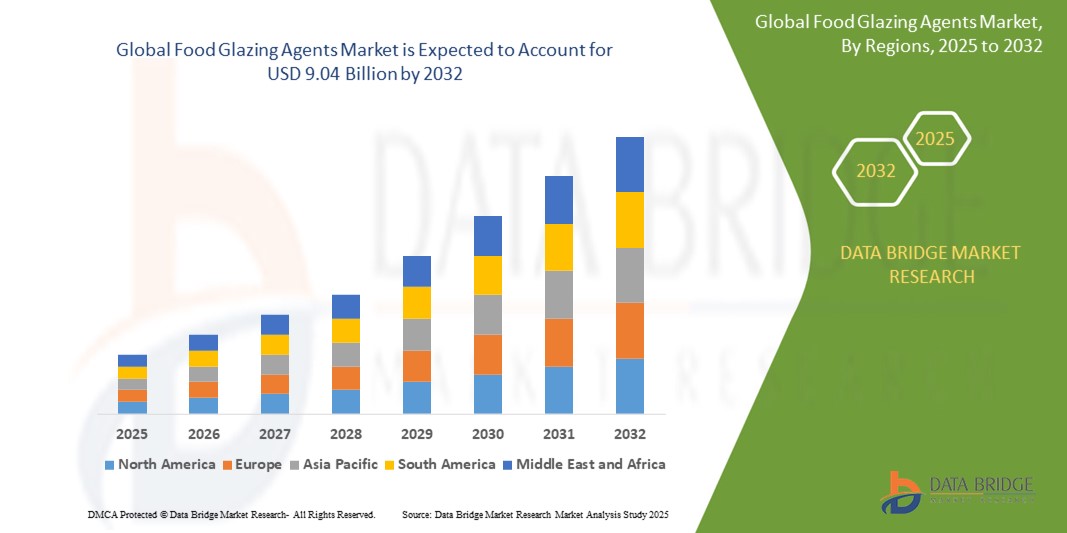
Food Glazing Agents Market Size
- The global food glazing agents market size was valued atUSD 4.79 billion in 2024and is expected to reachUSD 9.04 billion by 2032, at aCAGR of 8.25%during the forecast period
- This growth is driven by factors such as the increasing demand for processed and ready-to-eat food products, rising consumer preference for visually appealing food items, and advancements in food processing technologies that enhance the shelf life and texture of food products
Food Glazing Agents Market Analysis
- The food glazing agents’ market is witnessing significant growth due to their increasing usage in the food and beverage industry to enhance the appearance and texture of products such as candy, fruits, and bakery items. This trend reflects the growing consumer demand for aesthetically appealing and high-quality food products
- The market is also being driven by innovations in natural and organic food glazing agents that cater to the rising consumer preference for clean-label and healthy food options. This shift is expected to provide opportunities for manufacturers to meet evolving consumer preferences and regulatory standards
- Europe is expected to dominate the Food Glazing Agents market due to well-established food processing industry, high demand for clean-label products, and preference for natural ingredients such as carnauba wax
- Asia-Pacific is expected to be the fastest growing region in the Food Glazing Agents market during the forecast period due to rapid urbanization, increasing disposable incomes, and rising demand for processed foods
- Carnauba Wax segment is expected to dominate the market with a market share of 24.2% due to its natural origin, excellent gloss, and sustainability benefits.
Report Scope and Food Glazing Agents Market Segmentation
|
Attributes |
Food Glazing Agents Key Market Insights |
|
Segments Covered |
|
|
Countries Covered |
North America
Europe
Asia-Pacific
Middle East and Africa
South America
|
|
Key Market Players |
|
|
Market Opportunities |
|
|
Value Added Data Infosets |
In addition to the insights on market scenarios such as market value, growth rate, segmentation, geographical coverage, and major players, the market reports curated by the Data Bridge Market Research also include in-depth expert analysis, pricing analysis, brand share analysis, consumer survey, demography analysis, supply chain analysis, value chain analysis, raw material/consumables overview, vendor selection criteria, PESTLE Analysis, Porter Analysis, and regulatory framework. |
Food Glazing Agents Market Trends
“Increasing Demand for Natural and Clean-Label Ingredients”
- Consumers are increasingly prioritizing clean-label products, and as a result, manufacturers are turning to natural glazing agents to meet these demands
- For instance, carnauba wax, which is derived from the leaves of the carnauba palm, is being used more frequently in food products because it’s considered a natural and safe option
- Health-conscious shoppers are opting for foods with minimal synthetic additives, and natural glazing agents align with this trend
- For instance, beeswax, known for its non-toxic and natural properties, is often used in products such as bakery goods and fruit coatings to appeal to consumers who want cleaner ingredient
- Sustainability is another key driver of this shift, as natural ingredients such as candelilla wax are biodegradable and sourced from renewable resources
- Natural glazing agents are often perceived as more environmentally friendly, contributing to the growing preference for green ingredients
- With the rising demand for more transparency in food production, natural glazing agents are being promoted as a cleaner, more ethical choice
Food Glazing Agents Market Dynamics
Driver
“Increasing Demand for Extended Shelf Life and Improved Product Aesthetics”
- Increasing consumer demand for extended shelf life and improved product aesthetics is a key driver for the food glazing agent’s market
- Food glazing agents, such as carnauba wax and beeswax, help enhance the visual appeal of products by providing a glossy, attractive finish while also offering protection against moisture and air
- For instance, carnauba wax is commonly used in candies and chocolates to give them a shiny surface and prevent them from melting easily under high temperatures
- As consumer expectations rise for fresh-looking products that last longer on shelves, manufacturers increasingly turn to glazing agents to meet these demands
- Glazing agents also help preserve texture and taste, which is crucial for products such as baked goods, where moisture retention plays a significant role in maintaining quality
- For instance, candelilla wax is often used on bakery products such as pastries to retain moisture and ensure they maintain their original texture and appearance over time
- The rising demand for convenience and longer-lasting products in sectors such as packaged foods and snacks is further fueling the growth of food glazing agents
Opportunity
“Growing Trend Toward Plant-Based and Vegan Diets”
- The growing trend toward plant-based and vegan diets is creating significant opportunities for the food glazing agent’s market
- As more consumers adopt plant-based lifestyles, the demand for vegan-friendly food products that exclude animal-derived ingredients is rising
- For instance, beeswax, traditionally used in food glazing, is not suitable for vegan products due to its animal origin
- The need for plant-based glazing agents is expanding beyond confectionery to other sectors such as vegan chocolates, plant-based meats, and dairy alternatives
- For instance, vegan chocolate manufacturers are increasingly turning to candelilla wax or other plant-based coatings to maintain the shiny finish without using animal-derived ingredients
- With the rise of veganism driven by health, environmental, and ethical concerns, innovation in food glazing agents is expected to grow
- Manufacturers have an opportunity to introduce new, plant-derived glazing agents that align with the increasing demand for vegan and vegetarian products
- This shift not only helps manufacturers expand their product lines but also taps into a new market segment focused on sustainability, driving market growth
Restraint/Challenge
“High Cost of Natural Glazing Agents”
- One of the main challenges facing the food glazing agents’ market is the high cost and limited availability of natural glazing agents
- Natural ingredients such as carnauba wax, beeswax, and candelilla wax are popular due to their clean-label appeal and sustainability, but they come at a significantly higher price than synthetic alternatives
- For instance, carnauba wax, sourced from Brazil, faces supply chain challenges due to its limited availability, reliance on specific weather conditions, and the time-consuming harvest process
- These supply chain disruptions and the cost of natural ingredients can make them less accessible to manufacturers, particularly smaller companies or those working in price-sensitive markets
- For instance, smaller food producers may struggle to afford the premium cost of natural glazing agents, opting for synthetic alternatives to maintain profit margins
- Regulatory hurdles and environmental concerns can also complicate the sourcing of natural ingredients, especially when agricultural practices impact their availability
- Due to these challenges, manufacturers may turn to synthetic glazing agents, which are more affordable but may not meet the growing consumer demand for natural and sustainable products
- Balancing cost-effectiveness with consumer preference for natural ingredients remains a key challenge in the food glazing agents’ market, with manufacturers needing to find cost-efficient solutions without compromising on product quality and sustainability
Food Glazing Agents Market Scope
The market is segmented on the basis ingredient type, ingredient function, and application.
|
Segmentation |
Sub-Segmentation |
|
By Ingredient Type |
|
|
By Ingredient Function |
|
|
By Application |
|
In 2025, the carnauba wax is projected to dominate the market with a largest share in ingredient type segment
The carnauba wax segment is expected to dominate the food glazing agents’ market with the largest share of 24.2% in 2025 due to its natural origin, high melting point, and glossy finish, making it ideal for confectionery and bakery products.
The confectionary is expected to account for the largest share during the forecast period in application market
In 2025, the confectionary segment is expected to dominate the market with the largest market share of 12.6% due to its growing demand for visually appealing and long-lasting sweets that require glossy coatings.
Food Glazing Agents Market Regional Analysis
“Europe Holds the Largest Share in the Food Glazing Agents Market”
- Europe is projected to dominate the food glazing agents’ market in 2025 due to its established food processing industries and strong demand for high-quality confectionery and bakery products
- Europe holds over 34% of the global market share, with a focus on natural and clean-label ingredients, particularly in the confectionery and bakery sectors
- Stringent food safety regulations and a growing consumer preference for sustainable and natural ingredients such as carnauba and beeswax drive the use of food glazing agents in the region
- A well-established demand for aesthetically pleasing and long-lasting food products in European supermarkets boosts the market for glazing agents in confectionery and bakery items
- The region’s emphasis on clean-label products and natural ingredients aligns with the growing market preference for eco-friendly and healthy food solutions
“Asia-Pacific is Projected to Register the Highest CAGR in the Food Glazing Agents Market”
- Asia Pacific is the fastest-growing region in the food glazing agents’ market due to rising disposable incomes, urbanization, and a booming processed food industry
- Asia Pacific is experiencing rapid growth in food glazing agents, driven by the demand for convenience and processed foods in countries such as China and India
- Increasing consumer awareness of the aesthetic appeal of food and the desire for long shelf life are pushing the demand for glazing agents across various food segments
- The region’s expanding foodservice and retail sectors further contribute to the increasing consumption of glazing agents for both traditional and packaged foods
- The growing preference for natural ingredients in processed foods and bakery products is creating new opportunities for food glazing agents in Asia Pacific
Food Glazing Agents Market Share
The market competitive landscape provides details by competitor. Details included are company overview, company financials, revenue generated, market potential, investment in research and development, new market initiatives, global presence, production sites and facilities, production capacities, company strengths and weaknesses, product launch, product width and breadth, application dominance. The above data points provided are only related to the companies' focus related to market.
The Major Market Leaders Operating in the Market Are:
- ADM (U.S.)
- BJ International (U.K.)
- Koster Keunen (U.S.)
- Carnaúba do Brasil (Brazil)
- Poth Hille (U.K.)
- STEARINERIE DUBOIS (France)
- Masterol Foods Pty. Ltd (Australia)
- British Wax Ltd (U.K.)
- Strahl & Pitsch, Inc. (U.S.)
- Mantrose-Haeuser Co., Inc. (U.S.)
- Capol GmbH (Germany)
- Arla Foods amba (Denmark)
- DuPont (U.S.)
- AVATAR CORPORATION (U.S.)
- Stroever GmbH & Co. KG (Germany)
Latest Developments in Global Food Glazing Agents Market
- In October 2024, Colorcon (U.S.) and LOTTE Fine Chemical (South Korea) announced a strategic global partnership to enhance pharmaceutical and dietary supplement formulations. This multi-year agreement, effective November 1, 2024, designates Colorcon as the exclusive distributor of LOTTE’s AnyCoat-C and AnyCoat-P hypromellose polymers. These products are utilized in immediate, controlled, and enteric release drug formulations, offering benefits such as improved stability and targeted delivery. The collaboration aims to accelerate formulation development, leveraging Colorcon's global technical network and LOTTE's expertise in cellulose ether chemistry. This partnership is expected to strengthen both companies' positions in the competitive pharmaceutical market by providing optimized solutions to global customers
- In June 2024, Huhtamaki (Finland), in collaboration with 2M Group of Companies (U.K.), entered a multi-year agreement to integrate Xampla’s Morro Coating—a plastic-free, plant protein-based barrier coating—into their takeaway packaging solutions. This initiative aims to replace traditional plastic and PFAS-based coatings with a sustainable alternative, enhancing the environmental profile of foodservice packaging. The Morro Coating offers superior grease, water, and oxygen barrier properties, along with heat-seal capabilities, making it suitable for various food packaging applications. This collaboration underscores a significant step towards reducing plastic waste in the foodservice industry, aligning with global sustainability goals and consumer demand for eco-friendly packaging options
- In May 2024, Axalta Coating Systems (U.S.) launched its Alesta BioCore range of biobased powder coatings, derived from non-food organic waste. These coatings are designed to reduce CO₂ emissions by up to 25% compared to traditional fossil fuel-based resins. The BioCore line includes three categories—SD BioCore for architectural applications, AP BioCore for outdoor substrates, and IP BioCore for industrial uses. This move aligns with Axalta's commitment to sustainability, offering environmentally friendly solutions without compromising on performance. It provides customers with durable, high-performance coatings while supporting eco-friendly practices
SKU-

研究方法
数据收集和基准年分析是使用具有大样本量的数据收集模块完成的。该阶段包括通过各种来源和策略获取市场信息或相关数据。它包括提前检查和规划从过去获得的所有数据。它同样包括检查不同信息源中出现的信息不一致。使用市场统计和连贯模型分析和估计市场数据。此外,市场份额分析和关键趋势分析是市场报告中的主要成功因素。要了解更多信息,请请求分析师致电或下拉您的询问。
DBMR 研究团队使用的关键研究方法是数据三角测量,其中包括数据挖掘、数据变量对市场影响的分析和主要(行业专家)验证。数据模型包括供应商定位网格、市场时间线分析、市场概览和指南、公司定位网格、专利分析、定价分析、公司市场份额分析、测量标准、全球与区域和供应商份额分析。要了解有关研究方法的更多信息,请向我们的行业专家咨询。
可定制
Data Bridge Market Research 是高级形成性研究领域的领导者。我们为向现有和新客户提供符合其目标的数据和分析而感到自豪。报告可定制,包括目标品牌的价格趋势分析、了解其他国家的市场(索取国家列表)、临床试验结果数据、文献综述、翻新市场和产品基础分析。目标竞争对手的市场分析可以从基于技术的分析到市场组合策略进行分析。我们可以按照您所需的格式和数据样式添加您需要的任意数量的竞争对手数据。我们的分析师团队还可以为您提供原始 Excel 文件数据透视表(事实手册)中的数据,或者可以帮助您根据报告中的数据集创建演示文稿。











