


تقسيم سوق الزجاج منخفض الانبعاثية (منخفض الانبعاثية) في منطقة آسيا والمحيط الهادئ، حسب النوع (زجاج صلب منخفض الانبعاثية، وزجاج ناعم منخفض الانبعاثية)، نوع الطلاء (طلاء سلبي منخفض الانبعاثية، وطلاء منخفض الانبعاثية للتحكم الشمسي)، مادة الطلاء (معدني وشبه موصل)، التزجيج (زجاج أحادي منخفض الانبعاثية، وزجاج مزدوج منخفض الانبعاثية، وزجاج ثلاثي منخفض الانبعاثية)، التكنولوجيا (عملية التحلل الحراري وعملية الرش)، المستخدم النهائي (البناء والنقل) - اتجاهات الصناعة والتوقعات حتى عام 2032
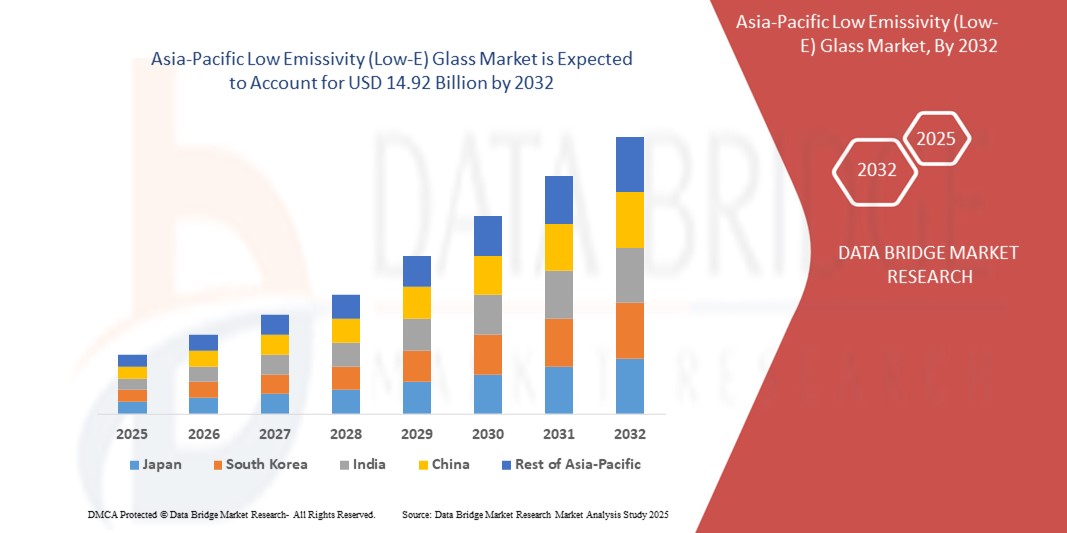
حجم سوق الزجاج منخفض الانبعاثية (Low-E) في منطقة آسيا والمحيط الهادئ
- تم تقييم حجم سوق الزجاج منخفض الانبعاثية (Low-E) في منطقة آسيا والمحيط الهادئ بنحو 9.29 مليار دولار أمريكي في عام 2024 ومن المتوقع أن يصل إلى 14.92 مليار دولار أمريكي بحلول عام 2032 ، بمعدل نمو سنوي مركب قدره 6.10٪ خلال الفترة المتوقعة
- إن نمو السوق مدفوع إلى حد كبير بالطلب المتزايد على مواد البناء الموفرة للطاقة وأنشطة البناء المتزايدة في المنطقة
- إن زيادة اللوائح والمبادرات الحكومية التي تروج لحلول البناء المستدامة الموفرة للطاقة تعمل على تعزيز توسع السوق بشكل أكبر
تحليل سوق الزجاج منخفض الانبعاثية (Low-E) في منطقة آسيا والمحيط الهادئ
- يشهد السوق زيادة في استخدام الزجاج منخفض الانبعاثية في البناء التجاري والسكني بسبب قدرته على تحسين كفاءة الطاقة والراحة الداخلية
- يركز المصنعون على ابتكار المنتجات وتوسيع قدرات الإنتاج لتلبية الطلب المتزايد على حلول الزجاج المتقدمة في تطبيقات البناء
- استحوذت سوق الزجاج منخفض الانبعاثات في الصين على أكبر حصة من إيرادات السوق بنسبة 62.5٪ في منطقة آسيا والمحيط الهادئ في عام 2024، ويعزى ذلك إلى التنمية الاقتصادية السريعة في البلاد، وصناعة البناء والتشييد الضخمة، والاستثمارات الكبيرة في مشاريع البناء الأخضر.
- من المتوقع أن تشهد اليابان أعلى معدل نمو سنوي مركب (CAGR) في سوق الزجاج منخفض الانبعاث (Low-E) في منطقة آسيا والمحيط الهادئ بسبب لوائح كفاءة الطاقة الصارمة والتركيز القوي على ممارسات البناء المستدامة وثقافة التكنولوجيا الفائقة التي تدفع الابتكار في تكنولوجيا الزجاج.
- من المتوقع أن يهيمن قطاع الزجاج منخفض الانبعاثية ذو الطبقة الناعمة على أكبر حصة سوقية من الإيرادات، بنسبة 71.1% خلال الفترة المتوقعة، بفضل أدائه الحراري المتفوق وخصائص العزل الأفضل. يوفر الزجاج منخفض الانبعاثية ذو الطبقة الناعمة، والمعروف أيضًا باسم الزجاج منخفض الانبعاثية المُرشوش، كفاءة طاقة مُحسّنة من خلال حجب الحرارة الشمسية بفعالية مع الحفاظ على الحرارة الداخلية، مما يجعله خيارًا مثاليًا للمباني السكنية والتجارية التي تسعى إلى تحقيق أقصى قدر من توفير الطاقة.
نطاق التقرير وتجزئة سوق الزجاج منخفض الانبعاثية (Low-E) في منطقة آسيا والمحيط الهادئ
|
صفات |
رؤى رئيسية حول سوق الزجاج منخفض الانبعاثية (Low-E) في منطقة آسيا والمحيط الهادئ |
|
القطاعات المغطاة |
|
|
الدول المغطاة |
آسيا والمحيط الهادئ
|
|
اللاعبون الرئيسيون في السوق |
|
|
فرص السوق |
|
|
مجموعات معلومات البيانات ذات القيمة المضافة |
بالإضافة إلى الرؤى حول سيناريوهات السوق مثل القيمة السوقية ومعدل النمو والتجزئة والتغطية الجغرافية واللاعبين الرئيسيين، فإن تقارير السوق التي تم تنظيمها بواسطة Data Bridge Market Research تشمل أيضًا تحليل الاستيراد والتصدير، ونظرة عامة على القدرة الإنتاجية، وتحليل استهلاك الإنتاج، وتحليل اتجاه الأسعار، وسيناريو تغير المناخ، وتحليل سلسلة التوريد، وتحليل سلسلة القيمة، ونظرة عامة على المواد الخام / المواد الاستهلاكية، ومعايير اختيار البائعين، وتحليل PESTLE، وتحليل بورتر، والإطار التنظيمي. |
اتجاهات سوق الزجاج منخفض الانبعاثية (Low-E) في منطقة آسيا والمحيط الهادئ
"تزايد استخدام الزجاج الموفر للطاقة في البناء"
- يؤدي الطلب المتزايد على البناء الموفر للطاقة إلى زيادة استخدام الزجاج منخفض الانبعاث في المباني السكنية والتجارية
- يقلل هذا الزجاج من انتقال الحرارة عبر النوافذ، مما يؤدي إلى راحة داخلية أفضل وتكاليف طاقة أقل
- تعمل الحكومات على تعزيز معايير البناء الأخضر، وتشجيع اعتماد الزجاج منخفض الانبعاثات في التطورات الجديدة
- على سبيل المثال، مجمع مارينا ون في سنغافورة، والذي يستخدم الزجاج منخفض الانبعاثات لتحقيق أهداف الاستدامة
- إن الابتكار المستمر من قبل الشركات المصنعة يعزز من متانة وأداء هذه المنتجات الزجاجية حرارياً
ديناميكيات سوق الزجاج منخفض الانبعاثية (Low-E) في منطقة آسيا والمحيط الهادئ
سائق
"التركيز المتزايد على البنية التحتية المستدامة والمباني الموفرة للطاقة"
- يؤدي التوسع الحضري المتزايد في بلدان مثل الصين والهند وأستراليا إلى تسريع الطلب على مواد البناء الموفرة للطاقة والمستدامة
- يعمل الزجاج منخفض الانبعاثية على تعزيز الكفاءة الحرارية من خلال عكس طاقة الأشعة تحت الحمراء وتقليل انتقال الحرارة في المباني
- The use of Low-E glass lowers energy consumption for heating and cooling, making it ideal for eco-friendly residential and commercial projects
- Governments are implementing strict building codes and offering incentives to encourage the adoption of energy-efficient materials
- For instance, India’s Energy Conservation Building Code (ECBC) promotes the use of Low-E glass in new constructions to reduce energy use in buildings
Restraint/Challenge
“High Cost Associated with Advanced Glass Manufacturing and Installation.”
- The high production cost of Low-E glass due to advanced coating technologies makes it less accessible for price-sensitive consumers
- Specialized labour is required for installation to retain the glass’s energy-efficient performance, increasing overall project expenses
- Limited awareness in rural and underdeveloped areas leads to lower demand, as consumers often opt for traditional glass options
- Inconsistent enforcement of energy efficiency regulations across the region results in uneven market adoption
- For instance, countries with weaker implementation of green building codes see slower uptake of Low-E glass compared to those with strict mandates
Asia-Pacific Low Emissivity (Low-E) Glass Market Scope
The market is segmented on the basis of type, coating type, coating material, glazing, technology, and end-user.
- By Type
On the basis of type, the Asia-Pacific low-emissivity (Low-E) glass market is segmented into hard coat low-E glass and soft coat low-E glass. The soft coat low-E glass segment is expected to dominate the largest market revenue share of 71.1% in the forecast period, driven by its superior thermal performance and better insulation properties. Soft coat Low-E glass, also known as sputtered Low-E, offers enhanced energy efficiency by effectively blocking solar heat gain while retaining indoor heat, making it highly preferred for both residential and commercial buildings aiming for optimal energy savings.
The hard coat low-E glass segment is expected to witness the fastest growth rate, fuelled by its durability, ease of handling, and suitability for various applications, including single glazing and storm windows. Hard coat Low-E glass, produced through a pyrolytic process, is more robust and less susceptible to damage during fabrication, making it a cost-effective solution for certain building projects.
- By Coating Type
On the basis of coating type, the Asia-Pacific low-emissivity (Low-E) glass market is segmented into passive low-E coating and solar control low-e coating. The solar control low-E coating segment held the largest market revenue share in 2024, driven by the increasing demand for energy-efficient buildings in regions with high solar radiation. This coating type is highly effective in reflecting solar heat, thereby reducing the need for air conditioning and lowering cooling costs in warm climates.
The passive low-E coating segment is expected to witness the fastest growth rate from 2025 to 2032, driven by its growing adoption in colder climates to maximize solar heat gain while minimizing heat loss. This coating type helps to keep interiors warmer by reflecting heat back into the building, reducing heating costs and improving overall thermal comfort, making it ideal for northern regions of Asia-Pacific.
- By Coating Material
On the basis of coating material, the Asia-Pacific low-emissivity (Low-E) glass market is segmented into metallic and semi-conductive coating. The metallic segment held the largest market revenue share in 2024, driven by the widespread use of silver-based coatings known for their excellent low-emissivity properties and superior thermal performance. Metallic coatings are highly effective in reflecting infrared radiation, contributing significantly to energy savings in buildings.
The semi-conductive coating segment is expected to witness the fastest growth rate, fuelled by ongoing research and development in new materials that offer improved performance and durability. Semi-conductive coatings, often tin oxide-based, are known for their robust nature and are commonly used in hard coat low-E glass applications due to their ease of manufacturing.
- By Glazing
On the basis of glazing, the Asia-Pacific low-emissivity (Low-E) glass market is segmented into single low-E glazing, double low-E glazing, and triple low-E glazing. The double low-E glazing segment held the largest market revenue share in 2024, driven by its optimal balance of energy efficiency, cost-effectiveness, and acoustic insulation. Double glazing with Low-E coatings is widely adopted in both residential and commercial constructions to meet increasingly stringent energy codes and reduce heating and cooling loads.
The triple low-E glazing segment is expected to witness the fastest growth rate from 2025 to 2032, fuelled by the growing demand for highly energy-efficient buildings in extreme climates and the increasing focus on achieving net-zero energy consumption. Triple glazing offers superior thermal performance and sound reduction, making it ideal for high-performance buildings and passive house designs.
- By Technology
On the basis of technology, the Asia-Pacific low-emissivity (Low-E) glass market is segmented into pyrolytic process and sputtered process. The sputtered process segment held the largest market revenue share in 2024, driven by its ability to produce highly efficient and multi-layered Low-E coatings with precise control over their optical and thermal properties. Sputtered coatings offer superior performance in terms of solar control and thermal insulation, leading to wider adoption in high-performance window systems.
The pyrolytic process segment is expected to witness the fastest growth rate, fuelled by its robustness, durability, and suitability for applications where the coating is exposed. Pyrolytic coatings are chemically bonded to the glass surface during manufacturing, making them highly resistant to scratches and corrosion, and ideal for demanding environments.
- By End-User
On the basis of end-user, the Asia-Pacific low-emissivity (Low-E) glass market is segmented into construction and transportation. The construction segment accounted for the largest market revenue share of 91.5% in 2024, driven by the rapid growth in residential and commercial building activities across the Asia-Pacific region, coupled with increasing awareness of energy conservation and green building initiatives. Low-E glass is widely used in windows, doors, and facades to improve energy efficiency in buildings.
The transportation segment is expected to witness the fastest growth rate from 2025 to 2032, driven by the growing demand for energy-efficient vehicles and the increasing adoption of Low-E glass in automotive, railway, and marine applications to reduce heat gain and improve passenger comfort. The focus on lightweight materials and fuel efficiency also contributes to its increasing use in transportation.
Asia-Pacific Low Emissivity (Low-E) Glass Market Regional Analysis
- China Low-E glass market accounted for the largest market revenue share of 62.5% in Asia Pacific in 2024, attributed to the country's rapid economic development, massive building and construction industry, and substantial investments in green building projects
- China's push towards energy-efficient infrastructure and its position as a leading manufacturer of glass and solar photovoltaic systems are key factors propelling the market
- The availability of diverse and affordable low-e glass options from strong domestic manufacturers further contributes to its dominance
Japan Low Emissivity (Low-E) Glass Market Insight
The Japan low-e glass market is expected to witness the fastest growth rate from 2025 to 2032, driven by the country's high-tech culture, stringent energy efficiency regulations, and a strong emphasis on sustainable building practices. The Japanese market prioritizes energy-efficient construction materials, with a growing demand for Low-E glass in smart buildings and for solar photovoltaic panels to meet ambitious carbon emission reduction targets. This is further supported by innovations in glass technology and an increasing need for enhanced thermal performance in both new constructions and existing structures.
Asia-Pacific Low Emissivity (Low-E) Glass Market Share
The Asia-Pacific Low Emissivity (Low-E) Glass industry is primarily led by well-established companies, including:
- Nippon Sheet Glass Co., Ltd., (Japan)
- AGC Inc., (Japan)
- Central Glass Co. Ltd., (Japan)
- Xinyi Glass Holdings Limited., (China)
- China Glass Holdings Limited (China)
- GUARDIAN INDUSTRIES (U.S.)
- Fuyao Glass Industry Group Co., Ltd., (China)
- Taiwan Glass Ind. Corp. (Taiwan)
- Beijing Northglass Technologies Co. Ltd., (China)
- Qingdao Tsing Glass Co. Limited (China)
- Guangzhou Topo Glass Co., Ltd., (China)
Latest Developments in Asia-Pacific Low Emissivity (Low-E) Glass Market
-
In February 2022, Pivotal Commware announced the commercial launch of Echo 5G, a cutting-edge product designed to enhance indoor 5G signal coverage. This development introduces a smart repeater solution that redirects and strengthens 5G millimeter wave signals, improving connectivity in areas with weak reception. Echo 5G enables mobile operators to expand their network coverage without extensive infrastructure changes. The product is expected to benefit both consumers and service providers by offering better speed and reliability indoors. This innovation supports the broader adoption of 5G technology and strengthens Pivotal Commware's position in the telecommunications market
- In June 2023, Vitro Architectural Glass introduced its Advanced Low-Emissivity (Low-E) Glass Sample Kit, featuring a selection of Solarban solar control, low-e glass products. This kit enables architects and designers to conveniently compare high-performance glass options that offer a solar heat gain coefficient (SHGC) of 0.25 or less, enhancing energy efficiency in building designs. By facilitating hands-on evaluation, the kit supports professionals in selecting glass solutions that meet stringent energy codes and aesthetic requirements. This initiative underscores Vitro's commitment to sustainability and innovation in the architectural glass market
SKU-
احصل على إمكانية الوصول عبر الإنترنت إلى التقرير الخاص بأول سحابة استخبارات سوقية في العالم

- لوحة معلومات تحليل البيانات التفاعلية
- لوحة معلومات تحليل الشركة للفرص ذات إمكانات النمو العالية
- إمكانية وصول محلل الأبحاث للتخصيص والاستعلامات
- تحليل المنافسين باستخدام لوحة معلومات تفاعلية
- آخر الأخبار والتحديثات وتحليل الاتجاهات
- استغل قوة تحليل المعايير لتتبع المنافسين بشكل شامل
منهجية البحث
يتم جمع البيانات وتحليل سنة الأساس باستخدام وحدات جمع البيانات ذات أحجام العينات الكبيرة. تتضمن المرحلة الحصول على معلومات السوق أو البيانات ذات الصلة من خلال مصادر واستراتيجيات مختلفة. تتضمن فحص وتخطيط جميع البيانات المكتسبة من الماضي مسبقًا. كما تتضمن فحص التناقضات في المعلومات التي شوهدت عبر مصادر المعلومات المختلفة. يتم تحليل بيانات السوق وتقديرها باستخدام نماذج إحصائية ومتماسكة للسوق. كما أن تحليل حصة السوق وتحليل الاتجاهات الرئيسية هي عوامل النجاح الرئيسية في تقرير السوق. لمعرفة المزيد، يرجى طلب مكالمة محلل أو إرسال استفسارك.
منهجية البحث الرئيسية التي يستخدمها فريق بحث DBMR هي التثليث البيانات والتي تتضمن استخراج البيانات وتحليل تأثير متغيرات البيانات على السوق والتحقق الأولي (من قبل خبراء الصناعة). تتضمن نماذج البيانات شبكة تحديد موقف البائعين، وتحليل خط زمني للسوق، ونظرة عامة على السوق ودليل، وشبكة تحديد موقف الشركة، وتحليل براءات الاختراع، وتحليل التسعير، وتحليل حصة الشركة في السوق، ومعايير القياس، وتحليل حصة البائعين على المستوى العالمي مقابل الإقليمي. لمعرفة المزيد عن منهجية البحث، أرسل استفسارًا للتحدث إلى خبراء الصناعة لدينا.
التخصيص متاح
تعد Data Bridge Market Research رائدة في مجال البحوث التكوينية المتقدمة. ونحن نفخر بخدمة عملائنا الحاليين والجدد بالبيانات والتحليلات التي تتطابق مع هدفهم. ويمكن تخصيص التقرير ليشمل تحليل اتجاه الأسعار للعلامات التجارية المستهدفة وفهم السوق في بلدان إضافية (اطلب قائمة البلدان)، وبيانات نتائج التجارب السريرية، ومراجعة الأدبيات، وتحليل السوق المجدد وقاعدة المنتج. ويمكن تحليل تحليل السوق للمنافسين المستهدفين من التحليل القائم على التكنولوجيا إلى استراتيجيات محفظة السوق. ويمكننا إضافة عدد كبير من المنافسين الذين تحتاج إلى بيانات عنهم بالتنسيق وأسلوب البيانات الذي تبحث عنه. ويمكن لفريق المحللين لدينا أيضًا تزويدك بالبيانات في ملفات Excel الخام أو جداول البيانات المحورية (كتاب الحقائق) أو مساعدتك في إنشاء عروض تقديمية من مجموعات البيانات المتوفرة في التقرير.











