


Global High-Flow Nasal Cannula Therapy Market Segmentation, By Component (Nasal Cannulas, Air/Oxygen Blenders, Active Humidifiers, Heated Inspiratory Circuits and Consumables), Medical Application (Acute Respiratory Failure (ARF), Chronic Obstructive Pulmonary Disease (COPD), Bronchiectasis, Carbon Monoxide Toxicity, Sleep Apnea, Acute Heart Failure and Others), End User (Hospitals, Specialty Clinics, Long-Term Care Centers, Ambulatory Care Centers and Homecare Settings), Age Group (Adult, Pediatric and Neonatal) - Industry Trends and Forecast to 2032
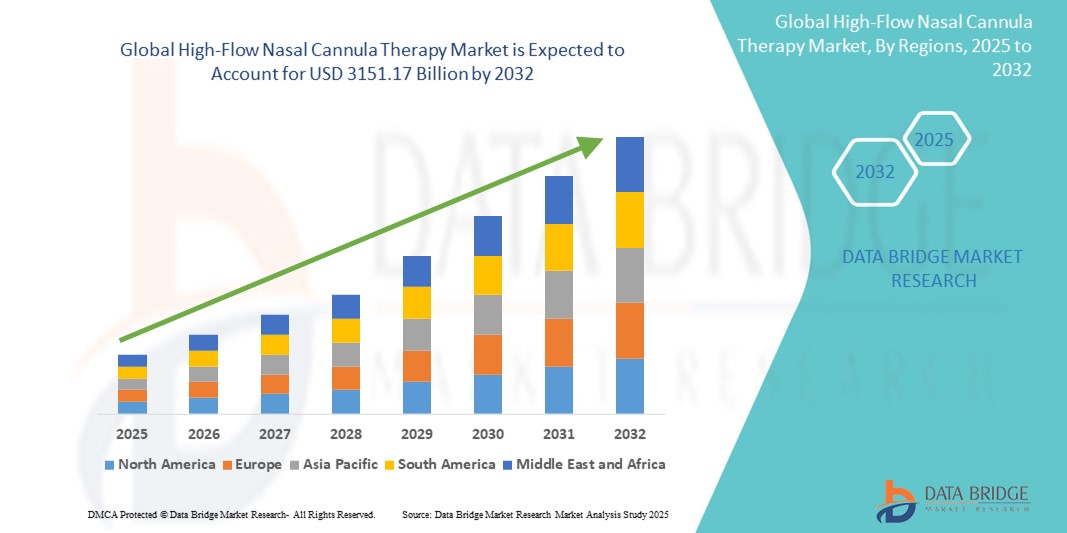
Global High-Flow Nasal Cannula Therapy Market Size
- The global high-flow nasal cannula therapy market size was valued at USD 1470.15 billion in 2024 and is expected to reach USD 3151.17 billion by 2032, at a CAGR of 10.00% during the forecast period
- The market growth is largely fueled by the increasing prevalence of respiratory diseases globally, including chronic obstructive pulmonary disease (COPD), acute respiratory failure, and asthma. This rise in respiratory illnesses, coupled with a growing aging population more susceptible to these conditions, significantly boosts the demand for effective respiratory support therapies
- Furthermore, continuous technological advancements in HFNC devices, such as the development of more comfortable nasal cannulas, integrated humidification systems, and portable designs, are enhancing patient compliance and therapeutic efficacy. The increasing adoption of non-invasive and user-friendly solutions in both clinical and homecare settings is establishing HFNC as a preferred modern respiratory support system. These converging factors are accelerating the uptake of global high-flow nasal cannula therapy solutions, thereby significantly boosting the industry's growth
Global High-Flow Nasal Cannula Therapy Market Analysis
- High-flow nasal cannula (HFNC) therapy involves delivering heated and humidified oxygen at high flow rates to patients with respiratory distress. It serves as a non-invasive respiratory support, offering enhanced patient comfort and clinical benefits compared to conventional oxygen therapy, making it a vital component in modern respiratory care across hospitals, specialty clinics, and increasingly, homecare settings
- The escalating demand for high-flow nasal cannula therapy is primarily fueled by the rising global prevalence of respiratory diseases such as COPD, asthma, and acute respiratory failure, along with a growing aging population more susceptible to these conditions. Furthermore, continuous technological advancements in HFNC devices, leading to improved comfort, portability, and efficacy, contribute significantly to their increasing adoption as a preferred non-invasive ventilatory support
- North America dominates the global high-flow nasal cannula therapy market with the largest share of 40.11% in 2024, characterized by its well-established healthcare infrastructure, high per capita healthcare expenditure, widespread awareness of advanced respiratory therapies, and a high prevalence of respiratory diseases
- Asia-Pacific is expected to be the fastest-growing region in the global high-flow nasal cannula therapy market during the forecast period, with a CAGR of 11.7%. This growth is attributed to improving healthcare infrastructure, increasing healthcare expenditure, a large and growing patient pool with respiratory conditions, rising awareness about advanced treatment modalities, and economic development in countries across the region
- The nasal cannulas segment dominates the global high-flow nasal cannula therapy market, with a market share of 35.7%, This dominance is driven by their essential role as the direct patient interface for oxygen delivery, coupled with their ease of use, patient comfort, and the continuous demand for consumables in various clinical and homecare settings
Report Scope and Global High-Flow Nasal Cannula Therapy Market Segmentation
|
Attributes |
Global High-Flow Nasal Cannula Therapy Key Market Insights |
|
Segments Covered |
|
|
Countries Covered |
North America
Europe
Asia-Pacific
Middle East and Africa
South America
|
|
Key Market Players |
|
|
Market Opportunities |
|
|
Value Added Data Infosets |
In addition to the insights on market scenarios such as market value, growth rate, segmentation, geographical coverage, and major players, the market reports curated by the Data Bridge Market Research also include in-depth expert analysis, pricing analysis, brand share analysis, consumer survey, demography analysis, supply chain analysis, value chain analysis, raw material/consumables overview, vendor selection criteria, PESTLE Analysis, Porter Analysis, and regulatory framework. |
Global High-Flow Nasal Cannula Therapy Market Trends
“Enhanced Personalization Through Integrated Monitoring”
- A significant and accelerating trend in the global high-flow nasal cannula therapy market is the deepening integration with advanced data analytics and sophisticated control systems. This fusion of technologies is significantly enhancing the personalization of therapy and optimizing clinical workflows, moving beyond static settings to adaptive, patient-centric care
- For instance, advanced HFNC systems are beginning to incorporate algorithms that can analyze real-time patient physiological data, such as respiratory rate, oxygen saturation, and inspiratory effort. This allows for dynamic adjustments to flow rate and oxygen concentration (FiO2) to precisely meet the patient's changing needs, thereby optimizing oxygen delivery and reducing the work of breathing
- Integrated monitoring in HFNC devices enables features such as learning individual patient respiratory patterns to anticipate changes in condition and potentially suggest proactive therapy adjustments. These smart systems can also provide more nuanced alerts based on subtle shifts in patient vitals, allowing clinicians to intervene more promptly. Furthermore, integrated sensors and advanced analytics offer clinicians a more streamlined approach to managing complex respiratory support, reducing manual adjustments and improving efficiency
- The seamless integration of HFNC devices with electronic health records (EHRs) and broader hospital information systems (HIS) facilitates centralized control and comprehensive data management. Through a single interface, healthcare providers can monitor multiple patients' HFNC parameters alongside other vital signs and medical history, creating a unified and automated care experience that supports informed decision-making
- هذا التوجه نحو أنظمة دعم تنفسية أكثر ذكاءً وسهولةً في الاستخدام وترابطًا يُعيد صياغة التوقعات السريرية للتهوية غير الباضعة بشكل جذري. ونتيجةً لذلك، تُطوّر الشركات الرائدة في قطاع رعاية الجهاز التنفسي حلولًا متقدمةً للتهوية غير الباضعة عالية التردد (HFNC) بميزات مثل توصيل التدفق التكيفي، والتحليلات التنبؤية للكشف المبكر عن التدهور، والاتصال المُحسّن للمراقبة عن بُعد.
- يتزايد الطلب على أنظمة HFNC التي توفر تكاملاً سلسًا وقدرات مراقبة متقدمة بسرعة في كل من المستشفيات ومرافق الرعاية المنزلية، حيث يعطي مقدمو الرعاية الصحية والمرضى الأولوية بشكل متزايد لرعاية المرضى الشخصية وتحسين النتائج السريرية والاستخدام الفعال للموارد
ديناميكيات السوق العالمية لعلاجات قنية الأنف عالية التدفق
سائق
"الحاجة المتزايدة بسبب تزايد انتشار أمراض الجهاز التنفسي والتقدم في الرعاية غير الجراحية"
- إن الانتشار المتزايد لأمراض الجهاز التنفسي على مستوى العالم، بما في ذلك مرض الانسداد الرئوي المزمن (COPD)، والفشل التنفسي الحاد، والربو، إلى جانب التبني المتسارع لتقنيات دعم الجهاز التنفسي غير الجراحية، هو محرك مهم للطلب المتزايد على علاج القنية الأنفية عالية التدفق.
- على سبيل المثال، في مارس 2024، أعلنت شركة Vapotherm، وهي شركة رائدة في سوق قنيات الأنف عالية التدفق، عن توسيع محفظة الأدلة السريرية الخاصة بها ببيانات جديدة تدعم استخدام نظام Precision Flow Hi-VNI الخاص بها في منع تفاقم الضائقة التنفسية في أقسام الطوارئ. ومن المتوقع أن يُسهم هذا التحقق السريري المستمر والتركيز الاستراتيجي على تحسين نتائج المرضى من قِبل الشركات الرئيسية في دفع عجلة نمو صناعة علاج قنيات الأنف عالية التدفق عالميًا خلال الفترة المتوقعة.
- مع تزايد وعي مقدمي الرعاية الصحية بالفوائد السريرية لعلاج HFNC والسعي إلى حلول محسنة لإدارة الضائقة التنفسية، يوفر HFNC ميزات متقدمة مثل توصيل الأكسجين الدقيق والترطيب النشط وغسل المساحة الميتة في البلعوم الأنفي، مما يوفر بديلاً مقنعًا للعلاج بالأكسجين التقليدي أو حتى التهوية غير الجراحية (NIV) في بعض فئات المرضى.
- علاوة على ذلك، فإن التركيز المتزايد على راحة المريض والرغبة في طرق علاج أقل تدخلاً تجعل علاج HFNC جزءًا لا يتجزأ من بروتوكولات رعاية الجهاز التنفسي الحديثة، مما يوفر انتقالًا سلسًا بين إعدادات الرعاية المختلفة ويقلل بشكل محتمل الحاجة إلى التهوية الميكانيكية.
- تُعدّ سهولة إدارة المرضى، وانخفاض تعقيدها مقارنةً بوسائل دعم التنفس الأخرى، والقدرة على إدارة المرضى في مختلف مرافق الرعاية، عوامل رئيسية تدفع نحو اعتماد علاج HFNC في قطاعي المستشفيات والرعاية المنزلية. كما يُسهم التوجه نحو التدخل المبكر وتزايد توافر أجهزة HFNC سهلة الاستخدام في نمو السوق.
ضبط النفس/التحدي
"المخاوف بشأن الأمن السيبراني والتكاليف الأولية المرتفعة"
- تُشكّل المخاوف المُحيطة بالتكلفة الأولية المرتفعة لأنظمة العلاج بالقنية الأنفية عالية التدفق تحديًا كبيرًا أمام توسيع نطاق انتشارها في السوق، لا سيما بالنسبة لمرافق الرعاية الصحية ذات الميزانية المحدودة أو في المناطق النامية. ونظرًا لأن أجهزة HFNC غالبًا ما تتضمن تقنيات متقدمة للترطيب وتوصيل التدفق، فإن استثمارها الأولي قد يكون كبيرًا مقارنةً بالعلاج بالأكسجين التقليدي.
- على سبيل المثال، يمكن أن تكون تكلفة الحصول على أجهزة HFNC وصيانتها، إلى جانب المواد الاستهلاكية المرتبطة بها، بمثابة رادع للمستشفيات أو العيادات الأصغر حجمًا التي تحاول تجهيز مرافقها، مما يؤثر على إمكانية الوصول الشاملة إلى هذا العلاج المتقدم.
- إن معالجة هذه المخاوف المتعلقة بالتكلفة من خلال اتفاقيات الشراء القائمة على القيمة ، واستراتيجيات تسعير الحزم ، وتطوير نماذج HFNC أكثر فعالية من حيث التكلفة، أمرٌ بالغ الأهمية لتعزيز انتشار هذه الأنظمة على نطاق أوسع. وتركز الشركات بشكل متزايد على إثبات فعالية HFNC من حيث التكلفة على المدى الطويل من خلال عرض إمكاناتها في خفض معدلات التنبيب، وتقصير فترات الإقامة في وحدات العناية المركزة، وخفض إجمالي نفقات المستشفيات. بالإضافة إلى ذلك، قد تُشكل التكلفة الأولية المرتفعة نسبيًا لبعض أنظمة HFNC المتقدمة عائقًا أمام تبنيها في أنظمة الرعاية الصحية التي تُراعي الأسعار، لا سيما في المناطق ذات أطر السداد المحدودة.
- في حين يتم الاعتراف بشكل متزايد بالفوائد السريرية لـ HFNC، فإن القيمة المضافة الملموسة لهذه التكنولوجيا المتقدمة لا تزال يمكن أن تعيق التبني على نطاق واسع، وخاصة في بيئات الرعاية الصحية حيث يتم التدقيق في العائد الفوري على الاستثمار في المعدات المتطورة
نطاق سوق علاج القنية الأنفية عالية التدفق العالمي
- حسب المكون
بناءً على مكوناتها، يُقسّم سوق علاج القنيات الأنفية عالية التدفق العالمي إلى قنيات أنفية، وخلاطات هواء/أكسجين، وأجهزة ترطيب نشطة، ودوائر استنشاق مُسخّنة، ومواد استهلاكية. ومن المتوقع أن يستحوذ قطاع القنيات الأنفية على حصة سوقية رئيسية تبلغ 35.7%، مدفوعًا بدورها الأساسي كواجهة رئيسية للمريض لتوصيل الأكسجين، وتصنيفها كمواد استهلاكية، مما يؤدي إلى طلب مستمر واستبدال مستمر.
ومن المتوقع أن يشهد قطاع الأنبوب المفرد المسخن أسرع معدل نمو في الفترة من 2025 إلى 2032، مع توقع نمو قوي، حيث أنه أمر حيوي لضمان توصيل الأكسجين الساخن والرطب، وتعزيز راحة المريض والنتائج العلاجية من خلال منع جفاف مجرى الهواء.
- حسب الطلب الطبي
بناءً على التطبيقات الطبية، يُقسّم سوق علاج القنية الأنفية عالية التدفق العالمي إلى فشل تنفسي حاد (ARF)، ومرض الانسداد الرئوي المزمن (COPD)، وتوسع القصبات، والتسمم بأول أكسيد الكربون، وانقطاع النفس النومي، وقصور القلب الحاد، وغيرها. يهيمن قطاع فشل الجهاز التنفسي الحاد (ARF) على السوق بحصة تُقدّر بـ 42.0% في عام 2024، حيث يُعتمد HFNC على نطاق واسع كطريقة دعم أولية لعلاج فشل الجهاز التنفسي الحاد والرعاية بعد إزالة الأنبوب نظرًا لطبيعته غير الجراحية وفعاليته.
The chronic obstructive pulmonary disease (COPD) segment is expected to witness the fastest growth rate, fueled by the rising global incidence of COPD and the increasing recognition of HFNC as an effective management tool to improve patient quality of life and reduce hospitalizations.
- By End User
On the basis of end user, the Global high-flow nasal cannula therapy market is segmented into hospitals, specialty clinics, long-term care centers, ambulatory care centers, and homecare settings. The hospitals segment accounted for a significant market share of 46.0% in 2024, driven by the high volume of critical and non-critical respiratory cases admitted, the availability of advanced equipment, and the established role of hospitals as primary care providers for acute respiratory conditions.
The ambulatory care centers segments are expected to witness the fastest growth from 2025 to 2032, propelled by the increasing preference for outpatient care, the growing demand for home healthcare services for chronic respiratory conditions, and the development of more portable HFNC devices.
- By Age Group
On the basis of age group, the global high-flow nasal cannula therapy market is segmented into adult, pediatric, and neonatal. The adult segment dominates the market with the largest revenue share in 2024, primarily due to the higher prevalence of chronic respiratory diseases (such as COPD and asthma) and acute respiratory conditions in the adult and geriatric populations, which are more susceptible to such illnesses.
The pediatric and neonatal segments are expected to witness the fastest growth, driven by increasing recognition of HFNC as an effective and gentle respiratory support for infants and children with conditions such as bronchiolitis, pneumonia, and respiratory distress syndrome, leading to increased adoption in pediatric hospitals and neonatal intensive care units (NICUs).
Global High-Flow Nasal Cannula Therapy Market Regional Analysis
- North America dominates the global high-flow nasal cannula therapy market, holding the largest revenue share of 40.11% in 2024. this dominance is primarily driven by the region's well-established and advanced healthcare infrastructure, high healthcare expenditure, and a significant prevalence of chronic and acute respiratory diseases
- Healthcare providers and patients in the region highly value the clinical efficacy, enhanced patient comfort, and the ability of HFNC to reduce the need for more invasive ventilatory support. The seamless integration of these devices with existing hospital IT systems and electronic health records further enhances their appeal
- This widespread adoption in North America is strongly supported by an aging population highly susceptible to respiratory illnesses, robust investments in medical research and development, and favorable reimbursement policies that facilitate the broader utilization of advanced respiratory therapies such as HFNC. These factors establish HFNC as a preferred solution for both acute and increasingly, post-acute and home care settings
U.S. High-Flow Nasal Cannula Therapy Market Insight
The U.S. high-flow nasal cannula therapy market captured the highest revenue share in 2024 within North America, reflecting its leading position in adopting advanced respiratory care. This dominance is fueled by a high prevalence of respiratory diseases, a well-established healthcare infrastructure, and substantial healthcare expenditure. Healthcare providers in the region prioritize the clinical effectiveness, patient comfort, and the ability of HFNC to improve patient outcomes, such as reducing intubation rates. This widespread adoption is further supported by the presence of key market players, robust research and development activities, and generally favorable reimbursement policies, establishing HFNC as a crucial solution in acute and post-acute care settings.
Europe High-Flow Nasal Cannula Therapy Market Insight
The Europe high-flow nasal cannula therapy market is projected to expand at a substantial CAGR throughout the forecast period. This growth is primarily driven by the increasing burden of respiratory diseases, an aging population, and the strong emphasis on non-invasive treatment modalities to improve patient comfort and reduce hospital stays.The region benefits from well-developed healthcare systems, increasing awareness among clinicians regarding the benefits of HFNC, and supportive clinical guidelines. European countries are also focused on technological advancements in medical devices and are increasingly incorporating HFNC into their standard respiratory care protocols for various conditions across hospitals and homecare.
U.K. High-Flow Nasal Cannula Therapy Market Insight
The U.K. high-flow nasal cannula therapy market is anticipated to grow at a noteworthy CAGR during the forecast period. This growth is driven by the escalating prevalence of chronic respiratory conditions such as COPD and asthma, coupled with the National Health Service (NHS)'s focus on efficient and patient-friendly respiratory support. In addition, the U.K.'s emphasis on evidence-based medicine and the increasing adoption of non-invasive therapies are encouraging healthcare providers to integrate HFNC into their treatment pathways. The country's strong commitment to healthcare innovation and its developed healthcare infrastructure are expected to continue to stimulate market expansion.
Germany High-Flow Nasal Cannula Therapy Market Insight
The Germany high-flow nasal cannula therapy market is expected to expand at a considerable CAGR during the forecast period. This growth is fueled by increasing awareness of advanced respiratory therapies, a strong and well-funded healthcare system, and a demand for technologically sophisticated medical solutions. Germany’s well-developed infrastructure, combined with its emphasis on precision engineering and quality in medical devices, promotes the adoption of HFNC, particularly in its advanced hospital and specialized care settings. The integration of HFNC with broader patient management systems and a strong preference for high-quality, patient-centric care align with local healthcare expectations.
Asia-Pacific High-Flow Nasal Cannula Therapy Market Insight
The Asia-Pacific high-flow nasal cannula therapy market is poised to grow at the fastest CAGR of 11.6% from 2025 to 2032. This acceleration is driven by increasing urbanization, rapidly developing healthcare infrastructure, and a surging patient pool with respiratory diseases in countries such as China, Japan, and India. The region's growing healthcare expenditure, supported by government initiatives promoting access to advanced medical technologies, is driving the adoption of HFNC. Furthermore, as APAC emerges as a significant manufacturing hub for medical components and systems, the increasing affordability and accessibility of HFNC devices are expanding their reach to a wider patient base across diverse economic strata.
Japan High-Flow Nasal Cannula Therapy Market Insight
The Japan high-flow nasal cannula therapy market is gaining momentum due to the country’s rapidly aging population, which contributes to a higher prevalence of respiratory conditions, and a strong demand for advanced, patient-friendly medical technologies. The Japanese market places significant emphasis on high-quality healthcare and continuous innovation. The adoption of HFNC is driven by the increasing integration of these devices within hospital respiratory care units and a focus on improving patient comfort and outcomes. Moreover, Japan's well-developed healthcare system and its commitment to adopting the latest medical advancements are fueling growth, particularly for solutions that offer effective and non-invasive respiratory support.
China High-Flow Nasal Cannula Therapy Market Insight
The China high-flow nasal cannula therapy market accounted for the largest market revenue share in Asia Pacific. This is attributed to the country's vast patient population, rapid advancements in healthcare infrastructure, and high rates of technological adoption in medical devices. China stands as one of the largest and fastest-growing markets for medical equipment, and HFNC is becoming increasingly popular in its expanding hospital network, as well as in the nascent but growing homecare sector. The push towards modernizing healthcare services and the availability of increasingly affordable HFNC options, alongside strong domestic manufacturers, are key factors propelling the market in China.
Global High-Flow Nasal Cannula Therapy Market Share
The Global high-flow nasal cannula therapy industry is primarily led by well-established companies, including:
- Fisher & Paykel Healthcare Limited (New Zealand)
- Vapotherm (U.S.)
- Teleflex Incorporated (U.S.)
- Hamilton Medical (Switzerland)
- ICU Medical, Inc. (U.S.)
- Flexicare (Group) Limited (U.K.)
- Masimo (U.S.)
- Teijin Limited (Japan)
- Drägerwerk AG & Co. KGaA (Germany)
- Intersurgical Ltd (U.K.)
- Teleflex Incorporated (U.S.)
- Mercury Medical (U.S.)
- Movair (U.S.)
Latest Developments in Global High-Flow Nasal Cannula Therapy Market
- In March 2025, ResMed, a leading health technology company, announced a comprehensive brand evolution aimed at unifying its brand portfolio to serve more people and healthcare providers worldwide. This initiative underscores ResMed's commitment to delivering innovations in respiratory therapy, including high-flow nasal cannula solutions, and expanding awareness of sleep and breathing health as mainstream priorities
- In February 2025, a study published in Hospital Pediatrics highlighted efforts to improve the use of HFNC in children with bronchiolitis, pneumonia, and asthma, aiming to decrease HFNC length of treatment and length of stay. This initiative reflects the ongoing clinical efforts to optimize HFNC therapy and ensure its value in diverse pediatric respiratory conditions
- In February 2025, a study in ERS Publications investigated the physiological effects of high-flow nasal cannula during sustained high-intensity exercise in healthy volunteers. The research concluded that HFNC intervention reduces respiratory effort and dyspnoea and improves temporal ventilation distribution, showcasing potential broader applications of HFNC beyond acute respiratory failure
- في أبريل 2025 ، طرحت شركة فابوثيرم قنية يونيكورن ، وهي قنية مبتكرة أحادية الطرف مصممة لتحسين تنقية ثاني أكسيد الكربون وراحة المريض. يُبرز هذا المنتج التزام فابوثيرم بتطوير واجهات متطورة للمرضى تُحسّن توصيل HFNC وتُحسّن النتائج السريرية.
- في أكتوبر 2023 ، منحت إدارة الغذاء والدواء الأمريكية (FDA) موافقة 510(k) لنظام Bonhawa للعلاج بالأكسجين عالي التدفق. صُمم هذا النظام لتحسين علاج مرضى قصور الجهاز التنفسي، ويدل على استمرار الابتكار والتوسع في أجهزة HFNC المتاحة في الأسواق الرئيسية.
SKU-
احصل على إمكانية الوصول عبر الإنترنت إلى التقرير الخاص بأول سحابة استخبارات سوقية في العالم

- لوحة معلومات تحليل البيانات التفاعلية
- لوحة معلومات تحليل الشركة للفرص ذات إمكانات النمو العالية
- إمكانية وصول محلل الأبحاث للتخصيص والاستعلامات
- تحليل المنافسين باستخدام لوحة معلومات تفاعلية
- آخر الأخبار والتحديثات وتحليل الاتجاهات
- استغل قوة تحليل المعايير لتتبع المنافسين بشكل شامل
منهجية البحث
يتم جمع البيانات وتحليل سنة الأساس باستخدام وحدات جمع البيانات ذات أحجام العينات الكبيرة. تتضمن المرحلة الحصول على معلومات السوق أو البيانات ذات الصلة من خلال مصادر واستراتيجيات مختلفة. تتضمن فحص وتخطيط جميع البيانات المكتسبة من الماضي مسبقًا. كما تتضمن فحص التناقضات في المعلومات التي شوهدت عبر مصادر المعلومات المختلفة. يتم تحليل بيانات السوق وتقديرها باستخدام نماذج إحصائية ومتماسكة للسوق. كما أن تحليل حصة السوق وتحليل الاتجاهات الرئيسية هي عوامل النجاح الرئيسية في تقرير السوق. لمعرفة المزيد، يرجى طلب مكالمة محلل أو إرسال استفسارك.
منهجية البحث الرئيسية التي يستخدمها فريق بحث DBMR هي التثليث البيانات والتي تتضمن استخراج البيانات وتحليل تأثير متغيرات البيانات على السوق والتحقق الأولي (من قبل خبراء الصناعة). تتضمن نماذج البيانات شبكة تحديد موقف البائعين، وتحليل خط زمني للسوق، ونظرة عامة على السوق ودليل، وشبكة تحديد موقف الشركة، وتحليل براءات الاختراع، وتحليل التسعير، وتحليل حصة الشركة في السوق، ومعايير القياس، وتحليل حصة البائعين على المستوى العالمي مقابل الإقليمي. لمعرفة المزيد عن منهجية البحث، أرسل استفسارًا للتحدث إلى خبراء الصناعة لدينا.
التخصيص متاح
تعد Data Bridge Market Research رائدة في مجال البحوث التكوينية المتقدمة. ونحن نفخر بخدمة عملائنا الحاليين والجدد بالبيانات والتحليلات التي تتطابق مع هدفهم. ويمكن تخصيص التقرير ليشمل تحليل اتجاه الأسعار للعلامات التجارية المستهدفة وفهم السوق في بلدان إضافية (اطلب قائمة البلدان)، وبيانات نتائج التجارب السريرية، ومراجعة الأدبيات، وتحليل السوق المجدد وقاعدة المنتج. ويمكن تحليل تحليل السوق للمنافسين المستهدفين من التحليل القائم على التكنولوجيا إلى استراتيجيات محفظة السوق. ويمكننا إضافة عدد كبير من المنافسين الذين تحتاج إلى بيانات عنهم بالتنسيق وأسلوب البيانات الذي تبحث عنه. ويمكن لفريق المحللين لدينا أيضًا تزويدك بالبيانات في ملفات Excel الخام أو جداول البيانات المحورية (كتاب الحقائق) أو مساعدتك في إنشاء عروض تقديمية من مجموعات البيانات المتوفرة في التقرير.











