


Global High-Flow Nasal Cannula Therapy Market Size
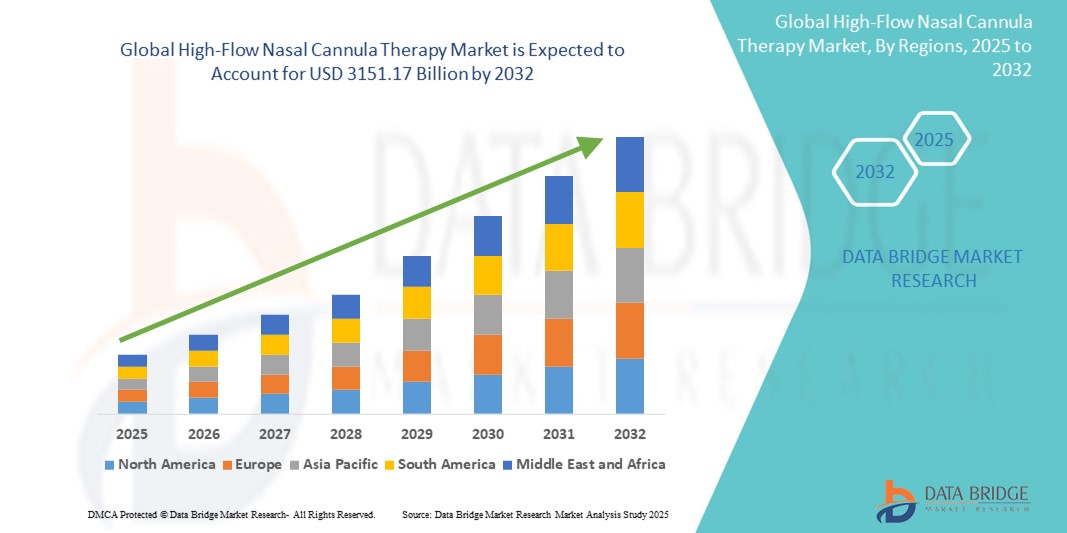
- The global high-flow nasal cannula therapy market size was valued at USD 1470.15 billion in 2024 and is expected to reach USD 3151.17 billion by 2032, at a CAGR of 10.00% during the forecast period
- The market growth is largely fueled by the increasing prevalence of respiratory diseases globally, including chronic obstructive pulmonary disease (COPD), acute respiratory failure, and asthma. This rise in respiratory illnesses, coupled with a growing aging population more susceptible to these conditions, significantly boosts the demand for effective respiratory support therapies
- Furthermore, continuous technological advancements in HFNC devices, such as the development of more comfortable nasal cannulas, integrated humidification systems, and portable designs, are enhancing patient compliance and therapeutic efficacy. The increasing adoption of non-invasive and user-friendly solutions in both clinical and homecare settings is establishing HFNC as a preferred modern respiratory support system. These converging factors are accelerating the uptake of global high-flow nasal cannula therapy solutions, thereby significantly boosting the industry's growth
Global High-Flow Nasal Cannula Therapy Market Analysis
- High-flow nasal cannula (HFNC) therapy involves delivering heated and humidified oxygen at high flow rates to patients with respiratory distress. It serves as a non-invasive respiratory support, offering enhanced patient comfort and clinical benefits compared to conventional oxygen therapy, making it a vital component in modern respiratory care across hospitals, specialty clinics, and increasingly, homecare settings
- The escalating demand for high-flow nasal cannula therapy is primarily fueled by the rising global prevalence of respiratory diseases such as COPD, asthma, and acute respiratory failure, along with a growing aging population more susceptible to these conditions. Furthermore, continuous technological advancements in HFNC devices, leading to improved comfort, portability, and efficacy, contribute significantly to their increasing adoption as a preferred non-invasive ventilatory support
- North America dominates the global high-flow nasal cannula therapy market with the largest share of 40.11% in 2024, characterized by its well-established healthcare infrastructure, high per capita healthcare expenditure, widespread awareness of advanced respiratory therapies, and a high prevalence of respiratory diseases
- Asia-Pacific is expected to be the fastest-growing region in the global high-flow nasal cannula therapy market during the forecast period, with a CAGR of 11.7%. This growth is attributed to improving healthcare infrastructure, increasing healthcare expenditure, a large and growing patient pool with respiratory conditions, rising awareness about advanced treatment modalities, and economic development in countries across the region
- The nasal cannulas segment dominates the global high-flow nasal cannula therapy market, with a market share of 35.7%, This dominance is driven by their essential role as the direct patient interface for oxygen delivery, coupled with their ease of use, patient comfort, and the continuous demand for consumables in various clinical and homecare settings
Report Scope and Global High-Flow Nasal Cannula Therapy Market Segmentation
|
Attributes |
Global High-Flow Nasal Cannula Therapy Key Market Insights |
|
Segments Covered |
|
|
Countries Covered |
North America
Europe
Asia-Pacific
Middle East and Africa
South America
|
|
Key Market Players |
|
|
Market Opportunities |
|
|
Value Added Data Infosets |
In addition to the insights on market scenarios such as market value, growth rate, segmentation, geographical coverage, and major players, the market reports curated by the Data Bridge Market Research also include in-depth expert analysis, pricing analysis, brand share analysis, consumer survey, demography analysis, supply chain analysis, value chain analysis, raw material/consumables overview, vendor selection criteria, PESTLE Analysis, Porter Analysis, and regulatory framework. |
Global High-Flow Nasal Cannula Therapy Market Trends
“Enhanced Personalization Through Integrated Monitoring”
- A significant and accelerating trend in the global high-flow nasal cannula therapy market is the deepening integration with advanced data analytics and sophisticated control systems. This fusion of technologies is significantly enhancing the personalization of therapy and optimizing clinical workflows, moving beyond static settings to adaptive, patient-centric care
- For instance, advanced HFNC systems are beginning to incorporate algorithms that can analyze real-time patient physiological data, such as respiratory rate, oxygen saturation, and inspiratory effort. This allows for dynamic adjustments to flow rate and oxygen concentration (FiO2) to precisely meet the patient's changing needs, thereby optimizing oxygen delivery and reducing the work of breathing
- Integrated monitoring in HFNC devices enables features such as learning individual patient respiratory patterns to anticipate changes in condition and potentially suggest proactive therapy adjustments. These smart systems can also provide more nuanced alerts based on subtle shifts in patient vitals, allowing clinicians to intervene more promptly. Furthermore, integrated sensors and advanced analytics offer clinicians a more streamlined approach to managing complex respiratory support, reducing manual adjustments and improving efficiency
- The seamless integration of HFNC devices with electronic health records (EHRs) and broader hospital information systems (HIS) facilitates centralized control and comprehensive data management. Through a single interface, healthcare providers can monitor multiple patients' HFNC parameters alongside other vital signs and medical history, creating a unified and automated care experience that supports informed decision-making
- This trend towards more intelligent, intuitive, and interconnected respiratory support systems is fundamentally reshaping clinical expectations for non-invasive ventilation. Consequently, leading companies in the respiratory care sector are developing advanced HFNC solutions with features such as adaptive flow delivery, predictive analytics for early detection of deterioration, and enhanced connectivity for remote monitoring
- The demand for HFNC systems that offer seamless integration and advanced monitoring capabilities is growing rapidly across both hospital and homecare settings, as healthcare providers and patients increasingly prioritize personalized patient care, improved clinical outcomes, and efficient resource utilization
Global High-Flow Nasal Cannula Therapy Market Dynamics
Driver
“Growing Need Due to Rising Prevalence of Respiratory Diseases and Advancements in Non-Invasive Care”
- The increasing prevalence of respiratory diseases globally, including chronic obstructive pulmonary disease (COPD), acute respiratory failure, and asthma, coupled with the accelerating adoption of non-invasive respiratory support technologies, is a significant driver for the heightened demand for high-flow nasal cannula therapy
- For instance, in March 2024, Vapotherm, Inc., a leading manufacturer in the HFNC market, announced the expansion of its clinical evidence portfolio with new data supporting the use of its Precision Flow Hi-VNI system in preventing escalation of respiratory distress in emergency department settings. Such continuous clinical validation and strategic focus on improving patient outcomes by key companies are expected to drive the global high-flow nasal cannula therapy industry growth in the forecast period
- As healthcare providers become more aware of the clinical benefits of HFNC therapy and seek enhanced solutions for managing respiratory distress, HFNC offers advanced features such as precise oxygen delivery, active humidification, and washout of nasopharyngeal dead space, providing a compelling alternative over traditional oxygen therapy or even non-invasive ventilation (NIV) in certain patient populations
- Furthermore, the growing focus on patient comfort and the desire for less invasive treatment modalities are making HFNC therapy an integral component of modern respiratory care protocols, offering seamless transition between different care settings and potentially reducing the need for mechanical ventilation
- The convenience for clinicians of easier patient management, reduced complexity compared to other ventilatory supports, and the ability to manage patients in various care settings are key factors propelling the adoption of HFNC therapy in both hospital and homecare sectors. The trend towards early intervention and the increasing availability of user-friendly HFNC devices further contribute to market growth
Restraint/Challenge
“Concerns Regarding Cybersecurity and High Initial Costs”
- Concerns surrounding the high initial cost of high-flow nasal cannula therapy systems pose a significant challenge to broader market penetration, particularly for healthcare facilities with budget constraints or in developing regions. As HFNC devices often incorporate advanced humidification and flow delivery technologies, their upfront investment can be substantial compared to conventional oxygen therapy
- For instance, the cost of acquiring and maintaining HFNC devices, along with associated consumables, can be a deterrent for smaller hospitals or clinics attempting to equip their facilities, impacting the overall accessibility of this advanced therapy
- Addressing these cost concerns through value-based purchasing agreements, bundle pricing strategies, and the development of more cost-effective HFNC models is crucial for building broader adoption. Companies are increasingly focused on demonstrating the long-term cost-effectiveness of HFNC by showcasing its potential to reduce intubation rates, shorten ICU stays, and decrease overall hospital expenditures. In addition, the relatively high initial cost of some advanced HFNC systems can be a barrier to adoption for price-sensitive healthcare systems, particularly in regions with limited reimbursement frameworks
- While the clinical benefits of HFNC are increasingly recognized, the perceived premium for this advanced technology can still hinder widespread adoption, especially in healthcare environments where the immediate return on investment for sophisticated equipment is scrutinized
Global High-Flow Nasal Cannula Therapy Market Scope
- By Component
On the basis of component, the global high-flow nasal cannula therapy market is segmented into nasal cannulas, air/oxygen blenders, active humidifiers, heated inspiratory circuits, and consumables. The nasal cannulas segment is anticipated to hold a major market share of 35.7%, driven by their essential role as the primary patient interface for oxygen delivery and their classification as a consumable, leading to continuous demand and replacement.
The Single Heated Tube segment is anticipated to witness the fastest growth rate from 2025 to 2032, with strong growth expected, as it is vital for ensuring heated and humidified oxygen delivery, enhancing patient comfort and therapeutic outcomes by preventing airway dryness.
- By Medical Application
On the basis of medical application, the global high-flow nasal cannula therapy market is segmented into acute respiratory failure (ARF), chronic obstructive pulmonary disease (COPD), bronchiectasis, carbon monoxide toxicity, sleep apnea, acute heart failure, and others. The acute respiratory failure (ARF) segment dominates the market with an estimated share of 42.0% in 2024, as HFNC is widely adopted as a first-line support method for ARF and post-extubation care due to its non-invasive nature and effectiveness.
The chronic obstructive pulmonary disease (COPD) segment is expected to witness the fastest growth rate, fueled by the rising global incidence of COPD and the increasing recognition of HFNC as an effective management tool to improve patient quality of life and reduce hospitalizations.
- By End User
On the basis of end user, the Global high-flow nasal cannula therapy market is segmented into hospitals, specialty clinics, long-term care centers, ambulatory care centers, and homecare settings. The hospitals segment accounted for a significant market share of 46.0% in 2024, driven by the high volume of critical and non-critical respiratory cases admitted, the availability of advanced equipment, and the established role of hospitals as primary care providers for acute respiratory conditions.
The ambulatory care centers segments are expected to witness the fastest growth from 2025 to 2032, propelled by the increasing preference for outpatient care, the growing demand for home healthcare services for chronic respiratory conditions, and the development of more portable HFNC devices.
- By Age Group
On the basis of age group, the global high-flow nasal cannula therapy market is segmented into adult, pediatric, and neonatal. The adult segment dominates the market with the largest revenue share in 2024, primarily due to the higher prevalence of chronic respiratory diseases (such as COPD and asthma) and acute respiratory conditions in the adult and geriatric populations, which are more susceptible to such illnesses.
The pediatric and neonatal segments are expected to witness the fastest growth, driven by increasing recognition of HFNC as an effective and gentle respiratory support for infants and children with conditions such as bronchiolitis, pneumonia, and respiratory distress syndrome, leading to increased adoption in pediatric hospitals and neonatal intensive care units (NICUs).
Global High-Flow Nasal Cannula Therapy Market Regional Analysis
- North America dominates the global high-flow nasal cannula therapy market, holding the largest revenue share of 40.11% in 2024. this dominance is primarily driven by the region's well-established and advanced healthcare infrastructure, high healthcare expenditure, and a significant prevalence of chronic and acute respiratory diseases
- Healthcare providers and patients in the region highly value the clinical efficacy, enhanced patient comfort, and the ability of HFNC to reduce the need for more invasive ventilatory support. The seamless integration of these devices with existing hospital IT systems and electronic health records further enhances their appeal
- This widespread adoption in North America is strongly supported by an aging population highly susceptible to respiratory illnesses, robust investments in medical research and development, and favorable reimbursement policies that facilitate the broader utilization of advanced respiratory therapies such as HFNC. These factors establish HFNC as a preferred solution for both acute and increasingly, post-acute and home care settings
U.S. High-Flow Nasal Cannula Therapy Market Insight
The U.S. high-flow nasal cannula therapy market captured the highest revenue share in 2024 within North America, reflecting its leading position in adopting advanced respiratory care. This dominance is fueled by a high prevalence of respiratory diseases, a well-established healthcare infrastructure, and substantial healthcare expenditure. Healthcare providers in the region prioritize the clinical effectiveness, patient comfort, and the ability of HFNC to improve patient outcomes, such as reducing intubation rates. This widespread adoption is further supported by the presence of key market players, robust research and development activities, and generally favorable reimbursement policies, establishing HFNC as a crucial solution in acute and post-acute care settings.
Europe High-Flow Nasal Cannula Therapy Market Insight
The Europe high-flow nasal cannula therapy market is projected to expand at a substantial CAGR throughout the forecast period. This growth is primarily driven by the increasing burden of respiratory diseases, an aging population, and the strong emphasis on non-invasive treatment modalities to improve patient comfort and reduce hospital stays.The region benefits from well-developed healthcare systems, increasing awareness among clinicians regarding the benefits of HFNC, and supportive clinical guidelines. European countries are also focused on technological advancements in medical devices and are increasingly incorporating HFNC into their standard respiratory care protocols for various conditions across hospitals and homecare.
U.K. High-Flow Nasal Cannula Therapy Market Insight
The U.K. high-flow nasal cannula therapy market is anticipated to grow at a noteworthy CAGR during the forecast period. This growth is driven by the escalating prevalence of chronic respiratory conditions such as COPD and asthma, coupled with the National Health Service (NHS)'s focus on efficient and patient-friendly respiratory support. In addition, the U.K.'s emphasis on evidence-based medicine and the increasing adoption of non-invasive therapies are encouraging healthcare providers to integrate HFNC into their treatment pathways. The country's strong commitment to healthcare innovation and its developed healthcare infrastructure are expected to continue to stimulate market expansion.
Germany High-Flow Nasal Cannula Therapy Market Insight
The Germany high-flow nasal cannula therapy market is expected to expand at a considerable CAGR during the forecast period. This growth is fueled by increasing awareness of advanced respiratory therapies, a strong and well-funded healthcare system, and a demand for technologically sophisticated medical solutions. Germany’s well-developed infrastructure, combined with its emphasis on precision engineering and quality in medical devices, promotes the adoption of HFNC, particularly in its advanced hospital and specialized care settings. The integration of HFNC with broader patient management systems and a strong preference for high-quality, patient-centric care align with local healthcare expectations.
Asia-Pacific High-Flow Nasal Cannula Therapy Market Insight
The Asia-Pacific high-flow nasal cannula therapy market is poised to grow at the fastest CAGR of 11.6% from 2025 to 2032. This acceleration is driven by increasing urbanization, rapidly developing healthcare infrastructure, and a surging patient pool with respiratory diseases in countries such as China, Japan, and India. The region's growing healthcare expenditure, supported by government initiatives promoting access to advanced medical technologies, is driving the adoption of HFNC. Furthermore, as APAC emerges as a significant manufacturing hub for medical components and systems, the increasing affordability and accessibility of HFNC devices are expanding their reach to a wider patient base across diverse economic strata.
Japan High-Flow Nasal Cannula Therapy Market Insight
The Japan high-flow nasal cannula therapy market is gaining momentum due to the country’s rapidly aging population, which contributes to a higher prevalence of respiratory conditions, and a strong demand for advanced, patient-friendly medical technologies. The Japanese market places significant emphasis on high-quality healthcare and continuous innovation. The adoption of HFNC is driven by the increasing integration of these devices within hospital respiratory care units and a focus on improving patient comfort and outcomes. Moreover, Japan's well-developed healthcare system and its commitment to adopting the latest medical advancements are fueling growth, particularly for solutions that offer effective and non-invasive respiratory support.
China High-Flow Nasal Cannula Therapy Market Insight
The China high-flow nasal cannula therapy market accounted for the largest market revenue share in Asia Pacific. This is attributed to the country's vast patient population, rapid advancements in healthcare infrastructure, and high rates of technological adoption in medical devices. China stands as one of the largest and fastest-growing markets for medical equipment, and HFNC is becoming increasingly popular in its expanding hospital network, as well as in the nascent but growing homecare sector. The push towards modernizing healthcare services and the availability of increasingly affordable HFNC options, alongside strong domestic manufacturers, are key factors propelling the market in China.
Global High-Flow Nasal Cannula Therapy Market Share
The Global high-flow nasal cannula therapy industry is primarily led by well-established companies, including:
- Fisher & Paykel Healthcare Limited (New Zealand)
- Vapotherm (U.S.)
- Teleflex Incorporated (U.S.)
- Hamilton Medical (Switzerland)
- ICU Medical, Inc. (U.S.)
- Flexicare (Group) Limited (U.K.)
- Masimo (U.S.)
- Teijin Limited (Japan)
- Drägerwerk AG & Co. KGaA (Germany)
- Intersurgical Ltd (U.K.)
- Teleflex Incorporated (U.S.)
- Mercury Medical (U.S.)
- Movair (U.S.)
Latest Developments in Global High-Flow Nasal Cannula Therapy Market
- In March 2025, ResMed, a leading health technology company, announced a comprehensive brand evolution aimed at unifying its brand portfolio to serve more people and healthcare providers worldwide. This initiative underscores ResMed's commitment to delivering innovations in respiratory therapy, including high-flow nasal cannula solutions, and expanding awareness of sleep and breathing health as mainstream priorities
- In February 2025, a study published in Hospital Pediatrics highlighted efforts to improve the use of HFNC in children with bronchiolitis, pneumonia, and asthma, aiming to decrease HFNC length of treatment and length of stay. This initiative reflects the ongoing clinical efforts to optimize HFNC therapy and ensure its value in diverse pediatric respiratory conditions
- In February 2025, a study in ERS Publications investigated the physiological effects of high-flow nasal cannula during sustained high-intensity exercise in healthy volunteers. The research concluded that HFNC intervention reduces respiratory effort and dyspnoea and improves temporal ventilation distribution, showcasing potential broader applications of HFNC beyond acute respiratory failure
- In April 2025, Vapotherm, Inc. introduced the Unicorn Cannula, an innovative single-prong cannula designed to enhance CO2 clearance and patient comfort. This product highlights Vapotherm's commitment to developing cutting-edge patient interfaces that optimize HFNC delivery and improve clinical outcomes
- In October 2023, the FDA granted 510(k) clearance to the Bonhawa high-flow oxygen therapy system. Designed to enhance the treatment of patients with respiratory insufficiency, this approval signifies continued innovation and expansion of available HFNC devices in key markets

- Interactive Data Analysis Dashboard
- Company Analysis Dashboard for high growth potential opportunities
- Research Analyst Access for customization & queries
- Competitor Analysis with Interactive dashboard
- Latest News, Updates & Trend analysis
- Harness the Power of Benchmark Analysis for Comprehensive Competitor Tracking
Data collection and base year analysis are done using data collection modules with large sample sizes. The stage includes obtaining market information or related data through various sources and strategies. It includes examining and planning all the data acquired from the past in advance. It likewise envelops the examination of information inconsistencies seen across different information sources. The market data is analysed and estimated using market statistical and coherent models. Also, market share analysis and key trend analysis are the major success factors in the market report. To know more, please request an analyst call or drop down your inquiry.
The key research methodology used by DBMR research team is data triangulation which involves data mining, analysis of the impact of data variables on the market and primary (industry expert) validation. Data models include Vendor Positioning Grid, Market Time Line Analysis, Market Overview and Guide, Company Positioning Grid, Patent Analysis, Pricing Analysis, Company Market Share Analysis, Standards of Measurement, Global versus Regional and Vendor Share Analysis. To know more about the research methodology, drop in an inquiry to speak to our industry experts.
Data Bridge Market Research is a leader in advanced formative research. We take pride in servicing our existing and new customers with data and analysis that match and suits their goal. The report can be customized to include price trend analysis of target brands understanding the market for additional countries (ask for the list of countries), clinical trial results data, literature review, refurbished market and product base analysis. Market analysis of target competitors can be analyzed from technology-based analysis to market portfolio strategies. We can add as many competitors that you require data about in the format and data style you are looking for. Our team of analysts can also provide you data in crude raw excel files pivot tables (Fact book) or can assist you in creating presentations from the data sets available in the report.













