



Global Model-based Enterprise Market Segmentation, By Offering (Solutions and Services), Deployment Type (On-Premise and Cloud), Industry (Aerospace and Defence, Automotive, Construction, Retail, Power and Energy, and Food and Beverages)- Industry Trends and Forecast to 2032
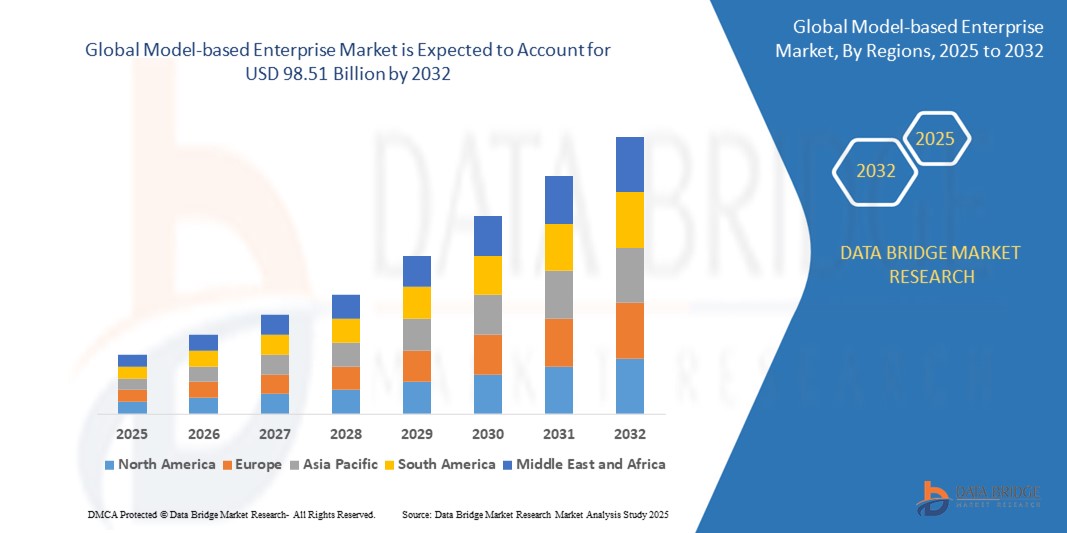
Model-based Enterprise Market Size
- The global model-based enterprise market size was valued at USD 26.10 billion in 2024 and is expected to reach USD 98.51 billion by 2032, at a CAGR of 18.06% during the forecast period
- The market growth is largely fuelled by the rising adoption of digital twins, increasing demand for product lifecycle management (PLM), and the push for improved manufacturing efficiency through 3D modelling and real-time data integration
- In addition, the increasing shift toward Industry 4.0 and smart manufacturing initiatives is accelerating the implementation of MBE solutions across aerospace, automotive, and industrial sectors
Model-based Enterprise Market Analysis
- The model-based enterprise market continues to expand steadily due to growing adoption across industries that seek to improve collaboration and streamline manufacturing operations through integrated 3D models
- Increased focus on digital transformation and the shift toward paperless engineering workflows are contributing to the rising implementation of model-based approaches in product lifecycle management
- North America dominates the model-based enterprise market with the largest revenue share of 37% in 2024, driven by the presence of leading technology providers and early adoption of advanced digital manufacturing solutions
- Asia-Pacific is expected to be the fastest growing region in the model-based enterprise market during the forecast period due to rapid industrialization, growing adoption of Industry 4.0 technologies, and increasing investments in smart manufacturing across countries such as China, India, and Japan
- The solutions segment holds the largest market revenue share in 2024, driven by the increasing need for integrated software platforms that enable digital continuity across product lifecycles. Solutions provide enterprises with tools for design, simulation, and lifecycle management, helping streamline operations
Report Scope and Model-based Enterprise Market Segmentation
|
Attributes |
Model-based Enterprise Key Market Insights |
|
Segments Covered |
|
|
Countries Covered |
North America
Europe
Asia-Pacific
Middle East and Africa
South America
|
|
Key Market Players |
|
|
Market Opportunities |
|
|
Value Added Data Infosets |
In addition to the market insights such as market value, growth rate, market segments, geographical coverage, market players, and market scenario, the market report curated by the Data Bridge Market Research team includes in-depth expert analysis, import/export analysis, pricing analysis, production consumption analysis, and pestle analysis. |
Model-based Enterprise Market Trends
“Integration of Digital Twins with Model-Based Enterprise”
- One prominent trend in the model-based enterprise market is the growing integration of digital twin technology, which provides real-time digital replicas of physical products and processes
- This trend enhances decision-making by enabling continuous monitoring and predictive analysis throughout the product lifecycle, improving both quality and efficiency
- Industries such as aerospace and automotive are increasingly adopting digital twins to optimize design validation and performance testing before physical prototypes are built
- For instance, Boeing uses digital twins for aircraft maintenance forecasting, and BMW leverages them in production planning
- By combining digital twins with model-based enterprise strategies, companies gain deeper insights into operational data, allowing for faster iterations and reduced product development cycles
- This convergence is also accelerating the use of Internet of Things-enabled sensors, creating connected ecosystems where digital models are constantly updated based on real-world inputs, such as in smart factories or advanced healthcare equipment maintenance systems
Model-based Enterprise Market Dynamics
Driver
“Rising Adoption of Digital Manufacturing Across Industries”
- The model-based enterprise market is witnessing growth due to the increasing shift toward digital manufacturing driven by Industry 4.0 adoption across industries
- These solutions ensure digital continuity throughout the product lifecycle by replacing traditional 2D drawings with enriched 3D models containing manufacturing and product data
- A centralized digital model enhances collaboration, speeds up decision-making, and reduces product development cycles across departments
- For instance, automotive companies are using model-based systems to accelerate design validation and reduce prototyping costs
- Aerospace leaders such as Lockheed Martin are adopting model-based enterprise strategies to improve traceability and manage complex systems more efficiently
Restraint/Challenge
“High Initial Investment and Integration Complexity”
- One major challenge in the model-based enterprise market is the high cost of initial investment, including new software, infrastructure upgrades, and employee training
- Shifting from traditional systems to model-based workflows often disrupts existing processes and requires careful change management, which can be difficult for small and medium-sized enterprises
- Seamless integration across departments such as engineering, procurement, and manufacturing remains complex due to varied software tools and data formats
- For instance, challenges arise when trying to unify model-based data between CAD software and ERP systems without standardized protocols
- A shortage of skilled professionals with expertise in both 3D modelling and enterprise-level integration further slows down the rate of adoption across the industry
Model-based Enterprise Market Scope
The global model-based enterprise market is segmented on the basis of offering, deployment type, and industry.
- By Offering
On the basis of offering, the market is segmented into solutions and services. The solutions segment holds the largest market revenue share in 2024, driven by the increasing need for integrated software platforms that enable digital continuity across product lifecycles. Solutions provide enterprises with tools for design, simulation, and lifecycle management, helping streamline operations.
The services segment is expected to witness the fastest growth rate from 2025 to 2032, supported by rising demand for consulting, implementation, and maintenance services to optimize model-based enterprise adoption and improve operational efficiency.
- By Deployment Type
On the basis of deployment type, the market is segmented into on-premise and cloud. The cloud deployment segment held the largest revenue share in 2024, attributed to its scalability, cost-effectiveness, and ease of access for remote teams. Cloud solutions enable real-time collaboration and data sharing across global locations, which is critical for modern enterprises.
The on-premise segment is expected to witness the fastest growth rate from 2025 to 2032, favoured by organizations that prioritize strict data security and control over their sensitive information. Many enterprises with established IT infrastructure prefer on-premise deployment to maintain direct oversight of their systems and ensure compliance with internal policies or regulatory standards. This approach also appeals to industries with critical operations where latency and data privacy are paramount. As a result, on-premise solutions continue to be a preferred choice for sectors such as aerospace, defence, and energy, supporting consistent market growth.
- By Industry
On the basis of industry, the market is segmented into aerospace and defence, automotive, construction, retail, power and energy, and food and beverages. The aerospace and defence segment commands the largest revenue share in 2024, driven by the complexity of systems and the critical need for precision and traceability in manufacturing processes.
The automotive segment is expected to witness the fastest growth rate from 2025 to 2032, fuelled by the push towards electric vehicles and the demand for advanced design and simulation capabilities. Other industries are progressively adopting model-based enterprise solutions to enhance efficiency and innovation in their operations.
Model-based Enterprise Market Regional Analysis
- North America dominates the model-based enterprise market with the largest revenue share of 37% in 2024, driven by widespread adoption of digital transformation initiatives and advanced manufacturing technologies
- Organizations in the region prioritize operational efficiency and innovation, leveraging model-based enterprise solutions to enhance product development and streamline workflows across industries
- This strong demand is further supported by substantial investments in Industry 4.0 technologies, a mature IT infrastructure, and a skilled workforce, establishing the region as a leader in the adoption of model-based enterprise frameworks
U.S. Model-based Enterprise Market Insight
The U.S. model-based enterprise market captured the largest revenue share within North America in 2024, fuelled by rapid digitization and growing demand for integrated product lifecycle management. Enterprises are focusing on improving collaboration, reducing development time, and increasing product quality through advanced 3D modelling and simulation tools. The strong presence of key industry players and technology providers further accelerates market growth. In addition, government initiatives promoting smart manufacturing and innovation hubs contribute significantly to the expansion of the model-based enterprise market.
Europe Model-based Enterprise Market Insight
من المتوقع أن يشهد سوق المؤسسات القائمة على النماذج في أوروبا أسرع معدل نمو خلال فترة التوقعات، مدفوعًا بتزايد الأتمتة الصناعية ولوائح الجودة والسلامة الصارمة. ويساعد تزايد اعتماد التوائم الرقمية والنماذج الأولية الافتراضية الشركات في قطاعات الطيران والسيارات والصناعة على تحسين دقة المنتجات وامتثالها للمعايير. كما يشجع تركيز المنطقة على التصنيع المستدام والابتكار الرقمي على دمج حلول المؤسسات القائمة على النماذج في كل من المشاريع الجديدة وتحديثات الأنظمة القديمة.
نظرة ثاقبة على سوق المؤسسات القائمة على النموذج في المملكة المتحدة
من المتوقع أن يشهد سوق المؤسسات القائمة على النماذج في المملكة المتحدة أسرع معدل نمو، مدفوعًا بمبادرات التحول الرقمي المتزايدة والطلب على إدارة مُحسّنة لدورة حياة المنتج. وتدعم الاستثمارات المتزايدة في البحث والتطوير، إلى جانب التركيز المتزايد على الابتكار في التصنيع والهندسة، توسع السوق. كما أن التزام المملكة المتحدة بتقنيات الثورة الصناعية الرابعة والتعاون الوثيق بين الصناعة والأوساط الأكاديمية يُحفّزان اعتماد حلول المؤسسات القائمة على النماذج.
نظرة ثاقبة على سوق المؤسسات القائمة على النموذج الألماني
من المتوقع أن يشهد سوق المؤسسات القائمة على النماذج في ألمانيا أسرع معدل نمو بفضل ريادتها في مجال الأتمتة الصناعية والهندسة الدقيقة. تدعم قاعدة التصنيع الراسخة، إلى جانب التركيز على الابتكار الرقمي والاستدامة، التطبيق الواسع لأطر عمل المؤسسات القائمة على النماذج. كما يعزز التكامل مع إنترنت الأشياء وأنظمة المصانع الذكية الطلب، لا سيما في قطاعي السيارات والفضاء. تفضل الشركات المحلية الحلول التي تعزز الكفاءة التشغيلية مع ضمان أمن البيانات والامتثال للوائح التنظيمية.
نظرة ثاقبة على سوق المؤسسات القائمة على النموذج في منطقة آسيا والمحيط الهادئ
من المتوقع أن يشهد سوق المؤسسات القائمة على النماذج في منطقة آسيا والمحيط الهادئ أسرع معدل نمو خلال فترة التوقعات، مدفوعًا بالتصنيع السريع، وتزايد الاعتماد الرقمي، والمبادرات الحكومية الداعمة للتصنيع الذكي. تستثمر دول مثل الصين واليابان والهند بكثافة في تقنيات التصنيع المتقدمة لتحسين تطوير المنتجات وتعزيز القدرة التنافسية. كما أن الحضور المتزايد للشركات متعددة الجنسيات وتوسع البنية التحتية يُسهّلان نمو السوق. إضافةً إلى ذلك، يُمكّن تركيز المنطقة على الابتكار والحلول الفعالة من حيث التكلفة من اعتماد أنظمة المؤسسات القائمة على النماذج على نطاق أوسع في مختلف القطاعات.
نظرة ثاقبة على سوق المؤسسات القائمة على النموذج الياباني
من المتوقع أن يشهد سوق الشركات القائمة على النماذج في اليابان أسرع معدل نمو، بفضل تركيز البلاد القوي على الابتكار التكنولوجي والتميز في التصنيع. ويُعزز دمج الممارسات القائمة على النماذج مع إنترنت الأشياء والروبوتات الدقة والكفاءة في تطوير المنتجات. كما أن شيخوخة القوى العاملة والطلب على الأتمتة يدفعان عجلة التبني، لا سيما في صناعتي السيارات والإلكترونيات. ويدعم التزام اليابان بمبادرات المصانع الذكية الاستثمارات المستمرة في حلول الشركات الرقمية.
نظرة ثاقبة على سوق المؤسسات القائمة على النموذج الصيني
ستستحوذ الصين على أكبر حصة من إيرادات السوق في منطقة آسيا والمحيط الهادئ بحلول عام 2024، مدفوعةً بالتوسع الحضري السريع والتقدم التكنولوجي وتوسع قطاع التصنيع. ويُسرّع توجه الحكومة نحو الثورة الصناعية الرابعة والمصانع الذكية من اعتماد أطر عمل المؤسسات القائمة على النماذج. وتُتيح التقنيات المحلية القوية والحلول الفعالة من حيث التكلفة هذه الأنظمة لمجموعة واسعة من الشركات، من السيارات إلى الإلكترونيات الاستهلاكية. ويُعدّ تركيز الصين على الابتكار والكفاءة عاملاً رئيسياً في دفع عجلة نمو السوق.
حصة سوق المؤسسات القائمة على النموذج
إن صناعة المؤسسات القائمة على النماذج يقودها في المقام الأول شركات راسخة، بما في ذلك:
- سيمنز (ألمانيا)
- PTC (الولايات المتحدة)
- شركة أوراكل (الولايات المتحدة)
- شركة إنترناشونال تيكني جروب (الولايات المتحدة)
- إنفور (الولايات المتحدة)
- جنرال إلكتريك (الولايات المتحدة)
- شركة إتش سي إل تكنولوجيز المحدودة (الهند)
- داسو سيستمز (فرنسا)
- شركة أوتوديسك (الولايات المتحدة)
- شركة سيسكو سيستمز (الولايات المتحدة)
- شركة أراس (الولايات المتحدة)
- شركة ANSYS، المحدودة (الولايات المتحدة)
- شركة أنارك (الولايات المتحدة)
أحدث التطورات في سوق المؤسسات العالمية القائمة على النماذج
- في يونيو 2022، طرحت شركة PTC Inc. إصدارًا مُحسّنًا من برنامج إدارة دورة حياة المنتج، مُركزًا على تحسين التكامل مع أدوات التصنيع الرقمية. يهدف هذا التطوير إلى تبسيط سير العمل، وتشجيع اعتماد ممارسات المؤسسات القائمة على النماذج على نطاق أوسع، وتعزيز الاستمرارية الرقمية في جميع العمليات. تدعم الإمكانيات الجديدة تعاونًا وكفاءة أفضل في عمليات التصميم والإنتاج، مما يُسهم في تسريع عملية اتخاذ القرارات. ونتيجةً لذلك، تُعزز هذه الخطوة مكانة PTC في السوق وتُسرّع اعتماد حلول إدارة دورة حياة المنتج (MBE)، لا سيما بين القطاعات التي تسعى إلى حلول رقمية شاملة.
- في سبتمبر 2023، وسّعت شركة سيمنز إيه جي محفظة برامجها للصناعات الرقمية بإضافة تحسينات جديدة مصممة لدعم تطبيقات المؤسسات القائمة على النماذج. صُمم هذا التطوير لإدارة سير عمل التصنيع المعقدة بفعالية أكبر من خلال تحسين الوصول الفوري إلى البيانات والتكامل بين الوظائف. يُفيد هذا التحديث الشركات من خلال تحسين عمليات هندسة النظم وتطوير المنتجات. ويُعزز ريادة سيمنز في مجال الرقمنة الصناعية، ومن المتوقع أن يُحدث تأثيرًا كبيرًا على نمو اعتماد حلول MBE في قطاعات التصنيع عالية التقنية.
SKU-
احصل على إمكانية الوصول عبر الإنترنت إلى التقرير الخاص بأول سحابة استخبارات سوقية في العالم

- لوحة معلومات تحليل البيانات التفاعلية
- لوحة معلومات تحليل الشركة للفرص ذات إمكانات النمو العالية
- إمكانية وصول محلل الأبحاث للتخصيص والاستعلامات
- تحليل المنافسين باستخدام لوحة معلومات تفاعلية
- آخر الأخبار والتحديثات وتحليل الاتجاهات
- استغل قوة تحليل المعايير لتتبع المنافسين بشكل شامل
منهجية البحث
يتم جمع البيانات وتحليل سنة الأساس باستخدام وحدات جمع البيانات ذات أحجام العينات الكبيرة. تتضمن المرحلة الحصول على معلومات السوق أو البيانات ذات الصلة من خلال مصادر واستراتيجيات مختلفة. تتضمن فحص وتخطيط جميع البيانات المكتسبة من الماضي مسبقًا. كما تتضمن فحص التناقضات في المعلومات التي شوهدت عبر مصادر المعلومات المختلفة. يتم تحليل بيانات السوق وتقديرها باستخدام نماذج إحصائية ومتماسكة للسوق. كما أن تحليل حصة السوق وتحليل الاتجاهات الرئيسية هي عوامل النجاح الرئيسية في تقرير السوق. لمعرفة المزيد، يرجى طلب مكالمة محلل أو إرسال استفسارك.
منهجية البحث الرئيسية التي يستخدمها فريق بحث DBMR هي التثليث البيانات والتي تتضمن استخراج البيانات وتحليل تأثير متغيرات البيانات على السوق والتحقق الأولي (من قبل خبراء الصناعة). تتضمن نماذج البيانات شبكة تحديد موقف البائعين، وتحليل خط زمني للسوق، ونظرة عامة على السوق ودليل، وشبكة تحديد موقف الشركة، وتحليل براءات الاختراع، وتحليل التسعير، وتحليل حصة الشركة في السوق، ومعايير القياس، وتحليل حصة البائعين على المستوى العالمي مقابل الإقليمي. لمعرفة المزيد عن منهجية البحث، أرسل استفسارًا للتحدث إلى خبراء الصناعة لدينا.
التخصيص متاح
تعد Data Bridge Market Research رائدة في مجال البحوث التكوينية المتقدمة. ونحن نفخر بخدمة عملائنا الحاليين والجدد بالبيانات والتحليلات التي تتطابق مع هدفهم. ويمكن تخصيص التقرير ليشمل تحليل اتجاه الأسعار للعلامات التجارية المستهدفة وفهم السوق في بلدان إضافية (اطلب قائمة البلدان)، وبيانات نتائج التجارب السريرية، ومراجعة الأدبيات، وتحليل السوق المجدد وقاعدة المنتج. ويمكن تحليل تحليل السوق للمنافسين المستهدفين من التحليل القائم على التكنولوجيا إلى استراتيجيات محفظة السوق. ويمكننا إضافة عدد كبير من المنافسين الذين تحتاج إلى بيانات عنهم بالتنسيق وأسلوب البيانات الذي تبحث عنه. ويمكن لفريق المحللين لدينا أيضًا تزويدك بالبيانات في ملفات Excel الخام أو جداول البيانات المحورية (كتاب الحقائق) أو مساعدتك في إنشاء عروض تقديمية من مجموعات البيانات المتوفرة في التقرير.











