


Global Oncology Small Molecule API Market Segmentation, By Type of Cancer (Breast, Cervical, Lung, Liver, Colorectal, and Others), API Classification Type (Thalidomide Analogues, Alkalyting Agents, Androgen Receptors, Folate Analog Metabolic, Nucleoside Metabolic, Microtubule, and Proteasome Inhibitors), API Type (Innovative Oncology APIs and Generic Oncology APIs), Manufacturer Type (Captive and Merchant), End Use (Hospitals, Diagnostic Laboratories, Diagnostic Imaging Centers, Academia, Specialty Clinics, and Other End Users), Type of Synthesis (Synthetic Oncology APIs and Biotech Oncology APIs) – Industry Trends and Forecast to 2032
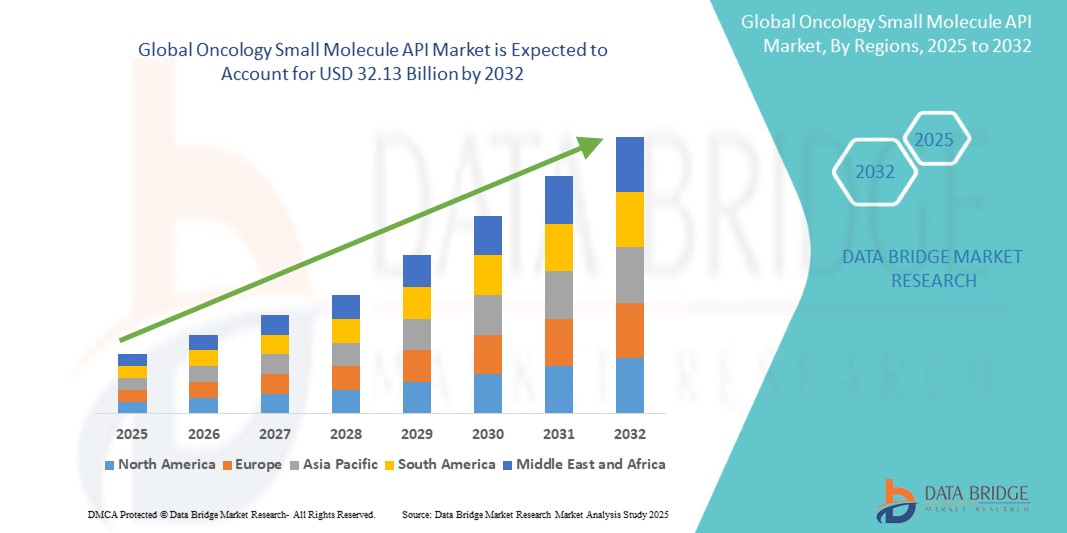
Oncology Small Molecule API Market Analysis
The oncology small molecule API market is experiencing significant growth driven by the increasing prevalence of cancer worldwide and the rising demand for targeted therapies. Small molecules have emerged as an effective approach to treating various types of cancer due to their ability to precisely target cancer cells while minimizing damage to surrounding healthy tissue. This market's expansion is also fueled by continuous advancements in drug development, with a focus on precision medicine and the increasing adoption of novel therapies such as kinase inhibitors and immune modulators.
Key factors contributing to market growth include the growing investments in research and development by pharmaceutical companies, the continuous pipeline of oncology drugs, and the shift toward personalized treatment regimens. In addition, the rise of biologics and biosimilars has spurred innovation in the small molecule API segment, as pharmaceutical companies seek to offer alternative treatments with fewer side effects and enhanced efficacy.
The market is also benefiting from the increasing approval of new oncology small molecule drugs by regulatory authorities, improving patient access to cutting-edge treatments. Moreover, the rising preference for combination therapies that integrate small molecules with other therapeutic modalities, such as immunotherapy, further strengthens the market's prospects.
Oncology Small Molecule API Market Size
The global oncology small molecule API market size was valued at USD 18.01 billion in 2024 and is projected to reach USD 32.13 billion by 2032, with a CAGR of 7.50% during the forecast period of 2025 to 2032. In addition to the insights on market scenarios such as market value, growth rate, segmentation, geographical coverage, and major players, the market reports curated by the Data Bridge Market Research also include depth expert analysis, patient epidemiology, pipeline analysis, pricing analysis, and regulatory framework.
Oncology Small Molecule API Market Trends
“Growing Demand for Effective Cancer Treatments”
The oncology small molecule API market is flourishing primarily due to the growing demand for effective cancer treatments and advancements in drug development. Small molecules, which target specific molecular pathways involved in cancer progression, have proven highly effective in treating various cancer types. Their ability to precisely target cancer cells while minimizing damage to healthy tissue has made them increasingly popular in precision medicine approaches. Furthermore, continuous innovation in oncology therapies, such as kinase inhibitors and immune-modulating small molecules, has expanded the range of treatment options. The rising focus on personalized cancer therapies, which tailor treatments to individual genetic profiles, also drives market growth. In addition, the increasing approval of new oncology drugs and the strategic investments by pharmaceutical companies in R&D further boost the market. Together, these factors are propelling the demand for small molecule APIs, making them a crucial component of the evolving oncology treatment landscape.
Report Scope and Oncology Small Molecule API Market Segmentation
|
Attributes |
Oncology Small Molecule API Key Market Insights |
|
Segments Covered |
|
|
Countries Covered |
U.S., Canada and Mexico, Germany, France, U.K., Italy, Spain, Denmark, Sweden, Norway, Rest of Europe, China, Japan, India, South Korea, Australia, Thailand, Indonesia, Rest of Asia-Pacific, Saudi Arabia, U.A.E, South Africa, Egypt, Kuwait, Rest of Middle East and Africa, Brazil, Argentina and Rest of South America |
|
Key Market Players |
Abbott (U.S.), Accord Healthcare (UK), AbbVie Inc. (U.S.), Apotex Inc. (Canada), AstraZeneca (UK), Bayer AG (Germany), Boehringer Ingelheim International GmbH (Germany), Bristol-Myers Squibb Company (U.S.), DAIICHI SANKYO COMPANY, LIMITED (Japan), Dr. Reddy’s Laboratories Ltd. (India), F. Hoffmann-La Roche Ltd (Switzerland), Fresenius Kabi AG (Germany), Genentech, Inc. (U.S.), Gilead Sciences, Inc. (U.S.), GSK plc. (UK), Johnson & Johnson Services, Inc. (U.S.), Lilly (U.S.), Novartis AG (Switzerland), Pfizer Inc. (U.S.), Sun Pharmaceutical Industries Ltd. (India), and Viatris Inc. (U.S.) |
|
Market Opportunities |
|
|
Value Added Data Infosets |
In addition to the insights on market scenarios such as market value, growth rate, segmentation, geographical coverage, and major players, the market reports curated by the Data Bridge Market Research also include depth expert analysis, patient epidemiology, pipeline analysis, pricing analysis, and regulatory framework. |
Oncology Small Molecule API Market Definition
Oncology small molecule active pharmaceutical ingredients (API) refer to the active ingredients in pharmaceutical drugs used to treat cancer, which are small, chemically synthesized molecules. These molecules work by targeting specific biological processes or pathways that promote cancer cell growth and survival. Unlike biologic therapies, which are made from living organisms, small molecules are typically manufactured through chemical processes and can be administered orally or intravenously.
Oncology Small Molecule API Market Dynamics
Drivers
- Increasing Prevalence of Cancer
The rising global incidence of cancer significantly drives the demand for oncology small molecule APIs. As cancers such as lung, breast, and colorectal become more common, the need for effective treatments intensifies. Small molecule APIs such as cisplatin, used in chemotherapy, and targeted therapies such as imatinib for chronic myelogenous leukemia, are essential in managing these conditions. For instance, the global rise in breast cancer cases has led to an increased use of small molecule drugs like letrozole. This surge in usage has sparked ongoing research into optimizing treatment efficacy and minimizing side effects for better patient outcomes. The growing patient population is leading to higher drug consumption, thereby boosting the market for small molecule APIs. With continued cancer growth, this trend is expected to sustain the demand for these drugs.
- Advancements in Drug Development
Ongoing innovations in drug development are propelling the oncology small molecule API market. Advances such as the creation of kinase inhibitors such as gefitinib for non-small cell lung cancer (NSCLC) and immune-modulating small molecules are expanding treatment options. For instance, the approval of osimertinib, a targeted therapy for EGFR-mutated NSCLC, has significantly improved patient outcomes. These targeted therapies focus on specific molecular pathways to inhibit cancer cell growth, offering more effective and personalized treatments. Furthermore, the approval of venetoclax for chronic lymphocytic leukemia (CLL) continues to fuel demand. As drug development accelerates, the market for oncology small molecule APIs is expected to grow substantially.
Opportunities
- Personalized Medicine and Targeted Therapies
إن التركيز المتزايد على الطب الشخصي يمثل فرصة كبيرة في سوق المواد الصيدلانية الجزيئية الصغيرة المستخدمة في علاج الأورام. إن تصميم علاجات السرطان على أساس الملف الجيني للفرد يسمح بعلاجات أكثر فعالية مع آثار جانبية أقل. على سبيل المثال، تعمل العلاجات المستهدفة مثل إيماتينيب لعلاج سرطان الدم النقوي المزمن (CML) أو أوسيميرتينيب لعلاج سرطان الرئة ذو الخلايا غير الصغيرة المتحور بجين عامل نمو البشرة (NSCLC) على تحسين نتائج العلاج. تقدم هذه العلاجات المستهدفة خيارات علاج أكثر دقة وشخصية، مما يؤدي إلى تحسين معدلات البقاء على قيد الحياة وتقليل الآثار السلبية للمرضى. مع انتشار الاختبارات الجينية على نطاق أوسع، من المتوقع أن يرتفع الطلب على الجزيئات الصغيرة التي تستهدف طفرات جينية محددة، مما يوفر إمكانات نمو كبيرة في هذه السوق.
- توسيع نطاق العلاجات المركبة
وتكمن فرصة رئيسية أخرى في سوق المواد الفعالة الجزيئية الصغيرة المستخدمة في علاج الأورام في التبني المتزايد للعلاجات المركبة، والتي تعمل على إحداث ثورة في علاج السرطان. ومن خلال الجمع بين الجزيئات الصغيرة والعلاجات المناعية أو غيرها من الوسائل العلاجية، تعمل هذه التركيبات على تعزيز فعالية العلاج وتحسين نتائج المرضى ومعالجة الطبيعة المعقدة والمتطورة للسرطان. على سبيل المثال، يُظهِر الجمع بين مثبطات الجزيئات الصغيرة مثل فينيتوكلاتس والعلاجات المناعية وعدًا كبيرًا في علاج سرطانات الدم مثل سرطان الدم الليمفاوي المزمن. ومع تطوير علاجات مركبة جديدة والحصول على الموافقة عليها، سيستمر الطلب على المواد الفعالة الجزيئية الصغيرة في الارتفاع، مما يعزز نمو السوق ويوفر إمكانات لعلاجات مبتكرة.
القيود/التحديات
- تكاليف التطوير والتصنيع المرتفعة
إن أحد القيود الرئيسية في سوق المواد الفعالة الجزيئية الصغيرة المستخدمة في علاج الأورام هو التكلفة العالية لتطوير وتصنيع الأدوية. إن العملية المعقدة والطويلة لإنشاء أدوية الأورام الجزيئية الصغيرة، من البحث إلى التجارب السريرية، تتطلب استثمارات كبيرة. على سبيل المثال، يتضمن تطوير العلاجات المستهدفة مثل أوسيميرتينيب أو فينيتوكلاتس بحثًا مكثفًا وإثباتًا سريريًا، مما يجعل طرح هذه الأدوية في السوق مكلفًا. يمكن أن تحد هذه التكاليف المرتفعة من إمكانية الوصول إليها وتبطئ تطوير علاجات جديدة، مما يمثل تحديًا لكل من الشركات المصنعة والمرضى .
- العقبات التنظيمية الصارمة
وتشكل المتطلبات التنظيمية الصارمة تحدياً آخر يواجه سوق المواد الصيدلانية الجزيئية الصغيرة المستخدمة في علاج الأورام. وقد يؤدي التعامل مع عملية الموافقة المعقدة للأدوية الجديدة، وخاصة في مجال الأورام، إلى تأخير الوصول إلى السوق وزيادة تكاليف التطوير. على سبيل المثال، في حين حصلت إيماتينيب والعلاجات المستهدفة الأخرى على الموافقة، فقد خضع تطويرها لتدقيق تنظيمي صارم. ويمكن لهذه العقبات أن تحد من السرعة التي تصبح بها العلاجات الجديدة متاحة، مما يخلق تحديات للشركات التي تحاول تلبية طلب المرضى بسرعة.
يقدم تقرير السوق هذا تفاصيل عن التطورات الحديثة الجديدة واللوائح التجارية وتحليل الاستيراد والتصدير وتحليل الإنتاج وتحسين سلسلة القيمة وحصة السوق وتأثير اللاعبين المحليين والمحليين في السوق وتحليل الفرص من حيث جيوب الإيرادات الناشئة والتغييرات في لوائح السوق وتحليل نمو السوق الاستراتيجي وحجم السوق ونمو سوق الفئات ومنافذ التطبيق والهيمنة وموافقات المنتجات وإطلاق المنتجات والتوسعات الجغرافية والابتكارات التكنولوجية في السوق. للحصول على مزيد من المعلومات حول السوق، اتصل بـ Data Bridge Market Research للحصول على موجز محلل، وسيساعدك فريقنا في اتخاذ قرار سوقي مستنير لتحقيق نمو السوق.
نطاق سوق API للجزيئات الصغيرة في علم الأورام
يتم تقسيم السوق على أساس نوع السرطان ونوع تصنيف API ونوع API ونوع الشركة المصنعة والاستخدام النهائي ونوع التركيب. سيساعدك النمو بين هذه القطاعات على تحليل قطاعات النمو الضئيلة في الصناعات وتزويد المستخدمين بنظرة عامة قيمة على السوق ورؤى السوق لمساعدتهم على اتخاذ قرارات استراتيجية لتحديد تطبيقات السوق الأساسية.
نوع السرطان
- صدر
- عنق الرحم
- رئة
- الكبد
- القولون والمستقيم
- آحرون
نوع تصنيف واجهة برمجة التطبيقات
- نظائر الثاليدوميد
- عوامل القلوية
- مستقبلات الاندروجين
- حمض الفوليك التناظري الأيضي
- النوكليوزيد الأيضي
- الأنابيب الدقيقة
- مثبطات البروتيازوم
نوع واجهة برمجة التطبيقات
- واجهات برمجة التطبيقات المبتكرة في مجال الأورام
- واجهات برمجة التطبيقات العامة لعلم الأورام
نوع الشركة المصنعة
- أسير
- تاجر
الاستخدام النهائي
- المستشفيات
- المختبرات التشخيصية
- مراكز التصوير التشخيصي
- الأكاديمية
- عيادات متخصصة
- المستخدمون النهائيون الآخرون
نوع التركيب
- واجهات برمجة التطبيقات لعلم الأورام الاصطناعي
- واجهات برمجة التطبيقات لعلم الأورام البيوتكنولوجي
تحليل إقليمي لسوق API للجزيئات الصغيرة في علم الأورام
يتم تحليل السوق وتوفير رؤى حول حجم السوق والاتجاهات حسب نوع السرطان ونوع تصنيف API ونوع API ونوع الشركة المصنعة والاستخدام النهائي ونوع التوليف كما هو مذكور أعلاه.
الدول التي يغطيها تقرير السوق هي الولايات المتحدة وكندا والمكسيك وألمانيا وفرنسا والمملكة المتحدة وإيطاليا وإسبانيا والدنمارك والسويد والنرويج وبقية أوروبا والصين واليابان والهند وكوريا الجنوبية وأستراليا وتايلاند وإندونيسيا وبقية دول آسيا والمحيط الهادئ والمملكة العربية السعودية والإمارات العربية المتحدة وجنوب أفريقيا ومصر والكويت وبقية دول الشرق الأوسط وأفريقيا والبرازيل والأرجنتين وبقية دول أمريكا الجنوبية.
من المتوقع أن تهيمن منطقة أمريكا الشمالية على سوق المواد الصيدلانية الجزيئية الصغيرة المستخدمة في علاج الأورام. ويرجع هذا إلى ارتفاع معدل انتشار السرطان والبنية التحتية القوية للرعاية الصحية التي تدعم التبني السريع للعلاجات المبتكرة، وخاصة في الولايات المتحدة. كما أن وجود شركات الأدوية الكبرى مثل فايزر وميرك، التي تقود تطوير أدوية علاج الأورام، يعزز نمو السوق. بالإضافة إلى ذلك، تعمل البيئات التنظيمية المواتية، مثل المبادرات من إدارة الغذاء والدواء الأمريكية لتسريع الموافقات على أدوية السرطان، على تسريع توافر العلاجات الجديدة. وتضع هذه العوامل أمريكا الشمالية كمنطقة مهيمنة في سوق المواد الصيدلانية الجزيئية الصغيرة المستخدمة في علاج الأورام.
The Asia-Pacific (APAC) region is expected to exhibit the highest growth rate in the oncology small molecule API market. The increasing prevalence of cancer in countries such as China and India, along with improving healthcare infrastructure, is driving the demand for effective cancer treatments. In addition, the rising adoption of advanced therapies, greater access to healthcare, and government initiatives to enhance medical research contribute to market growth. The growing pharmaceutical industry in the region, coupled with cost-effective production capabilities, also supports the expansion of small molecule APIs, making APAC a rapidly growing market for oncology treatments.
The country section of the report also provides individual market impacting factors and changes in regulation in the market domestically that impacts the current and future trends of the market. Data points such as down-stream and upstream value chain analysis, technical trends and porter's five forces analysis, case studies are some of the pointers used to forecast the market scenario for individual countries. Also, the presence and availability of global brands and their challenges faced due to large or scarce competition from local and domestic brands, impact of domestic tariffs and trade routes are considered while providing forecast analysis of the country data.
Oncology Small Molecule API Market Share
The market competitive landscape provides details by competitor. Details included are company overview, company financials, revenue generated, market potential, investment in research and development, new market initiatives, global presence, production sites and facilities, production capacities, company strengths and weaknesses, product launch, product width and breadth, application dominance. The above data points provided are only related to the companies' focus related to market.
Oncology Small Molecule API Market Leaders Operating in the Market Are:
- Abbott (U.S.)
- Accord Healthcare (UK)
- AbbVie Inc. (U.S.)
- Apotex Inc. (Canada)
- AstraZeneca (UK)
- Bayer AG (Germany)
- Boehringer Ingelheim International GmbH (Germany)
- Bristol-Myers Squibb Company (U.S.)
- DAIICHI SANKYO COMPANY, LIMITED (Japan)
- Dr. Reddy’s Laboratories Ltd. (India)
- F. Hoffmann-La Roche Ltd (Switzerland)
- Fresenius Kabi AG (Germany)
- Genentech, Inc. (U.S.)
- Gilead Sciences, Inc. (U.S.)
- GSK plc. (UK)
- Johnson & Johnson Services, Inc. (U.S.)
- Lilly (U.S.)
- Novartis AG (Switzerland)
- Pfizer Inc. (U.S.)
- Sun Pharmaceutical Industries Ltd. (India)
- Viatris Inc. (U.S.)
Latest Developments in Oncology Small Molecule API Market
- In January 2025, GSK plc announced that the US Food and Drug Administration (FDA) has granted Breakthrough Therapy Designation to GSK5764227 (GSK’227), its B7-H3-targeted antibody-drug conjugate (ADC). The drug is being evaluated for the treatment of adult patients with relapsed or refractory osteosarcoma (bone cancer) who have not responded to at least two prior lines of therapy. Osteosarcoma mainly affects children and young adults and is the most common primary bone cancer
- In January 2025, Pfizer Inc. announced favorable topline results from its pivotal Phase 3 CREST trial, which assessed sasanlimab, an investigational anti-PD-1 monoclonal antibody (mAb), in combination with Bacillus Calmette-Guérin (BCG) as induction therapy, with or without maintenance, for patients with BCG-naïve, high-risk non-muscle invasive bladder cancer (NMIBC)
- In December 2024, GSK plc announced that the US FDA has granted Breakthrough Therapy Designation to Jemperli (dostarlimab-gxly) for the treatment of patients with locally advanced mismatch repair deficient (dMMR)/microsatellite instability-high (MSI-H) rectal cancer. This designation is intended to accelerate the development and review of drugs that show promise in treating serious conditions, particularly when preliminary clinical evidence suggests a significant improvement over existing therapies
- In October 2024, Sun Pharmaceutical Industries has announced a global licensing agreement with the Italian-Swiss company Philogen for an anti-cancer drug. Under the terms of the deal, Sun Pharma will hold exclusive worldwide rights to commercialize Fibromun, which is currently undergoing registration trials by Philogen for the treatment of soft tissue sarcoma and glioblastoma
- In October 2024, AbbVie and EvolveImmune Therapeutics announced a collaboration and option-to-license agreement aimed at developing multispecific biologics targeting multiple oncology indications. The discovery partnership will utilize EvolveImmune’s T-cell engager platform to create innovative antibody-based therapies for both solid and hematologic cancers. EvolveImmune's proprietary EVOLVE platform is designed to provide potent, selective, and integrated T-cell co-stimulation, enhancing and sustaining the tumor-killing potential of T-cells
SKU-
احصل على إمكانية الوصول عبر الإنترنت إلى التقرير الخاص بأول سحابة استخبارات سوقية في العالم
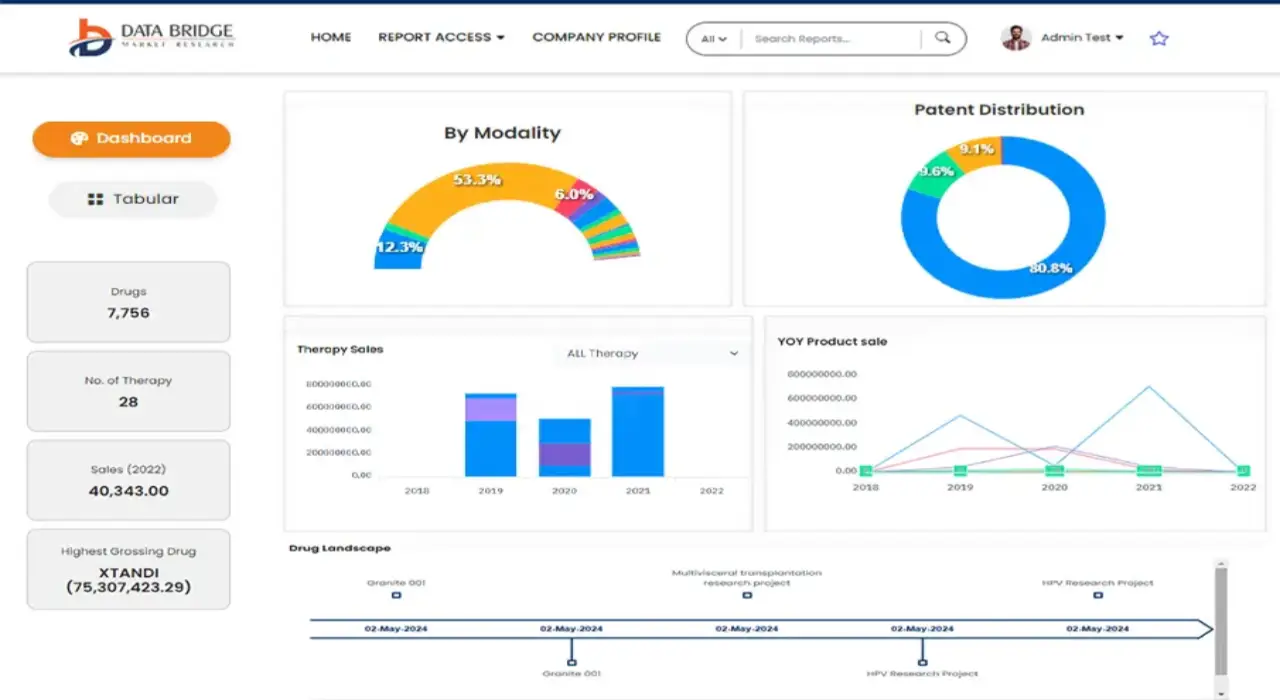
- لوحة معلومات تحليل البيانات التفاعلية
- لوحة معلومات تحليل الشركة للفرص ذات إمكانات النمو العالية
- إمكانية وصول محلل الأبحاث للتخصيص والاستعلامات
- تحليل المنافسين باستخدام لوحة معلومات تفاعلية
- آخر الأخبار والتحديثات وتحليل الاتجاهات
- استغل قوة تحليل المعايير لتتبع المنافسين بشكل شامل
منهجية البحث
يتم جمع البيانات وتحليل سنة الأساس باستخدام وحدات جمع البيانات ذات أحجام العينات الكبيرة. تتضمن المرحلة الحصول على معلومات السوق أو البيانات ذات الصلة من خلال مصادر واستراتيجيات مختلفة. تتضمن فحص وتخطيط جميع البيانات المكتسبة من الماضي مسبقًا. كما تتضمن فحص التناقضات في المعلومات التي شوهدت عبر مصادر المعلومات المختلفة. يتم تحليل بيانات السوق وتقديرها باستخدام نماذج إحصائية ومتماسكة للسوق. كما أن تحليل حصة السوق وتحليل الاتجاهات الرئيسية هي عوامل النجاح الرئيسية في تقرير السوق. لمعرفة المزيد، يرجى طلب مكالمة محلل أو إرسال استفسارك.
منهجية البحث الرئيسية التي يستخدمها فريق بحث DBMR هي التثليث البيانات والتي تتضمن استخراج البيانات وتحليل تأثير متغيرات البيانات على السوق والتحقق الأولي (من قبل خبراء الصناعة). تتضمن نماذج البيانات شبكة تحديد موقف البائعين، وتحليل خط زمني للسوق، ونظرة عامة على السوق ودليل، وشبكة تحديد موقف الشركة، وتحليل براءات الاختراع، وتحليل التسعير، وتحليل حصة الشركة في السوق، ومعايير القياس، وتحليل حصة البائعين على المستوى العالمي مقابل الإقليمي. لمعرفة المزيد عن منهجية البحث، أرسل استفسارًا للتحدث إلى خبراء الصناعة لدينا.
التخصيص متاح
تعد Data Bridge Market Research رائدة في مجال البحوث التكوينية المتقدمة. ونحن نفخر بخدمة عملائنا الحاليين والجدد بالبيانات والتحليلات التي تتطابق مع هدفهم. ويمكن تخصيص التقرير ليشمل تحليل اتجاه الأسعار للعلامات التجارية المستهدفة وفهم السوق في بلدان إضافية (اطلب قائمة البلدان)، وبيانات نتائج التجارب السريرية، ومراجعة الأدبيات، وتحليل السوق المجدد وقاعدة المنتج. ويمكن تحليل تحليل السوق للمنافسين المستهدفين من التحليل القائم على التكنولوجيا إلى استراتيجيات محفظة السوق. ويمكننا إضافة عدد كبير من المنافسين الذين تحتاج إلى بيانات عنهم بالتنسيق وأسلوب البيانات الذي تبحث عنه. ويمكن لفريق المحللين لدينا أيضًا تزويدك بالبيانات في ملفات Excel الخام أو جداول البيانات المحورية (كتاب الحقائق) أو مساعدتك في إنشاء عروض تقديمية من مجموعات البيانات المتوفرة في التقرير.











