



تجزئة سوق زيت فول الصويا العالمي، حسب نوع المنتج (زيت فول الصويا العضوي والتقليدي)، والاستخدام (السمن النباتي، والأطعمة المجمدة، وصلصة السلطة، والزيوت النباتية، والمخبوزات، ومستحضرات التجميل والعناية الشخصية، والزراعة الحيوانية، وغيرها)، والمكونات (دهون أوميغا 3، وفيتامين هـ، والدهون قليلة التشبع، والدهون المتعددة غير المشبعة)، وقنوات التوزيع (السوبر ماركت/الهايبر ماركت، ومتاجر التجزئة، وتجار الجملة/الموزعين، والمتاجر المحلية)، والمستخدم النهائي (التجارية والمنزلية) - اتجاهات الصناعة وتوقعاتها حتى عام 2032
حجم سوق زيت فول الصويا
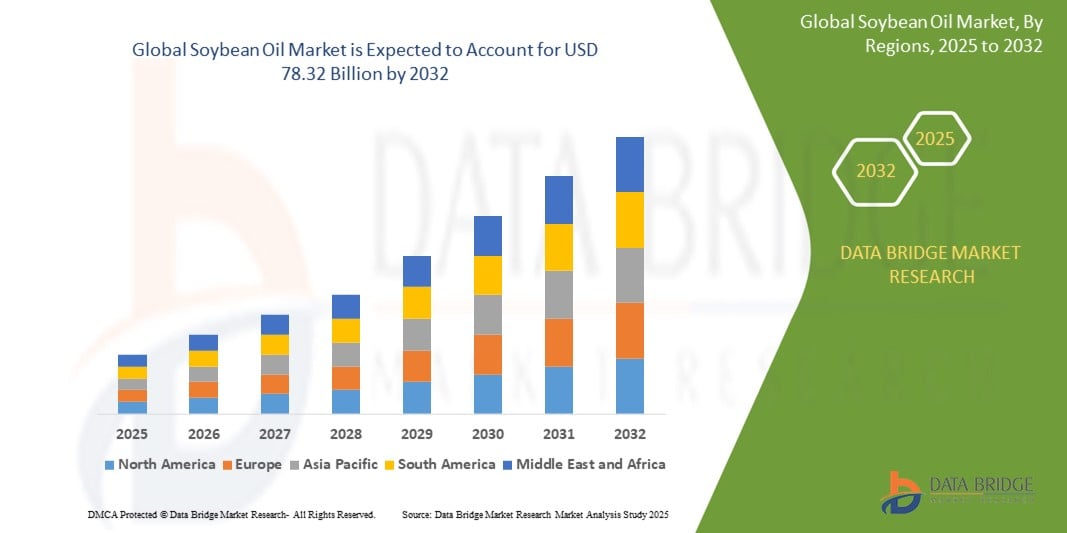
- تم تقييم حجم سوق زيت فول الصويا العالمي بـ 55.49 مليار دولار أمريكي في عام 2024 ومن المتوقع أن يصل إلى 78.32 مليار دولار أمريكي بحلول عام 2032 ، بمعدل نمو سنوي مركب قدره 4.4٪ خلال الفترة المتوقعة.
- ينشأ نمو السوق إلى حد كبير من الاستهلاك المتزايد للزيوت النباتية في معالجة الأغذية والطهي المنزلي والتطبيقات الصناعية، مع ظهور زيت فول الصويا كخيار مفضل نظرًا لقدرته على تحمل التكاليف وتعدد استخداماته ومستوى الأحماض الدهنية المواتية.
- علاوة على ذلك، فإن الوعي المتزايد باتجاهات الصحة والعافية، والطلب المتزايد على الزيوت الخالية من الكائنات المعدلة وراثيًا والدهون المتحولة، والتوسع في استخدام زيت فول الصويا في الديزل الحيوي ومنتجات العناية الشخصية، تعمل على تسريع اعتماده عبر القطاعات، وبالتالي تعزيز نمو الصناعة بشكل كبير.
تحليل سوق زيت فول الصويا
- زيت فول الصويا، المُستخلص من فول الصويا، هو زيت طهي متعدد الاستخدامات، يتميز بنكهته المحايدة ونقطة دخانه العالية. يُستخدم على نطاق واسع في تجهيز الأطعمة والقلي وتتبيل السلطات، كما أنه مكون شائع في السمن النباتي والزبدة. من الناحية الغذائية، فهو غني بالدهون المتعددة غير المشبعة وفيتامين هـ، مما يجعله خيارًا شائعًا للمستهلكين المهتمين بصحتهم.
- ينشأ نمو السوق في المقام الأول من خلال الطلب المتزايد على زيوت الطهي النباتية والمستدامة، والتوسع السريع في قطاع تصنيع الأغذية، والتحول العالمي نحو عادات غذائية أكثر صحة تفضل الزيوت منخفضة الدهون المشبعة.
- سيطرت منطقة آسيا والمحيط الهادئ على سوق زيت فول الصويا بحصة بلغت 47.02٪ في عام 2024، وذلك بسبب الكثافة السكانية العالية، وارتفاع الدخول المتاحة، والتفضيل المتزايد للزيوت النباتية بأسعار معقولة في الطهي اليومي.
- من المتوقع أن تكون أمريكا الشمالية أسرع منطقة نموًا في سوق زيت فول الصويا خلال فترة التوقعات بسبب الطلب القوي على الزيوت النباتية في الأطعمة المصنعة والمنتجات النباتية والمطابخ التجارية
- هيمن زيت فول الصويا التقليدي على السوق بحصة سوقية بلغت 86.2% في عام 2024، وذلك بفضل استخدامه طويل الأمد في التطبيقات المنزلية والصناعية. تجعله أسعاره المعقولة، وتوافره الواسع، ومذاقه الرائع الخيار الأمثل لشركات تصنيع الأغذية، وسلاسل مطاعم الوجبات السريعة، والمنازل على حد سواء. في البلدان النامية، حيث لا تزال حساسية الأسعار مرتفعة، يواصل زيت فول الصويا التقليدي تلبية الطلب الواسع. كما أن جودته الثابتة، ونكهته المحايدة، وثباته تحت الحرارة يجعله زيتًا متعدد الاستخدامات للقلي، والخبز، والتحمير.
نطاق التقرير وتقسيم سوق زيت فول الصويا
|
صفات |
رؤى رئيسية حول سوق زيت فول الصويا |
|
القطاعات المغطاة |
|
|
الدول المغطاة |
أمريكا الشمالية
أوروبا
آسيا والمحيط الهادئ
الشرق الأوسط وأفريقيا
أمريكا الجنوبية
|
|
اللاعبون الرئيسيون في السوق |
|
|
فرص السوق |
|
|
مجموعات معلومات البيانات ذات القيمة المضافة |
بالإضافة إلى الرؤى حول سيناريوهات السوق مثل القيمة السوقية ومعدل النمو والتجزئة والتغطية الجغرافية واللاعبين الرئيسيين، فإن تقارير السوق التي تم تنظيمها بواسطة Data Bridge Market Research تشمل أيضًا تحليلًا متعمقًا من الخبراء، وتحليل التسعير، وتحليل حصة العلامة التجارية، واستطلاع رأي المستهلكين، وتحليل التركيبة السكانية، وتحليل سلسلة التوريد، وتحليل سلسلة القيمة، ونظرة عامة على المواد الخام / المواد الاستهلاكية، ومعايير اختيار البائعين، وتحليل PESTLE، وتحليل Porter، والإطار التنظيمي. |
اتجاهات سوق زيت فول الصويا
"ارتفاع الطلب على الزيوت الصالحة للأكل"
- A key and accelerating trend in the global soybean oil market is the growing demand for edible oils, driven by changing dietary habits, population growth, and rising urbanization. Soybean oil, known for its neutral flavor and affordability, is increasingly preferred in cooking, frying, and processed food manufacturing across households and industrial kitchens
- For instance, in developing nations such as India, Indonesia, and Brazil, increasing disposable income and a shift toward packaged and restaurant food have boosted soybean oil consumption significantly. Its versatility across various culinary applications and its ability to blend well with other ingredients make it a preferred choice for food manufacturers
- Consumers are also actively seeking healthier oil options, and soybean oil, being low in saturated fats and rich in polyunsaturated fats, aligns well with current health trends. This is particularly evident in urban regions where there is heightened awareness about cardiovascular health and cholesterol control
- In addition, food processors are increasingly incorporating soybean oil into ready-to-eat meals, margarine, and baked goods to cater to demand for trans-fat-free formulations. The oil’s functional properties, such as longer shelf life and high oxidative stability, are adding to its appeal in commercial food production
- This sustained demand for high-quality, affordable, and multipurpose edible oils is reshaping global consumption patterns, firmly positioning soybean oil as a staple in the global cooking oil segment
Soybean Oil Market Dynamics
Driver
“Rising Prevalence of Obesity”
- The growing global prevalence of obesity and related lifestyle disorders such as diabetes and hypertension is driving consumers toward healthier cooking oil choices. Soybean oil, with its favorable fatty acid profile, including essential omega-3s and vitamin E, is perceived as a health-conscious alternative to saturated animal fats and partially hydrogenated oils
- For instance, in countries such as the U.S., China, and Mexico—where obesity rates are particularly high—public health campaigns and nutritional guidelines are urging populations to reduce saturated fat intake. As a result, many consumers are switching to plant-based oils such as soybean oil, which supports cardiovascular wellness and offers a better lipid profile
- Restaurants and commercial kitchens are also replacing traditional fats with soybean oil in deep frying, salad dressing, and baking to meet consumer demand for healthier meals without compromising taste or texture
- This shift is particularly visible in quick service restaurant (QSR) chains that are revising their oil usage to comply with health labeling and nutritional transparency standards
- Moreover, rising demand for low-calorie and cholesterol-free food products is prompting food companies to formulate new product lines using soybean oil, further boosting its market presence across both residential and institutional segments
Restraint/Challenge
“High Price of the Soybean Oil”
- The relatively high and volatile price of soybean oil continues to pose a significant restraint to the market. Factors such as erratic weather conditions affecting soybean harvests, fluctuating input costs, global supply chain disruptions, and export policy changes from major producers such as the U.S., Brazil, and Argentina all contribute to pricing instability
- For instance, drought conditions in key producing regions or geopolitical trade disputes can reduce global soybean output, resulting in sharp price hikes for soybean oil. Such volatility makes it difficult for manufacturers and retailers to maintain pricing consistency, especially in cost-sensitive markets
- Small and medium-sized food businesses, particularly in developing economies, often face difficulty absorbing high input costs, leading them to shift toward cheaper alternatives such as palm oil, which is more stable in pricing despite environmental concerns
- In addition, the growing global emphasis on sustainable and organic sourcing can further push prices upward, making premium soybean oil products less accessible to a broader consumer base
- Addressing this challenge requires strategic investments in crop resilience, supply chain efficiency, and supportive government trade policies to stabilize supply and pricing over the long term
Soybean Oil Market Scope
The market is segmented on the basis of product type, application, ingredients, distribution channel, and end user.
• By Product Type
On the basis of product type, the soybean oil market is segmented into organic soybean oil and conventional soybean oil. The conventional soybean oil segment dominated the market with the largest revenue share of 86.2% in 2024, primarily due to its long-standing use in both domestic and industrial applications. Its affordability, high availability, and refined taste make it the preferred choice for food processing companies, fast-food chains, and households alike. In developing countries, where price sensitivity remains high, conventional soybean oil continues to meet large-scale demand. Its consistent quality, neutral flavor, and stability under heat further position it as a versatile oil for frying, baking, and sautéing.
The organic soybean oil segment is expected to witness the fastest CAGR from 2025 to 2032, fueled by the global shift toward clean-label and non-GMO products. Consumers are increasingly seeking foods free from synthetic pesticides, hormones, and fertilizers, elevating the value of organic certification. The rising awareness around sustainable farming, health-related concerns about chemical residues in food, and the premiumization of organic products in modern retail outlets contribute to this growth. Organic soybean oil also appeals to environmentally-conscious consumers due to its lower ecological footprint and support for regenerative agriculture.
• By Application
On the basis of application, the market is segmented into margarine, frozen foods, salad dressings, shortenings, baked food, cosmetics and personal care products, animal agriculture, and others. The margarine segment held the largest market share in 2024, driven by the rising global demand for plant-based alternatives to butter. Soybean oil is a core ingredient in margarine manufacturing due to its excellent emulsifying capacity, mild flavor, and ability to maintain product consistency at refrigerated and room temperatures. It offers an economical solution for manufacturers to meet growing consumer preferences for cholesterol-free and trans-fat–compliant spreads.
The cosmetics and personal care products segment is projected to experience the fastest growth through 2032, owing to the increasing use of plant-based oils in skincare, body care, and haircare formulations. Soybean oil is naturally rich in vitamin E, linoleic acid, and antioxidants, making it suitable for hydration, anti-aging, and skin barrier support. With consumers prioritizing clean beauty, cruelty-free formulations, and natural actives, cosmetic brands are rapidly incorporating soybean oil as a base or carrier oil. The growth of the beauty and wellness industry, especially in Asia-Pacific and Latin America, further accelerates adoption in this category.
• By Ingredients
On the basis of ingredients, the soybean oil market is categorized into omega-3 fats, vitamin E, low saturated fats, and polyunsaturated fats. The polyunsaturated fats segment led the market in 2024, due to their proven cardiovascular benefits and strong backing from nutritional guidelines by major health organizations. Polyunsaturated fatty acids, including omega-6 and omega-3, are known to help reduce LDL cholesterol and lower heart disease risk. Soybean oil, with a favorable fatty acid profile, is frequently promoted as a heart-healthy cooking oil. This positioning drives its adoption among health-conscious consumers and supports marketing efforts targeting low-fat and low-cholesterol food formulations.
The omega-3 fats segment is projected to grow at the highest rate from 2025 to 2032, driven by their increasing application in functional foods and preventive health products. Consumers are becoming more proactive about cognitive health, inflammation control, and eye health—areas where omega-3s play a critical role. Soybean oil, being one of the few plant-based oils with naturally occurring alpha-linolenic acid (ALA), a precursor to omega-3s, offers a cost-effective and scalable alternative to marine-based sources such as fish oil.
• By Distribution Channel
بناءً على قنوات التوزيع، يُقسّم السوق إلى سوبر ماركت/هايبر ماركت، ومتاجر بقالة، وتجار جملة/موزعين، ومتاجر الأحياء. هيمن قطاع السوبر ماركت/هايبر ماركت على السوق في عام 2024، نظرًا لسيطرته على أنماط التسوق في المدن والضواحي. توفر هذه المتاجر مجموعة واسعة من العلامات التجارية وأشكال التغليف تحت سقف واحد، مما يُسهّل على المستهلكين مقارنة واختيار زيت فول الصويا بناءً على السعر أو الجودة أو شهادة العضوية. يُساعد التسويق القوي والخصومات الترويجية ووضوح المنتج على زيادة حجم المبيعات في هذه القناة. كما يستفيد هذا القطاع من الحضور المتزايد للزيوت ذات العلامات التجارية الخاصة التي تقدمها شركات التجزئة العملاقة.
من المتوقع أن يشهد قطاع تجارة الجملة والتوزيع أسرع معدل نمو حتى عام ٢٠٣٢، مدعومًا بالطلب المتزايد من المشترين بالجملة، مثل المطاعم والمطابخ المؤسسية ومصنّعي الأغذية. يُفضّل هؤلاء المشترون اتفاقيات التوريد طويلة الأجل وكفاءة تسعير القيمة على هوية العلامة التجارية. ومع توسّع عمليات الأغذية التجارية في الاقتصادات الناشئة واستمرار توسّع قطاع خدمات الطعام، يزداد دور الموزعين في إدارة الخدمات اللوجستية بالجملة والتخزين والحفاظ على نضارة المنتجات أهميةً.
• حسب المستخدم النهائي
بناءً على المستخدم النهائي، يُقسّم السوق إلى قطاعين تجاري ومنزلي. وقد استحوذ القطاع التجاري على أكبر حصة سوقية في عام 2024، مدفوعًا بالاستخدام المكثف لزيت فول الصويا في المخابز ومطاعم الخدمة السريعة ووحدات تجهيز الأغذية وخدمات تقديم الطعام. إن تنوعه، وأدائه المستقر في القلي، وسلسلة توريده المتكاملة تجعله عنصرًا أساسيًا في المطابخ الصناعية. كما أن التوجه المتزايد نحو الوجبات الخفيفة المعبأة، والوجبات الجاهزة للأكل، وخدمات الطعام المؤسسية واسعة النطاق، يدعم الطلب على هذا القطاع.
من المتوقع أن ينمو قطاع الأغذية المنزلية بأسرع معدل نمو سنوي مركب خلال فترة التوقعات، مما يعكس تأثير تزايد الوعي الصحي وتغيرات نمط الحياة، وخاصةً بعد الجائحة. ويتزايد اهتمام المستهلكين بزيوت الطهي لتحسين صحتهم، مما أدى إلى استبدال الدهون المشبعة بخيارات متعددة غير مشبعة مثل زيت فول الصويا. كما يستفيد هذا القطاع من تزايد توفره في عبوات صغيرة، وانتشار تجارة التجزئة الإلكترونية، واتجاهات الطهي المنزلي الصاعدة بدعم من المؤثرين في مجال الطعام ومنصات الوصفات.
تحليل إقليمي لسوق زيت فول الصويا
- سيطرت منطقة آسيا والمحيط الهادئ على سوق زيت فول الصويا بأكبر حصة إيرادات بلغت 47.02٪ في عام 2024، مدفوعة بالكثافة السكانية العالية، وارتفاع الدخول المتاحة، والتفضيل المتزايد للزيوت النباتية بأسعار معقولة في الطهي اليومي.
- إن توسع صناعة تجهيز الأغذية في المنطقة، والطلب المتزايد على الأطعمة المقلية والمعلبة، والوعي الصحي المتزايد فيما يتعلق بالدهون غير المشبعة، كلها عوامل تساهم بشكل رئيسي في نمو السوق
- تعمل الدول الرئيسية المنتجة لفول الصويا مثل الصين والهند، إلى جانب الواردات المتزايدة والاستثمارات في البنية التحتية لتكرير النفط، على تعزيز اعتماد زيت فول الصويا في كل من القطاعات الحضرية والريفية.
نظرة على سوق زيت فول الصويا في اليابان
يشهد السوق الياباني نموًا مطردًا بفضل الطلب المتزايد على زيوت الطهي الخفيفة والصحية بين كبار السن. يتميز زيت فول الصويا بانخفاض محتواه من الدهون المشبعة وثباته العالي، مما يتماشى مع التفضيلات الغذائية للبلاد. يُدمج مصنعو الأغذية اليابانيون زيت فول الصويا في الأطعمة المصنعة والوجبات الجاهزة للأكل، بينما يدعم الابتكار المستمر في الأنواع المعصورة على البارد والمُدعّمة توسع سوق المنتجات الفاخرة.
نظرة على سوق زيت فول الصويا في الصين
استحوذت الصين على الحصة الأكبر في سوق زيت فول الصويا في منطقة آسيا والمحيط الهادئ في عام 2024، مدعومةً بإنتاج محلي قوي واستهلاك واسع النطاق في التطبيقات المنزلية والتجارية. ويزداد الطلب مدفوعًا بارتفاع إنتاج علف الصويا، والمبادرات الحكومية الرامية إلى تحسين الاكتفاء الذاتي من زيوت الطعام، وتزايد الوعي الصحي بين المستهلكين في المناطق الحضرية. ويواصل نمو مطاعم الخدمة السريعة والأطعمة المصنعة تعزيز الطلب الكبير.
نظرة على سوق زيت فول الصويا في أوروبا
من المتوقع أن ينمو سوق زيت فول الصويا في أوروبا بمعدل نمو سنوي مركب ثابت خلال الفترة المتوقعة، مدفوعًا بتزايد الطلب على زيوت الطهي النباتية والمستدامة في تصنيع الأغذية والاستخدام المنزلي. يدفع تزايد استخدام زيت فول الصويا العضوي وغير المعدّل وراثيًا، إلى جانب لوائح وضع العلامات التجارية الملائمة للأغذية، المصنّعين إلى إعادة صياغة منتجاتهم باستخدام بدائل زيت أنظف. تشهد دول غرب وشمال أوروبا تحولًا من الدهون المشبعة إلى خيارات متعددة غير مشبعة، مما يعزز انتشار زيت فول الصويا في السوق.
نظرة على سوق زيت فول الصويا في المملكة المتحدة
يشهد سوق المملكة المتحدة توسعًا ملحوظًا بفضل تزايد اهتمام المستهلكين بالزيوت الغذائية الصحية، وتنامي التوجه نحو الأطعمة النباتية والنباتية الصرفة. ويكتسب زيت فول الصويا زخمًا متزايدًا كمكوّن رئيسي في بدائل اللحوم، وتتبيلات السلطة، والصلصات قليلة الدسم. وتتزايد مخزونات المتاجر الكبرى من الزيوت العضوية والمعصورة على البارد، بينما يسعى مشغلو خدمات الطعام إلى زيوت اقتصادية وعالية الأداء في ظل ضغوط التضخم.
نظرة على سوق زيت فول الصويا في ألمانيا
يشهد سوق زيت فول الصويا في ألمانيا نموًا معتدلًا، مدعومًا بقوة صناعة تجهيز الأغذية والطلب على المكونات النباتية المستدامة. كما يستفيد السوق من زيادة استخدام زيت فول الصويا في منتجات المخابز والوجبات الخفيفة. ويؤدي تفضيل المستهلكين للزيوت غير المعدلة وراثيًا والمعالجة بشكل طفيف إلى زيادة الطلب على زيت فول الصويا المكرر والمعصور على البارد، والذي يتم الحصول عليه من سلاسل توريد قابلة للتتبع.
نظرة عامة على سوق زيت فول الصويا في أمريكا الشمالية
North America is expected to grow at the fastest CAGR from 2025 to 2032, fueled by strong demand for vegetable oils in processed foods, plant-based products, and commercial kitchens. The shift toward trans fat-free and heart-healthy oils is accelerating soybean oil usage in packaged foods, snacks, and fast food chains. Technological advancements in oil refining, strong supply from domestic soybean producers, and supportive FDA regulations regarding GRAS (Generally Recognized As Safe) status for soybean oil are enhancing market penetration
U.S. Soybean Oil Market Insight
The U.S. soybean oil market captured the largest revenue share in 2024 within North America, driven by extensive domestic production and high consumption in both food and industrial sectors. Soybean oil is widely used by restaurants, snack manufacturers, and large-scale bakeries due to its affordability, neutral flavor, and frying stability. Additionally, increasing interest in biodiesel and bio-based products supports demand beyond culinary use.
Soybean Oil Market Share
The soybean oil industry is primarily led by well-established companies, including:
- DSM (Netherlands)
- ADM (U.S.)
- DuPont (U.S.)
- Cargill Incorporated. (U.S.)
- CHS Inc. (U.S.)
- Kerry Group plc (Ireland)
- Wilmar International Ltd (Singapore)
- Devansoy Inc. (U.S.)
- Blue Diamond Growers (U.S.)
- Dean Foods (U.S.)
- Eden Foods Inc. (U.S.)
- House Foods America Corporation. (U.S.)
- The Hain Celestial Group (U.S.)
- Pulmuone Foods USA (U.S.)
- Vitasoy International Holdings Limited. (Hong Kong)
- Tofurky (U.S.)
Latest Developments in Global Soybean Oil Market
- In July 2024, Louis Dreyfus Company (LDC), a leading global merchant and processor of agricultural goods, announced the relaunch of Vibhor, its consumer-facing edible oil brand in India. This strategic move reflects LDC’s intent to expand its downstream footprint in the value chain and is expected to intensify competition in the Indian soybean oil market. The relaunch strengthens brand visibility and consumer engagement, supporting the market’s ongoing shift toward branded and packaged edible oils amid rising health and quality consciousness
- In July 2024, ADM announced its commitment to supplying European customers with fully traceable and segregated soybean meal and oil, aligning with the upcoming EU deforestation regulations set to take effect on December 30, 2024. This initiative, involving over 5,300 U.S. farmers, leverages advanced technologies to enhance transparency and traceability across global supply chains, positioning ADM as a key player in sustainable sourcing within the soybean oil market
- In July 2024, Benson Hill, Inc. reported notable advancements in its innovation pipeline, aimed at enhancing product value across multiple segments of the soybean market. The company’s developments target improvements in applications such as animal feed, soybean oil, and biofuels, supporting market demand for higher-performing, sustainable, and multifunctional soybean-derived solutions
- In 2022, Emami Healthy & Tasty introduced its Ultra Lite Soyabean Oil to cater to the needs of health-conscious consumers. The product positioned itself as a low-absorption, heart-friendly option, which resonated well with urban households. Emami’s targeted marketing campaigns and wide retail network significantly boosted product reach, contributing to the premiumization trend in the Indian soybean oil segment and reinforcing the shift toward value-added offerings in the edible oil space
- In August 2021, ADM and Marathon Petroleum Corp announced a joint venture aimed at meeting the increasing demand for soybean oil used in the production of renewable diesel oil. The partnership seeks to capitalize on the growing popularity of renewable fuels and leverage the benefits of soybean oil as a key feedstock for sustainable energy solutions
SKU-
احصل على إمكانية الوصول عبر الإنترنت إلى التقرير الخاص بأول سحابة استخبارات سوقية في العالم

- لوحة معلومات تحليل البيانات التفاعلية
- لوحة معلومات تحليل الشركة للفرص ذات إمكانات النمو العالية
- إمكانية وصول محلل الأبحاث للتخصيص والاستعلامات
- تحليل المنافسين باستخدام لوحة معلومات تفاعلية
- آخر الأخبار والتحديثات وتحليل الاتجاهات
- استغل قوة تحليل المعايير لتتبع المنافسين بشكل شامل
منهجية البحث
يتم جمع البيانات وتحليل سنة الأساس باستخدام وحدات جمع البيانات ذات أحجام العينات الكبيرة. تتضمن المرحلة الحصول على معلومات السوق أو البيانات ذات الصلة من خلال مصادر واستراتيجيات مختلفة. تتضمن فحص وتخطيط جميع البيانات المكتسبة من الماضي مسبقًا. كما تتضمن فحص التناقضات في المعلومات التي شوهدت عبر مصادر المعلومات المختلفة. يتم تحليل بيانات السوق وتقديرها باستخدام نماذج إحصائية ومتماسكة للسوق. كما أن تحليل حصة السوق وتحليل الاتجاهات الرئيسية هي عوامل النجاح الرئيسية في تقرير السوق. لمعرفة المزيد، يرجى طلب مكالمة محلل أو إرسال استفسارك.
منهجية البحث الرئيسية التي يستخدمها فريق بحث DBMR هي التثليث البيانات والتي تتضمن استخراج البيانات وتحليل تأثير متغيرات البيانات على السوق والتحقق الأولي (من قبل خبراء الصناعة). تتضمن نماذج البيانات شبكة تحديد موقف البائعين، وتحليل خط زمني للسوق، ونظرة عامة على السوق ودليل، وشبكة تحديد موقف الشركة، وتحليل براءات الاختراع، وتحليل التسعير، وتحليل حصة الشركة في السوق، ومعايير القياس، وتحليل حصة البائعين على المستوى العالمي مقابل الإقليمي. لمعرفة المزيد عن منهجية البحث، أرسل استفسارًا للتحدث إلى خبراء الصناعة لدينا.
التخصيص متاح
تعد Data Bridge Market Research رائدة في مجال البحوث التكوينية المتقدمة. ونحن نفخر بخدمة عملائنا الحاليين والجدد بالبيانات والتحليلات التي تتطابق مع هدفهم. ويمكن تخصيص التقرير ليشمل تحليل اتجاه الأسعار للعلامات التجارية المستهدفة وفهم السوق في بلدان إضافية (اطلب قائمة البلدان)، وبيانات نتائج التجارب السريرية، ومراجعة الأدبيات، وتحليل السوق المجدد وقاعدة المنتج. ويمكن تحليل تحليل السوق للمنافسين المستهدفين من التحليل القائم على التكنولوجيا إلى استراتيجيات محفظة السوق. ويمكننا إضافة عدد كبير من المنافسين الذين تحتاج إلى بيانات عنهم بالتنسيق وأسلوب البيانات الذي تبحث عنه. ويمكن لفريق المحللين لدينا أيضًا تزويدك بالبيانات في ملفات Excel الخام أو جداول البيانات المحورية (كتاب الحقائق) أو مساعدتك في إنشاء عروض تقديمية من مجموعات البيانات المتوفرة في التقرير.











