



Middle East Luxury Leather Goods Market Segmentation, By Type (Footwear, Luggage, and Accessories), Product (High-Grade, Low-Grade, and Mid-Grade), Application (Men and Women), Distribution Channel (Offline Retail Stores and Online Retail Stores) - Industry Trends and Forecast to 2032
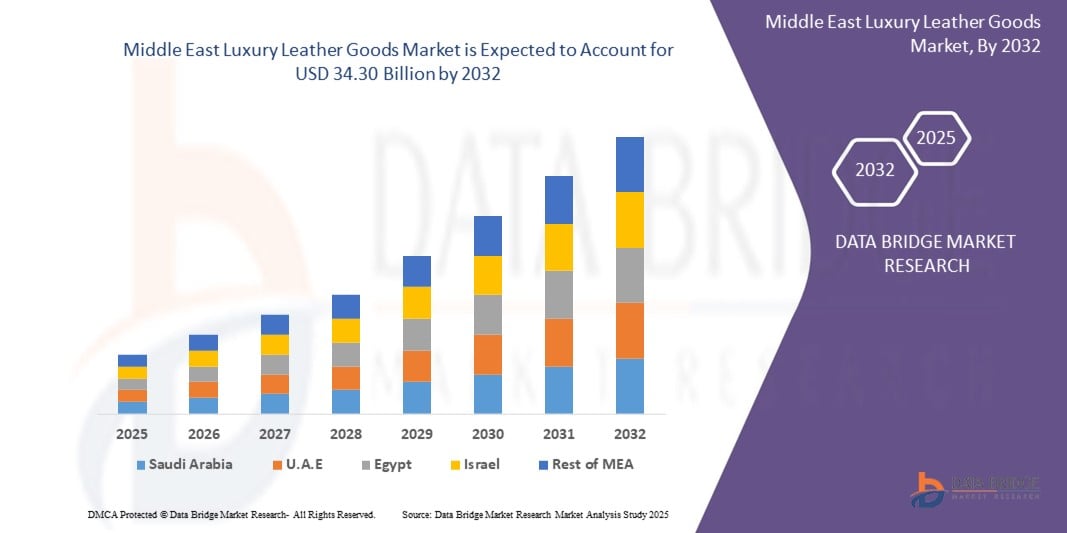
Middle East Luxury Leather Goods Market Size
- The middle east luxury leather goods market size was valued at USD 19.80 billion in 2024 and is expected to reach USD 34.30 billion by 2032, at a CAGR of 7.11% during the forecast period
- The market growth is largely fueled by rising disposable incomes and increasing demand for premium fashion accessories
- Economic diversification efforts and rising incomes, particularly in GCC countries, are increasing consumer spending on luxury items millennials and gen z consumers are showing strong preferences for exclusive and branded products, boosting market expansion.
Middle East Luxury Leather Goods Market Analysis
- The middle east luxury leather goods market is witnessing strong momentum as consumer interest increasingly shifts toward high-end craftsmanship and unique design, with a particular emphasis on quality and exclusivity that distinguishes luxury leather from mass-market alternatives
- The current market landscape reflects a growing emphasis on brand storytelling and artisanal value, where consumers, for instance, actively seek products that combine heritage techniques with contemporary aesthetics, making craftsmanship the central factor in purchasing decisions
- Saudi Arabia dominates the middle east luxury leather goods market with the largest revenue share in 2024, driven by a surge in high-net-worth individuals, expanding tourism sector, and increasing demand for premium fashion among affluent consumers
- U.A.E is expected to be the fastest growing region in the Middle East Luxury Leather Goods market during the forecast period due to its strong retail infrastructure, high disposable incomes, and status as a luxury shopping hub
- The luggage segment is identified as the largest and fastest-growing segment in the middle east & Africa luxury leather goods market in 2024, driven by increasing tourism and the growing trend of travel within and outside the region
Report Scope and Middle East Luxury Leather Goods Market Segmentation
|
Attributes |
Middle East Luxury Leather Goods Key Market Insights |
|
Segments Covered |
|
|
Countries Covered |
Middle East and Africa
|
|
Key Market Players |
|
|
Market Opportunities |
|
|
Value Added Data Infosets |
In addition to the insights on market scenarios such as market value, growth rate, segmentation, geographical coverage, and major players, the market reports curated by the Data Bridge Market Research also include in-depth expert analysis, pricing analysis, brand share analysis, consumer survey, demography analysis, supply chain analysis, value chain analysis, raw material/consumables overview, vendor selection criteria, PESTLE Analysis, Porter Analysis, and regulatory framework. |
Middle East Luxury Leather Goods Market Trends
“Digital Transformation Driving Luxury Leather Market Growth”
- The Middle East luxury leather goods market is experiencing a notable shift towards digital innovation, with brands increasingly adopting technologies such as augmented reality and virtual try-on tools to enhance the online shopping experience
- For instance, the Dubai Mall's Virtual Store allows shoppers to browse and purchase products from luxury brands using a virtual reality headset, showcasing the potential for digital innovation in the region
- This digital transformation is further supported by the region's high internet penetration rates and a young, tech-savvy population that prefers the convenience and accessibility of online platforms for luxury shopping
- Luxury brands are also leveraging social media influencers and personalized digital marketing strategies to connect with consumers, offering exclusive online collections and virtual events to engage their audience
- The integration of digital technologies into the luxury leather goods market is not only enhancing customer engagement but also expanding the reach of brands, making luxury products more accessible to a broader audience across the Middle East
Middle East Luxury Leather Goods Market Dynamics
Driver
“Increasing Consumer Preference for Premium Craftsmanship and Authenticity”
- Increasing consumer preference for premium craftsmanship is driving demand for luxury leather goods as buyers seek quality, durability, and artisanal heritage that sets products apart from mass-produced items
- For instance, brands such as Hermès and Louis Vuitton emphasize hand-stitched finishes and the use of full-grain leather, reflecting years of craftsmanship expertise that appeal to discerning consumers
- Owning handcrafted leather products is viewed as a status symbol and personal style statement, especially in markets where luxury spending aligns with social standing and cultural appreciation of artisan skills
- Growing sustainability awareness is shaping purchasing decisions, with consumers favoring brands that offer ethically sourced and transparent production processes, as seen in initiatives by companies such as Gucci and Prada
- This focus on authenticity and ethical practices encourages repeat purchases and brand loyalty, supporting consistent market growth and expanding customer bases over time
- The appreciation for genuine craftsmanship combined with ethical values continues to strengthen the luxury leather goods market and build lasting brand-consumer relationships
Restraint/Challenge
“High Price Sensitivity Limiting Market Accessibility”
- High price sensitivity among many consumers limits the accessibility of luxury leather goods, which are priced at a premium due to quality, brand reputation, and production costs
- For instance, while the affluent population is growing, many consumers remain cautious about expensive purchases during economic uncertainty or geopolitical tensions
- Middle-income buyers often opt for mid-range or mass-market leather products that offer a better cost-to-style ratio, restricting market expansion beyond wealthy segments
- This price sensitivity also impacts institutional buyers seeking bulk or customized orders but facing budget constraints, which limits overall sales volume growth
- Luxury brands face the challenge of balancing exclusivity with affordability, as lowering prices risks diluting brand prestige and alienating loyal customers
- Effective pricing strategies are crucial for luxury leather brands to sustain growth without compromising their premium image
Middle East Luxury Leather Goods Market Scope
The Middle east luxury leather goods market is segmented on the basis of type, product, application, and distribution channel.
- By Type
On the basis of type, the middle east luxury leather goods market is segmented into footwear, luggage, and accessories. The luggage (travel bags & backpacks) segment is identified as the largest and fastest-growing segment in the middle east & Africa luxury leather goods market in 2024, driven by increasing tourism and the growing trend of travel within and outside the region. As disposable incomes rise, consumers are investing in high-quality and branded travel accessories that offer both style and durability.
The demand for footwear is also significant, particularly for high-end leather shoes and boots, reflecting the region's fashion consciousness and the status symbol associated with designer footwear for both formal and casual wear.
- By Product
بناءً على المنتج (الدرجة)، يُقسّم سوق المنتجات الجلدية الفاخرة في الشرق الأوسط إلى فئات: عالية الجودة، ومنخفضة الجودة، ومتوسطة الجودة. ومن المتوقع أن تستحوذ فئة المنتجات عالية الجودة على الحصة الأكبر من إيرادات السوق، مدفوعةً بالطلب القوي على المنتجات الفاخرة والحصرية التي تُجسّد الثراء والمكانة الاجتماعية والرفاهية. يُولي المستهلكون في الشرق الأوسط عادةً أهميةً للحرفية الفائقة، والمواد النادرة، والعلامات التجارية الشهيرة في مشترياتهم من المنتجات الجلدية الفاخرة. ويستفيد هذا القطاع من قاعدة المستهلكين الميسورة في المنطقة، ومن ثقافة تُقدّر الجماليات الفاخرة.
من المتوقع أن يشهد قطاع المنتجات متوسطة الجودة نموًا ملحوظًا. ويدعم هذا النمو توسع الطبقة المتوسطة الطموحة التي تبحث عن الفخامة والجودة بأسعار في متناول الجميع. وتكتسب العلامات التجارية التي تقدم منتجات فاخرة بأسعار مناسبة وتصاميم عصرية زخمًا متزايدًا في هذا القطاع.
- حسب الطلب
بناءً على التطبيق، يُقسّم سوق المنتجات الجلدية الفاخرة في الشرق الأوسط إلى قسمين: الرجال والنساء. وقد استحوذت شريحة النساء على أكبر حصة من إيرادات السوق في عام 2024، ويعزى ذلك إلى ارتفاع الطلب على حقائب اليد والمحافظ الفاخرة ومجموعة واسعة من الإكسسوارات بين المستهلكات. وتُسهم اتجاهات الموضة، وزيادة الدخل المتاح، والأهمية الثقافية الكبيرة للحقائب المصممة كرمز للمكانة الاجتماعية، بشكل كبير في هيمنة هذه الشريحة.
من المتوقع أن يشهد قطاع الرجال أسرع معدل نمو سنوي مركب. ويعزى هذا النمو إلى تزايد توجه الرجال نحو الاستثمار في المنتجات الجلدية الفاخرة، مثل المحافظ والأحزمة وحقائب اليد والأحذية الفاخرة. ويُعد الوعي المتزايد بالموضة بين الرجال في المنطقة، وتزايد توافر مجموعات الجلود الرجالية الفاخرة، من العوامل الرئيسية الدافعة.
- حسب قناة التوزيع
بناءً على قنوات التوزيع، يُقسّم سوق المنتجات الجلدية الفاخرة في الشرق الأوسط إلى متاجر تجزئة تقليدية ومتاجر تجزئة إلكترونية. وقد حازت هذه المتاجر على أكبر حصة من إيرادات السوق، ويعود ذلك أساسًا إلى الانتشار القوي للبوتيكات الفاخرة والمتاجر متعددة الأقسام ومنافذ بيع العلامات التجارية الحصرية في المدن الرئيسية في الشرق الأوسط. ويفضل المستهلكون غالبًا تجربة التسوق الغامرة، والخدمة الشخصية، وإمكانية معاينة المنتجات الفاخرة عالية القيمة شخصيًا قبل الشراء.
من المتوقع أن يشهد قطاع متاجر التجزئة الإلكترونية أسرع معدل نمو سنوي مركب بين عامي 2025 و2032. ويعزى هذا النمو إلى تزايد انتشار الإنترنت، وسهولة التسوق الإلكتروني، والتأثير المتزايد لمنصات التجارة الإلكترونية ووسائل التواصل الاجتماعي في المنطقة. كما تعمل العلامات التجارية الفاخرة بنشاط على توسيع حضورها الإلكتروني لتلبية احتياجات قاعدة أوسع من المستهلكين وتقديم تشكيلات حصرية عبر الإنترنت.
تحليل إقليمي لسوق السلع الجلدية الفاخرة في الشرق الأوسط
- تهيمن المملكة العربية السعودية على سوق السلع الجلدية الفاخرة في الشرق الأوسط بحصة الإيرادات الأكبر في عام 2024، مدفوعة بزيادة في عدد الأفراد ذوي الثروات العالية، وتوسع قطاع السياحة، وزيادة الطلب على الأزياء الفاخرة بين المستهلكين الأثرياء.
- يرتكز هذا المكانة الرائدة على النمو الاقتصادي القوي للبلاد، والعدد الكبير من الأفراد ذوي الثروات الكبيرة، والميل الثقافي نحو المنتجات الفاخرة المرموقة وعالية الجودة. وتسمح القوة الشرائية القوية للبلاد بالاستثمار المستمر في المنتجات الجلدية الفاخرة، مما يعزز ريادتها في السوق.
- ويواصل حضور العلامات التجارية العالمية الفاخرة وتوسيع نطاق حضورها في مشهد البيع بالتجزئة النابض بالحياة في المملكة العربية السعودية، إلى جانب تأثير اتجاهات الموضة العالمية، تعزيز اهتمام المستهلكين ودفع المبيعات في سوق السلع الجلدية الفاخرة.
نظرة عامة على سوق السلع الجلدية الفاخرة في المملكة العربية السعودية
يشهد سوق المنتجات الجلدية الفاخرة في المملكة العربية السعودية نموًا مطردًا، مدفوعًا بمبادرات التنويع الاقتصادي والتركيز المتزايد على خيارات نمط الحياة الراقية بين المستهلكين. وتعزز مبادرة رؤية 2030 قطاع السياحة وتجارة التجزئة، مما يشجع العلامات التجارية العالمية الفاخرة على توسيع حضورها في مدن مثل الرياض وجدة. وتضم وجهات التسوق الراقية، مثل مركز المملكة ومول البحر الأحمر، متاجر رئيسية تعرض منتجات جلدية فاخرة. كما أن الاهتمام المتزايد بالسلع الفاخرة المخصصة، لا سيما بين جيل الألفية الميسورين وجيل Z، يدعم نمو السوق على المدى الطويل.
نظرة عامة على سوق المنتجات الجلدية الفاخرة في الإمارات العربية المتحدة
لا تزال دولة الإمارات العربية المتحدة رائدة إقليميًا في سوق المنتجات الجلدية الفاخرة، مدعومةً ببنية تحتية قوية لتجارة التجزئة، وسياحة فاخرة، وقدرة شرائية عالية للمستهلكين. وتستمر دبي وأبوظبي في جذب دور الأزياء العالمية التي تقدم مجموعات جلدية محدودة الإصدار وتجارب حصرية داخل المتاجر. وتُعدّ مواقع مثل دبي مول وياس مول مراكز رئيسية لتجارة الجلود الفاخرة، حيث تستضيف إطلاق المنتجات الموسمية والتعاون في مجالها. ويساهم اعتماد تجارة التجزئة متعددة القنوات، بما في ذلك التجارة الإلكترونية وخدمات الكونسيرج الشخصية، في تعزيز وصول المستهلكين وراحتهم.
نظرة عامة على سوق السلع الجلدية الفاخرة في إيران
يشهد سوق المنتجات الجلدية الفاخرة في إيران نموًا تدريجيًا، مع تنامي القدرة الإنتاجية المحلية وتقدير ثقافي للحرفية والمواد التقليدية. يركز المصنعون المحليون على الأحذية والحقائب والإكسسوارات الجلدية عالية الجودة التي تجذب المستهلكين الحضريين المهتمين بالأناقة. وبينما يظل حضور العلامات التجارية العالمية محدودًا بسبب العقوبات، يتزايد الطلب على العلامات التجارية المحلية الفاخرة التي تقدم الجودة والحصرية. ويلعب الشباب المهتمون بالموضة، وخاصة في مدن مثل طهران وأصفهان، دورًا رئيسيًا في تعزيز الاهتمام بالمنتجات الجلدية من خلال وسائل التواصل الاجتماعي وحركات الموضة المحلية.
نظرة عامة على سوق السلع الجلدية الفاخرة في إسرائيل
the Israel luxury leather goods market is progressing steadily, supported by a design-centric consumer base and increasing interest in artisan-crafted accessories. Tel Aviv, known for its vibrant fashion scene, is home to many boutique stores and local designers specializing in premium leather footwear and handbags. consumers are showing a strong preference for ethically produced and sustainable leather goods, encouraging innovation in eco-conscious manufacturing. e-commerce platforms are also gaining traction, allowing international luxury brands to reach consumers seeking modern design fused with functional aesthetics.
Qatar Luxury Leather Goods Market Insight
The Qatar luxury leather goods market continues to grow, driven by high-income consumers and the ongoing development of high-end retail environments. Doha’s luxury shopping destinations, such as the mall of Qatar and place Vendôme, host global leather brands offering exclusive collections tailored to local tastes. The cultural value placed on luxury gifting and personal presentation supports demand for premium accessories. In-store luxury experiences, combined with a growing emphasis on digital engagement through virtual styling and online catalogues, are enhancing brand interaction and customer retention.
Middle East Luxury Leather Goods Market Share
The middle east luxury leather goods industry is primarily led by well-established companies, including:
- Burberry (U.K.)
- COACH IP HOLDINGS LLC (U.S.)
- DIOR (France)
- Goldlion (China)
- GIVENCHY (France)
- Guccio Gucci S.p.A (Italy)
- Kate Spade (U.K.)
- Longchamp (France)
- Mulberry (U.S.)
- Michael Kors (U.S.)
- CAPRI HOLDINGS LIMITED (U.S.)
- 31 Phillip Lim (U.K.)
- Proenza Schouler (U.S.)
- Bata Brand (Switzerland)
- Wolverine World Wide Inc. (U.S.)
- Rahman Group (India)
- Dunlop Protective Footwear (Portugal)
- VF Corporation (U.S.)
- Uvex group (Germany)
- Hewat's Edinburgh (U.K.)
- ELTEN GmbH (Germany)
- COFRA Holding (Switzerland)
- Rock Fall Ltd. (U.K.)
- Oftenrich Holdings Co. Ltd. (U.S.)
Latest Developments in Middle East Luxury Leather Goods Market
- In September 2024, Vogue Business, in collaboration with the Saudi Fashion Commission, hosted an event during London Fashion Week to spotlight Saudi Arabia's burgeoning fashion industry and its investment potential. The event featured roundtable discussions with key figures from Saudi governmental bodies, including the Ministry of Investment and the Cultural Development Fund, alongside international brand executives. Topics covered included governmental incentives for foreign brands, the 'Saudi 100 Brands' initiative promoting local designers, and the release of the 'State of Fashion Sector in Saudi Arabia 2024' report
- In September 2024, Transparency Market Research projected that the Middle East second-hand luxury goods market is expected to reach USD 3.5 billion by 2035, growing at a CAGR of 13.3%. This growth is driven by increasing affluence, a desire for vintage and heritage luxury items, and a growing awareness of environmental sustainability. The market is particularly strong in the UAE, which leads due to its affluent population and established luxury retail infrastructure. jewelry, including bracelets, earrings, necklaces, rings, and watches, leads the product segments, while the men's segment dominates in terms of end-use, driven by demand for designer clothing and accessories
SKU-
احصل على إمكانية الوصول عبر الإنترنت إلى التقرير الخاص بأول سحابة استخبارات سوقية في العالم

- لوحة معلومات تحليل البيانات التفاعلية
- لوحة معلومات تحليل الشركة للفرص ذات إمكانات النمو العالية
- إمكانية وصول محلل الأبحاث للتخصيص والاستعلامات
- تحليل المنافسين باستخدام لوحة معلومات تفاعلية
- آخر الأخبار والتحديثات وتحليل الاتجاهات
- استغل قوة تحليل المعايير لتتبع المنافسين بشكل شامل
منهجية البحث
يتم جمع البيانات وتحليل سنة الأساس باستخدام وحدات جمع البيانات ذات أحجام العينات الكبيرة. تتضمن المرحلة الحصول على معلومات السوق أو البيانات ذات الصلة من خلال مصادر واستراتيجيات مختلفة. تتضمن فحص وتخطيط جميع البيانات المكتسبة من الماضي مسبقًا. كما تتضمن فحص التناقضات في المعلومات التي شوهدت عبر مصادر المعلومات المختلفة. يتم تحليل بيانات السوق وتقديرها باستخدام نماذج إحصائية ومتماسكة للسوق. كما أن تحليل حصة السوق وتحليل الاتجاهات الرئيسية هي عوامل النجاح الرئيسية في تقرير السوق. لمعرفة المزيد، يرجى طلب مكالمة محلل أو إرسال استفسارك.
منهجية البحث الرئيسية التي يستخدمها فريق بحث DBMR هي التثليث البيانات والتي تتضمن استخراج البيانات وتحليل تأثير متغيرات البيانات على السوق والتحقق الأولي (من قبل خبراء الصناعة). تتضمن نماذج البيانات شبكة تحديد موقف البائعين، وتحليل خط زمني للسوق، ونظرة عامة على السوق ودليل، وشبكة تحديد موقف الشركة، وتحليل براءات الاختراع، وتحليل التسعير، وتحليل حصة الشركة في السوق، ومعايير القياس، وتحليل حصة البائعين على المستوى العالمي مقابل الإقليمي. لمعرفة المزيد عن منهجية البحث، أرسل استفسارًا للتحدث إلى خبراء الصناعة لدينا.
التخصيص متاح
تعد Data Bridge Market Research رائدة في مجال البحوث التكوينية المتقدمة. ونحن نفخر بخدمة عملائنا الحاليين والجدد بالبيانات والتحليلات التي تتطابق مع هدفهم. ويمكن تخصيص التقرير ليشمل تحليل اتجاه الأسعار للعلامات التجارية المستهدفة وفهم السوق في بلدان إضافية (اطلب قائمة البلدان)، وبيانات نتائج التجارب السريرية، ومراجعة الأدبيات، وتحليل السوق المجدد وقاعدة المنتج. ويمكن تحليل تحليل السوق للمنافسين المستهدفين من التحليل القائم على التكنولوجيا إلى استراتيجيات محفظة السوق. ويمكننا إضافة عدد كبير من المنافسين الذين تحتاج إلى بيانات عنهم بالتنسيق وأسلوب البيانات الذي تبحث عنه. ويمكن لفريق المحللين لدينا أيضًا تزويدك بالبيانات في ملفات Excel الخام أو جداول البيانات المحورية (كتاب الحقائق) أو مساعدتك في إنشاء عروض تقديمية من مجموعات البيانات المتوفرة في التقرير.











