Middle East Luxury Leather Goods Market Size
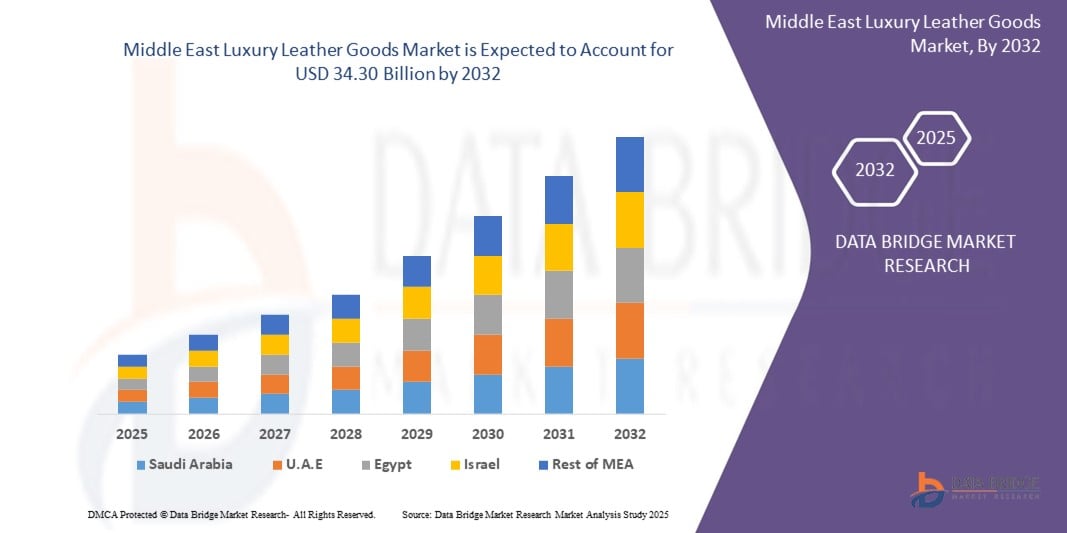
- The middle east luxury leather goods market size was valued at USD 19.80 billion in 2024 and is expected to reach USD 34.30 billion by 2032, at a CAGR of 7.11% during the forecast period
- The market growth is largely fueled by rising disposable incomes and increasing demand for premium fashion accessories
- Economic diversification efforts and rising incomes, particularly in GCC countries, are increasing consumer spending on luxury items millennials and gen z consumers are showing strong preferences for exclusive and branded products, boosting market expansion.
Middle East Luxury Leather Goods Market Analysis
- The middle east luxury leather goods market is witnessing strong momentum as consumer interest increasingly shifts toward high-end craftsmanship and unique design, with a particular emphasis on quality and exclusivity that distinguishes luxury leather from mass-market alternatives
- The current market landscape reflects a growing emphasis on brand storytelling and artisanal value, where consumers, for instance, actively seek products that combine heritage techniques with contemporary aesthetics, making craftsmanship the central factor in purchasing decisions
- Saudi Arabia dominates the middle east luxury leather goods market with the largest revenue share in 2024, driven by a surge in high-net-worth individuals, expanding tourism sector, and increasing demand for premium fashion among affluent consumers
- U.A.E is expected to be the fastest growing region in the Middle East Luxury Leather Goods market during the forecast period due to its strong retail infrastructure, high disposable incomes, and status as a luxury shopping hub
- The luggage segment is identified as the largest and fastest-growing segment in the middle east & Africa luxury leather goods market in 2024, driven by increasing tourism and the growing trend of travel within and outside the region
Report Scope and Middle East Luxury Leather Goods Market Segmentation
|
Attributes |
Middle East Luxury Leather Goods Key Market Insights |
|
Segments Covered |
|
|
Countries Covered |
Middle East and Africa
|
|
Key Market Players |
|
|
Market Opportunities |
|
|
Value Added Data Infosets |
In addition to the insights on market scenarios such as market value, growth rate, segmentation, geographical coverage, and major players, the market reports curated by the Data Bridge Market Research also include in-depth expert analysis, pricing analysis, brand share analysis, consumer survey, demography analysis, supply chain analysis, value chain analysis, raw material/consumables overview, vendor selection criteria, PESTLE Analysis, Porter Analysis, and regulatory framework. |
Middle East Luxury Leather Goods Market Trends
“Digital Transformation Driving Luxury Leather Market Growth”
- The Middle East luxury leather goods market is experiencing a notable shift towards digital innovation, with brands increasingly adopting technologies such as augmented reality and virtual try-on tools to enhance the online shopping experience
- For instance, the Dubai Mall's Virtual Store allows shoppers to browse and purchase products from luxury brands using a virtual reality headset, showcasing the potential for digital innovation in the region
- This digital transformation is further supported by the region's high internet penetration rates and a young, tech-savvy population that prefers the convenience and accessibility of online platforms for luxury shopping
- Luxury brands are also leveraging social media influencers and personalized digital marketing strategies to connect with consumers, offering exclusive online collections and virtual events to engage their audience
- The integration of digital technologies into the luxury leather goods market is not only enhancing customer engagement but also expanding the reach of brands, making luxury products more accessible to a broader audience across the Middle East
Middle East Luxury Leather Goods Market Dynamics
Driver
“Increasing Consumer Preference for Premium Craftsmanship and Authenticity”
- Increasing consumer preference for premium craftsmanship is driving demand for luxury leather goods as buyers seek quality, durability, and artisanal heritage that sets products apart from mass-produced items
- For instance, brands such as Hermès and Louis Vuitton emphasize hand-stitched finishes and the use of full-grain leather, reflecting years of craftsmanship expertise that appeal to discerning consumers
- Owning handcrafted leather products is viewed as a status symbol and personal style statement, especially in markets where luxury spending aligns with social standing and cultural appreciation of artisan skills
- Growing sustainability awareness is shaping purchasing decisions, with consumers favoring brands that offer ethically sourced and transparent production processes, as seen in initiatives by companies such as Gucci and Prada
- This focus on authenticity and ethical practices encourages repeat purchases and brand loyalty, supporting consistent market growth and expanding customer bases over time
- The appreciation for genuine craftsmanship combined with ethical values continues to strengthen the luxury leather goods market and build lasting brand-consumer relationships
Restraint/Challenge
“High Price Sensitivity Limiting Market Accessibility”
- High price sensitivity among many consumers limits the accessibility of luxury leather goods, which are priced at a premium due to quality, brand reputation, and production costs
- For instance, while the affluent population is growing, many consumers remain cautious about expensive purchases during economic uncertainty or geopolitical tensions
- Middle-income buyers often opt for mid-range or mass-market leather products that offer a better cost-to-style ratio, restricting market expansion beyond wealthy segments
- This price sensitivity also impacts institutional buyers seeking bulk or customized orders but facing budget constraints, which limits overall sales volume growth
- Luxury brands face the challenge of balancing exclusivity with affordability, as lowering prices risks diluting brand prestige and alienating loyal customers
- Effective pricing strategies are crucial for luxury leather brands to sustain growth without compromising their premium image
Middle East Luxury Leather Goods Market Scope
The Middle east luxury leather goods market is segmented on the basis of type, product, application, and distribution channel.
- By Type
On the basis of type, the middle east luxury leather goods market is segmented into footwear, luggage, and accessories. The luggage (travel bags & backpacks) segment is identified as the largest and fastest-growing segment in the middle east & Africa luxury leather goods market in 2024, driven by increasing tourism and the growing trend of travel within and outside the region. As disposable incomes rise, consumers are investing in high-quality and branded travel accessories that offer both style and durability.
The demand for footwear is also significant, particularly for high-end leather shoes and boots, reflecting the region's fashion consciousness and the status symbol associated with designer footwear for both formal and casual wear.
- By Product
On the basis of product (grade), the middle east luxury leather goods market is segmented into high-grade, low-grade, and mid-grade. The high-grade segment is expected to hold the largest market revenue share, driven by the strong demand for premium and exclusive products that signify wealth, status, and luxury. Consumers in the middle east often prioritize superior craftsmanship, rare materials, and renowned brand names in their luxury leather goods purchases. This segment benefits from the region's affluent consumer base and a culture that values opulent aesthetics.
The mid-grade segment is anticipated to witness substantial growth. This growth is fueled by an expanding aspirational middle class who seek luxury aesthetics and quality at a relatively more accessible price point. Brands offering value-for-money luxury and more contemporary designs are gaining traction in this segment.
- By Application
On the basis of application, the middle east luxury leather goods market is segmented into men and women. The women segment held the largest market revenue share in 2024, attributed to the high demand for luxury handbags, wallets, and a wide array of accessories among female consumers. Fashion trends, increasing disposable incomes, and the strong cultural significance of designer bags as status symbols contribute significantly to this segment's dominance.
The men segment is expected to witness the fastest CAGR. This growth is driven by a rising trend of men investing in premium leather goods such as wallets, belts, briefcases, and luxury footwear. The growing fashion consciousness among men in the region and the increasing availability of sophisticated men's luxury leather collections are key drivers.
- By Distribution Channel
On the basis of distribution channel, the middle east luxury leather goods market is segmented into offline retail stores and online retail stores. The offline retail stores segment held the largest market revenue share, primarily due to the established presence of luxury boutiques, department stores, and exclusive brand outlets across major cities in the middle east. Consumers often prefer the immersive shopping experience, personalized service, and the ability to physically inspect high-value luxury items before purchase.
The online retail stores segment is expected to witness the fastest CAGR from 2025 to 2032. This growth is fueled by increasing internet penetration, the convenience of online shopping, and the rising influence of e-commerce platforms and social media in the region. Luxury brands are also actively expanding their online presence to cater to a broader consumer base and offer exclusive online collections.
Middle East Luxury Leather Goods Market Regional Analysis
- Saudi Arabia dominates the Middle East Luxury Leather Goods market with the largest revenue share in 2024, driven by a surge in high-net-worth individuals, expanding tourism sector, and increasing demand for premium fashion among affluent consumers
- This leading position is underpinned by the nation's robust economic growth, a significant number of high-net-worth individuals, and a cultural inclination towards prestigious and high-quality luxury items. The country's strong purchasing power allows for consistent investment in premium leather goods, solidifying its market leadership
- The presence of international luxury brands expanding their footprint in Saudi Arabia's vibrant retail landscape, coupled with the influence of global fashion trends, continues to elevate consumer interest and drive sales in the luxury leather goods market.
Saudi Arabia Luxury Leather Goods Market Insight
The Saudi Arabia luxury leather goods market is expanding steadily, fueled by economic diversification initiatives and a rising emphasis on high-end lifestyle choices among consumers. The vision 2030 initiative is promoting tourism and retail, encouraging international luxury brands to increase their footprint across cities such as Riyadh and Jeddah. Upscale shopping destinations such as kingdom centre and red sea mall feature flagship stores that showcase premium leather products. Additionally, the growing interest in personalized luxury goods, particularly among affluent millennials and gen z consumers, is supporting long-term market growth.
U.A.E. Luxury Leather Goods Market Insight
The U.A.E remains a regional leader in the luxury leather goods market, supported by a robust retail infrastructure, luxury tourism, and high consumer purchasing power. Dubai and Abu Dhabi continue to attract global fashion houses that offer limited-edition leather collections and exclusive in-store experiences. Locations such as the Dubai mall and YAS mall are key hubs for luxury leather retail, hosting seasonal product launches and collaborations. The adoption of omnichannel retailing, including e-commerce and personalized concierge services, is further enhancing consumer access and convenience.
Iran Luxury Leather Goods Market Insight
The Iran luxury leather goods market is showing gradual development, with growing domestic production capacity and a cultural appreciation for craftsmanship and traditional materials. Local manufacturers are focusing on high-quality leather shoes, bags, and accessories that appeal to style-conscious urban consumers. While international brand presence is limited due to sanctions, there is increasing demand for premium homegrown labels offering quality and exclusivity. Fashion-forward youth, especially in cities such as Tehran and Isfahan, are playing a key role in driving interest in leather goods through social media and local fashion movements.
Israel Luxury Leather Goods Market Insight
the Israel luxury leather goods market is progressing steadily, supported by a design-centric consumer base and increasing interest in artisan-crafted accessories. Tel Aviv, known for its vibrant fashion scene, is home to many boutique stores and local designers specializing in premium leather footwear and handbags. consumers are showing a strong preference for ethically produced and sustainable leather goods, encouraging innovation in eco-conscious manufacturing. e-commerce platforms are also gaining traction, allowing international luxury brands to reach consumers seeking modern design fused with functional aesthetics.
Qatar Luxury Leather Goods Market Insight
The Qatar luxury leather goods market continues to grow, driven by high-income consumers and the ongoing development of high-end retail environments. Doha’s luxury shopping destinations, such as the mall of Qatar and place Vendôme, host global leather brands offering exclusive collections tailored to local tastes. The cultural value placed on luxury gifting and personal presentation supports demand for premium accessories. In-store luxury experiences, combined with a growing emphasis on digital engagement through virtual styling and online catalogues, are enhancing brand interaction and customer retention.
Middle East Luxury Leather Goods Market Share
The middle east luxury leather goods industry is primarily led by well-established companies, including:
- Burberry (U.K.)
- COACH IP HOLDINGS LLC (U.S.)
- DIOR (France)
- Goldlion (China)
- GIVENCHY (France)
- Guccio Gucci S.p.A (Italy)
- Kate Spade (U.K.)
- Longchamp (France)
- Mulberry (U.S.)
- Michael Kors (U.S.)
- CAPRI HOLDINGS LIMITED (U.S.)
- 31 Phillip Lim (U.K.)
- Proenza Schouler (U.S.)
- Bata Brand (Switzerland)
- Wolverine World Wide Inc. (U.S.)
- Rahman Group (India)
- Dunlop Protective Footwear (Portugal)
- VF Corporation (U.S.)
- Uvex group (Germany)
- Hewat's Edinburgh (U.K.)
- ELTEN GmbH (Germany)
- COFRA Holding (Switzerland)
- Rock Fall Ltd. (U.K.)
- Oftenrich Holdings Co. Ltd. (U.S.)
Latest Developments in Middle East Luxury Leather Goods Market
- In September 2024, Vogue Business, in collaboration with the Saudi Fashion Commission, hosted an event during London Fashion Week to spotlight Saudi Arabia's burgeoning fashion industry and its investment potential. The event featured roundtable discussions with key figures from Saudi governmental bodies, including the Ministry of Investment and the Cultural Development Fund, alongside international brand executives. Topics covered included governmental incentives for foreign brands, the 'Saudi 100 Brands' initiative promoting local designers, and the release of the 'State of Fashion Sector in Saudi Arabia 2024' report
- In September 2024, Transparency Market Research projected that the Middle East second-hand luxury goods market is expected to reach USD 3.5 billion by 2035, growing at a CAGR of 13.3%. This growth is driven by increasing affluence, a desire for vintage and heritage luxury items, and a growing awareness of environmental sustainability. The market is particularly strong in the UAE, which leads due to its affluent population and established luxury retail infrastructure. jewelry, including bracelets, earrings, necklaces, rings, and watches, leads the product segments, while the men's segment dominates in terms of end-use, driven by demand for designer clothing and accessories

- Interactive Data Analysis Dashboard
- Company Analysis Dashboard for high growth potential opportunities
- Research Analyst Access for customization & queries
- Competitor Analysis with Interactive dashboard
- Latest News, Updates & Trend analysis
- Harness the Power of Benchmark Analysis for Comprehensive Competitor Tracking
Data collection and base year analysis are done using data collection modules with large sample sizes. The stage includes obtaining market information or related data through various sources and strategies. It includes examining and planning all the data acquired from the past in advance. It likewise envelops the examination of information inconsistencies seen across different information sources. The market data is analysed and estimated using market statistical and coherent models. Also, market share analysis and key trend analysis are the major success factors in the market report. To know more, please request an analyst call or drop down your inquiry.
The key research methodology used by DBMR research team is data triangulation which involves data mining, analysis of the impact of data variables on the market and primary (industry expert) validation. Data models include Vendor Positioning Grid, Market Time Line Analysis, Market Overview and Guide, Company Positioning Grid, Patent Analysis, Pricing Analysis, Company Market Share Analysis, Standards of Measurement, Global versus Regional and Vendor Share Analysis. To know more about the research methodology, drop in an inquiry to speak to our industry experts.
Data Bridge Market Research is a leader in advanced formative research. We take pride in servicing our existing and new customers with data and analysis that match and suits their goal. The report can be customized to include price trend analysis of target brands understanding the market for additional countries (ask for the list of countries), clinical trial results data, literature review, refurbished market and product base analysis. Market analysis of target competitors can be analyzed from technology-based analysis to market portfolio strategies. We can add as many competitors that you require data about in the format and data style you are looking for. Our team of analysts can also provide you data in crude raw excel files pivot tables (Fact book) or can assist you in creating presentations from the data sets available in the report.