



North America Automated Liquid Handling Market Segmentation, By Product (Automated Liquid Handling Workstations, Reagents & Consumables and Others), Type (Automated Liquid Handling Systems and Semi-Automated Liquid Handling), Procedure (PCR Setup, Plate Replication, Serial Dilution, High Throughput Screening, Plate Reformatting, Cell Culture, Whole Genome Amplification, Array Printing, and Others), Modality (Disposable Tips and Fixed Tips), Application (Genomics, Drug Discovery, Clinical Diagnostics, Proteomics, and Others), End User (Biotechnology and Pharmaceutical Industries, Research Institutes, Hospitals, and Diagnostic Laboratories, Academic Institutes, and Others), Distribution Channel (Direct Tender, Retail Sales and Third Party Distributor)- Industry Trends and Forecast to 2033
ما هو حجم سوق المناولة السائلة الآلية لأمريكا الشمالية ومعدل النمو؟
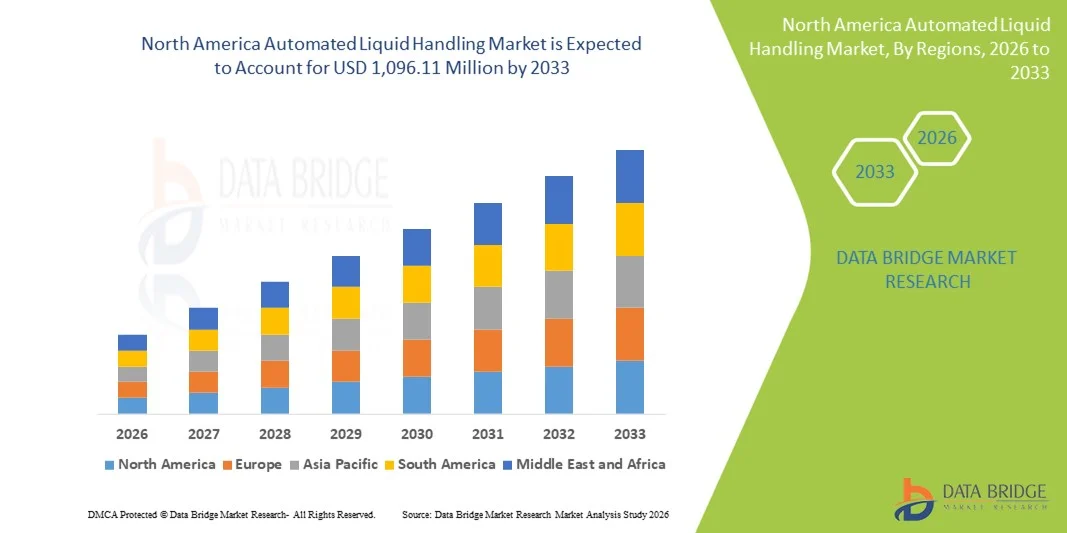
- وفقاً لتحليل بحثية عن سوق سوق بيانات الجسرمبلغ 574.94 مليون دولار في عام 2025ومن المتوقع أن يتم ذلك(أ) 096,11,1 مليون, ماالنسبة المئوية من 8.4٪خلال الفترة التي
- ويغذي نمو السوق إلى حد كبير الاعتماد المتزايد لنظم المناولة السائلة المؤتمتة في مجالات التكنولوجيا الأحيائية، والبحث والتطوير في مجال المستحضرات الصيدلانية، والتشخيص السريري، وبحوث علم الجينات- يؤدي تدفق تدفقات العمل العالية الإنتاجية، ومتطلبات الدقة، والحاجة إلى خفض الأخطاء اليدوية، والحاجة إلى الحد من الأخطاء اليدوية، إلى استثمارات في تكنولوجيات متقدمة لمناولة السوائل عبر مختبرات في الولايات المتحدة وكندا
- فضلاً عن ذلك، فإن الطلب المتزايد على المستهلكين والمؤسسات من أجل التشغيل الآلي للمختبرات بكفاءة وموثوقية وتكامل، بما في ذلك محطات العمل الآلية والمواد الاستهلاكية، يعمل على إنشاء حلول آلية لمناولة السوائل باعتبارها أدوات أساسية لتدفقات العمل الحديثة في علوم الحياة. وهذه العوامل المتقاربة تعمل على التعجيل بامتصاص المعالجات السائلة الآلية، وبالتالي تعزيز نمو السوق في المنطقة بشكل كبير.
سوق الحجم و توقّر
- قيمة السوق في أمريكا الشمالية (2025): 574.94
- القيمة السوقية المتوقعة (2033)1 - أ ع (ب)
- )٢٠٢٦-٢٠٣٣(: 8.4 %
تحليل سوق المناولة الآلية
- نظم المناولة السائلة الآلية، التي تمكِّن من معالجة السوائل في المختبرات على نحو دقيق وعالي الكفاءة، أصبحت بصورة متزايدة عناصر حيوية في تدفقات العمل الحديثة لعلوم الحياة والعلوم الحديثة في كل من البحوث والبيئات السريرية نظرا لدقتها وكفاءتها وتكاملها السلس مع منصات التشغيل الآلي للمختبرات
- ويؤجج الطلب المتزايد على نظم المناولة الآلية السائلة أساساً الاعتماد المتزايد لتكنولوجيات التشغيل الآلي للمختبرات، والحاجة إلى الحد من الأخطاء اليدوية، وزيادة متطلبات النواتج في إجراءات من قبيل تركيب نظام مراقبة الأداء،اختبار الفرز بالصوتوتكرار الصفيحة
- وتهيمن الولايات المتحدة على سوق المناولة الآلية السائلة التي بها أكبر حصة من الإيرادات بلغت 90 في المائة في عام 2025، والتي تتسم باستثمار قوي في البحث والتطوير، واعتماد تكنولوجيات مختبرية متقدمة في وقت مبكر، ووجود كبير للجهات الفاعلة الرئيسية في الصناعة، مع تسجيل نمو كبير في التكنولوجيا الأحيائية والصناعات الصيدلانية، ومعاهد البحوث، ومختبرات التشخيص، مدفوعة بالابتكارات في محطات التشغيل الآلية للمناولة السائلة، والنظم الآلية، والمواد الاستهلاكية.
- ومن المتوقع أن تكون كندا أسرع البلدان نموا في سوق المناولة السائلة الآلية في أمريكا الشمالية خلال الفترة المتوقعة نظرا لزيادة التكنولوجيا الأحيائية والبحوث الصيدلانية، وزيادة الدعم الحكومي للتشغيل الآلي للمختبرات، وتزايد الطلب على تدفقات العمل العالية الإنتاجية والدقيقة في المختبرات.
- هيمنة محطات عمل المناولة الآلية لمناولة السوائل على سوق الولايات المتحدة بحصة سوقية قدرها 45% في عام 2025، مدفوعة بدقتها ومرونتها وقدرتها على دعم مجموعة واسعة من الإجراءات عبر الجينوم، اكتشاف العقاقير، التشخيصات السريرية، وتطبيقات البروتيوميك
تقرير عن
|
الصفات الأولى |
أمريكا الشمالية |
|
المُسَجَّل |
|
|
البلدان |
أمريكا الشمالية
|
|
& مفتاح |
|
|
ما |
|
|
جاري |
وبالإضافة إلى الرؤى المتعلقة بسيناريوهات السوق مثل القيمة السوقية، ومعدل النمو، والتجزئة، والتغطية الجغرافية، والجهات الفاعلة الرئيسية، فإن تقارير السوق التي تُعدها بحوث سوق جسر البيانات تتضمن أيضاً تحليلاً متعمقاً للخبراء، وعلم الأوبئة للمرضى، وتحليل خطوط الأنابيب، وتحليل الأسعار، والإطار التنظيمي. |
ما هو الاتجاه الرئيسي في أمريكا الشمالية سوق المناولة الآلية؟
إدماج الآكل والروبوتات من أجل تعزيز كفاءة المختبرات
- وثمة اتجاه هام ومتسارع في سوق المناولة السائلة الآلية في أمريكا الشمالية يتمثل في إدماج الروبوتات التي تقودها المبادرة الدولية للتكيُّف مع محطات العمل المؤتمتة، وزيادة الدقة، والناتج، والكفاءة التشغيلية في سير العمل في المختبرات
- فعلى سبيل المثال، يدمج برنامج هاميلتون للدسرات الروبوتية (STARLETS) استخدام الأنابيب التي تساعدها منظمة العفو الدولية والمناولة الآلية للحد من التدخل اليدوي مع الاستفادة المثلى من أوقات تجهيز العينات.
- ويمكّن التكامل في إطار النظام المتكامل للتكيّف من سمات من قبيل كشف الخطأ التنبؤي، والتدرّج الأمثل لتدفق العمل على التكيف، والتجدول الذكي لتجارب عالية الفعالية، وتحسين القابلية للتكرار، والحد من الخطأ البشري
- يتيح الجمع السلس بين الروبوتات ونظم إدارة المعلومات المختبرية (LMS) التحكم المركزي في تدفقات العمل المتعددة، مما يمكّن من تتبع العينات آليا، وجمع البيانات، والإبلاغ عن طريق وصلة واحدة
- وهذا الاتجاه نحو نظم معالجة سائلة أكثر ذكاءً وترابطاً وإعادة تشكيل التوقعات من التشغيل الآلي للمختبرات، حيث تقوم شركات مثل شركة Tecan بتطوير منصات محسنة قادرة على المناولة السائلة المكيفة، والتحليل المتكامل، واتخاذ القرارات آلياً.
- الطلب على نظم المناولة السائلة المؤتمتة التي لها أثر مؤثّر غير مؤثّر والتكامل الروبوتي يتزايد بسرعة في جميع مجالات التكنولوجيا الأحيائية والمختبرات الصيدلانية والمختبرات السريرية، مع إيلاء المؤسسات الأولوية للكفاءة والموثوقية والدقة في تجهيز العينات
- زيادة التكامل بين الرصد عن بعد والربط القائم على سحابة، مما يمكِّن المختبرات من تتبع التجارب ومقاييس الأداء في الوقت الحقيقي، مما يدعم تدفق البحوث اللامركزية والتعاونية
أمريكا الشمالية
سائق
الحاجة المتزايدة إلى التجهيز العالي الجودة والمعالجة الدقيقة
- :: زيادة الحاجة إلى فرز النواتج العالية والدقة في تدفق البحوث، إلى جانب زيادة اعتماد تكنولوجيات التشغيل الآلي للمختبرات، مما يشكل محركا رئيسيا لنمو الأسواق
- فعلى سبيل المثال، في آذار/مارس 2025، أعلن بيكمان كولتر في آذار/مارس 2025 عن إدخال تحسينات على سلاسله الإلكترونية Biomek لدعم تدفقات تدفق المعلومات المجينية العالية الإنتاجية بهدف الحد من الخطأ اليدوي وزيادة كفاءة المختبرات
- ومع توسع مختبرات البحوث والمختبرات التشخيصية في عملياتها، تتيح نظم المناولة الآلية السائلة، التي توسع نطاق عملياتها، إمكانية إعادة المعالجة، وتقليل الأخطاء البشرية، وسرعة وقت التجهيز، مما يتيح ميزة واضحة على استخدام الأنابيب اليدوية
- ان ازدياد شعبية الحلول الآلية في اكتشاف العقاقير ، الجينومات ، والتشخيصات السريرية يجعل هذه النظم جزءا لا يتجزأ من العمليات المختبرية الحديثة
- :: تيسير العمليات الخالية من الأيدي وتبسيط مسارات العمل المعقدة، مما يؤدي إلى اعتماد التكنولوجيا الأحيائية والصيدلة والمختبرات التشخيصية
- وعلى سبيل المثال، فإن زيادة المتطلبات التنظيمية لعمليات المختبرات الموحدة والتعقبية تحفز المختبرات على اعتماد نظم آلية لمناولة السائلة لضمان الامتثال وسلامة البيانات
- ويتيح الاندماج في منصات متعددة الأقطاب وأدوات للفرز عالية المحتوى فرصة فريدة للتعجيل بدراسات البحوث المعقدة، ولا سيما في الطب الشخصي وفي علم الجينوم.
- وعلى سبيل المثال، يمكن للمعالجين السائلين بمساعدة من منظمة العفو الدولية تكييف البروتوكولات في الوقت الحقيقي مع التغيرات في حجم العينة أو تركيزها، والحد من نفايات الكوادر وتحسين الكفاءة التجريبية.
التعرّض/التحديي
التكاليف العالية والصيانة
- ويشكل الارتفاع النسبي في التكلفة الأولية لنظم المناولة السائلة الآلية المتقدمة، إلى جانب متطلبات الصيانة المستمرة، تحديا كبيرا أمام الاعتماد الواسع النطاق، ولا سيما بالنسبة للمختبرات الأصغر حجما.
- فعلى سبيل المثال، قد تتردد المشاريع الناشئة في مرحلة مبكرة من المراحل المبكرة في مجال التكنولوجيات الحيوية والتكنولوجيات التي قد تتردد في الاستثمار في محطات عمل آلية تماما بسبب قيود الميزانية، على الرغم من المكاسب المحتملة الطويلة الأجل في مجال الكفاءة
- يمكن أن يؤدي تركيب النظم المعقدة ومعايرة الموظفين المدربين وحاجتهم إلى الموظفين المدربين إلى إبطاء النشر، مما يحد من إمكانية الوصول لبعض معاهد البحوث أو مختبرات التشخيص
- وفي حين توجد نظم على مستوى الدخول إلى مستوى الدخول وحلول نموذجية، تظل منصات عالية الجودة ذات روبوتات متكاملة، ومعاملات الذكاء الفلكي، والأصناف الاستهلاكية باهظة التكلفة، مما يجعل التكلفة حاجزا أمام المؤسسات التي تراعي الأسعار
- وستكون مواجهة هذه التحديات من خلال حلول نموذجية وفعالة من حيث التكلفة وتدريب المستعملين ودعم الخدمات حاسمة الأهمية لتوسيع نطاق النفاذ إلى الأسواق وإدامة النمو في أمريكا الشمالية
- فعلى سبيل المثال، يمكن أن تؤدي الحاجة إلى تحديثات منتظمة للبرمجيات والصيانة الوقائية إلى الضغط على الأفرقة الداخلية لتكنولوجيا المعلومات وإدارة المختبرات، مما يزيد من التعقيد التشغيلي
- قد يعوق التشغيل التبادلية المحدودة بين نظم المناولة السائلة من مختلف البائعين من مختلف مختلف مختلف البائعين توحيد سير العمل والتكامل مع الهياكل الأساسية القائمة للتشغيل الآلي للمختبرات
- فعلى سبيل المثال، قد تواجه المختبرات الصغيرة والمتوسطة الحجم تحديات عند دمج منصات جديدة لمناولة السوائل مع الأسلحة الروبوتية الموجودة، أو LMS، أو برامجيات التحليل، أو إبطاء الاعتماد.
مجموعة دول أمريكا الشمالية
ويتم تقسيم السوق على أساس المنتج، والنوع، والإجراء، والأسلوب، والتطبيق، والمستعمل النهائي، وقناة التوزيع.
- )
وعلى أساس المنتج، تُقسم السوق إلى وحدات عمل للمناولة الآلية للمناولة السائلة، وأجهزة معالجة الكواشف والأصناف الاستهلاكية، وغيرها. وتهيمن فئة محطات العمل الآلية على السوق بأكبر حصة من الإيرادات قدرها 45 في المائة في عام 2025، مدفوعة بمستوى دقتها العالية ومرونتها وقدرتها على تشغيل المختبرات الآلية، وهذه المحطات تعتمد على نطاق واسع عبر الجينومات، واكتشاف العقاقير، والتشخيصات السريرية نظراً لتوافقها مع عمليات الفرز العالي الإنتاجية، وتركيب أجهزة تحديد المبردات الكيميائية، والإضعاف التسلسلي. وتفضّل المختبرات محطات العمل من حيث الحد من الأخطاء اليدوية، وزيادة الكفاءة، والتكامل السلس مع نظم إدارة المعلومات المختبرية (LIMS). كما أن الابتكارات المستمرة، مثل استخدام الأنابيب بمساعدة العاونة العملية، ومعالجة العينات الآلية، تزيد من تعزيز هيمنتها. كما أن الطلب المتزايد على النتائج القابلة للتكرار والثبات في المختبرات الأكاديمية والتجارية على حد سواء يعزز تفضيل محطات العمل الآلية. وبالإضافة إلى ذلك، أدى ارتفاع عدد منصات التشغيل الآلي للمختبرات المركزية القادرة على التعامل مع الإجراءات المتعددة في آن واحد إلى تعزيز اعتماد هذه النظم.
ومن المتوقع أن يشهد قطاع الكواشف والأصناف الاستهلاكية أسرع نمو من 2026 إلى 2033، مدعوماً بزيادة الاستخدام الاستهلاكي في التجارب العالية الإنتاجية، وزيادة الطلب على مجموعات المواد المزيفة قبل التجديد، والحاجة إلى عوامل كواشف موحدة. فالمواد الاستهلاكية مثل البقايا، والألواح، والأنابيب، تتسم بأهمية حاسمة بالنسبة لاتساق تدفق العمل، وقيادة المشتريات المتكررة. ويؤدي التوسع في علم الجينوميات، والبروتيوميات، والبحوث التشخيصية السريرية إلى خلق طلب ثابت على الكواشف والمواد الاستهلاكية، ودعم نموها. كما أن زيادة الوعي بشأن مراقبة الجودة ومنع التلوث يزيد من تعزيز الطلب على المواد الاستهلاكية المتخصصة.
- نوع
وعلى أساس النوع، فإن السوق مقسمة إلى نظم مناولة سائلة مؤتمتة ومناولة سائلة شبه آلية، وسيطر قطاع نظم المناولة السائلة المؤتمتة على السوق في عام 2025، مستأثرا بأكبر حصة من الإيرادات نظرا لقدرتها على التعامل مع تدفقات عمل معقدة ورفيعة الحجم مع الحد الأدنى من التدخل البشري، وتفضَّل هذه النظم بالنسبة للإجراءات الحرجة مثل تركيب نظام مراقبة الجودة الشخصية، والفحص العالي الإنتاجية، والتضخيم الكامل للجينوم، حيث تكون الدقة وقابلية التكرار أمران أساسيان. وتستفيد المختبرات من سرعة وتيرة التحول، وانخفاض معدلات الخطأ، والتكامل السلس مع نظام إدارة المعلومات عن بعد ومنصات الروبوتات. وقد عززت التحسينات المستمرة في البرمجيات، والتكامل مع معهد الدراسات الدولية، وتحقيق تدفق العمل الأمثل من اعتمادها. وتعتمد شركات الصيدلة والتكنولوجيا الأحيائية الكبيرة بشكل متزايد على نظم آلية بالكامل لاكتشاف العقاقير على نطاق واسع والبحوث الجينية، مما يزيد من تعزيز قيادتها السوقية.
ومن المتوقع أن يشهد قطاع المناولة السائلة شبه الآلية أسرع نمو من عام 2026 إلى عام 2033، مدفوعاً بمختبرات صغيرة أو متوسطة الحجم تسعى إلى إيجاد حلول للتشغيل الآلي تكون فعالة من حيث التكلفة. وتوفر النظم شبه الآلية كفاءة محسنة على استخدام الأنابيب اليدوية دون الاستثمار المرتفع اللازم لإنشاء منصات آلية بالكامل. ذلك أن مرونتها، وواجهتها السهلة الاستعمال، ونمذجتها تتيح الاعتماد التدريجي لتدفقات العمل في التشغيل الآلي. وتحبذ معاهد البحوث والمختبرات الأكاديمية النظم شبه الآلية للتنويع التجريبي، مما يجعل هذا الجزء جذاباً للغاية في الفترة المتوقعة.
- براتج
وعلى أساس الإجراءات المتبعة، فإن السوق مقسمة إلى تركيبات PCR، وتكرار الصفائح، والتمزيق التسلسلي، وفحص عالي الإنتاجية، وإصلاح الصفائح، وثقافة الخلايا، وتوسعة الجينوم بأكمله، وطباعة المصفوفات، وغيرها. وكان قطاع الفرز العالي الأداء مسيطراً على السوق في عام 2025 نظراً لدوره الحاسم في اكتشاف المخدرات، والجينومات، والبحوث المتعلقة بالبروتينيات. وتؤدي المختبرات إلى إعطاء الأولوية للتشغيل الآلي للتطبيقات ذات الإنتاجية العالية للحد من تكاليف العمل والتقليل إلى أدنى حد من الأخطاء البشرية. ولا يزال الطلب على تطوير العقاقير المتسارعة والبحوث الدقيقة يعزز من هيمنة هذا القطاع.
ومن المتوقع أن يشهد الجزء الخاص بوضع نظام مراقبة الأداء الشخصي أسرع نمو من عام 2026 إلى عام 2033، مدفوعاً بازدياد الجينومات والتشخيصات والطب الشخصي. فالتكاتف في تركيب نظام مراقبة السجلات الشخصية يقلل من الأخطاء في الأنابيب، ويكفل المناولة الموحدة للعينات، ويدعم التجهيز العالي الإنتاجية. وتعتمد المختبرات الأكاديمية والإكلينيكية والصيدلانية بشكل متزايد على الإعداد الآلي لنظام مراقبة الأداء المركزي لتلبية متطلبات الاختبار المتزايدة. وقد أدى اعتماد اختبارات COVID-19 والتشخيص الجزيئي في المستشفيات والمختبرات التشخيصية إلى زيادة التعجيل بالحاجة إلى تدفق العمل الآلي لنظام مراقبة الأداء.
- من خلال الطريقة
وعلى أساس الطريقة المتبعة، تُقسم السوق إلى نصائح قابلة للتصرف وإكراميات ثابتة، وقد هيمنة قطاع البقشيش القابلة للتصريف على السوق في عام 2025 نظرا لدورها في منع التلوث المتقاطع، والحفاظ على سلامة العينة، وضمان نتائج قابلة للانتكاس في سير العمل المختبري الحرج. وتستخدم البقشيش القابلة للإزالة على نطاق واسع في علم الجينوم، والتشخيص السريري، واكتشاف العقاقير للامتثال لمعايير الجودة والسلامة. كما تدعم هذه الأجزاء منصات المناولة الآلية السائلة مع الكشف المتكامل عن البقايا ومعايرة الحجم. وتعطى المختبرات الأولوية بشكل متزايد للمواد الاستهلاكية القابلة للتصرف للحد من خطر التلوث في الإجراءات العالية الإنتاجية والحساسة. وقد أدى الاستمرار في إدخال النصائح المسبقة التعقيم والمرشحة إلى زيادة تعزيز الاعتماد في الولايات المتحدة.
ومن المتوقع أن يشهد الجزء الخاص بالتلميحات الثابتة أسرع نمو من عام 2026 إلى عام 2033، مدفوعاً بفعالية تكاليفها، وإمكانية إعادة استخدامها، وتكاملها مع النظم شبه المؤتمتة. ذلك أن النصائح الثابتة تكتسب قوة في المختبرات الأكاديمية والبحثية حيث يكون تحقيق الاستفادة المثلى من الميزانية ومتطلبات الإنتاج المعتدلة بالغة الأهمية. كما يشجع الطلب المتزايد على الممارسات المستدامة بيئياً أيضاً على تبني نص ثابت قابل لإعادة الاستخدام في سير العمل الروتيني. فقوتها ومتانتها تجعلانها مثاليتين للتجارب المتكررة. ومن المتوقع أن يؤدي تزايد الوعي بالكفاءة التشغيلية إلى دفع توسع الجزء.
- ألف -
وعلى أساس التطبيق، تنقسم السوق إلى جينومات، واكتشافات للمخدرات، وتشخيصات سريرية، وبروتيوميكس، وغيرها.ويهيمن قطاع اكتشاف المخدرات على السوق في عام 2025 بسبب الاستخدام الواسع النطاق لمناولة سائلة آلية في مركبات الفحص، وإعداد لوحات الفحص، وإجراء تجارب عالية الإنتاجية. وتعتمد شركات الصيدلة على التشغيل الآلي لتسريع الجداول الزمنية للبحث والتطوير، والحد من الأخطاء، وتحسين القابلية للانتكاس. ويعزز التكامل مع منظمة العفو الدولية والمنصات الآلية الكفاءة ودقة البيانات في اختبار المجمعات.كما أدى التركيز على تطوير العقاقير أسرع ودواء الدقة إلى زيادة الاعتماد.كما أن الاستثمار المستمر في البحث والتطوير والتعاون مع شركات التكنولوجيا الحيوية يعزز الطلب على المناولة الآلية للسوائل في اكتشاف العقاقير.
ومن المتوقع أن يشهد قطاع الجينوم أسرع نمو من 2026 إلى 2033، مدفوعاً بارتفاع الطلب على التسلسل، والتشخيصات القائمة على أساس الفصل العنصري، وتطبيقات الطب الشخصي. فالتمكين في الجينوم يقلل من الأخطاء اليدوية، ويسرع عملية تجهيز العينات، ويدعم تدفق العمل المعقد مثل مجمل تضخيم الجينوم وطباعة المصفوفات. وقد أدت زيادة التمويل لبحوث علم الجينوم والمبادرات الحكومية الرامية إلى توسيع نطاق التشخيص الجزيئي إلى زيادة تعزيز الاعتماد. ويزيد الطلب المتزايد على العلاجات المكيفة من تعزيز هذا الجزء. ويؤدي التكامل مع منظمة العفو الدولية ومنصات الروبوتات إلى تعزيز الكفاءة وتوحيد تدفق العمل.
- هذا
وعلى أساس المستخدم النهائي، تنقسم السوق إلى التكنولوجيا الأحيائية والصناعات الصيدلانية، ومعاهد البحوث، والمستشفيات ومختبرات التشخيص، والمعاهد الأكاديمية، وغيرها. وهيمنة قطاع الصناعات البيولوجية والصيدلية على السوق في عام 2025 بسبب الاعتماد الشديد على المناولة الآلية للسوائل من أجل تطوير العقاقير، والفحص العالي الإنتاجية، والعمليات المختبرية القابلة للتكرير. والواقع أن عمليات البحث والتطوير الواسعة النطاق في هذه الصناعات تعطي الأولوية للسرعة والدقة والقابلية للقياس، مما يجعل من النظم الآلية الكاملة أمراً أساسيا. كما يعمل دمج وكالة الاستخبارات المالية والروبوتات على زيادة تعزيز الاعتماد في مختبرات الصيدلة والتكنولوجيا الحيوية. ومواصلة الاستثمارات في الطب الدقيق والبحوث ذات الإنتاجية العالية تعزز قيادة هذا القطاع.
ومن المتوقع أن يشهد الجزء الخاص بمعاهد البحوث أسرع نمو من عام 2026 إلى عام 2033، مدفوعاً بزيادة اعتماد النظم الآلية في المختبرات الأكاديمية والمختبرات التي تمولها الحكومات. ذلك أن معاهد البحوث تنفذ على نحو متزايد التشغيل الآلي للتعجيل بدراسات علم الجينوم، والبروتيوميات، والبيولوجيا الجزيئية، مع التقليل من التدخل اليدوي إلى أدنى حد ممكن. كما يدعم النمو أيضاً زيادة التعاون مع شركات التكنولوجيا الأحيائية والمنح من أجل تحديث المختبرات. وزيادة التركيز على تجارب البيولوجيا الجزيئية ذات الإنتاجية العالية تزيد من تغذية النمو القطاعي. ومن المتوقع أيضاً أن يشهد الجزء الخاص بمعاهد البحوث نمواً أسرع من عام 2026 إلى عام 2033، مدفوعاً بزيادة اعتماد الأنظمة الآلية في المختبرات الأكاديمية والمختبرات التي تمولها الحكومات.
- حسب التوزيع
وعلى أساس قناة التوزيع، تُقسم السوق إلى مناقصة مباشرة ومبيعات بالتجزئة وأطراف ثالثة، ويهيمن قطاع العطاءات المباشرة على السوق في عام 2025، مستأثرا بأكبر حصة من الإيرادات، حيث تفضل المختبرات الرئيسية وشركات المستحضرات الصيدلانية الشراء مباشرة من المصنعين لضمان الامتثال، ودعم الضمان، وخدمات ما بعد البيع.كما يتيح الشراء المباشر تكييف نظم المناولة السائلة الآلية لتلبية احتياجات محددة من تدفق العمل. ويعزز هذا النهج العلاقات الطويلة الأجل مع الموردين، ويكفل الدعم التقني وتحسينات النظام المنتظم. كما أن المشتريات السائبة من شبكات العمل المتعددة المصانع أو المنشآت المؤسسية تزيد من هيمنة مبيعات العطاءات المباشرة.
ومن المتوقع أن يشهد الجزء الخاص بجهات توزيع الأطراف الثالثة أسرع نمو من عام 2026 إلى عام 2033، يغذيه ارتفاع الطلب من المختبرات الصغيرة والمؤسسات الأكاديمية والمستشفيات التي تبحث عن خيارات شراء مرنة. ويتيح الموزعون من الأطراف الثالثة الوصول الفعال من حيث التكلفة إلى نظم التشغيل الآلي، والأصناف الاستهلاكية، وخدمات الصيانة، ويدعمون توسع الأسواق بما يتجاوز المختبرات الكبيرة. وتشجع عقود الخدمات المرنة والعروض المجمعة على الاعتماد. ويدعم الطلب المتزايد على التشغيل الآلي للمختبرات النائية والصغيرة التوسع في الموزع.
أمريكا الشمالية
- وتهيمن الولايات المتحدة على سوق المناولة السائلة الآلية بأكبر حصة من الإيرادات بلغت 90 في المائة في عام 2025، وتتسم بالاستثمار القوي في البحث والتطوير، والاعتماد المبكر لتكنولوجيات المختبرات المتقدمة، ووجود عدد كبير من الجهات الفاعلة الرئيسية في الصناعة.
- إجراء مختبرات في المنطقة تقدِّر تقديرا عاليا الدقة والكفاءة والقابلية للتكرار التي تتيحها نظم المناولة السائلة المؤتمتة التي تقلل إلى أدنى حد من الأخطاء اليدوية وتسريع الإجراءات المعقدة مثل تركيب نظام مراقبة
- ويدعم هذا الاعتماد الواسع الانتشار كذلك بنية تحتية متينة للبحث والتطوير، والاستثمار العالي في التشغيل الآلي للمختبرات، ووجود جهات فاعلة رئيسية في الصناعة، وإنشاء نظم آلية لمناولة السائلة كحل حاسم للمختبرات الأكاديمية والتجارية في جميع أنحاء الولايات المتحدة.
سوق المناولة الآلية للمعالجة السائلة
إن سوق المناولة الآلية للسوائل في الولايات المتحدة استحوذت على أكبر حصة من الإيرادات بلغت 90% داخل أمريكا الشمالية في عام 2025، ويغذيها الوجود القوي للتكنولوجيا الحيوية، والصيدلة، ومختبرات البحوث السريرية. فالمختبرات تعطي الأولوية بشكل متزايد لتدفقات العمل العالية الإنتاجية، والدقيقة، والقابلة للتكرار لتطبيقات من قبيل تركيب نظام مراقبة المواد الكيميائية، واكتشاف العقاقير، والبحوث المتعلقة بالجينومات. كما أن الطلب المتزايد على محطات التشغيل الآلية بالكامل، والتكامل الآلي، ونظم المناولة السائلة القابلة للاستخدام بواسطة الذكاء البنفسجي يزيد من دفع السوق. وبالإضافة إلى ذلك، تدعم الاستثمارات الحكومية والخاصة في مجال البحث والتطوير، إلى جانب اعتماد التشغيل الآلي للمختبرات من أجل الامتثال التنظيمي والكفاءة، توسع الأسواق. ولا تزال الولايات المتحدة تقود بسبب بنيتها الأساسية المتقدمة للبحوث، واعتماد التكنولوجيا المبكرة، وعمليات المختبرات التجارية الواسعة النطاق.
سوق المناولة السائلة الآلية في كندا
ومن المتوقع أن تنمو سوق المناولة الآلية للسوائل في كندا في أسرع وقت ممكن في أمريكا الشمالية خلال الفترة المتوقعة، مدفوعة بزيادة الاستثمارات في التكنولوجيا الحيوية والبحوث الصيدلانية. ومن المتوقع أن يؤدي تزايد التمويل الحكومي للتشغيل الآلي للمختبرات، وتوسيع مرافق البحوث الأكاديمية، وزيادة التركيز على البيولوجيا الجزيئية العالية الإنتاجية وتدفقات العمل في مجال الجينوم إلى زيادة الاعتماد. والطلب على نظم المناولة السائلة شبه الآلية والنمذجة مرتفع بشكل خاص بين معاهد البحوث والمستشفيات الأصغر حجماً. وتعمل المختبرات الكندية بشكل متزايد على تنفيذ التشغيل الآلي لتعزيز الإنتاجية، والتكرار، والكفاءة مع الحد من الأخطاء اليدوية. كما أن التعاون المتزايد بين معاهد البحوث المحلية وشركات علوم الحياة العالمية يزيد من تسارع نمو الأسواق.
سوق مناولة السيولة الآلية في المكسيك
إن سوق المكسيك الآلية لمناولة السوائل تشهد نمواً تدريجياً، مدعوماً بتوسيع قطاعات الصيدلة والتكنولوجيا الأحيائية وزيادة اعتماد التشغيل الآلي للمختبرات في البحوث السريرية والأكاديمية. فالاستثمارات المتزايدة في البنية الأساسية للرعاية الصحية، وارتفاع المبادرات الحكومية لتحديث البحوث، والشراكات مع شركات علوم الحياة الدولية، تحفز على تبنيها. وتتزايد الاستعانة في المختبرات المكسيكية بنظم المعالجة السائلة الآلية في تركيب نظام مراقبة الأداء المركزي، والفحص العالي الإنتاجية، وتدفقات عمل اكتشاف المخدرات لتحسين الدقة والكفاءة. والطلب على الحلول الفعالة من حيث التكلفة، والنمطية، وشبه الآلية مرتفع بشكل خاص في المستشفيات ومعاهد البحوث الأصغر حجما. ومن المتوقع أن ينمو السوق بشكل مطرد مع زيادة الوعي بفوائد التشغيل الآلي، والانتكاس، والكفاءة في تدفق العمل في مختلف أنحاء البلاد.
أمريكا الشمالية
وتقود صناعة المناولة الآلية للسوائل في أمريكا الشمالية في المقام الأول شركات راسخة، منها:
- شركة هاملتون (الولايات المتحدة الأمريكية)
- مؤسسة Terrmo Fisher Science Inc. (الولايات المتحدة الأمريكية)
- (الولايات المتحدة الأمريكية)
- )الولايات المتحدة الأمريكية(
- بيكمان كولتر (الولايات المتحدة الأمريكية)
- (الولايات المتحدة الأمريكية)
- Autؤ التشغيل التلقائي (الولايات المتحدة الأمريكية)
- Inc. (الولايات المتحدة)
- شركة Biomed (كندا)
- غيلسون، In Inc. (الولايات المتحدة الأمريكية)
- BioTek Inc. (الولايات المتحدة)
- (الولايات المتحدة الأمريكية)
- الشركة العلمية (الولايات المتحدة الأمريكية)
- مرتفعات الذوبان (الولايات المتحدة الأمريكية)
- تتومتيك التشغيل الذاتي (الولايات المتحدة الأمريكية)
- متلر توليدو رينين (الولايات المتحدة الأمريكية)
- أناييتيك جينا (الولايات المتحدة الأمريكية)
- مؤسسة كورننغ (الولايات المتحدة الأمريكية)
- PerkinElmer, Inc. (الولايات المتحدة)
ما هي التطورات الأخيرة في أمريكا الشمالية سوق المناولة الآلية للسوائل؟
- في تشرين الأول/أكتوبر 2025، أعلنت شركة Plar Bio Sciences عن حل آلي لإعداد مكتبة من فئة الخدمات العامة الوطنية على منصة هاميلتون ميكرولاب STAR المصممة للتعجيل بإجراء البحوث في مجال تطبيقات الأورام الفلاحة السريعة الانتشار وغيرها من تطبيقات الجينوم
- وفي تموز/يوليه 2025، أعلنت هاملتون عن شراكة استراتيجية بين كوفاريس وهاميلتون لتمكين المختبرات مع Sonicing SAR، وتعزيز تدفق العمل الآلي عن طريق الجمع بين التشغيل الآلي لمناولة السوائل في هاملتون وتكنولوجيا التزكية المتقدمة.
- في كانون الثاني/يناير 2025، أدخل تيكان رسمياً فيياTM، وهو منصة مناولة سائلة آلية من الجيل المقبل من الجيل الأول من الجيل المقبل، التي تدمج التشغيل الآلي المعزز، والتحليلات الآنية، وتدفقات العمل المسبقة الصنع التي تهدف إلى تبسيط العمليات المختبرية المعقدة وتعزيز الإنتاجية عبر البحوث والمختبرات السريرية.
- وفي حزيران/يونيه 2024، كشف عالم الثيرمو فيشر العلمي النقاب عن نظام تنقية الحمض النووي الفائق الصغر، وهو نظام يعمل بكامل طاقته ويقلل كثيراً من الوقت الذي يستغرقه العمل ويسرع سير العمل في البيولوجيا الجزيئية والبحوث العلاجية.
- وفي أيار/مايو 2023، دخلت شركة هاملتون في اتفاق استراتيجي مع شركة Biosero Inc. مع شركة Biosero في أيار/مايو 2023 بشأن تقاسم اتفاقات تسويق استراتيجية مع شركة Biosero Inc. لإدماج برامج Biosero Green Button Gog في برامجيات تحديد الجدولة والتحكم في منصات هاملتون المناولة السائلة الآلية، التي تهدف إلى تبسيط عمليات المختبرات وتحسين كفاءة سير العمل.
SKU-
احصل على إمكانية الوصول عبر الإنترنت إلى التقرير الخاص بأول سحابة استخبارات سوقية في العالم

- لوحة معلومات تحليل البيانات التفاعلية
- لوحة معلومات تحليل الشركة للفرص ذات إمكانات النمو العالية
- إمكانية وصول محلل الأبحاث للتخصيص والاستعلامات
- تحليل المنافسين باستخدام لوحة معلومات تفاعلية
- آخر الأخبار والتحديثات وتحليل الاتجاهات
- استغل قوة تحليل المعايير لتتبع المنافسين بشكل شامل
منهجية البحث
يتم جمع البيانات وتحليل سنة الأساس باستخدام وحدات جمع البيانات ذات أحجام العينات الكبيرة. تتضمن المرحلة الحصول على معلومات السوق أو البيانات ذات الصلة من خلال مصادر واستراتيجيات مختلفة. تتضمن فحص وتخطيط جميع البيانات المكتسبة من الماضي مسبقًا. كما تتضمن فحص التناقضات في المعلومات التي شوهدت عبر مصادر المعلومات المختلفة. يتم تحليل بيانات السوق وتقديرها باستخدام نماذج إحصائية ومتماسكة للسوق. كما أن تحليل حصة السوق وتحليل الاتجاهات الرئيسية هي عوامل النجاح الرئيسية في تقرير السوق. لمعرفة المزيد، يرجى طلب مكالمة محلل أو إرسال استفسارك.
منهجية البحث الرئيسية التي يستخدمها فريق بحث DBMR هي التثليث البيانات والتي تتضمن استخراج البيانات وتحليل تأثير متغيرات البيانات على السوق والتحقق الأولي (من قبل خبراء الصناعة). تتضمن نماذج البيانات شبكة تحديد موقف البائعين، وتحليل خط زمني للسوق، ونظرة عامة على السوق ودليل، وشبكة تحديد موقف الشركة، وتحليل براءات الاختراع، وتحليل التسعير، وتحليل حصة الشركة في السوق، ومعايير القياس، وتحليل حصة البائعين على المستوى العالمي مقابل الإقليمي. لمعرفة المزيد عن منهجية البحث، أرسل استفسارًا للتحدث إلى خبراء الصناعة لدينا.
التخصيص متاح
تعد Data Bridge Market Research رائدة في مجال البحوث التكوينية المتقدمة. ونحن نفخر بخدمة عملائنا الحاليين والجدد بالبيانات والتحليلات التي تتطابق مع هدفهم. ويمكن تخصيص التقرير ليشمل تحليل اتجاه الأسعار للعلامات التجارية المستهدفة وفهم السوق في بلدان إضافية (اطلب قائمة البلدان)، وبيانات نتائج التجارب السريرية، ومراجعة الأدبيات، وتحليل السوق المجدد وقاعدة المنتج. ويمكن تحليل تحليل السوق للمنافسين المستهدفين من التحليل القائم على التكنولوجيا إلى استراتيجيات محفظة السوق. ويمكننا إضافة عدد كبير من المنافسين الذين تحتاج إلى بيانات عنهم بالتنسيق وأسلوب البيانات الذي تبحث عنه. ويمكن لفريق المحللين لدينا أيضًا تزويدك بالبيانات في ملفات Excel الخام أو جداول البيانات المحورية (كتاب الحقائق) أو مساعدتك في إنشاء عروض تقديمية من مجموعات البيانات المتوفرة في التقرير.











