



Asia-Pacific Interventional Cardiology and Peripheral Vascular Devices Market Segmentation, By Product (Angioplasty Balloons, Stent, Catheters, Aneurysm Repair Products, and Others and Accessories), Type (Conventional and Standard), Procedure (Peripheral Angioplasty, Iliac Intervention, Tibial (Below-The-Knee) Interventions, Arterial Thrombectomy, Peripheral Atherectomy, and Femoropopliteal Interventions), Indication (Peripheral Arterial Disease and Coronary Intervention), Age Group (Geriatric, Adults, and Pediatric ) End User (Hospitals, Ambulatory Surgery Centers, Nursing Facilities, Clinics and Others.), Distribution Channel (Third Party Distributors, Direct Tender, and Others) – Industry Trends and Forecast to 2031
Asia-Pacific Interventional Cardiology and Peripheral Vascular Devices Market Analysis
The term interventional cardiology is an area of medicine within the subspecialty of cardiology and peripheral vascular devices that uses enhanced, conventional, and advanced and other diagnostic techniques to evaluate blood flow and pressure in the coronary arteries and chambers of the heart, as well as technical procedures and medications to treat abnormalities that impair the function of the cardiovascular system. The interventional cardiology and peripheral vascular devices are used, since the devices make changes in sedentary lifestyle. It reduces the complications of chronic cardiac diseases, such as coronary artery disease, ischemic heart disease and vascular diseases. The Asia-Pacific Interventional Cardiology and Peripheral Vascular Devices Market is experiencing robust growth driven by an aging population, rising rates of cardiovascular diseases, and advancements in minimally invasive techniques. Here is a detailed analysis:
Interventional Cardiology and Peripheral Vascular Devices Market Size
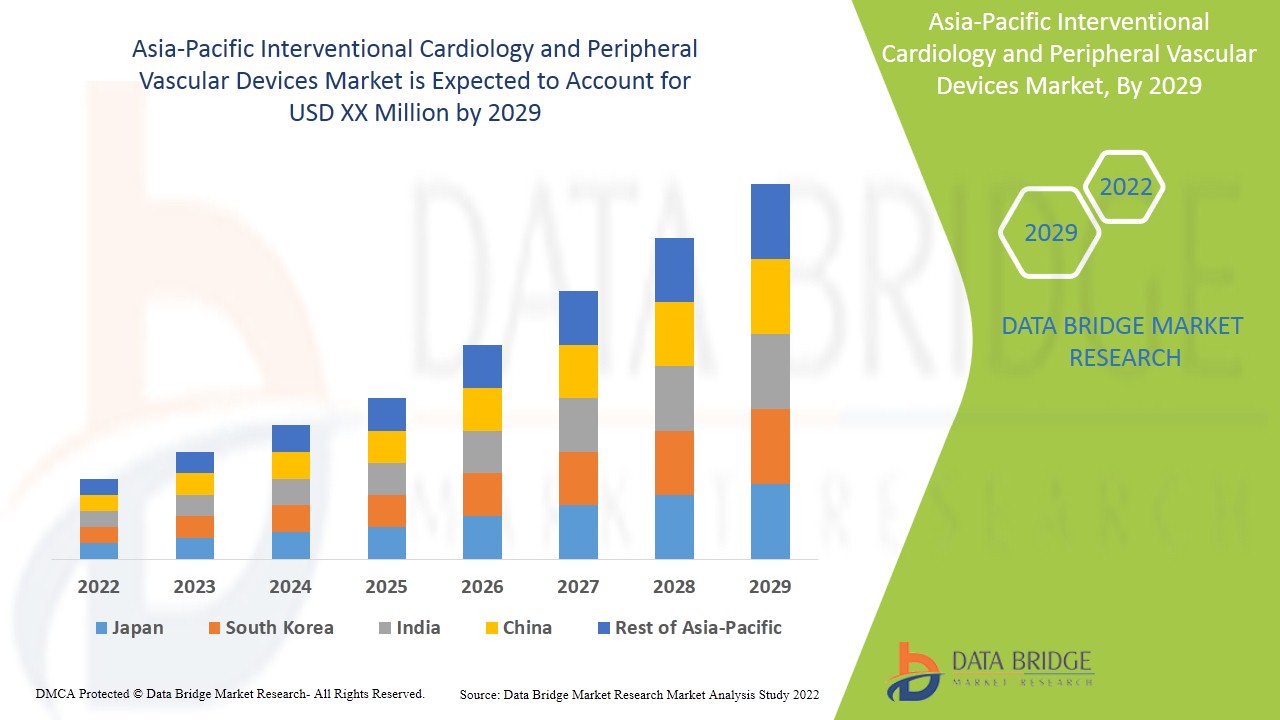
Asia-Pacific interventional cardiology and peripheral vascular devices market size was valued at USD 2.70 billion in 2023 and is projected to reach USD 5.16 billion by 2031, with a CAGR of 8.4% during the forecast period of 2024 to 2031. In addition to the insights on market scenarios such as market value, growth rate, segmentation, geographical coverage, and major players, the market reports curated by the Data Bridge Market Research also include import export analysis, production capacity overview, production consumption analysis, price trend analysis, climate change scenario, supply chain analysis, value chain analysis, raw material/consumables overview, vendor selection criteria, PESTLE Analysis, Porter Analysis, and regulatory framework.
Interventional Cardiology and Peripheral Vascular Devices Market Trends
“Growing Awareness About Cardiovascular Health and The Increasing Availability of Treatment Options”
Rising awareness of cardiovascular health and increased treatment options are key drivers of the interventional cardiology and peripheral vascular devices market in the Asia-Pacific region. As public understanding of cardiovascular diseases (CVDs) grows, more individuals recognize the importance of heart health and the risks associated with these conditions, leading to higher demand for preventive measures, regular check-ups, and effective treatments. Educational initiatives by governments, healthcare organizations, and non-profits are promoting awareness of CVD risk factors, encouraging proactive healthcare behaviors. This cultural shift is boosting demand for interventional devices like stents, catheters, and balloons essential for diagnosing and treating cardiovascular issues.
Report Scope and Interventional Cardiology and Peripheral Vascular Devices Market Segmentation
|
Attributes |
Anti-Nuclear Antibody Test Key Market Insights |
|
Segments Covered |
|
|
Countries Covered |
China, India, Japan, South Korea, Australia, Singapore, Indonesia, Thailand, Malaysia, Philippines, and Rest of Asia-Pacific |
|
Key Market Players |
Abbott (U.S.), Boston Scientific Corporation (U.S.), BD (U.S.), Medtronic (U.S.), Terumo Corporation (Japan), B.Braun SE (Germany), ENDOCOR GmbH & CO. KG (Germany), Teleflex Incorporated (U.S.), Lepu Medical Technology (Beijing)Co.,Ltd. (China), MicroPort Scientific Corporation (China), Koninklijke Philips N.V. (Netherlands), Biotronik (Germany), SMT (China), OrbusNeich Medical Group Holdings Limited (China), Biosensors International Group, Ltd. (Singapore), Edwards Lifesciences Corporation (U.S.), AngioDynamics (U.S.), Alvimedica (Turkey), Cook (U.S.), Cordis (U.S.), Palex (Spain), and W. L. Gore & Associates (U.S.), Inc. |
|
Market Opportunities |
|
|
Value Added Data Infosets |
In addition to the insights on market scenarios such as market value, growth rate, segmentation, geographical coverage, and major players, the market reports curated by the Data Bridge Market Research also include import export analysis, production capacity overview, production consumption analysis, price trend analysis, climate change scenario, supply chain analysis, value chain analysis, raw material/consumables overview, vendor selection criteria, PESTLE Analysis, Porter Analysis, and regulatory framework. |
Interventional Cardiology and Peripheral Vascular Devices Market Definition
Interventional cardiology is a branch of cardiology dealing with catheter-based treatment of heart diseases, such as coronary artery disease, heart valve diseases, and structural heart issues. Peripheral vascular devices are used to treat peripheral artery diseases, aneurysms, and other vascular disorders outside the heart, typically affecting arteries, veins, and lymphatic systems in areas like the legs and arms.
Interventional Cardiology and Peripheral Vascular Devices Market Dynamics
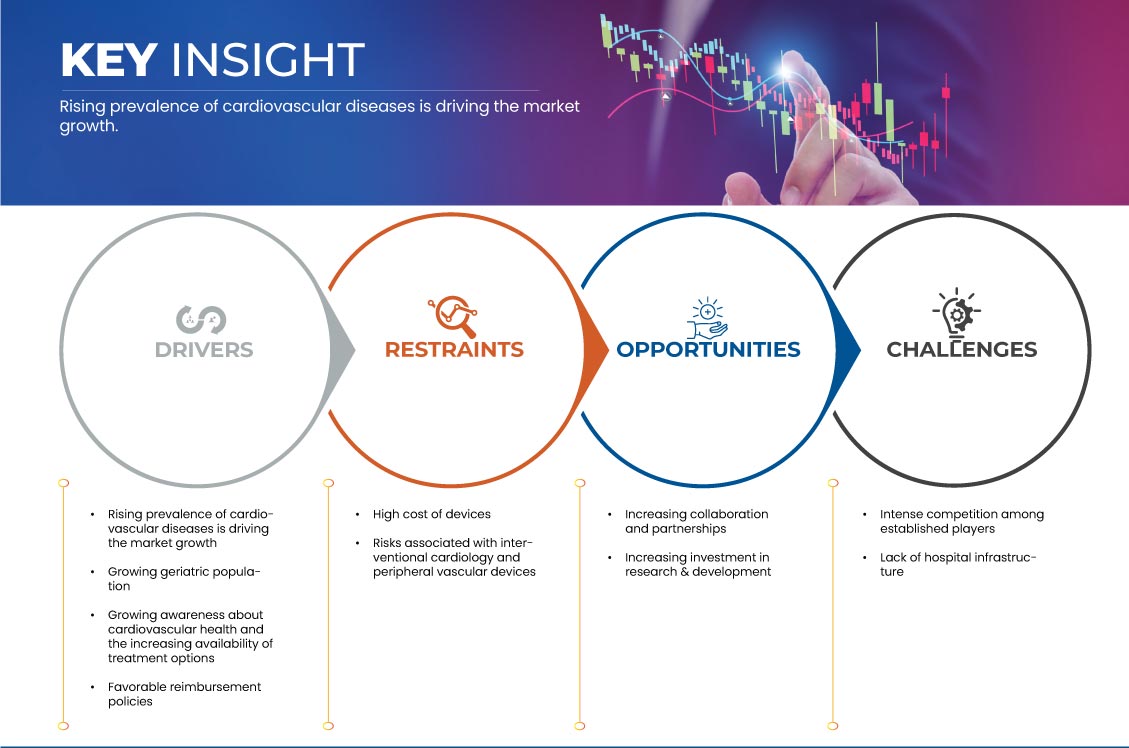
Drivers
- Increasing Prevalence of Autoimmune Diseases Across the Globe
The Asia-Pacific region is seeing a sharp increase in cardiovascular diseases (CVDs), influenced by lifestyle shifts, urbanization, and a growing elderly population. Rising sedentary behaviors, poor diets, smoking, alcohol use, and stress are contributing to higher obesity rates and conditions like hypertension, diabetes, and dyslipidemia, all of which increase CVD risk. Additionally, with one of the world’s fastest-aging populations, age-related vulnerabilities to heart disease are more common. These trends are transforming healthcare needs and driving demand for interventional cardiology and vascular devices to manage and treat CVDs effectively.
For instance,
In August 2024, according to an article published by THE LANCET, between 2025 and 2050, crude cardiovascular mortality is projected to rise by 91.2%, despite a 23% decline in the age-standardized mortality rate (ASMR). Ischaemic heart disease and stroke will remain the top causes, with Central Asia’s ASMR reaching 676 deaths per 100,000, far above Asia's average of 186, and high-income Asia at just 22. High systolic blood pressure will lead ASMR causes across Asia, while high fasting plasma glucose will dominate in Central Asia, contributing to 546 deaths per 100,000. These trends highlight the need for intervention, fueling demand for interventional cardiology and vascular devices across Asia-Pacific
In August 2024, according to an article published by THE LANCET, the cardiovascular disease (CVD) epidemic is particularly severe in Asia, accounting for 60% of the 18.6 million global CVD deaths in 2019. By 2050, the region's CVD prevalence is projected to rise by 109% from 2025, reaching 729.5 million cases. Ischaemic heart disease, peripheral artery disease, and stroke will make up 86.8% of cases, with heart failure affecting 74.5 million people. This surge underscores the urgent need for effective treatment and is expected to boost demand for interventional cardiology and vascular devices in Asia-Pacific healthcare systems
The interplay of lifestyle changes, an aging population, heightened awareness, and technological innovations is expected to sustain and enhance the demand for interventional devices. As healthcare providers continue to prioritize cardiovascular health and invest in advanced treatment solutions, the market for interventional cardiology and peripheral vascular devices is projected to grow substantially, addressing the urgent healthcare needs posed by the increasing burden of cardiovascular diseases in the region.
- Expansion of Diagnostic Centers and Laboratories
The growing geriatric population in the Asia-Pacific region is a significant driver of the interventional cardiology and peripheral vascular devices market. As older adults age, the prevalence of cardiovascular diseases (CVDs) rises, necessitating specialized medical devices to address their unique needs. Older adults are particularly susceptible to CVDs due to age-related changes and risk factors like hypertension, diabetes, and hyperlipidemia, increasing the demand for interventional devices such as stents and catheters. Furthermore, the elderly population's growth is leading to a rise in demand for invasive procedures and a proactive approach to cardiovascular health, enhancing the utilization of diagnostic and therapeutic devices and driving market expansion.
For instance,
In May 2024, according to an article published by Asian Development Bank, the population aged 60 and older in developing Asia and the Pacific is projected to nearly double to 1.2 billion by 2050. This dramatic rise in the elderly population highlights the increasing need for specialized healthcare services to address age-related health issues. As the geriatric population expands, it is expected to significantly drive growth in the Asia-Pacific interventional cardiology and peripheral vascular devices market, as healthcare systems focus on delivering effective treatments for conditions prevalent among older adults, particularly cardiovascular diseases
In September 2023, according to an article published by The Hindu, India’s elderly population is growing at a decadal rate of 41%, with the share of seniors expected to double to over 20% of the total population by 2050.
As the number of elderly individual’s increases, so does the prevalence of cardiovascular diseases, which results in heightened demand for specialized medical devices and interventional procedures. With an emphasis on preventive healthcare and ongoing technological innovations, the market is expected to experience substantial growth, effectively addressing the unique healthcare needs of the aging population and improving patient outcomes in cardiovascular care.
Opportunities
- Increasing Collaboration and Partnerships
Increasing collaboration and partnerships among companies in the Asia-Pacific interventional cardiology and peripheral vascular devices market create significant opportunities for growth and innovation. By forming strategic alliances, medical device manufacturers can improve distribution channels and market access, allowing for faster introduction of innovative products in clinical settings. These collaborations help companies understand the specific needs of healthcare providers and patients, enabling them to tailor their products to local market dynamics and regulatory requirements. Additionally, joint efforts can lead to co-development initiatives, fostering innovation and speeding up the time-to-market for new technologies.
For instance,
In September 2021, Medtronic announced that the company collaborated with Mpirik, which is known to provide a suite of cloud-based automated patient screening and care pathways for cardiovascular diseases. This collaboration helps the company to address disparities in care associated with the prevention of sudden cardiac arrest with their advanced artificial intelligence platform, thereby aiding the company to improve their leadership in market further
The trend of increasing collaboration and partnerships, along with a focus on timely product launches, offers substantial opportunities for growth in the Asia-Pacific interventional cardiology and peripheral vascular devices market. By harnessing these catheters, companies can enhance patient care, improve clinical outcomes, and strengthen their competitive positions in a rapidly evolving healthcare environment..
- Increasing Investment in Research & Development
Rising R&D investments offer crucial growth opportunities for the Asia-Pacific interventional cardiology and peripheral vascular devices market. With the increasing prevalence of cardiovascular diseases, demand for innovative treatment solutions is surging. By focusing on R&D, companies can develop advanced technologies, like bioabsorbable materials and minimally invasive devices, improving patient outcomes and addressing current treatment gaps. Moreover, R&D investment promotes collaboration with academic and research institutions, accelerating the translation of innovations into clinical use. These advancements not only enhance healthcare delivery efficiency but also strengthen market competitiveness by meeting the evolving needs of providers and patients.
For instance,
In July 2021, Abbott announced that the company confirms to invest USD 41.19 million for R&D for projects that focus on next-generation stents as well as coronary and endovascular balloon technologies for interventional cardiology treatments. This investment was specifically provided for their Clonmel facility in Ireland, which is a new research and development program in the area of cardiovascular devices.
By prioritizing research and innovation, companies can develop ground-breaking products that not only address the challenges posed by cardiovascular diseases but also enhance patient care. As the market continues to grow, the emphasis on R&D will be crucial for stakeholders looking to capitalize on emerging trends, ultimately leading to improved health outcomes and increased market competitiveness in the region.
Restraints/Challenges
- High Cost of Barrier
The high cost of advanced interventional devices significantly restrains the interventional cardiology and peripheral vascular devices market in the Asia-Pacific region. While these innovations enhance patient outcomes, their steep prices limit accessibility, particularly in lower-income areas.
Constrained healthcare budgets make it difficult for public systems to fund expensive technologies, leading hospitals to opt for cheaper alternatives, especially in rural regions. This results in delayed interventions and poorer health outcomes. Additionally, high costs deter providers from investing in necessary training and infrastructure, further limiting advanced cardiovascular care and reducing demand for these treatments, hindering market growth.
For instance,
According to IndiaMART, the AngioSculpt RX PTCA scoring balloon catheter brings a transformative solution for treating CAD, being the only specialty scoring device approved for ISR and complex Type-C lesions. Priced at USD 4.81, it represents a premium option in the market.
This highlights the “high cost of balloon catheters,” which poses a restraint on the Asia-Pacific interventional cardiology and peripheral vascular devices market, as such premium pricing may limit accessibility and broader use, especially in cost-sensitive healthcare settings
- Risks Associated with Interventional Cardiology and Peripheral Vascular Devices
Interventionelle Kardiologie und periphere Gefäßgeräte bergen Risiken wie Infektionen, Blutungen, Gefäßschäden und allergische Reaktionen sowie mögliche Gerätefehlfunktionen und Komplikationen wie Thrombosen oder Restenosen, die weitere medizinische Eingriffe erforderlich machen können. Diese Risiken können Gesundheitsdienstleister davon abhalten, neue Technologien einzuführen, insbesondere in Regionen mit begrenzter klinischer Expertise. Die Lernkurve für fortschrittliche Geräte wie intravaskulären Ultraschall (IVUS) und optische Kohärenztomographie (OCT) ist steil, und unzureichende Schulungen erhöhen die Wahrscheinlichkeit von Verfahrensfehlern, was die Einführung zusätzlich erschwert. Darüber hinaus verlangsamen Bedenken hinsichtlich rechtlicher Haftung und Patientensicherheit die Integration dieser Technologien in die Praxis.
Zum Beispiel,
Laut einem im Februar 2021 von PubMed Central veröffentlichten Artikel haben aktuelle Studien zu antithrombotischen Behandlungen gezeigt, dass Patienten im asiatisch-pazifischen Raum anfälliger für Blutungskomplikationen wie gastrointestinale Blutungen und hämorrhagische Schlaganfälle sind. Diese erhöhten Risiken stellen eine Herausforderung für die interventionelle Kardiologie und periphere Gefäßgeräte dar, da die Notwendigkeit einer Antikoagulation während der Eingriffe Sicherheitsbedenken aufwirft. Infolgedessen zögern sowohl Ärzte als auch Patienten möglicherweise, diese fortschrittlichen Behandlungen anzuwenden, was die Einführung innovativer Geräte behindert und das Marktwachstum in der Region verlangsamt.
Die mit der Verwendung interventioneller Kardiologie- und peripherer Gefäßgeräte verbundenen Risiken wirken sich erheblich hemmend auf den asiatisch-pazifischen Markt aus, da sie die Einführung innovativer Lösungen verlangsamen. Bedenken hinsichtlich der Sicherheit, der begrenzten Ausbildung und möglicher rechtlicher Verpflichtungen lassen Gesundheitsdienstleister zögern und behindern das Wachstum des Marktes trotz der Fortschritte in der Gerätetechnologie.
Marktumfang für interventionelle Kardiologie und periphere Gefäßgeräte
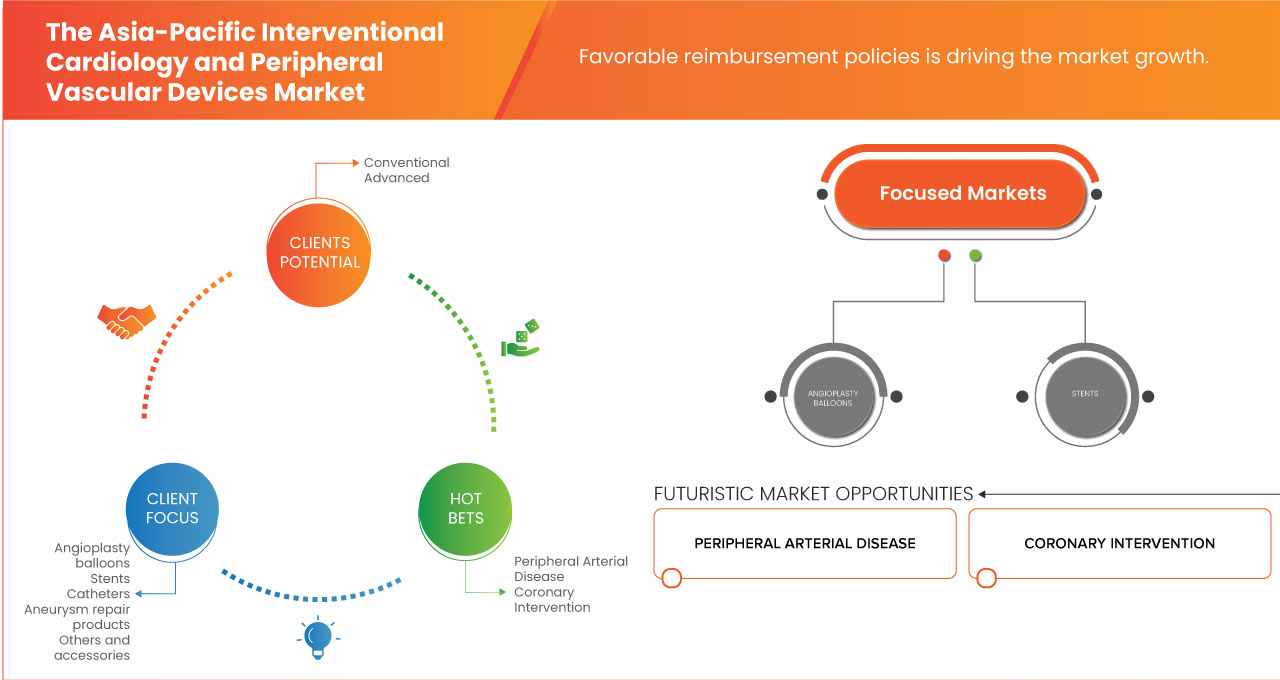
Der Markt ist nach Produkt, Typ, Verfahren, Indikation, Altersgruppe, Endbenutzer und Vertriebskanal segmentiert. Das Wachstum dieser Segmente hilft Ihnen bei der Analyse schwacher Wachstumssegmente in den Branchen und bietet den Benutzern einen wertvollen Marktüberblick und Markteinblicke, die ihnen bei der strategischen Entscheidungsfindung zur Identifizierung der wichtigsten Marktanwendungen helfen.
Produkt
- Angioplastie-Ballons
- Alte/normale Ballons
- Medikamentenfreisetzende Ballons
- Luftballons schneiden und rillen
- Stents
- Angioplastie-Stents
- Koronarstents
- Bare-Metal-Stents
- Medikamentenfreisetzende Stents (Des)
- Biologisch resorbierbare Stents
- Periphere Stents
- Sonstiges
- Katheter
- Produkt
- Führungskatheter
- Mikrokatheter
- Cto-Katheter
- Spezialität
- Angiographiekatheter
- Koronaraspirationskatheter
- Sonstiges
- Produkt
- Produkte zur Aneurysma-Reparatur
- Neuroaneurysma (Coiling)
- Sonstiges
- Sonstiges und Zubehör
- Führungsdrähte
- Einführschleusen
- Ballon-Aufblasgeräte
- Gefäßverschlussgeräte
- Sonstiges
- Sonstiges und Zubehör
Typ
- Konventionell
- Stents
- Katheter
- Führungsdrähte
- Gefäßverschlussgeräte (VCDS)
- Sonstiges
- Fortschrittlich
- Ballonkatheter
- Stentgrafts
Verfahren
- Periphere Angioplastie
- Angioplastie-Ballons
- Stent
- Katheter
- Produkte zur Aneurysma-Reparatur
- Sonstiges und Zubehör
Anzeige
- Periphere arterielle Verschlusskrankheit
- Arteriosklerose
- Neuroaneurysma (Coiling)
- Periphere arterielle Verschlusskrankheit der unteren Extremitäten
- Suprainguinale arterielle Verschlusskrankheit
- Infrainguinale arterielle Verschlusskrankheit
- Infrapopliteale Erkrankung
- Verschlusskrankheit der oberen Extremitäten
- Karotisarterienerkrankung
- Sonstiges
- Koronarintervention
- Ischämische Herzkrankheit
- Thorakales Aortenaneurysma
- Klappenerkrankung
- Perkutane Herzklappenreparatur oder -ersatz
- Angeborene Herzfehler
- Sonstiges
Altersgruppe
- Geriatrie
- Erwachsene
- Pädiatrie
Endbenutzer
- Krankenhäuser
- Privat
- Öffentlich
- Ambulante Chirurgiezentren
- Pflegeeinrichtungen
- Kliniken
- Sonstiges
Vertriebskanal
- Drittanbieter
- Direkte Ausschreibung
- Sonstiges
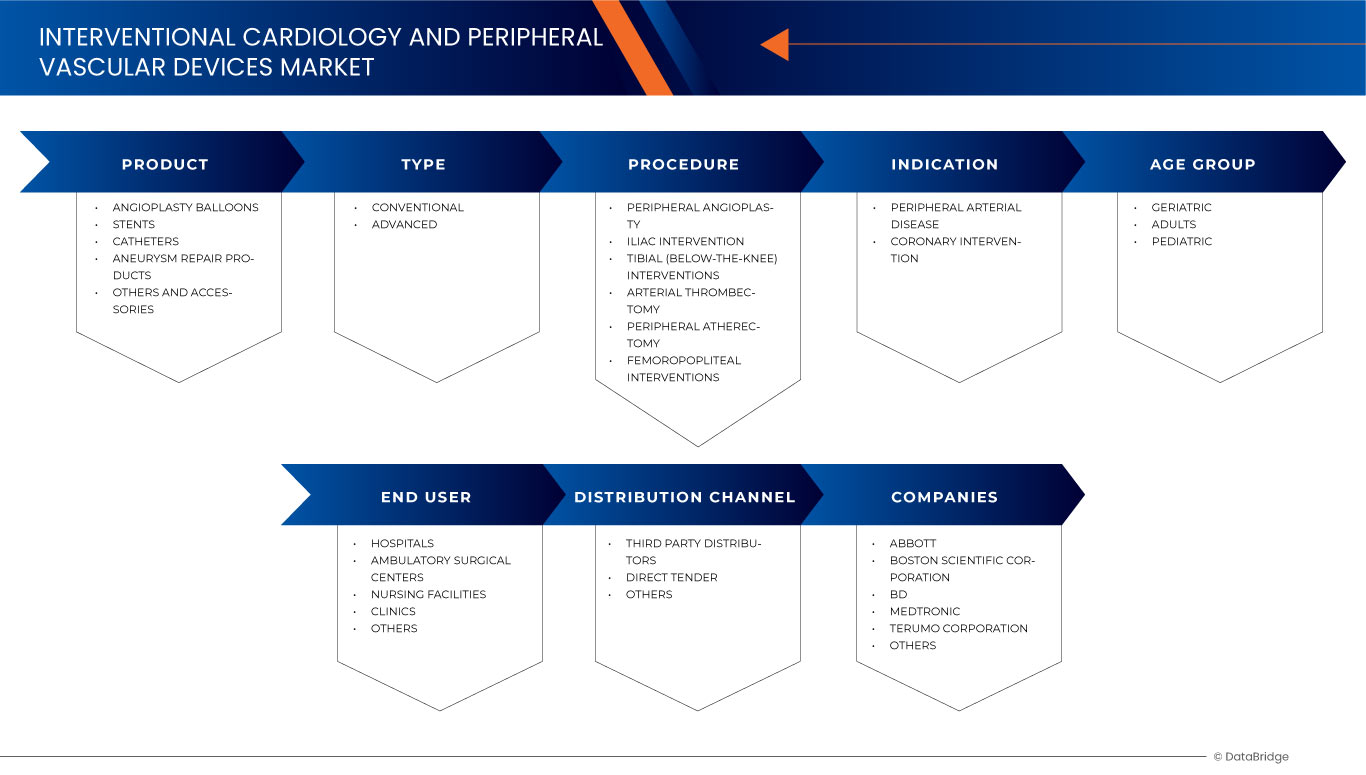
Regionale Analyse des Marktes für interventionelle Kardiologie und periphere Gefäßgeräte
Der Markt wird analysiert und es werden Einblicke in die Marktgröße und Trends nach Land, Produkt, Typ, Verfahren, Indikation, Altersgruppe, Endbenutzer und Vertriebskanal wie oben angegeben bereitgestellt.
Die vom Markt abgedeckten Länder sind China, Indien, Japan, Südkorea, Australien, Singapur, Indonesien, Thailand, Malaysia, die Philippinen und der restliche asiatisch-pazifische Raum.
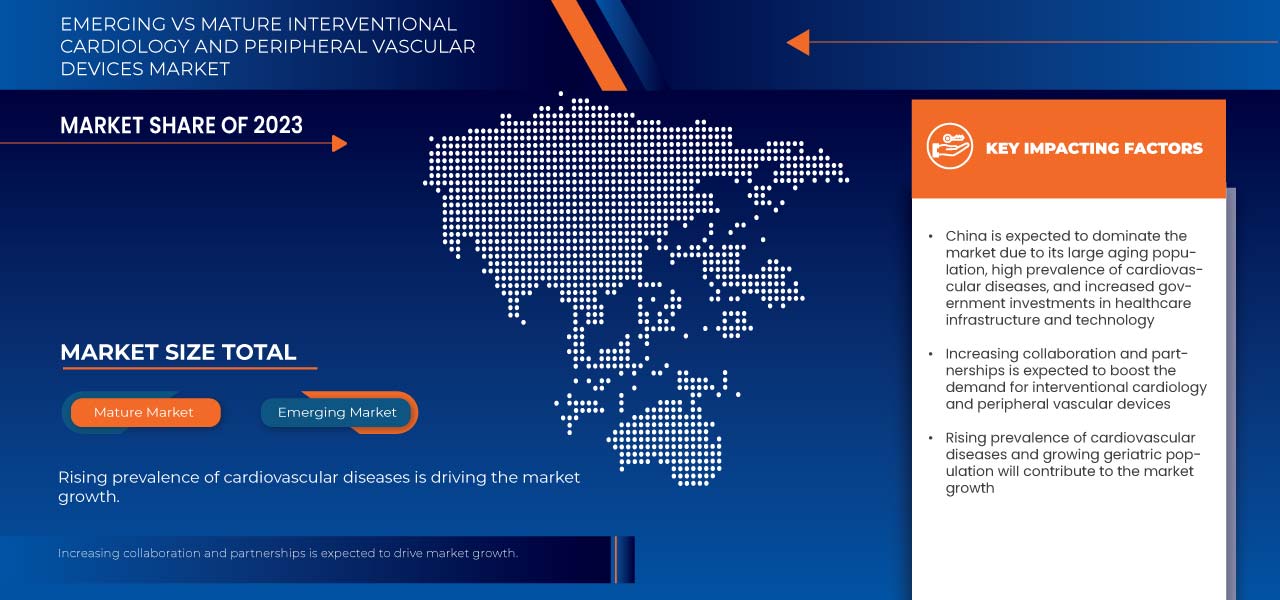
Aufgrund der hochentwickelten Gesundheitsinfrastruktur in der Region, der hohen Prävalenz von Herzkrankheiten und der zunehmenden Verbreitung von Geräten zur Frühbehandlung dürfte China den Markt dominieren.
Der Länderabschnitt des Berichts enthält auch Angaben zu einzelnen marktbeeinflussenden Faktoren und Änderungen der Regulierung auf dem Inlandsmarkt, die sich auf die aktuellen und zukünftigen Trends des Marktes auswirken. Datenpunkte wie Downstream- und Upstream-Wertschöpfungskettenanalysen, technische Trends und Porters Fünf-Kräfte-Analyse sowie Fallstudien sind einige der Anhaltspunkte, die zur Prognose des Marktszenarios für einzelne Länder verwendet werden. Bei der Prognoseanalyse der Länderdaten werden auch die Präsenz und Verfügbarkeit von Marken aus dem asiatisch-pazifischen Raum und ihre Herausforderungen aufgrund großer oder geringer Konkurrenz durch lokale und inländische Marken sowie die Auswirkungen inländischer Zölle und Handelsrouten berücksichtigt.
Marktanteil für interventionelle Kardiologie und periphere Gefäßgeräte
Die Wettbewerbslandschaft des Marktes liefert Einzelheiten nach Wettbewerbern. Die enthaltenen Einzelheiten umfassen Unternehmensübersicht, Unternehmensfinanzen, erzielten Umsatz, Marktpotenzial, Investitionen in Forschung und Entwicklung, neue Marktinitiativen, Präsenz im asiatisch-pazifischen Raum, Produktionsstandorte und -anlagen, Produktionskapazitäten, Stärken und Schwächen des Unternehmens, Produkteinführung, Produktbreite und -umfang, Anwendungsdominanz. Die oben angegebenen Datenpunkte beziehen sich nur auf den Fokus der Unternehmen in Bezug auf den Markt.
Die Marktführer für interventionelle Kardiologie und periphere Gefäßgeräte sind:
- Abbott (USA)
- Boston Scientific Corporation (USA)
- BD (USA)
- Medtronic (USA)
- Terumo Corporation (Japan)
- B.Braun SE (Deutschland)
- ENDOCOR GmbH & CO. KG (Deutschland)
- Teleflex Incorporated (USA)
- Lepu Medical Technology (Beijing) Co., Ltd. (China)
- MicroPort Scientific Corporation (China)
- Koninklijke Philips NV (Niederlande)
- Biotronik (Deutschland)
- SMT (China)
- OrbusNeich Medical Group Holdings Limited (China)
- Biosensors International Group, Ltd. (Singapur)
- Edwards Lifesciences Corporation (USA)
- AngioDynamics (USA)
- Alvimedica (Türkei)
- Koch (USA)
- Cordis (USA)
- Palex (Spanien)
- WL Gore & Associates (USA)
Neueste Entwicklungen auf dem Markt für interventionelle Kardiologie und periphere Gefäßgeräte
- Im September 2024 kooperieren Abbott und Seed Global Health, um die Gesundheitsversorgung von Müttern und Kindern in Malawi zu verbessern. Ihre Initiative umfasst die Einrichtung eines Kompetenzzentrums für Müttergesundheit am Queen Elizabeth Central Hospital, das sich auf die Ausbildung von Gesundheitspersonal konzentriert, um die Qualität und Nachhaltigkeit der Versorgung zu verbessern.
- Im September 2024 schloss BD die Übernahme der Produktgruppe Critical Care von Edwards Lifesciences ab und benannte sie in BD Advanced Patient Monitoring um. Mit diesem Schritt erweiterte BD sein Portfolio um fortschrittliche Überwachungstechnologien und KI-gestützte klinische Tools, verbesserte seine intelligenten vernetzten Pflegelösungen und unterstützte zukünftige Innovationen in der Patientenversorgung.
- Im März 2024 erhielt Medtronic die FDA-Zulassung für sein neuestes Evolut FX+ TAVR-System, das zur Behandlung symptomatischer schwerer Aortenstenose entwickelt wurde. Diese neue Generation verfügt über einen modifizierten rautenförmigen Rahmen, der größere Koronarzugangsfenster bietet und die Kathetermanövrierfähigkeit verbessert, während die außergewöhnliche Klappenleistung und -stärke der Evolut-Plattform erhalten bleibt.
- Im März 2024 hat Abbott seine Partnerschaft mit Real Madrid und der Real Madrid Foundation bis zur Saison 2026/27 verlängert. Dabei liegt der Schwerpunkt auf der Bekämpfung von Unterernährung bei Kindern und der Förderung gesunder Gewohnheiten. Die Zusammenarbeit ermöglichte umfassende Ernährungsaufklärung und -untersuchungen für Millionen von Kindern weltweit.
- Im November 2023 schloss die Boston Scientific Corporation am 17. November 2023 die Übernahme von Relievant Medsystems ab und fügte damit ihr Portfolio für chronische Schmerzen um das Intracept Intraosseous Nerve Ablation System hinzu. Die Übernahme, die 850 Millionen USD im Voraus plus bedingte Zahlungen kostet, erweitert den Zugang zur Behandlung von vertebrogenen Schmerzen durch eine landesweite Abdeckung und kommt über 150 Millionen Menschen zugute.
- Im November 2023 unterzeichneten BD und Bio Farma eine Absichtserklärung zur Bekämpfung der Tuberkulose in Indonesien durch die Bereitstellung von Zugang zu BDs TB-Diagnostik. Ziel dieser Zusammenarbeit war die Optimierung der Lieferkette und die Verbesserung der TB-Diagnostik, im Einklang mit Indonesiens Ziel, die Krankheit bis 2030 auszurotten.
- Im September 2023 gab die Boston Scientific Corporation bekannt, dass sie eine Vereinbarung zur Übernahme von Relievant Medsystems, Inc. für 850 Millionen USD im Voraus zuzüglich bedingter Zahlungen abgeschlossen hat. Die Übernahme, die voraussichtlich Anfang 2024 abgeschlossen wird, zielte darauf ab, das Behandlungsportfolio von Boston Scientific für chronische Rückenschmerzen um das Intracept-System zu erweitern.
SKU-
Erhalten Sie Online-Zugriff auf den Bericht zur weltweit ersten Market Intelligence Cloud

- Interaktives Datenanalyse-Dashboard
- Unternehmensanalyse-Dashboard für Chancen mit hohem Wachstumspotenzial
- Zugriff für Research-Analysten für Anpassungen und Abfragen
- Konkurrenzanalyse mit interaktivem Dashboard
- Aktuelle Nachrichten, Updates und Trendanalyse
- Nutzen Sie die Leistungsfähigkeit der Benchmark-Analyse für eine umfassende Konkurrenzverfolgung
Forschungsmethodik
Die Datenerfassung und Basisjahresanalyse werden mithilfe von Datenerfassungsmodulen mit großen Stichprobengrößen durchgeführt. Die Phase umfasst das Erhalten von Marktinformationen oder verwandten Daten aus verschiedenen Quellen und Strategien. Sie umfasst die Prüfung und Planung aller aus der Vergangenheit im Voraus erfassten Daten. Sie umfasst auch die Prüfung von Informationsinkonsistenzen, die in verschiedenen Informationsquellen auftreten. Die Marktdaten werden mithilfe von marktstatistischen und kohärenten Modellen analysiert und geschätzt. Darüber hinaus sind Marktanteilsanalyse und Schlüsseltrendanalyse die wichtigsten Erfolgsfaktoren im Marktbericht. Um mehr zu erfahren, fordern Sie bitte einen Analystenanruf an oder geben Sie Ihre Anfrage ein.
Die wichtigste Forschungsmethodik, die vom DBMR-Forschungsteam verwendet wird, ist die Datentriangulation, die Data Mining, die Analyse der Auswirkungen von Datenvariablen auf den Markt und die primäre (Branchenexperten-)Validierung umfasst. Zu den Datenmodellen gehören ein Lieferantenpositionierungsraster, eine Marktzeitlinienanalyse, ein Marktüberblick und -leitfaden, ein Firmenpositionierungsraster, eine Patentanalyse, eine Preisanalyse, eine Firmenmarktanteilsanalyse, Messstandards, eine globale versus eine regionale und Lieferantenanteilsanalyse. Um mehr über die Forschungsmethodik zu erfahren, senden Sie eine Anfrage an unsere Branchenexperten.
Anpassung möglich
Data Bridge Market Research ist ein führendes Unternehmen in der fortgeschrittenen formativen Forschung. Wir sind stolz darauf, unseren bestehenden und neuen Kunden Daten und Analysen zu bieten, die zu ihren Zielen passen. Der Bericht kann angepasst werden, um Preistrendanalysen von Zielmarken, Marktverständnis für zusätzliche Länder (fordern Sie die Länderliste an), Daten zu klinischen Studienergebnissen, Literaturübersicht, Analysen des Marktes für aufgearbeitete Produkte und Produktbasis einzuschließen. Marktanalysen von Zielkonkurrenten können von technologiebasierten Analysen bis hin zu Marktportfoliostrategien analysiert werden. Wir können so viele Wettbewerber hinzufügen, wie Sie Daten in dem von Ihnen gewünschten Format und Datenstil benötigen. Unser Analystenteam kann Ihnen auch Daten in groben Excel-Rohdateien und Pivot-Tabellen (Fact Book) bereitstellen oder Sie bei der Erstellung von Präsentationen aus den im Bericht verfügbaren Datensätzen unterstützen.











