


What is the Aneurysm Market Size and Growth Rate?
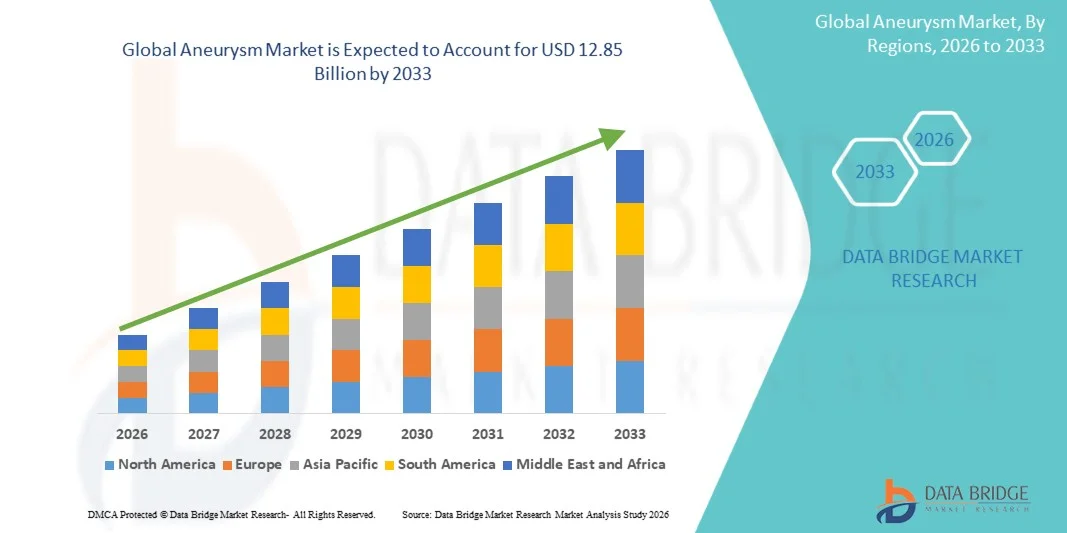
- As per Data Bridge Market Research Analysis the global Aneurysm market size was valued at USD 6.45 billion in 2025 and is expected to reach USD 12.85 billion by 2033, at a CAGR of 9.00% during the forecast period
- The market growth is largely propelled by technological advancements in endovascular aneurysm repair (EVAR) and thoracic endovascular aneurysm repair (TEVAR) devices, enhanced screening programs for early detection, and expanding healthcare infrastructure globally, which are increasing treatment uptake and improving patient outcomes
- Furthermore, growing awareness of aneurysm risk factors rising demand for effective and less invasive treatment options, and expanding coverage of aneurysm screening and intervention programs are establishing advanced aneurysm repair solutions as preferred clinical practices, thereby significantly boosting the industry’s growth
Market Size & Forecast
Global Market Value (2025): USD 6.45 billion
Expected Market Value (2033): USD 12.85 billion
Forecast CAGR (2026–2033): 9.00%
What are the Major Takeaways of Aneurysm Market?
- Aneurysm treatment solutions, including surgical, medicinal, and other therapeutic approaches for ruptured, leaking, and unruptured aneurysms, are increasingly critical in modern healthcare due to their life-saving potential and integration with advanced diagnostic and monitoring technologies
- The escalating demand for aneurysm treatment is primarily fueled by the rising prevalence of aneurysms, early diagnosis through improved screening programs, aging populations, and the growing preference for effective treatment options tailored to aneurysm type and severity
- North America dominated the aneurysm market with the largest revenue share of 38.7% in 2025, supported by advanced healthcare infrastructure, high patient awareness, well-established diagnostic and treatment facilities, and widespread adoption of surgical and minimally invasive procedures
- Asia-Pacific is expected to be the fastest-growing region in the aneurysm market during the forecast period due to increasing healthcare access, rising prevalence of risk factors such as hypertension and smoking, growing awareness of aneurysm management, and adoption of advanced treatment options across both urban and semi-urban populations
- Unruptured aneurysms segment dominated the market with the largest market share of 46.5% in 2025, driven by increased screening and early detection program
Report Scope and Aneurysm Market Segmentation
|
Attributes |
Aneurysm Key Market Insights |
|
Segments Covered |
|
|
Countries Covered |
North America
Europe
Asia-Pacific
Middle East and Africa
South America
|
|
Key Market Players |
|
|
Market Opportunities |
|
|
Value Added Data Infosets |
In addition to the insights on market scenarios such as market value, growth rate, segmentation, geographical coverage, and major players, the market reports curated by the Data Bridge Market Research also include in-depth expert analysis, patient epidemiology, pipeline analysis, pricing analysis, and regulatory framework |
What is the Key Trend in the Aneurysm Market?
“Advancements in Minimally Invasive and Endovascular Procedures”
- A key trend in the global aneurysm market is the growing adoption of minimally invasive and endovascular procedures, which reduce patient recovery time and procedural risk while improving treatment outcomes
- For instance, the use of flow-diverting stents and endovascular coils has gained traction for treating intracranial aneurysms, offering less invasive alternatives to traditional open surgeries
- Technological innovations enable precise navigation and deployment of devices, enhanced imaging guidance, and improved patient safety, supporting broader acceptance among clinicians
- Early detection technologies, including advanced CT, MRI, and AI-assisted imaging, allow for better preoperative planning and selection of the optimal intervention method
- This trend is reshaping treatment protocols, with hospitals increasingly favoring endovascular solutions over conventional surgeries, aligning with patient demand for faster, safer recovery
- The demand for advanced aneurysm treatment solutions is increasing rapidly across developed and emerging regions, driven by both growing patient awareness and healthcare infrastructure expansion
- Emerging hybrid operating rooms combining imaging and surgical capabilities are facilitating complex aneurysm treatments with higher precision and reduced procedural time
- Telemedicine integration for follow-up and remote monitoring of aneurysm patients is gaining traction, enabling better post-procedure management and patient compliance
Aneurysm Market Dynamics
Driver
“Increasing Prevalence of Aneurysms and Early Screening Programs”
- The rising prevalence of aortic and intracranial aneurysms, combined with increasing availability of screening programs, is a major driver for market growth
- For instance, hospitals in North America and Europe have expanded aneurysm screening campaigns, enabling early detection and timely intervention, which increases adoption of treatment procedures
- Patients and physicians are increasingly opting for effective interventions, including surgery or endovascular therapy, reducing mortality risk and improving quality of life
- Growing awareness of aneurysm risk factors, such as hypertension, smoking, and atherosclerosis, is encouraging more individuals to undergo regular screening and follow-up care
- Healthcare infrastructure development in emerging economies is supporting higher treatment uptake, with increased investment in modern imaging, surgical facilities, and specialized devices
- Advancements in treatment options and enhanced patient education are driving the adoption of innovative solutions across both hospital and outpatient care settings globally
- Government initiatives and funding for cardiovascular and neurological disease programs are promoting broader access to aneurysm diagnostics and interventions
- Collaboration between device manufacturers and hospitals to train specialists on new endovascular technologies is accelerating adoption in key markets
Restraint/Challenge
“High Treatment Costs and Limited Accessibility in Developing Regions”
- The high cost of aneurysm treatment procedures, especially minimally invasive devices, is a key restraint, limiting adoption in price-sensitive markets
- For instance, expensive stents, coils, and surgical equipment make access to advanced aneurysm care challenging in many emerging countries, where healthcare budgets are constrained
- Limited availability of trained specialists and advanced imaging equipment further restricts market penetration in rural and semi-urban regions
- Insurance coverage gaps and procedural reimbursement limitations can delay patient access to recommended treatment, especially in developing regions
- While innovations are reducing procedural risks, the perceived high cost relative to traditional surgical approaches can hinder widespread adoption among healthcare providers and patients
- Addressing these challenges through cost-effective devices, expanding healthcare infrastructure, and improving accessibility will be essential for sustained market growth
- Cultural and awareness barriers in certain regions result in delayed diagnosis and treatment, reducing market uptake despite availability of advanced therapies
- Regulatory hurdles and lengthy approval processes for new devices in certain countries can slow the introduction of innovative aneurysm treatment solutions
How is the Aneurysm Market Segmented?
The market is segmented on the basis of type, treatment, route of administration, end-users, and distribution channel.
- By Type
On the basis of type, the global aneurysm market is segmented into ruptured aneurysm, leaking aneurysm, unruptured aneurysm, and others. The unruptured aneurysm segment dominated the market in 2025, holding the largest revenue share of 46.5%, driven by increased adoption of early detection programs and routine screening practices. Healthcare providers are increasingly diagnosing unruptured aneurysms during routine imaging, which creates a growing pool of patients requiring timely intervention. Unruptured aneurysms often present opportunities for minimally invasive endovascular treatments, which are preferred due to lower procedural risk and faster recovery. Hospitals and specialty centers prioritize treatment of unruptured aneurysms to prevent complications and reduce long-term healthcare costs. Furthermore, patient awareness campaigns highlighting the risks associated with untreated unruptured aneurysms are boosting adoption of monitoring and intervention procedures. The segment also benefits from advancements in imaging technologies and device innovations that enable safer management of asymptomatic aneurysms.
The ruptured aneurysm segment is expected to witness the fastest growth rate during forecast period, driven by the rising prevalence of life-threatening aneurysm ruptures and increasing emergency interventions. Hospitals and trauma centers are increasingly equipped with advanced surgical and endovascular tools to handle ruptured cases efficiently. Early intervention and minimally invasive techniques are improving survival rates, fueling the adoption of treatments in this segment. Rising awareness among patients and caregivers about immediate care options for ruptured aneurysms is also contributing to market growth. In addition, government and private initiatives to reduce aneurysm-related mortality are supporting infrastructure expansion for ruptured aneurysm treatment. High unmet medical needs in both developed and emerging markets are expected to sustain the rapid growth of this segment throughout the forecast period.
- By Treatment
On the basis of treatment, the market is segmented into surgery, medication, and others. The surgery segment dominated the market in 2025, accounting for a 52.3% share, owing to its established efficacy in both aortic and intracranial aneurysm management. Surgical interventions, including open and endovascular repair, are often preferred for high-risk aneurysms or cases where minimally invasive procedures are not suitable. Hospitals rely on surgical procedures due to their proven long-term outcomes and ability to prevent aneurysm rupture. Surgical treatment adoption is further enhanced by technological advances such as 3D imaging, robotic-assisted surgery, and improved stent designs. Patient preference for definitive treatment and the increasing availability of trained vascular and neurosurgeons are also key growth drivers. Moreover, healthcare providers in developed markets continue to invest in surgical infrastructure, sustaining the dominance of this segment.
The medication segment is expected to witness the fastest growth during forecast period, driven by increasing use of pharmacological therapies to manage aneurysm risk factors such as hypertension and hyperlipidemia. Medications can reduce the risk of aneurysm progression and complement surgical or endovascular interventions. Growing awareness of preventative healthcare, patient adherence programs, and the rising elderly population requiring chronic aneurysm management are fueling adoption. Advances in drug development targeting aneurysm stabilization are also contributing to the segment’s growth. In emerging economies, medication offers a cost-effective and accessible treatment option where advanced surgical facilities may be limited. The segment is expected to expand further with integration into combination treatment regimens and personalized medicine approaches.
- By Route of Administration
On the basis of route of administration, the market is segmented into oral, parenteral, and others. The parenteral segment dominated the market in 2025, with a share of 57.1%, due to the prevalence of injectable therapies used for aneurysm stabilization and post-operative care. Parenteral administration allows precise dosing and rapid systemic effects, which are critical in high-risk patients and acute cases. Hospitals and specialty centers widely prefer parenteral delivery for targeted pharmacotherapy during surgical or endovascular procedures. The dominance is also supported by innovations in drug delivery systems and injectable biologics that enhance treatment outcomes. Clinical guidelines often recommend parenteral therapies for faster onset of action and better patient monitoring. Moreover, parenteral treatments are increasingly integrated into comprehensive aneurysm management programs.
The oral segment is expected to witness the fastest growth during forecast period, fueled by rising adoption of oral medications for chronic aneurysm management and risk factor control. Oral therapies provide convenience, improve patient compliance, and allow at-home management of blood pressure, cholesterol, and other risk factors associated with aneurysm progression. Growing awareness of lifestyle-related aneurysm risks is contributing to increasing oral medication use. Pharmaceutical innovations targeting aneurysm stabilization via oral agents are also expanding treatment options. In addition, the convenience of self-administered oral medications reduces hospital visits and overall treatment costs, making this segment highly attractive in both developed and emerging markets.
- By End-Users
On the basis of end-users, the market is segmented into hospitals, homecare, specialty centers, and others. The hospitals segment dominated the market in 2025, accounting for a 61.2% share, driven by the availability of advanced imaging, surgical facilities, and specialized care teams. Hospitals are preferred for complex aneurysm cases due to access to trained vascular and neurosurgeons and integrated post-operative monitoring. The dominance is also supported by the higher patient throughput and ability to manage both elective and emergency aneurysm cases. Hospitals offer multidisciplinary approaches combining surgery, medication, and monitoring, which improves outcomes. Patient trust and preference for hospital-based care further strengthen the segment. Investment in hospital infrastructure and adoption of minimally invasive technologies continue to sustain market leadership.
The homecare segment is expected to witness the fastest growth during forecast period, propelled by increasing demand for remote monitoring, follow-up care, and chronic risk management for aneurysm patients. Telemedicine platforms and wearable devices are enabling safe at-home monitoring, reducing hospital readmissions. Patients are increasingly adopting homecare services for post-surgical recovery and long-term medication management. Growing awareness and accessibility of remote health monitoring solutions in developed and emerging markets are accelerating this trend. Homecare also allows cost-effective management of stable aneurysm patients. Integration of AI-based monitoring and mobile applications enhances patient engagement and treatment adherence, supporting rapid growth in this segment.
- By Distribution Channel
On the basis of distribution channel, the market is segmented into hospital pharmacy, online pharmacy, and retail pharmacy. The hospital pharmacy segment dominated the market in 2025, with a share of 54.8%, due to the direct supply of treatment devices, surgical implants, and medications to hospitals and specialty centers. Hospital pharmacies ensure timely availability of critical therapies during surgical and emergency interventions. The segment benefits from close collaboration with medical device manufacturers and pharmaceutical companies, ensuring reliable supply chains. Hospitals prefer in-house pharmacies to maintain quality control and manage inventory for high-risk aneurysm treatments. Moreover, the hospital pharmacy network is critical for handling advanced therapies that require professional administration or supervision. The dominance of this segment is expected to continue, supported by ongoing hospital expansions and infrastructure upgrades.
The online pharmacy segment is expected to witness the fastest growth during forecast period, driven by increasing adoption of e-pharmacy platforms for home-delivered medications and patient convenience. Online pharmacies provide access to oral and other non-invasive therapies, enabling chronic management of aneurysm-related risk factors. The convenience of doorstep delivery, combined with increasing digital literacy, is fueling market expansion. E-pharmacy platforms are also integrating prescription verification and teleconsultation services, enhancing patient safety and adherence. In addition, growing smartphone penetration and e-commerce acceptance in emerging markets are accelerating this segment. The segment is particularly attractive for patients managing aneurysm risk factors in homecare settings, further driving rapid growth.
Which Region Holds the Largest Share of the Aneurysm Market?
- North America dominated the aneurysm market with the largest revenue share of 38.7% in 2025, supported by advanced healthcare infrastructure, high patient awareness, well-established diagnostic and treatment facilities, and widespread adoption of surgical and minimally invasive procedures
- Patients and healthcare providers in the region highly value access to minimally invasive procedures, advanced surgical interventions, and integrated aneurysm management programs that improve outcomes and reduce mortality risk
- This widespread adoption is further supported by well-established hospital networks, high healthcare spending, and the presence of leading medical device manufacturers, establishing North America as the preferred market for aneurysm treatment solutions
U.S. Aneurysm Market Insight
The U.S. aneurysm market captured the largest revenue share of 82% in 2025 within North America, fueled by advanced healthcare infrastructure, high patient awareness, and widespread adoption of minimally invasive and endovascular procedures. Patients are increasingly prioritizing early detection and treatment of aortic and intracranial aneurysms through advanced imaging and screening programs. The growing preference for hospital-based interventions, combined with strong investment in specialty vascular and neurosurgical centers, further propels the aneurysm market. Moreover, the integration of AI-assisted imaging and patient monitoring systems is significantly contributing to improved outcomes and market expansion.
Europe Aneurysm Market Insight
The Europe aneurysm market is projected to expand at a substantial CAGR throughout the forecast period, primarily driven by government-led screening initiatives, high healthcare standards, and increasing demand for minimally invasive aneurysm treatments. Rising urbanization, growing patient awareness, and the adoption of advanced endovascular and surgical interventions are fostering market growth. European healthcare providers are also focusing on preventative care and patient education programs, further enhancing treatment uptake. The region is experiencing significant growth across both public and private hospitals, with aneurysm management increasingly integrated into routine cardiovascular and neurological care programs.
U.K. Aneurysm Market Insight
The U.K. aneurysm market is anticipated to grow at a noteworthy CAGR during the forecast period, driven by the increasing prevalence of aneurysms and the emphasis on early detection through screening programs. Concerns regarding aneurysm rupture and mortality are encouraging both hospitals and specialty centers to expand access to advanced interventions. The U.K.’s strong healthcare infrastructure, combined with supportive policies for preventive care and adoption of minimally invasive procedures, is expected to continue stimulating market growth. Public awareness campaigns and collaborations between medical device companies and healthcare institutions further strengthen the market.
Germany Aneurysm Market Insight
The Germany aneurysm market is expected to expand at a considerable CAGR during the forecast period, fueled by increasing awareness of aneurysm risk factors and the growing demand for advanced, minimally invasive treatment options. Germany’s well-developed healthcare system, combined with emphasis on innovation and high standards of patient care, promotes the adoption of surgical and endovascular solutions. The integration of aneurysm management into hospital cardiovascular and neurology programs is also becoming increasingly prevalent, with strong patient preference for safe, effective, and privacy-focused interventions.
Asia-Pacific Aneurysm Market Insight
The Asia-Pacific aneurysm market is poised to grow at the fastest CAGR during the forecast period of 2026 to 2033, driven by rising prevalence of hypertension, smoking, and other aneurysm risk factors in countries such as China, Japan, and India. The region's increasing healthcare access, rising awareness of aneurysm screening, and adoption of minimally invasive procedures are driving market expansion. Furthermore, as APAC emerges as a hub for manufacturing medical devices and endovascular systems, affordability and accessibility of aneurysm treatment solutions are improving across urban and semi-urban populations.
Japan Aneurysm Market Insight
The Japan aneurysm market is gaining momentum due to the country’s advanced healthcare system, aging population, and high adoption of minimally invasive interventions. The Japanese market emphasizes early detection, patient monitoring, and integration of imaging and treatment technologies. Hospitals and specialty centers are increasingly leveraging endovascular procedures alongside traditional surgeries to improve patient outcomes. Moreover, Japan’s focus on preventative healthcare and technological innovation is expected to sustain growth in aneurysm management for both residential and commercial healthcare facilities.
India Aneurysm Market Insight
The India aneurysm market accounted for the largest market revenue share in Asia-Pacific in 2025, attributed to the country’s expanding healthcare infrastructure, growing urban population, and rising awareness of aneurysm risk factors. India is witnessing increasing adoption of advanced diagnostic and minimally invasive treatment solutions across hospitals and specialty centers. Government initiatives promoting cardiovascular and neurological health, alongside availability of cost-effective treatment options, are key factors propelling the market. Furthermore, strong domestic medical device manufacturing and the expansion of healthcare access in tier-2 and tier-3 cities are supporting sustained growth.
Which are the Top Companies in Aneurysm Market?
The Aneurysm industry is primarily led by well-established companies, including:
- Medtronic (Ireland)
- Stryker (U.S.)
- W. L. Gore & Associates, Inc. (U.S.)
- Boston Scientific Corporation (U.S.)
- Abbott (U.S.)
- Terumo Corporation (Japan)
- Cook (U.S.)
- B. Braun SE (Germany)
- Cardinal Health, Inc. (U.S.)
- MicroPort Scientific Corporation (China)
- Endologix LLC (U.S.)
- Penumbra, Inc. (U.S.)
- Phenox GmbH (Germany)
- JOTEC GmbH (Germany)
- Lombard Medical, Inc. (U.S.)
- Acandis GmbH (Germany)
- InspireMD, Inc. (US)
- Merit Medical Systems, Inc. (U.S.)
- Artivion, Inc. (U.S.)
- Getinge AB (Sweden)
What are Latest Developments in Aneurysm Market?
- In January 2026, preliminary real‑world clinical data showed that the Artisse 2.0 intrasaccular device achieved high technical success rates and favorable safety and efficacy in treating both unruptured and ruptured intracranial aneurysms at six‑month follow‑up, indicating its potential as an effective treatment option and broadening therapeutic choices
- In October 2025, Kaneka Corporation initiated official sales of its i‑ED COIL™, a catheter‑delivered neurovascular device for treating brain aneurysms, across Europe after obtaining EC certification under EU medical device regulations; the coil’s design allows denser packing in aneurysms and aims to improve outcomes by reducing rupture risk
- In October 2025, Medtronic received FDA labeling approval for its Endurant™ stent graft system to remove the warning against using it for ruptured abdominal aortic aneurysm (rAAA) treatment, making it the first device of its kind cleared to empower physicians with confidence in emergency aneurysm repair. This approval reflects significant clinical evidence supporting the stent graft’s safety and effectiveness in treating ruptured cases, aligning device labeling with real‑world practice and expanding treatment options for high‑risk aortic aneurysm patients
- In August 2025, Cleveland Clinic Abu Dhabi became the first hospital in the Middle East and North Africa (MENA) region to deploy the Artisse Intrasaccular Flow Modulator, a cutting‑edge device for treating wide‑necked brain aneurysms, marking an advancement in minimally invasive neurological care and regional access to new aneurysm treatment options
- In January 2025, Kaneka Corporation acquired a 96.8% stake in EndoStream Medical Ltd., an Israeli medical tech firm, aiming to co‑develop innovative cerebrovascular solutions including the Nautilus™ device for wide‑neck cerebral aneurysms, expanding its portfolio in neurovascular therapies and addressing complex aneurysm cases

- Interactive Data Analysis Dashboard
- Company Analysis Dashboard for high growth potential opportunities
- Research Analyst Access for customization & queries
- Competitor Analysis with Interactive dashboard
- Latest News, Updates & Trend analysis
- Harness the Power of Benchmark Analysis for Comprehensive Competitor Tracking
Data collection and base year analysis are done using data collection modules with large sample sizes. The stage includes obtaining market information or related data through various sources and strategies. It includes examining and planning all the data acquired from the past in advance. It likewise envelops the examination of information inconsistencies seen across different information sources. The market data is analysed and estimated using market statistical and coherent models. Also, market share analysis and key trend analysis are the major success factors in the market report. To know more, please request an analyst call or drop down your inquiry.
The key research methodology used by DBMR research team is data triangulation which involves data mining, analysis of the impact of data variables on the market and primary (industry expert) validation. Data models include Vendor Positioning Grid, Market Time Line Analysis, Market Overview and Guide, Company Positioning Grid, Patent Analysis, Pricing Analysis, Company Market Share Analysis, Standards of Measurement, Global versus Regional and Vendor Share Analysis. To know more about the research methodology, drop in an inquiry to speak to our industry experts.
Data Bridge Market Research is a leader in advanced formative research. We take pride in servicing our existing and new customers with data and analysis that match and suits their goal. The report can be customized to include price trend analysis of target brands understanding the market for additional countries (ask for the list of countries), clinical trial results data, literature review, refurbished market and product base analysis. Market analysis of target competitors can be analyzed from technology-based analysis to market portfolio strategies. We can add as many competitors that you require data about in the format and data style you are looking for. Our team of analysts can also provide you data in crude raw excel files pivot tables (Fact book) or can assist you in creating presentations from the data sets available in the report.












