



Allemagne Marché de la chaussure de sécurité, par type de produit (Protection des orteils Chaussures, protection des métatarses Chaussures, protection contre les dangers électriques Chaussures, chaussures chimiques ou imperméables, chaussures thermiques ou résistantes au feu, chaussures antidérapantes, chaussures de sport, autres), matériel (cuir, caoutchouc, plastique, textiles, autres), genre (hommes, femmes, unisexe), industrie (huile et gaz, agriculture, industrie chimique, industrie de la construction, industrie des métaux, industrie alimentaire, transports, sécurité, industrie minière, industrie pharmaceutique, industrie électronique, autres), chaîne de distribution (non basée sur le stock, en magasin, autres) - Tendances et prévisions de l'industrie jusqu'en 2033
Allemagne Chaussures de sécurité Taille du marché
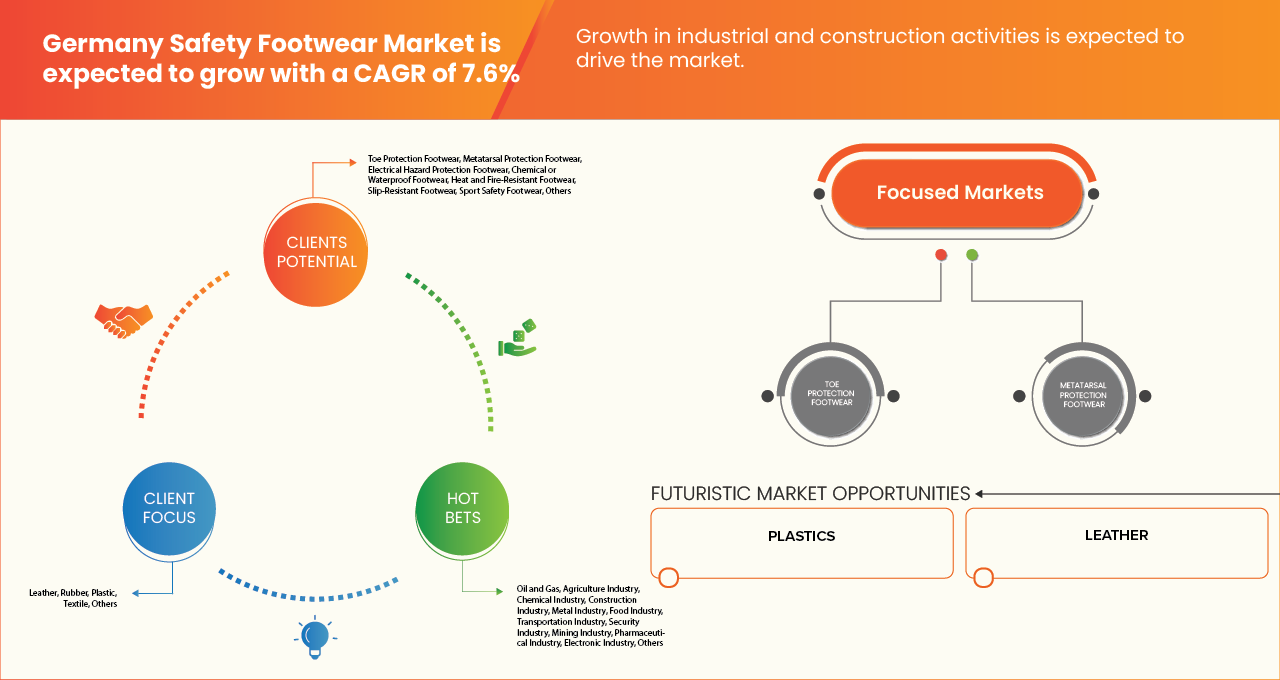
- Selon l'analyse de marché de Data Bridge, le marché allemand des chaussures de sécurité devrait atteindre 1706,01 millions de dollars d'ici 2033, contre 954,94 millions de dollars en 2026, avec un TCAC important de 7,6 % au cours de la période prévue de 2026 à 2033.
- Le marché allemand des chaussures de sécurité est animé par une forte main-d'œuvre qualifiée, la conformité obligatoire à la sécurité et de solides réseaux industriels et logistiques qui soutiennent la demande continue.
- Réseaux
Taille du marché et prévisions
- Allemagne Valeur de marché (2026):954,94 millions de dollars
- Valeur marchande prévue (2033) :1706,01 millions de dollars
- Prévisions CAGR (2027-2033):7.6%
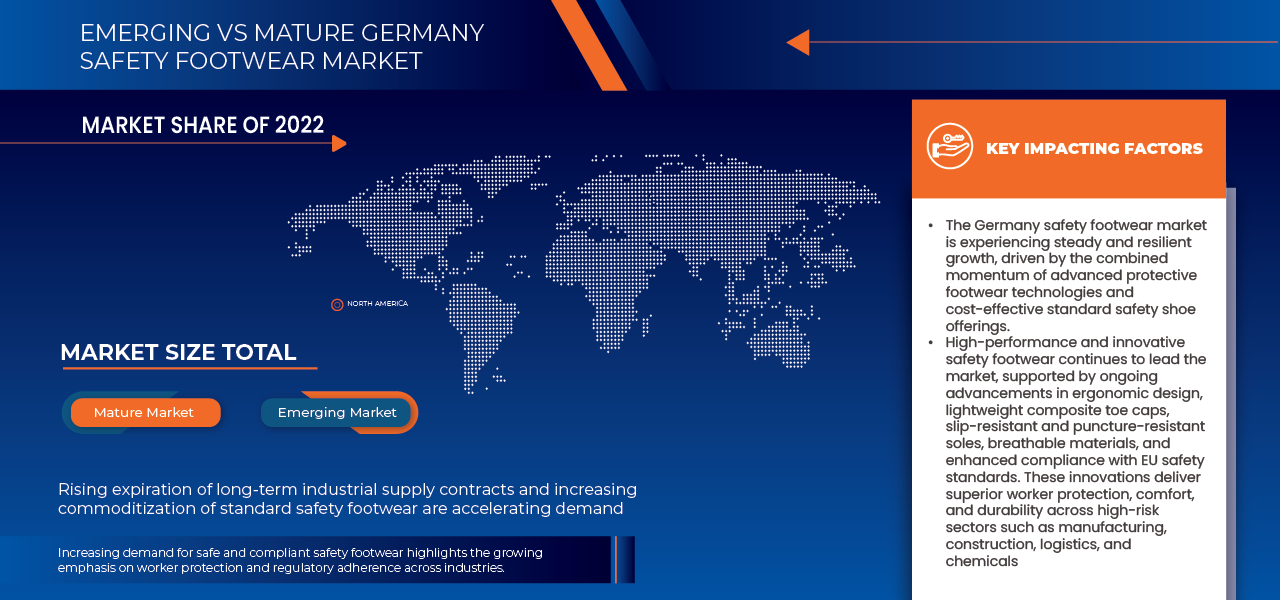
Allemagne Sécurité Chaussures Analyse du marché
- L'activité croissante dans les secteurs de la fabrication, de l'automobile, de la construction, de la logistique, de l'énergie et des produits chimiques augmente considérablement la demande de chaussures de sécurité certifiées dans toute l'Allemagne, soutenues par des exigences strictes en matière de sécurité sur le lieu de travail.
- L'application par les pouvoirs publics et l'industrie de la réglementation en matière de sécurité au travail (EN ISO 20345 et EU PPE Regulation) continue d'exiger l'utilisation de chaussures de protection dans des environnements de travail dangereux, en maintenant une demande de remplacement cohérente.
- Les coûts élevés de main-d'oeuvre et de production, associés à la pression pour équilibrer le confort, la durabilité et la durabilité, posent des défis de coûts pour les fabricants opérant en Allemagne.
- Les progrès technologiques dans les matériaux et la conception, y compris les composites légers, les semelles anti-fatigue, les semelles extérieures antidérapantes et la construction ergonomique, améliorent le confort et la productivité des travailleurs, entraînant des mises à niveau de produits.
- L'adoption croissante des canaux de vente numériques, y compris les plateformes de commerce électronique et les modèles de consommation directe, améliore l'accessibilité du marché et permet aux marques d'atteindre plus efficacement les PME et les travailleurs individuels.
- Les tendances en matière de durabilité et d'écoconception remodelent le développement des produits, les fabricants utilisant de plus en plus des matériaux recyclés, du cuir respectueux de l'environnement et des procédés de production économes en énergie pour atteindre les objectifs de l'ESG.
- Le segment des chaussures de sécurité devrait dominer le marché allemand des chaussures de sécurité, qui représente la plus grande part de marché de 29,82 % en 2026, grâce à une forte utilisation dans les secteurs de la construction, de la fabrication, de la logistique et de l'automobile, où les chaussures légères et de confort d'une journée sont préférées aux chaussures lourdes.
Portée du rapport et segmentation du marché des chaussures de sécurité en Allemagne
|
Attributs |
Allemagne Sécurité Chaussures Aperçus du marché |
|
Segments couverts |
|
|
Pays couverts |
|
|
Principaux acteurs du marché |
|
|
Possibilités de marché |
|
|
Infos sur la valeur ajoutée |
En plus des renseignements sur les scénarios de marché comme la valeur marchande, le taux de croissance, la segmentation, la couverture géographique et les principaux intervenants, les rapports de marché établis par Data Bridge Market Research comprennent également une analyse approfondie des experts, l'épidémiologie des patients, l'analyse des pipelines, l'analyse des prix et le cadre réglementaire. |
Allemagne Sécurité Chaussures Tendances du marché
(en milliers de dollars)Renforcement des activités de développement des infrastructures et construction durable(en milliers de dollars)
- L'augmentation des activités de développement des infrastructures et les dépenses de construction soutenues dans toute l'Allemagne sont des facteurs clés de la croissance du marché allemand de la chaussure de sécurité, car les projets à grande échelle accroissent le besoin de protection des travailleurs sur les chantiers actifs. On s'attend à ce que l'adoption croissante de chaussures de sécurité dans toutes les installations de fabrication, de logistique, de distribution d'électricité et de gestion des déchets et de l'eau, ainsi que son rôle dans la réduction des accidents du travail et des coûts de compensation connexes, stimulent l'expansion du marché.
- Les principales restrictions qui pourraient nuire au marché allemand des chaussures de sécurité comprennent des préoccupations liées au confort d'usure prolongé, à des problèmes potentiels de santé ou d'environnement liés aux matériaux et à l'adoption incohérente de conceptions de protection de pointe dans les petites entreprises. Une connaissance limitée de la sélection appropriée de chaussures pour des risques particuliers en milieu de travail peut aussi limiter la pénétration optimale du marché.
- On s'attend à ce que l'accent mis de plus en plus sur les pratiques de fabrication durables et l'intérêt croissant pour des matériaux écologiques, recyclables et légers pour les chaussures de sécurité crée de nouvelles possibilités sur le marché allemand des chaussures de sécurité. En outre, des réglementations plus strictes en matière de sécurité au travail et l'accent mis par le gouvernement sur le bien-être des travailleurs encouragent les employeurs à moderniser leurs équipements de protection. Toutefois, le choix ou l'utilisation inadéquats de chaussures de sécurité, la variation des pratiques de conformité et les fluctuations des prix des matières premières comme le cuir, le caoutchouc et les polymères devraient poser des problèmes à la croissance du marché.
- En mars 2022, le groupe uvex a élargi son portefeuille de chaussures de sécurité en Allemagne en introduisant des chaussures de sécurité ergonomiquement optimisées fabriquées dans son établissement de Lüneburg. Les nouveaux produits ont été conçus pour améliorer le confort du porteur pendant de longues heures de travail tout en respectant les normes de sécurité EN ISO, soutenant des industries telles que la construction, la fabrication et la logistique. Cette expansion a renforcé la position d'un fournisseur national axé sur des solutions de chaussures de protection de haute qualité centrées sur les travailleurs.
- En octobre 2021, Elten GmbH, un fabricant de chaussures de sécurité basé en Allemagne, a lancé une nouvelle gamme de chaussures de sécurité légères intégrant des matériaux respirants et la technologie de semelle antidérapante. La gamme de produits a été élaborée en réponse à la demande croissante des secteurs industriel et d'entreposage de chaussures qui réduisent la fatigue sans compromettre les performances en matière de sécurité. L'introduction a favorisé l'amélioration du respect de la sécurité au travail tout en répondant aux préoccupations liées au confort des travailleurs.
Allemagne Sécurité Chaussures Marché Dynamique
Chauffeur
Base industrielle solide et conformité à la réglementation de sécurité
- La position de l'Allemagne en tant que plus grande économie industrielle d'Europe, soutenue par une solide base manufacturière couvrant les secteurs de l'automobile, de la machinerie, de la construction, des produits chimiques, de la logistique et de l'énergie, a été un moteur fondamental de la demande soutenue de chaussures de sécurité. Une proportion importante de la main-d'oeuvre travaille dans des milieux où le risque professionnel est élevé, où les chaussures de protection ne sont pas facultatives, mais une exigence réglementaire. Cela a entraîné l'intégration des chaussures de sécurité en tant qu'élément central des stratégies de conformité au milieu de travail et d'atténuation des risques dans l'ensemble des industries.
- La stricte application de la réglementation en matière de sécurité au travail — en particulier les normes EN ISO 20345 en vertu de la loi allemande sur la sécurité et la santé au travail (Arbeitsschutzgesetz) — impose l'utilisation de chaussures de sécurité certifiées offrant des caractéristiques telles que la protection des orteils, la résistance aux glissements, la résistance à la pénétration, les propriétés antistatiques et l'absorption d'énergie. Les employeurs sont juridiquement responsables de la conformitééquipement de protection individuelle (EPI), qui se traduit directement par des achats réguliers et récurrents de chaussures de sécurité. En outre, la forte présence de grands employeurs et syndicats industriels renforce le respect des normes de sécurité, limitant la substitution par des solutions de rechange non certifiées ou de mauvaise qualité.
- En janvier 2024, l'Institut fédéral allemand de la sécurité et de la santé au travail (BAuA) a réaffirmé qu'en vertu de la loi sur la sécurité et la santé au travail (ArbSchG) et de l'ordonnance sur l'utilisation des EPI (PSA-BV), les employeurs sont légalement tenus de fournir gratuitement aux employés exposés à des risques professionnels des équipements de protection individuelle certifiés, y compris des chaussures de sécurité. Cette obligation réglementaire soutient directement la demande continue de chaussures de sécurité conformes dans les secteurs industriels, de la construction, de la logistique et de la fabrication en Allemagne.
- En mars 2023, la DGUV a mis à jour ses règles techniques pour la protection des pieds et des jambes, mettant l'accent sur l'utilisation obligatoire de chaussures de sécurité conformes à la norme EN ISO 20345 dans les environnements de travail à haut risque. Ces règles de la DGUV servent de critères de conformité reconnus par la loi, renforçant l'acquisition normalisée de chaussures de sécurité certifiées par les employeurs allemands.
- En octobre 2022, la Commission européenne, par son règlement EPI (UE) 2016/425, a réaffirmé que toutes les chaussures de sécurité commercialisées dans les États membres de l'UE, y compris l'Allemagne, doivent satisfaire à des normes harmonisées telles que la norme EN ISO 20345 et être certifiées CE. Ce cadre réglementaire garantit des exigences uniformes en matière de performance en matière de sécurité et soutient la réputation de l'Allemagne en matière de qualitésécurité industriellematériel.
- En avril 2024, uvex Safety Group, un fabricant allemand de chaussures de sécurité, a souligné sur son site web que toutes les chaussures de sécurité uvex sont développées et testées conformément aux directives EN ISO 20345 et DGUV. L'entreprise a mis l'accent sur les essais internes, la conception ergonomique et l'innovation axée sur la conformité afin de respecter les normes strictes de sécurité au travail de l'Allemagne, reflétant la façon dont les fabricants nationaux harmonisent le développement de produits avec l'application de la réglementation.
- En conclusion, le vaste paysage industriel de l'Allemagne, combiné à des réglementations rigoureuses en matière de sécurité au travail, crée un environnement de demande structurellement résistant et non discrétionnaire pour les chaussures de sécurité. L'obligation légale de se conformer aux normes EN ISO 20345, renforcée par les autorités nationales et les réglementations au niveau de l'UE, garantit que les chaussures de sécurité certifiées demeurent une catégorie d'approvisionnement essentielle plutôt qu'un élément de coût facultatif. Cette certitude réglementaire, appuyée par une forte surveillance institutionnelle et un comportement de l'employeur axé sur la conformité, non seulement maintient une demande stable de remplacement, mais encourage également l'innovation continue de produits par les fabricants nationaux, solidifiant les chaussures de sécurité en tant que segment à long terme axé sur la conformité au sein de l'écosystème industriel allemand.
Restriction/Défi
Coûts élevés de production et de certification
- Les coûts élevés de production et de certification demeurent une restriction notable sur le marché allemand des chaussures de sécurité, les fabricants supportant des dépenses importantes pour garantir que les produits répondent aux normes de sécurité strictes et aux attentes en matière de qualité. Les chaussures de sécurité vendues en Allemagne doivent être conformes à la norme EN ISO 20345 et au règlement EPI de l'UE (UE) 2016/425, qui exigent des essais de laboratoire approfondis pour la résistance aux chocs, la compression, la résistance à la pénétration, les performances de glissement et d'autres critères de protection. Ces processus de certification comprennent des essais répétés, des vérifications de la qualité et de la documentation, qui augmentent tous les délais de développement et les structures de coûts, surtout pour les conceptions nouvelles ou innovatrices.
- Les fabricants sont également confrontés à des coûts de matériaux élevés en raison de l'utilisation de composants haut de gamme tels que des bouchons d'orteils composites légers, des semelles intermédiaires résistantes à la perforation, des systèmes de rembourrage ergonomiques et des semelles extérieures antidérapantes avancées. Ces matériaux, ainsi que les investissements dans les technologies de fabrication automatisée et la formation de main-d'oeuvre qualifiée, entraînent des coûts de production plus élevés que les chaussures non cotées. Les petits et moyens producteurs, en particulier, pourraient avoir du mal à absorber ces dépenses, en réduisant leur capacité de concurrencer les produits de remplacement importés qui offrent une protection de base à moindre coût unitaire.
- En 2024, selon uvex Safety Group, l'investissement dans les tests de laboratoire en plusieurs étapes et les audits de qualité internes pour les chaussures certifiées EN ISO 20345 S3 a augmenté les coûts de production de plus de 10%, soulignant la charge financière de garantir la conformité tout en maintenant des caractéristiques avancées de sécurité et d'ergonomie.
- En 2023, ELTEN GmbH a indiqué dans son examen annuel que l'augmentation des coûts des bouchons d'orteils composites, des semelles intermédiaires résistantes à la perforation et des systèmes de rembourrage ergonomiques a entraîné une augmentation de 12 à 15 % des coûts unitaires moyens de production des modèles S3 et ESD, ce qui démontre les pressions sur les coûts associées à l'adoption de matériaux de première qualité.
- En 2023, le Ministère fédéral allemand de l'économie et de l'action pour le climat (BMWK) a confirmé que les fabricants d'EPI réglementés, y compris les chaussures de sécurité, allouent une plus grande part des budgets de R-D aux processus de certification et de conformité que les segments de chaussures non réglementés, ce qui indique des défis à long terme en matière de coûts opérationnels pour les petits producteurs.
- En 2025, selon le groupe HAIX, les investissements continus dans les installations d'essai, la formation des employés et les organismes de certification accrédités externes ont augmenté les frais généraux, ce qui a eu une incidence particulière sur la flexibilité des prix pour les modèles de chaussures de sécurité axés sur l'exportation.
- En 2024, l'Institut fédéral allemand de la sécurité et de la santé au travail (BAuA) a signalé que les mises à jour des normes EN ISO 20345 et des règles techniques connexes de la DGUV obligent les fabricants à procéder à une réévaluation et à une recertification périodiques, ce qui impose des charges financières et administratives récurrentes aux producteurs de chaussures de sécurité.
- En 2024, la Commission européenne (règlement EPI de l'UE 2016/425) a noté que les modifications apportées aux normes de sécurité harmonisées nécessitent souvent une nouvelle certification des modèles de chaussures de sécurité existants, ce qui entraîne des coûts de conformité récurrents qui limitent l'agilité du marché, en particulier pour les petits et moyens fabricants.
- En conclusion, l'impact combiné d'exigences de certification strictes, d'obligations de conformité récurrentes et de l'utilisation de matériaux de protection de qualité continue d'exercer une pression financière importante sur les fabricants de chaussures de sécurité en Allemagne. Bien que ces coûts assurent des chaussures de haute qualité conformes à la réglementation qui protègent les travailleurs dans les secteurs de l'industrie et de la construction, ils limitent également la flexibilité des prix et l'agilité du marché, en particulier pour les petits et moyens producteurs. En conséquence, les coûts élevés de production et de certification demeurent une contrainte persistante, qui façonne la dynamique concurrentielle et influe sur la stratégie des produits sur le marché allemand des chaussures de sécurité.
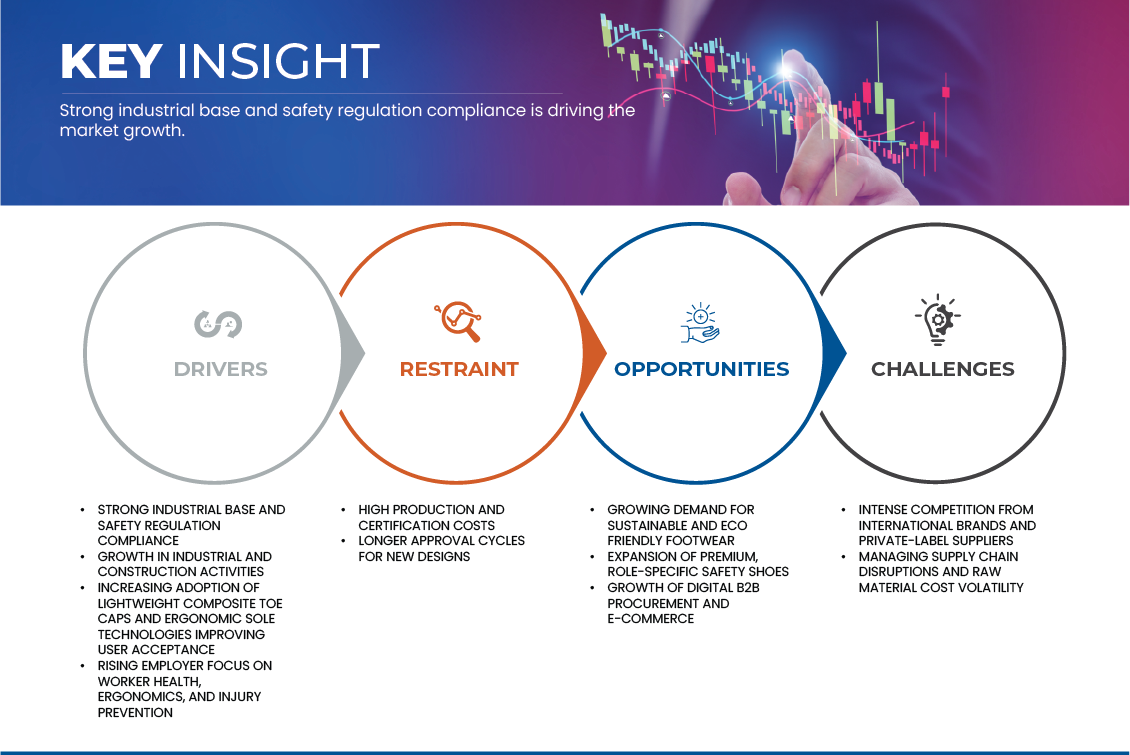
Allemagne Chaussures de sécurité Portée du marché
Le marché allemand de la chaussure de sécurité est segmenté en cinq segments notables basés sur le type de produit, le genre matériel, l'industrie et le canal de distribution
- Par type de produit
Sur la base du type de produit, le marché allemand des chaussures de sécurité est segmenté en chaussures de protection contre les orteils, chaussures de protection métatarsale, chaussures de protection contre les risques électriques, chaussures chimiques ou imperméables, chaussures résistantes à la chaleur et au feu, chaussures antidérapantes, chaussures de sécurité pour le sport, autres.
En 2026, le segment des chaussures de protection des orteils devrait dominer le marché allemand des chaussures de sécurité avec une part de 29,82 %, en raison de son adoption généralisée dans les secteurs de la construction, de la fabrication, de la transformation des métaux et de la logistique, où la protection contre les risques d'impact et de compression est obligatoire. En plus de détenir la plus grande part du marché, les chaussures de protection contre les orteils sont également le segment qui connaît la croissance la plus rapide, soutenue par une application accrue de la réglementation et une sensibilisation accrue à la sécurité au travail. Ces produits offrent une durabilité accrue, un respect strict des normes de sécurité européennes et une meilleure confiance des travailleurs, faisant des chaussures de protection des orteils une exigence fondamentale dans les environnements industriels à haut risque.
- Par matière
Sur la base des matériaux, le marché allemand des chaussures de sécurité est segmenté en cuir, caoutchouc, plastique, textile, etc.
En 2026, le segment du cuir devrait dominer la part du marché allemand de la chaussure de sécurité de 51,39 % en raison de sa durabilité supérieure, de sa respirabilité et de son confort, ce qui le rend bien adapté à une utilisation industrielle prolongée. Les chaussures de sécurité à base de cuir offrent une résistance accrue à l'abrasion, maintiennent la flexibilité dans des conditions de travail variables et soutiennent la conception ergonomique des chaussures, renforçant ainsi son adoption généralisée dans le secteur de la construction, de la fabrication et de l'industrie lourde.
- Par sexe
Sur la base du sexe, le marché allemand des chaussures de sécurité est segmenté en hommes, femmes et unisexes.
En 2026, le segment des hommes devrait dominer la part du marché allemand de la chaussure de sécurité de 71,63 % en raison de la plus forte concentration de main-d'oeuvre masculine dans les secteurs de la construction, de la fabrication, de la transformation des métaux et de l'industrie lourde. Les chaussures de sécurité pour hommes sont largement adoptées en raison de leur disponibilité dans une gamme plus large de conceptions de protection, de capacités de charge et de conformité avec des réglementations strictes en matière de sécurité au travail. Cependant, les segments des femmes et des unisexes sont de plus en plus actifs avec une participation accrue des femmes à la main-d'œuvre et une demande croissante de chaussures de sécurité ergonomiques, incluant la taille, dans diverses industries en allemand.
- Par industrie
Sur la base de l'industrie, le marché allemand des chaussures de sécurité est segmenté en pétrole et gaz, l'industrie agricole, l'industrie chimique, l'industrie de la construction, l'industrie métallique, l'industrie alimentaire, l'industrie des transports, l'industrie de la sécurité, l'industrie minière, l'industrie pharmaceutique, l'industrie électronique, etc.
En 2026, le segment de l'industrie de la construction devrait dominer la part du marché allemand de la chaussure de sécurité de 31,83 % en raison du développement continu de l'infrastructure, de la stricte réglementation en matière de sécurité au travail et de l'exposition élevée des travailleurs aux risques mécaniques, électriques et liés aux glissements dans divers environnements de construction.
- Par canal de distribution
Sur la base du canal de distribution, le marché allemand des chaussures de sécurité est segmenté en non-store, en magasin, en autres.
En 2026, le segment hors magasin devrait dominer la part du marché allemand des chaussures de sécurité de 63,51 % en raison de la forte présence de réseaux de détail organisés, de l'accessibilité facile pour les acheteurs industriels et commerciaux, et de la capacité de fournir des équipements et des démonstrations personnalisés, tandis que le segment hors magasin connaît une croissance constante en raison de l'adoption croissante de plateformes en ligne et de canaux de commerce électronique pour des achats pratiques et une plus large sélection de produits.
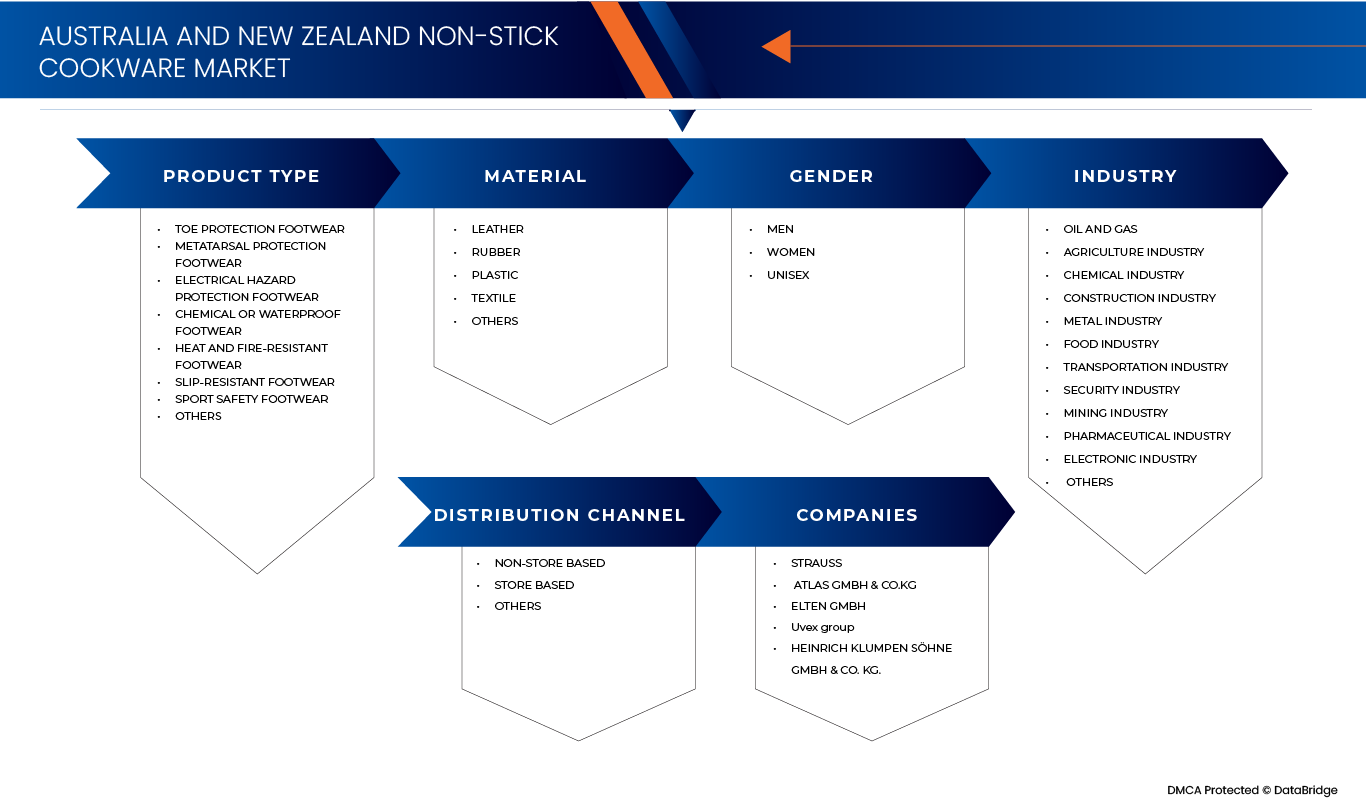
Allemagne Sécurité Chaussures Part de marché
Certains des principaux acteurs du marché allemand de la chaussure de sécurité sont énumérés ci-dessous:
- Engelbert Strauss Inc.(Allemagne)
- ATLAS GmbH & Co.KG(Allemagne)
- ELTEN GmbH (Allemagne)
- Groupe de sécurité UVEX (Allemagne)
- Heinrich Klumpen Söhne GmbH & Co. KG (Allemagne)
- Bata Industriels(PaysBas)
- Aigle(France)
- Stabilus Safety GmbH (Allemagne)
- LUPOS® Gmbh, (Allemagne)
- Chaussures de sécurité FTG Srl, (Italie)
- Portwest UC (Irlande)
- Talan de chaussures,
- GROUPE HAIX (Allemagne)
- COFRA S.r.l. (Italie)
Derniers développements en Allemagne Marché des Chaussures de Sécurité
- En 2024, Engelbert Strauss a poursuivi sa stratégie de lancement semestriel de chaussures de sécurité, alignée sur les collections printemps-été et automne-hiver. Ces lancements ont mis l'accent sur la conception moderne, les matériaux légers et la conformité EN ISO 20345, ciblant la construction, la logistique et les métiers spécialisés. En 2025, l'entreprise a renforcé son modèle de vente directe et de commerce électronique en Allemagne, soutenu par des investissements dans les infrastructures logistiques et les centres d'expérience de marque. Les initiatives de développement durable, y compris les partenariats à long terme avec les fournisseurs et l'approvisionnement responsable, sont demeurées au cœur de l'action tout au long de cette période.
- En 2024, ATLAS a maintenu sa position en tant que l'un des plus grands fabricants de chaussures de sécurité d'Europe en se concentrant sur la production de haute capacité dans son installation Dortmund, renforçant son positionnement « Made in Germany ». Tout au long de 2025, l'entreprise a mis l'accent sur l'optimisation des processus, l'automatisation et la production de qualité cohérente, plutôt que sur les changements majeurs de portefeuille. ATLAS a continué d'approvisionner de grands clients industriels dans les secteurs de la construction, de l'automobile, de la fabrication et de la logistique, en bénéficiant d'une demande croissante fondée sur la conformité pour des chaussures de sécurité certifiées.
- En 2024, ELTEN a accéléré la mise en œuvre de sa stratégie de durabilité ELTEN LOOP, en introduisant d'autres modèles de chaussures de sécurité utilisant des matériaux recyclés et respectueux de l'environnement. L'entreprise a renforcé son positionnement ESG, en gagnant en reconnaissance grâce à une haute durabilité et à des notations RSE, ce qui a augmenté l'attrait chez les acheteurs industriels et commerciaux. En 2025, ELTEN a renforcé la visibilité de la marque en participant à d'importantes expositions industrielles telles que A+A Düsseldorf, tout en poursuivant l'innovation progressive dans le confort, la durabilité et l'éco-conception dans sa gamme de chaussures de sécurité premium.
- Au cours de l'année 2024, UVEX a étendu son attention sur les chaussures de sécurité légères et ergonomiques, intégrant des systèmes de semelles de pointe et des modèles de réduction de la fatigue pour supporter de longues heures de travail dans des environnements industriels. En 2025, UVEX est entré dans une nouvelle phase stratégique après l'investissement en fonds propres privés, visant à accélérer la croissance, l'innovation et l'expansion internationale. On s'attend à ce que cette évolution renforce le portefeuille de chaussures de sécurité UVEX en accroissant les investissements dans la R-D, l'innovation durable en matière de matériaux et une plus grande portée du marché tout en maintenant son patrimoine en génie allemand.
- Tout au long de 2024, HAIX a continué de se concentrer sur les chaussures de sécurité haute performance, en particulier pour les applications industrielles, les services publics et les services d'urgence. Le développement du produit a mis l'accent sur la performance technique, la durabilité, la résistance aux glissements et le confort ergonomique. En 2025, HAIX a maintenu sa stratégie de raffinement progressif des produits plutôt que de grands changements d'entreprise, renforçant sa réputation de fabricant spécialisé. La poursuite de la production européenne et la rigueur des normes de qualité ont soutenu la forte demande des utilisateurs professionnels et industriels en Allemagne.
SKU-
Accédez en ligne au rapport sur le premier cloud mondial de veille économique

- Tableau de bord d'analyse de données interactif
- Tableau de bord d'analyse d'entreprise pour les opportunités à fort potentiel de croissance
- Accès d'analyste de recherche pour la personnalisation et les requêtes
- Analyse de la concurrence avec tableau de bord interactif
- Dernières actualités, mises à jour et analyse des tendances
- Exploitez la puissance de l'analyse comparative pour un suivi complet de la concurrence
Table des matières
1 INTRODUCTION
1.1 OBJECTIFS DE L'ÉTUDE
1.2 DÉFINITION DU MARCHÉ
1.3 APERÇU DU MARCHÉ INTÉRIEUR DE LA SÉCURITÉ ALLEMAGNE
1.4 LIMITATIONS
1.5 MARCHÉS COUVERTS
2 SEGMENTATION DU MARCHÉ
2.1 MARCHÉS COUVERTS
2.2 CHAMP D'APPLICATION GÉOGRAPHIQUE
2.3 ANS CONSIDÉRÉS POUR L'ÉTUDE
2.4 MONNAIE ET PRÊT
2.5 MODÈLE DE VALIDATION DES DONNÉES DU TRIPOD DBMR
2.6 MODÉLISATION MULTIVARIÉE
2.7 INTERVENTIONS PRIMAIRES AVEC LES PRINCIPAUX DIRECTEURS DE L'AVIS
2.8 GRID DE POSITION DU MARCHÉ DBMR
2.9 COUVERTURE DE LA DEMANDE DE MARCHÉ
2.1 ANALYSE DU PARTAGE DES VENDEURS DBMR
2.11 SOURCES SECONDAIRES
2.12 OBSERVATIONS
3 RÉSUMÉ
4 PRIME INSIGHT
4.1 CINQ FORCES PORTÉES
4.1.1 LA PROTECTION DES NOUVEAUX ENTRANTS
4.1.2 POUVOIR DE FABRICATION
4.1.3 POUVOIR D'ACHETEURS
4.1.4 MENACES DES SUBSTITATS
4.1.5 RIVALISATION COMPÉTITIVE
4.2 TRAQUEMENT D'INNOVATION ET ANALYSE STRATÉGIQUE – MARCHÉ DE LA SÉCURITÉ ALLEMAGNE
4.2.1 PRINCIPAUX DEALS ET ANALYSE DES ALLIANCES STRATÉGIQUES
4.2.2 VALEURS COMMUNES
4.2.3 MARQUES ET ACQUISITIONS
4.2.4 LICENCE ET PARTENARIAT
4.2.5 COLLABORATION DES TECHNOLOGIES
4.2.6 DIVERSEMENTS STRATÉGIQUES
4.2.7 NOMBRE DE PRODUITS EN DÉVELOPPEMENT
4.2.8 CALENDRIER DU DÉVELOPPEMENT
4.2.9 CALENDRIER ET MILITAIRES
4.2.10 STRATÉGIES ET MÉTHODES D'INNOVATION
4.2.11 ÉVALUATION ET MITIGATION DES RISQUES
4.2.12 PERSPECTIVES FUTURS
4.2.13 CONCLUSION
4.2.14 EXPLICATION: -
4.2.15 EXPLICATION: -
4.2.16 EXPLICATION:
4.3 ANALYSE DE LA CHAINE D'APPROVISIONNEMENT
4.3.1 INTRODUCTION
4.3.2 Aperçu général
4.3.3 SOURCES ET ACHETS DES MATÉRIAUX RÉVISÉS
4.3.4 TRAITEMENT ET FABRICATION DES PRODUITS (PRODUCTION)
4.3.5 LOGISTIQUE DE LA CHAINE D'APPROVISIONNEMENT ET DE LA DISTRIBUTION (TRANSPORTATION)
4.3.6 SCÉNARIO DES COUTS LOGISTIQUES
4.3.7 CHANNELS D'ACHETS ET D'ACHETS COMMERCIAUX (DISTRIBUTION ET VENTES)
4.3.8 IMPORTANCE DES SERVICES LOGISTIQUES
4.3.9 CONCLUSION
4.4 COUVERTURE DES MATÉRIAUX RAW
4.4.1 ÉTABLISSEMENT
4.4.2 RUBBER ET POLYURETHANE THERMOPOLASTIQUE (TPU)
4.4.3 MÉTAUX ET MATIÈRES COMPOSÉES
4.4.4 FABRICATIONS TEXTILES ET SYNTHÉTIQUES
4.4.5 MATÉRIAUX DE CUSHIONAGE ET D'ABORAGE
4.5 ANALYSE DE LA CHAINE DE VALEUR
4.5.1 SOURCE DES MATÉRIAUX RAVES
4.5.2 Design et développement des produits
4.5.3 FABRICATION ET PRODUCTION
4.5.4 DISTRIBUTION ET LOGISTIQUE
4.5.5 COMMERCIALISATION ET VENTE
4.5.6 SOUTIEN APRÈS SALES
4.5.7 CONCLUSION
4.6 RÉPARTITION DE L'ANALYSE DES COÛTS DU MARCHÉ DE LA SÉCURITÉ ALLEMAGNE
4.6.1 INTRODUCTION
4.6.2 Matières premières et coûts de fabrication
4.6.3 COÛTS D' EMBALLAGE ET DE LOGISTIQUE
4.6.4 COÛTS DE RECHERCHE, DE QUALITÉ ET DE CONFORMITÉ RÉGLEMENTAIRE
4.6.5 COÛTS ENVIRONNEMENTAUX, ÉNERGÉTIQUES ET DURABLES
4.6.6 ÉVOLUTION DES TENDANCES DES COÛTS
4.6.7 CONCLUSION
4.7 LES MARGES DE PROFIT SCÉNARIO DU MARCHÉ INTÉRIEUR DE LA SÉCURITÉ ALLEMAGNE
4.7.1 INTRODUCTION
4.7.2 GESTION DES COÛTS ET FORMATION DE MARGIN
4.7.3 DIFFÉRENCE DE LA TECHNOLOGIE ET STRATÉGIE DE PRODUIT
4.7.4 INFLUENCE DE CHAINE ET DE DISTRIBUTION
4.7.5 INFLUENCES RÉGLEMENTAIRES ET MACROÉCONOMIQUES
4.7.6 ÉVOLUTION DES TENDANCES ET RÉPONSES STRATÉGIQUES
4.7.7 CONCLUSION
4.8 ANALYSE PRICTUELLE
4.9 CRITÈRES DE SÉLECTION DU VENDEUR
4.9.1 CERTIFICATION
4.9.2 QUALITÉ DU PRODUIT
4.9.3 RESPONSABILITÉ EN MATIÈRE DE DOUANISATION
4.9.4 COÛT ET COMPÉTITIVITÉ COMMERCIALE
4.9.5 PRATIQUES DE RÉGLEMENTATION, DE SÉCURITÉ ET DE DURABILITÉ
4.9.6 FLEXIBILITÉ DE COLLABORATION, D'INNOVATION ET DE PROGRAMME
4.1 PERSPECTIVES GÉNÉRALES
4.10.1 APERÇU DE LA SOCIÉTÉ VS
4.11 CHANGEMENT CLIMATIQUE SCÉNARIO
4.11.1 QUESTIONS ENVIRONNEMENTALES
4.11.2 RÉPONSES DE L'INDUSTRIE
4.11.3 RÔLE DU GOUVERNEMENT
4.11.4 RECOMMANDATIONS D'ANALYSE
4.12 COMPORTEMENT DES CONSOMMATEURS
4.13 INTRODUCTION
4.13.1 VERS UNE PROTECTION COMFORTE, ERGONOMIQUE ET AVANCEMENT
4.13.2 STRONG EMPHASIS SUR LA CONFORMITÉ RÉGLEMENTAIRE ET LA CRÉDIBILITÉ GRANDE
4.13.3 SENSIBILITÉ DES PRIX ET ACHETAGE BASÉ DES MARCHÉS
4.13.4 INFLUENCE DES CHANEAUX DE DISTRIBUTION ET DES MARCHÉS NUMÉRIQUES
4.13.5 IMPORTANCE DE L'APPROVISIONNEMENT ET DE LA CONSISTANCE DU PRODUIT
4.13.6 RÔLE DES SERVICES DE VALEUR AJOUTÉE
4.13.7 DURABILITÉ, PRATIQUES ETHIQUES ET PRÉFÉRENCES DE PRIME
4.13.8 INFLUENCE DU TYPE D'INDUSTRIE ET DE LA CULTURE DU LIEU DE TRAVAIL
4.13.9 CONCLUSION
4.14 ANALYSE DES ÉCOSYSTÈMES DE L'INDUSTRIE
4.14.1 ENTREPRISES PROMINENTES
4.14.2 Petites et moyennes entreprises
4.14.3 UTILISATEURS DE FIN
4.15 AVANTAGES TECHNOLOGIQUES
4.15.1 MATÉRIAUX AVANCÉS ET PROTECTION DU POIDS
4.15.2 ENGAGEMENTS ERGONOMIQUES ET BIOMÉCANIQUES
4.15.3 TECHNOLOGIES SMART ET INTÉGRATION DES SENSEURS
4.15.4 INNOVATIONS DURABLES ET ÉCONOMIQUES
4.15.5 OUTILS DE FABRICATION ET DE CONCEPTION NUMÉRIQUES DE PRÉCISION
5 TARIF ET LEUR IMPACT SUR LE MARCHÉ DE LA SÉCURITÉ ALLEMAGNE
5.1 INTRODUCTION
5.2 TAUX TARIFAIRES ACTUELS DANS LES PAYS ALLEMAGNES ET CLÉS PARTENAIRES
5.3 PERSPECTIVES: PRODUCTION LOCALE VS. RELIANCE DES IMPORTATIONS EN ALLEMAGNE
5.4 CRITÈRES DE SÉLECTION DES VENDEURS DYNAMIQUES EN ALLEMAGNE
5.5 IMPACT SUR LA CHAINE D'APPROVISIONNEMENT DE LA SÉCURITÉ ALLEMAGNE
5.5.1 Achats de matières premières
5.5.2 FABRICATION ET PRODUCTION
5.5.3 LOGISTIQUES ET DISTRIBUTION
5.5.4 PITCHAGE DES PRIX ET POSITION DU MARCHÉ EN ALLEMAGNE
5.6 PARTICIPANTS DE L'INDUSTRIE: MOUVEMENTS PROACTIFS EN ALLEMAGNE
5.6.1 OPTIMISATION DE LA CHAINE D'APPROVISIONNEMENT
5.6.2 ÉTABLISSEMENTS COMMUNS DE VENTURE
5.7 IMPACT SUR LES PRIX EN ALLEMAGNE
5.7.1 INCLINATION RÉGLEMENTAIRE EN ALLEMAGNE
5.7.1.1 SITUATION GEOPOLITIQUE
5.7.2 PARTENARIATS COMMERCIAUX EN ALLEMAGNE
5.7.2.1 ACCORDS DE LIBRE-ÉCHANGE
5.7.2.2 ÉTABLISSEMENTS D'ALLIANCE
5.7.3 ACCRÉDITATION DE L'ÉTAT (Y COMPRIS NPF)
5.7.4 COURS DOMESTIQUE DE CORRECTION EN ALLEMAGNE
5.7.4.1 RÉGIMES INCENTIFS DE LA PRODUCTION
5.7.4.2 ÉTABLISSEMENT DE PARCS INDUSTRIELS ET DE CLIENTS DE FABRICATION
5.8 CONCLUSION
5.8.1 EXPLICATION:
6 COUVERTURE RÉGLEMENTAIRE
6.1 CODES DES PRODUITS
6.2 NORMES CERTIFIÉES
6.3 NORMES DE SÉCURITÉ
6.3.1 MATÉRIEL ET STOCKAGE
6.3.2 TRANSPORT ET PRÉCAUTIONS
6.3.3 IDENTIFICATION DU DANGER
7 APERÇU DU MARCHÉ
7.1 Conducteurs
7.1.1 CONFORMITÉ À LA BASE INDUSTRIELLE ET AU RÈGLEMENT DE SÉCURITÉ
7.1.2 CROISSANCE DANS LES ACTIVITÉS INDUSTRIELLES ET DE CONSTRUCTION
7.1.3 RENFORCEMENT DE L'ADOPTION DES CAPS ET DES TECHNOLOGIES ERGONOMIQUES COMPOSÉES EN LUMIÈRE AMÉLIORANT L'ACCEPTANCE DE L'UTILISATEUR
7.1.4 RISQUES DE L'EMPLOYEUR SUR LA SANTÉ DES TRAVAILLEURS, LES ERGONOMIQUES ET LA PRÉVENTION DES PRÉVENTIONS
7.2 RÉSULTATS
7.2.1 COÛTS DE HAUTE PRODUCTION ET DE CERTIFICATION
7.2.2 CYCLES D ' HOMOLOGATION LONGUEUR POUR LES NOUVEAUX DESSINS
7.3 POSSIBILITÉ
7.3.1 DEMANDE DE CROISSANCE DURABLE ET DURABLE
7.3.2 EXPANSION DE L'EXPÉDITION DE L'ÉCHELLE DE SÉCURITÉ ROLE-SPÉCIFIQUE
7.3.3 CROISSANCE DES MARCHÉS NUMÉRIQUES B2B ET DU COMMERCE électronique
7.4 DÉFIS
7.4.1 CONCURRENCE INTÉRIEURE DES MARQUES INTERNATIONALES ET DES FOURNISSEURS DE LABEL PRIVÉ
7.4.2 GESTION DES DIFFICULTÉS DE LA CHAINE D'APPROVISIONNEMENT ET VOLATILITÉ DU COÛT DES MATÉRIAUX
8 MARCHÉ DE LA SÉCURITÉ ALLEMAGNE, PAR TYPE DE PRODUITS
8.1 Aperçu général
8.2 OUTILS DE PROTECTION
8.3 PROTECTION MÉTATARSALE
8.4 PROTECTION DES DANGERS ÉLECTRIQUES
8.5 FEUILLES CHIMIQUES / EAU
8.6 CHAUFFAGE ET RÉSISTANT AU FEU
8.7 FEUILLES RÉSISTANTES
8.8 SÉCURITÉ DES SPORTS
8.9 AUTRES
9 MARCHÉ DE LA SÉCURITÉ ALLEMAGNE PAR MATÉRIEL
9.1 Aperçu général
9.2 LEATHER
9.3 RUBER
9.4 PLASTIQUE
9.5 TEXTILES
9.6 AUTRES
9.6.1 ÉLÉMENT GENUINE
9.6.2 NIVEAU SYNTHÉTIQUE
9.6.3 RUBBRE SYNTHÉTIQUE
9.6.4 ROUTE NATURELLE
9.6.5 POLYURETHANE (PU) ET POLYURETHANE
9.6.6 POLYESTER
9.6.7 ACÉTATE D'ÉTHYLÈNE-VINYLE (EVA)
9.6.8 CHLORURE DE POLYVINYLE (PVC)
9.6.9 AUTRES
10 MARCHÉ DE LA SÉCURITÉ ALLEMAGNE, PAR ALLEMAGNE
10.1 Aperçu général
10.2 HOMMES
10.3 FEMMES
10.4 UNISEX
11 MARCHÉ DE LA SÉCURITÉ ALLEMAGNE PAR INDUSTRIE
11.1 Aperçu général
11.2 POIL ET GAZ
11.2.1 OIL ET GAZ, PAR APPLICATION
11.2.1.1 SUR L ' ÉTAT
11.2.1.2 OFF SHORE
11.2.2 OIL ET GAZ, PAR PRODUIT
11.2.2.1 PROTECTION DES OUTILS
11.2.2.2 PROTECTION MÉTATARSALE
11.2.2.3 OUTILS DE PROTECTION DES DANGERS ÉLECTRIQUES
11.2.2.4 BOÎTES CHIMIQUES / EAU
11.2.2.5 CHAUFFAGE ET FEUILLES RÉSISTANTE
11.2.2.6 FEUILLES RÉSISTANTES
11.2.2.7 SPORTS DE SÉCURITÉ
11.2.2.8 AUTRES
11.3 INDUSTRIE AGRICOLE
11.3.1 OUTILS DE PROTECTION
11.3.2 PROTECTION MÉTATARSALE
11.3.3 PROTECTION DES DANGERS ÉLECTRIQUES
11.3.4 CHIMIQUE / HYDRORIQUE
11.3.5 CHAUFFAGE ET RÉSISTANT AU FEU
11.3.6 FEUILLES RÉSISTANTES
11.3.7 SÉCURITÉ DES SPORTS
11.3.8 AUTRES
11.4 INDUSTRIE CHIMIQUE
11.4.1 PROTECTION DES OUTILS
11.4.2 MÉTATAIRES DE PROTECTION
11.4.3 PROTECTION DES DANGERS ÉLECTRIQUES
11.4.4 CHERCHEURS CHIMIQUES / EAU
11.4.5 CHAUFFAGE ET CHAUFFAGE
11.4.6 FEUILLES RÉSISTANTES
11.4.7 SÉCURITÉ DES SPORTS
11.4.8 AUTRES
11.5 INDUSTRIE DE LA CONSTRUCTION
11.5.1 INDUSTRIE DE LA CONSTRUCTION, PAR APPLICATION
11.5.1.1 CONSTRUCTION RÉSIDENTIELLE
11.5.1.2 CONSTRUCTION ENGINÉAIRE
11.5.1.2.1 CONSTRUCTION DE L'ENGINIER, PAR TYPE
11.5.1.2.1.1 VOIES ROUTIÈRES
11.5.1.2.1.2 PURELINES
11.5.1.2.1.3 FRUITS
11.5.1.2.1.4 TUNNELS ET DAMS
11.5.1.2.1.5 FERROVIAIRES
11.5.1.2.1.6 CONSTRUCTION DE L'AIRPORT
11.5.1.2.1.7 AUTRES
11.5.1.3 CONSTRUCTION COMMERCIALE
11.5.1.3.1 CONSTRUCTION COMMERCIALE, PAR TYPE
11.5.1.3.1.1 BUREAUX
11.5.1.3.1.2 INSTALLATIONS DE SANTÉ
11.5.1.3.1.3 INSTITUTIONS D'ÉDUCATION
11.5.1.3.1.4 HÔTELS
11.5.1.3.1.5 RESTAURANTS ET BARS
11.5.1.3.1.6 WAREHOUSES
11.5.1.3.1.7 LABORATOIRES DE RECHERCHE
11.5.1.3.1.8 AUTRES
11.5.2 INDUSTRIE DE LA CONSTRUCTION, PAR PRODUITS
11.5.2.1 PROTECTION DES OUTILS
11.5.2.2 MÉTATAIRES DE PROTECTION
11.5.2.3 PROTECTION DES DANGERS ÉLECTRIQUES
11.5.2.4 FEUILLES CHIMIQUES / EAU
11.5.2.5 CHAUFFAGE ET RÉSISTANT AU FEU
11.5.2.6 FEUILLES RÉSISTANTES
11.5.2.7 SPORTS DE SÉCURITÉ
11.5.2.8 AUTRES
11.6 INDUSTRIE MÉTALE
11.6.1 PROTECTION DES OUTILS
11.6.2 PROTECTION MÉTATARSALE
11.6.3 PROTECTION DES DANGERS ÉLECTRIQUES
11.6.4 CHIMIQUE / EAU DE FEUILLE
11.6.5 CHAUFFAGE ET RÉSISTANT AU FEU
11.6.6 FEUILLES RÉSISTANTES
11.6.7 SPORTS DE SÉCURITÉ
11.6.8 AUTRES
11.7 INDUSTRIE ALIMENTAIRE
11.7.1 ALIMENTS
11.7.1.1 VIANDE ET AUTRES
11.7.1.2 LAIT ET PRODUITS LAITIERS
11.7.1.3 FRUITS ET LÉGUMES
11.7.1.4 PRODUITS GRAIN
11.7.1.5 AUTRES
11.7.1.6 BOISSONS
11.7.1.6.1 BOISSONS, PAR TYPE
11.7.1.6.1 Non - ALCOOLIQUE
11.7.1.6.1.1.1 EAU CHARGÉE
11.7.1.6.1.1.2 FEUILLES DE SOUFRE CARBONÉES (CSDS)
11.7.1.6.1.1.3 BOISSONS FONCTIONNELLES
11.7.1.6.1.4 BOISSONS DE FRUIT
11.7.1.6.1.1.5 SPORTS
11.7.1.6.1.6 AUTRES
11.7.1.6.1.2 ALCOOLIQUE
11.7.1.6.1.2.1 BOIS
11.7.1.6.1.2.2 ESPRITS
11.7.1.6.1.2.3 VINS
11.7.1.6.1.2.4 TEQUILA & COCKTAILS
11.7.1.6.1.2.5 CHAMPAGNE
11.7.1.6.1.2.6 AUTRES
11.7.2 INDUSTRIE ALIMENTAIRE, PAR PRODUITS
11.7.2.1 PROTECTION DES OUTILS
11.7.2.2 PROTECTION MÉTATARSALE
11.7.2.3 PROTECTION DES DANGERS ÉLECTRIQUES
11.7.2.4 FEUILLES CHIMIQUES / EAU
11.7.2.5 CHAUFFAGE ET RÉSISTANT AU FEU
11.7.2.6 FEUILLES RÉSISTANTES DU SLIP
11.7.2.7 SPORTS DE SÉCURITÉ
11.7.2.8 AUTRES
11.8 INDUSTRIE DES TRANSPORTS
11.8.1 PROTECTION DES OUTILS
11.8.2 PROTECTION MÉTATARSALE
11.8.3 PROTECTION DES DANGERS ÉLECTRIQUES
11.8.4 FEUILLES CHIMIQUES / EAU
11.8.5 CHAUFFAGE ET FEUILLES RÉSISTANTE
11.8.6 FEUILLES RÉSISTANTES
11.8.7 SÉCURITÉ DES SPORTS
11.8.8 AUTRES
11.9 INDUSTRIE DE LA SÉCURITÉ
11.9.1 PROTECTION DES OUTILS
11.9.2 PROTECTION MÉTATARSALE
11.9.3 PROTECTION DES DANGERS ÉLECTRIQUES
11.9.4 BOÎTES CHIMIQUES / EAU
11.9.5 CHAUFFAGE ET CHAUFFAGE
11.9.6 FEUILLES RÉSISTANTES
11.9.7 SPORTS DE SÉCURITÉ
11.9.8 AUTRES
11.1 INDUSTRIE MINIÈRE
11.10.1 PROTECTION DES OUTILS
11.10.2 MÉTATAIRES DE PROTECTION
11.10.3 PROTECTION DES DANGERS ÉLECTRIQUES
11.10.4 CHIMIQUE / EAU PROFESSIONNELLE
11.10.5 CHAUFFAGE ET FEUILLES RÉSISTANTE
11.10.6 FEUILLES RÉSISTANTES
11.10.7 SÉCURITÉ DES SPORTS
11.10.8 AUTRES
11.11 INDUSTRIE PHARMACEUTIQUE
11.11.1 PROTECTION DES OUTILS
11.11.2 MÉTATAIRES DE PROTECTION
11.11.3 PROTECTION DES DANGERS ÉLECTRIQUES
11.11.4 CHIMIQUE / EAU PROFESSIONNELLE
11.11.5 CHAUFFAGE ET CHAUFFAGE
11.11.6 FEUILLES RÉSISTANTES
11.11.7 SPORTS DE SÉCURITÉ
11.11.8 AUTRES
11.12 INDUSTRIE ÉLECTRONIQUE
11.12.1 PROTECTION DES OUTILS
11.12.2 MÉTATAIRES DE PROTECTION
11.12.3 PROTECTION DES DANGERS ÉLECTRIQUES
11.12.4 CHIMIQUE / EAU PROFESSIONNELLE
11.12.5 CHAUFFAGE ET CHAUFFAGE
11.12.6 FEUILLES RÉSISTANTES
11.12.7 SÉCURITÉ DES SPORTS
11.12.8 AUTRES
11.13 AUTRES
11.13.1 PROTECTION DES OUTILS
11.13.2 MÉTATAIRES DE PROTECTION
11.13.3 PROTECTION DES DANGERS ÉLECTRIQUES
11.13.4 BOÎTES CHIMIQUES / EAU
11.13.5 CHAUFFAGE ET FEUILLES RÉSISTANTE
11.13.6 FEUILLES RÉSISTANTES
11.13.7 SPORTS DE SÉCURITÉ
11.13.8 AUTRES
12 MARCHÉ DE LA SÉCURITÉ ALLEMAGNE, PAR CHANEAU DE DISTRIBUTION
12.1 Aperçu général
12.2 BASE NON DE BASE
12.2.1 SITES WEB DES ENTREPRISES
12.2.2 TROISIÈME PARTIE E PLATE-FORME COMMERCE
12.3 BASE DE BASE
12.3.1 SUPERMARQUETS/HYPERMARQUETS
12.3.2 SECTEURS INDUSTRIELS
12.3.3 SECTEURS EXCLUSIFS GRANDS
12.3.4 DÉTAILLANTS INDÉPENDANTS
12.3.5 MULTI BRAND STORE
12.3.6 AUTRES
12.4 AUTRES
13 MARCHÉ INTÉRIEUR DE LA SÉCURITÉ ALLEMAGNE, SOCIÉTÉ PAYSAGE
13.1 ANALYSE DU PARTAGE DES ENTREPRISES: ALLEMAGNE
14 ANALYSE SWOT
15 PROFIL D'ENTREPRISE
15.1 ENGELBERT STRAUSS INC
15.1.1 COMPAGNIE
15.1.2 PORTEFEUILLE DE PRODUITS
15.1.3 DÉVELOPPEMENT RÉCENT
15.2 ATLAS
15.2.1 COMPAGNIE SNAPSHOT
15.2.2 PORTEFEUILLE DE PRODUITS
15.2.3 DÉVELOPPEMENT RÉCENT
15.3 ELTEN
15.3.1 COMPAGNIE SNAPSHOT
15.3.2 PORTEFEUILLE DE PRODUITS
15.3.3 DÉVELOPPEMENT RÉCENT
15.4 GROUPE DE SÉCURITÉ SUR LES UVEX
15.4.1 COMPAGNIE SNAPSHOT
15.4.2 PORTEFEUILLE DE PRODUITS
15.4.3 DÉVELOPPEMENT RÉCENT
15,5 HKS GMBH & CO. KG
15.5.1 COMPAGNIE SNAPSHOT
15.5.2 PORTEFEUILLE DE PRODUITS
15.5.3 DÉVELOPPEMENT RÉCENT
15.6 AIGLE (SUBSIDIAIRE DE MAUS FRÈRES SA)
15.6.1 COMPAGNIE SNAPSHOT
15.6.2 PORTEFEUILLE DE PRODUITS
15.6.3 DÉVELOPPEMENT RÉCENT
15.7 ALBATROS
15.7.1 COMPAGNIE SNAPSHOT
15.7.2 PORTEFEUILLE DE PRODUITS
15.7.3 DÉVELOPPEMENT RÉCENT
15.8 ALPHA-TEX ARBEITSCHUTZ GMBH
15.8.1 COMPAGNIE SNAPSHOT
15.8.2 PORTEFEUILLE DE PRODUITS
15.8.3 DÉVELOPPEMENT RÉCENT
15.9 EXPRESS D ' ARBEITSCHUTZ (ASX)
15.9.1 COMPAGNIE SNAPSHOT
15.9.2 PORTEFEUILLE DE PRODUITS
15.9.3 DÉVELOPPEMENT RÉCENT
15.1 INDUSTRIES DU BAT
15.10.1 COMPAGNIE SNAPSHOT
15.10.2 PORTEFEUILLE DE PRODUITS
15.10.3 DÉVELOPPEMENT RÉCENT
15.11 COFRA S.R.L.
15.11.1 COMPAGNIE SNAPSHOT
15.11.2 PORTEFEUILLE DE PRODUITS
15.11.3 DÉVELOPPEMENT RÉCENT
15.12 TALAN FOOTWEAR
15.12.1 COMPAGNIE SNAPSHOT
15.12.2 PORTEFEUILLE DE PRODUITS
15.12.3 DÉVELOPPEMENT RÉCENT
15.13 FTG SHOES DE SÉCURITÉ SRL
15.13.1 COMPAGNIE SNAPSHOT
15.13.2 PORTEFEUILLE DE PRODUITS
15.13.3 DÉVELOPPEMENT RÉCENT
15.14 GROUPE HAIX
15.14.1 COMPAGNIE SNAPSHOT
15.14.2 PORTEFEUILLE DE PRODUITS
15.14.3 DÉVELOPPEMENT RÉCENT
15.15 LUPOS® GMBH
15.15.1 COMPAGNIE SNAPSHOT
15.15.2 PORTEFEUILLE DE PRODUITS
15.15.3 DÉVELOPPEMENT RÉCENT
15.16 LAYER GROBHANDEL
15.16.1 COMPAGNIE SNAPSHOT
15.16.2 PORTEFEUILLE DE PRODUITS
15.16.3 DÉVELOPPEMENT RÉCENT
15.17 PORTOUEST UC
15.17.1 COMPAGNIE SNAPSHOT
15.17.2 PORTEFEUILLE DE PRODUITS
15.17.3 DÉVELOPPEMENT RÉCENT
15.18 SCÉNOLIE
15.18.1 COMPAGNIE SNAPSHOT
15.18.2 PORTEFEUILLE DE PRODUITS
15.18.3 DÉVELOPPEMENT RÉCENT
15.19 SÉCURITÉ DES STABILS
15.19.1 COMPAGNIE SNAPSHOT
15.19.2 PORTEFEUILLE DE PRODUITS
15.19.3 DÉVELOPPEMENT RÉCENT
15.2 GROSSE TEXTIL UE
15.20.1 COMPAGNIE SNAPSHOT
15.20.2 PORTEFEUILLE DE PRODUITS
15.20.3 DÉVELOPPEMENT RÉCENT
15.21 HASTEDT ECOMMERCE GMBH
15.21.1 COMPAGNIE SNAPSHOT
15.21.2 PORTEFEUILLE DE PRODUITS
15.21.3 DÉVELOPPEMENT RÉCENT
15.22 GROBHANDE DE STOCKETIK
15.22.1 COMPAGNIE SNAPSHOT
15.22.2 PORTEFEUILLE DE PRODUITS
15.22.3 DÉVELOPPEMENT RÉCENT
16 QUESTIONNAIRE
17 RAPPORTS CONNEXES
Liste des tableaux
TABLEAU 1 MODÈLE DE COÛT DE LA SÉCURITÉ ALLEMAGNE
TABLEAU 2 ANALYSE COMPARATIVE GÉNÉRALE
TABLEAU 3 APERÇU DE LA SOCIÉTÉ VS
TABLEAU 4 PRÉFÉRENCE DES CONSOMMATEURS
TABLEAU 5 MARCHÉ INTÉRIEUR DE LA SÉCURITÉ ALLEMAGNE, PAR TYPE DE PRODUITS, 2018-2033 (MILLIERS USD)
TABLEAU 6 MARCHÉ DE LA SÉCURITÉ ALLEMAGNE, PAR TYPE DE PRODUITS, 2018-2033 (EN MILLIERS)
TABLEAU 7 MARCHÉ INTÉRIEUR DE LA SÉCURITÉ ALLEMAGNE, PAR MATÉRIEL, 2018-2033
TABLEAU 8 TRAITEMENT DE L'ALLEMAGNE SUR LE MARCHÉ DE LA SÉCURITÉ, PAR TYPE, 2018-2033
TABLEAU 9 RUBER DE L'ALLEMAGNE SUR LE MARCHÉ DE LA SÉCURITÉ, PAR TYPE, 2018-2033 (EN MILLIERS)
TABLEAU 10 PLASTIQUE ALLEMAGNE SUR LE MARCHÉ DE LA SÉCURITÉ, PAR TYPE, 2018-2033
TABLEAU 11 MARCHÉ INTÉRIEUR DE LA SÉCURITÉ ALLEMAGNE, PAR GENDRE, 2018-2033 (MILLIERS USD)
TABLEAU 12 MARCHÉ INTÉRIEUR DE LA SÉCURITÉ ALLEMAGNE, PAR GENDRE, 2018-2033 (EN MILLIERS)
TABLEAU 13 MARCHÉ INTÉRIEUR DE LA SÉCURITÉ ALLEMAGNE, PAR INDUSTRIE, 2018-2033
TABLEAU 14 MARCHÉ INTÉRIEUR DE LA SÉCURITÉ ALLEMAGNE, PAR INDUSTRIE, 2018-2033
TABLEAU 15 OIL ET GAZ ALLEMAGNES SUR LE MARCHÉ DE LA SÉCURITÉ, PAR APPLICATION, 2018-2033 (MILLIERS USD)
TABLEAU 16 OIL ET GAZ ALLEMAGNES SUR LE MARCHÉ DE LA SÉCURITÉ, PAR DEMANDE, 2018-2033 (EN MILLIERS)
TABLEAU 17 OIL ET GAZ ALLEMAGNES SUR LE MARCHÉ DE LA SÉCURITÉ, PAR PRODUITS, 2018-2033 (MILLIERS USD)
TABLEAU 18 OIL ET GAZ ALLEMAGNES SUR LE MARCHÉ DE LA SÉCURITÉ, PAR PRODUITS, 2018-2033 (EN MILLIERS)
TABLEAU 19 INDUSTRIE ALLEMAGNE DE L'AGRICULTURE SUR LE MARCHÉ DE LA SÉCURITÉ, PAR PRODUITS, 2018-2033 (MILLIERS USD)
TABLEAU 20 INDUSTRIE ALLEMAGNE DE L'AGRICULTURE DANS LE MARCHÉ DE LA SÉCURITÉ, PAR PRODUITS, 2018-2033 (MILLIERS)
TABLEAU 21 INDUSTRIE CHIMIQUE ALLEMAGNE SUR LE MARCHÉ DE LA SÉCURITÉ, PAR PRODUITS, 2018-2033 (MILLIERS USD)
TABLEAU 22 INDUSTRIE CHIMIQUE ALLEMAGNE SUR LE MARCHÉ DE LA SÉCURITÉ, PAR PRODUITS, 2018-2033 (EN MILLIERS)
TABLEAU 23 INDUSTRIE DE LA CONSTRUCTION ALLEMAGNE DANS LE MARCHÉ DE LA SÉCURITÉ, PAR APPLICATION, 2018-2033 (MILLIERS USD)
TABLEAU 24 INDUSTRIE DE LA CONSTRUCTION ALLEMAGNE SUR LE MARCHÉ DE LA SÉCURITÉ, PAR PRODUITS, 2018-2033 (EN MILLIERS)
TABLEAU 25 INDUSTRIE ALLEMAGNE DE LA CONSTRUCTION DANS LE MARCHÉ DE LA SÉCURITÉ PAR TYPE, 2018-2033
TABLEAU 26 INDUSTRIE ALLEMAGNE DE LA CONSTRUCTION DANS LE MARCHÉ DE LA SÉCURITÉ PAR TYPE, 2018-2033
TABLEAU 27 INDUSTRIE DE LA CONSTRUCTION COMMERCIALE ALLEMAGNE SUR LE MARCHÉ DE LA SÉCURITÉ, PAR TYPE, 2018-2033
TABLEAU 28 INDUSTRIE DE LA CONSTRUCTION COMMERCIALE ALLEMAGNE SUR LE MARCHÉ DE LA SÉCURITÉ, PAR TYPE, 2018-2033 (EN MILLIERS)
TABLEAU 29 INDUSTRIE ALLEMAGNE DE LA CONSTRUCTION DANS LE MARCHÉ DE LA SÉCURITÉ, PAR PRODUITS, 2018-2033 (MILLIERS USD)
TABLEAU 30 INDUSTRIE DE LA CONSTRUCTION ALLEMAGNE DANS LE MARCHÉ DE LA SÉCURITÉ, PAR PRODUITS, 2018-2033 (EN MILLIERS)
TABLEAU 31 INDUSTRIE ALLEMAGNE DES MÉTAUX DANS LE MARCHÉ DE LA SÉCURITÉ, PAR PRODUITS, 2018-2033 (MILLIERS USD)
TABLEAU 32 INDUSTRIE ALLEMAGNE DES MÉTAUX DANS LE MARCHÉ DE LA SÉCURITÉ, PAR PRODUIT, 2018-2033 (EN MILLIERS)
TABLEAU 33 INDUSTRIE ALIMENTAIRE ALLEMAGNE SUR LE MARCHÉ DE LA SÉCURITÉ, PAR TYPE, 2018-2033
TABLEAU 34 INDUSTRIE ALIMENTAIRE ALLEMAGNE SUR LE MARCHÉ DE LA SÉCURITÉ, PAR TYPE, 2018-2033
TABLEAU 35 INDUSTRIE ALIMENTAIRE ALLEMAGNE SUR LE MARCHÉ DE LA SÉCURITÉ, PAR TYPE DE PRODUITS ALIMENTAIRES, 2018-2033 (en milliers de dollars)
TABLEAU 36 INDUSTRIE ALIMENTAIRE ALLEMAGNE SUR LE MARCHÉ DE LA SÉCURITÉ, PAR TYPE D'ALIMENTATION, 2018-2033 (EN MILLIERS)
TABLEAU 37 INDUSTRIE ALIMENTAIRE ALLEMAGNE SUR LE MARCHÉ DE LA SÉCURITÉ, PAR TYPE DE BOISSONS, 2018-2033 (MILLIERS USD)
TABLEAU 38 INDUSTRIE ALIMENTAIRE ALLEMAGNE SUR LE MARCHÉ DE LA SÉCURITÉ, PAR TYPE DE BOISSONS, 2018-2033 (EN MILLIERS)
TABLEAU 39 INDUSTRIE ALIMENTAIRE ALLEMAGNE SUR LE MARCHÉ DE LA SÉCURITÉ, PAR PAYS NON ALCOOLIQUE, 2018-2033 (MILLIERS USD)
TABLEAU 40 INDUSTRIE ALIMENTAIRE ALLEMAGNE SUR LE MARCHÉ DE LA SÉCURITÉ, PAR PAYS NON ALCOOLIQUE, 2018-2033 (EN MILLIERS)
TABLEAU 41 INDUSTRIE ALIMENTAIRE ALLEMAGNE SUR LE MARCHÉ DE LA SÉCURITÉ, PAR ALCOOLIQUE, 2018-2033 (MILLIERS USD)
TABLEAU 42 INDUSTRIE ALIMENTAIRE ALLEMAGNE SUR LE MARCHÉ DE LA SÉCURITÉ, PAR ALCOOLIQUE, 2018-2033 (milliers d'unités)
TABLEAU 43 INDUSTRIE ALIMENTAIRE ALLEMAGNE SUR LE MARCHÉ DE LA SÉCURITÉ, PAR PRODUIT, 2018-2033 (MILLIERS USD)
TABLEAU 44 INDUSTRIE ALIMENTAIRE ALLEMAGNE SUR LE MARCHÉ DE LA SÉCURITÉ, PAR PRODUITS, 2018-2033 (EN MILLIERS)
TABLEAU 45 INDUSTRIE ALLEMAGNE DES TRANSPORTS SUR LE MARCHÉ DE LA SÉCURITÉ, PAR PRODUIT, 2018-2033 (MILLIERS USD)
TABLEAU 46 INDUSTRIE ALLEMAGNE DES TRANSPORTS DANS LE MARCHÉ DE LA SÉCURITÉ, PAR PRODUITS, 2018-2033 (EN MILLIERS)
TABLEAU 47 INDUSTRIE DE LA SÉCURITÉ ALLEMAGNE SUR LE MARCHÉ DE LA SÉCURITÉ PAR PRODUITS, 2018-2033
TABLEAU 48 INDUSTRIE DE LA SÉCURITÉ ALLEMAGNE SUR LE MARCHÉ DE LA SÉCURITÉ, PAR PRODUITS, 2018-2033 (EN MILLIERS)
TABLEAU 49 INDUSTRIE INTÉRIEURE ALLEMAGNE SUR LE MARCHÉ DE LA SÉCURITÉ, PAR PRODUITS, 2018-2033 (MILLIERS USD)
TABLEAU 50 INDUSTRIE INTÉRIEURE ALLEMAGNE DANS LE MARCHÉ DE LA SÉCURITÉ, PAR PRODUITS, 2018-2033 (EN MILLIERS)
TABLEAU 51 L'INDUSTRIE DES PHARMACEUTIQUES ALLEMAGNES SUR LE MARCHÉ DE LA SÉCURITÉ, PAR PRODUITS, 2018-2033 (MILLIERS USD)
TABLEAU 52 L'INDUSTRIE DES PHARMACEUTIQUES ALLEMAGNES SUR LE MARCHÉ DE LA SÉCURITÉ, PAR PRODUITS, 2018-2033 (EN MILLIERS)
TABLEAU 53 INDUSTRIE ALLEMAGNE DES ÉLECTRONIQUES SUR LE MARCHÉ DE LA SÉCURITÉ, PAR PRODUITS, 2018-2033 (MILLIERS USD)
TABLEAU 54 INDUSTRIE ALLEMAGNE DES ÉLECTRONIQUES SUR LE MARCHÉ DE LA SÉCURITÉ, PAR PRODUITS, 2018-2033 (EN MILLIERS)
TABLEAU 55 ALLEMAGNE AUTRES INDUSTRIES DANS LE MARCHÉ DE LA SÉCURITÉ, PAR PRODUITS, 2018-2033 (MILLIERS USD)
TABLEAU 56 ALLEMAGNE AUTRES INDUSTRIES DANS LE MARCHÉ DE LA SÉCURITÉ, PAR PRODUITS, 2018-2033 (EN MILLIERS)
TABLEAU 57 MARCHÉ INTÉRIEUR DE LA SÉCURITÉ ALLEMAGNE, PAR CHANEAU DE DISTRIBUTION, 2018-2033 (MILLIERS USD)
TABLEAU 58 ALLEMAGNE NON FONDÉ SUR LE MARCHÉ DE LA SÉCURITÉ, PAR TYPE, 2018-2033
TABLEAU 59 STORE ALLEMAGNE FONDÉ SUR LE MARCHÉ DE LA SÉCURITÉ, PAR TYPE, 2018-2033 (MILLIERS USD)
Liste des figures
FIGURE 1 MARCHÉ DE LA SÉCURITÉ ALLEMAGNE
FIGURE 2 MARCHÉ DE LA SÉCURITÉ ALLEMAGNE: TRIANGULATION DES DONNÉES
FIGURE 3 MARCHÉ INTÉRIEUR DE LA SÉCURITÉ ALLEMAGNE: ANALYSE DES DROGUES
FIGURE 4 MARCHÉ INTÉRIEUR DE LA SÉCURITÉ ALLEMAGNE: ANALYSE DU MARCHÉ DES PAYS
FIGURE 5 MARCHÉ DE LA SÉCURITÉ ALLEMAGNE: ANALYSE DE LA RECHERCHE DANS LES ENTREPRISES
FIGURE 6 MARCHÉ DE LA SÉCURITÉ ALLEMAGNE: MODÈLE MULTIVARIAT
FIGURE 7 MARCHÉ DE LA SÉCURITÉ ALLEMAGNE: DÉMOGRAPHIQUES INTERVIEW
FIGURE 8 MARCHÉ INTÉRIEUR DE LA SÉCURITÉ ALLEMAGNE: GRID DE POSITION DU MARCHÉ DBMR
FIGURE 9 MARCHÉ DE LA SÉCURITÉ ALLEMAGNE: COUVERTURE DE LA DEMANDE DE MARCHÉ
FIGURE 10 MARCHÉ INTÉRIEUR DE LA SÉCURITÉ ALLEMAGNE: ANALYSE DU PARTAGE DES VENDEURS
FIGURE 11 MARCHÉ INTÉRIEUR DE LA SÉCURITÉ ALLEMAGNE: RÉSUMÉ
FIGURE 12 DÉCISIONS STRATÉGIQUES
FIGURE 13 MARCHÉ INTÉRIEUR DE LA SÉCURITÉ ALLEMAGNE: SEGMENTATION
FIGURE 14 SEPT SEGMENTS COMPRIS LE MARCHÉ DE LA SÉCURITÉ ALLEMAGNE, PAR TYPE DE PRODUITS (2025)
FIGURE 15 BASE INDUSTRIELLE STRONG ET RÈGLEMENT DE SÉCURITÉ CONFORMÉMENT À LA CONFORMITÉ PRÉVUE À LA CONDUITE DU MARCHÉ DE LA SÉCURITÉ ALLEMAGNE DANS LA PÉRIODE PRÉVUE DE 2026 À 2033
FIGURE 16 LE SEGMENT DE PROTECTION DES OUTILS EST EXPRIMÉ EN 2026 ET 2033
FIGURE 17 PORTEURS CINQ FORCES
FIGURE 18 ANS ACTIVITÉ STRATÉGIQUE SUR LE MARCHÉ DE LA SÉCURITÉ ALLEMAGNE (2019-2024)
FIGURE 19 ÉTABLISSEMENTS STRATÉGIQUES PAR TYPE DU MARCHÉ DE LA SÉCURITÉ ALLEMAGNE
FIGURE 20 DISTRIBUTION DES DEALS STRATÉGIQUES PAR SECTEUR D'ACTIVITÉ
FIGURE 21 MARCHÉ DE LA SÉCURITÉ ALLEMAGNE, 2018-2033, PRIX MOYEN (USD/UNITE)
FIGURE 22 CRITÈRES DE SÉLECTION DES VENDEURS
FIGURE 23 PERSPECTIVES DE LA CAPACITÉ DE PRODUCTION ET DISTRIBUTION DES GRANDS FABRICANTS
FIGURE 24 TRANSFERTS, RESTRAINTES, OPPORTUNITÉS ET DÉFIS DU MARCHÉ DE LA SÉCURITÉ ALLEMAGNE
FIGURE 25 MARCHÉ DE LA SÉCURITÉ ALLEMAGNE: PAR TYPE DE PRODUITS, 2025
FIGURE 26 MARCHÉ INTÉRIEUR DE LA SÉCURITÉ ALLEMAGNE: PAR MATÉRIEL, 2025
FIGURE 27 MARCHÉ DE LA SÉCURITÉ ALLEMAGNE: PAR ALLEMAGNE, 2025
FIGURE 28 MARCHÉ INTÉRIEUR DE LA SÉCURITÉ ALLEMAGNE: PAR INDUSTRIE, 2025
FIGURE 29 MARCHÉ INTÉRIEUR DE LA SÉCURITÉ ALLEMAGNE: PAR CHANEAU DE DISTRIBUTION, 2025
GRAPHIQUE 30 MARCHÉ INTÉRIEUR DE LA SÉCURITÉ ALLEMAGNE: ENTREPRISE PARTAGE 2025 (%)
FIGURE 31 MARCHÉ INTÉRIEUR DE LA SÉCURITÉ ALLEMAGNE, SNAPSHOT (2025)

Méthodologie de recherche
La collecte de données et l'analyse de l'année de base sont effectuées à l'aide de modules de collecte de données avec des échantillons de grande taille. L'étape consiste à obtenir des informations sur le marché ou des données connexes via diverses sources et stratégies. Elle comprend l'examen et la planification à l'avance de toutes les données acquises dans le passé. Elle englobe également l'examen des incohérences d'informations observées dans différentes sources d'informations. Les données de marché sont analysées et estimées à l'aide de modèles statistiques et cohérents de marché. De plus, l'analyse des parts de marché et l'analyse des tendances clés sont les principaux facteurs de succès du rapport de marché. Pour en savoir plus, veuillez demander un appel d'analyste ou déposer votre demande.
La méthodologie de recherche clé utilisée par l'équipe de recherche DBMR est la triangulation des données qui implique l'exploration de données, l'analyse de l'impact des variables de données sur le marché et la validation primaire (expert du secteur). Les modèles de données incluent la grille de positionnement des fournisseurs, l'analyse de la chronologie du marché, l'aperçu et le guide du marché, la grille de positionnement des entreprises, l'analyse des brevets, l'analyse des prix, l'analyse des parts de marché des entreprises, les normes de mesure, l'analyse globale par rapport à l'analyse régionale et des parts des fournisseurs. Pour en savoir plus sur la méthodologie de recherche, envoyez une demande pour parler à nos experts du secteur.
Personnalisation disponible
Data Bridge Market Research est un leader de la recherche formative avancée. Nous sommes fiers de fournir à nos clients existants et nouveaux des données et des analyses qui correspondent à leurs objectifs. Le rapport peut être personnalisé pour inclure une analyse des tendances des prix des marques cibles, une compréhension du marché pour d'autres pays (demandez la liste des pays), des données sur les résultats des essais cliniques, une revue de la littérature, une analyse du marché des produits remis à neuf et de la base de produits. L'analyse du marché des concurrents cibles peut être analysée à partir d'une analyse basée sur la technologie jusqu'à des stratégies de portefeuille de marché. Nous pouvons ajouter autant de concurrents que vous le souhaitez, dans le format et le style de données que vous recherchez. Notre équipe d'analystes peut également vous fournir des données sous forme de fichiers Excel bruts, de tableaux croisés dynamiques (Fact book) ou peut vous aider à créer des présentations à partir des ensembles de données disponibles dans le rapport.











