



Segmentation du marché mondial des produits de toilette pour bébés biologiques, par produit (entretien de la peau, produits de bain, couches,ÉpousesSoins capillaires, et autres), Canal de distribution (Supermarchés et hypermarchés, Magasins spécialisés, en ligne, et autres), Formulation (Liquide, Crème et Gel), Utilisateur final (Enfants et tout-petits) - Tendances et prévisions de l'industrie jusqu'en 2032
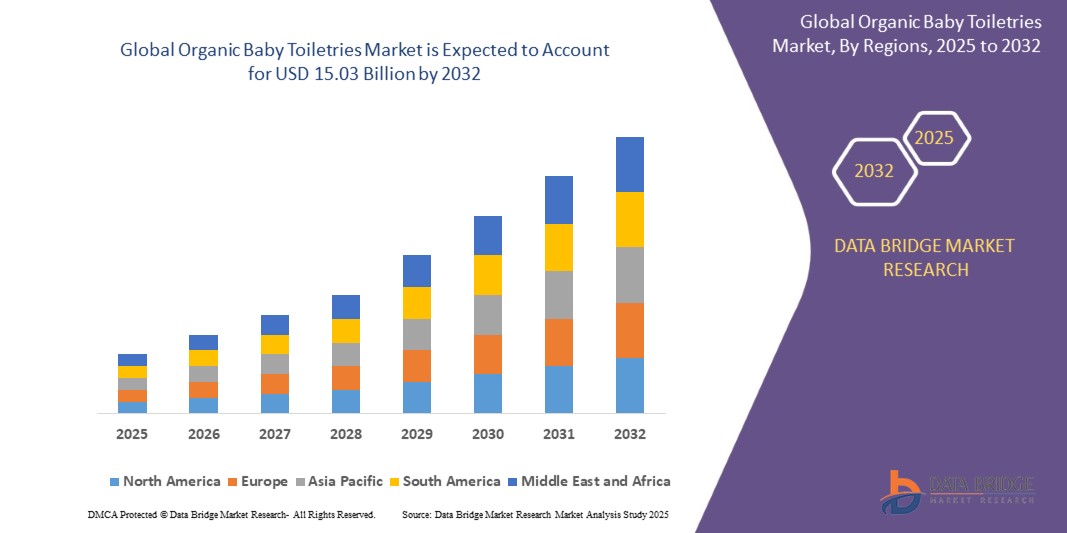
Produits de toilette pour bébés biologiques Taille du marché
- Le marché mondial des produits de toilette pour bébés biologiques a été évalué à8,00 milliards de dollars en 2024et devrait atteindre15,03 milliards de dollars en 2032
- Au cours de la période de prévision de 2025 à 2032, le marché devrait croître àTCAC de 8,20 %,principalement motivée par la sensibilisation des parents aux produits naturels et sans produits chimiques
- Cette croissance est due aux préoccupations croissantes concernant la sensibilité de la peau des nourrissons et à la préférence croissante pour des solutions de remplacement durables et respectueuses de l'environnement.
Analyse du marché des produits de toilette pour bébés biologiques
- Lesmarché des articles de toilette pour bébés biologiquesa gagné en popularité en raison de l'augmentationsensibilisation des parentset de la demande croissantesolutions de soins naturelsqui garantissentsécurité et alimentationpour les nourrissons. Les innovations modernes, telles queformulations végétalesetemballages biodégradables, ont rendu les soins biologiques pour bébés plus accessibles, ce qui a favorisé l'expansion du marché dans différentes régions
- La demande deArticles de toilette pour bébés biologiquesest fortement motivé par la croissancepréférence pour les produits sans produits chimiques, augmentation des cas deSensibilité de la peau des nourrissons, et l'expansion detendances parentales éco-consciencesmondial
- L'Amérique du Nord domine le marché, principalement en raison des dépenses de consommation élevéesProduits de soins pour bébés premium, la présence demarques bio de soins de la peau, et un soutien accru pourInnovations durables dans les produits
- Par exemple,États-Unis, la demande d'articles de toilette pour bébés biologiquesa augmenté de façon soutenue, les détaillants signalant une augmentation régulière des ventes dans les segments des produits haut de gamme et du marché de masse. La région continue de stimuler l'innovation, les fabricantspréparations hypoallergéniquesetsoin pour bébé certifié végétalienrépondre aux attentes changeantes des consommateurs
- Au niveau mondial,segment des articles de toilette pour bébés biologiquesse classe parmi les catégories les plus dynamiques ensoins aux bébés, avec des progrès tels queformulations sans eau, probiotique- soin de la peau infuséetemballages recyclablessolutionsjouer un rôle central dans l'expansion du marché
Portée du rapport et segmentation du marché des produits de toilette pour bébés biologiques
| Attributs | Produits de toilette pour bébés biologiques Principales perspectives du marché |
| Segments couverts |
|
| Pays couverts | Amérique du Nord
Europe
Asie-Pacifique
Moyen-Orient et Afrique
Amérique du Sud
|
| Principaux acteurs du marché |
|
| Possibilités de marché |
|
| Infos sur la valeur ajoutée | En plus des renseignements sur les scénarios du marché tels que la valeur du marché, le taux de croissance, la segmentation, la couverture géographique et les principaux intervenants, les rapports de marché établis par Data Bridge Market Research comprennent également une analyse approfondie des experts, une analyse des prix, une analyse des parts de marque, une enquête auprès des consommateurs, une analyse démographique, une analyse de la chaîne d'approvisionnement, une analyse de la chaîne de valeur, une vue d'ensemble des matières premières et des consommables, des critères de sélection des fournisseurs, une analyse PESTLE, une analyse Porter et un cadre réglementaire. |
Tendances du marché des produits de toilette pour bébés biologiques
La demande croissante de produits de soins naturels et fonctionnels pour bébés
- L'une des principales tendances du mondemarché des articles de toilette pour bébés biologiquesest la préférence croissante poursolutions de soins naturels et multifonctionnels, en raison de l'augmentation de la sensibilisation des parentsformulations exemptes de produits chimiques
- Ces innovations comprennent :ingrédients végétauxetemballages biodégradables, assurantsécurité, durabilité et meilleure alimentationpour la peau des nourrissons tout en répondant aux consommateurs éco-conscients
- Par exemple, de nombreux chefs de filemarques de soins aux bébéssont lancésproduits de soins organiques polyvalents, comme les hydratants avec protection solaire etlotions pour bébés infusées de probiotiques, traitant de diverses préoccupations de la peau avec une seule formulation
- Les fabricants intègrent égalementformulations sans eauetsolutions d'emballage recyclables, réduisant l'impact environnemental tout en améliorant la longévité et la convivialité des produits
- Cette tendance transformeindustrie des soins aux bébés, faire des articles de toilette bio plusaccessible, durable et préféré par les parents modernes dans le monde entier
Dynamique du marché des produits de toilette pour bébés biologiques
Chauffeur
Augmentation de la préférence parentale pour les produits pour bébés sans produits chimiques
- Croissancesensibilisation à la sensibilité de la peau infantileet les dommages potentiels causés par les ingrédients synthétiques ont conduit les parents à préférerarticles de toilette pour bébés biologiques et naturels
- La demande denon toxique, hypoallergénique et dermatologiquement testéles produits de soins pour bébés sont en hausse, à mesure que les consommateurs cherchentformulations douces mais efficacesqui assurent le bien-être des nourrissons
- Les organismes de réglementation soutiennentproduits pour bébés sans produits chimiques, pousser les marques à développersolutions de remplacement écologiques et à base végétalequi s'harmonisent avec l'évolution des normes de sécurité
Par exemple,
- En mars 2024,Petit Johnsonélargit sa ligne de soins bio aveclotions à base de plantes et shampooings sans déchirure, répondant à la demande croissante de formulations douces
- En novembre 2023,La société mère.présentéLavage et lotion certifiés biologiques pour bébé, soins aux parents à la recherchesoins naturels sans toxinespour nourrissons
- En juillet 2023,Mustelalancé songel nettoyant éco-conçu, fabriqués avecingrédients biodégradables, renforçant le déplacement verssolutions durables de soins aux bébés.
- Avecla sécurité et la durabilité, lesmarché des articles de toilette pour bébés biologiquesOn s'attend à ce que la croissance se poursuive et que l'innovation se poursuive.produits pour bébés naturels et sans produits chimiques
Possibilités
Élargissement de la présence au détail et du commerce électronique pour les articles de toilette pour bébés biologiques
- La disponibilité croissante deArticles de toilette pour bébés biologiquesparmarchés en ligne, magasins spécialisés et grandes chaînes de vente au détailcrée des possibilités de croissance importantes
- Les marques tirent partimodèles direct au consommateur (DTC), services d'abonnement et stratégies de marketing numérique pour améliorer la portée et la fidélité de la marque
- La montéeemballages durables et lignes de produits rechargeablesattire davantage les consommateurs éco-conscients, favorisant l'expansion du marché
Par exemple,
- En février 2024,Société honnêteen partenariat avec d'importants détaillantsWalmart et Ciblepour étendre la présence en magasin degamme de soins biologiques pour bébés, en renforçant l'accessibilité
- En septembre 2023,Terre Mama biologiquelancé uneplateforme dédiée au commerce électronique, permettant la vente directe de sesarticles de toilette pour bébés à base de plantestout en offrant des rabais basés sur l'abonnement
- En juin 2023,Pipette bébéprésenté unforfait exclusif en ligne, promouvoirles produits de soin pour bébés certifiés végétaliens et EWGaux premiers consommateurs numériques
- Avecinfluence croissante du commerce électronique et de l'expansion du commerce de détail, lesmarché des articles de toilette pour bébés biologiquesest censé connaître une croissance soutenue,Amélioration de l'accessibilité, de la commodité des consommateurs et des stratégies d'engagement numérique
Restriction/Défi
Coûts de production élevés et sensibilité aux prix chez les consommateurs
- L'utilisationingrédients biologiques de première qualité, des emballages écologiques et des méthodes de production durables augmentent considérablementCoûts de fabrication, faireArticles de toilette pour bébés biologiquesplus cher que les alternatives classiques
- La sensibilité aux prix reste un défi, car de nombreux consommateurs, en particuliermarchés soucieux des prix, hésitez à payer une prime pourproduits de soins naturels pour bébésmalgré leurs avantages
- Sensibilisation limitée des consommateursidées fausses sur les certifications biologiquesune adoption plus lente, exigeant des marques d'investir massivement dansÉducation et marketing
Par exemple,
- En janvier 2024,Bébésa dûréviser sa stratégie de tarificationaprès avoir fait face à la résistance des consommateurs soucieux du budget, en introduisant des emballages plus petits et abordables
- En octobre 2023,Le bébé des abeillesa élargi sa gamme de produits avecgamme de soins bio de milieu de gamme, la restauration à un public plus large sans compromettre la qualité des ingrédients
- En mai 2023,Mamaerrelancé unCampagne éducativesoulignant les avantages deArticles de toilette pour bébés biologiques, s'attaquer au scepticisme des consommateurs et justifier la fixation des prix à la hausse
- Avecdes coûts limitant l'adoption de masse, les entreprises doivent équilibrerabordable et durable, assurantArticles de toilette pour bébés biologiquesrester accessible tout en maintenantqualité des produits et approvisionnement éthique
Portée du marché des articles de toilette pour bébés biologiques
Le marché est segmenté en fonction du produit, du canal de distribution, des formulations et de l'utilisateur final.
| Segmentation | Sous-segmentation |
| Par produit |
|
| Par canal de distribution |
|
| Par formulation |
|
| Par Utilisateur final |
|
Marché des produits de toilette pour bébés biologiques Analyse régionale
L'Amérique du Nord est la région dominante du marché biologique des produits de toilette pour bébés.
- Amérique du Norddétient la plus grande part du marché mondialArticles de toilette pour bébés biologiquesle marché, sous l'impulsion de la sensibilisationingrédients naturels, augmentation de la demandeformulations exemptes de produits chimiques, et une préférence croissante pourproduits pour bébés écologiques
- LesÉtats-UnisL'intérêt des consommateurs poursoin de la peau biologique, un réseau bien établi demagasins spécialisés pour bébés, et des investissements croissants dansfabrication durable
- La disponibilitéformulations hypoallergéniques, y comprislingettes à base de plantesetcouches biodégradables, a contribué à l'expansion du marché
- En outre, les préoccupationssensibilité de la peau, augmentation des ventes parPlateformes de commerce électronique, et l'influence croissanteendossements de célébritéscontribuer à la croissanceArticles de toilette pour bébés biologiquesmarché en Amérique du Nord
L'Asie-Pacifique devrait enregistrer le taux de croissance le plus élevé.
- Asie-Pacifiqueest prévu pour assister au plus hautTCACdans lesArticles de toilette pour bébés biologiquesle marché, sous l'impulsion de la sensibilisationsoins pour bébés, augmentation de la demandeproduits pour bébés sans produits chimiques, et une préférence croissante pouremballages durables
- Pays tels queChine, Japon et Indesont à la tête du marché en raison de l'intérêt marqué des consommateurs pourformulations organiques, l'expansion de la distribution de détail et l'influence detendances des parents sur les médias sociaux
- La croissance rapidePlateformes de commerce électronique, ainsi que des innovations continues dansingrédients végétaux, accélère encore l' expansion du marché
- En outre, des initiatives gouvernementalessanté infantile, augmentation des investissements dansdéveloppement de produits naturels, et adoption croissante dearticles de toilette pour bébés hypoallergéniquescontribuent au développement rapide deArticles de toilette pour bébés biologiquesmarché à traversAsie-Pacifique
Le paysage concurrentiel du marché fournit des détails par concurrent. Les détails inclus sont l'aperçu de l'entreprise, les finances de l'entreprise, les revenus générés, le potentiel du marché, les investissements dans la recherche et le développement, les nouvelles initiatives du marché, la présence mondiale, les sites et installations de production, les capacités de production, les forces et faiblesses de l'entreprise, le lancement de produits, la largeur et l'étendue du produit, la domination de l'application. Les données ci-dessus fournies ne sont liées qu'à la concentration des entreprises sur le marché.
Les principaux leaders du marché sont :
- Terre Mama (États-Unis)
- California Baby (États-Unis)
- Natures Baby Organics (États-Unis)
- The Honest Company, Inc. (États-Unis)
- Personnes vertes (Royaume-Uni)
- Ayablu Incorporated (États-Unis)
- LittleTwig (États-Unis)
- ERBAVIVA (États-Unis)
- Babyganics (États-Unis)
- Charlie Banana (Hong Kong)
- Septième génération Inc. (États-Unis)
- Burt's Bees (États-Unis)
- Avalon Natural Products, Inc. (États-Unis)
- Procter et Gamble (États-Unis)
- Weleda (Suisse)
- Kenvue Brands LLC (États-Unis)
- Cotton Babies, Inc. (États-Unis)
- CeraVe (États-Unis)
- Hedgehog de coco (Royaume-Uni)
- Laboratoires Expanscience (France)
Derniers développements sur le marché mondial des produits de toilette pour bébés biologiques
- En novembre 2024,Le groupe Good Glamma achevé l'acquisition complète deLa société mère., finalisant sa participation majoritaire initialement acquise en 2021. Cela marque la sortie complète de la société, les fondateurs et les investisseurs, bien que les détails financiers de la transaction restent non divulgués
- En août 2024,Bébé Nalalancéà Sainsbury, apportant sa gamme de soins pour nourrissons entièrement recyclables, approuvée par le dermatologue, approuvée par le pédiatre, sans cruauté. La marque augmente rapidement sa présence dans les grandes chaînes de vente au détail britanniques
- En janvier 2024,PureBornélargi dansEurope, renforçant sa présence grâce à un partenariat avec le distributeur suisse Laboratoire Naturel. L'entreprise, connue pour ses couches hypoallergéniques composées jusqu'à 43% de bambou organique, a introduit un site européen dédié avec des portails spécifiques à chaque pays pour l'accessibilité sans soudure des produits
- En octobre 2023,Babe de bouleauprésentéla collection Birch Baby, comprenant trois produits de soin pour nourrissons entièrement naturels, végétaliens et sans parfum, fabriqués avec des ingrédients biologiques. En outre, 1% des ventes de cette gamme soutiendra la Fondation David Suzuki, renforçant l'engagement de la marque à la durabilité
- En août 2023,Terralancé dontcouches et lingettes végétales haut de gamme aux États-Unis et au Canada, offrant 85 % de matériaux à base végétale avec une absorption à 360 degrés et plus de 12 heures de protection contre l'humidité
SKU-
Accédez en ligne au rapport sur le premier cloud mondial de veille économique

- Tableau de bord d'analyse de données interactif
- Tableau de bord d'analyse d'entreprise pour les opportunités à fort potentiel de croissance
- Accès d'analyste de recherche pour la personnalisation et les requêtes
- Analyse de la concurrence avec tableau de bord interactif
- Dernières actualités, mises à jour et analyse des tendances
- Exploitez la puissance de l'analyse comparative pour un suivi complet de la concurrence
Méthodologie de recherche
La collecte de données et l'analyse de l'année de base sont effectuées à l'aide de modules de collecte de données avec des échantillons de grande taille. L'étape consiste à obtenir des informations sur le marché ou des données connexes via diverses sources et stratégies. Elle comprend l'examen et la planification à l'avance de toutes les données acquises dans le passé. Elle englobe également l'examen des incohérences d'informations observées dans différentes sources d'informations. Les données de marché sont analysées et estimées à l'aide de modèles statistiques et cohérents de marché. De plus, l'analyse des parts de marché et l'analyse des tendances clés sont les principaux facteurs de succès du rapport de marché. Pour en savoir plus, veuillez demander un appel d'analyste ou déposer votre demande.
La méthodologie de recherche clé utilisée par l'équipe de recherche DBMR est la triangulation des données qui implique l'exploration de données, l'analyse de l'impact des variables de données sur le marché et la validation primaire (expert du secteur). Les modèles de données incluent la grille de positionnement des fournisseurs, l'analyse de la chronologie du marché, l'aperçu et le guide du marché, la grille de positionnement des entreprises, l'analyse des brevets, l'analyse des prix, l'analyse des parts de marché des entreprises, les normes de mesure, l'analyse globale par rapport à l'analyse régionale et des parts des fournisseurs. Pour en savoir plus sur la méthodologie de recherche, envoyez une demande pour parler à nos experts du secteur.
Personnalisation disponible
Data Bridge Market Research est un leader de la recherche formative avancée. Nous sommes fiers de fournir à nos clients existants et nouveaux des données et des analyses qui correspondent à leurs objectifs. Le rapport peut être personnalisé pour inclure une analyse des tendances des prix des marques cibles, une compréhension du marché pour d'autres pays (demandez la liste des pays), des données sur les résultats des essais cliniques, une revue de la littérature, une analyse du marché des produits remis à neuf et de la base de produits. L'analyse du marché des concurrents cibles peut être analysée à partir d'une analyse basée sur la technologie jusqu'à des stratégies de portefeuille de marché. Nous pouvons ajouter autant de concurrents que vous le souhaitez, dans le format et le style de données que vous recherchez. Notre équipe d'analystes peut également vous fournir des données sous forme de fichiers Excel bruts, de tableaux croisés dynamiques (Fact book) ou peut vous aider à créer des présentations à partir des ensembles de données disponibles dans le rapport.











