


Global Anthrax Treatment Market Segmentation, By Type (Cutaneous Anthrax, Pulmonary Anthrax and Intestinal Anthrax), Route of Administration (Oral, Parenteral and Others), End User (Government Organization, Hospitals, Academic and Research Institutes and Others) - Industry Trends and Forecast to 2033
Anthrax治療市場規模と成長率は何ですか
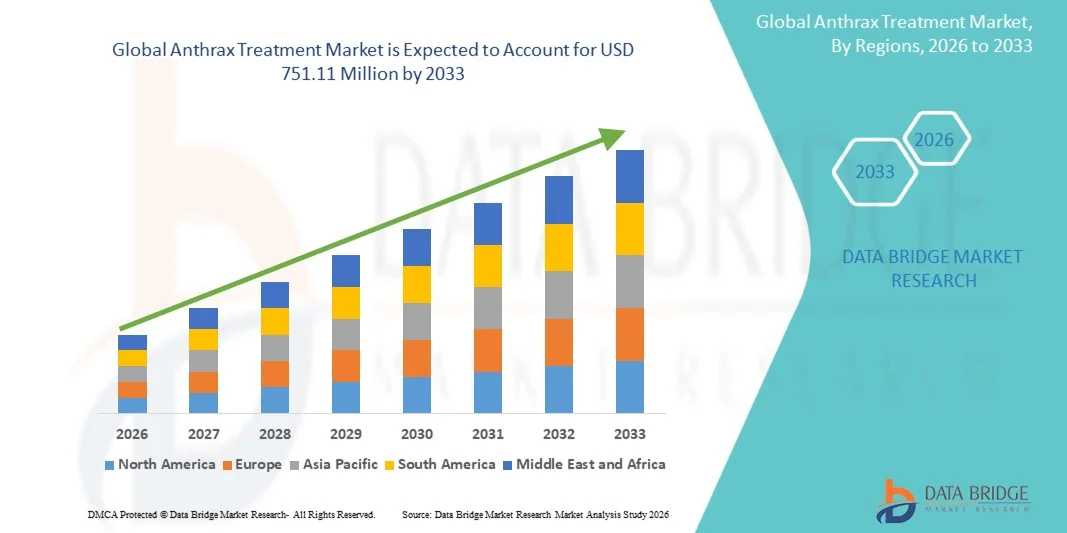
- データブリッジ市場調査分析により、世界規模のアンスラックス処理市場規模が評価されました2025年のUSD 450.45百万そして到達する予定米ドル 751.11 百万 によって 2033, お問い合わせ6.6%のCAGR予報期間中
- 市場成長は、人間と家畜の両方でanthrax感染の蔓延を増加させることによって主に駆動され、タイムリーな診断と治療に関する高度意識と相まっています。 抗菌療法およびワクチンの急速な進歩はより有効な処置の選択の拡大に貢献しています
- また、政府の取り組み、公衆衛生プログラム、およびアントラークス管理の先進的なバイオロジカルおよび抗生物質に対する需要の増加は、市場位置を強化しています。 これらの組み合わせ要因は、革新的なアンスラックス療法の採用を加速しています, これにより、業界の成長を著しく向上します
市場規模と予測
- グローバル市場価値 (2025):米ドル 450.45 百万
- 期待される市場価値 (2033):米ドル 751.11 百万
- 予測CAGR (2026–2033):6.6%
Anthrax治療市場の主要なテイクアウトは何ですか
- 抗生物質、抗トキシン、ワクチンを含むアントラックス治療は、重度の合併症や肥大症を予防する効果による公衆衛生の安全性と生体防衛の準備に重要な役割を果たし、ヒトや家畜のBacillus anthracis感染症を管理するために不可欠です
- アントラックス治療のエスカレート要求は、主に燃料を補給し、バイオテロリズム脅威、急激な診断およびタイムリーな治療介入を促進する黄道帯感染症および政府のイニシアティブの上昇の発生
- 北アメリカは、2025年に38.7%の最大の収益シェアを持つアンスラックス治療市場を支配しました。特に米国では、政府と民間のコラボレーションが治療のアクセシビリティとイノベーションを強化する、先進のバイオロジックの早期採用、および主要な製薬会社による研究開発における重要な投資を主導しています。
- アジア・パシフィックは、畜産の生産増加による予測期間におけるアンスラックス治療市場で最も急速に成長する地域であり、アンスラックスの発生の可能性を高め、インドや中国などの国における医療システムを強化することを期待しています。
- カタンス・アンスラックス・セグメントは、2025年に42.5%のシェアで市場を支配し、ヒト・アンスラックスの症例と確立された治療プロトコルの可用性を高める
レポートスコープとAnthrax処理市場セグメンテーション
|
アトリビュート |
Anthraxの処置のキー マーケットの洞察 |
|
カバーされる区分 |
|
|
カバーされた国 |
北アメリカ
ヨーロッパ
アジアパシフィック
中東・アフリカ
南米
|
|
主要市場プレイヤー |
|
|
マーケットチャンス |
|
|
付加価値データインフォセットを追加 |
市場価値、成長率、セグメンテーション、地理的カバレッジ、主要なプレーヤーなどの市場シナリオに関する洞察に加えて、Data Bridge Market Researchがキュレーションした市場レポートには、詳細なエキスパート分析、患者疫学、パイプライン分析、価格設定分析、規制フレームワークも含まれています。 |
Anthrax治療市場の重要な傾向は何ですか
「バイオロジックとコンビネーションセラピーの進歩」
- 世界的なanthrax治療市場での有意で加速傾向は、新しい生物学的製剤、アンチトキシン、およびコンビネーション療法の開発であり、Bacillus anthracis感染症の生存率と治療効力を改善しています。
- 例えば、raxibacumab のようなモノクローナル抗体療法は、標準と一緒にますます採用されています抗生物質anthrax の毒素のターゲットにされた中和を提供し、忍耐強い結果を高めるため
- コンビネーション療法は、吸入および全身の形態の解剖学的形態に対処する治療プロトコルを可能にし、暴露人口における死亡率と合併症を軽減します。
- 研究の努力は、これらの生物学の安定性、貯蔵寿命、および急速な配置性の改善に重点を置いています。これは、生テロ症のシナリオにおける質量予防のために不可欠です。
- より効果的で多機能のanthrax療法に対するこの傾向は治療基準を再構築し、Emergent BioSolutionsなどの製薬企業が次世代抗トキシンおよびワクチンソリューションを進化させるよう求めています
- 政府やヘルスケアプロバイダーが、フラックス曝露に対する効果的な対策を優先するにつれて、革新的なバイオロジカルとコンビネーション療法の需要は、市民と防衛セクターの両方で急速に成長しています。
- 例えば、急速診断プラットフォームを備えた次世代のアンスラックスワクチンの統合により、早期の介入とより優れた患者のアウトブレイクシナリオ
- バイオテクノロジー企業と政府機関の連携を強化し、耐性バシラスアスラシス株を標的とする新たな治療薬の開発を加速
Anthrax 治療市場ダイナミクス
ドライバー
「BioterrorismとZoonotic Risksの意識を高める」
- 畜内の生体テロの脅威と黄道帯疾患としてのアンスラックスの上昇意識は、ワクチン、抗生物質、抗トキシンに対する高まる需要のための重要なドライバーです
- たとえば、2025年3月、米国保健省と人保健省は、緊急の準備を強化するために、追加の整形剤と戦略的な国民の株式の拡大を発表しました
- 公衆衛生機関は早期の検出および時機を得た処置を強調するので、ヘルスケア提供者はanthraxの治療薬を積極的に貯蔵し、管理します
- アジア・パシフィックなどの地域における畜産産産および関連するアンスラックス発生の拡大が求められる予防ワクチンそして処置の議定書
- 政府主導の意識プログラムと生体防衛の取り組みは、国民の健康安全保障戦略の重要なコンポーネントを作ることです
- 増加する生体テロ症の調製と黄道帯疾患管理の組み合わせは、商業および政府のセグメント間で市場成長を強力に推進しています。 例えば、家畜の適切な取り扱いや症状の早期報告に関する教育キャンペーンは、予防接種対策の採用を行っています。
- 国際保健機関と地方政府間の連携が促進され、リスクの高い地域でのアントラックス治療の迅速化とアクセシビリティが向上
- たとえば、ワクチンメーカーとNGOとのパートナーシップにより、農村地域で突然の発生時にワクチンの迅速な展開が可能
- 新興国における国内株式プログラムの拡大は、解剖治療および関連医療サービスの市場需要を増加させる
拘束/チャレンジ
「高い治療コストと規制のハードル」
- モノクローナル抗体やコンビネーション療法を含む先進的なアンスラックス治療の高コストは、開発と価格に敏感な地域における幅広い採用への大きな障壁をポーズします
- たとえば、raxibacumab または anthrax ワクチンへのアクセスは、低所得国における価格設定、規制当局の承認、および分布の課題のために制限することができます
- 臨床試験、緊急使用承認、および安全性試験のための厳格な規制要件は、市場への新しい治療法の導入を遅くします
- アンチトキシンとワクチンの限られた製造能力は、突然の発生状況で供給を抑制することができ、タイムリーなアクセスに影響を与える
- 政府のストックピリングプログラムが不足を緩和するのに役立ちますが、革新的なアントラックス治療の比較的優れたコストは、病院や小規模な医療プロバイダーによる採用を妨げる可能性があります
- コストの最適化、規制経路の合理化、生産能力の増大は、持続的な市場拡大に不可欠です。 たとえば、ワクチンのWHO認証を取得する遅延は、破壊的な地域で国際分布を遅くすることができます
- 先進的なアンスラックス療法のための有能な償還方針および限られた保険の補償は、特に先進国における患者のアクセスを制限することができます
- 例えば、複雑な輸入輸出規制は、緊急時の重要なアントラックスアンチトキシンの配送を遅らせることができます
- 適切な管理プロトコルに関する農村医療プロバイダ間の限られた意識は、治療の有効性を低下させ、市場浸透を遅くする可能性があります
Anthrax治療市場はどのように区分されますか
市場はタイプ、管理の経路、およびエンド ユーザーに基づいてセグメント化されます。
- タイプ別
種類に基づいて、アントラックス治療市場は、カタン系アントラックス、肺アントラックス、および腸内アントラックスに分けられます。 カタンス・アントラックス・セグメントは、2025年に42.5%の最大の市場収益シェアで市場を支配し、ヒト・アントラックス感染におけるカタンス症例の高優先度を占めています。 カタンス・アンスラックスは、他の形態と比較して検出し、治療が容易で、ヘルスケアプロバイダーや公衆衛生への取り組みの第一次焦点となっています。 抗生物質を使用した標準的な治療プロトコルは、このタイプのために十分に確立され、予測可能な患者結果を保証します。 また、農家、獣医師、農村のコミュニティをターゲットとする意識キャンペーンは、早期の診断と治療に貢献し、市場の需要を後押ししています。 予防接種ワクチンおよび補助療法の可用性により、このセグメントの位置をさらに強化します。
2026年から2033年までの最も速い成長率を目撃するPulmonary Anthraxの区分は生物テロ症および吸入性の暴露の危険に対する懸念を高めることによって運転されます。 肺のanthraxは、最も厳しい形態である、抗生物質と一緒にモノクローナル抗体や組み合わせ治療などの高度な療法を要求します。 抗トキシンの生体防衛プログラム、迅速な診断ツール、および政府の証券化へのライジング投資は、肺フラックスの治療の採用を燃料化しています。 病院や防衛機関における世界的な意識と準備の取り組みは、需要を加速しています。 さらに、特に吸入型アンスラックスを標的とする新規抗トキシン療法の研究は、このセグメントにおけるさらなる成長を促進し、大きな注目を集めています。
- 行政のルートで
管理の経路に基づいて、anthrax治療市場は、経口、ペアラル、その他に分けられます。 経口セグメントは、2025年に46.1%の最大の市場収益シェアを保持しました。主に、大量暴露シナリオにおける後露の予防接種と管理の容易さのために便利です。 経口抗生物質は、カタンスおよび吸入性鼻炎症の症例の両方に広く使用され、多くの場合、国民の緊急予約で貯蔵されます。 口腔投薬のシンプルさ、幅広い可用性と手頃な価格の相まって、その優位性に貢献します。 経口投与はまた、外来治療プロトコルをサポートし、アウトブレイク中にコミュニティレベルの応答を高速化します。
パーシャルセグメントは、2026年から2033年まで最速のCAGRを目撃し、重度のアントラックス症例、特に肺および全身感染の重要な役割を担っています。 静脈内または筋肉内投与により、抗トキシンおよび抗生物質のより高いバイオアベイラビリティを可能にし、急性症を必要とする症例に不可欠です。 病院化の上昇と、生体テロや破壊イベントの急激な治療介入の必要性は、育児療法の採用を加速しています。 また、モノクローナル抗体や支持的なバイオロジックなど、親子で提供したコンビネーション療法は、重度のアントラックス管理の有効性によるトラクションを獲得しています。
- エンドユーザーによる
エンドユーザーをベースに、政府機関、病院、学術機関、研究機関等にアンスラックス治療市場を区分しています。 病院は2025年に50.3%のシェアを持つ市場を支配しました、それらは急性のanthraxの箱のための第一次処置の中心として機能し、抗生物質および抗トキシンの必須のstockpilesを維持します。 病院はまた、後露光予防接種、重度の感染症の管理、および組み合わせ療法の管理において重要な役割を果たしています。 ヘルスケアプロバイダー間でのアンスラックス症状の増大と緊急対応プロトコルのトレーニングの増加により、病院のセグメントをさらにサポートします。
政府機関は、2026年から2033年までの最も速い成長率を目撃し、戦略的な国民の証券化プログラムおよび生物防衛の取り組みによって運転されることを期待しています。 政府は、バイオテロリズムの脅威を軽減するためにワクチン、抗トキシン、緊急対応策にますます投資しています。 政府と民間のバイオテクノロジー企業間の協業プログラムは、研究、株式の取得、および迅速な展開の需要が高まっています。 さらに、高リスク地域におけるアンスラックス調製のための国際パートナーシップと助成金は、政府組織の重要かつ急速に拡大するエンドユーザーセグメントを加速しています。
Anthrax治療市場の最大の株式を保持する地域は
- 北アメリカは2025年に38.7%の最大の収益シェアを持つアンスラックス治療市場を支配し、確立された医療インフラ、戦略的ストックピリングプログラム、高度なバイオロジックの早期採用、および主要な製薬会社による研究開発における重要な投資を主導しました
- 抗生物質、ワクチン、抗トキシンの早期発見、迅速な治療、緊急のストックピリングを優先する地域におけるヘルスケアプロバイダーおよび政府機関は、アントラックス症のタイムリーな管理を保証します
- この広範囲にわたる採用は、強力な研究開発投資、公共部門と民間部門間のコラボレーション、および生体テロ症および黄道帯疾患リスクに関する啓発プログラムによってさらに支持され、市民と防衛部門の両方における国民の健康安全保障戦略の重要な構成として、anthrax治療を確立しています
米国Anthrax治療市場インサイト
米国アントラックス治療市場は、北米で最大79%の売上高を占め、バイオ防衛準備のための強力な政府の取り組みとワクチン、抗生物質、および抗トキシンの戦略的蓄積によって燃料を供給しました。 ヘルスケアプロバイダーは、特に高リスクゾーンおよび研究所において、急激な診断と治療を優先します。 黄道帯感染症の上昇意識と相まって、バイオテロ症の調製に成長する焦点は、先進的な治療法の需要を促進しています。 また、連邦政府機関と民間製薬会社とR&Dおよび緊急流通の連携により、市場拡大を推進しています。 確立された医療インフラおよび高度の処置の議定書の存在は破壊の間に治療の時機を得た管理を保障します。
ヨーロッパのAnthraxの処置の市場洞察
欧州のanthrax治療市場は、厳しい公衆衛生規則によって駆動され、黄道帯および職業上のリスクの認知度が高まっています。 病院や研究機関における先進の抗生物質、ワクチン、抗トキシンの採用が高まっています。 欧州諸国は、生物学的脅威に対する調製性を強調し、ストックピリングプログラムを強化し、新規抗トキシンの研究を支援しています。 また、畜産のアンスラックスの上昇前因性は、農業および獣医セクターにおける予防措置と相まって、市場の採用を加速しています。 公衆衛生ネットワークにおける診断および治療戦略の統合により、地域の対応能力を強化します。
U.K. Anthrax治療市場インサイト
英国アンスラックス治療市場は、政府主導のバイオ防衛プログラムによって駆動され、家畜および実験室の設定におけるアンスラックスリスクの認識を高めるために、予測期間中に注目すべきCAGRで成長することを期待しています。 公衆衛生機関は、予防接種、予防接種、抗生物質管理、迅速な介入プロトコルを積極的に推進しています。 病院、学術機関、政府機関とのコラボレーションと相まって、引き続き市場成長を支え続けることが期待されています。 潜在的な生物学的脅威に対する緊急対応計画における投資の上昇は、アントラックス治療の採用を促します。 U.K.は、まれに高影響力のある感染に対する準備に重点を置いています。
ドイツ Anthrax 治療市場 Insight
ドイツのアントラックス治療市場は、予測期間中にかなりのCAGRで拡大することが期待されています, 農業や実験室の設定における生物テロリスクや職業曝露の意識を高めることによって燃料を供給しました. ドイツは、予防対策と緊急の調製に重点を置いた、先進医療システムと組み合わせ、整形外科の広範な採用をサポートしています。 ワクチンや抗トキシンに対する病院、研究機関、政府のストックパイリングプログラムの市場需要。 また、バイオセーフティ、病気のモニタリング、迅速な介入を促進する取り組みは、治療のアクセシビリティを強化しています。 全国緊急対応戦略への高度治療の統合により、市場をさらに強化します。
Asia-Pacific Anthrax 治療市場 洞察
2026年から2033年までの予測期間において、アジア・パシフィック・アンスラックス・トリートメント・マーケットは、アスラックス・アウトブレイクの普及、中国、インド、日本などの国における医療システムの強化に取り組みます。 病気の予防と迅速な対応プログラムのための政府の取り組みは、市場採用をサポートしています。 医薬品製造能力を拡充し、ワクチンや抗トキシンの可用性と有用性を高めています。 また、医療提供者、獣医師、農村コミュニティの認知度を高め、予防措置の取組を加速しています。 株式の取得および迅速な分配のための公的および民間部門間の戦略的コラボレーションにより、市場成長を促進します。
ジャパン・アントラックス・トリートメント・マーケット・インサイト
先進医療インフラ、バイオ防衛準備、感染症管理のための厳格な規制プロトコルに重点を置いた日本アンスラックス治療市場は、先進的な医療インフラにより勢いを上げています。 日本市場は、ワクチンや抗トキシンの急な診断、予防処置、緊急治療を強調しています。 病院および研究施設の高度の診断および治療の解決の統合は成長を運転しています。 また、農業や研究室の分野における公衆衛生意識のプログラムや準備の取り組みは、早期の介入を促します。 次世代のアンチトキシンやコンビネーションセラピスの導入を支える医療・バイオロジス開発における日本の技術力。
インド Anthrax 治療市場 Insight
2025年にアジア・パシフィックで最大の市場収益シェアを占めるインド・アンスラックス・トリートメント・マーケットは、畜産養殖、頻繁なアンスラックス・アウトブレイクの増加、疾病予防および制御のための政府の取り組みの増加に因しました。 インドでは、農村医療インフラと予防接種プログラムの普及が進んでいます。 先進の抗生物質、抗トキシン、ワクチンの採用は、公共および民間病院で増加しています。 また、農家や獣医師を対象とする認知キャンペーンは早期発見やタイムリーな治療を推進しています。 医薬品製造能力を拡充し、ストックピリングと迅速な導入のための政府支援と組み合わせ、インドにおける市場成長を推進する重要な要因です。
Anthrax治療市場でトップ企業は
Anthraxの処置の企業は主に下記のものを含んでいる十分に確立された会社によって、導きます:
- Emergent BioSolutions Inc.(米国)
- Elusys Therapeutics, Inc.(米国)
- ポルトンバイオ医薬品リミテッド(米国)
- Pfizer Inc.(米国)
- バイエルAG(ドイツ)
- サンオフィ(フランス)
- サン製薬工業株式会社(インド)
- Soligenix, Inc.(米国)
- Teva Pharmaceutical Industries Ltd.(イスラエル)
- 武田薬品工業株式会社(日本)
- アルベビック医薬品株式会社(インド)
- ルパンリミテッド(インド)
- 株式会社パラテック医薬品(米国)
- Altimmune, Inc.(米国)
- Hikmaの薬剤PLC (イギリス)
- CSL Seqirus (オーストラリア)
- Bharat Biotech International Ltd.(インド)
- 株式会社ノバックス(米国)
- Panacea Biotec Ltd.(インド)
- 株式会社トニックス医薬品ホールディング(米国)
Anthrax治療市場で最新の開発は何ですか
- 2025年9月、エマージェントバイオソリューションズは、2026年初頭に計画された配送でCYFENDUS®のアントラックスワクチンの用量を引き続き供給し、米国医療対策株式のさらなる強化に取り組みました。
- 2025年1月、Emergent BioSolutionsは、米国防総省の防衛省にBioThrax®(Anthrax Vaccine Adsorbed)を米国に供給する200万ドルの契約オプションのUSD 20百万の契約オプションの演習を発表しました。サービスメンバー間での予防接種予防接種の脅威に対する軍事的信頼性を強化
- 2024年12月、米国Biomedical Advanced Research and Development Authority(BARDA)は、CYFENDUS®(Anthrax Vaccine Adsorbed、Adjuvanted)のさらなる用量を調達するために、Emergent BioSolutionに50万ドルの契約オプションを授与しました。
- 2024年9月、米国CDCおよびルイジアナ州保健省は、モノクローナル抗体抗体抗トキシンオビルトキサキシマブのまれな臨床使用を報告し、ウェルダーのアントラックスの重症例をうまく治療し、承認されたアントラックス抗トキシンの現実世界治療アプリケーションを実証
- 2023年11月、BARDAは、新たにFDA承認されたCyfendus anthraxワクチンの追加用量のための緊急バイオソリューションとの既存の合意に基づく75万ドルのオプションを行使し、2023承認後の主要な連邦調達に署名しました
SKU-
世界初のマーケットインテリジェンスクラウドに関するレポートにオンラインでアクセスする
- インタラクティブなデータ分析ダッシュボード
- 成長の可能性が高い機会のための企業分析ダッシュボード
- カスタマイズとクエリのためのリサーチアナリストアクセス
- インタラクティブなダッシュボードによる競合分析
- 最新ニュース、更新情報、トレンド分析
- 包括的な競合追跡のためのベンチマーク分析のパワーを活用
調査方法
データ収集と基準年分析は、大規模なサンプル サイズのデータ収集モジュールを使用して行われます。この段階では、さまざまなソースと戦略を通じて市場情報または関連データを取得します。過去に取得したすべてのデータを事前に調査および計画することも含まれます。また、さまざまな情報ソース間で見られる情報の不一致の調査も含まれます。市場データは、市場統計モデルと一貫性モデルを使用して分析および推定されます。また、市場シェア分析と主要トレンド分析は、市場レポートの主要な成功要因です。詳細については、アナリストへの電話をリクエストするか、お問い合わせをドロップダウンしてください。
DBMR 調査チームが使用する主要な調査方法は、データ マイニング、データ変数が市場に与える影響の分析、および一次 (業界の専門家) 検証を含むデータ三角測量です。データ モデルには、ベンダー ポジショニング グリッド、市場タイムライン分析、市場概要とガイド、企業ポジショニング グリッド、特許分析、価格分析、企業市場シェア分析、測定基準、グローバルと地域、ベンダー シェア分析が含まれます。調査方法について詳しくは、お問い合わせフォームから当社の業界専門家にご相談ください。
カスタマイズ可能
Data Bridge Market Research は、高度な形成的調査のリーダーです。当社は、既存および新規のお客様に、お客様の目標に合致し、それに適したデータと分析を提供することに誇りを持っています。レポートは、対象ブランドの価格動向分析、追加国の市場理解 (国のリストをお問い合わせください)、臨床試験結果データ、文献レビュー、リファービッシュ市場および製品ベース分析を含めるようにカスタマイズできます。対象競合他社の市場分析は、技術ベースの分析から市場ポートフォリオ戦略まで分析できます。必要な競合他社のデータを、必要な形式とデータ スタイルでいくつでも追加できます。当社のアナリスト チームは、粗い生の Excel ファイル ピボット テーブル (ファクト ブック) でデータを提供したり、レポートで利用可能なデータ セットからプレゼンテーションを作成するお手伝いをしたりすることもできます。











