


What is the Anthrax Treatment Market Size and Growth Rate?
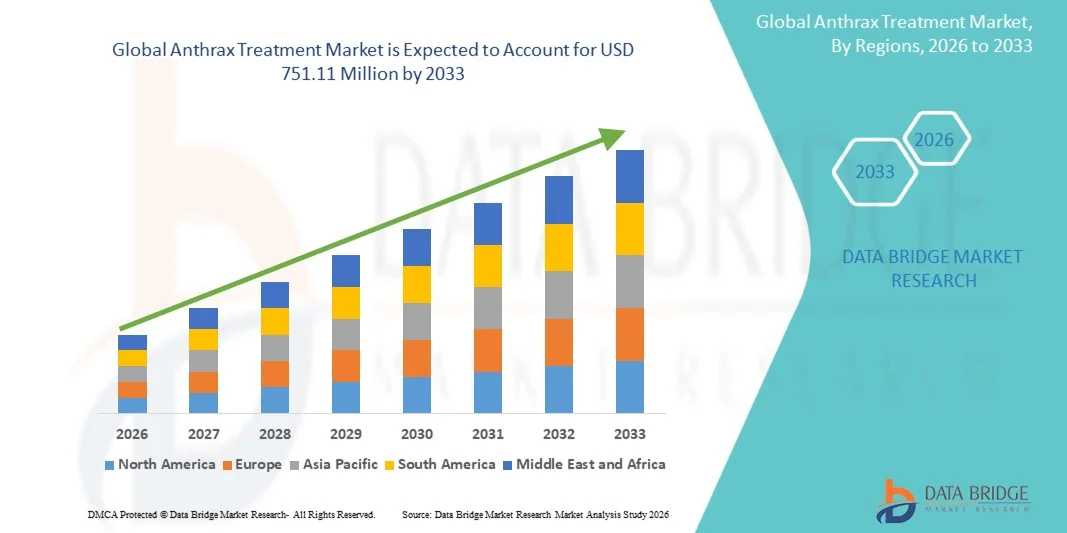
- As per Data Bridge Market Research Analysis the global anthrax treatment market size was valued at USD 450.45 million in 2025 and is expected to reach USD 751.11 million by 2033, at a CAGR of 6.6% during the forecast period
- The market growth is largely driven by increasing prevalence of anthrax infections in both humans and livestock, coupled with heightened awareness regarding timely diagnosis and treatment. Rapid advancements in antimicrobial therapies and vaccines are further contributing to the expansion of effective treatment options
- In addition, government initiatives, public health programs, and rising demand for advanced biologics and antibiotics for anthrax management are strengthening the market position. These combined factors are accelerating the adoption of innovative anthrax therapies, thereby significantly boosting the industry's growth
Market Size & Forecast
- Global Market Value (2025): USD 450.45 million
- Expected Market Value (2033): USD 751.11 million
- Forecast CAGR (2026–2033): 6.6%
What are the Major Takeaways of Anthrax Treatment Market?
- Anthrax treatments, including antibiotics, antitoxins, and vaccines, are critical for managing Bacillus anthracis infections in humans and livestock, playing a vital role in public health safety and biodefense preparedness due to their effectiveness in preventing severe complications and fatalities
- The escalating demand for anthrax treatments is primarily fueled by increasing awareness of bioterrorism threats, rising incidence of zoonotic infections, and government initiatives promoting rapid diagnosis and timely therapeutic intervention
- North America dominated the anthrax treatment market with the largest revenue share of 38.7% in 2025, driven by well-established healthcare infrastructure, strategic stockpiling programs, early adoption of advanced biologics, and significant investments in R&D by key pharmaceutical companies, particularly in the U.S., where government and private collaborations are enhancing treatment accessibility and innovation
- Asia-Pacific is expected to be the fastest growing region in the anthrax treatment market during the forecast period due to rising livestock production, increasing prevalence of anthrax outbreaks, and strengthening healthcare systems in countries such as India and China
- Cutaneous Anthrax segment dominated the market with a share of 42.5% in 2025, driven by its higher incidence among human anthrax cases and the availability of established treatment protocols
Report Scope and Anthrax Treatment Market Segmentation
|
Attributes |
Anthrax Treatment Key Market Insights |
|
Segments Covered |
|
|
Countries Covered |
North America
Europe
Asia-Pacific
Middle East and Africa
South America
|
|
Key Market Players |
|
|
Market Opportunities |
|
|
Value Added Data Infosets |
In addition to the insights on market scenarios such as market value, growth rate, segmentation, geographical coverage, and major players, the market reports curated by the Data Bridge Market Research also include in-depth expert analysis, patient epidemiology, pipeline analysis, pricing analysis, and regulatory framework |
What is the Key Trend in the Anthrax Treatment Market?
“Advancements in Biologics and Combination Therapies”
- A significant and accelerating trend in the global anthrax treatment market is the development of novel biologics, antitoxins, and combination therapies, which are improving survival rates and treatment efficacy for Bacillus anthracis infections
- For instance, monoclonal antibody therapies such as raxibacumab are increasingly being adopted alongside standard antibiotics to provide targeted neutralization of anthrax toxins, enhancing patient outcomes
- Combination therapies are enabling treatment protocols that address both inhalational and systemic forms of anthrax, reducing mortality and complications in exposed populations
- Research efforts are focused on improving stability, shelf life, and rapid deployability of these biologics, which is critical for mass prophylaxis in bioterrorism scenarios
- This trend toward more effective and multifunctional anthrax therapies is reshaping treatment standards, prompting pharmaceutical companies such as Emergent BioSolutions to advance next-generation antitoxin and vaccine solutions
- The demand for innovative biologics and combination therapies is growing rapidly across both civilian and defense sectors, as governments and healthcare providers prioritize effective countermeasures against anthrax exposure
- For instance, integration of next-generation anthrax vaccines with rapid diagnostic platforms allows earlier intervention and better patient outcomes in outbreak scenarios
- Enhanced research collaborations between biotech firms and government agencies are accelerating the development of novel therapeutics targeting resistant Bacillus anthracis strains
Anthrax Treatment Market Dynamics
Driver
“Increasing Awareness of Bioterrorism and Zoonotic Risks”
- The rising awareness of anthrax as a bioterrorism threat and zoonotic disease in livestock is a significant driver for heightened demand for vaccines, antibiotics, and antitoxins
- For instance, in March 2025, the U.S. Department of Health and Human Services announced an expansion of its Strategic National Stockpile with additional anthrax antitoxins to enhance emergency preparedness
- As public health agencies emphasize early detection and timely treatment, healthcare providers are more actively stocking and administering anthrax therapeutics
- Growing livestock production and associated anthrax outbreaks in regions such as Asia-Pacific are increasing demand for prophylactic vaccines and treatment protocols
- Government-led awareness programs and biodefense initiatives are making anthrax treatments an essential component of national health security strategies
- The combination of rising bioterrorism preparedness and zoonotic disease management is strongly propelling market growth across both commercial and government segments. For instance, educational campaigns on proper handling of livestock and early reporting of symptoms are driving adoption of prophylactic anthrax measures
- Increasing collaboration between international health organizations and local governments is facilitating faster distribution and accessibility of anthrax treatments in high-risk areas
- For instance, partnerships between vaccine manufacturers and NGOs enable rapid deployment of vaccines during sudden outbreaks in rural regions
- Expansion of national stockpiling programs in emerging economies is boosting market demand for anthrax treatments and related healthcare services
Restraint/Challenge
“High Treatment Costs and Regulatory Hurdles”
- The high cost of advanced anthrax treatments, including monoclonal antibodies and combination therapies, poses a significant barrier to widespread adoption in both developing and price-sensitive regions
- For instance, access to raxibacumab or anthrax vaccines can be limited due to pricing, regulatory approvals, and distribution challenges in low-income countries
- Stringent regulatory requirements for clinical trials, emergency use authorizations, and safety testing slow down the introduction of new therapies to the market
- Limited manufacturing capacity for antitoxins and vaccines can constrain supply during sudden outbreak situations, impacting timely access
- While government stockpiling programs help mitigate shortages, the relatively premium cost of innovative anthrax treatments can hinder adoption by hospitals and smaller healthcare providers
- Overcoming these challenges through cost optimization, streamlined regulatory pathways, and increased production capacity is essential for sustained market expansion. For instance, delays in obtaining WHO prequalification for vaccines can slow international distribution in outbreak-prone regions
- Inconsistent reimbursement policies and limited insurance coverage for advanced anthrax therapies can restrict patient access, especially in developing countries
- For instance, complex import-export regulations can delay delivery of critical anthrax antitoxins during emergency situations
- Limited awareness among rural healthcare providers regarding proper administration protocols may reduce treatment effectiveness and slow market penetration
How is the Anthrax Treatment Market Segmented?
The market is segmented on the basis of type, route of administration, and end user.
- By Type
On the basis of type, the anthrax treatment market is segmented into Cutaneous Anthrax, Pulmonary Anthrax, and Intestinal Anthrax. The Cutaneous Anthrax segment dominated the market with the largest market revenue share of 42.5% in 2025, owing to the higher prevalence of cutaneous cases among human anthrax infections. Cutaneous anthrax is easier to detect and treat compared to other forms, making it the primary focus of healthcare providers and public health initiatives. Standard treatment protocols using antibiotics are well-established for this type, ensuring predictable patient outcomes. In addition, awareness campaigns targeting farmers, veterinarians, and rural communities have contributed to early diagnosis and treatment, boosting market demand. The availability of prophylactic vaccines and supportive therapies for cutaneous anthrax further strengthens this segment's position.
The Pulmonary Anthrax segment is anticipated to witness the fastest growth rate of 19.8% from 2026 to 2033, driven by increasing concerns over bioterrorism and inhalational exposure risks. Pulmonary anthrax, being the most severe form, demands advanced therapies such as monoclonal antibodies and combination treatments alongside antibiotics. Rising investments in biodefense programs, rapid diagnostic tools, and government stockpiling of antitoxins are fueling the adoption of treatments for pulmonary anthrax. Heightened global awareness and preparedness initiatives in hospitals and defense organizations are accelerating demand. Furthermore, research into novel antitoxin therapies specifically targeting inhalational anthrax is attracting significant attention, further driving growth in this segment.
- By Route of Administration
On the basis of route of administration, the anthrax treatment market is segmented into oral, parenteral, and others. The Oral segment held the largest market revenue share of 46.1% in 2025, primarily due to its convenience for post-exposure prophylaxis and ease of administration during mass exposure scenarios. Oral antibiotics are widely used for both cutaneous and inhalational anthrax cases and are often stockpiled in national emergency reserves. The simplicity of oral dosing, coupled with broad availability and affordability, contributes to its dominant position. Oral administration also supports outpatient treatment protocols, enabling faster community-level response during outbreaks.
The Parenteral segment is expected to witness the fastest CAGR from 2026 to 2033, driven by its critical role in severe anthrax cases, particularly pulmonary and systemic infections. Intravenous or intramuscular administration allows higher bioavailability of antitoxins and antibiotics, essential for acute cases requiring hospitalization. Rising hospitalizations and the need for rapid therapeutic intervention during bioterrorism or outbreak events are accelerating the adoption of parenteral therapies. Moreover, combination therapies delivered parenterally, including monoclonal antibodies and supportive biologics, are gaining traction due to their efficacy in severe anthrax management.
- By End User
On the basis of end user, the anthrax treatment market is segmented into government organizations, hospitals, academic and research institutes, and others. Hospitals dominated the market with a share of 50.3% in 2025, as they serve as primary treatment centers for acute anthrax cases and maintain essential stockpiles of antibiotics and antitoxins. Hospitals also play a key role in post-exposure prophylaxis, management of severe infections, and administration of combination therapies. The growing awareness of anthrax symptoms among healthcare providers and increased training in emergency response protocols further support the hospital segment.
The Government Organizations segment is expected to witness the fastest growth rate from 2026 to 2033, driven by strategic national stockpiling programs and biodefense initiatives. Governments are increasingly investing in vaccines, antitoxins, and emergency response measures to mitigate bioterrorism threats. Collaborative programs between governments and private biotech firms for research, stockpiling, and rapid deployment are boosting demand in this segment. Furthermore, international partnerships and grants for anthrax preparedness in high-risk regions are accelerating growth, making government organizations a critical and rapidly expanding end-user segment.
Which Region Holds the Largest Share of the Anthrax Treatment Market?
- North America dominated the anthrax treatment market with the largest revenue share of 38.7% in 2025, driven by well-established healthcare infrastructure, strategic stockpiling programs, early adoption of advanced biologics, and significant investments in R&D by key pharmaceutical companies
- Healthcare providers and government agencies in the region prioritize early detection, rapid treatment, and emergency stockpiling of antibiotics, vaccines, and antitoxins, ensuring timely management of anthrax cases
- This widespread adoption is further supported by strong R&D investments, collaborations between public and private sectors, and awareness programs on bioterrorism and zoonotic disease risks, establishing anthrax treatments as an essential component of national health security strategies in both civilian and defense sectors
U.S. Anthrax Treatment Market Insight
The U.S. anthrax treatment market captured the largest revenue share of 79% in 2025 within North America, fueled by strong government initiatives for biodefense preparedness and strategic stockpiling of vaccines, antibiotics, and antitoxins. Healthcare providers prioritize rapid diagnosis and treatment of anthrax cases, particularly in high-risk zones and laboratories. The growing focus on bioterrorism preparedness, coupled with rising awareness of zoonotic infections, is driving demand for advanced therapies. Moreover, collaboration between federal agencies and private pharmaceutical companies for R&D and emergency distribution further propels market expansion. The presence of well-established healthcare infrastructure and advanced treatment protocols ensures timely administration of therapies during outbreaks.
Europe Anthrax Treatment Market Insight
The Europe anthrax treatment market is projected to expand at a substantial CAGR throughout the forecast period, driven by stringent public health regulations and growing awareness of zoonotic and occupational risks. The increasing adoption of advanced antibiotics, vaccines, and antitoxins in hospitals and research institutions is fostering market growth. European countries are emphasizing preparedness for biological threats, enhancing stockpiling programs, and supporting research for novel antitoxins. In addition, the rising prevalence of anthrax in livestock, coupled with preventive measures in agricultural and veterinary sectors, is further accelerating market adoption. The integration of diagnostic and treatment strategies across public health networks strengthens regional response capabilities.
U.K. Anthrax Treatment Market Insight
The U.K. anthrax treatment market is anticipated to grow at a noteworthy CAGR during the forecast period, driven by government-led biodefense programs and increasing awareness of anthrax risks in livestock and laboratory settings. Public health agencies are actively promoting vaccination, prophylactic antibiotic administration, and rapid intervention protocols. The country’s strong research infrastructure, coupled with collaboration between hospitals, academic institutions, and government agencies, is expected to continue supporting market growth. Rising investments in stockpiling and emergency response planning for potential biological threats further encourage adoption of anthrax treatments. The U.K.’s focus on preparedness for rare but high-impact infections positions the market for sustained expansion.
Germany Anthrax Treatment Market Insight
The Germany anthrax treatment market is expected to expand at a considerable CAGR during the forecast period, fueled by increasing awareness of bioterrorism risks and occupational exposure in agricultural and laboratory settings. Germany’s well-developed healthcare system, combined with strong emphasis on preventive measures and emergency preparedness, supports the widespread adoption of anthrax therapeutics. Hospitals, research institutes, and government stockpiling programs drive market demand for vaccines and antitoxins. Moreover, initiatives promoting biosafety, disease monitoring, and rapid intervention are enhancing treatment accessibility. Integration of advanced therapies into national emergency response strategies strengthens the market further.
Asia-Pacific Anthrax Treatment Market Insight
The Asia-Pacific anthrax treatment market is poised to grow at the fastest CAGR of 23% during the forecast period of 2026 to 2033, driven by rising livestock production, increasing prevalence of anthrax outbreaks, and strengthening healthcare systems in countries such as China, India, and Japan. Growing government initiatives for disease prevention and rapid response programs are supporting market adoption. The region’s expanding pharmaceutical manufacturing capabilities are improving availability and affordability of vaccines and antitoxins. In addition, increasing awareness among healthcare providers, veterinarians, and rural communities is accelerating the uptake of preventive and therapeutic measures. Strategic collaborations between public and private sectors for stockpiling and rapid distribution further propel market growth.
Japan Anthrax Treatment Market Insight
The Japan anthrax treatment market is gaining momentum due to the country’s advanced healthcare infrastructure, strong focus on biodefense preparedness, and stringent regulatory protocols for infectious disease management. The Japanese market emphasizes rapid diagnosis, prophylactic treatment, and emergency stockpiling of vaccines and antitoxins. Integration of advanced diagnostic and therapeutic solutions in hospitals and research facilities is driving growth. Moreover, public health awareness programs and preparedness initiatives in agricultural and laboratory sectors encourage early intervention. Japan’s technological capabilities in healthcare and biologics development support the introduction of next-generation antitoxins and combination therapies.
India Anthrax Treatment Market Insight
The India anthrax treatment market accounted for the largest market revenue share in Asia-Pacific in 2025, attributed to rising livestock farming, frequent anthrax outbreaks, and increasing government initiatives for disease prevention and control. India’s growing focus on rural healthcare infrastructure and vaccination programs is enhancing access to anthrax therapies. The adoption of advanced antibiotics, antitoxins, and vaccines is increasing in both public and private hospitals. Moreover, awareness campaigns targeting farmers and veterinarians are promoting early detection and timely treatment. The country’s expanding pharmaceutical manufacturing capabilities, combined with government support for stockpiling and rapid deployment, are key factors propelling market growth in India.
Which are the Top Companies in Anthrax Treatment Market?
The Anthrax Treatment industry is primarily led by well-established companies, including:
- Emergent BioSolutions Inc. (U.S.)
- Elusys Therapeutics, Inc. (U.S.)
- Porton Biopharma Limited (U.K.)
- Pfizer Inc. (U.S.)
- Bayer AG (Germany)
- Sanofi (France)
- Sun Pharmaceutical Industries Ltd. (India)
- Soligenix, Inc. (U.S.)
- Teva Pharmaceutical Industries Ltd. (Israel)
- Takeda Pharmaceutical Company Limited (Japan)
- Alembic Pharmaceuticals Ltd. (India)
- Lupin Limited (India)
- Paratek Pharmaceuticals, Inc. (U.S.)
- Altimmune, Inc. (U.S.)
- Hikma Pharmaceuticals PLC (U.K.)
- CSL Seqirus (Australia)
- Bharat Biotech International Ltd. (India)
- Novavax, Inc. (U.S.)
- Panacea Biotec Ltd. (India)
- Tonix Pharmaceuticals Holding Corp. (U.S.)
What are Latest Developments in Anthrax Treatment Market?
- In September 2025, Emergent BioSolutions secured a USD 30 million contract modification from BARDA to continue supplying CYFENDUS® anthrax vaccine doses with deliveries planned through early 2026, further strengthening U.S. medical countermeasure stocks
- In January 2025, Emergent BioSolutions announced exercise of a USD 20 million contract option to supply BioThrax® (Anthrax Vaccine Adsorbed) to the U.S. Department of Defense for pre‑exposure prophylaxis use among service members, reinforcing military readiness against anthrax threats
- In December 2024, the U.S. Biomedical Advanced Research and Development Authority (BARDA) awarded a USD 50 million contract option to Emergent BioSolutions to procure additional doses of CYFENDUS® (Anthrax Vaccine Adsorbed, Adjuvanted), supporting biodefense stockpile preparedness with deliveries slated through April 2025
- In September 2024, the U.S. CDC and Louisiana Department of Health reported a rare clinical use of the monoclonal antibody antitoxin obiltoxaximab to successfully treat a severe case of welder’s anthrax, demonstrating real‑world therapeutic application of approved anthrax antitoxins
- In November 2023, BARDA exercised a USD 75 million option under an existing agreement with Emergent BioSolutions for additional doses of the newly FDA‑approved Cyfendus anthrax vaccine, marking a major federal procurement following its 2023 approval

- Interactive Data Analysis Dashboard
- Company Analysis Dashboard for high growth potential opportunities
- Research Analyst Access for customization & queries
- Competitor Analysis with Interactive dashboard
- Latest News, Updates & Trend analysis
- Harness the Power of Benchmark Analysis for Comprehensive Competitor Tracking
Data collection and base year analysis are done using data collection modules with large sample sizes. The stage includes obtaining market information or related data through various sources and strategies. It includes examining and planning all the data acquired from the past in advance. It likewise envelops the examination of information inconsistencies seen across different information sources. The market data is analysed and estimated using market statistical and coherent models. Also, market share analysis and key trend analysis are the major success factors in the market report. To know more, please request an analyst call or drop down your inquiry.
The key research methodology used by DBMR research team is data triangulation which involves data mining, analysis of the impact of data variables on the market and primary (industry expert) validation. Data models include Vendor Positioning Grid, Market Time Line Analysis, Market Overview and Guide, Company Positioning Grid, Patent Analysis, Pricing Analysis, Company Market Share Analysis, Standards of Measurement, Global versus Regional and Vendor Share Analysis. To know more about the research methodology, drop in an inquiry to speak to our industry experts.
Data Bridge Market Research is a leader in advanced formative research. We take pride in servicing our existing and new customers with data and analysis that match and suits their goal. The report can be customized to include price trend analysis of target brands understanding the market for additional countries (ask for the list of countries), clinical trial results data, literature review, refurbished market and product base analysis. Market analysis of target competitors can be analyzed from technology-based analysis to market portfolio strategies. We can add as many competitors that you require data about in the format and data style you are looking for. Our team of analysts can also provide you data in crude raw excel files pivot tables (Fact book) or can assist you in creating presentations from the data sets available in the report.












