



Global Biosimilars Market, By Molecule (Denosumab, Aflibercept, Ustekinumab, Adaliabmum, Pegfilgrastim, Bevacizumab, Ranibizumab, Trastuzumab, Filgrastim, Rituximab, Teriparatide, Etanercept, Epoetin alfa, Infliximab, Insulin Asprova, Insins, Insinsertal, Insinsertal, Instim, Instim, Instim, Infalfinal, Intana, Instim, Instim, Ins, In, Intide, Int, In, Intide, Ins, Infal, Int, Intide, In, Int, Int, Int, Int, Int, In, In, In, Infal, Int, Int, In, In, Int, Int, In, Int, Infab, Int, Int, Int, Int, Int, Int, Int, In 業界動向と予測 2033
バイオシミラー市場概要
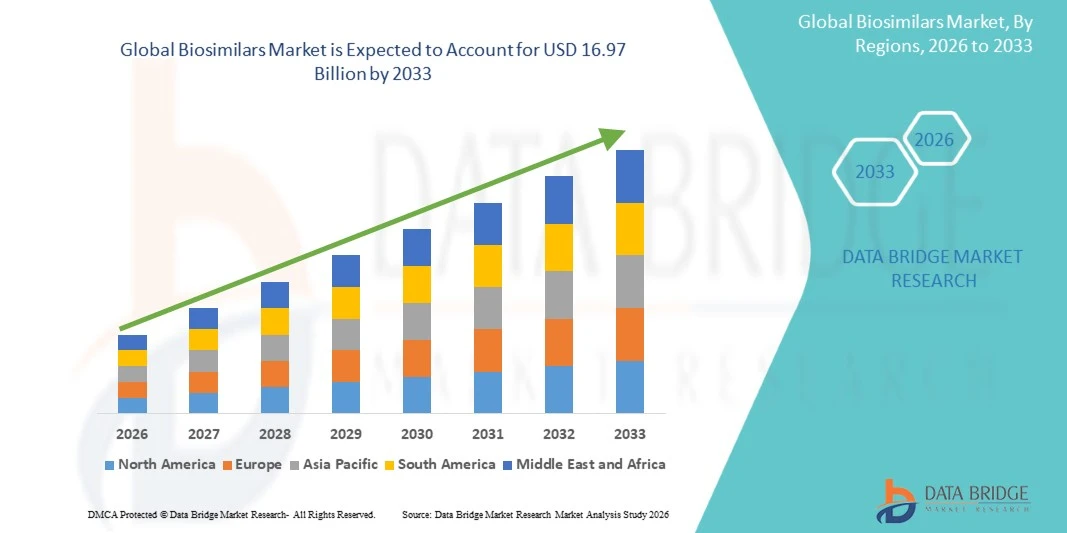
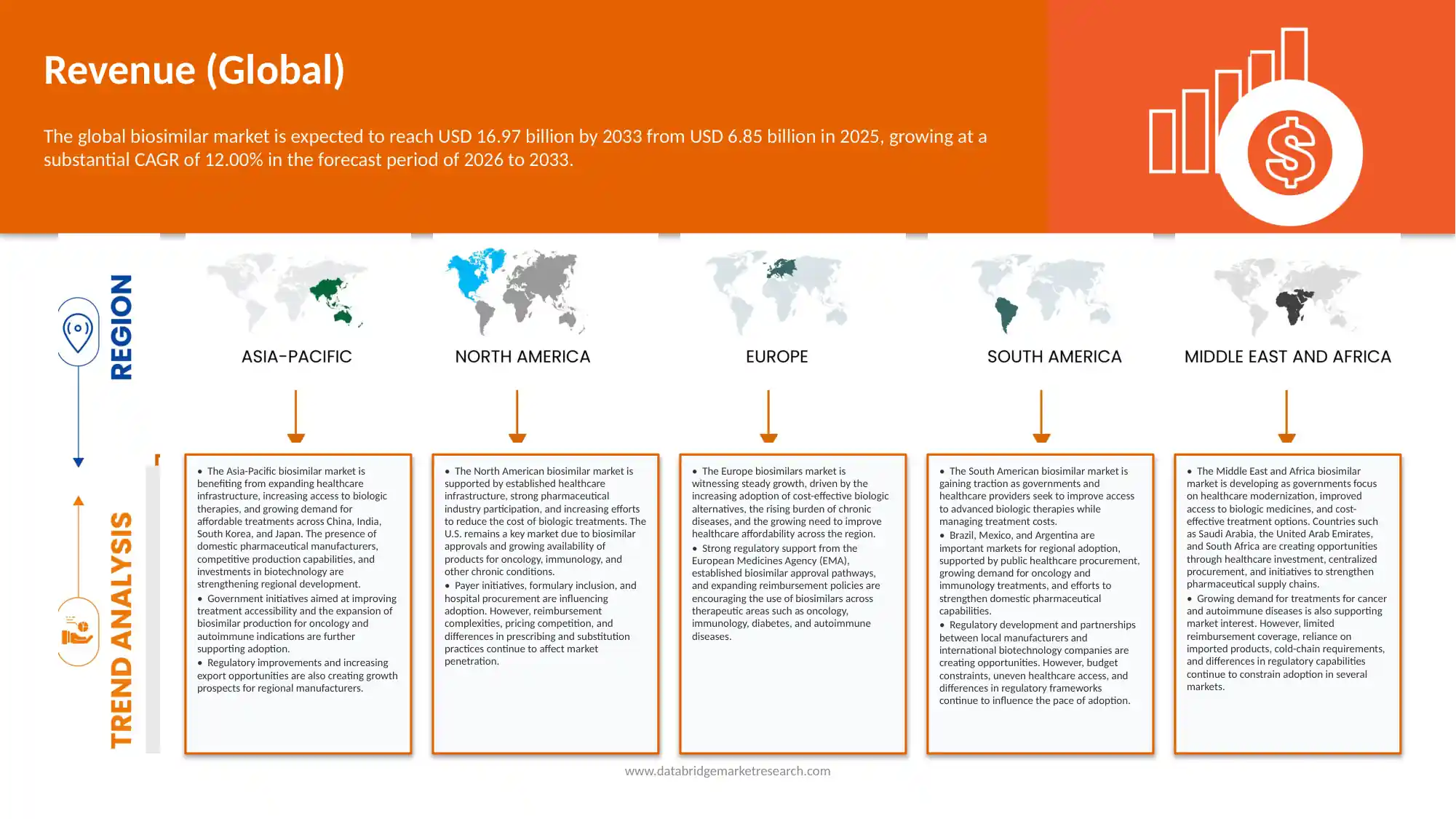
グローバルバイオシミラーズ市場が評価されました2025年のUSD 6.85億そして、達するために写し出されます米ドル 16.97 法案による 2033, 成長2026年から2033年にかけて12.00%のCAGR. 市場成長は、生体薬への費用対効果の高い代替のための需要の増加、慢性疾患の増大、腫瘍学、免疫学、炎症障害、糖尿病のアプリケーションを拡大することによって駆動されます。 医療費を削減し、高度療法への忍耐強いアクセスを改善する圧力を育てることは、バイオシミラーの採用を奨励しています。 また、主要なバイオ医薬品、バイオ医薬品製造の進歩、および支持的な規制枠組みは、バイオシミラーメーカーの機会を創出しています。 アジア・パシフィックは、ヘルスケアインフラを拡大し、バイオテクノロジー投資を増加させ、手頃な価格のバイオロジカル・トリートメントの需要が高まっています。
市場規模と予測
- グローバル市場価値(2025):USD 6.85億
- 期待される市場価値(2033):USD 16.97億
- 予測CAGR (2026~2033): 12.00%
- 2025年のリーディング地域:ヨーロッパ
- 最速成長地域:東南アジア
主な市場動向と洞察
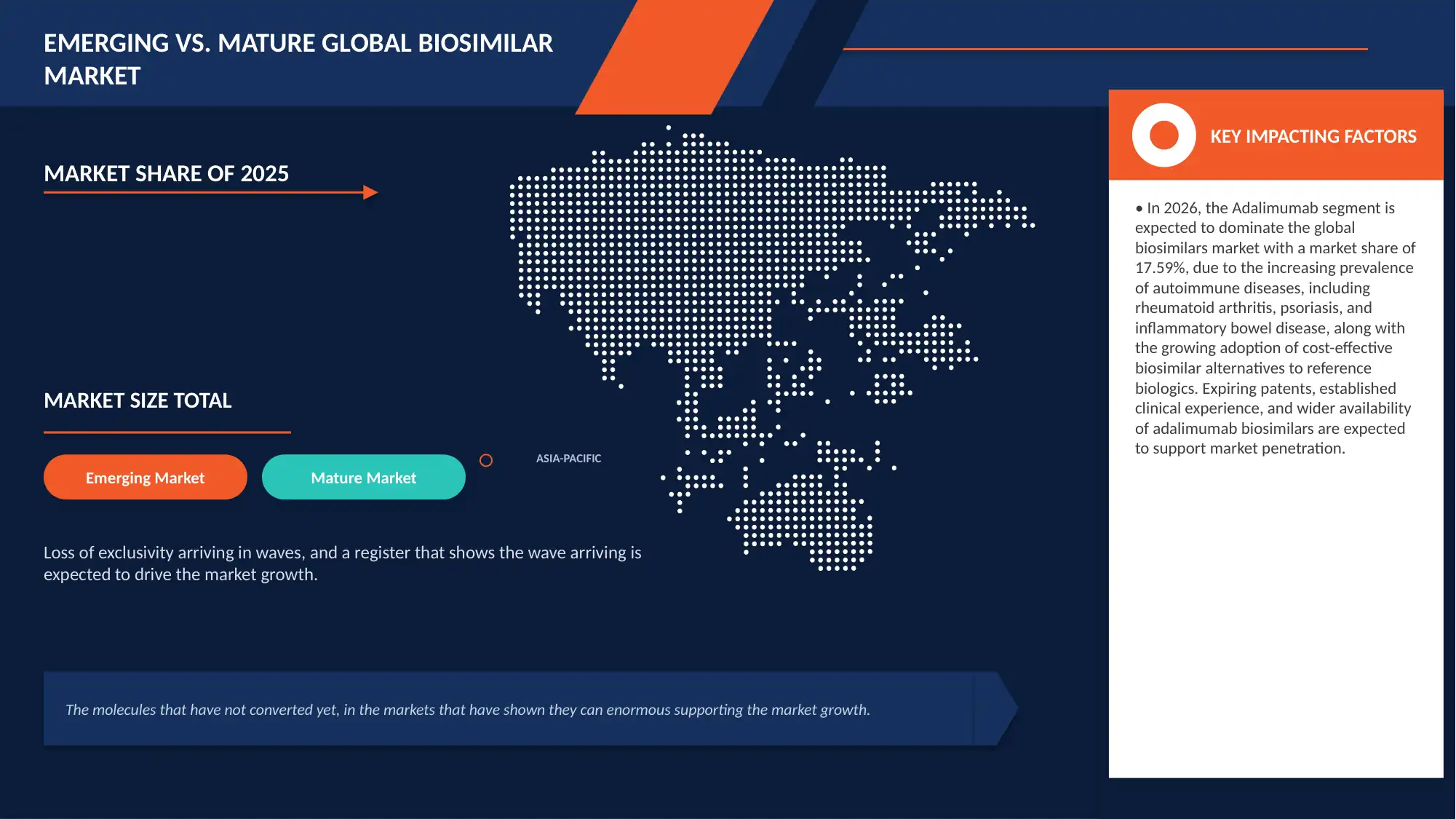
- 欧州は、世界規模のバイオシミラー市場を支配し、2025年に57.43%の最大の収益シェアを占め、規制枠組みの確立、バイオシミラー薬の広範な採用、および強力な医療システムによってサポートしました。 生物学的医薬品、費用対効果の高い取り組み、手頃な価格の治療を推進する調達方針の特許調査は、欧州の主要な国々でバイオシミラーのアップテークをサポートしています。
- Adalimumabセグメントは、世界的なバイオシミラー市場を支配し、2025年に17.59%の収益シェアを占め、自己免疫および炎症状態を治療する広範な使用によって駆動され、関節リウマチ、乾癬、クローン病、および潰瘍性関節炎を含む。
- 東南アジアは、2026~2033年の間に12.00%のCAGRを登録し、グローバルバイオシミラー市場で最速成長地域になることを期待しています。 成長は、手頃な価格の生態学療法のための需要の増加、ヘルスケアインフラの拡大、慢性疾患の早期増加によってサポートされています。
- 免疫学および炎症の区分は2025年に44.12%の収益シェアを占める世界的なバイオシミラーの市場を支配し、自己免疫および慢性の炎症状態のための生物医学の広範な使用によって運転しました。 関節リウマチ、乾癬、クローン病、および潰瘍性膀胱炎の治療に対する増加の需要は、生体類似体導入をサポートしています。
- 市場セグメントは、世界的なバイオシミラー市場を支配し、2025年に99.52%の収益シェアを占め、複数の治療領域にわたって承認されたバイオシミラー製品の確立された商用可用性を反映しています。 病院、専門医、医療従事者による採用の増加は、市販品の需要に対応しています。
- 病院の区分は、特に腫瘍学、免疫学および炎症性疾患のために、病院の設定の生態学的薬の広範な管理によって運転される2025年に52.75%の収益のシェアを占める全体的な生物類似物質の市場を支配しました。 病院は、専門医療専門家、適切な薬物管理インフラ、集中型調達システムから恩恵を受ける
- 2026~2033年の間に14.37%のCAGRを登録し、グローバルバイオシミラー市場で最も急速に成長している流通チャネルであることが予想されます。 成長は、手頃な価格の生態学医学へのアクセスを改善し、公衆衛生支出を制御するための政府の努力によって駆動されます。 公立病院や医療機関による競争力のある入札、集中調達、大量購入は、バイオシミラーの採用を奨励しています。
レポートスコープとバイオシミラー市場セグメント
|
アトリビュート |
Biosimilarsの主要市場の洞察 |
|
カバーされる区分 |
|
|
カバーされた国 |
ヨーロッパ
ラテンアメリカ
中国語(簡体) 東南アジア
中東・北アフリカ
|
|
主要市場プレイヤー |
|
|
マーケットチャンス |
|
|
付加価値データインフォセットを追加 |
市場価値、成長率、セグメンテーション、地理的カバレッジ、主要なプレーヤーなどの市場シナリオに関する洞察に加えて、Data Bridge Market Researchがキュレーションした市場レポートには、詳細なエキスパート分析、患者疫学、パイプライン分析、価格設定分析、規制フレームワークも含まれています。 |
バイオシミラー市場動向
トレンド:バイオシミラーポートフォリオの拡大とバイオマニュファクチャリングの推進
世界的なバイオシミラー市場は、製品ポートフォリオを拡大し、製造効率を改善し、バイオ医薬品を参照するための費用対効果の高い代替品を開発することにますます注力しています。 メーカーは、腫瘍学、免疫学、炎症性疾患、糖尿病などの治療領域にわたってバイオシミラーを導入し、患者様が生態学的治療へのアクセスを改善しています。 大手バイオ医薬品の特許審査は、新市場参入の機会を創出し、細胞開発、プロセス最適化、分析特性評価、製造技術が製品開発を支援しています。 さらに、医療費の封入、規制当局の承認の増加、医療従事者の受け入れの拡大に重点を置いています。 戦略的コラボレーション、製造投資、および拡大された商品化能力は、世界的なバイオシミラー市場における競争のさらなる形成です。
例えば、
- 2025年10月、米国食品医薬品局(FDA)は、不必要な臨床検査の要件を削減し、交換性の開発をより効率的にするなど、バイオシミラー開発を簡素化する対策を提案した。 これらの規制への取り組みは、開発コストを削減し、手頃な価格の生態学医学への広範な患者のアクセスをサポートすることを意図しました。
- 2025年11月、上海ヘヌリウスバイオロジックスが開発したFDA承認のPoherdy(pertuzumab-dpzb)は、Perjetaに交換可能なバイオシミラーとして開発されました。 これは、Perjetaの最初のバイオシミラー承認とHER2陽性母乳がん患者のための治療オプションを拡大しました。
- Biocon Biologicsは2026年4月、BosayaとAukelso、denosumab BiosimilarsがProliaとXgevaを紹介する米国の商用起動を発表しました。 発売は、骨の健康と腫瘍学関連の徴候における生体模倣治療オプションの可用性を拡大し、確立された生態学医学にバイオシミラーに関連する成長した商業機会を実証しました。
全体的に、これらの開発は、規制革新、製品承認、およびグローバルなバイオシミラー市場における商業拡大の重要性を強調しています。 特許の拡大、ヘルスケア支出の軽減、手頃な価格のバイオロジカルセラピーの要求に対する努力は、ポートフォリオを拡大し、生産と流通能力を強化するメーカーを奨励しています。 バイオマニュファクチュアリング、戦略的パートナーシップ、規制開発への継続的な投資は、予測期間中にバイオシミラーのイノベーションと市場成長をサポートする見込みです。
バイオシミラーズマーケットダイナミクス
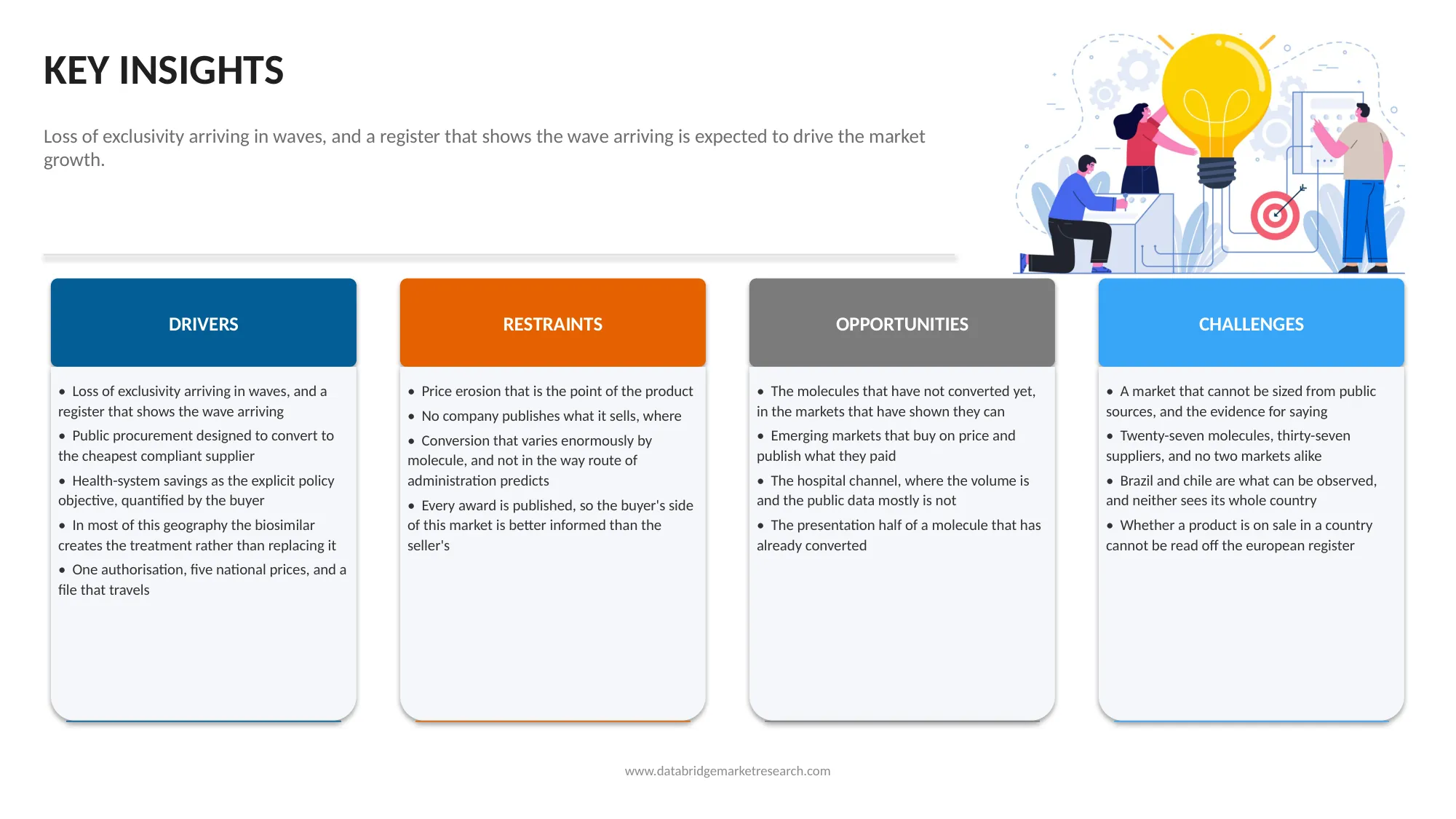
主要市場ドライバー: 費用効果の高い生物的療法および拡大のBiosimilarの採用のための上昇の要求
世界的なバイオシミラー市場は、バイオロジカル医薬品を参照するための手頃な価格の選択肢の需要の増加とヘルスケア支出を減らす必要があるため、成長を経験しています。 バイオシミラーは、腫瘍学、免疫学、炎症性疾患、糖尿病などの治療領域全体でますます採用され、生態学的治療が広く使用されている。 主要なバイオ医薬品に対する特許および市場独占の普及は、バイオシミラー製品を導入し、競争を増加させるための機会を作り出しています。 また、高度治療への患者のアクセスを改善するために、ヘルスケアシステムに圧力を増加させることは、病院、ヘルスケアプロバイダー、およびバイオシミラーを考慮するための支払者を奨励しています。 バイオマニュファクチュアリング技術、進化する規制経路の改善、医師の受入の増加は、さらなる市場開拓をサポートしています。 これらの要因は、バイオシミラーメーカーが製品ポートフォリオを拡大し、グローバル製薬市場全体でのプレゼンスを強化する機会を作り出しています。
例えば、
- 2025年10月、米国食品医薬品局(FDA)は、バイオシミラー開発の簡素化と、不必要な臨床検査を削減するための変更を提案した。 規制要件を合理化し、より手頃な価格のバイオシミラー薬の開発を容易にすることを目的とした取り組み。
- 2026年3月、FDAは、科学的に正当化したときに、不要な薬理(PK)試験が合理化されることを推奨する草案を発行しました。 提案されたアプローチは、開発コストを削減し、より効率的なバイオシミラー開発を支援することを目的としていました。
- 2026年5月、FDAはImmgolisとImmgolis Intriを承認し、それぞれSimponiとSimponi Ariaへの最初の交換可能なバイオシミラー。 製品は、関節リウマチおよび潰瘍性関節炎のためのバイオシミラー治療オプションを拡大し、免疫学および炎症分野における競争をサポートしました。
全体として、これらの開発は、費用対効果の高い治療オプション、合理化された規制経路の重要性を強調し、グローバルバイオシミラー市場における治療用途を拡大する。 バイオシミラー開発における手頃な価格の生物学的医薬品、特許調査、および進歩に対する需要の増加は、製品パイプラインおよび商用ポートフォリオを拡大するためのメーカーを奨励しています。 継続的な規制支援と成長医療システム導入は、予測期間中にバイオシミラーメーカーのさらなる機会を作成することが期待されます。
鍵の拘束/チャレンジ:規制の複雑さ、高い開発コスト、市場アクセスの障壁
世界的なバイオシミラー市場は、複雑な規制要件、高い開発コスト、および広範な市場採用を達成するために困難に関連する課題に直面しています。 従来のジェネリック医薬品とは異なり、バイオシミラーは、広範囲の分析特性評価、比較研究、および品質、安全性、および有効性の観点からバイオロジック製品を参照する類似性を実証するエビデンスを必要とします。 これらの要件は、メーカー向けの開発のタイムラインと金融投資を増加させます。 また、各国の規制経路の違いは、製品の承認と国際的商用化を複雑化することができます。 複数のバイオシミラー製造業者間の価格圧力、払い戻し制限、および競争はまた収益性に影響を与えることができます。 限られた医師の親しみ、参照の生物学的論理からの切り替えに関する患者の懸念、および処方および置換ポリシーの違いは、さらなる採用を遅らせる可能性があります。 その結果、メーカーは、製造品質を維持し、規制基準を満たし、医療従事者と患者の間で自信を確立するために必要な投資で競争力のある価格設定のバランスをとる必要があります。
例えば、
- 2025年10月、米国食品医薬品局(FDA)は、バイオシミラー開発ガイダンスへの変更を提案し、不要な比較効果の調査や開発要件の合理化を図っています。 これらの変更は、開発コストを削減し、バイオシミラー薬へのアクセスを加速するために意図されました。
- 2025年8月、米国保健省とヒューマンサービスがバイオシミラー市場参入の課題の分析を公表し、開発コスト、商業的リターンの不確実性、および低導入が市場参入からメーカーを差別化することができます。 調査結果は、市場へのアクセスを改善し、バイオシミラー開発のための持続可能なインセンティブを作成することの重要性を強調した。
- 2025年7月、米国保健省とヒューマンサービスが、米国治療薬市場における競争の分析を公表し、バイオシミラーの競争が特許保護終了にもかかわらず、多くの生態学的医薬品に限定されていると報告しました。 調査結果は、価格設定、市場浸透、および参照バイオロジックからバイオシミラーへの移行に関連する課題を強調した。
全体的に、これらの開発は、効率的な規制経路、持続可能な価格設定戦略、および世界的なバイオシミラー市場における課題に対処するためのより強力な市場導入の重要性を強調しています。 高い開発コスト、特許争議、規制要件の異なる、および限られた医師または患者の信任は、市販化を遅らせ、市場浸透を制限することができます。 継続的な規制改善、より大きなステークホルダー教育、およびより予測可能な払い戻しおよび調達方針は、競争をサポートし、予測期間中にバイオシミラー薬へのアクセスを改善するために重要です。
主要な市場機会:特許の有効期限を拡大し、費用効果の高い生物的療法のための需要を成長させる
世界的なバイオシミラー市場は、主要な生物学的医薬品の有効期限が切れる特許および市場独占期間として重要な機会を提示しています。製造業者は複数の治療領域にわたってバイオシミラー代替品を導入することができます。 がん、自己免疫障害、炎症性疾患、糖尿病に対する手頃な価格の治療に対する需要の増加は、製薬企業がバイオシミラーポートフォリオを拡大するための奨励です。 メーカーは、バイオシミラーの開発と商品化をサポートする高度なバイオ処理技術、製造能力、分析特性評価、および規制能力に投資しています。 また、治療費用を抑え、生態学医学へのアクセスを改善するために、ヘルスケアシステムに圧力を増大させ、病院、専門医院、公衆医療プログラムを通じて採用を支援しています。 公共調達への取り組み、競争入札、バイオテクノロジー企業とのコラボレーションにより、バイオシミラーメーカーが市場へのアクセスを強化し、地理的存在を拡大する機会が増えています。
例えば、
- 2025年10月、米国食品医薬品局(FDA)は、特定のバイオシミラー性研究を簡素化し、交換可能なバイオシミラーの開発を促進するなど、バイオシミラーの開発コストを削減する施策を提案した。 これらの対策は、競争をサポートし、低コストの生物学的治療への患者のアクセスを改善することを目的としていました。
- 2026年4月、バイオコンは、ボスヤとアウケルソの米国商取引開始を発表しました。 がんに関連した骨粗鬆症および骨格関連の合併症の予防、骨の健康と腫瘍学関連の治療法の機会を創出するためのバイオシミラー治療オプションの可用性を拡大しました。
- 2026年10月、Samsung BioepisとTevaは、Fasenra(benralizumab)とIlaris(canakinumab)を参照する候補を含む最大6つの潜在的なバイオシミラー候補を開発し、商品化するための戦略的パートナーシップを拡大しました。 コラボレーションは、Samsung Bioepisの開発と製造能力をTevaの商業的リーチと組み合わせ、炎症および免疫媒介疾患の潜在的な治療オプションの進歩をサポートします。
全体的に、これらの開発は、規制の進歩、商用製品発売、およびグローバルバイオシミラー市場における戦略的コラボレーションの重要性を強調しています。 手頃な価格の生物学的療法に対する需要の増加、今後の特許調査と開発プロセスを合理化するための努力と組み合わせることで、製品パイプラインと商用機能を拡大するためのメーカーを奨励しています。 バイオテクノロジー、製造インフラ、およびパートナーシップの継続的な投資は、予測期間中にバイオシミラーメーカーのさらなる機会を作成することが期待されます。
バイオシミラー市場スコープ
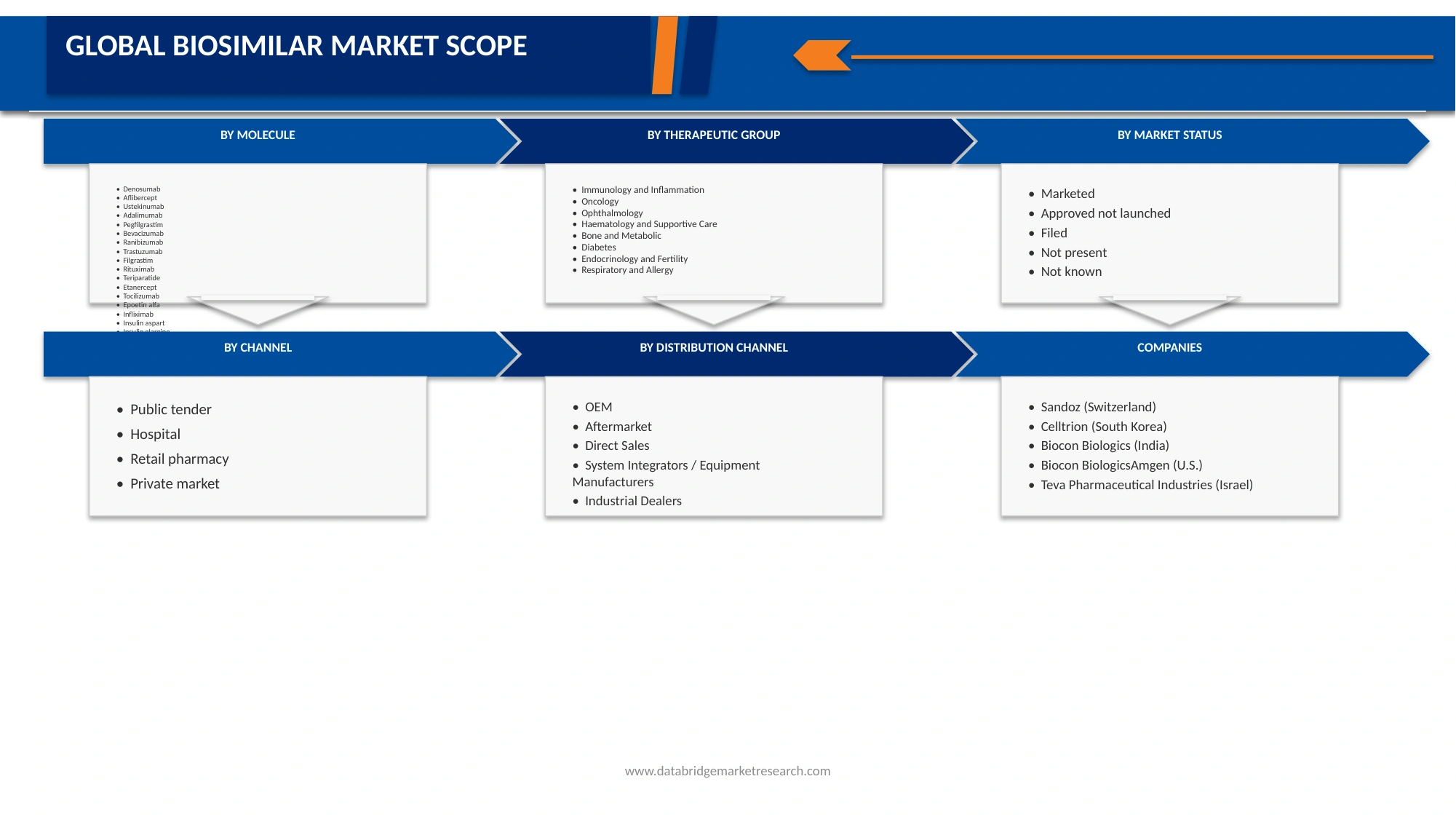
グローバルバイオシミラー市場は、分子、治療グループ、市場状況、チャネル、および流通チャネルに基づいて5つの注目すべきセグメントに分類されます。
- 分子によって
分子に基づいて、グローバルバイオシミラー市場は、denosumab、aflibercept、ustekinumab、adalimumab、pegfilgrastim、bevacizumab、ranibizumab、trastuzumab、filgrastim、rituximab、teriparatide、etanercept、tocilizumab、eptin alfa、inflixインフルエンザ、galfinal es、gal es、gal esaab、nab、nab、nab、nab、nab、nab、nab、nab、nab、nab、nab、nab、nab、nab、nab、nab、nab、nab、nab、nab、nab、nab、nab、nab、nab、nab、nab、nab、nab、nab、nab、nab、nab、nab、nab、nab、nab、nab、nab、nab、nab、nab、nab、nab、nab、na 2025年に、adalimumabの区分は18.99%の市場占有率の全体的なbiosimilarsの市場占有と炎症状態を、rheumatoid関節炎、乾癬、Crohnの病気、潰瘍性関節炎およびankylosing膿疱症を含む処理の広範な使用が原因で含んでいます。 Humira、参照の生物的、のための排他性のexpirationは複数のadalimumab生物類似体の記入項目を可能にしましたり、競争を高め、処置の選択を拡大しました。
tocilizumab セグメントは、2026 から 2033 までの 18.58% の最速の CAGR を登録するために計画されています。, オートムンと炎症条件のための費用対効果の高い生態学的治療の需要を高める, 特にリウマチ関節炎と巨大な細胞関節炎. Tocilizumab Biosimilarsは、参照バイオロジック、Actemraへの低コストの代替手段を提供し、医療費の軽減と患者のアクセスの改善のための努力をサポートしています。
- 治療グループによる
治療グループに基づき、世界的なバイオシミラー市場は免疫学および炎症、腫瘍学、眼科、血液学および支持ケア、骨および代謝、糖尿病、内分泌学および豊饒および呼吸器およびアレルギーに分けられます。 2025年、免疫学および炎症の区分は44.69%の市場占有率の全体的な生物類似物質の市場占有率を、rheumatoid関節炎、乾癬、Crohnの病気および潰瘍性炎を含むautoimmuneおよび慢性の炎症性疾患の上昇のprevalenceが原因で含まることが期待されます。 adalimumab、infliximab、etanerceptなどのバイオロジカル薬の広範な使用は、バイオシミラー代替品の可用性とともに、セグメントの成長をサポートしています。
免疫学および炎症の区分は2026年から2033年までの13.33%の最も速いCAGRを、autoimmuneおよび慢性の炎症性疾患の上昇のprevalenceに、長期生物的療法のための要求を高め、費用効果が大きい生物類似体の代わりの可用性を増加させるために提案されます。 アドリムマブ、インフリキシマブ、エタネセプトなど、確立されたバイオロジカルのための特許の普及は、競合製品を紹介し、治療アクセスを拡大するためのメーカーの機会を作成します。
- 市場状況によって
市場状況に基づいて、世界的なバイオシミラー市場は、販売、承認されていない開始、ファイルされていない、現在、知られていないセグメント化されています。 2025年に、販売されたセグメントは、免疫学、腫瘍学、血液学、糖尿病を含む複数の治療領域にわたって承認されたバイオシミラー製品の商業用可用性を確立しているため、99.52%の市場シェアで世界的なバイオシミラー市場を支配することが期待されています。 これらの製品は、必要な規制審査を完了し、医療提供者、病院、患者の採用をサポートする適格な市場での使用のために利用可能です。
市場セグメントは、2026年から2033年までの12.00%の最速のCAGRを登録するために投影され、免疫学、腫瘍学、および糖尿病を含む治療領域にわたって承認されたバイオシミラー製品の増加の商業的可用性と採用に向けています。 大規模生態学医学のための特許の普及と組み合わせて、生態学を参照するための費用対効果の高い選択肢のための成長の需要は、市場投入バイオシミラーが市場プレゼンスを拡大する機会を作成します。
- チャネル別
チャネルに基づいて、グローバルバイオシミラー市場は、公共入札、病院、小売薬局、民間市場に区分されます。 2025年、公共入札セグメントは、政府の医療プログラム、公立病院、集中購買機関による生態学的医薬品の調達の増加に伴い、世界規模のバイオシミラー市場を50.00%の市場シェアで廃止する見込みです。 公共入札者は、複数のバイオシミラーメーカーから入札を招き、治療コストを削減し、重要な生物的治療へのアクセスを改善することによって、医療システムを競争力のある価格を交渉することができます。
公共入札セグメントは、2026年から2033年までの13.80%の最速のCAGRを登録し、政府や公共医療システムの普及に向け、生態学的治療コストを削減し、手頃な価格の医薬品へのアクセスを改善することを目的としています。 競争力のある入札により、医療当局は、複数のバイオシミラーメーカーから有利な価格を交渉し、公立病院や全国の医療プログラムの幅広い採用を奨励することができます。
バイオシミラー市場地域分析
ヨーロッパは、世界のバイオシミラー市場を支配し、2025年に57.43%の最大の収益シェアを占め、地域の確立された規制枠組みによって駆動され、バイオシミラー薬の早期採用、および医療費削減に重点を置いています。 欧州医薬品庁(EMA)は、バイオシミラー開発、承認、市場参入を支援する規制経路を確立する重要な役割を果たしています。 加えて、腫瘍学、免疫学、および炎症性疾患を横断するバイオシミラーの広範な使用は、支持的償還方針、競争的調達慣行、およびヘルスケアの専門家間の受諾の増加と組み合わせ、地域市場成長を強化しました。
また、欧州地域は、費用対効果の高いバイオシミラー薬の採用の増加、慢性疾患および自己免疫疾患の治療に対する需要の増加、および医療費の支出を減らすための継続的な努力によって駆動され、2026〜2033年の間に12.00%の最高のCAGRを登録する予定です。 欧州医薬品庁が支持する地域が設立された規制枠組みは、バイオシミラー開発と市場参入を容易にします。 また、主要なバイオ医薬品の特許の普及、製品の利用可能性の拡大、競争入札慣行の拡大、およびヘルスケア専門家の受け入れの増加は、欧州における病院やヘルスケアシステムにおけるバイオシミラーの取組の加速が期待されています。
中国バイオシミラー市場洞察
中国バイオシミラー市場は、慢性疾患の上昇の優先順位、手頃な価格の生物的治療の需要の増加、および医療アクセシビリティを向上させるための政府の取り組みによる成長を経験しています。 国立医療製品管理(NMPA)は、バイオシミラー開発と承認をサポートする規制経路を確立し、国内製薬企業を奨励し、製品ポートフォリオを拡大しています。 また、調達プログラムの集中化、バイオテクノロジー投資の拡大、主要なバイオロジカル医薬品の特許の普及が市場競争を強化しています。 腫瘍学、免疫学、および炎症性疾患における適用の増加は、予測期間を通じて市場拡大をサポートすることが期待されます。
ジャパンバイオシミラーズマーケットインサイト
日本バイオシミラーズ市場は、慢性疾患、老化人口の増加、およびヘルスケア支出の増加により、着実に成長することが期待されます。 がん、自己免疫障害、および炎症状態の手頃な価格の治療のための需要を成長させることは、バイオシミラー薬の採用を奨励しています。 医薬品・医療機器庁の規制枠組みを整備し、バイオシミラー製品の審査・承認を容易に また、政府は、ジェネリック・バイオシミラーの活用を推進し、医療費を削減し、予測期間中に市場拡大を支援するため、先進的なバイオロジカルセラピーへのアクセスを改善するための取り組みを行っています。
ヨーロッパバイオシミラーズ市場洞察
欧州バイオシミラー市場は、確立された規制枠組みによって支持され、ヘルスケアコスト・コンテインメント・イニシアチブを増加させ、バイオシミラー・医薬品の広範な受諾を経験しています。 欧州医学庁の規制経路から、バイオシミラーの承認と商用化を容易にする地域の利点。 腫瘍学、自己免疫障害、および炎症性疾患の手頃な価格の治療のための有利な需要は、さらに市場拡大をサポートしています。 また、主要な生態学薬、競争入札慣行の特許調査、および病院および公共医療システム全体の採用の増加は、予測期間を通じて市場を強化することが期待されます。
北米バイオシミラーズ市場洞察
北アメリカの生物類似物質の市場は費用効果が大きい生物的療法、上昇のヘルスケアの支出および癌、自己免疫の無秩序および慢性の炎症性疾患の高められたprvalenceのための増加された要求によって運転されます。 米国は、バイオシミラーの承認を拡大し、メーカー間で競争を増加させ、手頃な価格の治療への患者のアクセスを改善するよう支援し、地域の需要の重要な共有のためのアカウントを占めています。 また、大手バイオ医薬品の特許取得、製薬会社による医薬品普及の機会を創出しています。 しかしながら、医師の受入における償還の複雑性、価格設定圧力、バリエーションは、地域全体の採用に影響を与える可能性があります。
バイオシミラーズマーケットシェア
世界的なバイオシミラーの企業は、主に、以下のような広範な企業によって導かれています。
- Sandoz (スイス)
- セルトリオン(韓国)
- バイオコンバイオロジック(インド)
- Amgen(アメリカ)
- Tevaの製薬産業(イスラエル)
- オルガノン(アメリカ)
- サムスンバイオエピス(韓国)
- Fresenius Kabi (ドイツ)
- STADA Arzneimittel AG(ドイツ)
- アコードヘルスケア(英国)
- バイアトリス(米国)
- Pfizer(アメリカ)
- コヘルスバイオサイエンス(米国)
- ガン&リー医薬品(中国)
バイオシミラー市場の最新動向
- 2026年10月、Samsung BioepisとTevaは、FasenraとIlarisを参照する候補を含む最大6人のバイオシミラー候補を開発し、商品化するためのパートナーシップを拡大しました。 米国、ヨーロッパ、カナダを横断する開発パイプラインおよび商業範囲を強化して下さい。
- 2026年8月、Amneal PharmaceuticalsがKashiv BioSciencesの買収を完了しました。 バイオシミラーの研究、開発、製造、商品化の機能を組み合わせて、将来の製品発売を支援します。
- 2026年7月、Formyconは、バイオシミラー製造のためのOneSource Specialty Pharmaと提携しました。 グローバルなバイオシミラープログラムをサポートする医薬品・医薬品製造能力を拡大。
- 2026年5月、FormyconとKlinge Biopharmaは、ドイツ、フランス、イタリアでの初期のロールアウトで、EUのAhzantiveとBaiamaのafliberceptバイオシミラー製品を開始しました。 眼科で競争を拡大し、網膜疾患のさらなる治療オプションを提供します。
- 2026年3月、Samsung BioepisはSandozと提携し、Entyvioを言及するベドリズマブ候補を含む最大5つのバイオシミラー候補を開発し、商品化しました。 免疫学におけるバイオシミラーパイプラインを強化し、グローバル市場におけるより広範な商品化をサポートします。
SKU-
世界初のマーケットインテリジェンスクラウドに関するレポートにオンラインでアクセスする

- インタラクティブなデータ分析ダッシュボード
- 成長の可能性が高い機会のための企業分析ダッシュボード
- カスタマイズとクエリのためのリサーチアナリストアクセス
- インタラクティブなダッシュボードによる競合分析
- 最新ニュース、更新情報、トレンド分析
- 包括的な競合追跡のためのベンチマーク分析のパワーを活用
目次
1 エグゼクティブ ミーティング
2つの市場定義、スコープおよび沈殿物
2.1 包まれたプロダクトおよび要求される
2.2 分離軸およびその値
2.3 国と地域グループ
2.4 車両輸送中の製品
3件の検索方法とデータソース
3.1 ソース ヒエルアーキシーと何コーチ ソース カバー
3.2 報告、開発、および評価: EX-U.S.およびEX-INDIA
3.3 拠点マップ:EX-U.SとEX-INDIA
3.4 課題と制限
4 BIOSIMILARS マーケット オーバービュー
5 マーケットダイナミクス
5.1 ドライバー
5.1.1 ウィーヴス州における過半透明度生存の損失、およびWAVE ARRIVINGの活性化
5.1.2 汚染物質の処理は、最高の汚染物質に関与するように設計
5.1.3 購入者によってQUANTIFIED、排他的な方針として健康状態の上昇
5.1.4 この議題の冒頭で、BIOSIMILARは、それを置き換える取引をRATHER THAN
5.1.5 旅費・旅行代金・旅費
5.2 削除
5.2.1 製品のポイントである価格のEROSION
5.2.2 会社のPUBLISHESは、それが何のELLS、WHERE
5.2.3 暴力団員が死亡し、管理者の権限がない
5.2.4 EVERY AWARDは購入済みなので、このマーケットのバイヤーの側は、販売店が正式に設立されました
5.3 機会
5.3.1 不可解な YET を起こさないモーク, できるショーン
5.3.2 価格で購入し、ペイドを PUBLISH する市場を新興
5.3.3 病院のチャンネル, VOLUME があると、公共のデータは、そうでない
5.3.4 変換されたモークのプレゼントHALF
5.4 チャレンジ
5.4.1 PUBLIC SOURCES、およびSYING SOの発祥の市場
5.4.2 TWENTY-SEVEN MOLECULES、THIRTY-SEVEN SUPPLIERS、および何のTWOの市場を好みません
5.4.3 ブラジルとチリは、保存することができるものであり、他の人は誰が国に与えます
5.4.4 製品の販売は、欧州の登録者を離れて読み取ることができる国で
5.5 業界のトレンドを新興
5.5.1 潜水艦に侵入した瞬間から移動する波
5.5.2 統合バイオロジクス・マニュファクチュアラーの小数点に供給
5.5.3 買主は、方針の決定として管理データをPUBLISHING
5.5.4 スプリアーズ・オン・アカウントでグロース・ラインを構成するテンダー・ウィンズ
5.5.5 プレゼントに反映する製品 BIOSIMILAR HAS YET COPIED
5.6 インパクト分析: DRIVERS、RESTRAINTS、OPPORTUNITIES、チャレンジ
5.7 PORTER'S FIVE FORCESアナリシス
5.8 エステル分析
5.9 SWOT分析
6 プライシング分析
6.1 タイプによる価格:リスト、EX-FACTORY、修正、テンダー、小売
6.2 標準的な単位ごとの価格 COUNTRY
6.3 価格動き、2018-2025
6.4 価格 outloOK、2026-2033
6.5 価格 に ローカル通貨 で 米ドル, と STATED RATE
6.6 コンスタント - 保険料価格の備品: アルゼンチン、トルコ、エジプト
7 テーナーと汎用分析
7.1 COUNTRY、バイヤーおよびWINNING Companyによる表彰式入札者
7.2 MOLECULEによるボリュームと価格の獲得
7.3 パブリック・アッセンシャル・プライベート・シャネル・ミックス
7.4 TENDER の価格 country によるリストの価格
7.5 チャンネルの集約と何が起こるか
8製品および相互の土地
8.1 COUNTRYによるプロダクト単位: ブランド、分子、力、形態
8.2 マーケティング・オーダ、マニュファクター、パートナー、ディストリビューター
8.3 口座の承認と発覚
8.4 販売済み 代理店登録 - 特許取得済
9 歴史の枠組みと応用パスウェイ
9.1 適用方法および国別ボディを磨くこと
9.2 登録機器およびタイピカルタイムライン
9.3 COUNTRYによる資産および不動産管理
10 BIOSIMILAR のペネテーションはオリジナレーターを組織します
10.1 通貨と通貨で価値とボリュームによるペネテーション
10.2 オリジナレーターは、BIOSIMILAR価格と割引を発表
10.3 流暢な割引の発券
10.4 SHARE MOVEMENT SINCE BIOSIMILAR エントリー
10.5 マイルとブランド IDENTIFIED 無し、MOLECULE および COUNTRY によって
11 COUNTRY-BY-MOLECULE マーケットマップ
11.1 企業とブランドは、セルごとに存在します
12 BIOSIMILARS マーケット、MOLECULE による 2018–2033 (USD MILLION)
12.1 概要
12.2 デノスマブ
12.3 免責事項
12.4 アステキンマブ
12.5 アドリムマブ
12.6 PEGFILGRASTIMの特長
12.7 ビーシーマブ
12.8 ラニビズマブ
12.9 TRASTUZUMABの特長
12.1 フィリピン
12.11 リッチマブ
12.12 テラス
12.13 税制
12.14 オシリズマブ
12.15 エポエチンアルファ
12.16 インフィックスマブ
12.17 インスリンアパート
12.18 インスリン・グレイン
12.19 欧州共同体
12.2 エポエタン ゼータ
12.21 FOLLITROPINアルファ
12.22 ゴリマブ
12.23 インスリンLISPRO
12.24 ENOXAPARINナトリウム
12.25 ナタリズマブ
12.26 OMALIZUMAB(オモリスマブ)
12.27 PERTUZUMABの特長
12.28 ソマトロピン
13 BIOSIMILARSの市場、別々のTHERAPEUTICグループ、2018–2033 (USD MILLION)
13.1 概要
13.2 免疫・炎症
13.3 オンコロジー
13.4 眼科
13.5 免疫・支援ケア
13.6 骨および金属
13.7 糖尿病
13.8 アドビノロジーと機能
13.9 歴史とアレルギー
14 BIOSIMILARSの市場, による 市場動向, 2018–2033 (USD MILLION)
14.1 概要
14.2 発売
14.3 起動しない
14.4 繊維
14.5 未発表
14.6 ノックなし
15 BIOSIMILARSの市場, によって チャンネル, 2018–2033 (USD MILLION)
15.1 レビュー
15.2 パブリック テンダー
15.2.1 デンオサマブ
15.2.2 免責事項
15.2.3 アステキンマブ
15.2.4 アドリムマブ
15.2.5 PEGFILGRASTIMの特長
15.2.6 ビーシーマブ
15.2.7 ラニビズマブ
15.2.8 TRASTUZUMABの特長
15.2.9 フランクフルト
15.2.10 RITUXIMABの特長
15.2.11 テラス
15.2.12 エーターシート
15.2.13 トシリズマブ
15.2.14 エポエチンアルファ
15.2.15 インフィックスマブ
15.2.16 インスリン アセンブリ
15.2.17 インスリン・グランジン
15.2.18 欧州共同体
15.2.19 エポエタン ゼータ
15.2.20 FOLLITROPINアルファ
15.2.21 ゴリマブ
15.2.22 インスリン・リスプロ
15.2.23 ENOXAPARINナトリウム
15.2.24 ナタリズマブ
15.2.25 OMALIZUMAB(オモリスマブ)
15.2.26 PERTUZUMABの特長
15.2.27 ソマトロピン
15.3 病院
15.3.1 デンオサマブ
15.3.2 免責事項
15.3.3 アステキンマブ
15.3.4 アドリムマブ
15.3.5 PEGFILGRASTIMの特長
15.3.6 ビーシーマブ
15.3.7 ラニビズマブ
15.3.8 TRASTUZUMABの特長
15.3.9 フランクフルト
15.3.10 RITUXIMABの特長
15.3.11 テラス
15.3.12 税制
15.3.13 トシリズマブ
15.3.14 エポエチンアルファ
15.3.15 インフィックスマブ
15.3.16 インスリン アセンブリ
15.3.17 インスリン・グランジン
15.3.18 欧州共同体
15.3.19 エポエチン ゼータ
15.3.20 FOLLITROPINアルファ
15.3.21 ゴリマブ
15.3.22 インスリンLISPRO
15.3.23 ENOXAPARINナトリウム
15.3.24 ナタリズマブ
15.3.25 OMALIZUMAB(オモリスマブ)
15.3.26 PERTUZUMABの特長
15.3.27 ソマトロピン
15.4 小売薬局
15.4.1 デンオサマブ
15.4.2 免責事項
15.4.3 アステキンマブ
15.4.4 アドリムマブ
15.4.5 PEGFILGRASTIMの特長
15.4.6 ビーシーマブ
15.4.7 ラニビズマブ
15.4.8 TRASTUZUMABの特長
15.4.9 フランクフルト
15.4.10 RITUXIMABの特長
15.4.11 テラス
15.4.12 税制
15.4.13 トシリズマブ
15.4.14 エポエチンアルファ
15.4.15 インフィックスマブ
15.4.16 インスリン アセンブリ
15.4.17 インスリン・グランジン
15.4.18 欧州共同体
15.4.19 エポエチン ゼータ
15.4.20 FOLLITROPINアルファ
15.4.21 ゴリマブ
15.4.22 インスリンLISPRO
15.4.23 ENOXAPARINナトリウム
15.4.24 ナタリズマブ
15.4.25 馬場
15.4.26 ペルツワマブ
15.4.27 ソマトロピン
15.5 キャンペーン
15.5.1 デンオサマブ
15.5.2 免責事項
15.5.3 アステキンマブ
15.5.4 アドリムマブ
15.5.5 PEGFILGRASTIMの特長
15.5.6 ビーシーマブ
15.5.7 ラニビズマブ
15.5.8 トレースズマブ
15.5.9 フィラストイム
15.5.10 RITUXIMABの特長
15.5.11 テラス
15.5.12 の ETANERCEPT
15.5.13 トシリズマブ
15.5.14 エポエチンアルファ
15.5.15 インフィックスマブ
15.5.16 インスリン部品
15.5.17 インスリン・グランジン
15.5.18 欧州共同体
15.5.19 エポエチン ゼータ
15.5.20 FOLLITROPINアルファ
15.5.21 ゴリマブ
15.5.22 インスリンLISPRO
15.5.23 ENOXAPARINナトリウム
15.5.24 ナタリズマブ
15.5.25 OMALIZUMAB(オミズマブ)
15.5.26 PERTUZUMABの
15.5.27 ソマトロピン
16 BIOSIMILARSの市場, によって GEOGRAPHY, 2018–2033 (USD MILLION)
16.1 概要
16.2 グローバル
16.2.1 EU-5
16.2.1.1 ガーマニー
16.2.1.2 フランス
16.2.1.3 イタリア
16.2.1.4 スパン
16.2.1.5 ユナイテッド キングダム
16.2.2 ラテンアメリカ
16.2.2.1 ブラジル
16.2.2.2 メキシコ
16.2.2.3 アルゼンチン
16.2.2.4 コロンビア
16.2.2.5 チリ
16.2.3 中国
16.2.3.1 中国
16.2.4 東南アジア
16.2.4.1 インドネシア
16.2.4.2 タイ
16.2.4.3 ベトナム
16.2.4.4 フィリピン
16.2.4.5 マレーシア
16.2.4.6 シンガポール
16.2.5 メナ
16.2.5.1 サウジアラビア
16.2.5.2 アラブ首長国連邦
16.2.5.3 エジプト
16.2.5.4 ターキー
17 複合ランドスケープ
17.1 VALUEとVOLUME、2025の会社株式
17.2 COUNTRY と REGION によって展開される会社
17.3 当社が販売する商品数
17.4 会社の売上高
18 会社案内
18.1 商号をMANDATORYとして名付け
18.1.1 バンドオ
18.1.1.1 会社案内
18.1.1.2 分析
18.1.1.3 ジオグラフィック プレゼンス
18.1.1.4 M&Aの特長
18.1.1.5 生産容量の拡張
18.1.1.6 商品紹介
18.1.1.7 その他
18.1.1.8 製品ポートフォリオ
18.1.1.9 最近の開発
18.1.2 セルトリオン
18.1.2.1 会社案内
18.1.2.2 再燃分析
18.1.2.3 ジオグラフィック プレゼンス
18.1.2.4 商品紹介
18.1.2.5 その他
18.1.2.6 製品ポートフォリオ
18.1.2.7 最近の開発
18.1.3 バイオコンバイオロジー
18.1.3.1 会社案内
18.1.3.2 分析
18.1.3.3 ジオグラフィック プレゼンス
18.1.3.4 M&Aの特長
18.1.3.5 その他
18.1.3.6 製品ポートフォリオ
18.1.3.7 最近の開発
18.1.4 アムゲン
18.1.4.1 会社案内
18.1.4.2 分析
18.1.4.3 ジオグラフィックプレゼンス
18.1.4.4 その他
18.1.4.5 製品ポートフォリオ
18.1.4.6 最近の開発
18.1.5 テヴァ
18.1.5.1 会社案内
18.1.5.2 到着分析
18.1.5.3 ジオグラフィック プレゼンス
18.1.5.4 製品紹介
18.1.5.5 その他
18.1.5.6 製品ポートフォリオ
18.1.5.7 リクルート開発
18.1.6 オルガノ
18.1.6.1 会社案内
18.1.6.2 到着分析
18.1.6.3 ジオグラフィック プレゼンス
18.1.6.4 製品紹介
18.1.6.5 その他
18.1.6.6 製品ポートフォリオ
18.1.6.7 最近の開発
18.2 その他の投資
18.2.1 サムスンBIOEPIS
18.2.1.1 会社案内
18.2.1.2 分析
18.2.1.3 ジオグラフィック プレゼンス
18.2.1.4 コラボレーション
18.2.1.5 その他
18.2.1.6 製品ポートフォリオ
18.2.1.7 最近の開発
18.2.2 フレセニウス・カビ
18.2.2.1 会社案内
18.2.2.2 再燃分析
18.2.2.3 ジオグラフィックプレゼンス
18.2.2.4 コラボレーション
18.2.2.5 商品紹介
18.2.2.6 その他
18.2.2.7 製品ポートフォリオ
18.2.2.8 最近の開発
18.2.3 スタダ
18.2.3.1 会社案内
18.2.3.2 再燃分析
18.2.3.3 ジオグラフィック プレゼンス
18.2.3.4 コラボレーション
18.2.3.5 その他
18.2.3.6 製品ポートフォリオ
18.2.3.7 最近の開発
18.2.4 ACCORD ヘルスケア
18.2.4.1 会社案内
18.2.4.2 アナリティクスの変更
18.2.4.3 ジオグラフィック プレゼンス
18.2.4.4 生産設備
18.2.4.5 その他
18.2.4.6 製品ポートフォリオ
18.2.4.7 最近の開発
18.2.5 ヴィアトリス
18.2.5.1 会社案内
18.2.5.2 到着分析
18.2.5.3 ジオグラフィック プレゼンス
18.2.5.4 M&Aの特長
18.2.5.5 その他
18.2.5.6 製品ポートフォリオ
18.2.5.7 最近の開発
18.2.6 ファイザー
18.2.6.1 会社案内
18.2.6.2 アナリシス
18.2.6.3 ジオグラフィックプレゼンス
18.2.6.4 その他
18.2.6.5 製品ポートフォリオ
18.2.6.6 最近の開発
18.2.7 コーラス
18.2.7.1 会社案内
18.2.7.2 ジオグラフィック プレゼンス
18.2.7.3 メジャーディール
18.2.7.4 M&Aの特長
18.2.7.5 その他
18.2.7.6 製品ポートフォリオ
18.2.7.7 最近の開発
18.2.8 ガン&リー
18.2.8.1 会社案内
18.2.8.2 到着分析
18.2.8.3 ジオグラフィック プレゼンス
18.2.8.4 生産容量拡張
18.2.8.5 その他
18.2.8.6 製品ポートフォリオ
18.2.8.7 最近の開発
19 商業プレゼンスと市場へのルート
19.1 DIRECT パートナー主導モデル カントリー
19.2 名前付きディストリビューターとチケットハンドリング
19.3 フィールドフォース サイズ、ホイール オブザブル
20 カントリーディープダイバーシティ
21 配送可能、調達および制限
21.1 データの収集と保管
21.2 クラス別ツアー, カバーと日付アクセス
21.3 何ができるか、そしてなぜ
表のリスト
表1 イーチフォースのインパクト、沈殿物による
TABLE 2 エステル分析
表3 SWOT:強度と重量
表4 SWOT:機会と脅威
タイプによるテーブル5価格:リスト、EX-FACTORY、修正、テンダー、小売
標準的な単位ごとのテーブル6の価格 COUNTRY
テーブル 7 は月刊 PURCHASING RECORD を、PUBLISHED として貯蔵しました
表皮で表皮の総代理店のUSDのテーブル8の価格、STATED RATE
TABLE 9 COUNTRYによる承認と発覚
TABLE 10 は登録をした登録を禁止しました
TABLE 11 アップルパスウェイとゴーバーニングボディ、カントリー
表12 BIOSIMILARが PAID であり、方法を決定する人
車両と容積による13のペネテーション、モークとカントリー
表14オリジナレーターがBIOSIMILAR価格と割引を発表
TABLE 15 費用は最高で、モジュールによって操作をテストします
表16 包丁のバイオシミラーのシャルル, 費用とテストの動作
TABLE 17 ブランド無しで賞味されたライン
TABLE 18の商品とブランドは、セルごとに存在します
TABLE 19 BIOSIMILARS マーケット、MOLECULE による 2018-2025 (USD MILLION)
TABLE 20 BIOSIMILARS の市場、MOLECULE によって、2026-2033 (米ドルの百万円)
TABLE 21 BIOSIMILARS の市場, による THERAPEUTIC GROUP, 2018-2025 (USD MILLION)
TABLE 22 BIOSIMILARS の市場、THERAPEUTIC グループによる、2026-2033 (USD MILLION)
TABLE 23 BIOSIMILARS 市場, による マーケット スタタス, 2018-2025 (USD MILLION)
テーブル 24 の BIOSIMILARS の市場、による マーケット スタタス、2026-2033 (米ドルの 百万円)
TABLE 25 BIOSIMILARS マーケット, チャンネル, 2018-2025 (USD MILLION)
TABLE 26 BIOSIMILARS マーケット, チャンネル, 2026-2033 (USD MILLION)
TABLE 27 PUBLIC テンダー, タイプ別, 2018-2025 (USD MILLION)
TABLE 28 PUBLICテンダー, タイプ別, 2026-2033 (USD MILLION)
TABLE 29 HOSPITAL、タイプ別、2018-2025(USD MILLION)
TABLE 30 HOSPITAL、タイプ別、2026-2033(USD MILLION)
TABLE 31 リテール薬局, タイプ別, 2018-2025 (USD MILLION)
TABLE 32 リテール薬局, タイプ別, 2026-2033 (USD MILLION)
TABLE 33 PRIVATE MARKET, BY TYPE, 2018-2025 (USD MILLION) - 現金自動預け払い機
TABLE 34 PRIVATE MARKET, タイプ別, 2026-2033 (USD MILLION)
TABLE 35 BIOSIMILARS チケット, によって GEOGRAPHY, 2018-2025 (USD MILLION)
TABLE 36 BIOSIMILARS マーケット、GEOGRAPHY、2026-2033(USD MILLION)による
TABLE 37 EU-5, カントリー, 2018-2025 (USD MILLION)
TABLE 38 EU-5, カントリー, 2026-2033 (USD MILLION)
TABLE 39 EU-5、MOLECULEで、2018-2025(USD MILLION)
TABLE 40 EU-5、MOLECULEで、2026-2033(USD MILLION)
TABLE 41 EU-5, による THERAPEUTIC グループ, 2018-2025 (USD MILLION)
TABLE 42 EU-5, 別々のグループ, 2026-2033 (USD MILLION)
TABLE 43 EU-5, 市場動向, 2018-2025 (USD MILLION)
TABLE 44 EU-5、市場動向、2026-2033(USD MILLION)
TABLE 45 EU-5, チャンネル, 2018-2025 (USD MILLION)
TABLE 46 EU-5, チャンネルで, 2026-2033 (USD MILLION)
TABLE 47 GERMANY、MOLECULE、2018-2025(USD MILLION)による
TABLE 48 GERMANY, MOLECULE により, 2026-2033 (USD MILLION)
TABLE 49 GERMANY, による THERAPEUTIC グループ, 2018-2025 (USD MILLION)
TABLE 50 GERMANY, による THERAPEUTIC グループ, 2026-2033 (USD MILLION)
TABLE 51 GERMANY, による マーケットスタタス, 2018-2025 (USD MILLION)
TABLE 52 GERMANY, マーケット・スタタス, 2026-2033 (USD MILLION)
TABLE 53 GERMANY, によって チャンネル, 2018-2025 (USD MILLION)
TABLE 54 GERMANY, チャンネル, 2026-2033 (USD MILLION)
TABLE 55 FRANCE、MOLECULE、2018-2025(USD MILLION)による
テーブル56のフランス、MOLECULEによって、2026-2033 (米ドルの百万円)
TABLE 57 FRANCE, バイ THERAPEUTIC グループ, 2018-2025 (USD MILLION)
TABLE 58 FRANCE, バイ THERAPEUTIC グループ, 2026-2033 (USD MILLION)
TABLE 59 FRANCE, By MARKET STATUS, 2018-2025 (USD MILLION) - 現金自動預け払い機
TABLE 60 FRANCE, マーケット・スタタス, 2026-2033 (USD MILLION)
TABLE 61 フランス, チャンネル, 2018-2025 (USD MILLION)
TABLE 62 フランス, チャンネル, 2026-2033 (USD MILLION)
TABLE 63イタリア、MOLECULE、2018-2025(USD MILLION)による
TABLE 64イタリア、MOLECULEによって、2026-2033 (USD MILLION)
TABLE 65イタリア、THERAPEUTICグループ、2018-2025(USD MILLION)
TABLE 66イタリア、THERAPEUTICグループ、2026-2033(USD MILLION)
TABLE 67イタリア、市場動向、2018-2025(USD MILLION)
TABLE 68イタリア、市場動向、2026-2033(USD MILLION)
TABLE 69イタリア、CHANNEL、2018-2025(USD MILLION)による
TABLE 70 イタリア, チャンネル, 2026-2033 (USD MILLION)
TABLE 71 Spain、MOLECULE、2018-2025(USD MILLION)による
TABLE 72 スパン、MOLECULE による、2026-2033 (USD MILLION)
TABLE 73 Spain, 別々のグループ, 2018-2025 (USD MILLION)
TABLE 74 Spain、THERAPEUTICグループ、2026-2033(USD MILLION)による
TABLE 75 スパン, マーケット・スタタス, 2018-2025 (USD MILLION)
TABLE 76 スパン, マーケット・スタタス, 2026-2033 (USD MILLION)
TABLE 77 SPAIN、CHANNEL、2018-2025(USD MILLION)による
TABLE 78 スパン, チャンネル, 2026-2033 (USD MILLION)
TABLE 79 UNITED KINGDOM, MOLECULE, 2018-2025 (USD MILLION) により
TABLE 80 UNITED KINGDOM, MOLECULE により, 2026-2033 (USD MILLION)
TABLE 81 UNITED KINGDOM、別々のTHERAPEUTICグループ、2018-2025(USD MILLION)
TABLE 82 UNITED KINGDOM, による THERAPEUTIC グループ, 2026-2033 (USD MILLION)
TABLE 83 UNITED KINGDOM, マーケット・スタタス, 2018-2025 (USD MILLION)
TABLE 84 UNITED KINGDOM, マーケット・スタタス, 2026-2033 (USD MILLION)
TABLE 85 UNITED KINGDOM, チャンネル, 2018-2025 (USD MILLION)
TABLE 86 UNITED KINGDOM, チャンネルで, 2026-2033 (USD MILLION)
TABLE 87 ラテンアメリカ、国別、2018-2025 (USD MILLION)
TABLE 88 LATINアメリカ, カントリー, 2026-2033 (USD MILLION)
TABLE 89 LATINアメリカ、MOLECULE、2018-2025(USD MILLION)による
TABLE 90 LATINアメリカ、MOLECULE、2026-2033 (USD MILLION)による
TABLE 91 LATIN AMERICA, による THERAPEUTIC GROUP, 2018-2025 (USD MILLION)
TABLE 92 LATINアメリカ、THERAPEUTICグループ、2026-2033(USD MILLION)
TABLE 93 LATIN AMERICA, マーケット・スタタス, 2018-2025 (USD MILLION)
TABLE 94 LATINアメリカ、マーケット・スタタス、2026-2033 (USD MILLION)
TABLE 95 ラテンアメリカ, チャンネル, 2018-2025 (USD MILLION)
TABLE 96 ラテンアメリカ, チャンネル, 2026-2033 (USD MILLION)
TABLE 97 ブラジル、MOLECULE、2018-2025(USD MILLION)
TABLE 98 BRAZIL、MOLECULE、2026-2033(USD MILLION)による
TABLE 99 ブラジル、THERAPEUTICグループ、2018-2025(USD MILLION)
TABLE 100 ブラジル、THERAPEUTICグループ、2026-2033(USD MILLION)
TABLE 101 BRAZIL, マーケット・スタタス, 2018-2025 (USD MILLION)
TABLE 102 BRAZIL, 市場動向, 2026-2033 (USD MILLION)
TABLE 103 BRAZIL, チャンネル, 2018-2025 (USD MILLION)
TABLE 104 ブラジル, チャンネル, 2026-2033 (USD MILLION)
TABLE 105 MEXICO、MOLECULE、2018-2025(USD MILLION)による
TABLE 106 MEXICO、MOLECULEによる、2026-2033(USD MILLION)
TABLE 107 MEXICO、THERAPEUTIC GROUP、2018-2025(USD MILLION)による
TABLE 108 MEXICO、THERAPEUTICグループ、2026-2033(USD MILLION)
TABLE 109 MEXICO, 市場動向, 2018-2025 (USD MILLION)
TABLE 110 MEXICO、市場動向、2026-2033(USD MILLION)
TABLE 111 MEXICO, チャンネル, 2018-2025 (USD MILLION)
TABLE 112 メキシコ, チャンネル, 2026-2033 (USD MILLION)
TABLE 113 ARGENTINA、MOLECULE、2018-2025(USD MILLION)による
TABLE 114 アルゲンティナ, モーク, 2026-2033 (USD MILLION)
TABLE 115 アルゲンティナ, 別々のアルパスティックグループ, 2018-2025 (USD MILLION)
TABLE 116 アルゲンティナ, バイ THERAPEUTIC GROUP, 2026-2033 (USD MILLION)
TABLE 117 アルゲンティナ, マーケット・スタタス, 2018-2025 (USD MILLION)
TABLE 118 アルゲンティナ, による 市場 STATUS, 2026-2033 (USD MILLION)
TABLE 119 アルゲンティナ, チャンネル, 2018-2025 (USD MILLION)
TABLE 120 ARGENTINA, チャンネルで, 2026-2033 (USD MILLION)
TABLE 121 COLOMBIA, MOLECULE, 2018-2025 (USD MILLION) により
TABLE 122 COLOMBIA、MOLECULE、2026-2033(USD MILLION)による
TABLE 123 COLOMBIA, 別売グループ, 2018-2025 (USD MILLION)
TABLE 124 COLOMBIA、THERAPEUTICグループ、2026-2033(USD MILLION)による
TABLE 125 COLOMBIA, 市場動向, 2018-2025 (USD MILLION)
TABLE 126 COLOMBIA, マーケット・スタタス, 2026-2033 (USD MILLION)
TABLE 127 COLOMBIA, チャンネル, 2018-2025 (USD MILLION)
TABLE 128 COLOMBIA, チャンネル, 2026-2033 (USD MILLION)
TABLE 129 CHILE、MOLECULE、2018-2025(USD MILLION)による
TABLE 130 CHILE、MOLECULE、2026-2033(USD MILLION)による
TABLE 131 CHILE, バイ THERAPEUTIC グループ, 2018-2025 (USD MILLION)
TABLE 132 マイル, 別々のグループ, 2026-2033 (USD MILLION)
TABLE 133 CHILE, による マーケットスタタス, 2018-2025 (USD MILLION)
テーブル 134 チリ, による マーケット スタタス, 2026-2033 (USD ミリオン)
TABLE 135 CHILE, チャンネル, 2018-2025 (USD MILLION)
テーブル 136 チリ, チャンネル, 2026-2033 (USD ミリオン)
TABLE 137 CHINA、国別、2018-2025(USD MILLION)
TABLE 138 中国、国別、2026-2033 (USD MILLION)
TABLE 139 CHINA、MOLECULE、2018-2025(USD MILLION)による
TABLE 140中国、MOLECULEによって、2026-2033 (USD MILLION)
TABLE 141中国、THERAPEUTICグループ、2018-2025(USD MILLION)による
TABLE 142 中国, による THERAPEUTIC グループ, 2026-2033 (USD MILLION)
TABLE 143 中国、市場動向、2018-2025 (USD MILLION)
TABLE 144中国、市場スタタス、2026-2033 (USD MILLION)による
TABLE 145 中国, チャンネル, 2018-2025 (USD MILLION)
TABLE 146 中国、CHANNEL、2026-2033 (USD MILLION) による
TABLE 147 中国、MOLECULE、2018-2025 (USD MILLION) による
TABLE 148中国、MOLECULEによって、2026-2033 (米ドルの百万円)
TABLE 149 中国, による THERAPEUTIC グループ, 2018-2025 (USD MILLION)
TABLE 150中国、THERAPEUTICグループ、2026-2033(USD MILLION)による
TABLE 151 中国, による マーケット スタタス, 2018-2025 (USD MILLION)
TABLE 152 中国、市場動向、2026-2033 (USD MILLION)
TABLE 153 CHINA、CHANNEL、2018-2025(USD MILLION)による
TABLE 154 中国, チャンネル, 2026-2033 (USD MILLION)
TABLE 155 SOUTHEAST ASIA, BY COUNTRY, 2018-2025 (USD 百万円)
TABLE 156 SOUTHEAST ASIA, BY COUNTRY, 2026-2033 (USD 百万円)
TABLE 157 SOUTHEAST ASIA, by MOLECULE, 2018-2025 (USD 百万円)
TABLE 158 SOUTHEAST ASIA, BY MOLECULE, 2026-2033 (USD MILLION) ミネソタ日米協会
TABLE 159 SOUTHEAST ASIA, BY THERAPEUTIC GROUP, 2018-2025 (USD MILLION) ミネソタ日米協会
TABLE 160 SOUTHEAST ASIA, バイ THERAPEUTIC GROUP, 2026-2033 (USD MILLION), キプロス
TABLE 161 SOUTHEAST ASIA 2018-2025 (USD MILLION) チケット・スタタスによる
TABLE 162 SOUTHEAST ASIA, マーケット・スタタス, 2026-2033 (USD MILLION)
TABLE 163 SOUTHEAST ASIA, BY CHANNEL, 2018-2025 (USD MILLION) ミネソタ日米協会
TABLE 164 SOUTHEAST ASIA, チャンネル, 2026-2033 (USD MILLION)
TABLE 165 INDONESIA、MOLECULE、2018-2025(USD MILLION)による
TABLE 166 INDONESIA, MOLECULE, 2026-2033 (USD 百万円)
TABLE 167 INDONESIA, 別売グループ, 2018-2025 (USD MILLION)
TABLE 168 INDONESIA、THERAPEUTIC GROUP、2026-2033(USD MILLION)による
TABLE 169 INDONESIA, 市場動向, 2018-2025 (USD MILLION)
TABLE 170 INDONESIA, マーケット・スタタス, 2026-2033 (USD MILLION)
TABLE 171 INDONESIA, チャンネル, 2018-2025 (USD MILLION)
TABLE 172 INDONESIA, チャンネルで, 2026-2033 (USD MILLION)
TABLE 173 タイ, MOLECULE, 2018-2025 (USD MILLION)
TABLE 174 タイ、MOLECULE、2026-2033(USD MILLION)
TABLE 175 タイ、THERAPEUTICグループ、2018-2025(USD MILLION)
TABLE 176 タイ、THERAPEUTICグループ、2026-2033(USD MILLION)
TABLE 177 タイ, マーケット・スタタス, 2018-2025 (USD MILLION)
TABLE 178 タイ、マーケット・スタタス、2026-2033(USD MILLION)
TABLE 179 タイ, チャンネル, 2018-2025 (USD MILLION)
TABLE 180 タイ, チャンネル, 2026-2033 (USD MILLION)
TABLE 181 VIETNAM、MOLECULE、2018-2025(USD MILLION)による
TABLE 182 VIETNAM, MOLECULE, 2026-2033 (USD MILLION) により
TABLE 183 VIETNAM、2018-2025(USD MILLION)のTHERAPEUTICグループによる
TABLE 184 VIETNAM、THERAPEUTIC GROUP、2026-2033(USD MILLION)による
TABLE 185 VIETNAM, マーケット・スタタス, 2018-2025 (USD MILLION)
TABLE 186 VIETNAM, マーケット・スタタス, 2026-2033 (USD MILLION)
TABLE 187 ベトナム, チャンネル, 2018-2025 (USD MILLION)
TABLE 188 VIETNAM, チャンネル, 2026-2033 (USD MILLION)
TABLE 189 フィリピン, MOLECULE, 2018-2025 (USD MILLION)
TABLE 190 フィリップス, MOLECULE により, 2026-2033 (USD MILLION)
TABLE 191 フィリピン, による THERAPEUTIC GROUP, 2018-2025 (USD MILLION)
TABLE 192 フィリップス、THERAPEUTIC GROUP、2026-2033(USD MILLION)による
TABLE 193 フィリピン, マーケット・スタタス, 2018-2025 (USD MILLION)
TABLE 194 フィリピン, による マーケット スタタス, 2026-2033 (USD MILLION)
TABLE 195 フィリピン, チャンネル, 2018-2025 (USD MILLION)
TABLE 196 フィリピン, チャンネル, 2026-2033 (USD MILLION)
TABLE 197 MALAYSIA, MOLECULE, 2018-2025 (USD MILLION) により
TABLE 198 MALAYSIA, MOLECULE により, 2026-2033 (USD MILLION)
TABLE 199 MALAYSIA, による THERAPEUTIC グループ, 2018-2025 (USD MILLION)
TABLE 200 MALAYSIA、THERAPEUTICグループ、2026-2033(USD MILLION)による
TABLE 201 MALAYSIA, 市場動向, 2018-2025 (USD MILLION)
TABLE 202 MALAYSIA, マーケット・スタタス, 2026-2033 (USD MILLION)
TABLE 203 MALAYSIA, チャンネル, 2018-2025 (USD MILLION)
TABLE 204 MALAYSIA, チャンネル, 2026-2033 (USD MILLION)
TABLE 205 シンガポール、MOLECULE、2018-2025(USD MILLION)
TABLE 206 シンガポール、2026-2033(USD MILLION)
TABLE 207 シンガポール、THERAPEUTICグループ、2018-2025(USD MILLION)
TABLE 208 シンガポール、2026-2033 (USD MILLION)
TABLE 209 SINGAPORE, マーケット・スタタス, 2018-2025 (USD MILLION)
TABLE 210 SINGAPORE, マーケット・スタタス, 2026-2033 (USD MILLION)
TABLE 211 シンガポール、カンネル、2018-2025(USD MILLION)
TABLE 212 シンガポール、2026-2033(USD MILLION)
TABLE 213 MENA, カントリー, 2018-2025 (USD MILLION)
TABLE 214 MENA, カントリー, 2026-2033 (USD MILLION)
TABLE 215 MENA、MOLECULE、2018-2025(USD MILLION)による
TABLE 216 MENA、MOLECULE による、2026-2033 (USD MILLION)
TABLE 217 MENA、THERAPEUTICグループ、2018-2025(USD MILLION)による
TABLE 218 MENA、THERAPEUTICグループ、2026-2033(USD MILLION)による
TABLE 219 メナ, による 市場状況, 2018-2025 (USD MILLION)
TABLE 220 MENA, 市場動向, 2026-2033 (USD MILLION)
TABLE 221 MENA, チャンネル, 2018-2025 (USD MILLION)
TABLE 222 MENA, チャンネル, 2026-2033 (USD MILLION)
TABLE 223 SAUDI ARABIA, MOLECULE により, 2018-2025 (USD MILLION)
TABLE 224 SAUDI ARABIA, MOLECULE により, 2026-2033 (USD MILLION)
TABLE 225 SAUDI ARABIA, 別売グループ, 2018-2025 (USD MILLION)
TABLE 226 SAUDI ARABIA, 別売グループ, 2026-2033 (USD MILLION)
TABLE 227 SAUDI ARABIA, マーケット・スタタス, 2018-2025 (USD MILLION)
TABLE 228 SAUDI ARABIA, マーケット・スタタス, 2026-2033 (USD MILLION)
TABLE 229 SAUDI ARABIA, チャンネル, 2018-2025 (USD MILLION)
TABLE 230 SAUDI ARABIA, チャンネル, 2026-2033 (USD MILLION)
TABLE 231 UNITED ARAB EMIRATES, BY MOLECULE, 2018-2025 (USD 百万円)
TABLE 232 UNITED ARAB EMIRATES, BY MOLECULE, 2026-2033 (USD MILLION) により
TABLE 233 UNITED ARAB EMIRATES, BY THERAPEUTIC GROUP, 2018-2025 (USD MILLION), アラブ首長国連邦
TABLE 234 UNITED ARAB EMIRATES, BY THERAPEUTIC GROUP, 2026-2033 (USD MILLION) - 現金自動預け払い機
TABLE 235 UNITED ARAB EMIRATES, BY MARKET STATUS, 2018-2025 (USD MILLION) - 現金自動預け払い機
TABLE 236 UNITED ARAB EMIRATES, BY MARKET STATUS, 2026-2033 (USD MILLION) により
TABLE 237 UNITED ARAB EMIRATES, チャンネル, 2018-2025 (USD MILLION)
TABLE 238 UNITED ARAB EMIRATES, チャンネル, 2026-2033 (USD MILLION)
TABLE 239 EGYPT, MOLECULE, 2018-2025 (USD MILLION) により
TABLE 240 EGYPT, MOLECULE, 2026-2033 (USD MILLION) により
TABLE 241エジプト、別々のグループ、2018-2025(USD MILLION)
TABLE 242エジプト、THERAPEUTICグループ、2026-2033(USD MILLION)
TABLE 243 EGYPT, マーケット・スタタス, 2018-2025 (USD MILLION)
テーブル 244 エジプト, による マーケット スタタス, 2026-2033 (米ドル ミリオン)
TABLE 245 EGYPT, キャンネル, 2018-2025 (USD MILLION)
TABLE 246 エジプト、カンネル、2026-2033 (USD MILLION)
TABLE 247 TURKEY, MOLECULE による, 2018-2025 (USD MILLION)
TABLE 248 ターキー、MOLECULE による、2026-2033 (USD の兆)
TABLE 249 TURKEY, バイ THERAPEUTIC グループ, 2018-2025 (USD MILLION)
TABLE 250 TURKEY, による THERAPEUTIC グループ, 2026-2033 (USD MILLION)
TABLE 251 TURKEY, マーケット・スタタス, 2018-2025 (USD MILLION)
TABLE 252 TURKEY, マーケット・スタタス, 2026-2033 (USD MILLION)
TABLE 253 TURKEY, キャンネル, 2018-2025 (USD MILLION)
テーブル 254 ターキー, チャンネルで, 2026-2033 (USD MILLION)
TABLE 255 バリューとボリュームの企業シャル
TABLE 256 EU-5: ボルム社、2025年
TABLE 257 LATIN AMERICA(ラテイン・アメリカ):VOLUME社、2025社
TABLE 258 SOUTHEAST ASIA: VolumE社、2025年
TABLE 259 メナ: ボルム社、2025年
TABLE 260 中国: ボルム社、2025年
TABLE 261 EU-5: VALUE社、2025社
TABLE 262 LATIN AMERICA: VALUE、2025 社による株式
TABLE 263 SOUTHEAST ASIA:VALUE社、2025年
テーブル 264 メナ:2025年 バリューによる企業シェア
TABLE 265 中国: VALUE、2025 社による株式
1社あたりの販売商品数 266
TABLE 267は会社によって成長します
テーブル268 SANDOZ:製品ポートフォリオ
テーブル269 SANDOZ: 最近の開発
テーブル270セルトリオン:製品ポートフォリオ
テーブル271セルトリオン: 最近の開発
TABLE 272 BIOCON BIOLOGICS:製品ポートフォリオ
表273バイオコンBIOLOGICS: 最近の開発
テーブル 274 アムゲン: プロダクト ポルトフォリオ
TABLE 275 AMGEN: 現在の開発
テーブル 276 テバ: プロダクト ポルトフォリオ
テーブル 277 テバ: 最近の開発
テーブル 278 オルガノ: プロダクト PORTFOLIO
テーブル279 オルガノ: 最近の開発
テーブル280 SAMSUNG BIOEPIS:製品ポートフォリオ
テーブル281 SAMSUNG BIOEPIS: 最近の開発
テーブル282 フレッシュカビ:製品ポートフォリオ
表283のフレッシュカビ:現在の開発
テーブル284 STADA:製品ポートフォリオ
テーブル285 STADA: 最近の開発
TABLE 286 ACCORD のヘルスケア: プロダクト PORTFOLIO
テーブル 287 ACCORD ヘルスケア: 最近の開発
TABLE 288 VIATRIS: プロダクト ポルトフォリオ
TABLE 289 VIATRIS: 最近の開発
テーブル290 PFIZER:製品ポートフォリオ
テーブル291 PFIZER: 最近の開発
表292 COHERUS:製品ポートフォリオ
テーブル293 COHERUS: 最近の開発
テーブル294ガン&リー:製品ポートフォリオ
テーブル295ガン&リー: 最近の開発
TABLE 296 名前を付けられたディストリビューターおよびWHOLESALERSは、どの会社が使用するか。
TABLE 297 クラス別ツアー, カバーと日付アクセス
表298 何ができるか、そしてなぜ
図表一覧
2018-2033 (USD MILLION) - フィギュア1 - エクス・ツー・インディア BIOSIMILARS
第2回 EX-U.S.とEX-INDIA BIOSIMILARS MARKET: グローバルでの売上高、2025年
フィギュア3 EX-U.S.とEX-INDIA BIOSIMILARS 市場: DRIVERS インパクト分析
フィギュア4 EX-U.S.とEX-インドバイオシラ マーケット:PORTER's FIVE FORCES
フィギュア5 EX-U.S.およびEX-INDIAバイオシラ マーケット:PESTLEアナリシス
フィギュア6 EX-U.S.とEX-INDIA BIOSIMILARS:SWOT分析
フィギュア 7 BIOSIMILARS の市場、MOLECULE による: 主 インターフェイス
フィギュア8 BIOSIMILARSの市場、MOLECULEによって、2025
フィギュア9 EX-U.S.およびEX-INDIA BIOSIMILARS MARKET、MOLECULE、2033(USD MILLION)による
フィギュア 10 BIOSIMILARS の市場、THERAPEUTIC のグループによって: 主焦点
フィギュア11 BIOSIMILARSの市場、THERAPEUTICのグループによって、2025
第12回 BIOSIMILARS MARKET(マーケット・スタタス)
フィギュア13 BIOSIMILARS マーケット、2025
フィギュア 14 BIOSIMILARS マーケット, チャンネル: KEY ファインディング
フィギュア 15 BIOSIMILARS の市場、チャネルによって、2025
フィギュア16 BIOSIMILARS マーケット、GEOGRAPHY:キーファインディング
フィギュア17 BIOSIMILARS MARKET、GEOGRAPHY、2025
フィギュア 18 EU-5, カントリー, 2025
フィギュア 19 ラテンアメリカ, カントリー, 2025
フィギュア 20 中国、国別、2025
FIGURE 21 SOUTHEAST ASIA, カントリー, 2025
フィギュア22 MENA、カントリー、2025
フィギュア23 SANDOZ、EX-U.Sの株式とEX-INDIA BIOSIMILARSの市場、2025
フィギュア 24 の SANDOZ: 会社の SNAPSHOT
フィギュア25セルトリオン、EX-U.Sの株式およびEX-INDIA BIOSIMILARSの市場、2025
フィギュア 26 セルトリオン: カンパニー スナプ ホット
フィギュア27バイオコンBIOLOGICS、EX-U.Sの株式、およびEX-INDIAバイオシミラー市場、2025
フィギュア28 バイオコン BIOLOGICS: カンパニースホット
フィギュア29 AMGEN、EX-U.SとEX-INDIA BIOSIMILARS MARKETの株式、2025
フィギュア 30 アムゲン: カンパニー スナプ ホット
フィギュア31テバー:会社SNAPSHOT
フィギュア 32 オルガノ、EX-U.S.の株式およびEX-INDIA BIOSIMILARS市場、2025
フィギュア 33 オルガノ: カンパニー スナプ ホット
フィギュア 34 サムスン BIOEPIS, EX-U.Sのシャープ, エクスインディア BIOSIMILARS マーケット, 2025
フィギュア 35 サムスンBIOEPIS:会社 SNAPSHOT
フィギュア 36 フレデニウス カムイ: カンパニー スナプ ホット
フィギュア37 STADA:カンパニー・スナプ ホット
フィギュア 38 ACCORD のヘルスケア: 会社の SNAPSHOT
フィギュア 39 ヴィアトリアス: カンパニー スナプ ホット
フィギュア 40 の PFIZER: 会社の SNAPSHOT
フィギュア41 COHERUS:会社スナプショット
フィギュア 42 ガン&リー: カンパニー スナプ ホット

調査方法
データ収集と基準年分析は、大規模なサンプル サイズのデータ収集モジュールを使用して行われます。この段階では、さまざまなソースと戦略を通じて市場情報または関連データを取得します。過去に取得したすべてのデータを事前に調査および計画することも含まれます。また、さまざまな情報ソース間で見られる情報の不一致の調査も含まれます。市場データは、市場統計モデルと一貫性モデルを使用して分析および推定されます。また、市場シェア分析と主要トレンド分析は、市場レポートの主要な成功要因です。詳細については、アナリストへの電話をリクエストするか、お問い合わせをドロップダウンしてください。
DBMR 調査チームが使用する主要な調査方法は、データ マイニング、データ変数が市場に与える影響の分析、および一次 (業界の専門家) 検証を含むデータ三角測量です。データ モデルには、ベンダー ポジショニング グリッド、市場タイムライン分析、市場概要とガイド、企業ポジショニング グリッド、特許分析、価格分析、企業市場シェア分析、測定基準、グローバルと地域、ベンダー シェア分析が含まれます。調査方法について詳しくは、お問い合わせフォームから当社の業界専門家にご相談ください。
カスタマイズ可能
Data Bridge Market Research は、高度な形成的調査のリーダーです。当社は、既存および新規のお客様に、お客様の目標に合致し、それに適したデータと分析を提供することに誇りを持っています。レポートは、対象ブランドの価格動向分析、追加国の市場理解 (国のリストをお問い合わせください)、臨床試験結果データ、文献レビュー、リファービッシュ市場および製品ベース分析を含めるようにカスタマイズできます。対象競合他社の市場分析は、技術ベースの分析から市場ポートフォリオ戦略まで分析できます。必要な競合他社のデータを、必要な形式とデータ スタイルでいくつでも追加できます。当社のアナリスト チームは、粗い生の Excel ファイル ピボット テーブル (ファクト ブック) でデータを提供したり、レポートで利用可能なデータ セットからプレゼンテーションを作成するお手伝いをしたりすることもできます。











