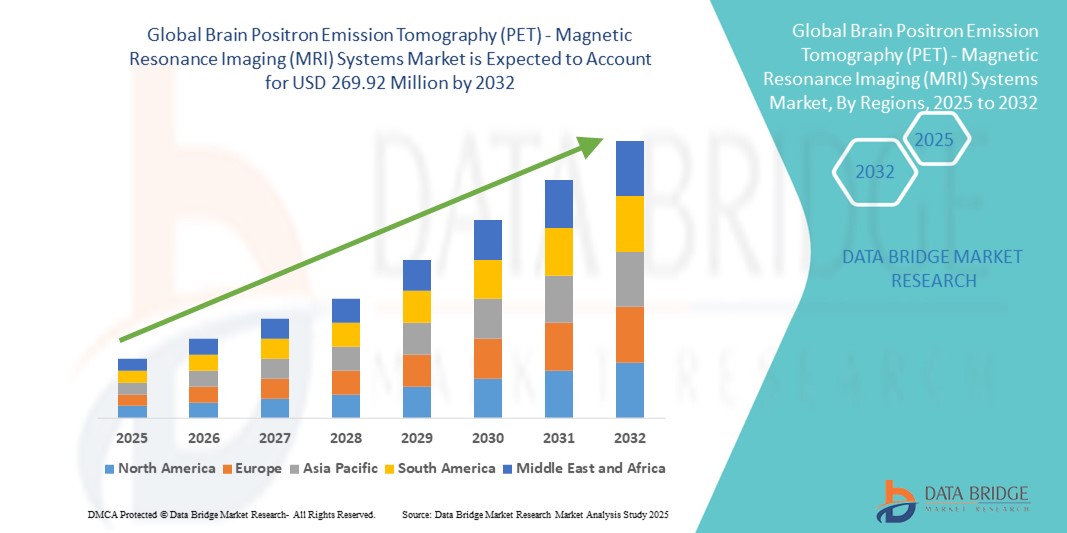
Global Brain Positron Emission Tomography (PET)
Market Size in USD Billion
CAGR :
%
USD
185.50 Million
USD
269.92 Million
2024
2032
| 2025 –2032 | |
| USD 185.50 Million | |
| USD 269.92 Million | |
|
|
|
|
Global Brain Positron Emission Tomography (PET) - Magnetic Resonance Imaging (MRI) Systems Market Segmentation, By Phase (Clinical and Pre-clinical), Product (Traditional Positron Emission Tomography (PET)- Magnetic Resonance Imaging (MRI) Systems and Helium-Free Positron Emission Tomography (PET)- Magnetic Resonance Imaging (MRI) System), End Use (Hospitals, Diagnostic Imaging Centres, and Others) - Industry Trends and Forecast to 2032
Brain Positron Emission Tomography (PET) - Magnetic Resonance Imaging (MRI) Systems Market Size
- The global brain positron emission tomography (PET) - magnetic resonance imaging (MRI) systems market size was valued at USD 185.50 million in 2024 and is expected to reach USD 269.92 million by 2032, at a CAGR of 4.80% during the forecast period
- The market growth is primarily driven by advancements in neuroimaging technologies, increased adoption of hybrid imaging systems, and rising prevalence of neurological disorders, which are prompting healthcare providers to seek more accurate diagnostic solutions
- In addition, growing investments in research and development, coupled with the demand for non-invasive, high-resolution imaging solutions for early detection of brain abnormalities, are positioning PET-MRI systems as a preferred choice in both clinical and research settings. These factors are collectively propelling the market growth and expanding the adoption of advanced brain imaging technologies globally
Brain Positron Emission Tomography (PET) - Magnetic Resonance Imaging (MRI) Systems Market Analysis
- Brain PET-MRI systems, offering hybrid imaging by combining functional and structural brain scans, are increasingly critical in hospitals, diagnostic imaging centers, and research institutions due to their high accuracy, non-invasive approach, and ability to support early detection and treatment monitoring of neurological disorders
- The rising demand for PET-MRI systems is mainly driven by the increasing prevalence of neurological conditions such as Alzheimer’s, Parkinson’s, and brain tumors, along with growing investments in advanced imaging technologies and the push for precision medicine in neurology
- North America dominated the brain positron emission tomography (PET) - magnetic resonance imaging (MRI) systems market with the largest revenue share of 43% in 2024, owing to advanced healthcare infrastructure, early adoption of hybrid imaging systems, robust research initiatives, and the presence of leading imaging equipment manufacturers introducing AI-assisted and workflow-optimized systems
- Asia-Pacific is expected to be the fastest-growing region in the brain positron emission tomography (PET) - magnetic resonance imaging (MRI) systems market during the forecast period, supported by rising healthcare expenditure, increasing awareness of neurological health, expansion of advanced medical facilities, and favorable government policies promoting diagnostic imaging adoption
- The Clinical phase segment dominated the brain positron emission tomography (PET) - magnetic resonance imaging (MRI) systems market with a market share of 72.5% in 2024, driven by the high adoption of PET-MRI systems in hospitals and diagnostic imaging centers for accurate diagnosis, treatment planning, and patient monitoring of brain disorders
Report Scope and Brain Positron Emission Tomography (PET) - Magnetic Resonance Imaging (MRI) Systems Market Segmentation
|
Attributes |
Brain Positron Emission Tomography (PET) - Magnetic Resonance Imaging (MRI) Systems Key Market Insights |
|
Segments Covered |
|
|
Countries Covered |
North America
Europe
Asia-Pacific
Middle East and Africa
South America
|
|
Key Market Players |
|
|
Market Opportunities |
|
|
Value Added Data Infosets |
In addition to the insights on market scenarios such as market value, growth rate, segmentation, geographical coverage, and major players, the market reports curated by the Data Bridge Market Research also include in-depth expert analysis, pricing analysis, brand share analysis, consumer survey, demography analysis, supply chain analysis, value chain analysis, raw material/consumables overview, vendor selection criteria, PESTLE Analysis, Porter Analysis, and regulatory framework. |
Brain Positron Emission Tomography (PET) - Magnetic Resonance Imaging (MRI) Systems Market Trends
Advancements in Hybrid Imaging and AI-Driven Diagnostics
- A significant trend in the global brain PET-MRI systems market is the increasing integration of artificial intelligence (AI) and advanced image processing algorithms into hybrid imaging systems, enhancing diagnostic precision, workflow efficiency, and early disease detection capabilities
- For instance, Siemens’ Biograph Vision PET-MRI system incorporates AI-based image reconstruction and motion correction features, allowing clinicians to obtain higher-resolution images while reducing scan times. Similarly, GE Healthcare’s SIGNA PET-MRI platform leverages AI to optimize scanning protocols and provide real-time insights for neurological assessment
- AI integration enables systems to detect subtle abnormalities, quantify metabolic activity, and provide predictive analytics for disease progression, supporting personalized treatment planning. In addition, AI-assisted systems reduce human error and improve the reproducibility of diagnostic results
- The combination of PET and MRI in a single system allows simultaneous acquisition of functional and structural brain data, creating a comprehensive imaging solution that supports early detection of conditions such as Alzheimer’s, epilepsy, and brain tumors. This seamless hybrid integration is increasingly preferred in both clinical and research environments
- The trend towards AI-enabled, hybrid neuroimaging is driving competition among key players such as Philips, Siemens Healthineers, and Canon Medical, who are introducing solutions with automated analysis, motion compensation, and optimized scan protocols to improve patient outcomes
- Demand for PET-MRI systems with advanced AI capabilities is rising rapidly across hospitals, diagnostic imaging centers, and research institutions, as healthcare providers prioritize accurate, efficient, and personalized brain imaging solutions
Brain Positron Emission Tomography (PET) - Magnetic Resonance Imaging (MRI) Systems Market Dynamics
Driver
Rising Prevalence of Neurological Disorders and Need for Early Diagnosis
- The increasing incidence of neurological disorders, including Alzheimer’s, Parkinson’s, and brain tumors, is a key driver for the adoption of brain PET-MRI systems. Hospitals and research institutions are seeking highly accurate diagnostic solutions to support early intervention and treatment planning
- For instance, in March 2024, Philips announced the expansion of its PET-MRI imaging platform with AI-based neuroimaging capabilities for early detection of cognitive impairments, demonstrating the market’s focus on advanced disease detection solution
- Healthcare providers are increasingly leveraging PET-MRI systems to monitor disease progression, guide surgical planning, and optimize therapy outcomes, making these systems indispensable in modern neurodiagnostics
- Furthermore, the adoption of hybrid imaging is supported by the trend toward precision medicine, enabling clinicians to tailor treatment plans based on detailed functional and anatomical data
- The rising demand for minimally invasive diagnostic tools is fueling PET-MRI adoption, as the technology reduces the need for multiple separate scans and invasive procedures while providing comprehensive brain imaging data
- Increasing government funding and grants for neurological research and early detection programs are supporting the procurement and deployment of advanced PET-MRI systems in leading healthcare institutions
Restraint/Challenge
High Costs and Regulatory Compliance Hurdles
- The high capital investment and operational costs associated with PET-MRI systems, including maintenance and helium-free technologies, pose a barrier to adoption, particularly for smaller hospitals or diagnostic centers in developing regions
- For instance, the installation of hybrid PET-MRI systems requires specialized infrastructure, training, and adherence to stringent regulatory standards, which can delay deployment and limit accessibility
- Compliance with local and international medical device regulations, safety protocols, and radiation guidelines adds complexity and increases time-to-market for new systems
- Addressing these challenges through cost optimization, modular solutions, and leasing models, along with continued innovation in AI-driven workflow efficiency, will be crucial for broader adoption and sustained market growth
- Limited availability of trained personnel to operate and maintain hybrid PET-MRI systems can restrict their deployment in emerging markets, necessitating additional investment in training programs and technical support
- Variability in reimbursement policies and insurance coverage for advanced neuroimaging procedures across regions can impact the adoption rate of PET-MRI systems, as hospitals and patients weigh cost-benefit considerations
Brain Positron Emission Tomography (PET) - Magnetic Resonance Imaging (MRI) Systems Market Scope
The market is segmented on the basis of phase, product, and end use.
- By Phase
On the basis of phase, the brain brain positron emission tomography (PET) - magnetic resonance imaging (MRI) systems market is segmented into clinical and pre-clinical phases. The clinical phase dominated the market with the largest revenue share of 72.5% in 2024, driven by the extensive adoption of PET-MRI systems in hospitals and diagnostic imaging centers for accurate detection, monitoring, and treatment planning of neurological disorders. Clinical PET-MRI systems are preferred for patient diagnostics due to their ability to provide high-resolution hybrid imaging combining both structural and functional brain information in a single scan. Hospitals and healthcare institutions often prioritize clinical systems for their reliability, validated performance, and compatibility with existing imaging workflows. The segment also benefits from increasing awareness about neurological disorders and the growing demand for early diagnosis and precision medicine.
The pre-clinical phase segment is expected to witness the fastest growth during the forecast period, as research institutions, pharmaceutical companies, and academic centers increasingly adopt PET-MRI systems for neurological studies, drug development, and translational research. Pre-clinical systems enable researchers to evaluate disease progression, test novel therapeutics, and conduct longitudinal studies on animal models, providing critical insights into brain function. Growing investments in neuroimaging research and rising demand for advanced pre-clinical tools are key drivers for the accelerated growth of this segment.
- By Product
On the basis of product, the brain positron emission tomography (PET) - magnetic resonance imaging (MRI) systems market is segmented into traditional PET-MRI systems and helium-free PET-MRI systems. The traditional PET-MRI systems segment dominated the market in 2024, owing to its established use in hospitals and diagnostic centers, proven reliability, and broad adoption by healthcare providers. These systems are widely preferred due to their robust imaging capabilities, validated protocols, and compatibility with existing radiopharmaceuticals and workflow systems. Hospitals often continue to invest in traditional PET-MRI systems because of their familiar operation and long-term support from manufacturers. The segment also benefits from continuous technological upgrades, such as AI-assisted imaging and automated reconstruction features.
The helium-free PET-MRI systems segment is anticipated to witness the fastest growth from 2025 to 2032, driven by environmental sustainability, lower operational costs, and reduced dependence on liquid helium for MRI superconducting magnets. These systems offer easier maintenance and improved accessibility for healthcare providers in regions with limited helium supply, while maintaining high-quality imaging performance. The increasing emphasis on green technologies in medical imaging and regulatory encouragement for helium-free systems are supporting the rapid adoption of this segment globally.
- By End Use
On the basis of end use, the brain positron emission tomography (PET) - magnetic resonance imaging (MRI) systems market is segmented into hospitals, diagnostic imaging centers, and others (research institutes, academic centers, and pharmaceutical companies). The hospitals segment dominated the market with the largest revenue share of 60% in 2024, attributed to large-scale adoption in tertiary care and multi-specialty hospitals for accurate diagnosis and patient monitoring. Hospitals prioritize PET-MRI systems for comprehensive brain imaging, supporting early detection of neurological disorders and guiding treatment planning. The integration of PET-MRI into hospital workflows also facilitates multidisciplinary collaboration and research.
The diagnostic imaging centers segment is expected to witness the fastest growth, fueled by the increasing number of standalone imaging facilities offering specialized neuroimaging services. These centers are adopting PET-MRI systems to meet rising patient demand for high-resolution brain scans, faster turnaround times, and access to cutting-edge imaging technologies. The growth is also supported by partnerships with hospitals, insurance providers, and research institutions, enabling wider accessibility of advanced PET-MRI imaging to outpatients and non-hospitalized patients.
Brain Positron Emission Tomography (PET) - Magnetic Resonance Imaging (MRI) Systems Market Regional Analysis
- North America dominated the brain positron emission tomography (PET) - magnetic resonance imaging (MRI) systems market with the largest revenue share of 43% in 2024, owing to advanced healthcare infrastructure, early adoption of hybrid imaging systems, robust research initiatives, and the presence of leading imaging equipment manufacturers introducing AI-assisted and workflow-optimized systems
- Healthcare providers and research institutions in the region increasingly prioritize PET-MRI systems for accurate diagnosis, treatment planning, and monitoring of neurological disorders, benefiting from high-resolution hybrid imaging that combines functional and structural brain data
- The widespread adoption is further supported by substantial investments in healthcare, a strong focus on precision medicine, and increasing government funding for neurological research and early detection programs. High awareness of advanced diagnostic tools among clinicians and patients, coupled with access to trained specialists, reinforces North America’s dominance in the market
U.S. Positron Emission Tomography (PET) - Magnetic Resonance Imaging (MRI) Systems Market Insight
The U.S. brain positron emission tomography (PET) - magnetic resonance imaging (MRI) systems market captured the largest revenue share of 83% in 2024 within North America, driven by the rapid adoption of advanced neuroimaging technologies in hospitals and diagnostic centers. The rising prevalence of neurological disorders, such as Alzheimer’s, Parkinson’s, and brain tumors, is prompting healthcare providers to invest in hybrid PET-MRI systems for early detection and precision treatment planning. Integration of AI-assisted imaging, motion correction, and automated reconstruction features further enhances diagnostic efficiency. In addition, robust healthcare infrastructure, government funding for neurological research, and access to trained radiologists support the market’s expansion in the U.S.
Europe Brain Positron Emission Tomography (PET) - Magnetic Resonance Imaging (MRI) Systems Market Insight
The Europe brain positron emission tomography (PET) - magnetic resonance imaging (MRI) systems market is projected to expand at a substantial CAGR during the forecast period, driven by stringent medical device regulations and increasing demand for early diagnosis of neurological disorders. Hospitals and diagnostic imaging centers are investing in advanced PET-MRI systems to improve diagnostic accuracy, reduce scan times, and enable better treatment planning. Growing awareness of brain health, rising prevalence of cognitive disorders, and integration of AI-based image analysis tools are fueling adoption. The market also benefits from expansion in both residential healthcare and research facilities conducting clinical neurological studies.
U.K. Brain Positron Emission Tomography (PET) - Magnetic Resonance Imaging (MRI) Systems Market Insight
The U.K. brain positron emission tomography (PET) - magnetic resonance imaging (MRI) systems market is anticipated to grow at a noteworthy CAGR, fueled by the increasing prevalence of neurological disorders and government initiatives promoting early diagnosis and research in cognitive health. Hospitals and specialized imaging centers are adopting PET-MRI systems for advanced brain imaging, combining functional and structural data in a single scan. The U.K.’s well-developed healthcare infrastructure, skilled workforce, and focus on precision medicine continue to drive market growth. In addition, collaborations between imaging equipment manufacturers and research institutions further stimulate technological advancements and adoption.
Germany Brain Positron Emission Tomography (PET) - Magnetic Resonance Imaging (MRI) Systems Market Insight
The Germany brain positron emission tomography (PET) - magnetic resonance imaging (MRI) systems market is expected to expand at a considerable CAGR, supported by rising awareness of neurological health, advanced hospital infrastructure, and strong research and development activities in medical imaging. Adoption is fueled by hospitals and diagnostic centers seeking high-resolution, non-invasive imaging solutions for brain disorders. Emphasis on innovation, sustainability, and regulatory compliance encourages the deployment of advanced PET-MRI systems. Integration with AI-based diagnostic platforms and hospital information systems enhances workflow efficiency and patient care, further promoting market growth.
Asia-Pacific Brain Positron Emission Tomography (PET) - Magnetic Resonance Imaging (MRI) Systems Market Insight
The Asia-Pacific brain positron emission tomography (PET) - magnetic resonance imaging (MRI) systems market is poised to grow at the fastest CAGR of 23% during 2025–2032, driven by increasing healthcare expenditure, rising prevalence of neurological disorders, and expansion of advanced medical facilities in countries such as China, Japan, and India. Government initiatives promoting digital healthcare and research funding are supporting market adoption. Moreover, rising awareness among clinicians and patients about the benefits of hybrid imaging for early disease detection is boosting demand. Emerging medical infrastructure and collaborations with global imaging technology providers are further enhancing accessibility and adoption across the region.
Japan Brain Positron Emission Tomography (PET) - Magnetic Resonance Imaging (MRI) Systems Market Insight
The Japan brain positron emission tomography (PET) - magnetic resonance imaging (MRI) systems market is gaining momentum due to high healthcare standards, rapid urbanization, and the country’s emphasis on technological innovation in medical imaging. Hospitals and research institutes are increasingly adopting hybrid systems for early diagnosis and management of neurological disorders. Integration of AI-assisted imaging and motion correction enhances precision and reduces scan times. In addition, Japan’s aging population drives demand for advanced, non-invasive diagnostic solutions, while strong government support for healthcare research encourages continued growth in the PET-MRI segment.
India Brain Positron Emission Tomography (PET) - Magnetic Resonance Imaging (MRI) Systems Market Insight
The India brain positron emission tomography (PET) - magnetic resonance imaging (MRI) systems market accounted for the largest revenue share in Asia-Pacific in 2024, attributed to the country’s expanding healthcare infrastructure, growing prevalence of neurological disorders, and rising awareness of advanced diagnostic solutions. Adoption is increasing in tertiary hospitals, diagnostic imaging centers, and research institutions. Government initiatives supporting smart healthcare and medical research, along with partnerships with global imaging technology providers, are accelerating market growth. Moreover, increasing affordability of hybrid imaging solutions and training of specialized personnel are contributing to the rapid expansion of the market in India.
Brain Positron Emission Tomography (PET) - Magnetic Resonance Imaging (MRI) Systems Market Share
The Brain Positron Emission Tomography (PET) - Magnetic Resonance Imaging (MRI) Systems industry is primarily led by well-established companies, including:
- Seimens Healthineers AG (Germany)
- GENERAL ELECTRIC COMPANY (U.S.)
- Bruker (U.S.)
- Koninklijke Philips N.V. (Netherlands)
- Aspect Imaging Ltd. (U.S.)
- ESAOTE SPA (Italy)
- Magritek (Germany)
- Neusoft Medical Systems Co., Ltd. (China)
- Esaote S.p.A. (Italy)
- Shimadzu Corporation (Japan)
- PerkinElmer (U.S.)
- Time Medical Holdings Ltd (Hong Kong)
- Aspect Imaging Ltd (U.S.)
- Mediso Ltd (Hungary)
- MR Solutions (U.K.)
- Shanghai United Imaging Healthcare Co., LTD (China)
- Cubresa Inc. (Canada)
- Inviscan Imaging Systems (U.S.)
What are the Recent Developments in Global Brain Positron Emission Tomography (PET) - Magnetic Resonance Imaging (MRI) Systems Market?
- In December 2024, Siemens Healthineers introduced the Biograph One PET/MR system at the Radiological Society of North America (RSNA) 2024 conference. This system combines positron emission tomography and magnetic resonance imaging to enable simultaneous visualization of organ location, function, and cellular metabolism. It aims to enhance theranostics by integrating diagnostics and therapy for personalized treatment approaches
- In August 2024, Researchers at the Institute of Organic Chemistry and Biochemistry of the Czech Academy of Sciences (IOCB Prague) developed a new PET/MRI probe aimed at the early detection of covert diseases. This innovative probe enhances the sensitivity and specificity of molecular imaging, potentially leading to earlier diagnosis of various conditions. The development underscores the ongoing advancements in imaging technologies for improved disease detection
- In July 2024, Positrigo, a Swiss-based company specializing in nuclear medical imaging devices, announced the U.S. Food and Drug Administration (FDA) clearance of its dedicated brain PET system, NeuroLF. This ultra-compact imaging device is designed to assist in diagnosing and monitoring brain-related disorders such as Alzheimer's disease, brain tumors, epilepsy, and Parkinson's disease. The clearance marks a significant milestone in advancing functional brain imaging technologies
- In July 2023, BAMF Health achieved a significant milestone by performing Michigan's first clinical PET/MRI scan. This advancement provides local patients with access to advanced imaging technology without the need to travel out of state, enhancing diagnostic capabilities for neurological and oncological conditions
- In June 2023, GE HealthCare introduced the SIGNA PET/MR AIR system at the Society of Nuclear Medicine and Molecular Imaging (SNMMI) 2023 annual meeting. This system integrates advanced AIR (Asymmetric Imaging Reconstruction) technologies, enhancing diagnostic precision and simplifying workflows in clinical settings. The system aims to improve image quality and reduce scan times, benefiting patients and clinicians
SKU-
世界初のマーケットインテリジェンスクラウドに関するレポートにオンラインでアクセスする

- インタラクティブなデータ分析ダッシュボード
- 成長の可能性が高い機会のための企業分析ダッシュボード
- カスタマイズとクエリのためのリサーチアナリストアクセス
- インタラクティブなダッシュボードによる競合分析
- 最新ニュース、更新情報、トレンド分析
- 包括的な競合追跡のためのベンチマーク分析のパワーを活用
調査方法
データ収集と基準年分析は、大規模なサンプル サイズのデータ収集モジュールを使用して行われます。この段階では、さまざまなソースと戦略を通じて市場情報または関連データを取得します。過去に取得したすべてのデータを事前に調査および計画することも含まれます。また、さまざまな情報ソース間で見られる情報の不一致の調査も含まれます。市場データは、市場統計モデルと一貫性モデルを使用して分析および推定されます。また、市場シェア分析と主要トレンド分析は、市場レポートの主要な成功要因です。詳細については、アナリストへの電話をリクエストするか、お問い合わせをドロップダウンしてください。
DBMR 調査チームが使用する主要な調査方法は、データ マイニング、データ変数が市場に与える影響の分析、および一次 (業界の専門家) 検証を含むデータ三角測量です。データ モデルには、ベンダー ポジショニング グリッド、市場タイムライン分析、市場概要とガイド、企業ポジショニング グリッド、特許分析、価格分析、企業市場シェア分析、測定基準、グローバルと地域、ベンダー シェア分析が含まれます。調査方法について詳しくは、お問い合わせフォームから当社の業界専門家にご相談ください。
カスタマイズ可能
Data Bridge Market Research は、高度な形成的調査のリーダーです。当社は、既存および新規のお客様に、お客様の目標に合致し、それに適したデータと分析を提供することに誇りを持っています。レポートは、対象ブランドの価格動向分析、追加国の市場理解 (国のリストをお問い合わせください)、臨床試験結果データ、文献レビュー、リファービッシュ市場および製品ベース分析を含めるようにカスタマイズできます。対象競合他社の市場分析は、技術ベースの分析から市場ポートフォリオ戦略まで分析できます。必要な競合他社のデータを、必要な形式とデータ スタイルでいくつでも追加できます。当社のアナリスト チームは、粗い生の Excel ファイル ピボット テーブル (ファクト ブック) でデータを提供したり、レポートで利用可能なデータ セットからプレゼンテーションを作成するお手伝いをしたりすることもできます。