



使い捨てポイントオブケア検査(POCT)機器の世界市場:製品別(血糖モニタリング機器、心血管代謝モニタリング製品、感染症検査製品、凝固モニタリング製品、妊娠・妊孕性検査製品、血液検査製品、乱用薬物検査製品、便潜血検査製品、コレステロール検査製品など)、技術別(ディップスティック、ラテラルフローアッセイ、分子診断、マイクロフルイディクス、免疫アッセイなど)、処方モード別(処方箋ベースおよびOTC)、エンドユーザー別(病院、診療所、在宅ケア、研究機関、外来診療センターなど) - 2032年までの業界動向と予測
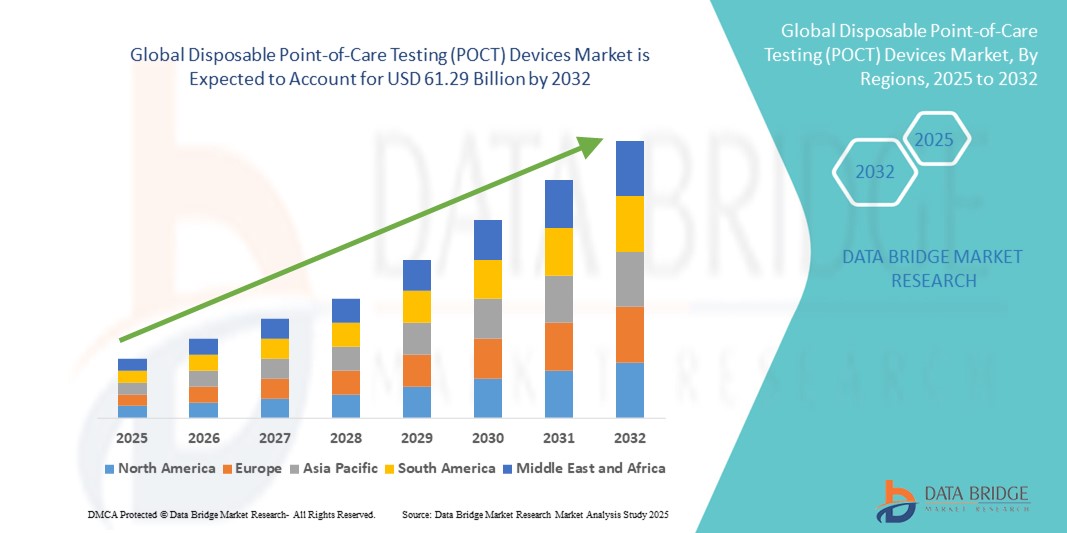
使い捨てポイントオブケア検査(POCT)機器市場規模
- 世界の使い捨てポイントオブケア検査(POCT)機器市場規模は2024年に373億1000万米ドルと評価され、予測期間中に6.40%のCAGRで成長し、2032年には612億9000万米ドル に達すると予想されています 。
- 市場の成長は、慢性疾患や感染症の罹患率の増加と、診療現場で結果を提供できる迅速な診断ソリューションの需要の高まりによって主に促進され、集中的な臨床検査への依存が軽減されています。
- さらに、病院、診療所、在宅ケア、遠隔医療現場において、携帯性に優れ、使いやすく、費用対効果の高い診断ツールへの需要が高まっており、使い捨てPOCT(Point-of-Care Test)デバイスが診断ソリューションとして定着しつつあります。これらの要因が相まって、使い捨てPOCTデバイスの普及が加速し、業界の成長を大きく後押ししています。
使い捨てポイントオブケア検査(POCT)デバイス市場分析
- 使い捨てのポイントオブケア検査(POCT)デバイスは、臨床、家庭、緊急の現場での迅速な診断用に設計されており、迅速な結果、使いやすさ、糖尿病、心血管の問題、感染症などの慢性および急性疾患の管理における重要な役割により、現代の医療においてますます重要になっています。
- 使い捨てPOCT機器の需要の高まりは、主に慢性疾患の蔓延、分散型検査の必要性の高まり、COVID-19パンデミックなどの出来事後の意識の高まり、在宅医療や農村部での導入の増加によって促進されています。
- 北米は、堅牢な医療インフラ、有利な償還政策、そして高度なPOCT技術の積極的な導入に支えられ、2023年には使い捨てPOCT(ポイント・オブ・ケア検査)機器市場において35.37%の収益シェアを獲得し、市場をリードしました。米国は、イノベーションと支援的な診断エコシステムによって、病院、診療所、在宅診断における導入率が高く、この地域をリードしています。
- アジア太平洋地域は、使い捨てポイントオブケア検査(POCT)機器市場において最も急速に成長している地域であり、医療インフラへの投資の増加、慢性疾患や感染症の発生率の上昇、中国やインドなどの国における分散型検査を推進する政府の取り組みにより、8%を超えるCAGRが予測されています。
- 消費者の自己モニタリングや在宅での疾病管理への傾向の高まりにより、OTCセグメントは2024年に55.6%の収益シェアで使い捨てポイントオブケア検査(POCT)デバイス市場を支配した。
レポートの範囲と使い捨てポイントオブケア検査(POCT)デバイス市場のセグメンテーション
|
属性 |
使い捨てポイントオブケア検査(POCT)デバイスの主要な市場洞察 |
|
対象セグメント |
|
|
対象国 |
北米
ヨーロッパ
アジア太平洋
中東およびアフリカ
南アメリカ
|
|
主要な市場プレーヤー |
|
|
市場機会 |
|
|
Value Added Data Infosets |
In addition to the insights on market scenarios such as market value, growth rate, segmentation, geographical coverage, and major players, the market reports curated by the Data Bridge Market Research also include in-depth expert analysis, pricing analysis, brand share analysis, consumer survey, demography analysis, supply chain analysis, value chain analysis, raw material/consumables overview, vendor selection criteria, PESTLE Analysis, Porter Analysis, and regulatory framework. |
Disposable Point-of-Care Testing (POCT) Devices Market Trends
Enhanced Accessibility and Diagnostic Accuracy Driving Adoption
- A significant and accelerating trend in the global Disposable Point-of-Care Testing (POCT) Devices market is the continuous improvement in accessibility, portability, and diagnostic accuracy of these devices, making them vital for both developed and emerging healthcare systems. The evolution of compact, easy-to-use POCT devices is empowering patients and healthcare providers with real-time diagnostic insights at the bedside, in remote locations, or even at home
- For instance, recent innovations in disposable POCT devices for COVID-19, influenza, and respiratory infections have demonstrated how rapid results directly support infection control, timely treatment, and reduced hospital burden. Companies are increasingly investing in developing single-use test kits with enhanced sensitivity and faster turnaround times
- Advancements in disposable POCT devices also include integrated biosensors and microfluidic technologies that improve precision while reducing the sample size required for testing. This allows for minimally invasive procedures such as finger-prick blood tests while maintaining high levels of diagnostic accuracy
- Furthermore, the growing use of POCT devices in chronic disease management, especially for diabetes and cardiovascular conditions, has accelerated adoption. Portable glucose monitoring strips, disposable cholesterol test kits, and cardiac marker POCT solutions are increasingly relied upon to ensure timely interventions and better patient outcomes
- The seamless integration of disposable POCT devices into digital health platforms and remote patient monitoring systems allows data from test kits to be automatically recorded and transmitted to healthcare providers. This enhances care coordination, reduces diagnostic delays, and supports personalized treatment approaches
- This trend towards more accessible, accurate, and connected POCT solutions is fundamentally reshaping patient expectations for healthcare delivery. Consequently, companies such as Abbott, Roche Diagnostics, and Siemens Healthineers are actively advancing disposable POCT devices with features such as rapid-read analyzers, multiplex testing capabilities, and compatibility with electronic health records (EHRs)
- The demand for Disposable POCT Devices that offer faster, reliable, and patient-friendly diagnostics is rapidly growing across both clinical and homecare settings, as consumers and providers increasingly prioritize convenience, efficiency, and improved healthcare outcomes
Disposable Point-of-Care Testing (POCT) Devices Market Dynamics
Driver
Growing Need Due to Rising Disease Burden and Demand for Rapid Testing
- The increasing prevalence of infectious diseases, chronic conditions, and global health emergencies is a significant driver for the heightened demand for Disposable Point-of-Care Testing (POCT) Devices. Their ability to provide rapid, reliable, and cost-effective diagnostics makes them essential in both clinical and homecare settings
- For instance, during 2023 and 2024, several health authorities and diagnostic companies expanded their portfolios of disposable POCT devices for COVID-19, influenza, and respiratory infections, highlighting the critical role of these tools in outbreak preparedness and patient management. Such developments are expected to fuel industry growth during the forecast period
- As patients and healthcare providers seek quicker diagnostic solutions to reduce delays in treatment, disposable POCT devices offer features such as real-time testing, minimal sample requirements, and ease of use, making them highly effective alternatives to central laboratory testing
- Furthermore, the growing emphasis on personalized and decentralized healthcare is making disposable POCT devices an integral component of modern care systems, with applications ranging from diabetes monitoring to cardiac biomarker detection and infectious disease screening
- The convenience of rapid results, suitability for remote or rural healthcare delivery, and increasing availability of user-friendly test kits are key factors propelling the adoption of disposable POCT devices across both developed and emerging healthcare markets
Restraint/Challenge
Concerns Regarding Accuracy, Regulation, and High Initial Adoption Costs
- Concerns surrounding the accuracy and reliability of certain disposable POCT devices pose a significant challenge to broader market penetration. While laboratory testing remains the gold standard, variations in sensitivity and specificity among POCT kits can limit trust and adoption
- For instance, high-profile reports of inconsistent performance in some rapid COVID-19 POCT kits made healthcare providers and regulators more cautious about widespread deployment, creating a barrier for acceptance in critical clinical decisions
- Addressing these concerns through stricter regulatory approvals, robust clinical validation, and continuous product improvements is crucial for building confidence among healthcare professionals and patients. Companies such as Abbott, Roche, and Siemens Healthineers have emphasized strong clinical data and regulatory certifications to strengthen market credibility
- In addition, the relatively high initial cost of advanced disposable POCT systems, compared to traditional diagnostic methods, can be a barrier to adoption in price-sensitive regions. While simpler glucose strips or pregnancy kits are affordable, more sophisticated POCT solutions for cardiac or oncology biomarkers often come with higher costs
- Although prices are gradually decreasing due to technological innovation and scaling, the perceived expense of advanced POCT devices can still hinder adoption, particularly in low-resource healthcare settings
- Overcoming these challenges through cost optimization, expanded insurance coverage, and wider training of healthcare workers will be vital for sustained market growth
Disposable Point-of-Care Testing (POCT) Devices Market Scope
The market is segmented on the basis of product, technology, prescription mode, and end user.
- By Product
On the basis of product, the market is segmented into glucose monitoring devices, cardiometabolic monitoring products, infectious disease testing products, coagulation monitoring products, pregnancy and fertility testing products, hematology testing products, drugs-of-abuse testing products, fecal occult testing products, cholesterol testing products, and others. The glucose monitoring devices segment accounted for the largest revenue share of 38.2% in 2024, driven by the rising prevalence of diabetes worldwide and the need for regular self-monitoring. Continuous demand for disposable glucose strips and portable glucose meters in both developed and emerging economies reinforces this segment’s dominance. Public health campaigns promoting early detection of diabetes, coupled with reimbursement support in several countries, have further bolstered adoption. In addition, the integration of glucose monitoring devices with digital health platforms for real-time data tracking is strengthening patient engagement. The convenience of home-based testing, along with advancements in non-invasive glucose sensors, continues to support consistent market growth.
The infectious disease testing products segment is expected to register the fastest CAGR of 15.4% from 2025 to 2032, fueled by the increasing incidence of viral and bacterial outbreaks such as COVID-19, influenza, tuberculosis, and HIV. Rapid diagnostic kits offering accurate results within minutes are becoming essential in hospital emergency rooms, community health centers, and home-based care. Government initiatives and investments in infectious disease preparedness are further driving adoption, especially in low-resource settings. The growing emphasis on early detection, combined with technological innovations such as multiplexed testing platforms, is enhancing the segment’s growth prospects. In addition, the rising awareness of infection control and patient safety protocols is creating sustained demand. The segment’s expansion is also supported by the need for decentralized diagnostics, particularly in rural and semi-urban areas where laboratory infrastructure is limited.
- By Technology
On the basis of technology, the market is segmented into dipsticks, lateral flow assays, molecular diagnostics, microfluidics, immunoassays, and others. The lateral flow assays segment dominated the market with a revenue share of 41.7% in 2024, owing to its simplicity, cost-effectiveness, and rapid results. These devices are widely adopted for applications including pregnancy testing, glucose monitoring, and infectious disease detection, especially in resource-limited settings. Their ease of use without specialized training makes them ideal for home and point-of-care testing. Lateral flow tests are also preferred in emergency and outpatient settings due to their portability and quick turnaround times. Government and NGO programs promoting community health screening have further reinforced the segment’s adoption. The widespread availability of lateral flow kits across retail and online channels has also contributed to market dominance.
The molecular diagnostics segment is projected to grow at the fastest CAGR of 16.2% from 2025 to 2032, driven by technological advancements in nucleic acid amplification, PCR, and microfluidic platforms. Molecular POCT devices provide high sensitivity and specificity, particularly for detecting complex infectious diseases such as HIV, HPV, and COVID-19 variants. Integration into hospital laboratories and mobile testing units enables real-time pathogen detection and outbreak management. Rising demand for accurate diagnostics in critical care and pandemic preparedness programs is further accelerating growth. Continuous miniaturization and automation of molecular testing platforms are enhancing accessibility and efficiency. In addition, the increasing adoption of personalized medicine and precision diagnostics is expanding the segment’s global footprint.
- By Prescription Mode
処方箋に基づいて、市場は処方箋医薬品と市販薬に分類されます。消費者の自己モニタリングや在宅検査への嗜好の高まりを背景に、OTCセグメントは2024年に55.6%という最大の収益シェアを占めました。妊娠検査キット、コレステロール検査装置、血糖値モニターなどの製品は、薬局やオンラインプラットフォームを通じてますます入手しやすくなり、患者は医療機関を受診することなく検査を行うことができます。健康意識の高まり、手頃な価格、そして使いやすさは、OTCデバイスの優位性をさらに強化しています。迅速なポイントオブケア診断の利便性は、服薬遵守と早期発見を促進します。予防医療プログラムを支援する政府の取り組みは、このセグメントの採用を促進しています。さらに、結果を解釈するための遠隔医療サポートが利用できることで、患者の自己検査に対する信頼が高まります。
処方箋に基づくセグメントは、凝固モニタリング、心血管代謝検査、高度な感染症検出といった複雑な用途における医師の監督下での診断ソリューションへの需要に支えられ、2025年から2032年にかけて12.8%という最も高いCAGRを記録すると予想されています。診断精度と臨床監督を重視する規制が、処方箋に基づくPOCTデバイスの導入を促進しています。病院や専門クリニックは、誤診を減らすため、高リスク患者には処方箋に基づくソリューションを好んでいます。精密医療と医師主導モニタリングへのトレンドが、このセグメントの需要を押し上げています。病院の電子健康記録(EHR)との統合により、データ管理と患者追跡が強化されます。処方箋に基づくデバイスの高度な分析機能は、その市場ポテンシャルをさらに高めています。
- エンドユーザー別
エンドユーザーに基づいて、市場は病院、診療所、在宅ケア、研究室、外来診療センター、その他に分類されます。病院セグメントは、患者数の増加、複雑な臨床症例、救急・集中治療室における迅速な結果を求めるニーズに牽引され、2024年には47.3%という最大の収益シェアで市場を席巻しました。病院は、訓練を受けたスタッフ、電子カルテとの統合、感染対策用の使い捨てキットといったメリットを享受しており、これらが市場における優位性を強化しています。また、病院は急性期と慢性期の両方の疾患管理の中核拠点としての役割も担っています。さらに、病院における高度なPOCT機器の導入は、ワークフローの効率化と患者の安全確保に貢献しています。
在宅ケア分野は、分散型検査と患者エンパワーメントの需要の高まりを背景に、2025年から2032年にかけて14.7%という最も高いCAGRを記録すると予測されています。患者は、糖尿病や心血管疾患などの慢性疾患を自宅で管理するために、デジタルヘルスプラットフォーム、スマートフォン対応のPOCTデバイス、遠隔モニタリングツールの利用をますます増やしています。在宅ケアは、通院回数を減らし、医療費を削減し、利便性を高めます。遠隔医療の統合と遠隔患者サポートサービスが、この導入をさらに加速させています。予防医療と慢性疾患管理に対する意識の高まりは、在宅検査の急速な成長に貢献しています。
使い捨てポイントオブケア検査(POCT)デバイス市場の地域分析
- 北米は、高度な医療インフラ、強力な償還枠組み、革新的な診断技術の早期導入に支えられ、2023年には使い捨てポイントオブケア検査(POCT)機器市場で35.37%の収益シェアを獲得し、市場をリードしました。
- 生活習慣病の蔓延、感染症の発生率の上昇、そして迅速で信頼性の高い診断ソリューションに対する患者の強い要望により、北米はこの業界の世界的リーダーとしての地位を確固たるものにしています。
- この地域は、トップクラスの診断機器メーカーの存在、高い研究開発費、そしてPOCT製品の革新と商業化を加速させる有利な規制環境の恩恵も受けています。
米国における使い捨てPOCT機器市場の洞察
米国では、使い捨てのPOCT(ポイント・オブ・ケア検査)機器が北米で最大のシェアを占めています。これは、堅牢な診断エコシステム、早期疾患発見に対する政府の強力な支援、そして分散型検査ソリューションの急速な導入拡大に牽引されています。自己検査キットへの高い需要、分子POCTプラットフォームの急速な普及、そしてリアルタイムモニタリングのためのデジタル統合への注力などが、成長を牽引しています。さらに、診断企業、医療提供者、遠隔医療プラットフォーム間のパートナーシップの増加は、より迅速で患者中心のケアを可能にすることで、米国のPOCT環境を変革しつつあります。
カナダの使い捨てPOCTデバイス市場の洞察
カナダの使い捨てポイントオブケア検査(POCT)機器は、医療政策が地方や医療サービスが行き届いていない地域におけるタイムリーな診断へのアクセス向上に重点を置いていることから、着実に成長しています。糖尿病、呼吸器疾患、心血管疾患の罹患率の上昇により、使いやすいPOCT機器への需要が高まっています。予防医療の拡大に向けた政府支援の取り組みや、在宅検査に対する消費者の意識の高まりも、POCT機器の普及を後押ししています。さらに、国際的な診断企業との提携や現地製造業への投資により、カナダにおける費用対効果の高いPOCTソリューションの提供が加速しています。
欧州の使い捨てPOCTデバイス市場
The Europe disposable point-of-care testing (POCT) devices is projected to witness substantial growth in the Disposable POCT Devices market over the forecast period, supported by strict healthcare regulations, a well-developed public health system, and rising emphasis on preventive medicine and early diagnostics. Increasing healthcare expenditure, coupled with rapid technological innovation, is creating a favorable environment for the adoption of POCT devices across hospitals, clinics, pharmacies, and homecare. The push for sustainability and the integration of digital health tools with diagnostic solutions are further shaping the European market.
U.K. Disposable POCT Devices Market Insight
The U.K. disposable point-of-care testing (POCT) devices is experiencing rapid expansion in the POCT devices market due to strong consumer preference for at-home diagnostics, heightened concerns regarding chronic and infectious diseases, and government programs encouraging preventive healthcare. The growing popularity of glucose monitoring kits, fertility diagnostics, and infectious disease test kits is driving demand. In addition, the U.K.’s robust e-commerce and pharmacy networks are making POCT devices more accessible, while digital integration with mobile apps and telehealth services is further strengthening adoption.
Germany Disposable POCT Devices Market Insight
The Germany disposable point-of-care testing (POCT) devices represents one of Europe’s largest and most advanced POCT markets, supported by its strong focus on innovation, sustainability, and digital transformation in healthcare. Hospitals and clinics are increasingly adopting advanced POCT solutions for real-time monitoring, while consumers are showing growing interest in home-based diagnostic devices for diabetes and cardiac conditions. The integration of POCT devices with electronic health records and connected healthcare systems is enhancing efficiency, while demand for eco-friendly, accurate, and affordable solutions is shaping purchasing preferences in the German market.
Asia Pacifice Disposable POCT Devices Market Insight
The Asia-Pacific disposable point-of-care testing (POCT) devices is the fastest-growing region in the Disposable POCT Devices market, projected to expand at a CAGR exceeding 8% between 2025 and 2032, fueled by rising healthcare investments, rapid urbanization, and government-led initiatives to improve accessibility of diagnostics in underserved areas. The region’s increasing burden of chronic and infectious diseases, coupled with an expanding middle-class population and growing technological capabilities, is driving significant uptake of POCT solutions. Asia-Pacific is also emerging as a major manufacturing hub, offering affordable and scalable diagnostic devices for both domestic and international markets.
China Disposable POCT Devices Market Insight
The China disposable point-of-care testing (POCT) devices market held the largest share of the Asia-Pacific market in 2023, supported by its expanding middle class, rising healthcare spending, and extensive government policies focused on strengthening primary and preventive care. Rapid urbanization and the widespread adoption of smart healthcare solutions are fueling demand for POCT devices across hospitals, diagnostic labs, and homecare settings. In addition, China’s robust domestic manufacturing sector ensures affordability and wide availability, while initiatives promoting smart cities and digital health ecosystems are accelerating integration of connected POCT technologies.
India Disposable POCT Devices Market Insight
The India disposable point-of-care testing (POCT) devices market is projected to record the fastest CAGR in the region, fueled by a high disease burden, particularly in diabetes, cardiovascular, and infectious conditions. Expanding healthcare infrastructure, combined with government programs promoting decentralized testing in rural areas, is driving adoption of affordable POCT solutions. Consumer preference for easy-to-use self-testing kits, coupled with the rise of mobile health and telemedicine platforms, is transforming the Indian diagnostic landscape. The increasing involvement of private players and partnerships with global diagnostic companies are further boosting growth.
Disposable Point-of-Care Testing (POCT) Devices Market Share
The disposable point-of-care testing (POCT) Devices industry is primarily led by well-established companies, including:
- Danaher Corporation (U.S.)
- Abbott (U.S.)
- F. Hoffmann-La Roche Ltd. (Switzerland)
- BD (U.S.)
- Trinity Biotech Ireland (Ireland)
- Cardinal Health (U.S.)
- Thermo Fisher Scientific (U.S.)
- Chembio Diagnostics, Inc. (U.S.)
- Meridian Bioscience, Inc. (U.S.)
- Sekisui Diagnostics (U.S.)
- OraSure Technologies, Inc. (U.S.)
- Quidel Corporation (U.S.)
- Siemens Healthineers AG (Germany)
- Nova Biomedical (U.S.)
- EKF Diagnostics Holdings plc (U.K.)
- Beckman Coulter, Inc. (U.S.)
- Bayer AG (Germany)
- BIOMÉRIEUX (France)
- Johnson & Johnson and its affiliates (U.S.)
Latest Developments in Global Disposable Point-of-Care Testing (POCT) Devices Market
- In April 2021, Abbott began nationwide shipping of the BinaxNOW COVID-19 Ag Self Test for over-the-counter, non-prescription home use in the United States after receiving FDA Emergency Use Authorization (EUA). This milestone expanded access to disposable at-home antigen testing through retail channels, enabling consumers to perform rapid COVID-19 detection without visiting healthcare facilities. The move marked one of the first large-scale rollouts of disposable POCT devices for home diagnostics in the U.S. market
- In December 2021, Roche received FDA Emergency Use Authorization for the Roche COVID-19 At-Home Test (OTC). This authorization allowed frequent self-testing using disposable lateral-flow cassette devices, significantly enhancing accessibility of POCT diagnostics for households and contributing to early detection and isolation efforts during ongoing pandemic surges
- In April 2022, InspectIR Systems achieved FDA EUA for its COVID-19 Breathalyzer, becoming the first FDA-authorized breath-based diagnostic test for SARS-CoV-2. This innovation broadened the spectrum of rapid point-of-care testing options beyond traditional swab-based formats, introducing a novel, non-invasive disposable POCT modality for real-time viral detection
- In May 2022, Labcorp received FDA EUA for its Seasonal Respiratory Virus RT-PCR Direct-to-Consumer (DTC) Test, covering COVID-19, influenza, and RSV. The test incorporated at-home self-collection with mail-in processing, marking the first FDA authorization of a multi-analyte, direct-to-consumer POCT solution. This development represented a major step toward more comprehensive disposable testing options for multiple respiratory infections
- In February 2023, Lucira Health secured the first FDA EUA for an OTC at-home combination test capable of detecting and differentiating influenza A/B and COVID-19 within a single-use device. Delivering results in approximately 30 minutes, this advancement reinforced the role of disposable POCT devices in multi-pathogen detection and significantly improved convenience for consumers during flu seasons coinciding with COVID-19 outbreaks
- In June 2023, Cue Health obtained FDA De Novo marketing authorization for the Cue COVID-19 Molecular Test for both home and point-of-care use. This was the first COVID-19 home test authorized through the traditional premarket review pathway, moving beyond EUA status. The milestone highlighted the regulatory transition of POCT devices from temporary pandemic-driven approvals to long-term integration into healthcare and consumer markets
- In November 2023, ACON Laboratories’ Flowflex COVID-19 Antigen Home Test became the first OTC COVID-19 antigen test to complete the traditional FDA premarket review process and achieve full clearance for marketing, rather than relying solely on EUA. This established Flowflex as a benchmark for quality and reliability in disposable POCT devices, reinforcing consumer trust in at-home diagnostics
- In October 2024, Healgen Scientific gained FDA De Novo marketing authorization for its Rapid Check COVID-19/Flu A&B Antigen Test, making it the first at-home combination flu and COVID antigen test authorized outside of emergency use provisions. This milestone significantly expanded the utility of disposable POCT devices for seasonal and pandemic respiratory illnesses, meeting rising demand for dual-detection solutions
- 2025年5月、ACON Laboratoriesは、2024年7月にEUAに基づいて最初に配布されていたFlowflex Plus COVID-19 + Flu A/BホームテストのFDA 510(k)承認を発表しました。この承認により、米国市場での複数の分析対象物、使い捨てのPOCT抗原コンボテストの利用可能性が拡大し、日常のヘルスケアにおける手頃な価格で消費者に優しい診断の役割がさらに強化されました。
- 2025年6月、米国FDAは、承認された在宅OTC COVID-19診断検査の公開リストと、完全な販売承認を取得した検査のリストを更新しました。これは、緊急使用許可から従来の承認手続きへの規制の移行を反映しており、パンデミック時代を過ぎて安定に向かう世界の使い捨てPOCTデバイス市場にとって重要な転換点となります。
SKU-
世界初のマーケットインテリジェンスクラウドに関するレポートにオンラインでアクセスする

- インタラクティブなデータ分析ダッシュボード
- 成長の可能性が高い機会のための企業分析ダッシュボード
- カスタマイズとクエリのためのリサーチアナリストアクセス
- インタラクティブなダッシュボードによる競合分析
- 最新ニュース、更新情報、トレンド分析
- 包括的な競合追跡のためのベンチマーク分析のパワーを活用
調査方法
データ収集と基準年分析は、大規模なサンプル サイズのデータ収集モジュールを使用して行われます。この段階では、さまざまなソースと戦略を通じて市場情報または関連データを取得します。過去に取得したすべてのデータを事前に調査および計画することも含まれます。また、さまざまな情報ソース間で見られる情報の不一致の調査も含まれます。市場データは、市場統計モデルと一貫性モデルを使用して分析および推定されます。また、市場シェア分析と主要トレンド分析は、市場レポートの主要な成功要因です。詳細については、アナリストへの電話をリクエストするか、お問い合わせをドロップダウンしてください。
DBMR 調査チームが使用する主要な調査方法は、データ マイニング、データ変数が市場に与える影響の分析、および一次 (業界の専門家) 検証を含むデータ三角測量です。データ モデルには、ベンダー ポジショニング グリッド、市場タイムライン分析、市場概要とガイド、企業ポジショニング グリッド、特許分析、価格分析、企業市場シェア分析、測定基準、グローバルと地域、ベンダー シェア分析が含まれます。調査方法について詳しくは、お問い合わせフォームから当社の業界専門家にご相談ください。
カスタマイズ可能
Data Bridge Market Research は、高度な形成的調査のリーダーです。当社は、既存および新規のお客様に、お客様の目標に合致し、それに適したデータと分析を提供することに誇りを持っています。レポートは、対象ブランドの価格動向分析、追加国の市場理解 (国のリストをお問い合わせください)、臨床試験結果データ、文献レビュー、リファービッシュ市場および製品ベース分析を含めるようにカスタマイズできます。対象競合他社の市場分析は、技術ベースの分析から市場ポートフォリオ戦略まで分析できます。必要な競合他社のデータを、必要な形式とデータ スタイルでいくつでも追加できます。当社のアナリスト チームは、粗い生の Excel ファイル ピボット テーブル (ファクト ブック) でデータを提供したり、レポートで利用可能なデータ セットからプレゼンテーションを作成するお手伝いをしたりすることもできます。











