



製品種別(ベーカリー製品、朝食 シリアル, スナック/機能性バー, 乳製品製品, 赤ちゃんの食べ物, その他の製品タイプ), 流通チャネル (スーパーマーケット/スーパーマーケット, スペシャリスト小売店, コンビニエンスストア, オンライン小売, その他の流通チャネル)- 業界動向と予測 2033
新着情報 機能性食品市場規模と成長率
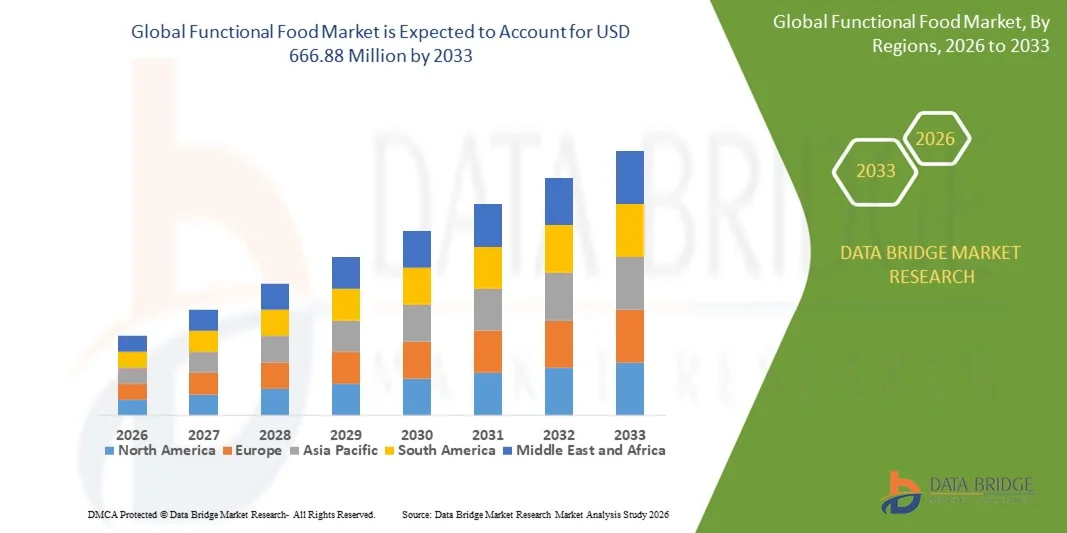
- データブリッジ市場調査分析では、グローバルな機能性食品市場規模が評価されました。2025年のUSD 379.53,000,000そして到達する予定2033年 666.88万ドル, お問い合わせカリフォルニア 7.30%予報期間中
- 市場成長は、健康意識の上昇、強化された栄養素が豊富な製品に対する需要の増加、ダイエットを通じた予防医療のための消費者の嗜好の増加によって主に燃料を供給されます
- 慢性疾患の蔓延を増加させ、健康なライフスタイルの採用と相まって、プロバイオティクス、ビタミン、ミネラル、植物由来成分などの機能性食品の需要を促進
市場規模と予測
- グローバル市場価値 (2025):米ドル 379.53 百万
- 期待される市場価値 (2033):資本金 666.88百万円
- 予測CAGR (2026–2033):7.30%
機能性食品市場の主要なテイクアウトは何ですか
- 食品加工の技術革新、新しい生体活性成分の配合、パーソナライズされた栄養ソリューションの開発により、市場は強い成長を目撃しています
- 免疫力を高めることと腸の健康促進食品についての意識を高める, 健康食品を促進する政府の取り組みとともに, 機能食品製品の採用を奨励しています。
- 北米は、2025年に35.20%の最大の収益シェアで機能性食品市場を支配し、健康意識を高め、強化された栄養素が豊富な製品に対する需要を高め、予防医療の実践の普及を広く支持
- アジア太平洋地域は、世界最高成長率を目撃する見込み機能性食品市場, 予防医療の意識を高めることによって駆動, ミドルクラスの人口を上昇させる, 急速な都市化, より健康的な食事や機能性食品消費を促進する政府の取り組み
- ザ・オブ・ザ・酪農製品セグメントは、2025年に最大の市場収益シェアを保持し、強化ミルク、ヨーグルト、およびプロバイオティクス飲料の広範な採用によって駆動しました。 乳製品ベースの機能性食品は、栄養上の利点、消費の容易さ、日々の食事療法に取り入れて、健康に配慮した消費者の間で人気のある選択をしています。
レポートスコープと機能性食品市場セグメント
|
アトリビュート |
機能性食品キーマーケットの洞察 |
|
カバーされる区分 |
|
|
カバーされた国 |
北アメリカ
ヨーロッパ
アジアパシフィック
中東・アフリカ
南米
|
|
主要市場プレイヤー |
|
|
マーケットチャンス |
|
|
付加価値データインフォセットを追加 |
市場価値、成長率、セグメンテーション、地理的カバレッジ、主要なプレーヤーなどの市場シナリオに関する洞察に加えて、Data Bridge Market Researchがキュレーションする市場レポートには、詳細なエキスパート分析、価格設定分析、ブランドシェア分析、消費者調査、デモグラフィ分析、サプライチェーン分析、バリューチェーン分析、原材料/消耗品の概要、ベンダー選定基準、PESTLE分析、ポーター分析、規制フレームワークが含まれます。 |
機能性食品市場の重要な傾向は何ですか
健康志向と強化食品の調達需要
- 予防に着目するヘルスケア消費者は免疫サポート、消化器の健康、心の健康などの特定の健康上の利点を提供する製品を好むので、機能性食品市場を著しく形成しています。 機能性食品は、毎日の食事療法にシームレスにフィットしながら、追加の栄養素、生体活性化合物、およびプロバイオティクスを提供する能力のためにトラクションを得ています。 この傾向は、ベーカリー、乳製品、飲料、スナックセグメント全体での採用を強化し、メーカーを奨励し、消費者のニーズを進化させる新しい処方を革新します
- 生活習慣病、栄養、および長寿に関する意識を高めることで、食前食、飲料、乳製品、栄養補助食品の機能性食品の需要を加速しました。 健康志向の消費者は、ビタミン、ミネラル、繊維、植物由来成分を豊富に含んだ製品を積極的に求めています。ブランドが自然で清潔なラベル処方を優先させるよう求めています。 また、成分サプライヤーと製品メーカーの間で機能的な利点を高めるためのコラボレーションにもつながっています。
- ウェルネスとクリーンラベルのトレンドは、透明なラベリング、科学的なバッキング、および環境に優しい調達を強調するメーカーと、購買の決定に影響を及ぼしています。 これらの要因は、ブランドが競争力のある市場で製品を差別化し、消費者の信頼を構築するのに役立ちます, また、非GMOなどの認定の採用を駆動しながら, オーガニック, グルテンフリー. 企業は、消費者を意識するためにブランドの位置と魅力を強化するために、これらの利点を強調するために、マーケティングキャンペーンを使用してますますます増加しています
- たとえば、2024年、スイスのフランスとネステレのダノンは、強化飲料を組み込んだ機能性食品ポートフォリオを拡大し、プロバイオティックヨーグルト栄養豊富なスナック。 これらは、小売、専門、オンラインチャネルを横断して、健康志向の製品に対する消費者の好みを高めるために導入されました。 製品は、全体的なウェルネスに貢献し、ブランドの忠誠性を高め、ターゲットオーディエンスの間で購入を繰り返すためにも販売されました
- 機能性食品の需要が高まっていますが、持続的な市場拡大は、継続的な研究開発、費用対効果の高い生産、栄養効果の維持に左右されます。 メーカーは、スケーラビリティの向上、サプライチェーンの信頼性の向上、およびより広範な採用のためのコスト、品質、健康上の利点のバランスの革新的なソリューションの開発にも注力しています。
機能性食品市場ダイナミクス
ドライバー
健康志向製品および強化製品に対する環境の拡大
- 特定の健康上の利点を提供する食品の消費者需要を高めることは、機能性食品市場の主要なドライバーです。 製造業者は、ビタミン、ミネラル、繊維、およびプロバイオティクスで、健康に配慮した消費者の要件を満たし、規制基準を遵守します。 このトレンドは、新しい生体活性成分や植物由来のソースへの研究を促し、製品多様化をサポート
- 飲料、ベーカリー、乳製品、スナック、および栄養補助食品のアプリケーションを拡大することは、市場の成長に影響を与える。 機能性食品は、味と利便性を維持しながら免疫、消化、および全体的なウェルネスを強化し、製造業者が高品質の栄養価の高い提供のために消費者の期待を満たすことを可能にします。 世界的な予防医療の採用が増加し、この傾向を強化
- 食品・飲料メーカーは、製品のイノベーション、マーケティングキャンペーン、健康認証を通じて機能性食品ベースの処方を積極的に推進しています。 これらの取り組みは、健康に重点を置いた持続可能な製品のための成長する消費者の好みによって支えられています。また、原材料サプライヤーとブランドとのパートナーシップを促進し、製品性能を向上させ、環境フットプリントを削減します。
- たとえば、2023年、米国・ヤクルト州のペプシコは、飲料や乳製品において、プロバイオティクスや強化された成分の含有量が増加したと報告した。 この拡張は、免疫ブーム、非GMO、および植物ベースの製品に対する高い消費者需要の高まり、繰り返しの購入と製品の差別を促進しました。 どちらの企業も、消費者の信頼とブランドの忠誠性を強化するために、マーケティングキャンペーンで科学的検証と持続可能性を強調しました
- 健康を意識し、清潔なラベルの傾向サポートの成長を増加させるが、より広い採用は、コストの最適化、成分の可用性、スケーラブルな生産プロセスに依存します。 サプライチェーンの効率性、持続可能な調達、および高度な処方技術への投資は、グローバルな需要を満たし、競争上の優位性を維持するために不可欠です
拘束/チャレンジ
従来の食品製品と比較して高いコストと限られた意識
- 従来の製品と比較して、機能性食品の比較的高いコストは、価格に敏感な消費者の採用を制限する重要な課題です。 優れた成分、複雑な配合プロセス、および強化技術は、高い価格設定に貢献します。 また、特定の生体活性成分の変動供給は、コスト安定性と市場浸透にさらに影響を及ぼす可能性があります
- 消費者およびメーカーの意識は、特に予防的な健康の傾向がまだ現れている市場を開発する不均等に残っています。 機能的な利点の限られた理解は特定のプロダクト部門を渡る採用を制限します。 また、機能的な食品に対する教育的取り組みが最小限である新興国でイノベーションが加速する
- サプライチェーンと流通の課題は、機能的な食品は、専門サプライヤーから調達し、厳格な品質基準に遵守する必要があるため、市場成長にも影響を与えます。 ロジスティックな複雑性、温度制御の要件、およびいくつかの強化された製品の保存寿命は、運用コストを増加させます。 企業は、製品の完全性を維持するために、低温貯蔵、適切な取り扱い、効率的な輸送ネットワークに投資しなければなりません
- たとえば、2024年、インド、東南アジアのディストリビューターが強化された飲料と機能性スナックを供給することで、従来型食品と比較して、より高価な機能上の利点の認識が制限されると報告しました。 貯蔵条件および証明の承諾は付加的な障壁でした。 これらの要因はまた、可視性および販売に影響を与えるプレミアム機能製品のための棚スペースを制限するためにいくつかの小売店を促しました
- これらの課題を克服すると、コスト効率の高い生産、流通ネットワークの拡大、およびメーカーや消費者向けの集中的な教育取り組みが必要になります。 小売業者、フードサービス事業者、認証機関とのコラボレーションにより、グローバルな機能性食品市場における長期的成長の可能性を享受できます。 さらに、コスト競争力のある処方を開発し、健康と持続可能性のメリットに関するマーケティング戦略を強化することは、広範な採用に不可欠です
機能性食品市場はどのように区分されますか
市場は製品の種類と流通チャネルに基づいてセグメント化されます。
- 製品タイプ別
製品の種類に基づいて、機能性食品市場は、ベーカリー製品、朝食シリアル、スナック/機能性バー、乳製品、ベビーフード、その他の製品タイプに分けられます。 乳製品部門は、強化ミルク、ヨーグルト、プロバイオティクス飲料の幅広い採用によって駆動され、2025年に最大の市場収益シェアを保持しました。 乳製品ベースの機能性食品は、栄養上の利点、消費の容易さ、日々の食事に組み込まれて、健康に配慮した消費者の間で人気のある選択をしています。
スナック/ファンクションバーのセグメントは、2026年から2033年までの最も速い成長率を目撃し、オンザ・ゴー栄養、利便性、およびタンパク質強化または繊維強化オプションの需要の増加によって推進されると予想されます。 機能性スナックバーは、ミレニアル世代や作業の専門家の間で特に人気があり、それらのポータビリティとアクティブなライフスタイルをサポートする能力は、多くの場合、伝統的な食事に便利な代替として役立つ。
- 流通チャネル
流通チャネルに基づいて、市場はスーパーマーケット/スーパーマーケット、専門家の小売店、コンビニエンスストア、オンライン小売および他の配分チャネルに分けられます。 スーパーマーケット/Hypermarkets の区分は機能食糧プロダクト、昇進の提供および高い消費者の足場の広範な供給による 2025 の最大の共有を保持しました。 大規模な小売チェーンは、さまざまな強化された機能的な食品に簡単にアクセスでき、可視性を高め、販売を運転します。
オンライン小売セグメントは、2026年から2033年までの最も速い成長率を目撃し、電子商取引の普及、消費者の出荷の好み、ニッチ、プレミアム、およびパーソナライズされた機能性食品の可用性を高めることが期待されます。 オンラインプラットフォームは、消費者がさまざまなブランドにアクセスし、レビューを読んで、商品を便利に購入し、市場成長を加速することができます。
機能性食品市場の最大のシェアはどの地域ですか
- 北米は、2025年に35.20%の最大の収益シェアで機能性食品市場を支配し、健康意識を高め、強化された栄養素が豊富な製品に対する需要を高め、予防医療の実践の普及を広く支持
- 地域における消費者は、利便性、栄養上の利点、および科学的に支持された主張を高く評価し、免疫、消化器の健康、および全体的なウェルネスのための標的ソリューションを提供しています
- 高い使い捨て所得、高度な小売、電子商取引インフラ、ライフスタイル関連疾患の普及、健康意識の消費者に好まれる選択肢として機能性食品の確立により、より広く採用されています。
米国機能性食品市場情報
米国の機能性食品市場は、北米で2025年で最大の収益シェアを獲得し、健康意識を高め、フィットネスとウェルネスのトレンドを拡張し、強化された生体活性成分食品の消費者の好みを増加させました。 消費者は、利便性と味を組み合わせながら、免疫、消化器の健康、エネルギーをサポートする製品を求めています。 オンライン食料品プラットフォーム、専門健康ストア、サブスクリプションサービスの人気が高まっています。 また、食品ブランドと栄養専門家のパートナーシップは、イノベーションを推進し、市場成長を促進しています。
欧州機能性食品市場の洞察
欧州の機能性食品市場は、2026年から2033年までの最も速い成長率を目撃し、主に老化人口によって運転され、生活習慣病の蔓延を増加させ、健康食を促進する政府の取り組みが期待されています。 栄養とウェルネスに関する高い消費者意識と相まって都市化を上げ、強化食品の採用を促進しています。 ヨーロッパの消費者も植物ベースの、プロバイオティック、グルテンフリー製品に描画されます。 地域は、ベーカリー、乳製品、飲料用途の大きな成長を経験しており、機能性食品は日々の食事やウェルネスプログラムに組み込まれています。
U.K. 機能性食品市場の洞察
U.K.機能性食品市場は、2026年から2033年までの最も速い成長率を目撃し、健康意識を高め、免疫増強と消化器の健康製品に対する需要が高まり、パーソナライズされた栄養に関心が高まります。 消費者は、機能的な食品を全体的な健康を維持するための便利なソリューションとして選択しています。 U.K.の強力な小売および電子商取引エコシステム、および強化されたおよびプラントベースの製品へのアクセスが広く普及し、市場の成長を刺激し続けることが期待されています。
ドイツ 機能性食品市場 Insight
ドイツの機能性食品市場は、2026年から2033年までの最も速い成長率を目撃し、予防医療の消費者の関心を高めることで燃料を供給し、自然と強化された製品に対する需要が高まり、機能的な利点の科学的検証に重点を置いています。 ドイツは、食品加工インフラを整備し、持続可能性に重点を置き、機能性食品の採用を促します。 機能性成分をベーカリー、乳製品、飲料製品に統合することはますます一般的になっています。消費者の好みに合わせて、健康で便利で高品質な製品を提供しています。
アジア・パシフィックの機能性食品市場情報
アジア・パシフィックの機能性食品市場は、2026年から2033年にかけて急速に成長率を目撃し、都市化、使い捨て所得の上昇、中国、日本、インドなどの国における健康とウェルネスの意識を高めることが期待されています。 地域が強化された栄養素が豊富な製品に興味をもち、ヘルシーなダイエットを促進する政府の取り組みとともに、採用を推進しています。 さらに、機能性材料のAPACの強力な製造拠点は、より広範な消費者基盤に製品の可能性とアクセシビリティを保証します。
日本機能性食品市場情報
日本機能性食品市場は、国の老化人口、高健康意識、予防栄養の優先順位により、2026年から2033年までの最速成長率を目撃する見込みです。 免疫力、消化力、全体的な健康を支える日本の消費者の高度の価値プロダクト。 機能性食品の伝統的な食、コンビニエンスフード、飲料の統合が成長しています。 さらに、科学的検証とイノベーションを重視した国は、小売と機関のセグメントの両方で製品開発と採用を奨励しています。
中国機能性食品市場の洞察
2025年にアジア・パシフィックで最大の市場収益シェアを占める中国機能性食品市場は、国の拡大中級、増加する使い捨て収入、そして健康意識のライフスタイルの採用の増加に起因しています。 機能性食品は、ベーカリー、乳製品、スナック、飲料の分野でますます普及しています。 健康ダイエットへの押し、病気予防の意識を高め、国内および国際メーカーの強い存在は、中国の市場で繁殖する重要な要因です。 eコマースおよび小売チャネルによる可用性の向上により、さらなる成長をサポートします。
機能性食品市場でトップ企業は
機能性食品業界は、主に、以下のような広範な企業によって導かれています。
- アーチャー・ダニエルズ・ミッドランド(アメリカ)
- 株式会社アシュランド(米国)
- カルギル(アメリカ)
- CPケルコ(アメリカ)
- EI DuPont De Nemours & Co.(米国)
- 株式会社フューエルストデイローソン(イギリス)
- Ingredion Inc.(米国)
- 株式会社ケリー(米国)
- Tate&Lyle PLC(イギリス)
- TIC Gums Inc.(米国)
- 英国食品関連(英国)
- アムウェイ(アメリカ)
- ネスレ(スイス)
- DMH成分(米国)
- アジノモト株式会社(日本)
機能性食品市場の最新動向とは
- 大手乳製品メーカーであるYoplaitは、SKYR Energyブランドのもとに高タンパク質ヨーグルトを発売し、製品ポートフォリオを拡大しました。 新しいヨーグルトは実フルーツの部分を特色にし、ビタミンB6およびビタミンDと、いちご及び blackcurrantおよびマンゴー及び情熱のフルーツの味で利用できる強化されます。 この開発は、タンパク質が豊富で栄養強化された乳製品に対する需要が高まっています。 発売は、Yoplaitの機能性食品部門のプレゼンスを強化し、より健康的なスナックニングオプションの消費者選択を強化し、健康に配慮した消費者を引き付けることで、タンパク質ヨーグルト市場にプラスの影響を期待しています
- 2023年5月、ジャボ・ビバレッジ(Javo飲料)は、食品サービス事業者にターゲットを絞った全自然エネルギーレモネードと風味豊かなお茶を導入しました。 立ち上げは、機能性と天然飲料の消費者の嗜好を高めます。 機能性飲料の拡充により、Javoの飲料は成長する機能性飲料の区分の市場シェアを捕獲し、ブランドの可視性を高め、より健康な飲料の選択の採用を促進することを目指しています
- 2023年4月、Hangobiは米国ベースの飲料メーカーで、ウェイク、エッセンシャル、カルムの3種類で強化された飲料を発売しました。 KeHE、UNFI Supervalu、C&S Wholesaleなどの販売代理店と連携し、Hangobiは、ニューヨークの広範な可用性を保証します。 この開発は、エネルギー、ウェルネス、リラクゼーションをサポートする機能的な飲料オプションを提供することに焦点を当てています。 創業は、強化された飲料分野におけるハンゴビの市場位置を強化し、機能性飲料の幅広い消費者採用を推進する見込みです。
SKU-
世界初のマーケットインテリジェンスクラウドに関するレポートにオンラインでアクセスする

- インタラクティブなデータ分析ダッシュボード
- 成長の可能性が高い機会のための企業分析ダッシュボード
- カスタマイズとクエリのためのリサーチアナリストアクセス
- インタラクティブなダッシュボードによる競合分析
- 最新ニュース、更新情報、トレンド分析
- 包括的な競合追跡のためのベンチマーク分析のパワーを活用
調査方法
データ収集と基準年分析は、大規模なサンプル サイズのデータ収集モジュールを使用して行われます。この段階では、さまざまなソースと戦略を通じて市場情報または関連データを取得します。過去に取得したすべてのデータを事前に調査および計画することも含まれます。また、さまざまな情報ソース間で見られる情報の不一致の調査も含まれます。市場データは、市場統計モデルと一貫性モデルを使用して分析および推定されます。また、市場シェア分析と主要トレンド分析は、市場レポートの主要な成功要因です。詳細については、アナリストへの電話をリクエストするか、お問い合わせをドロップダウンしてください。
DBMR 調査チームが使用する主要な調査方法は、データ マイニング、データ変数が市場に与える影響の分析、および一次 (業界の専門家) 検証を含むデータ三角測量です。データ モデルには、ベンダー ポジショニング グリッド、市場タイムライン分析、市場概要とガイド、企業ポジショニング グリッド、特許分析、価格分析、企業市場シェア分析、測定基準、グローバルと地域、ベンダー シェア分析が含まれます。調査方法について詳しくは、お問い合わせフォームから当社の業界専門家にご相談ください。
カスタマイズ可能
Data Bridge Market Research は、高度な形成的調査のリーダーです。当社は、既存および新規のお客様に、お客様の目標に合致し、それに適したデータと分析を提供することに誇りを持っています。レポートは、対象ブランドの価格動向分析、追加国の市場理解 (国のリストをお問い合わせください)、臨床試験結果データ、文献レビュー、リファービッシュ市場および製品ベース分析を含めるようにカスタマイズできます。対象競合他社の市場分析は、技術ベースの分析から市場ポートフォリオ戦略まで分析できます。必要な競合他社のデータを、必要な形式とデータ スタイルでいくつでも追加できます。当社のアナリスト チームは、粗い生の Excel ファイル ピボット テーブル (ファクト ブック) でデータを提供したり、レポートで利用可能なデータ セットからプレゼンテーションを作成するお手伝いをしたりすることもできます。











