Global Glycosidases Market Size, Share, and Trends Analysis Report
Market Size in USD Billion
CAGR :
%
USD
91.18 Million
USD
214.71 Million
2025
2033
| 2026 –2033 | |
| USD 91.18 Million | |
| USD 214.71 Million | |
|
|
|
|
Global Glycosidases Market Segmentation, By Product (Enzymes, Instruments, Kits, and Reagents), Application (Diagnostics, Drug Discovery and Development, Oncology, Immunology, and Other Applications), End User (Academic Research Institutes, Pharmaceutical and Biotechnology Companies, and Contract Research Organizations)- Industry Trends and Forecast to 2033
Glycosidases Market Size
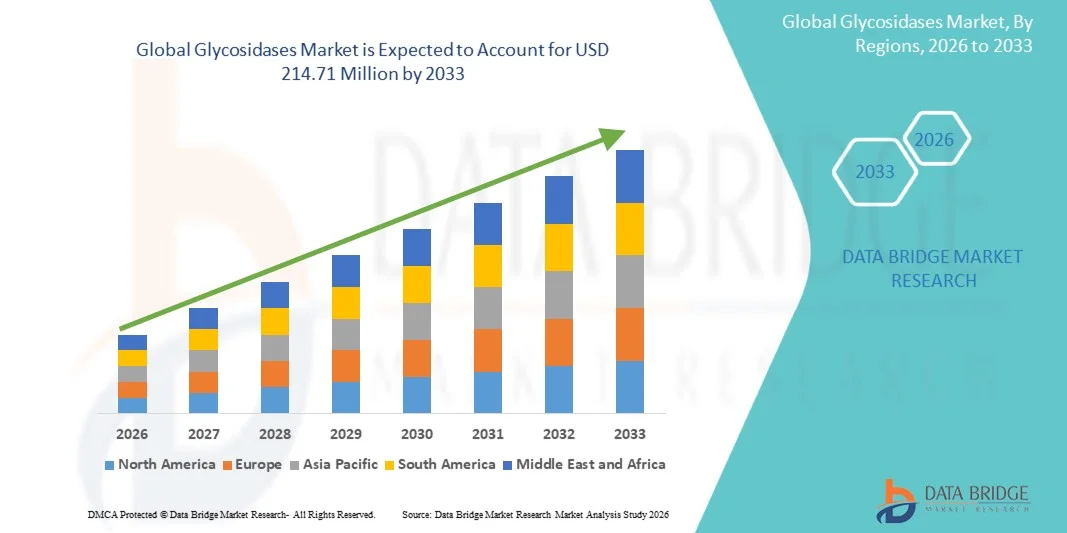
- The global glycosidases market size was valued at USD 91.18 million in 2025 and is expected to reach USD 214.71 million by 2033, at a CAGR of 11.3% during the forecast period
- The market growth is largely fueled by increasing applications of glycosidases in pharmaceuticals, food & beverages, and biofuel industries, along with ongoing advancements in enzyme engineering and biocatalysis technologies
- Furthermore, rising demand for sustainable industrial processes, efficient bioconversion methods, and novel therapeutic solutions is positioning glycosidases as a key biocatalyst across multiple sectors. These converging factors are accelerating the adoption of glycosidase-based solutions, thereby significantly driving the industry's growth
Glycosidases Market Analysis
- Glycosidases, enzymes that catalyze the hydrolysis of glycosidic bonds in carbohydrates, are increasingly vital in pharmaceutical, food & beverage, and biofuel industries due to their efficiency, specificity, and versatility in biocatalysis processes
- The escalating demand for glycosidases is primarily fueled by growing applications in drug development, functional foods, and biomass conversion, alongside ongoing advancements in enzyme engineering and protein modification technologies
- North America dominated the glycosidases market with the largest revenue share of 38.5% in 2025, characterized by strong biopharmaceutical and biotechnology sectors, high R&D investments, and a robust presence of key enzyme manufacturers, with the U.S. driving growth through innovations in enzyme formulations and large-scale industrial applications
- Asia-Pacific is expected to be the fastest-growing region in the glycosidases market during the forecast period due to increasing demand for processed foods, expanding biofuel production, and rising investments in biotechnology infrastructure
- Enzymes segment dominated the glycosidases market with a market share of 41.7% in 2025, driven by its broad applications in food processing, biofuel production, and therapeutic formulations
Report Scope and Glycosidases Market Segmentation
|
Attributes |
Glycosidases Key Market Insights |
|
Segments Covered |
|
|
Countries Covered |
North America
Europe
Asia-Pacific
Middle East and Africa
South America
|
|
Key Market Players |
|
|
Market Opportunities |
|
|
Value Added Data Infosets |
In addition to the insights on market scenarios such as market value, growth rate, segmentation, geographical coverage, and major players, the market reports curated by the Data Bridge Market Research also include in-depth expert analysis, patient epidemiology, pipeline analysis, pricing analysis, and regulatory framework |
Glycosidases Market Trends
“Advancements in Enzyme Engineering and Biocatalysis”
- A significant and accelerating trend in the global glycosidases market is the adoption of advanced enzyme engineering techniques, including directed evolution and protein modification, to enhance catalytic efficiency and substrate specificity for diverse industrial applications
- For instance, engineered α-glucosidases are being optimized for higher thermostability and activity in starch processing, improving production efficiency in the food and beverage sector
- Biocatalysis integration allows glycosidases to replace harsh chemical processes in pharmaceutical synthesis, enabling greener and more sustainable production methods
- The combination of enzyme engineering with high-throughput screening platforms facilitates rapid identification of tailored glycosidases for specific industrial needs, accelerating R&D timelines
- This trend toward highly efficient, application-specific glycosidases is reshaping expectations for enzyme performance across industries
- The demand for specialized, robust, and high-performance glycosidases is growing rapidly across pharmaceuticals, food processing, and biofuels, as industries prioritize sustainability and cost-effective biocatalytic solutions
- Expansion of enzyme marketplaces and contract manufacturing services is improving accessibility, allowing smaller companies to adopt glycosidases for industrial applications without heavy upfront investment
Glycosidases Market Dynamics
Driver
“Increasing Industrial and Therapeutic Applications”
- The rising use of glycosidases in pharmaceuticals, biofuels, and functional foods is a key driver for the market, as industries seek efficient and sustainable enzymatic solutions
- For instance, β-glucosidases are employed in bioethanol production to convert cellulose into fermentable sugars, significantly enhancing biofuel yields
- Growing demand for glycosidases in drug development and nutraceuticals to improve bioavailability and modify bioactive compounds is further driving market expansion
- Industries increasingly prefer enzymatic processes over chemical methods due to higher specificity, lower energy consumption, and reduced environmental impact
- Widespread adoption of biotechnology and enzyme-based R&D in leading markets, combined with the scalability of glycosidase production, is fueling growth across multiple industrial sectors
- The rising focus on sustainable and eco-friendly industrial processes is encouraging companies to replace chemical catalysts with glycosidases in various manufacturing workflows
- Strategic collaborations between biotech firms and academic institutions are accelerating the discovery of novel glycosidases for specialized industrial applications.
Restraint/Challenge
“High Production Costs and Stability Limitations”
- The high costs associated with large-scale glycosidase production and purification remain a significant challenge for broader market adoption, particularly for small and medium enterprises
- For instance, producing thermostable or highly specific glycosidases requires advanced expression systems and complex downstream processing, increasing overall operational expenses
- Enzyme stability under industrial conditions, such as high temperature, extreme pH, or presence of inhibitors, can limit practical applications and reduce efficiency
- Addressing these challenges through protein engineering, immobilization techniques, and cost-effective production strategies is essential to expand industrial use
- Despite advancements, the balance between enzyme performance, production cost, and application-specific stability remains a critical hurdle for widespread adoption
- Limited regulatory frameworks for enzyme use in food and pharmaceuticals in certain regions can delay product approvals and restrict market penetration
- Competition from cheaper chemical catalysts in some industrial processes may slow adoption of glycosidases, particularly in cost-sensitive markets
Glycosidases Market Scope
The market is segmented on the basis of product, application, and end user.
- By Product
On the basis of product, the glycosidases market is segmented into enzymes, instruments, kits, and reagents. The enzymes segment dominated the market with the largest market revenue share of 41.7% in 2025, driven by their extensive industrial and research applications across pharmaceuticals, food & beverages, and biofuel production. Glycosidases as enzymes are widely used for biocatalysis, enabling efficient hydrolysis of glycosidic bonds, which is crucial for drug development, flavor modification, and bioethanol production. Strong demand is observed due to their versatility, high specificity, and the ongoing trend toward greener and more sustainable processes. Established biotech companies and enzyme manufacturers continue to innovate by developing thermostable and highly active variants, further reinforcing the segment's dominance. The availability of customized enzyme formulations for specific industrial requirements also contributes to the segment’s strong market presence.
The kits segment is expected to witness the fastest growth rate of 20.4% from 2026 to 2033, fueled by increasing adoption in diagnostic laboratories, academic research, and pharmaceutical R&D. Kits provide pre-optimized reagents and protocols for rapid enzymatic assays, reducing experimental variability and time-to-results. They are particularly preferred for high-throughput screening and drug discovery applications where consistency and reproducibility are critical. In addition, the growing trend of outsourcing laboratory research to CROs that rely on standardized kits further propels segment growth. Market expansion is also supported by innovations in user-friendly, automated assay kits that simplify glycosidase activity measurement for both small and large-scale applications.
- By Application
On the basis of application, the glycosidases market is segmented into diagnostics, drug discovery and development, oncology, immunology, and other applications. The drug discovery and development segment dominated the market with the largest revenue share of 42.8% in 2025, owing to glycosidases’ critical role in modifying bioactive molecules, enhancing drug bioavailability, and enabling targeted therapeutic strategies. Pharmaceutical companies leverage glycosidases for producing nucleoside analogs, glycoproteins, and enzyme replacement therapies. The segment benefits from increasing investments in R&D, expansion of biopharmaceutical pipelines, and growing demand for biologics. Collaborations between biotech firms and academic institutions to discover novel enzyme applications further reinforce dominance. The segment also sees robust growth due to the adoption of high-throughput screening and enzyme engineering technologies that optimize glycosidase function in drug development workflows.
The oncology segment is expected to witness the fastest CAGR from 2026 to 2033, driven by the rising use of glycosidases in cancer biomarker detection, tumor-targeted drug delivery, and therapeutic enzyme development. Advances in precision medicine and immuno-oncology create demand for enzyme-based diagnostics and treatment strategies. Glycosidases are increasingly utilized to modify glycan structures in cancer cells, aiding in targeted therapy and improved efficacy. Expansion of personalized medicine initiatives and growing prevalence of cancer worldwide further accelerate segment growth.
- By End User
On the basis of end user, the glycosidases market is segmented into academic research institutes, pharmaceutical and biotechnology companies, and contract research organizations (CROs). The pharmaceutical and biotechnology companies segment dominated the market with the largest revenue share of 45.3% in 2025, as these companies extensively use glycosidases for drug synthesis, biologics production, and process optimization. The segment’s dominance is supported by continuous R&D investments, technological collaborations, and the need for scalable, efficient enzymatic processes in commercial manufacturing. Strong focus on novel enzyme discovery and enzyme-mediated therapeutic development further drives market share. Companies in this segment also prioritize high-quality, customized glycosidases to meet strict regulatory and performance standards.
The CROs segment is expected to witness the fastest growth rate from 2026 to 2033, fueled by the increasing outsourcing of research and development activities. CROs rely heavily on glycosidases for high-throughput screening, assay development, and enzyme-based studies for client pharmaceutical companies. The trend of cost-effective outsourcing and rising contract research agreements across the U.S., Europe, and Asia-Pacific supports rapid adoption. In addition, CROs benefit from standardized enzyme kits and reagents, enabling faster project completion and consistent results, making them a key growth driver in the market.
Glycosidases Market Regional Analysis
- North America dominated the glycosidases market with the largest revenue share of 38.5% in 2025, characterized by strong biopharmaceutical and biotechnology sectors, high R&D investments, and a robust presence of key enzyme manufacturers
- Companies in the region extensively utilize glycosidases for drug development, industrial biocatalysis, and functional food production, benefiting from advanced laboratory infrastructure and well-established regulatory frameworks
- The U.S., in particular, is witnessing substantial growth in glycosidase applications due to increasing demand for sustainable industrial processes, enzyme-based therapeutics, and ongoing innovations in enzyme engineering and protein modification technologies
U.S. Glycosidases Market Insight
The U.S. glycosidases market captured the largest revenue share of 79% in 2025 within North America, driven by the strong presence of pharmaceutical, biotechnology, and industrial enzyme companies. Rising demand for glycosidases in drug development, functional foods, and biofuel production is fueling market growth. Advanced R&D infrastructure, high adoption of enzyme-based technologies, and supportive regulatory frameworks enable rapid commercialization of novel glycosidases. In addition, collaborations between biotech firms and academic institutions accelerate enzyme discovery and application. The increasing focus on sustainable and efficient industrial processes further propels market expansion.
Europe Glycosidases Market Insight
The Europe glycosidases market is projected to expand at a substantial CAGR during the forecast period, primarily driven by strong biopharmaceutical research, stringent quality regulations, and growing applications in food, pharmaceuticals, and biofuel industries. Countries such as Germany, France, and the U.K. are investing heavily in enzyme research and industrial biotechnology. The region’s emphasis on sustainable and green manufacturing processes, along with the adoption of advanced biocatalysis technologies, is fostering glycosidase utilization. European academic and research institutes further support the development of specialized enzymes for diagnostics and therapeutics.
U.K. Glycosidases Market Insight
The U.K. glycosidases market is anticipated to grow at a noteworthy CAGR during the forecast period, driven by increasing biotechnology and pharmaceutical R&D activities. Demand for glycosidases in drug discovery, personalized medicine, and industrial bioprocessing is rising steadily. The U.K.’s supportive regulatory environment, strong academic research network, and active participation in enzyme-related innovation are stimulating market growth. In addition, collaborations between universities and biotech companies are enabling the development of novel glycosidase applications. Rising adoption of enzyme-based technologies in food and biofuel sectors further enhances market potential.
Germany Glycosidases Market Insight
The Germany glycosidases market is expected to expand at a considerable CAGR during the forecast period, fueled by the country’s focus on industrial biotechnology, sustainable chemical processes, and advanced pharmaceutical research. High investments in enzyme engineering and protein modification technologies support glycosidase applications across multiple sectors. German companies are increasingly integrating glycosidases into food processing, biofuel production, and therapeutic enzyme development. The strong R&D ecosystem, emphasis on innovation, and growing adoption of enzyme-based sustainable solutions are key factors driving market growth.
Asia-Pacific Glycosidases Market Insight
The Asia-Pacific glycosidases market is poised to grow at the fastest CAGR of 23% during the forecast period of 2026 to 2033, driven by rapid industrialization, expanding pharmaceutical and food processing sectors, and rising biotechnology investments in countries such as China, India, and Japan. The region’s growing adoption of enzyme-based biocatalysis for industrial and research applications is accelerating market penetration. Government initiatives promoting biotech innovation and sustainable industrial practices are further supporting growth. Moreover, the increasing availability of cost-effective enzymes and rising R&D outsourcing to Asia-Pacific CROs are expanding the market to a broader end-user base.
Japan Glycosidases Market Insight
The Japan glycosidases market is gaining momentum due to the country’s advanced biotechnology infrastructure, focus on precision medicine, and increasing demand for industrial enzymes. Japanese pharmaceutical and food industries are actively incorporating glycosidases for drug development, functional foods, and biofuel production. The integration of enzymes into high-throughput research platforms and industrial bioprocesses is driving adoption. In addition, the country’s strong emphasis on sustainable processes and enzyme innovation supports continuous market growth. Rising collaborations between academic research institutions and biotech firms further enhance the development of novel glycosidase applications.
India Glycosidases Market Insight
The India glycosidases market accounted for the largest market revenue share in Asia-Pacific in 2025, attributed to the country’s growing pharmaceutical and biotechnology sectors, rapid industrialization, and increasing research activities. India is emerging as a hub for enzyme manufacturing and R&D services, with cost-effective production supporting domestic and international demand. Government initiatives promoting biotechnology and sustainable industrial processes further accelerate adoption. In addition, expanding academic research, CRO activities, and growing demand for glycosidases in food, biofuel, and pharmaceutical applications are key factors propelling market growth.
Glycosidases Market Share
The Glycosidases industry is primarily led by well-established companies, including:
- DuPont de Nemours, Inc., (U.S.)
- BASF SE (Germany)
- Pfizer Inc, (U.S.)
- F. Hoffmann‑La Roche Ltd (Switzerland)
- Amgen Inc, (U.S.)
- Johnson & Johnson Services, Inc. (U.S.)
- AbbVie Inc, (U.S.)
- Sanofi (France)
- Boehringer Ingelheim, (Germany)
- Thermo Fisher Scientific Inc, (U.S.)
- New England Biolabs Inc, (U.S.)
- Carl Roth GmbH + Co. KG, (Germany)
- Creative Enzymes (U.S.)
- AB Enzymes GmbH, (Germany)
- Advanced Enzyme Technologies Ltd, (India)
- Amano Enzyme Inc (Japan)
- Enzyme Development Corporation (U.S.)
- Kerry Group plc (Ireland)
- Lonza Group AG (Switzerland)
- Cargill, Incorporated (U.S.)
What are the Recent Developments in Global Glycosidases Market?
- In October 2025, research published in Scientific Reports identified new α‑glucosidase inhibitors from Paenibacillus sp. JNUCC 31, showing potential therapeutic activity and informing the design of future anti‑diabetic enzyme inhibitors
- In June 2025, research in RSC Medicinal Chemistry reported the development of glycosidase‑activated prodrugs of a cytotoxic iron chelator for targeted cancer therapy. These prodrugs leverage glycosidase expression in tumor cells to achieve selective cytotoxicity, pointing to innovative enzyme‑triggered therapeutic strategies in oncology
- In April 2025, scientists published a study on enhancing glycosylation of drug‑like natural products by deleting endogenous glycosidases in Saccharomyces cerevisiae, improving glucoside production and showing how targeted manipulation of glycosidases can optimize biosynthetic yields for pharmaceutical use
- In March 2025, researchers at Tokyo University of Science discovered a novel enzyme in the human gut that specifically targets β‑1,2‑galactooligosaccharides, significantly enhancing understanding of how specialized glycosidases can synthesize and break down prebiotic glycans with potential health benefits. This breakthrough could open new avenues in the development of functional foods and gut‑health interventions
- In May 2024, a study published in the Journal of Agricultural and Food Chemistry unveiled novel glycosidases discovered through genome mining that enable highly effective enzymatic hydrolysis of smoke‑derived phenolic glycosides, offering safer and more accurate analysis techniques for agricultural and food science applications
SKU-
世界初のマーケットインテリジェンスクラウドに関するレポートにオンラインでアクセスする

- インタラクティブなデータ分析ダッシュボード
- 成長の可能性が高い機会のための企業分析ダッシュボード
- カスタマイズとクエリのためのリサーチアナリストアクセス
- インタラクティブなダッシュボードによる競合分析
- 最新ニュース、更新情報、トレンド分析
- 包括的な競合追跡のためのベンチマーク分析のパワーを活用
調査方法
データ収集と基準年分析は、大規模なサンプル サイズのデータ収集モジュールを使用して行われます。この段階では、さまざまなソースと戦略を通じて市場情報または関連データを取得します。過去に取得したすべてのデータを事前に調査および計画することも含まれます。また、さまざまな情報ソース間で見られる情報の不一致の調査も含まれます。市場データは、市場統計モデルと一貫性モデルを使用して分析および推定されます。また、市場シェア分析と主要トレンド分析は、市場レポートの主要な成功要因です。詳細については、アナリストへの電話をリクエストするか、お問い合わせをドロップダウンしてください。
DBMR 調査チームが使用する主要な調査方法は、データ マイニング、データ変数が市場に与える影響の分析、および一次 (業界の専門家) 検証を含むデータ三角測量です。データ モデルには、ベンダー ポジショニング グリッド、市場タイムライン分析、市場概要とガイド、企業ポジショニング グリッド、特許分析、価格分析、企業市場シェア分析、測定基準、グローバルと地域、ベンダー シェア分析が含まれます。調査方法について詳しくは、お問い合わせフォームから当社の業界専門家にご相談ください。
カスタマイズ可能
Data Bridge Market Research は、高度な形成的調査のリーダーです。当社は、既存および新規のお客様に、お客様の目標に合致し、それに適したデータと分析を提供することに誇りを持っています。レポートは、対象ブランドの価格動向分析、追加国の市場理解 (国のリストをお問い合わせください)、臨床試験結果データ、文献レビュー、リファービッシュ市場および製品ベース分析を含めるようにカスタマイズできます。対象競合他社の市場分析は、技術ベースの分析から市場ポートフォリオ戦略まで分析できます。必要な競合他社のデータを、必要な形式とデータ スタイルでいくつでも追加できます。当社のアナリスト チームは、粗い生の Excel ファイル ピボット テーブル (ファクト ブック) でデータを提供したり、レポートで利用可能なデータ セットからプレゼンテーションを作成するお手伝いをしたりすることもできます。