



Global Home Office Spending Market Segmentation, By Solution (Tools and Services), Deployment (Cloud and On-Premises), Application (Business Productivity, Information Security, Enterprise Communication, and Others) - Industry Trends and Forecast to 2033
グローバルホームオフィスの市場規模と成長率は
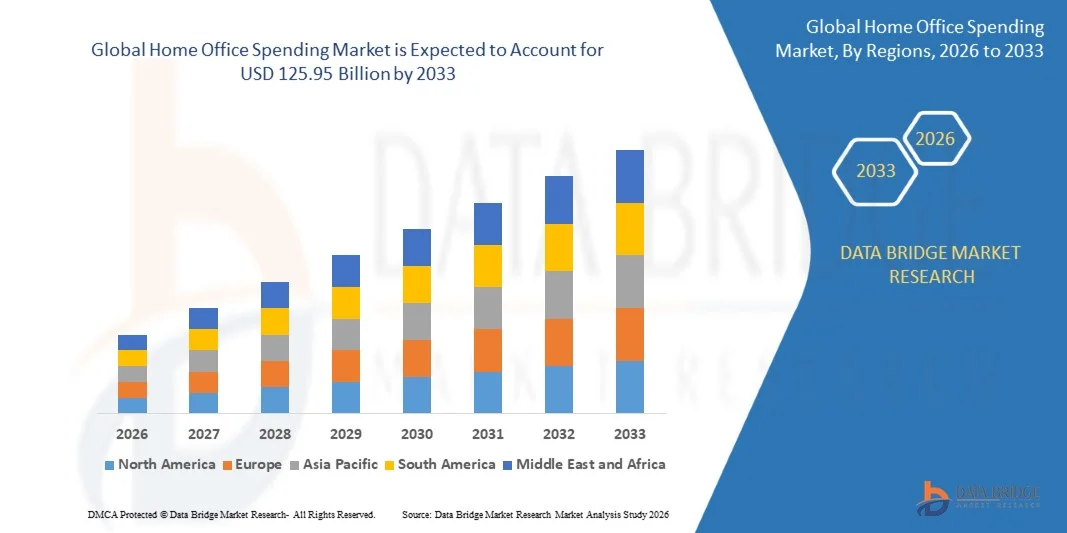
- データブリッジ市場調査分析による 市場規模を消費するグローバルホームオフィスは、2025年のUSD 39.22億そして到達する予定2033年(昭和40年), お問い合わせ15.70%のCAGR予報期間中
- 予報期間の家庭オフィスの支出市場の成長を後押しすると予想される主要な要因は、精度と高速でデータの収束の増加です
- さらに、効率的なコンピューティングの必要性の増加は、家庭のオフィスの支出市場の成長を促進するためにさらに期待されています。 一方、データセキュリティに関する費用と懸念の上昇は、期限内に市場を消費する家庭のオフィスの成長を阻害する予定です
市場規模と予測
- グローバル市場価値 (2025):米ドル 39.22 億
- 期待される市場価値 (2033):米ドル 125.95 億
- 予測CAGR (2026–2033):15.70%
Home Office Spending Marketの大手テイクアウトとは
- クラウドモデルは、リモートワークスキームの高度に有利なプラットフォームであることが展示されているので、今後数年で市場を消費する家庭のオフィスの成長のための潜在的な機会を提供します
- しかしながら、コミュニケーションインフラの悪化は、近い将来に市場を費やす家庭のオフィスの成長にさらに挑戦するかもしれません
- 北米は、2025年に39.64%の収益シェアを持つホームオフィスの支出市場を占め、リモートファーストの企業、先進のブロードバンドのインフラ、および米国とカナダを横断する高購買力の存在が強い
- アジア・パシフィックは、2026年から2033年にかけて最も速いCAGRの登録を予定しており、都市型デジタル化を推進し、フリーランス・エコノミーの拡大、スタートアップ文化の拡大、中国、日本、インド、韓国、東南アジアのブロードバンド普及の拡大を図っています。
- ツールのセグメントは、ラップトップ、外部モニター、人間工学的椅子、スタンドデスク、ヘッドセット、ウェブカム、ルータ、ライセンスされた生産性ソフトウェアに費やす強力な消費者と企業によって駆動され、2025年に62.4%のシェアで市場を支配しました
レポートスコープとホームオフィスのスペンディング市場セグメンテーション
|
アトリビュート |
ホーム オフィスのスペンディング キー マーケットの洞察 |
|
カバーされる区分 |
|
|
カバーされた国 |
北アメリカ
ヨーロッパ
アジアパシフィック
中東・アフリカ
南米
|
|
主要市場プレイヤー |
|
|
マーケットチャンス |
|
|
付加価値データインフォセットを追加 |
|
Home Office Spending Marketの主要トレンドは何ですか
「 」ハイブリッドプロフェッショナル向け統合型デジタルワークエコシステムの導入ツイート
- 市場を消費するホームオフィスは、コンピューティングデバイス、コラボレーションソフトウェア、人間工学に基づいた家具、スマート周辺機器を組み合わせて、シームレスなリモートワーク環境を作成するオールインワンのデジタルエコシステムで強力な成長を経験しています
- 製造業者はAI搭載の生産性ツール、スマート照明システム、超ワイドモニター、および高度なビデオ会議機器を立ち上げ、ワークフローの効率性とバーチャルエンゲージメント品質を向上させる
- 最小主義、モジュール式、および技術対応のワークスペース設計の好みの増加は都市の専門家および遠隔従業員間の購買行動の影響を及ぼす
- たとえば、Microsoft Corporation、Dell Technologies、HP Inc.、Cisco Systemsなどの企業は、ハイブリッドワークフォースに適した統合デバイスとコラボレーションポートフォリオを拡大しています。
- デジタルウェルネス、サイバーセキュリティ、および途切れないコネクティビティを重視した成長は、最適化されたホームオフィスエコシステムへの支出を加速
- ハイブリッドワークモデルは、グローバルに安定させるため、ホームオフィスの投資は、生産性、柔軟性、およびエンタープライズレベルのリモートオペレーションを維持するために不可欠です。
ホームオフィスのスペンディング市場の主要なドライバは何ですか
- 企業間のリモート・アンド・ハイブリッド・ワークプレイス・ストラテジーの展開は、オフィス・インフラとコラボレーション・テクノロジーの投資を大幅に増加させる
- 例えば、2025年、Amazon Web Services や Google LLC などのプロバイダーがクラウドの生産性とコラボレーションエコシステムを強化し、世界中の分散チームをサポート
- 高速ブロードバンド、クラウドストレージ、SaaSベースのワークフロープラットフォームの普及により、米国、欧州、アジア太平洋の効率的なリモート操作が可能
- 人間工学に基づいた健康リスクと従業員の幸福の意識の拡大は、調整可能なデスク、人間工学に基づいた椅子、最適化された照明システムの購入を促進しています
- フリーランサー、リモートコンサルタント、デジタルスタートアップの増加は、スケーラブルで手頃な価格のホームオフィスのセットアップのための長期的な需要を持続しています
- 企業の償還、デジタル変革の取り組み、およびオンライン小売チャネルの拡大によって支えられるホームオフィスの保留市場は安定した長期成長を維持するために計画されています
ホームオフィスの支出市場の成長を望む要因は
- プレミアム人間工学に基づいた家具、高度なコンピューティング機器、およびエンタープライズグレードのコラボレーションツールの初期コストは、予算重視の消費者の間で手頃な価格を制限します
- 例えば、2024年~2025年の間に、半導体サプライチェーンにおけるボラティリティと物流コストの上昇により、ラップトップ、モニター、およびネットワークハードウェアのグローバル化
- 密集した都市ハウジングのスペース制約は特に密接に飾られた首都圏の熱心なオフィスの取付けの可能性を減らします
- ハードウェアとソフトウェアシステムにおける迅速なイノベーションサイクルと互換性の懸念により、不確実性と短時間交換のタイムラインを購入
- 特定の業界における部分的なリターン・ツー・オフィスの方針は、特定の先進市場における成長を遅らせる可能性がある
- これらの障壁を緩和するために、企業は、束ねられた価格モデル、サブスクリプションベースのデバイスアクセス、コンパクトなモジュラー家具、および直接対面オンライン流通戦略を強調し、ホームオフィスソリューションのグローバル採用を強化しています
ホームオフィスの支出市場はどのように区分されますか
市場は、に基づいてセグメント化されますソリューション、デプロイメント、および垂直.
• 解決によって
ソリューションに基づいて、ホームオフィスの支出市場は、ツールとサービスにセグメント化されています。 ツールのセグメントは、ラップトップ、外部モニター、人間工学的椅子、スタンドデスク、ヘッドセット、ウェブカム、ルータ、ライセンスされた生産性ソフトウェアに費やす強力な消費者と企業によって駆動され、2025年に62.4%のシェアで市場を支配しました。 リモートの専門家は、信頼性の高いハードウェアとコラボレーションツールを優先し、シームレスな通信、ワークフローの効率性、デジタルタスク管理を維持します。 コーポレート・リミューズメント・プログラム、ハードウェア・ソフトウェア・パッケージをバンドルし、eコマースの可用性により、中小企業や大企業間でのセグメント・成長をさらに強化します。
サービスセグメントは、管理されたITサービス、リモートデバイス監視、サイバーセキュリティサポート、クラウドマイグレーションコンサルティング、仮想ワークスペース最適化の需要の増加により、2026年から2033年まで最速のCAGRで成長することが期待されます。 家庭のオフィス環境は、よりセキュリティに敏感でデジタルに複雑になるため、サブスクリプションベースと管理されたサービス提供は迅速なトラクションを獲得しています。
• 導入によって
展開ベースでは、オフィスの消費市場をクラウドとオンプレミスに分割しています。 クラウドセグメントは、SaaSベースのコラボレーションツール、クラウドストレージプラットフォーム、ユニファイドコミュニケーションシステム、ワークフロー自動化ソフトウェアの採用を増加させることに起因する2025年に68.7%のシェアで市場を支配しました。 クラウド展開により、ファイル、リモート同期、自動更新、および大規模インフラ投資なしに、エンタープライズレベルのデータセキュリティにリアルタイムでアクセスできます。 組織は、分散チームをサポートするスケーラビリティ、柔軟性、コスト効率性のためのクラウドモデルを好む。
クラウドセグメントは、AIを搭載した生産性向上ツール、高度なサイバーセキュリティレイヤー、およびクロスデバイスアクセシビリティの統合を増加させることにより、2026年から2033年まで最速のCAGRで成長する予定です。 リモートファースト戦略の急速な企業のデジタル変革と拡張は、世界的な強力なクラウドベースの採用を維持することが期待されます。
• 縦によって
垂直に、家庭のオフィスの支出市場は、ビジネス生産性、情報セキュリティ、企業コミュニケーション、その他に区分されます。 ビジネス生産性セグメントは、プロジェクト管理プラットフォーム、オフィススイート、ワークフロー自動化ソフトウェア、ドキュメントコラボレーションツールの広範な使用によって燃料を供給し、2025年に38.9%のシェアで市場を支配しました。 企業は、今後も、生産性向上技術に大きく投資し、リモート・アンド・ハイブリッド・ワークフォースの効率性を維持しています。
情報セキュリティセグメントは、2026年から2033年まで最速のCAGRで成長すると予想され、サイバー脅威の増加、リモートネットワークの脆弱性の増加、および厳格なデータ保護規則によって推進されます。 VPN、エンドポイントセキュリティソリューション、暗号化された通信ツール、アイデンティティアクセス管理システムの採用が急速に加速しています。 リモートワークのエコシステムが拡大するにつれて、安全なデジタルインフラは持続可能な市場成長にとって不可欠です。
どの地域がホームオフィスの支出市場の最大株式を保持していますか
- 北米は、2025年に39.64%の収益シェアを持つホームオフィスの支出市場を占め、リモートファーストの企業、先進のブロードバンドのインフラ、および米国とカナダを横断する高購買力の存在によって主導しました。 ハイブリッド・ワーク・ポリシーの広範な採用は、ラップトップ、人間工学的家具、企業コラボレーション・ソフトウェア、サイバーセキュリティ・ツール、および住宅のワークスペースを横断するスマート・オフィス・アクセサリーの燃料消費を続け
- 地域における主要な技術プロバイダーは、AI対応の生産性プラットフォーム、セキュアなクラウドコラボレーションスイート、および統合型コミュニケーションエコシステムを一貫して立ち上げ、北米のデジタル職場イノベーションにおけるリーダーシップを強化しています。 SaaS、エンドポイントセキュリティ、リモートIT管理ソリューションの継続的な投資により、長期的な市場成長をサポート
- 高度のデジタルリテラシー、企業再投資プログラム、および十分に確立された電子商取引の配分ネットワークは更に家オフィス装置およびサービスの地域の優位性を強化します
U.S. Home Office 市場動向
米国は、IT、金融、ヘルスケア、コンサルティング、および教育部門を横断し、企業全体のデジタル変革の取り組みと強力なリモート・ワークフォースの浸透によって支えられた、北アメリカ内で最大のシェアを表しています。 クラウドストレージ、VPNソリューション、AIを活用したコラボレーションツール、プレミアム人間工学に基づいた家具の需要が高まっています。
カナダ ホーム オフィス 営業 市場 洞察
カナダは、ハイブリッド・ワークの採用、政府主導のデジタル・イニシアチブ、技術スタートアップの拡大により著しく貢献しています。 サイバーセキュリティソリューション、デジタルコミュニケーションプラットフォーム、最適化されたホームワークスペース設計に重点を置き、国内市場拡大を強化します。
アジア・パシフィック・ホームオフィス・スペンディング・マーケット
アジア・パシフィックは、2026年から2033年にかけて最も速いCAGRの登録を予定しており、都市型デジタル化を推進し、フリーランス・エコノミーの拡大、スタートアップ文化の拡大、中国、日本、インド、韓国、東南アジアのブロードバンド普及の拡大を図っています。 クラウドベースの生産性ツールと手頃な価格のコンピューティングデバイスを採用することで、地域の需要を加速します。
中国 ホーム オフィス 市場 洞察
中国は、強力なコンシューマーエレクトロニクスの生産、リモートワークフォースの採用を拡大し、ホームオフィス製品への広範なアクセスをサポートする強力な電子商取引エコシステムにより、地域成長をリードします。
日本ホームオフィス向け市場動向
日本では、先進のデジタルインフラ、企業モダナイゼーション戦略、およびセキュアなコラボレーションツールやコンパクトな人間工学的ソリューションの需要の増加により、安定した成長を遂げています。
インド ホーム オフィス 営業 市場 洞察
インドは、ITサービス、スタートアップエコシステム、フリーランスの専門家、手頃な価格のインターネットアクセスを拡大し、コンピューティングデバイスやコラボレーションソフトウェアの購入を高めることで急速に成長しています。
韓国のホームオフィス向け市場情報
韓国は、強力なブロードバンドネットワーク、高デジタル採用率、およびプレミアムコンピューティングデバイスおよびセキュアなコミュニケーションプラットフォームの需要増加により大幅に貢献し、長期的な市場成長を維持します。
Home Office Spending Marketのトップ企業は
業界を消費するホームオフィスは、主に、以下のような企業によって導かれています。
- オラクル(米国)
- Google LLC(米国)
- シスコシステムズ株式会社(米国)
- アヴァヤ株式会社(米国)
- マイクロソフト株式会社(米国)
- アマゾンウェブサービス株式会社(米国)
- パナソニック株式会社(日本)
- Plantronics, Inc.(米国)
- Tech Mahindra Limited(インド)
- Huaweiの技術Co.、株式会社(中国)
- Motorola Solutions, Inc.(米国)
- SAP(ドイツ)
- コグニザント(アメリカ)
- デル(アメリカ)
- IBM (米国)
- マーラブス株式会社(米国)
- ブロードコム株式会社(米国)
- Hewlett Packard Enterprise Development LP (アメリカ)
- アルコル(アメリカ)
- Happiest minds (インド)
グローバルホームオフィス向け市場における最近の発展とは
- 2023年12月、Oracleは、GartnerのMagic Quadrant for Strategic Cloud Platform Servicesのリーダーとして認められ、クラウドインフラ、プラットフォーム機能、デジタルトランスフォーメーションサービスにおいて強力な勢いを反映し、Oracle Cloud Infrastructureは、IaaS、PaaS、SaaS環境を横断し、さまざまな企業および規制要件を満たし、グローバルなクラウドエコシステムにおける競争的地位を強化する
- Amazon Web Services は、Zurich Insurance Group が、エンタープライズ IT インフラストラクチャを AWS に移行し、AWS のスケーラブルなグローバルクラウドネットワークを活用し、高度な分析と機械学習機能を活用して、デジタル顧客エンゲージメントと運用の自動化を強化し、長期的なデジタル変革戦略とサービスイノベーションロードマップを強化することを発表しました。
SKU-
世界初のマーケットインテリジェンスクラウドに関するレポートにオンラインでアクセスする

- インタラクティブなデータ分析ダッシュボード
- 成長の可能性が高い機会のための企業分析ダッシュボード
- カスタマイズとクエリのためのリサーチアナリストアクセス
- インタラクティブなダッシュボードによる競合分析
- 最新ニュース、更新情報、トレンド分析
- 包括的な競合追跡のためのベンチマーク分析のパワーを活用
調査方法
データ収集と基準年分析は、大規模なサンプル サイズのデータ収集モジュールを使用して行われます。この段階では、さまざまなソースと戦略を通じて市場情報または関連データを取得します。過去に取得したすべてのデータを事前に調査および計画することも含まれます。また、さまざまな情報ソース間で見られる情報の不一致の調査も含まれます。市場データは、市場統計モデルと一貫性モデルを使用して分析および推定されます。また、市場シェア分析と主要トレンド分析は、市場レポートの主要な成功要因です。詳細については、アナリストへの電話をリクエストするか、お問い合わせをドロップダウンしてください。
DBMR 調査チームが使用する主要な調査方法は、データ マイニング、データ変数が市場に与える影響の分析、および一次 (業界の専門家) 検証を含むデータ三角測量です。データ モデルには、ベンダー ポジショニング グリッド、市場タイムライン分析、市場概要とガイド、企業ポジショニング グリッド、特許分析、価格分析、企業市場シェア分析、測定基準、グローバルと地域、ベンダー シェア分析が含まれます。調査方法について詳しくは、お問い合わせフォームから当社の業界専門家にご相談ください。
カスタマイズ可能
Data Bridge Market Research は、高度な形成的調査のリーダーです。当社は、既存および新規のお客様に、お客様の目標に合致し、それに適したデータと分析を提供することに誇りを持っています。レポートは、対象ブランドの価格動向分析、追加国の市場理解 (国のリストをお問い合わせください)、臨床試験結果データ、文献レビュー、リファービッシュ市場および製品ベース分析を含めるようにカスタマイズできます。対象競合他社の市場分析は、技術ベースの分析から市場ポートフォリオ戦略まで分析できます。必要な競合他社のデータを、必要な形式とデータ スタイルでいくつでも追加できます。当社のアナリスト チームは、粗い生の Excel ファイル ピボット テーブル (ファクト ブック) でデータを提供したり、レポートで利用可能なデータ セットからプレゼンテーションを作成するお手伝いをしたりすることもできます。











