



世界のくる病市場のセグメンテーション:種類別(ビタミンD関連くる病、低カルシウム血症関連くる病、低リン血症関連くる病)、原因別(日光、食事、遺伝、その他)、治療法別(診断と治療)、エンドユーザー別(病院、診療所、その他) - 業界動向と2033年までの予測
くる病市場規模
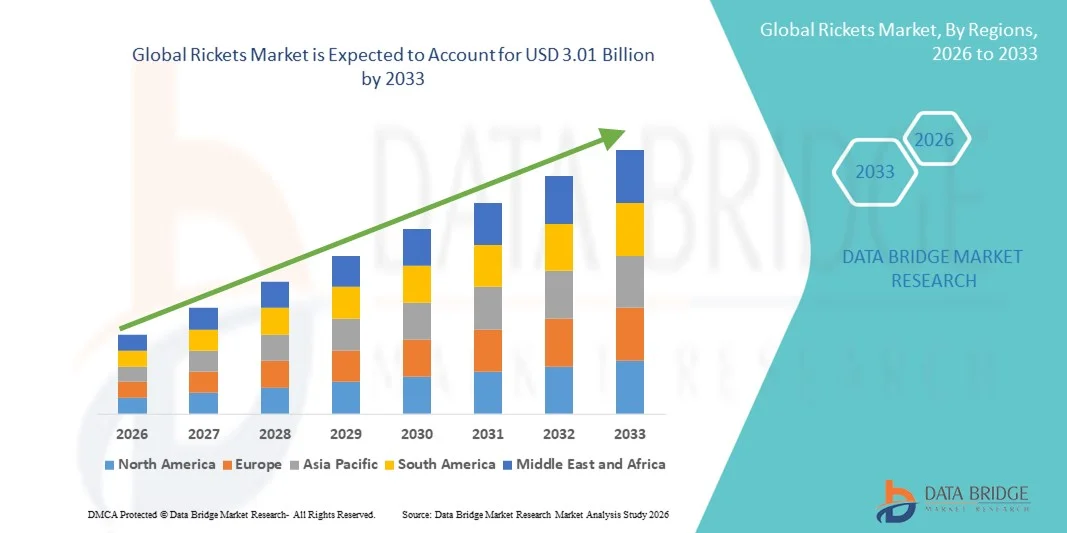
- 世界のくる病市場規模は、2025年には15億米ドルと評価され、予測期間中の年平均成長率(CAGR)9.10%で、2033年までに30億1000万米ドル に達すると予測されて いる。
- 市場の成長は、骨の健康に対する意識の高まり、ビタミンD欠乏症の有病率の上昇、そして小児および成人における予防医療措置の普及拡大によって大きく促進されている。
- さらに、公衆衛生イニシアチブの拡大、栄養補助食品に関する政府プログラム、骨疾患の早期診断と治療への注目の高まりにより、くる病は重要な懸念事項として認識されるようになっています。これらの要因が複合的に作用することで、くる病の治療法や介入策の普及が加速し、業界の成長を大きく後押ししています。
くる病市場分析
- くる病は、主にビタミンD欠乏、カルシウム欠乏、または遺伝的要因によって引き起こされる代謝性骨疾患であり、骨の健康と小児栄養に対する意識の高まりに伴い、ますます注目を集めている。先進国と発展途上国の両方で早期診断と予防的ケアが不可欠になりつつあり、治療の普及とサプリメントプログラムの拡大を促している。
- くる病管理ソリューションへの需要の高まりは、主に子供と大人におけるくる病の罹患率の増加、ビタミンDサプリメントへの意識の高まり、そして骨の健康を促進する政府および医療機関の支援的な取り組みによって促進されている。
- 北米は、骨の健康に対する高い意識、高度な医療インフラ、予防的な栄養補助食品の普及といった特徴から、2025年には収益シェア38.5%でくる病市場を席巻した。米国では、公衆衛生キャンペーンと民間セクターのイノベーションの両方に牽引され、くる病管理プログラムとビタミンD補給イニシアチブが大幅に成長した。
- アジア太平洋地域は、予測期間中にくる病市場において最も急速に成長する地域になると予想されており、都市化の進展、ビタミンD欠乏症の蔓延、栄養介入および栄養強化プログラムの普及拡大により、2026年から2033年にかけて年平均成長率(CAGR)9.2%で拡大すると見込まれています。
- 治療分野は、ビタミンD、カルシウム、リン酸塩のサプリメントの普及拡大に加え、X連鎖性低リン血症に対するブロスマブなどの革新的な薬物療法に支えられ、2025年には最大の収益シェア49.2%を占めた。
レポートの範囲とくる病市場のセグメンテーション
|
属性 |
くる病に関する主要な市場インサイト |
|
対象分野 |
|
|
対象国 |
北米
ヨーロッパ
アジア太平洋
中東およびアフリカ
南アメリカ
|
|
主要市場プレーヤー |
|
|
市場機会 |
|
|
付加価値データ情報セット |
Data Bridge Market Researchが作成する市場レポートには、市場価値、成長率、セグメンテーション、地理的範囲、主要企業といった市場シナリオに関する洞察に加え、専門家による詳細な分析、患者疫学、パイプライン分析、価格分析、規制枠組みなども含まれています。 |
くる病市場の動向
早期診断と予防医療への注目の高まり
- 世界のくる病市場における顕著かつ拡大傾向の一つは、特に小児、青年、その他の高リスク集団において、早期発見、予防的医療措置、栄養介入への重点が高まっていることである。
- 世界中の政府、医療機関、小児科学会は、乳幼児期からの骨の健康状態をモニタリングするプログラムをますます重視するようになっている。これらの取り組みは、未治療のくる病に関連する長期的な骨格変形や成長障害を予防することを目的としている。
- 例えば、2024年に欧州小児内分泌学会は、ヨーロッパの複数の国で乳幼児を対象とした定期的なビタミンDスクリーニングを提供する大規模な取り組みを開始しました。
- このプログラムは、血液検査、栄養評価、定期的なX線検査による欠乏症の早期発見を重視している。同様に、北米では、小児病院が定期的な健康診断において、ビタミンD補給と食事からのカルシウム摂取量のモニタリングに関する標準化されたガイドラインをますます採用している。
- 臨床的な取り組みと並行して、適切な日光浴、栄養強化食品、サプリメントに関する啓発キャンペーンが展開されており、親や介護者を対象としている。
- 学校給食プログラムや地域保健クリニックにおける予防戦略の統合も勢いを増しており、事後対応型治療から積極的な予防への転換を強調している。
- この傾向は、早期介入が骨の発達を改善するだけでなく、後の人生における関連合併症のリスクも軽減するという認識の高まりを反映している。
くる病市場の動向
ドライバ
ビタミンD欠乏症および栄養バランスの崩れの発生率増加
- ビタミンD欠乏症、カルシウム不足、および偏った食習慣の世界的な増加は、くる病市場を牽引する重要な要因である。
- 都市生活、屋外活動の減少、日光への曝露不足、加工食品への依存などが複合的に作用し、先進国と発展途上国の両方でくる病の蔓延が増加している。
- 例えば、2025年には、米国疾病予防管理センター(CDC)が、特に日光への曝露が最小限である人口密度の高い都市部において、米国における小児くる病症例の著しい増加を指摘した。
- 病院や小児科クリニックは、乳幼児健診時にビタミンDとカルシウムの定期検査を実施するとともに、サプリメントや強化食品の摂取を推奨することで対応した。同様に、インドやアフリカの一部地域では、微量栄養素の欠乏が蔓延していることから、政府主導の栄養プログラムが実施され、子供たちのカルシウムとビタミンDの摂取量を増やすことを目指している。
- もう一つの重要な要因は、妊婦の栄養状態とそれが乳児の骨の健康に及ぼす影響に対する意識の高まりです。研究によると、妊婦のビタミンDレベルが不足すると、新生児のくる病発症リスクが著しく高まります。
- その結果、妊婦健診プログラムには、ビタミンDサプリメントの摂取、カルシウムの食事源に関する教育、安全な日光浴に関する指導などがますます含まれるようになっている。
- これらの対策が相まって、強化牛乳、栄養補助食品、地域密着型の栄養補助食品提供活動など、治療的および予防的な解決策への需要が高まっている。
抑制/挑戦
発展途上地域における認知度の低さと経済的障壁
- 先進国ではくる病に対する認識が高まっているものの、発展途上国ではくる病や予防医療に関する知識が限られているため、市場の成長が阻害され続けている。
- 多くの農村部や医療サービスが行き届いていない地域では、適切な診断サービス、栄養カウンセリング、ビタミン補給へのアクセスが不足しており、その結果、疾患の発見と治療が遅れている。
- This gap in awareness and infrastructure represents a major barrier for comprehensive rickets management
- For instance, high prevalence rates of rickets persist in Sub-Saharan Africa, South Asia, and certain Latin American countries, where economic constraints, low healthcare accessibility, and cultural dietary habits hinder preventive interventions
- Even when supplements or fortified foods are available, their affordability often limits widespread adoption, particularly among low-income households
- Furthermore, challenges such as urban pollution reducing sunlight exposure, seasonal variations affecting vitamin D synthesis, and inconsistent adherence to supplementation programs further complicate effective disease management
- Addressing these issues requires targeted public health campaigns, improved distribution of affordable supplements, community education programs, and the development of accessible diagnostic tools
- The combination of awareness initiatives, cost-effective supplementation, and policy support will be critical to overcoming these challenges and ensuring sustainable growth of the Rickets market globally
Rickets Market Scope
The market is segmented on the basis of type, causes, therapy, and end user.
- By Type
On the basis of type, the Rickets market is segmented into Vitamin D-Related Rickets, Hypocalcemia-Related Rickets, and Hypophosphatemia-Related Rickets. The Vitamin D-Related Rickets segment dominated the largest market revenue share of 44.1% in 2025, owing to the widespread prevalence of vitamin D deficiency worldwide. Its dominance is reinforced by high awareness among healthcare providers and parents regarding prevention and supplementation. Vitamin D deficiency remains a primary etiological factor for rickets in children across both developed and developing nations. Government health programs promoting vitamin D fortification and supplementation bolster segment growth. Routine pediatric screening for vitamin D levels enhances early diagnosis and treatment uptake. Pharmaceutical and nutraceutical interventions targeting vitamin D deficiency strengthen market share. Clinical guidelines recommend vitamin D supplementation for at-risk populations, driving adoption. Continuous research highlighting the role of vitamin D in skeletal development supports the segment. Public health initiatives and awareness campaigns further reinforce its dominance. Expansion of fortified food programs in emerging regions enhances accessibility. Increasing pediatric patient population globally sustains steady demand.
The Hypophosphatemia-Related Rickets segment is projected to witness the fastest CAGR of 18.6% from 2026 to 2033, driven by advances in diagnostic technologies and targeted therapies for phosphate metabolism disorders. Early detection of genetic and acquired forms of hypophosphatemia supports timely intervention. Novel therapies, including phosphate supplements and burosumab, improve patient outcomes and accelerate adoption. Growing awareness among clinicians regarding rare rickets forms expands treatment uptake. Research funding for metabolic bone disorders enhances pipeline development. Personalized treatment plans and combination therapy strategies further propel market growth. Expansion of specialty pediatric and endocrine centers supports accessibility. Increasing prevalence of chronic kidney disease and other comorbidities related to phosphate imbalance drives demand. Clinical trial success rates encourage faster approval of new therapies. Patient advocacy groups promote awareness and early diagnosis. Technological innovation in monitoring phosphate levels strengthens growth. Rising availability of home care therapies enhances convenience and adherence.
- By Causes
On the basis of causes, the Rickets market is segmented into Sunlight, Diet, Genetics, and Others. The Sunlight segment dominated the largest revenue share of 46.3% in 2025, as insufficient sunlight exposure remains the leading cause of vitamin D deficiency-related rickets globally. Urbanization, indoor lifestyles, and cultural practices reducing sun exposure increase prevalence. Public health initiatives advocating safe sun exposure contribute to early prevention. Pediatric healthcare programs screen for sunlight-related deficiencies to mitigate risk. Sunlight-induced vitamin D synthesis supports skeletal development, driving therapeutic focus. Government-supported awareness campaigns promote outdoor activity for children. Routine supplementation in regions with limited sunlight ensures continued adoption. Strong evidence linking sunlight deficiency to rickets reinforces clinical attention. Seasonal variations in sunlight availability impact regional demand. Research studies further highlight the preventive potential of sunlight. Integration with school health programs enhances early intervention.
The Diet segment is expected to witness the fastest CAGR of 17.9% from 2026 to 2033, driven by increasing recognition of nutritional deficiencies as key contributors to rickets. Diets low in vitamin D, calcium, or phosphate necessitate supplementation and fortified foods. Nutritional interventions in schools and hospitals support rapid adoption. Rising parental awareness of balanced pediatric nutrition drives demand. Expansion of fortified milk, cereals, and supplements improves accessibility. Government and NGO programs promoting diet-based prevention accelerate market penetration. Clinical guidelines recommend dietary management as a first-line preventive strategy. Emerging economies with high prevalence of malnutrition witness strong growth. Technological advances in fortification processes enhance product quality. Pediatric clinics increasingly emphasize dietary counseling. Collaboration with food and pharmaceutical companies expands distribution channels. Rising urbanization and dietary lifestyle changes contribute to accelerated CAGR.
- By Therapy
On the basis of therapy, the Rickets market is segmented into Diagnosis and Treatment. The Treatment segment dominated the largest revenue share of 49.2% in 2025, supported by growing adoption of vitamin D, calcium, and phosphate supplementation, as well as innovative pharmacological therapies like burosumab for X-linked hypophosphatemia. Early intervention programs in hospitals and clinics strengthen market leadership. Treatment protocols for severe rickets cases promote adoption in pediatric care. Integration of therapy with routine pediatric check-ups ensures continuity of care. Clinical guidelines emphasize pharmacological and nutritional therapies to prevent complications. Pharmaceutical innovations targeting rare rickets forms drive market dominance. Treatment adherence is enhanced by home-based administration options. Government and insurance coverage encourage therapy uptake. Awareness campaigns highlighting therapy effectiveness boost acceptance. Global prevalence of childhood rickets ensures steady revenue inflow. Ongoing research on bone mineralization supports therapy adoption.
The Diagnosis segment is expected to witness the fastest CAGR of 18.3% from 2026 to 2033, driven by increased screening programs, advanced imaging, and biomarker-based diagnostics for early detection of rickets. Pediatric screening initiatives by hospitals and clinics expand adoption. Introduction of point-of-care testing and genetic diagnostics accelerates clinical uptake. Early diagnosis enables timely intervention, reducing long-term skeletal deformities. Growth in academic research and hospital diagnostic capacities supports segment expansion. Technological improvements in biochemical assays enhance reliability. Collaboration between laboratories and healthcare providers improves accessibility. Rising awareness among parents and pediatricians about early signs of rickets fuels market growth. Digital health platforms facilitate monitoring and follow-up. Expansion of diagnostic services in emerging markets drives rapid adoption. Integration of diagnostics with telehealth services improves patient reach. Increasing prevalence of vitamin D deficiency globally strengthens segment CAGR.
- By End User
On the basis of end user, the Rickets market is segmented into Hospitals, Clinics, and Others. The Hospitals segment accounted for the largest revenue share of 51.5% in 2025, due to high patient inflows, availability of specialized pediatric endocrinology departments, and integration of diagnostic and therapeutic services under one roof. Hospitals offer comprehensive management for rickets, including supplementation programs, advanced diagnostics, and follow-up care. Adoption is further supported by insurance coverage and government health initiatives. Large-scale hospital programs ensure consistent treatment and monitoring. Academic hospital collaborations accelerate research and innovation in therapy options. Hospital-based outreach programs increase early diagnosis and awareness. Strong presence of pediatric specialists enhances credibility. Multi-disciplinary care models ensure effective management of complex cases. Government funding for public hospitals reinforces segment stability. Expansion of hospital networks globally sustains revenue dominance.
The Clinics segment is projected to witness the fastest CAGR of 16.8% from 2026 to 2033, driven by increasing outpatient care services, ease of access for routine supplementation, and growing focus on preventive healthcare. Clinics offer convenient monitoring, nutritional counseling, and therapy administration for rickets patients. Rising number of specialized pediatric and endocrine clinics facilitates adoption. Integration with community health programs supports early detection and treatment. Clinics benefit from partnerships with pharmaceutical and diagnostic companies. Telemedicine and home care services enhance reach and adherence. Urban and semi-urban populations prefer clinic-based preventive interventions. Expansion of ambulatory care networks accelerates growth. Awareness campaigns targeting parents encourage proactive clinic visits. Technological advances in portable diagnostics support rapid adoption. Clinics increasingly implement standardized treatment protocols. Rising demand for outpatient-focused healthcare services ensures sustained CAGR.
Rickets Market Regional Analysis
- North America dominated the rickets market with the largest revenue share of 38.5% in 2025, characterized by high awareness of bone health, advanced healthcare infrastructure, and widespread adoption of preventive nutritional supplements. The region has well-established pediatric screening programs and strong public health policies that promote early detection of vitamin D deficiency and calcium imbalance among infants and children
- Consumers and healthcare providers in the region place significant emphasis on preventive healthcare practices, including routine vitamin D supplementation, fortified dairy consumption, and early pediatric assessments to monitor bone development. Pediatric associations actively recommend supplementation protocols for breastfed infants and at-risk populations, strengthening the preventive care framework
- This widespread adoption is further supported by high healthcare expenditure, strong insurance coverage, and continuous public health campaigns focused on nutritional education. The presence of leading nutraceutical manufacturers and pharmaceutical companies offering fortified foods and vitamin D supplements has further reinforced North America’s dominant position in the Rickets market
U.S. Rickets Market Insight
The U.S. rickets market captured the largest revenue share in 2025 within North America, driven by substantial growth in rickets management programs and vitamin D supplementation initiatives. Public health campaigns led by pediatric organizations have emphasized early screening for vitamin D deficiency and bone mineral disorders. Hospitals and pediatric clinics increasingly incorporate routine vitamin D testing and dietary counseling into well-child visits. Additionally, private sector innovation in fortified infant formulas, chewable vitamin D supplements, and calcium-enriched food products has enhanced accessibility and compliance. Growing awareness among parents regarding the long-term consequences of untreated rickets, such as skeletal deformities and delayed growth, continues to propel preventive and therapeutic adoption across the country.
Europe Rickets Market Insight
The Europe rickets market is projected to expand at a substantial CAGR throughout the forecast period, primarily driven by strong public healthcare systems and increasing emphasis on preventive child health programs. European governments have implemented national vitamin D supplementation guidelines, particularly in countries with limited sunlight exposure. School-based nutrition programs and fortified food policies are contributing to improved awareness and early management of rickets. Rising research efforts focused on micronutrient deficiencies and maternal nutrition are also strengthening regional growth.
U.K. Rickets Market Insight
The U.K. Rickets market is anticipated to grow at a noteworthy CAGR during the forecast period, supported by structured NHS-led supplementation schemes and national awareness programs addressing vitamin D deficiency. The Healthy Start program, which provides vitamin supplements to low-income families, has played a key role in reducing deficiency-related disorders. Increased screening among high-risk ethnic populations and urban communities with limited sunlight exposure further drives demand for supplementation and preventive care solutions.
Germany Rickets Market Insight
The Germany rickets market is expected to expand at a considerable CAGR during the forecast period, fueled by rising awareness of pediatric bone health and strong healthcare infrastructure. Germany’s focus on preventive healthcare, maternal nutrition counseling, and fortified food consumption supports early identification and management of rickets. Pediatricians increasingly recommend vitamin D supplementation during infancy, particularly during winter months when sunlight exposure is reduced. The country’s emphasis on evidence-based clinical guidelines and nutritional education further strengthens market growth.
Asia-Pacific Rickets Market Insight
The Asia-Pacific rickets market is expected to be the fastest-growing region during the forecast period, expanding at a CAGR of 9.2% from 2026 to 2033. Growth is driven by rapid urbanization, increasing prevalence of vitamin D deficiency, and growing awareness regarding pediatric nutritional health. Countries across the region are implementing food fortification initiatives and expanding access to affordable vitamin supplements. Rising disposable incomes and improvements in healthcare infrastructure are also contributing to enhanced screening and early diagnosis.
Japan Rickets Market Insight
The Japan rickets market is gaining momentum due to increasing focus on maternal and child health, coupled with high standards of healthcare delivery. Although overall prevalence remains relatively low, increased attention to vitamin D insufficiency among urban populations has led to growing supplementation awareness. Pediatric healthcare providers emphasize balanced nutrition and preventive monitoring, particularly in infants and toddlers.
China Rickets Market Insight
The China rickets market accounted for the largest market revenue share in Asia-Pacific in 2025, attributed to rapid urbanization, changing dietary habits, and increasing pediatric health awareness. Government-led nutrition programs promoting fortified milk and vitamin D supplementation are strengthening early intervention efforts. Expanding healthcare access in rural areas and rising investments in maternal and child healthcare services are key factors propelling market growth.
Rickets Market Share
The Rickets industry is primarily led by well-established companies, including:
- Pfizer Inc. (U.S.)
- GlaxoSmithKline plc (U.K.)
- Abbott (U.S.)
- Sanofi S.A. (France)
- Novartis AG (Switzerland)
- Roche Holding AG (Switzerland)
- Bayer AG (Germany)
- Merck & Co., Inc. (U.S.)
- Takeda Pharmaceutical Company Limited (Japan)
- Eli Lilly and Company (U.S.)
- Amgen Inc. (U.S.)
- AstraZeneca plc (U.K.)
- Mylan N.V. (U.S.)
- Cipla Limited (India)
- Sun Pharmaceutical Industries Ltd. (India)
- Torrent Pharmaceuticals Ltd. (India)
- Dr. Reddy’s Laboratories Ltd. (India)
- GlaxoSmithKline Consumer Healthcare (U.K.)
- Nestlé Health Science (Switzerland)
- Danone Nutricia (France)
Latest Developments in Global Rickets Market
- In February 2022, the European Medicines Agency (EMA) approved Crysvita (burosumab) for the treatment of tumor-induced osteomalacia (TIO) in adults and adolescents, expanding the therapeutic indication of the monoclonal antibody beyond X-linked hypophosphatemia (XLH). Crysvita targets fibroblast growth factor 23 (FGF23), directly addressing phosphate metabolism disorders that cause hereditary and rare forms of rickets and osteomalacia. This approval strengthened treatment options in Europe for patients suffering from FGF23-related bone mineralization disorders
- 2022年4月、米国食品医薬品局(FDA)は、成人および2歳以上の小児患者における腫瘍誘発性骨軟化症(TIO)の治療薬としてCrysvita®(ブロスマブ-twza)を承認し、米国における適応症の大幅な拡大を示しました。この規制上の重要な節目は、くる病や重度の骨変形を引き起こす希少なリン酸排泄障害の治療における標的生物学的療法の役割を改めて強調するものでした。
- 2023年6月、ウルトラジェニックス・ファーマシューティカル社は、X連鎖性低リン血症(XLH)の小児患者を対象としたクリスビタの継続中の臨床試験から得られた良好な長期データを発表し、くる病の重症度スコア、リン酸代謝、および成長パラメータの持続的な改善を示しました。これらの結果は、遺伝性くる病の管理におけるFGF23阻害の長期的な臨床的利点をさらに裏付けるものでした。
- 2024年1月、内分泌学会は、疾患予防のためのビタミンDに関する最新の臨床診療ガイドラインを発表し、高リスクの小児集団におけるスクリーニングとサプリメント摂取戦略を強調した。栄養性ビタミンD欠乏症は依然として世界的にくる病の主な原因であるため、これらの最新の推奨事項は、世界中の予防および早期介入戦略に大きな影響を与えた。
- 2024年3月、英国の保健当局は、小児におけるビタミンD欠乏症の症例が引き続き増加していると報告し、サプリメント摂取と強化食品に関する意識向上を目的とした新たな公衆衛生キャンペーンが開始された。この事態は、先進国における栄養性くる病の再流行を浮き彫りにし、予防的治療法と診断検査への需要を改めて高めた。
- 2025年1月、ニュージーランドの保健当局は、小児におけるくる病の再流行を報告した。4か月以内に20件の確定症例が確認され、ビタミンD欠乏症と小児の骨の健康に対する全国的な注目が集まった。この報告を受けて、サプリメント摂取に関する推奨事項と啓発活動が強化され、予防可能なくる病に関連する世界的な公衆衛生上の懸念が改めて浮き彫りになった。
SKU-
世界初のマーケットインテリジェンスクラウドに関するレポートにオンラインでアクセスする

- インタラクティブなデータ分析ダッシュボード
- 成長の可能性が高い機会のための企業分析ダッシュボード
- カスタマイズとクエリのためのリサーチアナリストアクセス
- インタラクティブなダッシュボードによる競合分析
- 最新ニュース、更新情報、トレンド分析
- 包括的な競合追跡のためのベンチマーク分析のパワーを活用
調査方法
データ収集と基準年分析は、大規模なサンプル サイズのデータ収集モジュールを使用して行われます。この段階では、さまざまなソースと戦略を通じて市場情報または関連データを取得します。過去に取得したすべてのデータを事前に調査および計画することも含まれます。また、さまざまな情報ソース間で見られる情報の不一致の調査も含まれます。市場データは、市場統計モデルと一貫性モデルを使用して分析および推定されます。また、市場シェア分析と主要トレンド分析は、市場レポートの主要な成功要因です。詳細については、アナリストへの電話をリクエストするか、お問い合わせをドロップダウンしてください。
DBMR 調査チームが使用する主要な調査方法は、データ マイニング、データ変数が市場に与える影響の分析、および一次 (業界の専門家) 検証を含むデータ三角測量です。データ モデルには、ベンダー ポジショニング グリッド、市場タイムライン分析、市場概要とガイド、企業ポジショニング グリッド、特許分析、価格分析、企業市場シェア分析、測定基準、グローバルと地域、ベンダー シェア分析が含まれます。調査方法について詳しくは、お問い合わせフォームから当社の業界専門家にご相談ください。
カスタマイズ可能
Data Bridge Market Research は、高度な形成的調査のリーダーです。当社は、既存および新規のお客様に、お客様の目標に合致し、それに適したデータと分析を提供することに誇りを持っています。レポートは、対象ブランドの価格動向分析、追加国の市場理解 (国のリストをお問い合わせください)、臨床試験結果データ、文献レビュー、リファービッシュ市場および製品ベース分析を含めるようにカスタマイズできます。対象競合他社の市場分析は、技術ベースの分析から市場ポートフォリオ戦略まで分析できます。必要な競合他社のデータを、必要な形式とデータ スタイルでいくつでも追加できます。当社のアナリスト チームは、粗い生の Excel ファイル ピボット テーブル (ファクト ブック) でデータを提供したり、レポートで利用可能なデータ セットからプレゼンテーションを作成するお手伝いをしたりすることもできます。











