


Rickets Market Size
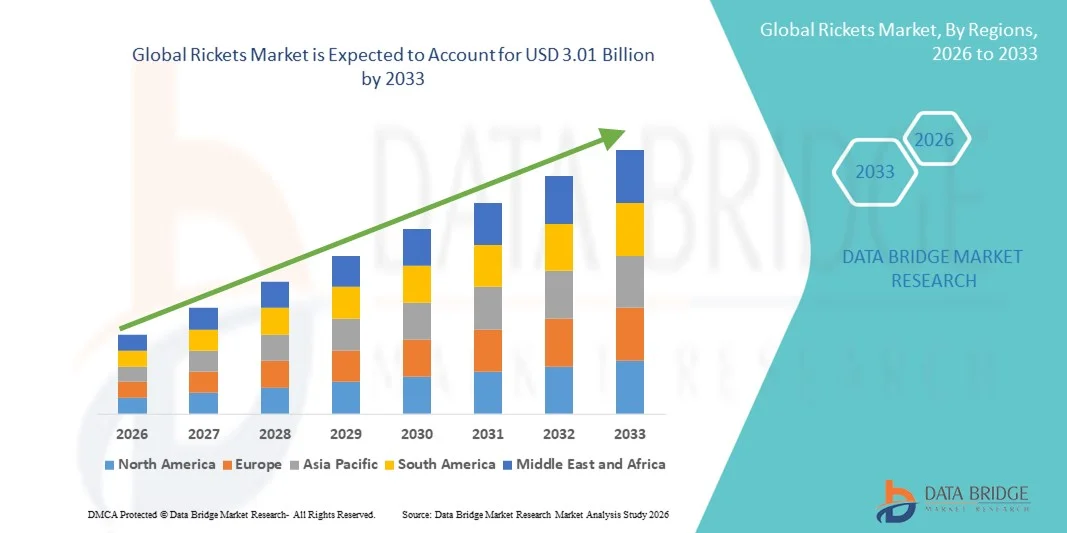
- The global rickets market size was valued at USD 1.50 billion in 2025 and is expected to reach USD 3.01 billion by 2033, at a CAGR of 9.10% during the forecast period
- The market growth is largely fueled by increasing awareness of bone health, rising prevalence of vitamin D deficiency, and growing adoption of preventive healthcare measures in both pediatric and adult populations
- Furthermore, expanding public health initiatives, government programs for nutritional supplementation, and rising focus on early diagnosis and treatment of bone disorders are establishing Rickets as a critical area of concern. These converging factors are accelerating the uptake of Rickets therapies and interventions, thereby significantly boosting the industry's growth
Rickets Market Analysis
- Rickets, a metabolic bone disorder primarily caused by vitamin D deficiency, calcium deficiency, or genetic factors, is increasingly gaining attention due to rising awareness of bone health and pediatric nutrition. Early diagnosis and preventive care are becoming essential in both developed and developing regions, driving growth in treatment adoption and supplementation programs
- The escalating demand for Rickets management solutions is primarily fueled by growing prevalence of rickets among children and adults, increasing awareness of vitamin D supplementation, and supportive government and healthcare initiatives promoting bone health
- North America dominated the Rickets market with the largest revenue share of 38.5% in 2025, characterized by high awareness of bone health, advanced healthcare infrastructure, and widespread adoption of preventive nutritional supplements. The U.S. experienced substantial growth in Rickets management programs and vitamin D supplementation initiatives, driven by both public health campaigns and private sector innovations
- Asia-Pacific is expected to be the fastest-growing region in the Rickets market during the forecast period, expanding at a CAGR of 9.2% from 2026 to 2033, due to rising urbanization, increasing prevalence of vitamin D deficiency, and growing adoption of nutritional interventions and fortification programs
- The Treatment segment dominated the largest revenue share of 49.2% in 2025, supported by growing adoption of vitamin D, calcium, and phosphate supplementation, as well as innovative pharmacological therapies like burosumab for X-linked hypophosphatemia
Report Scope and Rickets Market Segmentation
|
Attributes |
Rickets Key Market Insights |
|
Segments Covered |
|
|
Countries Covered |
North America
Europe
Asia-Pacific
Middle East and Africa
South America
|
|
Key Market Players |
|
|
Market Opportunities |
|
|
Value Added Data Infosets |
In addition to the insights on market scenarios such as market value, growth rate, segmentation, geographical coverage, and major players, the market reports curated by the Data Bridge Market Research also include in-depth expert analysis, patient epidemiology, pipeline analysis, pricing analysis, and regulatory framework. |
Rickets Market Trends
Rising Focus on Early Diagnosis and Preventive Care
- A prominent and growing trend in the global Rickets market is the heightened emphasis on early detection, preventive healthcare measures, and nutritional interventions, particularly among children, adolescents, and other high-risk populations
- Governments, healthcare organizations, and pediatric societies worldwide are increasingly prioritizing programs that monitor bone health from infancy. These initiatives aim to prevent long-term skeletal deformities and growth impairments associated with untreated rickets
- For instance, in 2024, the European Society for Paediatric Endocrinology launched a large-scale initiative to provide routine vitamin D screening for infants and toddlers across several European countries
- The program emphasizes early identification of deficiency through blood tests, nutritional assessments, and periodic radiographic evaluations. Similarly, in North America, pediatric hospitals are increasingly adopting standardized guidelines for vitamin D supplementation and dietary calcium intake monitoring in routine wellness visits
- Alongside clinical efforts, public awareness campaigns are driving education on proper sunlight exposure, fortified foods, and supplementation, targeting both parents and caregivers
- The integration of preventive strategies in school nutrition programs and community health clinics is also gaining momentum, underscoring the shift from reactive treatment to proactive prevention
- This trend reflects a growing recognition that early intervention not only improves bone development but also reduces the risk of associated comorbidities later in life
Rickets Market Dynamics
Driver
Growing Incidence of Vitamin D Deficiency and Nutritional Imbalances
- The global rise in vitamin D deficiency, calcium insufficiency, and imbalanced dietary habits is a key factor propelling the Rickets market
- Urban lifestyles, reduced outdoor activity, limited sunlight exposure, and dependence on processed foods have collectively contributed to the increasing prevalence of rickets in both developed and developing countries
- For instance, in 2025, the Centers for Disease Control and Prevention (CDC) highlighted a noticeable increase in pediatric rickets cases in the United States, particularly in densely populated urban regions where sunlight exposure is minimal
- Hospitals and pediatric clinics responded by implementing routine vitamin D and calcium screenings during well-child visits, alongside recommending supplementation and fortified dietary products. Similarly, in India and parts of Africa, widespread micronutrient deficiencies have prompted government-led nutritional programs aimed at enhancing calcium and vitamin D intake among children
- Another important driver is the growing awareness of maternal nutrition and its impact on infant bone health. Research indicates that insufficient vitamin D levels in expectant mothers significantly increase the likelihood of rickets in newborns
- As a result, prenatal care programs are increasingly including vitamin D supplementation protocols, education on dietary sources of calcium, and guidance on safe sunlight exposure
- Together, these measures are driving demand for therapeutic and preventive solutions, including fortified milk, dietary supplements, and community-based supplementation initiatives
Restraint/Challenge
Limited Awareness in Developing Regions and Economic Barriers
- Despite increasing awareness in developed nations, limited knowledge about rickets and preventive healthcare in developing countries continues to restrict market growth
- Many rural and underserved regions lack proper access to diagnostic services, nutritional counseling, and vitamin supplementation, leading to delayed identification and treatment
- This gap in awareness and infrastructure represents a major barrier for comprehensive rickets management
- For instance, high prevalence rates of rickets persist in Sub-Saharan Africa, South Asia, and certain Latin American countries, where economic constraints, low healthcare accessibility, and cultural dietary habits hinder preventive interventions
- Even when supplements or fortified foods are available, their affordability often limits widespread adoption, particularly among low-income households
- Furthermore, challenges such as urban pollution reducing sunlight exposure, seasonal variations affecting vitamin D synthesis, and inconsistent adherence to supplementation programs further complicate effective disease management
- Addressing these issues requires targeted public health campaigns, improved distribution of affordable supplements, community education programs, and the development of accessible diagnostic tools
- The combination of awareness initiatives, cost-effective supplementation, and policy support will be critical to overcoming these challenges and ensuring sustainable growth of the Rickets market globally
Rickets Market Scope
The market is segmented on the basis of type, causes, therapy, and end user.
- By Type
On the basis of type, the Rickets market is segmented into Vitamin D-Related Rickets, Hypocalcemia-Related Rickets, and Hypophosphatemia-Related Rickets. The Vitamin D-Related Rickets segment dominated the largest market revenue share of 44.1% in 2025, owing to the widespread prevalence of vitamin D deficiency worldwide. Its dominance is reinforced by high awareness among healthcare providers and parents regarding prevention and supplementation. Vitamin D deficiency remains a primary etiological factor for rickets in children across both developed and developing nations. Government health programs promoting vitamin D fortification and supplementation bolster segment growth. Routine pediatric screening for vitamin D levels enhances early diagnosis and treatment uptake. Pharmaceutical and nutraceutical interventions targeting vitamin D deficiency strengthen market share. Clinical guidelines recommend vitamin D supplementation for at-risk populations, driving adoption. Continuous research highlighting the role of vitamin D in skeletal development supports the segment. Public health initiatives and awareness campaigns further reinforce its dominance. Expansion of fortified food programs in emerging regions enhances accessibility. Increasing pediatric patient population globally sustains steady demand.
The Hypophosphatemia-Related Rickets segment is projected to witness the fastest CAGR of 18.6% from 2026 to 2033, driven by advances in diagnostic technologies and targeted therapies for phosphate metabolism disorders. Early detection of genetic and acquired forms of hypophosphatemia supports timely intervention. Novel therapies, including phosphate supplements and burosumab, improve patient outcomes and accelerate adoption. Growing awareness among clinicians regarding rare rickets forms expands treatment uptake. Research funding for metabolic bone disorders enhances pipeline development. Personalized treatment plans and combination therapy strategies further propel market growth. Expansion of specialty pediatric and endocrine centers supports accessibility. Increasing prevalence of chronic kidney disease and other comorbidities related to phosphate imbalance drives demand. Clinical trial success rates encourage faster approval of new therapies. Patient advocacy groups promote awareness and early diagnosis. Technological innovation in monitoring phosphate levels strengthens growth. Rising availability of home care therapies enhances convenience and adherence.
- By Causes
On the basis of causes, the Rickets market is segmented into Sunlight, Diet, Genetics, and Others. The Sunlight segment dominated the largest revenue share of 46.3% in 2025, as insufficient sunlight exposure remains the leading cause of vitamin D deficiency-related rickets globally. Urbanization, indoor lifestyles, and cultural practices reducing sun exposure increase prevalence. Public health initiatives advocating safe sun exposure contribute to early prevention. Pediatric healthcare programs screen for sunlight-related deficiencies to mitigate risk. Sunlight-induced vitamin D synthesis supports skeletal development, driving therapeutic focus. Government-supported awareness campaigns promote outdoor activity for children. Routine supplementation in regions with limited sunlight ensures continued adoption. Strong evidence linking sunlight deficiency to rickets reinforces clinical attention. Seasonal variations in sunlight availability impact regional demand. Research studies further highlight the preventive potential of sunlight. Integration with school health programs enhances early intervention.
The Diet segment is expected to witness the fastest CAGR of 17.9% from 2026 to 2033, driven by increasing recognition of nutritional deficiencies as key contributors to rickets. Diets low in vitamin D, calcium, or phosphate necessitate supplementation and fortified foods. Nutritional interventions in schools and hospitals support rapid adoption. Rising parental awareness of balanced pediatric nutrition drives demand. Expansion of fortified milk, cereals, and supplements improves accessibility. Government and NGO programs promoting diet-based prevention accelerate market penetration. Clinical guidelines recommend dietary management as a first-line preventive strategy. Emerging economies with high prevalence of malnutrition witness strong growth. Technological advances in fortification processes enhance product quality. Pediatric clinics increasingly emphasize dietary counseling. Collaboration with food and pharmaceutical companies expands distribution channels. Rising urbanization and dietary lifestyle changes contribute to accelerated CAGR.
- By Therapy
On the basis of therapy, the Rickets market is segmented into Diagnosis and Treatment. The Treatment segment dominated the largest revenue share of 49.2% in 2025, supported by growing adoption of vitamin D, calcium, and phosphate supplementation, as well as innovative pharmacological therapies like burosumab for X-linked hypophosphatemia. Early intervention programs in hospitals and clinics strengthen market leadership. Treatment protocols for severe rickets cases promote adoption in pediatric care. Integration of therapy with routine pediatric check-ups ensures continuity of care. Clinical guidelines emphasize pharmacological and nutritional therapies to prevent complications. Pharmaceutical innovations targeting rare rickets forms drive market dominance. Treatment adherence is enhanced by home-based administration options. Government and insurance coverage encourage therapy uptake. Awareness campaigns highlighting therapy effectiveness boost acceptance. Global prevalence of childhood rickets ensures steady revenue inflow. Ongoing research on bone mineralization supports therapy adoption.
The Diagnosis segment is expected to witness the fastest CAGR of 18.3% from 2026 to 2033, driven by increased screening programs, advanced imaging, and biomarker-based diagnostics for early detection of rickets. Pediatric screening initiatives by hospitals and clinics expand adoption. Introduction of point-of-care testing and genetic diagnostics accelerates clinical uptake. Early diagnosis enables timely intervention, reducing long-term skeletal deformities. Growth in academic research and hospital diagnostic capacities supports segment expansion. Technological improvements in biochemical assays enhance reliability. Collaboration between laboratories and healthcare providers improves accessibility. Rising awareness among parents and pediatricians about early signs of rickets fuels market growth. Digital health platforms facilitate monitoring and follow-up. Expansion of diagnostic services in emerging markets drives rapid adoption. Integration of diagnostics with telehealth services improves patient reach. Increasing prevalence of vitamin D deficiency globally strengthens segment CAGR.
- By End User
On the basis of end user, the Rickets market is segmented into Hospitals, Clinics, and Others. The Hospitals segment accounted for the largest revenue share of 51.5% in 2025, due to high patient inflows, availability of specialized pediatric endocrinology departments, and integration of diagnostic and therapeutic services under one roof. Hospitals offer comprehensive management for rickets, including supplementation programs, advanced diagnostics, and follow-up care. Adoption is further supported by insurance coverage and government health initiatives. Large-scale hospital programs ensure consistent treatment and monitoring. Academic hospital collaborations accelerate research and innovation in therapy options. Hospital-based outreach programs increase early diagnosis and awareness. Strong presence of pediatric specialists enhances credibility. Multi-disciplinary care models ensure effective management of complex cases. Government funding for public hospitals reinforces segment stability. Expansion of hospital networks globally sustains revenue dominance.
The Clinics segment is projected to witness the fastest CAGR of 16.8% from 2026 to 2033, driven by increasing outpatient care services, ease of access for routine supplementation, and growing focus on preventive healthcare. Clinics offer convenient monitoring, nutritional counseling, and therapy administration for rickets patients. Rising number of specialized pediatric and endocrine clinics facilitates adoption. Integration with community health programs supports early detection and treatment. Clinics benefit from partnerships with pharmaceutical and diagnostic companies. Telemedicine and home care services enhance reach and adherence. Urban and semi-urban populations prefer clinic-based preventive interventions. Expansion of ambulatory care networks accelerates growth. Awareness campaigns targeting parents encourage proactive clinic visits. Technological advances in portable diagnostics support rapid adoption. Clinics increasingly implement standardized treatment protocols. Rising demand for outpatient-focused healthcare services ensures sustained CAGR.
Rickets Market Regional Analysis
- North America dominated the rickets market with the largest revenue share of 38.5% in 2025, characterized by high awareness of bone health, advanced healthcare infrastructure, and widespread adoption of preventive nutritional supplements. The region has well-established pediatric screening programs and strong public health policies that promote early detection of vitamin D deficiency and calcium imbalance among infants and children
- Consumers and healthcare providers in the region place significant emphasis on preventive healthcare practices, including routine vitamin D supplementation, fortified dairy consumption, and early pediatric assessments to monitor bone development. Pediatric associations actively recommend supplementation protocols for breastfed infants and at-risk populations, strengthening the preventive care framework
- This widespread adoption is further supported by high healthcare expenditure, strong insurance coverage, and continuous public health campaigns focused on nutritional education. The presence of leading nutraceutical manufacturers and pharmaceutical companies offering fortified foods and vitamin D supplements has further reinforced North America’s dominant position in the Rickets market
U.S. Rickets Market Insight
The U.S. rickets market captured the largest revenue share in 2025 within North America, driven by substantial growth in rickets management programs and vitamin D supplementation initiatives. Public health campaigns led by pediatric organizations have emphasized early screening for vitamin D deficiency and bone mineral disorders. Hospitals and pediatric clinics increasingly incorporate routine vitamin D testing and dietary counseling into well-child visits. Additionally, private sector innovation in fortified infant formulas, chewable vitamin D supplements, and calcium-enriched food products has enhanced accessibility and compliance. Growing awareness among parents regarding the long-term consequences of untreated rickets, such as skeletal deformities and delayed growth, continues to propel preventive and therapeutic adoption across the country.
Europe Rickets Market Insight
The Europe rickets market is projected to expand at a substantial CAGR throughout the forecast period, primarily driven by strong public healthcare systems and increasing emphasis on preventive child health programs. European governments have implemented national vitamin D supplementation guidelines, particularly in countries with limited sunlight exposure. School-based nutrition programs and fortified food policies are contributing to improved awareness and early management of rickets. Rising research efforts focused on micronutrient deficiencies and maternal nutrition are also strengthening regional growth.
U.K. Rickets Market Insight
The U.K. Rickets market is anticipated to grow at a noteworthy CAGR during the forecast period, supported by structured NHS-led supplementation schemes and national awareness programs addressing vitamin D deficiency. The Healthy Start program, which provides vitamin supplements to low-income families, has played a key role in reducing deficiency-related disorders. Increased screening among high-risk ethnic populations and urban communities with limited sunlight exposure further drives demand for supplementation and preventive care solutions.
Germany Rickets Market Insight
The Germany rickets market is expected to expand at a considerable CAGR during the forecast period, fueled by rising awareness of pediatric bone health and strong healthcare infrastructure. Germany’s focus on preventive healthcare, maternal nutrition counseling, and fortified food consumption supports early identification and management of rickets. Pediatricians increasingly recommend vitamin D supplementation during infancy, particularly during winter months when sunlight exposure is reduced. The country’s emphasis on evidence-based clinical guidelines and nutritional education further strengthens market growth.
Asia-Pacific Rickets Market Insight
The Asia-Pacific rickets market is expected to be the fastest-growing region during the forecast period, expanding at a CAGR of 9.2% from 2026 to 2033. Growth is driven by rapid urbanization, increasing prevalence of vitamin D deficiency, and growing awareness regarding pediatric nutritional health. Countries across the region are implementing food fortification initiatives and expanding access to affordable vitamin supplements. Rising disposable incomes and improvements in healthcare infrastructure are also contributing to enhanced screening and early diagnosis.
Japan Rickets Market Insight
The Japan rickets market is gaining momentum due to increasing focus on maternal and child health, coupled with high standards of healthcare delivery. Although overall prevalence remains relatively low, increased attention to vitamin D insufficiency among urban populations has led to growing supplementation awareness. Pediatric healthcare providers emphasize balanced nutrition and preventive monitoring, particularly in infants and toddlers.
China Rickets Market Insight
The China rickets market accounted for the largest market revenue share in Asia-Pacific in 2025, attributed to rapid urbanization, changing dietary habits, and increasing pediatric health awareness. Government-led nutrition programs promoting fortified milk and vitamin D supplementation are strengthening early intervention efforts. Expanding healthcare access in rural areas and rising investments in maternal and child healthcare services are key factors propelling market growth.
Rickets Market Share
The Rickets industry is primarily led by well-established companies, including:
- Pfizer Inc. (U.S.)
- GlaxoSmithKline plc (U.K.)
- Abbott (U.S.)
- Sanofi S.A. (France)
- Novartis AG (Switzerland)
- Roche Holding AG (Switzerland)
- Bayer AG (Germany)
- Merck & Co., Inc. (U.S.)
- Takeda Pharmaceutical Company Limited (Japan)
- Eli Lilly and Company (U.S.)
- Amgen Inc. (U.S.)
- AstraZeneca plc (U.K.)
- Mylan N.V. (U.S.)
- Cipla Limited (India)
- Sun Pharmaceutical Industries Ltd. (India)
- Torrent Pharmaceuticals Ltd. (India)
- Dr. Reddy’s Laboratories Ltd. (India)
- GlaxoSmithKline Consumer Healthcare (U.K.)
- Nestlé Health Science (Switzerland)
- Danone Nutricia (France)
Latest Developments in Global Rickets Market
- In February 2022, the European Medicines Agency (EMA) approved Crysvita (burosumab) for the treatment of tumor-induced osteomalacia (TIO) in adults and adolescents, expanding the therapeutic indication of the monoclonal antibody beyond X-linked hypophosphatemia (XLH). Crysvita targets fibroblast growth factor 23 (FGF23), directly addressing phosphate metabolism disorders that cause hereditary and rare forms of rickets and osteomalacia. This approval strengthened treatment options in Europe for patients suffering from FGF23-related bone mineralization disorders
- In April 2022, the U.S. Food and Drug Administration (FDA) approved Crysvita® (burosumab-twza) for the treatment of tumor-induced osteomalacia (TIO) in adult and pediatric patients aged 2 years and older, marking a significant expansion of its indication in the United States. This regulatory milestone reinforced the role of targeted biologic therapy in treating rare phosphate-wasting disorders that lead to rickets and severe bone deformities
- In June 2023, Ultragenyx Pharmaceutical Inc. announced positive long-term data from ongoing studies of Crysvita in pediatric patients with X-linked hypophosphatemia (XLH), demonstrating sustained improvements in rickets severity scores, phosphate metabolism, and growth parameters. These results further validated the long-term clinical benefit of FGF23 inhibition in hereditary rickets management
- In January 2024, the Endocrine Society published updated clinical practice guidelines on Vitamin D for the prevention of disease, emphasizing screening and supplementation strategies in high-risk pediatric populations. Since nutritional vitamin D deficiency remains the leading cause of rickets globally, these updated recommendations significantly influenced prevention and early intervention strategies worldwide
- In March 2024, health authorities in the United Kingdom reported a continued rise in vitamin D deficiency cases among children, prompting renewed public health campaigns focused on supplementation and fortified food awareness. This development highlighted the re-emergence of nutritional rickets in developed nations and reinforced demand for preventive therapeutics and diagnostic testing
- In January 2025, New Zealand health officials reported a resurgence of rickets cases in children, with 20 confirmed cases identified within four months, drawing national attention to vitamin D deficiency and childhood bone health. The report triggered strengthened supplementation recommendations and awareness initiatives, underscoring ongoing global public health concerns related to preventable rickets

- Interactive Data Analysis Dashboard
- Company Analysis Dashboard for high growth potential opportunities
- Research Analyst Access for customization & queries
- Competitor Analysis with Interactive dashboard
- Latest News, Updates & Trend analysis
- Harness the Power of Benchmark Analysis for Comprehensive Competitor Tracking
Data collection and base year analysis are done using data collection modules with large sample sizes. The stage includes obtaining market information or related data through various sources and strategies. It includes examining and planning all the data acquired from the past in advance. It likewise envelops the examination of information inconsistencies seen across different information sources. The market data is analysed and estimated using market statistical and coherent models. Also, market share analysis and key trend analysis are the major success factors in the market report. To know more, please request an analyst call or drop down your inquiry.
The key research methodology used by DBMR research team is data triangulation which involves data mining, analysis of the impact of data variables on the market and primary (industry expert) validation. Data models include Vendor Positioning Grid, Market Time Line Analysis, Market Overview and Guide, Company Positioning Grid, Patent Analysis, Pricing Analysis, Company Market Share Analysis, Standards of Measurement, Global versus Regional and Vendor Share Analysis. To know more about the research methodology, drop in an inquiry to speak to our industry experts.
Data Bridge Market Research is a leader in advanced formative research. We take pride in servicing our existing and new customers with data and analysis that match and suits their goal. The report can be customized to include price trend analysis of target brands understanding the market for additional countries (ask for the list of countries), clinical trial results data, literature review, refurbished market and product base analysis. Market analysis of target competitors can be analyzed from technology-based analysis to market portfolio strategies. We can add as many competitors that you require data about in the format and data style you are looking for. Our team of analysts can also provide you data in crude raw excel files pivot tables (Fact book) or can assist you in creating presentations from the data sets available in the report.













