Global Aromatase Inhibitor Drug Class Market Segmentation, 약 (Anastrozole, Letrozole, Exemestane, Formestane, Fadrozole 및 기타), 유형 (Non-Steroidal Aromatase Inhibitors 및 steroidal Aromatase Inhibitors), 응용 프로그램 (Breast Cancer Treatment, Fertility Treatment 및 기타), 최종 사용자 (Hospitals, 전문 클리닉, 홈 케어, 기타) 및 기타 2033 산업에 대한 업계 동향 및 2033
Aromatase 억제물 약 종류 시장 크기
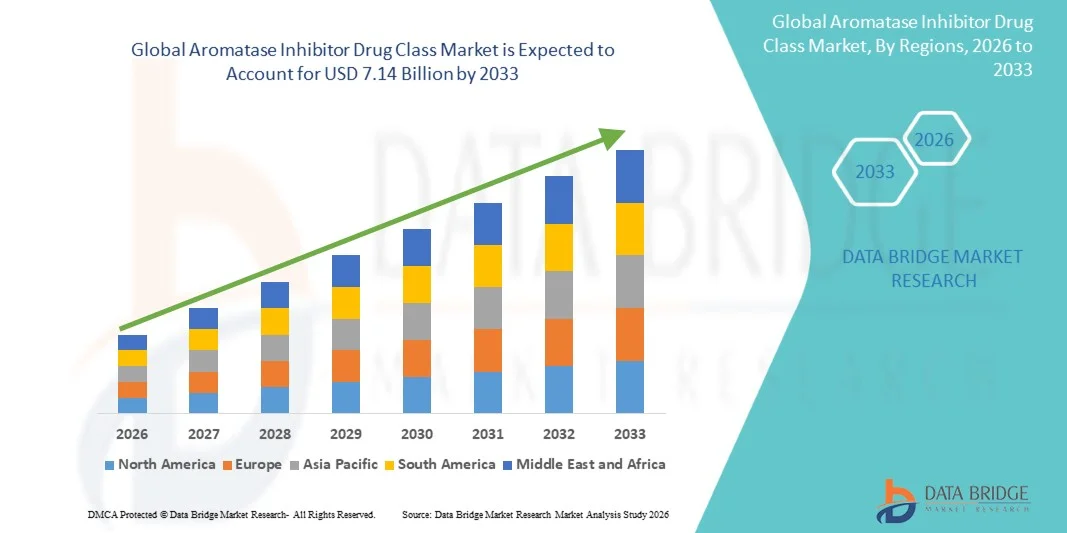
- 세계적인 aromatase 억제물 약 종류 시장 크기는에 평가되었습니다2025년 USD 4.73 억견적 요청2033년 USD 7.14억, 에 의해5.30%의 CAGR예측 기간
- 시장 성장은 크게 상승에 의해 구동된다호르몬 수용체 positive 모유 암, 목표의 증가 채택호르몬 치료, 및 포스트-menopausal 여자에서 첫번째 선과 adjuvant 처리 선택권으로 aromatase 억제물의 확장 사용
- 또한, 개량한 생존 결과를 지원하는 임상 증거, 비용 효과적인 일반적인 정립의 더 넓은 가용성 및 endocrine 근거한 암 치료의 인식은 향기롭게 하는 억제물을 위한 수요를 강화하고, 전반적인 시장 성장을 두드러지게 합니다
Aromatase 억제물 약 종류 시장 분석
- aromatase 효소를 금해서 에스트로겐 생산을 억제하는 Aromatase 억제물은, 에스트로겐 수용체 positive 암, 특히 모유 암을 위한 호르몬 치료의 긴요한 성분이고, 병원, 진료소 및 외피성 종양 조정의 맞은편에 널리 이용됩니다
- aromatase 억제물 약을 위한 증가 수요는 1 차적으로 chemotherapy에 표적으로 한 endocrine 치료를 위한 성장 선호하는 breast 암의 상승 세계적인 불균형에 의해 몰고, 이 대리인의 초기 단계와 대사성 처리 의정서에 있는 확장 사용
- 북아메리카는 2025년에 38.6%의 가장 큰 수익 점유율을 가진 aromatase 억제물 약 종류 시장을, 진보된 종양 인프라에 의해 지원해, 높은 처리 채택 비율, 호의를 베푸는 reimbursement 기구 및 미국과 상표가 붙은 일반적인 약제 제조자의 강한 존재 평가했습니다. 지역 수요의 대다수를 위해 회계
- 아시아 태평양은 암 인식을 증가시키기 위해 예측 기간 동안 aromatase 억제제 약 클래스 시장에서 가장 빠르게 성장하는 지역이 될 것으로 예상되며, 종양 치료에 대한 액세스를 개선하고, 의료 지출을 확장하고, 중국과 인도와 같은 국가에서 저렴한 일반적인 아로마 타제 억제제의 상승 가능성
- 비스테로이드 aromatase 억제물 세그먼트는 그들의 광대한 임상 사용, 강한 효험 단면도에 의해 모는 2025년에 61.4%의 점유율을 가진 시장을 지배하고, 호르몬 수용체 긍정 암 치료에 있는 첫번째 선 치료로 역할을 설치했습니다
Scope와 Aromatase 억제물 약 종류 시장 세그먼트를 보고하십시오
| 관련 기사 | Aromatase 억제물 약 종류 열쇠 시장 통찰력 |
| Segments 적용 |
|
| 국가 덮음 | 북아메리카
·
아시아 태평양
중동 및 아프리카
대한민국
|
| 핵심 시장 선수 |
|
| 시장 기회 |
|
| Value 추가 데이터 Infosets | 시장 가치, 성장률, 세그먼트, 지리적 범위 및 주요 플레이어와 같은 시장 시나리오에 대한 통찰력 외에도 데이터 브리지 시장 연구에 의해 큐레이터 시장 보고서는 심층적 인 전문가 분석, 환자 분석, 파이프라인 분석, 가격 분석 및 규제 프레임 워크를 포함합니다. |
Aromatase 억제물 약 종류 시장 동향
“Aromatase Inhibitors의 사용 맞춤 및 조합 치료”
- 세계적인 aromatase 억제물 약 종류 시장에 있는 고명하고 가속 추세는 개인화한 처리 접근 및 조합 식약의 증가, 특히 호르몬 수용체 긍정 암 관리에서, 효험과 환자 결과를 개량하기 위하여, 입니다
- 예를 들면, letrozole와 anastrozole와 같은 aromatase 억제물은 점점 조합에서 처방됩니다CDK4/6 억제물고급 및 메타 정적 모유 암에서, 두드러지게 monotherapy에 비해 진전없는 생존을 향상
- Biomarker 테스트 및 게놈 프로파일링의 전진은 아로마 타제 억제제 기반 치료제의 혜택을 누릴 수있는 환자를 더 잘 식별 할 수 있으며 더 많은 타겟 및 최적화 된 치료 결정을 지원합니다.
- , aromatase 억제물가 선택 환자에서 5 년 이상 사용 되는 장시간 adjuvant 치료 내구에 성장 이동은, 이 약을 위한 더 많은 influencing prescribing 본 그리고 장기 수요입니다
- aromatase 억제물의 통합은 진화 임상 가이드라인으로 그리고 실제 종양학 연습은 호르몬 의존성 암에 있는 코너스톤 치료로 그들의 역할을 강화하고 있습니다
- 초기 질병 단계에 있는 aromatase 억제물을 증발하는 임상 시험 및 예방적인 조정은 치료 범위 및 장기 시장 잠재력을 확장하고 있습니다
- 실제 증거 발생 증가는 장기적인 안전과 효과에 대한 신뢰를 강화하는 종양학 중 aromatase 억제제 기반 요법의 더 넓은 합격을 지원한다
- 이 추세는 더 맞춤화, 증거 기반 및 조합 중심의 치료 전략은 생명주기 관리 및 조합 요법 임상 시험에 투자하기 위해 제약 회사 인 Reshaping therapeutic 표준입니다.
Aromatase 억제물 약 종류 시장 역학
관련 기사
“Burden of Hormone Receptor-Positive Breast Cancer and Preference for Endocrine Therapy”에 대한 관심
- , 특히 포스트 menopausal 여자 사이에서 호르몬 수용체 positive 모유 암의 증가 세계적인 불변은, aromatase 억제물 치료를 위한 중요한 운전사 연료 수요입니다
- 예를 들어, 3 월 2025에서, 몇몇 oncology societies reaffirmed aromatase 억제제는 이른 단계 모유 암을 위한 갱신 임상 연습 권고에 있는 첫번째 선 adjuvant 치료로
- chemotherapy와 비교해, aromatase 억제물은 endocrine 근거한 처리 접근을 위한 개량한 tolerability, 모는 의사 및 환자 선호의 표적적인 기계장치를 제안합니다
- 암 진단, 심사 프로그램 및 신흥 경제학 치료에 대한 액세스 확장은 aromatase 억제제 치료를위한 자격이있는 환자 풀 증가
- 정부 주도 암 인식 이니셔티브 및 심사 프로그램은 이전 진단을 가능하게하고, 아로마 타제 억제제 치료의 시작율을 증가
- aromatase 억제물 처리 의정서를 가진 성장 의사 친밀함 및 장기 결과 자료는 각종 환자 인구의 맞은편에 prescribing 신뢰를 강화합니다
- 일반적인 aromatase 억제물의 광대한 가용성은 개량한 감당성 및 고착이, 개발하고 개발 지구를 통하여 지속적인 시장 성장을 지원하는 더 있습니다
스트레인트/Challenge
"Long-Term Side Effects 및 치료 애드워런스"
- aromatase 억제물의 장기 사용은 뼈 조밀도 손실, 합동 고통 및 심장 혈관 위험과 같은 불리한 효력과 치료로 환자 고착 및 지속을 제한할 수 있는 관계됩니다
- 예를 들어, 실제 임상 연구는 musculoskeletal 증후에 몇몇 환자의 치료 억제를 보고했습니다
- 지원 치료, 모니터링 전략을 통해 이러한 부작용을 관리하고 환자 교육은 전반적인 치료 부담 및 의료 비용을 추가합니다.
- 새로운 개구 전략과 지원 개구가 탐구되고 있지만 삶의 질에 대한 우려는 장시간 치료 기간 동안 장벽 남아있다.
- 환자 관리, 위험 완화 전략, 차세대 endocrine 치료가 장기적인 시장 확장을 위해 필수적인 문제 해결
- aromatase 억제물 관련 부작용의 관리에 대하여 한정된 환자 인식은 premature discontinuation와 suboptimal 처리 결과에 지도할 수 있습니다
- reimbursement 적용에 있는 Variability 및 지역에 걸쳐 지원 관리 서비스에 접근은 aromatase 억제물 치료에 일관된 장기 고착을 따릅니다
Aromatase 억제물 약 종류 시장 범위
시장은 약물, 유형, 응용 프로그램 및 최종 사용자의 기초에 구분됩니다.
- 약으로
약의 기초에, 세계적인 aromatase 억제물 약 종류 시장은 anastrozole, letrozole, exemestane, formestane, fadrozole 및 다른 사람으로 구분됩니다. letrozole 세그먼트는 2025년에 가장 큰 수익 점유율을 가진 시장을, 호르몬 수용체 positive 모유 암 및 그것의 강한 임상 효험 단면도에 있는 첫번째 선 치료로 그것의 광대한 사용에 의해 모였습니다. Letrozole은 강력한 임상 가이드라인과 장기적인 결과 데이터에 의해 지원되는 애드젠트 및 메타 정적 설정 모두에서 광범위하게 처방됩니다. 종양학에 대한 광범위한 수용, 브랜드 및 일반 형태의 가용성, 그리고 불임 치료에 대한 off-label 사용 증가 더 그것의 지배력을 강화. 또한, 중요한 시장에 있는 호의를 베푸는 reimbursement 적용에서, 높은 처리 고착 및 지속적인 수요를 지원하.
exemestane 세그먼트는 예측 기간 도중 가장 빠른 성장을 목격할 것으로 예상됩니다, 저항을 개발하는 환자에 있는 증가 사용 또는 비스테로이드 aromatase 억제물. 작용의 명백한 기계장치를 가진 steroidal 억제물로, exemestane는 점점 순차적으로 그리고 장시간 endocrine 치료 요법에서 이용됩니다. 장기적인 야기암 관리의 전환 전략을 위한 치료 및 상승 임상 선호도에 대한 채택은 그 성장을 연료화하고 있습니다. 질병없는 생존을 개선하기 위해 그것의 역할을 지원하는 임상 증거를 확장하는 것은 더 가속화 시장 uptake입니다.
- 이름 *
유형의 기초에, 시장은 비스테로이드 aromatase 억제물 및 steroidal aromatase 억제물로 분할됩니다. 비스테로이드 aromatase 억제물 세그먼트는 61.4%의 시장 점유율을 가진 2025에 있는 시장을, anastrozole의 광대한 사용에 빚지고 표준 치료 치료로 letrozole 지배했습니다. 이 약은 입증 된 효능, 유리한 안전 프로파일 및 구강 관리의 용이성 때문에 국제 치료 지침에 널리 사용됩니다. 초기 단계에서 강한 존재와 대사성 모유 암 치료 프로토콜은 시장 지배에 크게 기여합니다. 또한, 일반적인 버전의 높은 가용성은 개발 및 신흥 지역에 걸쳐 대규모 채택을 지원하는 감소성 및 액세스가 향상되었습니다.
steroidal aromatase 억제물 세그먼트는 대안 또는 순차적인 endocrine 치료를 요구하는 환자에 있는 그들의 증가 사용에 의해 지원된 예측 기간 도중 가장 빠른 속도로 성장하기 위하여 계획됩니다. exemestane와 같은 steroidal 억제물은 질병 진도의 경우에 이익을 제안할 수 있는 그들의 무능한 의무적인 기계장치 때문에 견인을 얻는다. 개인화 처리 sequencing 및 저항 관리에 대한 clinicians에 대한 인식은 세그먼트 성장을 지원한다. 임상 시험과 장시간 adjuvant 치료 전략은 steroidal 억제물을 위한 더 강화 수요입니다.
- 회사연혁
응용 분야의 기초에, 시장은 모유 암 치료, 불임 치료 및 기타 응용 분야로 구분됩니다. breast 암 치료 세그먼트는 2025 년에 가장 큰 수익 점유율을 가진 시장을 전 세계적으로 호르몬 수용체 긍정적 인 모유 암의 높은 prevalence에 의해 구동. Aromatase 억제물은 adjuvant, neoadjuvant 및 metastatic 처리 조정의 맞은편에 사용된 포스트 menopausal 여자를 위한 코너스톤 치료입니다. 강력한 임상 승인, 긴 치료 기간 및 생존율은 지속되고 반복적인 수요에서 유래했습니다. 또한, aromatase 억제제의 통합은 Targeted therapies를 가진 조합식으로 시장 지배력을 지원합니다.
불임 치료 세그먼트는 예측 기간 동안 가장 빠르게 성장할 것으로 예상되며, ovulation induction 및 polycystic ovary 증후군 (PCOS)의 관리를위한 letrozole의 상승 사용으로 구동됩니다. pharmacological fertility 처리의 증가된 수용력, 지연된 pregnancies는 연료를 공급합니다. Letrozole은 점점 더 많은 임신 결과 및 위험 프로파일을 개선하기 때문에 전통적인 치료법을 선호합니다. 새로운 시장의 오프 라벨 응용 프로그램의 더 큰 인식은이 부문에서 성장을 가속화하고 있습니다.
- 최종 사용자
최종 사용자의 기초에, 시장은 병원, 전문 클리닉, homecare 및 다른 사람으로 구분됩니다. 병원 세그먼트는 2025 년에 시장, 종양학 관리의 중앙화된 납품에 의해 지원해, 전문화된 진단 기능에 접근, 및 다중화 치료 접근. 병원은 암 진단을 위한 1 차적인 센터로, 치료의 시작, 진보된 질병 단계의 관리 봉사합니다. 높은 환자 볼륨, 구조화 처리 프로토콜 및 강력한 재투자 프레임 워크는 세그먼트의 주요 수익 공유에 기여합니다. 또한, 병원은 장기 치료 결과를 관리하고 모니터링하는 중요한 역할을합니다.
홈케어 부문은 가장 빠르게 성장할 것으로 예상되며, 방향족화 억제제 치료의 구강 자연에 의해 구동되는 예측 기간 중 가장 빠른 성장을 목격하고 외래 및 가정 기반 암 관리에 대한 이동. 환자 교육, 디지털 건강 모니터링 및 삶의 질에 중점을두고이 추세를 지원합니다. Homecare 설정은 의료비 및 병원 방문으로 장기 치료 준수를 가능하게합니다. 환자 중심의 케어 모델은 이 부문에서 더 가속화되는 성장과 편리함을 위해 노력합니다.
Aromatase Inhibitor 약 종류 시장 지역 분석
- 북아메리카는 2025년에 38.6%의 가장 큰 수익 점유율을 가진 aromatase 억제물 약 종류 시장을, 진보된 종양 인프라에 의해 지원해, 높은 처리 채택 비율, 호의를 베푸는 reimbursement 기구 및 미국과 상표가 붙은 일반적인 약제 제조자의 강한 존재 평가했습니다. 지역 수요의 대다수를 위해 회계
- 이 지역의 환자 및 의료 제공 업체는 입증 된 임상 효능, 두 브랜드 및 일반 옵션의 가용성, 브로스트 암 관리를위한 표준 치료 지침에 강한 포함, 및 강력한 포함
- 이 광대한 채택은 호의를 베푸는 reimbursement 정책, 진보된 암 진단에 이른 접근 및 endocrine 치료의 높은 인식, 병원과 외래 종양학 조정의 구석암 처리로 aromatase 억제물을 설치하
미국 Aromatase Inhibitor 약 종류 시장 통찰력
미국 aromatase 억제물 약 종류 시장은 2025년에 북아메리카 내의 가장 큰 수익 점유율을 붙잡았습니다, 호르몬 수용체 positive 야수암의 높은 불균형에 의해 몰고 진보된 endocrine 치료의 초기 채택. 미국에 있는 Physicians는 그들의 강한 임상 효험, 장기 생존 이익 및 국내 oncology 지침에 있는 첫번째 선 처리로 포함 때문에 aromatase 억제물의 점점 우선순위합니다. 브랜드 및 일반 의약품의 광범위한 가용성은 호의를 베푸는 reimbursement 정책과 결합되어 시장의 성장을 지원합니다. 또한, 임상 시험에 강한 참여 및 표적 치료제와 조화 요법의 급속한 섭취는 추진 시장 확장을 계속합니다.
유럽 Aromatase 억제물 약 종류 시장 통찰력
유럽 aromatase 억제물 약 종류 시장은 예측 기간 도중 실질적적인 CAGR에, 주로 일어나는 암 prevalence 및 well-established 공중 건강 관리 체계에 의해 모였습니다 계획됩니다. 유럽 국가 전역의 조기 암 진단 및 표준화 치료 프로토콜에 중점을두고 아로마 타제 억제제에 대한 일관성있는 수요를 촉진합니다. 유럽 의료 제공 업체는 그들의 비용 효과 및 강한 장기 임상 증거에 대한 이러한 치료를 선호합니다. 성장은 두 병원과 외래 설정에 걸쳐 관찰됩니다, 일반적인 사용 증가 하 여 지원 하 고 endocrine 치료에 액세스 확장.
U.K. Aromatase 억제물 약 종류 시장 통찰력
미국 aromatase 억제물 약 종류 시장은 국가 건강 서비스 내의 가이드라인 구동 브로스트 암 치료의 강한 채택에 의해 지원되는 예측 기간 도중 주목할만한 CAGR에 성장하기 위하여 예상됩니다. 호르몬 수용체 positive 모유 암의 상승 인식 및 증가 된 검열 이니셔티브는 이전 진단 및 더 높은 치료 개시 비율에 기여하고 있습니다. 비용 효과적인 일반적인 aromatase 억제물에 대한 선호는 더 지속적인 수요를 지원합니다. 또한, 지속적인 연구 활동과 미국의 실제 결과를 연구합니다. 장기 내독 치료 사용에 대한 의사의 신뢰를 강화하기 위해 계속.
독일 Aromatase 억제물 약 종류 시장 통찰력
독일 aromatase 억제물 약 종류 시장은 고려할 수 있는 CAGR에 확장할 것으로 예상되고, 진보된 종양 인프라에 의해 연료를 공급하고 증거 근거한 처리에 강한 강조. 독일 clinicians는 그들의 입증된 효험 및 호의를 베푸는 안전 단면도 때문에 aromatase 억제물을 넓게 채택합니다. 국가의 강력한 약제 제조 기초 및 강한 reimbursement 환경은 둘 다 상표를 붙이고 일반적인 치료에 접근을 강화합니다. 개인화 된 의약품 및 순차적 인 내분비 치료 전략에 중점을 두는 것은 독일에서 더 많은 시장 성장입니다.
Asia-Pacific Aromatase Inhibitor 약 종류 시장 통찰력
Asia-Pacific aromatase 억제제 약 종류 시장은 예측 기간 도중 가장 빠른 CAGR에 성장하기 위하여, 건강 관리 접근을 개량하고, 호르몬 치료의 인식을 증가하는 암 부신에 의해 모는. 급속한 도시화, 종양학 인프라 확장, 중국, 일본 및 인도와 같은 국가의 정부 의료 투자 증가 치료 채택. 저비용 유전자의 성장 가능성은 환자의 접근을 크게 개선하고 있습니다. 또한, 글로벌 임상 시험에 참여 증가는 지역 전체에 aromatase 억제물 치료의 더 넓은 합격을 지원한다.
일본 Aromatase Inhibitor 약 종류 시장 통찰력
일본 향기롭게 하는 억제제 약 종류 시장은 노후화 인구와 야후 폐암의 높은 prevalence로 인해 모세관을 얻고 있습니다. 일본 의료 시스템은 초기 진단 및 장기 질병 관리에 강한 중점을두고 있습니다. Endocrine 치료의 지속적인 사용. Aromatase 억제물은 그들의 호의를 베푸는 이익risk 단면도 때문에 넓게 처방됩니다. 또한, 강력한 의사는 임상 지침을 준수하고 조합 치료의 채택 증가는 꾸준한 시장 성장에 기여하고 있습니다.
인도 Aromatase 억제제 약 종류 시장 통찰력
인도 아로마 타제 억제제 약 등급 시장은 2025년 아시아 태평양에서 상당한 수익 점유율을 차지했으며, 암 부담을 늘리고 진단 능력을 확장하고 의료 인식을 높였습니다. 인도의 강력한 일반적인 제약 산업은 도시와 반 우르반 지역에 걸쳐 치료 액세스를 개선 저렴한 아로마 타제 억제제의 넓은 가용성을 보장합니다. 정부 주도 암 프로그램 및 개인 종양 센터의 증가 된 침투는 시장 확장을 지원합니다. 또한, 장기 endocrine 치료의 수용 증가는 인도 시장에서 지속적인 성장에 기여.
Aromatase 억제물 약 종류 시장 점유율
Aromatase Inhibitor Drug Class 산업은 주로 잘 설립 된 회사에 의해 주도됩니다.
- Pfizer Inc. (미국)
- AstraZeneca (미국)
- Novartis AG (스위스)
- Sanofi (프랑스)
- Bayer AG (독일)
- Teva 제약 산업 (Israel)
- Sandoz International GmbH (스위스)
- Apotex Inc. (캐나다)
- Sun Pharmaceutical Industries Ltd. (인도)
- Reddy의 Laboratories Ltd. (인도) 박사
- Cipla Limited (인도)
- Hetero 약 제한 (인도)
- Zydus 생명 과학 제한 (인도)
- Lupin Limited (인도)
- Amneal Pharmaceuticals, Inc. (미국)
- Hikma 약제 PLC (미국)
- ANI 제약, Inc. (미국)
- Fresenius Kabi AG (독일)
- Mayne Pharma Group Limited (호주)
Global Aromatase Inhibitor Drug Class Market의 최근 개발은 무엇입니까?
- 2025년 8월에서는, 연구에 따르면 polyisoprenylated cysteinyl amide 억제물 (PCAIs)는 향기롭게 하는 억제물 저항하는 모유 암세포에 대하여 유력한 활동을, AI 치료에 있는 저항을 극복하기 위하여 비발하는 비발한 전략을 향하게 했습니다
- 7 월 2025에서, 단계 2 재판은 낮은 테스토스테론 때문에 남성 불임의 처리를 위해 leflutrozole, 일류 aromatase 억제물을 평가하기 위하여 시작되었습니다, oncology를 넘어서 AI 치료 신청의 잠재적인 확장을 나타내는
- 1 월 2025에서, 임상 연구는 aromatase 억제물로 metronomic capecitabine을 결합하는 것을 보고했습니다 두드러지게 전진 자유로운 생존 및 향기롭게 억제물 혼자 비교된 HR+ 모유 암 환자에서 전반적인 생존, 건의 조합 전략은 치료 결과를 개량할지도 모릅니다
- 유럽위원회 (European Commission)는 12 월 2024에서 ribociclib에 대한 승인을 수여했으며 향기로운 억제제는 HR + / HER2-negative 이른 breast 암을위한 항주 요법으로 향합니다. EU 회원국의 유럽 규제 정책과 유럽 규제 정책을 정렬
- 9월 2024일, 미국 식품의약품안전처 (FDA)는 ribociclib (Kisqali)를 호르몬 수용체 긍정 (HR+)/HER2-negative (HR+)를 가진 성인의 adjuvant 처리를 위한 aromatase 억제물과 조화하여, 치료의 높은 위험에 이른 breast 암에서 자료에 근거를 둔 이전 단계로 향기롭게 하는 억제물의 역할을 확장합니다 NATALEE 단계 III 예심에서 자료에 근거를 둔
SKU-
세계 최초의 시장 정보 클라우드 보고서에 온라인으로 접속하세요
- 대화형 데이터 분석 대시보드
- 높은 성장 잠재력 기회를 위한 회사 분석 대시보드
- 사용자 정의 및 질의를 위한 리서치 분석가 액세스
- 대화형 대시보드를 통한 경쟁자 분석
- 최신 뉴스, 업데이트 및 추세 분석
- 포괄적인 경쟁자 추적을 위한 벤치마크 분석의 힘 활용
연구 방법론
데이터 수집 및 기준 연도 분석은 대규모 샘플 크기의 데이터 수집 모듈을 사용하여 수행됩니다. 이 단계에는 다양한 소스와 전략을 통해 시장 정보 또는 관련 데이터를 얻는 것이 포함됩니다. 여기에는 과거에 수집한 모든 데이터를 미리 검토하고 계획하는 것이 포함됩니다. 또한 다양한 정보 소스에서 발견되는 정보 불일치를 검토하는 것도 포함됩니다. 시장 데이터는 시장 통계 및 일관된 모델을 사용하여 분석하고 추정합니다. 또한 시장 점유율 분석 및 주요 추세 분석은 시장 보고서의 주요 성공 요인입니다. 자세한 내용은 분석가에게 전화를 요청하거나 문의 사항을 드롭하세요.
DBMR 연구팀에서 사용하는 주요 연구 방법론은 데이터 마이닝, 시장에 대한 데이터 변수의 영향 분석 및 주요(산업 전문가) 검증을 포함하는 데이터 삼각 측량입니다. 데이터 모델에는 공급업체 포지셔닝 그리드, 시장 타임라인 분석, 시장 개요 및 가이드, 회사 포지셔닝 그리드, 특허 분석, 가격 분석, 회사 시장 점유율 분석, 측정 기준, 글로벌 대 지역 및 공급업체 점유율 분석이 포함됩니다. 연구 방법론에 대해 자세히 알아보려면 문의를 통해 업계 전문가에게 문의하세요.
사용자 정의 가능
Data Bridge Market Research는 고급 형성 연구 분야의 선두 주자입니다. 저희는 기존 및 신규 고객에게 목표에 맞는 데이터와 분석을 제공하는 데 자부심을 느낍니다. 보고서는 추가 국가에 대한 시장 이해(국가 목록 요청), 임상 시험 결과 데이터, 문헌 검토, 재생 시장 및 제품 기반 분석을 포함하도록 사용자 정의할 수 있습니다. 기술 기반 분석에서 시장 포트폴리오 전략에 이르기까지 타겟 경쟁업체의 시장 분석을 분석할 수 있습니다. 귀하가 원하는 형식과 데이터 스타일로 필요한 만큼 많은 경쟁자를 추가할 수 있습니다. 저희 분석가 팀은 또한 원시 엑셀 파일 피벗 테이블(팩트북)로 데이터를 제공하거나 보고서에서 사용 가능한 데이터 세트에서 프레젠테이션을 만드는 데 도움을 줄 수 있습니다.