Global High Drug-to-Antibody Ratio ADC Therapies Market Size, Share and Trends Analysis Report – Industry Overview and Forecast to 2033

TOC 요청 TOC 요청 분석가에게 문의 분석가에게 문의 무료 샘플 보고서 무료 샘플 보고서 구매하기 전에 문의 구매하기 전에 문의 지금 구매 지금 구매

Global High Drug-to-Antibody Ratio ADC Therapies Market Size, Share and Trends Analysis Report – Industry Overview and Forecast to 2033

Global High Drug-to-Antibody Ratio ADC Therapies Market Segmentation, By Payload Type (Topoisomerase Inhibitors, Microtubule Inhibitors, DNA Damaging Agents, and Others), Indication (Breast Cancer, Hematologic Malignancies, Lung Cancer, Colorectal Cancer, and Others), Development Stage: Preclinical, Clinical Trials and Commercialized Products) - Industry Trends and Forecast to 2033

  • Pharmaceutical
  • Feb 2026
  • Global
  • 350 Pages
  • 테이블 수: 220
  • 그림 수: 60

Global High Drug To Antibody Ratio Adc Therapies Market

시장 규모 (USD 10억)

연평균 성장률 :  % Diagram

Chart Image USD 2.12 Billion USD 7.96 Billion 2025 2033
Diagram 예측 기간
2026 –2033
Diagram 시장 규모(기준 연도)
USD 2.12 Billion
Diagram 시장 규모(예측 연도)
USD 7.96 Billion
Diagram 연평균 성장률
%
Diagram 주요 시장 플레이어
  • Pfizer Inc.
  • Roche Holding AG
  • AbbVie Inc.
  • Amgen Inc.
  • Astellas Pharma Inc.

Global High Drug-to-Antibody Ratio ADC Therapies Market Segmentation, By Payload Type (Topoisomerase Inhibitors, Microtubule Inhibitors, DNA Damaging Agents, and Others), Indication (Breast Cancer, Hematologic Malignancies, Lung Cancer, Colorectal Cancer, and Others), Development Stage: Preclinical, Clinical Trials and Commercialized Products) - Industry Trends and Forecast to 2033

High Drug-to-Antibody Ratio ADC Therapies Market Size

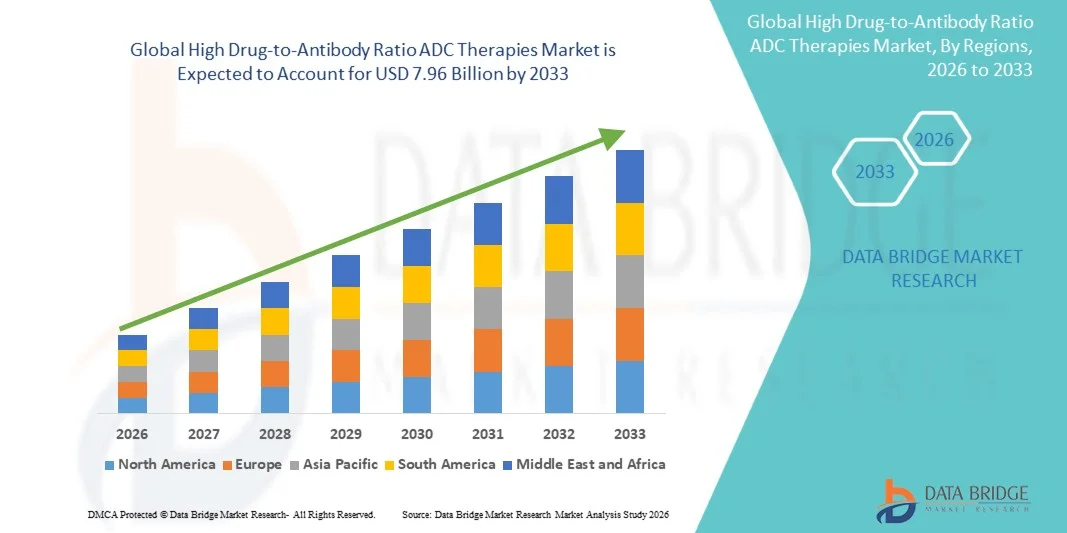
  • The global high drug-to-antibody ratio ADC therapies market size was valued at USD 2.12 billion in 2025 and is expected to reach USD 7.96 billion by 2033, at a CAGR of 18.00% during the forecast period
  • The market growth is largely fueled by increasing adoption of high Drug-to-Antibody Ratio (DAR) Antibody-Drug Conjugates (ADCs) in oncology, driven by their enhanced therapeutic efficacy, ability to deliver higher cytotoxic payloads directly to tumor cells, and advancements in linker technologies that improve stability and reduce off-target toxicity
  • Furthermore, rising demand for targeted cancer therapies, growing incidence of hematologic and solid tumors, and increasing investment in ADC research and clinical development are accelerating the uptake of high DAR ADC therapies, thereby significantly boosting overall market growth

High Drug-to-Antibody Ratio ADC Therapies Market Analysis

  • High Drug-to-Antibody Ratio (DAR) ADC therapies, designed to deliver higher payloads of cytotoxic drugs directly to tumor cells, are increasingly vital in oncology due to their improved efficacy, reduced systemic toxicity, and ability to treat both hematologic and solid malignancies, driving adoption in clinical and hospital settings
  • The escalating demand for high DAR ADC therapies is primarily fueled by rising cancer prevalence, growing focus on targeted therapies, and continuous innovations in ADC linker and conjugation technologies, which enhance treatment outcomes and patient compliance
  • North America dominated the High Drug-to-Antibody Ratio ADC Therapies market with the largest revenue share of approximately 39.5% in 2025, supported by advanced oncology infrastructure, high R&D investment, strong regulatory frameworks, and the presence of leading ADC developers and biotech startups in the U.S.
  • Asia-Pacific is expected to be the fastest-growing region during the forecast period, driven by increasing cancer incidence, improving healthcare infrastructure, expanding clinical trial activities, and growing adoption of targeted therapies in countries such as China, Japan, and India
  • The Commercialized Products segment dominated the market with a revenue share of 44.3% in 2025, driven by the presence of FDA-approved ADCs and their widespread clinical adoption

High Drug-to-Antibody Ratio ADC Therapies Market

Report Scope and High Drug-to-Antibody Ratio ADC Therapies Market Segmentation 

Attributes

High Drug-to-Antibody Ratio ADC Therapies Key Market Insights

Segments Covered

  • By Payload Type: Topoisomerase Inhibitors, Microtubule Inhibitors, DNA Damaging Agents, and Others
  • By Indication: Breast Cancer, Hematologic Malignancies, Lung Cancer, Colorectal Cancer, Others)
  • By Development Stage: Preclinical, Clinical Trials, and Commercialized Products

Countries Covered

North America

  • U.S.
  • Canada
  • Mexico

Europe

  • Germany
  • France
  • U.K.
  • Netherlands
  • Switzerland
  • Belgium
  • Russia
  • Italy
  • Spain
  • Turkey
  • Rest of Europe

Asia-Pacific

  • China
  • Japan
  • India
  • South Korea
  • Singapore
  • Malaysia
  • Australia
  • Thailand
  • Indonesia
  • Philippines
  • Rest of Asia-Pacific

Middle East and Africa

  • Saudi Arabia
  • U.A.E.
  • South Africa
  • Egypt
  • Israel
  • Rest of Middle East and Africa

South America

  • Brazil
  • Argentina
  • Rest of South America

Key Market Players

  • Pfizer Inc. (U.S.)
  • Roche Holding AG (Switzerland)
  • AbbVie Inc. (U.S.)
  • Amgen Inc. (U.S.)
  • Astellas Pharma Inc. (Japan)
  •  Daiichi Sankyo Company, Limited (Japan)
  •  Mersana Therapeutics, Inc. (U.S.)
  •  Synaffix BV (Netherlands)
  •  Genmab A/S (Denmark)
  •  Innovent Biologics, Inc. (China)
  •  Wuxi Biologics (China)
  •  IGM Biosciences, Inc. (U.S.)
  •  RemeGen Co., Ltd. (China)

Market Opportunities

  • Expansion in Targeted Oncology Indications
  • Advancements in ADC Conjugation and Linker Technologies

Value Added Data Infosets

In addition to the insights on market scenarios such as market value, growth rate, segmentation, geographical coverage, and major players, the market reports curated by the Data Bridge Market Research also include in-depth expert analysis, patient epidemiology, pipeline analysis, pricing analysis, and regulatory framework.

High Drug-to-Antibody Ratio ADC Therapies Market Trends

Expansion Through Innovative Payload Technologies and Clinical Advancements

  • A significant and accelerating trend in the global high drug-to-antibody ratio (DAR) ADC therapies market is the development of novel linker and payload technologies that allow higher drug-to-antibody ratios while maintaining stability and targeted delivery. This approach is enhancing therapeutic efficacy and expanding the range of treatable cancers, particularly in hematologic malignancies and solid tumors
  • For instance, in 2024, Seagen introduced a next-generation high-DAR ADC candidate targeting HER2-positive breast cancer, showing promising preclinical results with improved cytotoxic payload delivery and minimized off-target toxicity. Similarly, Daiichi Sankyo’s enhancement of trastuzumab deruxtecan demonstrated increased DAR while preserving antibody specificity, enabling higher potency in clinical trials. These advances are improving clinical outcomes and patient tolerability, supporting broader adoption across oncology centers
  • Moreover, advancements in site-specific conjugation techniques and bioconjugation chemistry are allowing manufacturers to optimize DAR without compromising antibody stability, reducing immunogenicity risks and improving pharmacokinetic profiles
  • The trend toward higher DAR ADCs is also supported by the increasing number of clinical trials investigating combinations with immunotherapies, checkpoint inhibitors, and standard-of-care chemotherapies, reflecting the growing importance of ADCs in comprehensive cancer management strategies
  • The integration of improved manufacturing technologies, such as automated conjugation platforms and enhanced purification methods, is accelerating the development of scalable high-DAR ADCs, enabling rapid transition from preclinical testing to clinical applications
  • These innovations collectively are shaping expectations for more effective, targeted, and patient-friendly ADC therapies, driving increased investment and research interest in high-DAR ADC development

High Drug-to-Antibody Ratio ADC Therapies Market Dynamics

Driver

“Rising Demand for Targeted Cancer Therapies and Improved Clinical Outcomes”

  • The increasing global incidence of cancer, coupled with the growing demand for precision medicine, is a significant driver for the adoption of high-DAR ADC therapies
  • For instance, the FDA’s accelerated approval of fam-trastuzumab deruxtecan in 2022 for HER2-positive metastatic breast cancer highlighted the clinical benefits of high-DAR ADCs, including improved progression-free survival and reduced systemic toxicity. Similarly, ongoing clinical trials of Gemtuzumab ozogamicin in acute myeloid leukemia demonstrate enhanced efficacy in patients previously unresponsive to conventional chemotherapy
  • Expanding awareness among oncologists about the advantages of ADCs in selectively targeting tumor cells while minimizing adverse effects is further fueling market growth
  • In addition, increased funding from both private and public sectors for ADC research and development, alongside collaborations between biopharma companies and academic institutions, is accelerating innovation in high-DAR payload technologies
  • The rising prevalence of difficult-to-treat cancers and the need for personalized treatment regimens continue to drive investment in ADC platforms, with a focus on optimizing therapeutic windows and patient outcomes

Restraint/Challenge

High Development Costs, Regulatory Hurdles, and Safety Concerns

  • The relatively high cost of developing high-DAR ADC therapies, including complex conjugation chemistry, rigorous quality control, and expensive clinical trials, poses a significant barrier to market expansion
  • For instance, manufacturing site-specific conjugation ADCs requires specialized facilities and highly skilled personnel, increasing the upfront investment for small and mid-sized biotech firms. This may delay market entry for innovative candidates
  • Regulatory challenges, including stringent requirements from agencies such as the FDA and EMA for safety, stability, and efficacy, can slow approval timelines and add to development costs
  • Concerns over potential off-target toxicity and immunogenicity of high-DAR ADCs may limit widespread adoption until long-term clinical safety data are available
  • Addressing these challenges through optimized manufacturing processes, robust preclinical validation, and strategic collaborations with regulatory experts will be crucial for sustaining growth in the high-DAR ADC market

High Drug-to-Antibody Ratio ADC Therapies Market Scope

The market is segmented on the basis of Payload Type, Indication, and Development Stage.

• By Payload Type

On the basis of payload type, the High Drug-to-Antibody Ratio ADC Therapies market is segmented into Topoisomerase Inhibitors, Microtubule Inhibitors, DNA Damaging Agents, and Others. The Topoisomerase Inhibitors segment dominated the largest market revenue share of 41.5% in 2025, driven by their proven efficacy in targeted cancer therapy and reduced off-target toxicity. These inhibitors are widely adopted in breast cancer and hematologic malignancies due to their ability to induce DNA damage selectively in rapidly dividing tumor cells. Pharmaceutical companies prefer Topoisomerase-based payloads for their predictable pharmacokinetics and established safety profiles. The compatibility of these payloads with high drug-to-antibody ratios allows for potent therapeutic outcomes while minimizing systemic side effects. Increasing clinical success and regulatory approvals for Topoisomerase ADCs further bolster market dominance. Adoption is especially high in North America and Europe, where oncology pipelines are mature and advanced biologics infrastructure exists.

The DNA Damaging Agents segment is expected to witness the fastest CAGR of 22.1% from 2026 to 2033, fueled by ongoing clinical trials targeting difficult-to-treat cancers such as lung and colorectal malignancies. DNA-damaging ADCs offer a high therapeutic index and can be tailored for combination therapies, increasing their clinical attractiveness. Growth is accelerated by expanding research into novel linkers and antibody technologies that enhance payload delivery efficiency. Emerging markets are increasingly adopting DNA Damaging ADCs due to their potential in precision oncology and personalized medicine approaches.

• By Indication

On the basis of indication, the market is segmented into Breast Cancer, Hematologic Malignancies, Lung Cancer, Colorectal Cancer, and Others. Breast cancer therapies held the largest revenue share of 38.7% in 2025, owing to high incidence rates globally and the adoption of ADCs in HER2-positive and triple-negative breast cancer treatments. The established clinical protocols, along with favorable reimbursement policies in major markets, further drive dominance. Top-tier pharmaceutical players continue to focus on breast cancer ADCs due to strong clinical trial outcomes, expanding patient awareness, and adoption in both private and public healthcare systems.

The Hematologic Malignancies segment is expected to register the fastest CAGR of 21.5% from 2026 to 2033, driven by the increasing prevalence of leukemias, lymphomas, and multiple myeloma. ADCs targeting hematologic cancers benefit from higher response rates and reduced systemic toxicity, encouraging accelerated development pipelines. Clinical studies continue to expand indications across relapsed and refractory patient populations. Emerging biologics and the integration of novel payloads like DNA Damaging Agents and Topoisomerase inhibitors further accelerate growth in this segment.

• By Development Stage

On the basis of development stage, the market is segmented into Preclinical, Clinical Trials, and Commercialized Products. The Commercialized Products segment dominated the market with a revenue share of 44.3% in 2025, driven by the presence of FDA-approved ADCs and their widespread clinical adoption. These products provide validated safety and efficacy data, making them preferred choices for oncologists and healthcare institutions. Established commercial products also benefit from brand recognition, insurance coverage, and robust distribution networks.

The Clinical Trials segment is expected to witness the fastest CAGR of 23.4% from 2026 to 2033, as pharmaceutical companies aggressively expand ADC pipelines targeting unmet oncology needs. Innovation in linker technology, higher drug-to-antibody ratios, and novel payloads fuel rapid clinical development. The surge in global oncology research funding, regulatory incentives for breakthrough therapies, and collaborations between biotech startups and large pharma further drive growth. Emerging markets are also increasingly participating in clinical trials, expanding patient access and accelerating global adoption of next-generation ADCs.

High Drug-to-Antibody Ratio ADC Therapies Market Regional Analysis

  • North America dominated the high drug-to-antibody ratio ADC therapies market with the largest revenue share of approximately 39.5% in 2025, supported by advanced oncology infrastructure, high R&D investment, strong regulatory frameworks, and the presence of leading ADC developers and biotech startups in the U.S.
  • In addition, strategic partnerships between pharmaceutical companies and academic cancer centers are driving accelerated development and commercialization of novel ADC therapies
  • The widespread adoption is further supported by high healthcare expenditure, the availability of specialized oncology centers, and favorable reimbursement policies, establishing North America as the leading market for high-DAR ADC therapies

U.S. High Drug-to-Antibody Ratio ADC Therapies Market Insight

The U.S. high drug-to-antibody ratio ADC therapies market captured the largest revenue share within North America in 2025, fueled by extensive clinical trial activities, strong collaboration between biopharma and academic research institutes, and high patient awareness of targeted therapies. For instance, the FDA approval of fam-trastuzumab deruxtecan for HER2-positive breast cancer and ongoing trials of Gemtuzumab ozogamicin for acute myeloid leukemia highlight the region’s rapid adoption of innovative ADCs. The strong R&D pipeline and established oncology infrastructure continue to propel the U.S. market.

Europe High Drug-to-Antibody Ratio ADC Therapies Market Insight

The Europe high drug-to-antibody ratio ADC therapies market is projected to expand at a substantial CAGR during the forecast period, driven by rising cancer prevalence, increasing government support for oncology research, and stringent regulatory standards for biologics. For instance, in 2023, Roche and AstraZeneca initiated high-DAR ADC clinical programs across multiple European oncology centers, aiming to address unmet therapeutic needs in breast and lung cancers. The region’s emphasis on precision medicine and growing adoption of targeted therapies is expected to further stimulate market growth.

U.K. High Drug-to-Antibody Ratio ADC Therapies Market Insight

The U.K. high drug-to-antibody ratio ADC therapies market is anticipated to grow at a noteworthy CAGR during the forecast period, driven by expanding cancer treatment infrastructure, increasing clinical trial participation, and rising healthcare expenditure on innovative biologics. For instance, collaboration between U.K.-based hospitals and global ADC developers is supporting trials for novel high-DAR ADC candidates targeting hematologic malignancies, enhancing accessibility and accelerating adoption.

 Germany High Drug-to-Antibody Ratio ADC Therapies Market Insight

The Germany high drug-to-antibody ratio ADC therapies market is expected to expand at a considerable CAGR during the forecast period, fueled by the country’s focus on biotechnology innovation, advanced healthcare facilities, and regulatory incentives for clinical research. For example, BioNTech and other German biotech firms are investing in ADC development platforms to enhance targeted payload delivery, reflecting a growing trend toward precision oncology.

 Asia-Pacific High Drug-to-Antibody Ratio ADC Therapies Market Insight

The Asia-Pacific high drug-to-antibody ratio ADC therapies market is poised to grow at the fastest CAGR during the forecast period, driven by increasing cancer incidence, improving healthcare infrastructure, expanding clinical trial activities, and growing adoption of targeted therapies in countries such as China, Japan, and India. For instance, in China, regulatory approval of multiple ADC candidates and the expansion of oncology centers in Tier-1 cities are facilitating broader patient access. In India, collaborations between domestic biotech companies and global ADC developers are enabling local production and clinical studies. Similarly, Japan’s investment in high-tech oncology research and adoption of innovative therapies for breast, lung, and hematologic cancers are driving market growth across the region.

Japan High Drug-to-Antibody Ratio ADC Therapies Market Insight

The Japanese high drug-to-antibody ratio ADC therapies market is gaining momentum due to advanced healthcare infrastructure, early adoption of innovative oncology therapies, and increasing cancer awareness. For instance, Japan’s participation in global high-DAR ADC clinical trials and the availability of government-supported research grants are accelerating the development and uptake of novel ADC therapies.

China High Drug-to-Antibody Ratio ADC Therapies Market Insight

The China high drug-to-antibody ratio ADC therapies market accounted for the largest market revenue share in Asia-Pacific in 2025, attributed to rising cancer prevalence, expanding hospital networks, and a growing middle-class population seeking advanced cancer therapies. For example, Shanghai-based ADC developers have launched multiple high-DAR ADC candidates in Phase II and III clinical trials, demonstrating the region’s rapid adoption of cutting-edge oncology treatments. Government initiatives supporting biologics manufacturing and clinical research are further propelling the market.

High Drug-to-Antibody Ratio ADC Therapies Market Share

The High Drug-to-Antibody Ratio ADC Therapies industry is primarily led by well-established companies, including:

  •  Pfizer Inc. (U.S.)
  •  Roche Holding AG (Switzerland)
  •  AbbVie Inc. (U.S.)
  •  Amgen Inc. (U.S.)
  •  Astellas Pharma Inc. (Japan)
  •  Daiichi Sankyo Company, Limited (Japan)
  •  Mersana Therapeutics, Inc. (U.S.)
  •  Synaffix BV (Netherlands)
  •  Genmab A/S (Denmark)
  •  Innovent Biologics, Inc. (China)
  •  Wuxi Biologics (China)
  •  IGM Biosciences, Inc. (U.S.)
  •  RemeGen Co., Ltd. (China)

Latest Developments in Global High Drug-to-Antibody Ratio ADC Therapies Market

  • In January 2025, the U.S. Food and Drug Administration approved Datopotamab Deruxtecan‑dlnk (Datroway), a Trop‑2‑directed antibody‑drug conjugate developed by Daiichi Sankyo and AstraZeneca for adults with unresectable or metastatic hormone receptor‑positive, HER2‑negative breast cancer, providing a new targeted ADC therapy option for patients who have received prior endocrine and chemotherapy treatment
  • In April 2025, Datopotamab Deruxtecan (Datroway) received marketing authorization in the European Union, further expanding access to this ADC therapy for patients with unresectable or metastatic HR‑positive, HER2‑negative breast cancer
  • In June 2025, the U.S. FDA approved Datroway for treatment of EGFR‑mutated non‑small cell lung cancer, marking the first approval of this ADC therapy in a lung cancer indication and expanding its clinical impact beyond breast cancer
  • In June 2025, the U.S. Food and Drug Administration approved Datroway for advanced non‑small cell lung cancer, providing a targeted option for patients with EGFR‑mutated tumors resistant to other therapies and highlighting the expanding clinical utility of ADCs in multiple cancer types
  • In October 2025, AstraZeneca and Daiichi Sankyo reported that Datroway significantly improved overall survival in patients with triple‑negative breast cancer in a late‑stage clinical trial, underscoring the potential therapeutic benefit and clinical progression of high‑potency ADC therapies
  • In November 2025, Day One Biopharmaceuticals agreed to acquire Mersana Therapeutics for up to USD 285 million, bringing Mersana’s lead ADC asset Emi‑Le (targeting B7‑H4) into Day One’s oncology portfolio and signaling strong investor confidence in the potential of advanced ADC therapies
  • In May 2025, Radiance Biopharma entered an exclusive licensing agreement for a ROR‑1‑targeted ADC, expanding development collaborations in the ADC space and supporting innovation in next‑generation conjugates
  • In June 2025, SunRock Biopharma and Escugen announced a partnership to develop SRB123, a first‑in‑class CCR9‑targeted ADC intended to treat multiple solid tumors, demonstrating growing collaboration and diversification in ADC development pipelines


SKU-

세계 최초의 시장 정보 클라우드 보고서에 온라인으로 접속하세요
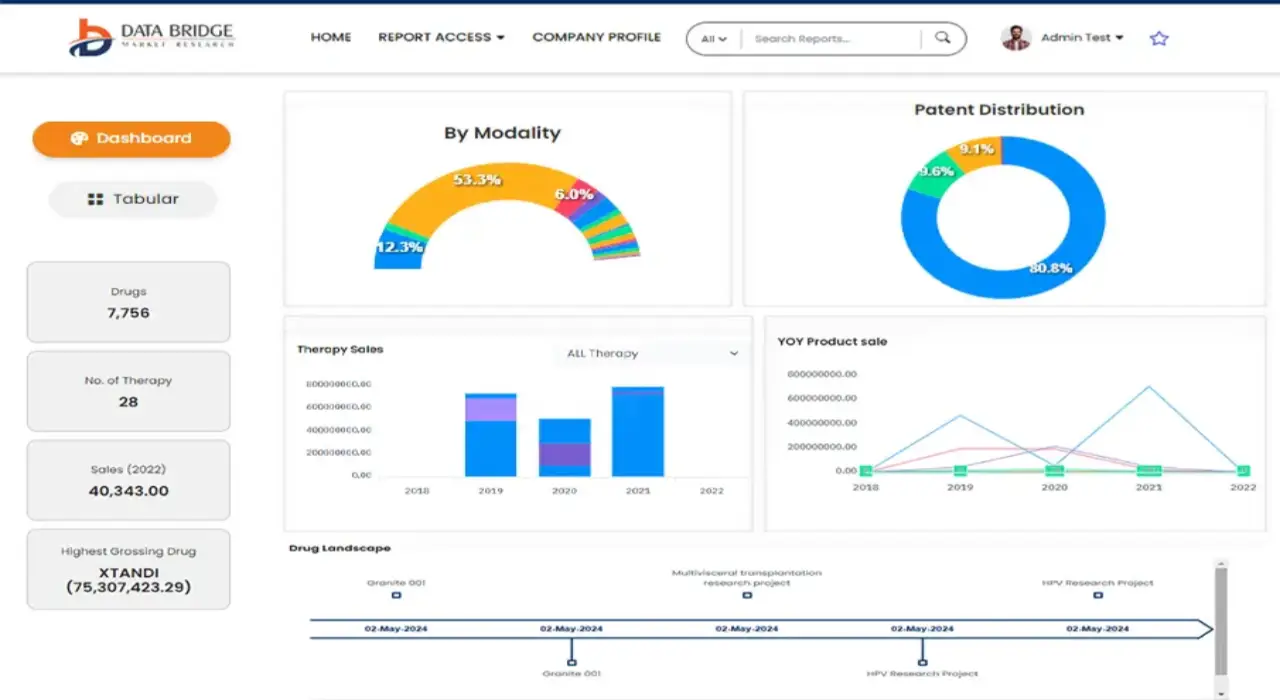
  • 대화형 데이터 분석 대시보드
  • 높은 성장 잠재력 기회를 위한 회사 분석 대시보드
  • 사용자 정의 및 질의를 위한 리서치 분석가 액세스
  • 대화형 대시보드를 통한 경쟁자 분석
  • 최신 뉴스, 업데이트 및 추세 분석
  • 포괄적인 경쟁자 추적을 위한 벤치마크 분석의 힘 활용
데모 요청

연구 방법론

데이터 수집 및 기준 연도 분석은 대규모 샘플 크기의 데이터 수집 모듈을 사용하여 수행됩니다. 이 단계에는 다양한 소스와 전략을 통해 시장 정보 또는 관련 데이터를 얻는 것이 포함됩니다. 여기에는 과거에 수집한 모든 데이터를 미리 검토하고 계획하는 것이 포함됩니다. 또한 다양한 정보 소스에서 발견되는 정보 불일치를 검토하는 것도 포함됩니다. 시장 데이터는 시장 통계 및 일관된 모델을 사용하여 분석하고 추정합니다. 또한 시장 점유율 분석 및 주요 추세 분석은 시장 보고서의 주요 성공 요인입니다. 자세한 내용은 분석가에게 전화를 요청하거나 문의 사항을 드롭하세요.

DBMR 연구팀에서 사용하는 주요 연구 방법론은 데이터 마이닝, 시장에 대한 데이터 변수의 영향 분석 및 주요(산업 전문가) 검증을 포함하는 데이터 삼각 측량입니다. 데이터 모델에는 공급업체 포지셔닝 그리드, 시장 타임라인 분석, 시장 개요 및 가이드, 회사 포지셔닝 그리드, 특허 분석, 가격 분석, 회사 시장 점유율 분석, 측정 기준, 글로벌 대 지역 및 공급업체 점유율 분석이 포함됩니다. 연구 방법론에 대해 자세히 알아보려면 문의를 통해 업계 전문가에게 문의하세요.

사용자 정의 가능

Data Bridge Market Research는 고급 형성 연구 분야의 선두 주자입니다. 저희는 기존 및 신규 고객에게 목표에 맞는 데이터와 분석을 제공하는 데 자부심을 느낍니다. 보고서는 추가 국가에 대한 시장 이해(국가 목록 요청), 임상 시험 결과 데이터, 문헌 검토, 재생 시장 및 제품 기반 분석을 포함하도록 사용자 정의할 수 있습니다. 기술 기반 분석에서 시장 포트폴리오 전략에 이르기까지 타겟 경쟁업체의 시장 분석을 분석할 수 있습니다. 귀하가 원하는 형식과 데이터 스타일로 필요한 만큼 많은 경쟁자를 추가할 수 있습니다. 저희 분석가 팀은 또한 원시 엑셀 파일 피벗 테이블(팩트북)로 데이터를 제공하거나 보고서에서 사용 가능한 데이터 세트에서 프레젠테이션을 만드는 데 도움을 줄 수 있습니다.


자주 묻는 질문

높은 약 - 항체 비율 ADC 치료 시장 크기는 2025 년 USD 2.12 억에서 평가되었습니다.
높은 약물 - 항체 비율 ADC 치료 시장은 2026에서 2033의 예측 기간 동안 18.00%의 CAGR에서 성장하는 것입니다.
고약 항체 비율 (DAR) ADC 치료 시장은 payload 유형, 표시 및 개발 단계에 근거를 둔 4개의 주목할만한 세그먼트로 분류됩니다. 페이로드 유형의 기준으로 시장은 Topoisomerase Inhibitors, Microtubule Inhibitors, DNA Damaging Agents 및 기타로 구분됩니다. 표시의 기초에, 시장은 Oncology (Breast Cancer, Hematologic Malignancies, Lung Cancer, Colorectal Cancer 및 기타)로 구분됩니다. 개발 단계에 따라 시장은 Preclinical, Clinical Trials, Commercialized Products로 구분됩니다.
Pfizer Inc. (U.S.), Roche Holding AG (Switzerland), AbbVie Inc. (U.S.), Amgen Inc. (U.S.), Astellas Pharma Inc. (일본)와 같은 기업은 높은 약 - 항체 비율 ADC 치료 시장에 있는 중요한 선수입니다.
6월 2025일, SunRock Biopharma 및 Escugen은 SRB123을 개발하는 파트너십을 발표했습니다. 최초의 ‐ 클래스 CCR9-targeted ADC는 여러 고체 종양을 치료하기 위해 ADC 개발 파이프라인에서 성장하는 협업 및 다양화
미국, 캐나다, 멕시코, 독일, 프랑스, 미국, 네덜란드, 스위스, 벨기에, 러시아, 이탈리아, 스페인, 터키, 유럽, 중국, 일본, 인도, 한국, 싱가포르, 말레이시아, 호주, 태국, 인도네시아, 필리핀, 나머지 아시아 태평양, 브라질, 아르헨티나, 나머지 동남아, 사우디 아라비아, 미국, 이집트, 아프리카, 이집트, 이집트, 이집트, 아프리카, 중동 및 아프리카.
아시아 태평양은 예측 기간 동안 가장 빠르게 성장하는 지역이 될 것으로 예상되며, 암 발생률 증가, 의료 인프라 확장, 임상 시험 활동 확대, 중국, 일본 및 인도와 같은 국가의 표적 치료의 채택 증가
미국은 높은 R&D 투자에 의해 구동되는 높은 약에 항체 비율 ADC Therapies 시장을 지배할 것으로 예상됩니다.
Testimonial