


Global Marine Salvage Services Market Segmentation, By Services (Wreck Removal, General Salvage, Emergency Response, Pollution Control 및 Cargo Recovery), 최종 사용자 (개인 선박 소유자, 보험 회사, 정부 기관 및 배송 회사)- 산업 동향 및 예측 2033
Marine Salvage Services Market Size와 성장률은 무엇입니까
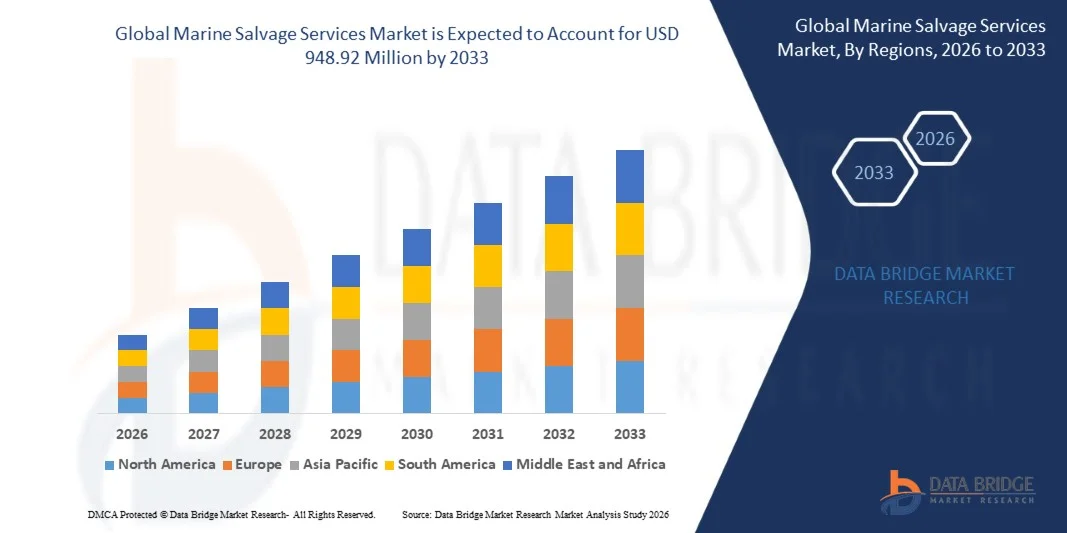
- Data Bridge Market Research Analysis에 따르면 글로벌 해양 급여 서비스 시장 규모가 평가되었습니다.2025년 USD 474.48 백만견적 요청948.92 백만 2033, 에 의해9.05%의 CAGR예측 기간
- 시장 성장은 크게 해양 사고 및 shipwrecks의 증가 수에 의해 연료를 공급, 글로벌 무역 및 운송 활동 상승, 그리고 물가로 만들어진 선박의 안전한 제거를 요구하는 엄격한 환경 규정
- Wreck 회복에 있는 전문화된 급여 가동 및 선진 기술 채택을 위한 성장 수요는 시장 확장을 지원합니다
시장 크기 & Forecast
- 글로벌 시장 가치 (2025):474.48 백만
- 예상 시장 가치 (2033):948.92 백만
- 캐스트 CAGR (2026–2033): 9.05%
Marine Salvage Services Market의 주요 테이크아웃은 무엇입니까
- 시장은 해상 안전 및 환경 보호의 강화 인식으로 인해 꾸준한 성장을 목격하고 있습니다.
- 급여 인프라 및 장비 현대화에 대한 투자 증가는 운영 효율성을 강화하고 있습니다.
- 북아메리카는 2025년에 38.45%의 가장 큰 수익 점유율을 가진 바다 급여 서비스 시장을 지배하고, 큰 상업적인 선박 함대, 엄격한 해상 안전 규칙의 존재에 의해 몰고, 진보된 급여 인프라에 있는 투자를 증가합니다
- 아시아 태평양 지역은 글로벌에서 가장 높은 성장률을 목격할 것으로 예상됩니다.해상 급여 서비스시장, 해상 무역의 급속한 확장에 의해, 증가 선박 활동, 항구 현대화 이니셔티브, 및 환경 보호와 해상 안전에 상승한 규제 초점
- Wreck 제거 세그먼트는 2025 년에 가장 큰 시장 수익 공유를 개최, 해상 사고 및 shipwrecks의 증가 수에 의해 구동, 뿐만 아니라 항해 경로 및 환경 영향을 최소화에 중점을두고 성장. Wreck 제거 가동은 수시로 전문화한 배, 진보된 장비 및 증명한 인원을 포함하고, 상업적인 선박과 정부 분야의 맞은편에 긴요한과 높은 수요 서비스를 만들기
보고서 범위 및 해양 Salvage 서비스 시장 세그먼트
|
관련 기사 |
Marine Salvage Services 주요 시장 통찰력 |
|
Segments 적용 |
|
|
국가 덮음 |
북아메리카
·
아시아 태평양
중동 및 아프리카
대한민국
|
|
핵심 시장 선수 |
|
|
시장 기회 |
• Offshore 배송 활동 확장 |
|
Value 추가 데이터 Infosets |
시장 가치, 성장률, 시장 세그먼트, 지리적 적용, 시장 플레이어 및 시장 시나리오와 같은 시장 통찰력 외에도 데이터 브리지 시장 연구 팀은 심층적 인 전문가 분석, 수입 / 수출 분석, 가격 분석, 생산 소비 분석 및 pestle 분석이 포함됩니다. |
Marine Salvage Services Market의 주요 동향은 무엇입니까
"Advanced Salvage Operations and Environmental Compliance에 대한 수요 상승"
• 해상 작업의 성장 복잡성 및 증가 된 글로벌 운송 트래픽은 크게 선박 회사와 정부가 효율적이고 안전하며 환경 책임있는 복구 솔루션을 추구하는 해양 급여 서비스 시장을 형성하고 있습니다. 해양 급여 서비스는 금융 손실을 막고 환경 손상을 방지하고 내비게이션 안전을 회복 할 수있는 능력으로 인해 견인력을 얻고 있습니다. 이 추세는 상업 운송, 해상 및 정부 부문의 채택을 강화하고, 고급 기술 및 전문 팀에 투자하기 위해 서비스 제공 업체를 격려
• 해상 안전 및 환경 보호에 대한 규제 압력 증가는 전문 급여 운영에 대한 수요를 가속화했다. 기업 및 보험 회사는 shipwrecks, 기름 유출 및 좌초된 배를 취급하기 위하여 증명된 급여 공급자를 요구하고, 서비스 공급자와 항구 당국 사이 신속한 협력은 응답 효율성과 수락 기준을 개량하기 위하여 효율성을 개량합니다
• 안전 및 지속 가능성 추세는 공인 된 절차, 환경 친화적 인 복구 기술 및 위험 완화 전략을 통합하는 운송 회사와 운영 결정에 영향을 미칩니다. 이러한 요인은 고객에게 신뢰를 구축하면서 경쟁력 있는 시장에서 차별화된 서비스 제공업체를 돕고, 고급 모니터링 및 급여 기술의 채택을 추진합니다.
• 예를 들어, 2024 년, 네덜란드의 Titan Salvage 및 Smit Salvage는 ROV 보조 작업 및 환경에 안전한 wreck 제거 솔루션을 통합하여 서비스 포트폴리오를 확장했습니다. 이 프로젝트는 규제 및 보험 요구 사항을 증가하기 위해 응답에서 수행되었으며, 상업 운송, 해상 플랫폼 및 항구 당국과 함께 운영됩니다. 이 서비스는 안전, 효율, 환경 준수, 고객 충성 및 장기 계약 강화로 추진되었습니다.
• 해양 급여 서비스 수요가 증가하고 있으며 지속적인 시장 확장은 기술, 전문 교육 및 국제 안전 및 환경 표준 준수에 대한 지속적인 투자에 달려 있습니다. 서비스 제공업체는 운영 확장성 개선, 응답 시간 단축, 복잡한 급여 시나리오를 효율적으로 처리하는 혁신적인 솔루션을 개발하는 데 중점을 둡니다.
Marine Salvage 서비스 시장
관련 기사
“해상 안전 및 환경 준수에 초점을 올리는”
• 글로벌 운송 트래픽 증가, 해상 사고, 해상 활동은 해양 급여 서비스 시장의 주요 드라이버입니다. 기업 및 정부는 환경 영향과 금융 손실을 최소화하기 위해 전문 급여 운영에 적극적으로 투자하고, 탐색 안전을 보장합니다. 이 동향은 또한 새로운 장비, 기술 및 가동 의정서로 연구, 지원 서비스 다변화입니다
• Shipwreck 제거, 오일 유출 복구, 해양 플랫폼 급여 및 비상 견인 작업에 대한 확장 응용 프로그램은 시장 성장에 영향을 미칩니다. 해양 급여 서비스는 환경 위험을 방지하고 경제적 손실을 줄이고 운송 경로를 유지하며 규제 및 운영 기대를 충족시키는 고객을 가능하게합니다. 국제 해상 규정의 성장 수는이 추세를 강화
• Salvage 서비스 제공 업체는 ROVs, sonar mapping 및 전문 선박을 통해 기술적으로 고급 작업을 촉진하고 있습니다. 이 노력은 신속하고 안전하며 환경적으로 책임있는 서비스를 위해 클라이언트 수요를 늘리고 있으며, 급여 회사, 보험 회사 및 항구 당국 간의 파트너십을 통해 운영 효율과 준수를 향상시킵니다.
• 예를 들어, 2023 년 네덜란드의 Smit Salvage와 미국의 Marine Group을 해결했습니다. 고급 급여 기술 및 환경 준수 작업의 증가 된 채택을보고했습니다. 이 확장은 글로벌 운송 트래픽과 엄격한 해상 규정을 상승, 반복 계약 및 운영 차이를 구동. 두 회사는 또한 신뢰와 장기적인 파트너십을 강화하기 위하여 클라이언트 커뮤니케이션에 있는 안전, traceability 및 환경 보호 강조했습니다
• 해상 활동 및 환경 규정 지원 성장, 더 넓은 채택은 전문화한 장비, 훈련된 인원 및 복잡한 국제 기준에 고착하는 투자에 달려 있습니다. 가동 효율성, 급속한 응답 기능 개량하고, 진보된 감시 기술은 세계적인 수요를 만나고 경쟁 이점 유지를 위해 중대할 것입니다
스트레인트/Challenge
"높은 운영 비용 및 복잡한 규제 요구 사항"
• 표준 견인 또는 수리 서비스에 비해 해양 급여 운영의 상대적으로 높은 비용은 작은 운송 회사 중 채택을 제한하는 주요 도전에 남아 있습니다. 높은 장비, 인력 및 보험료는 높은 가격에 기여합니다. 또한 국제 및 지역 해상 규정 준수는 운영 복잡성 및 비용을 더 늘릴 수 있습니다.
• 공인 된 전문 급여 서비스의 인식 및 가용성은 특히 규제 집행이 제한되는 해양 지구를 개발하는 데 남아있다. 특수 급여 절차의 제한적 이해는 특정 배송 경로 또는 해상 운영을 통해 채택을 제한합니다. 이것은 또한 설립 된 해상 안전 프레임 워크가 부족한 지역의 느린 시장 성장으로 이어진다.
• 물류 및 환경 문제도 시장 성장에 영향을 미칩니다. 급여 작업은 특수 선박, 훈련 된 인력 및 안전 및 환경 표준에 엄격한 준수가 필요합니다. 원격 위치, 예측할 수없는 날씨, 복잡한 wreck 조건 증가 운영 위험과 비용. 회사는 서비스 신뢰성을 유지하기 위해 고급 계획, 모니터링 및 조정에 투자해야합니다.
• 예를 들어, 2024 년 동남아시아의 급여 운영자는 물가로 덮인 선박과 해양 플랫폼 사고가 엄격한 환경 규정 및 제한된 지역 인프라로 인해 높은 비용과 운영 지연을보고했습니다. 원격 위치, 인증 장비의 가용성, 전문 인력은 추가 장벽이었다. 이 요인은 또한 시장 수익에 영향을 미치는 급여 가동을 지연하기 위하여 몇몇 선박 회사를 초래했습니다
• 이러한 과제를 극복하면 비용 효율적인 기술, 지역 인프라 및 전문 교육 프로그램에 투자해야합니다. 보험 회사, 정부 당국과 협력하여 항구 운영자는 글로벌 해병 서비스 시장의 장기 성장 잠재력을 잠금 해제 할 수 있습니다. 또한, 환경 기준을 가진 가동 효율성 그리고 수락은 더 넓은 채택합니다
Marine Salvage Services Market Segmented는 무엇입니까
시장은 서비스 및 최종 사용자를 기준으로 구분됩니다.
• 서비스
서비스의 기초에, 해상 급여 서비스 시장은 Wreck 제거, 일반 급여, 비상 응답, 오염 제어 및화물 복구로 구분됩니다. Wreck 제거 세그먼트는 2025 년에 가장 큰 시장 수익 공유를 개최, 해상 사고 및 shipwrecks의 증가 수에 의해 구동, 뿐만 아니라 항해 경로 및 환경 영향을 최소화에 중점을두고 성장. Wreck 제거 가동은 수시로 전문화한 배, 진보된 장비 및 증명한 인원을 포함하고, 상업적인 선박과 정부 분야의 맞은편에 긴요한과 높은 수요 서비스를 만들기.
긴급 응답 세그먼트는 2026에서 2033에 가장 빠른 성장률을 목격 할 것으로 예상되며, 글로벌 운송 트래픽 상승 및 해상 사고 중에 신속한 개입이 필요합니다. 긴급 응답 서비스는 특히 즉각적인 도움을 제공 할 수있는 능력에 대한 가치, 환경 위험 방지, 금융 손실을 감소, 종종 빠른 동기 부여 및 전문가 조정을 요구하는 고압 시나리오에서 작동.
• 최종 사용자
최종 사용자의 기초에, 해양 급여 서비스 시장은 민간 선박 소유자, 보험 회사, 정부 기관 및 선박 회사에 세그먼트. 선박 회사 세그먼트는 2025 년에 가장 큰 시장 점유율을 개최, 상업 해상 운영의 높은 볼륨에 의해 구동 및 자산을 보호 할 필요가, 안전 규정 준수, 및 무결합 무역 노선을 유지합니다.
보험회사 부문은 2026년부터 2033년까지 가장 빠른 성장률을 목격할 것으로 예상되며, 해상 사고와 관련된 청구를 증가시키고 금융 노출을 최소화하기 위해 전문 급여 서비스에 대한 신뢰도를 높일 것으로 예상됩니다. 위험 완화, 환경 준수 및 효율적인 자산 복구를 보장하기 위해 인증 된 공급자와 함께 더 많은 급여 작업이 있습니다.
어떤 지역은 Marine Salvage Services Market의 가장 큰 주식을 보유합니까
• 북미는 2025 년에 38.45%의 가장 큰 매출 점유율을 가진 해양 급여 서비스 시장을 지배, 대규모 상업 선박 함대, 엄격한 해상 안전 규정의 존재에 의해 구동, 고급 급여 인프라에 투자 증가
• ROV-assisted 운영 및 전문화한 급여 배를 포함하여 지역 높게 가치 급속한 응답 기능, 환경 수락 및 선진 기술 배치에 있는 이해 관계자
• 이 광범위한 채택은 강력한 규제 프레임 워크, 높은 해상 트래픽에 의해 더 지원되며 환경 영향 최소화에 중점을두고 해양 급여 서비스를 개인 및 상업 운영을위한 중요한 요구 사항으로 수립
U.S. Marine Salvage 서비스 시장 통찰력
미국 해양 급여 서비스 시장은 북미 내에서 2025에서 가장 큰 수익 점유율을 차지했으며 국가의 광범위한 운송 운영, 바쁜 항구 및 엄격한 환경 규정에 의해 연료를 공급했습니다. 선박 소유자와 보험 회사는 점점 긴급, wreck 제거 및 오염 통제를 취급하기 위하여 전문적인 급여 공급자에 의존합니다. 첨단 급여 기술의 성장 통합, sonar 매핑 및 원격 운영 차량과 같은, 더 조작 효율을 향상. 또한, 급여 회사, 정부 기관 및 민간 사업자 간의 협력은 서비스 채택 및 시장 성장 강화.
Europe Marine Salvage 서비스 시장 통찰력
유럽 해양 급여 서비스 시장은 2026 년에서 2033 년까지 가장 빠른 성장률을 목격 할 것으로 예상되며 주로 해상 교통, 엄격한 환경 정책 및 항구 안전 및 비상 대비 투자를 증가시킵니다. 유럽 국가는 사고 및 환경에 대한 신속한 대응을 촉진하고 책임있는 급여 운영. 시장은 상업 운송, 해상 플랫폼 및 정부 주도 해상 이니셔티브를 통해 성장하고 있으며, 항구 및 해안 안전 프로그램에 더 많이 통합되어 있습니다.
U.K. Marine Salvage 서비스 시장 통찰력
미국 해양 급여 서비스 시장은 2026 년에서 2033 년까지 가장 빠른 성장률을 목격 할 것으로 예상되며, 환경 준수의 인식, 고급 급여 기술의 채택을 증가하여 구동됩니다. 해상 사고 및 환경 위험에 대한 우려는 민간 선박 소유자, 선박 회사 및 정부 기관이 전문 급여 계약을 보장하기 위해 노력합니다. 국가의 잘 개발 된 해상 인프라 및 강력한 규제 프레임 워크는 신속한 응답 및 전문 복구 작업을 지원합니다.
Germany Marine Salvage 서비스 시장 통찰력
독일 해상 급여 서비스 시장은 2026 년에서 2033 년까지 가장 빠른 성장률을 목격 할 것으로 예상되며 북해 및 발트 항구, 첨단 기술 채택 및 환경 안전에 중점을두고 있습니다. 독일의 강력한 해상 규정은 혁신과 지속 가능한 운영에 초점을 맞추고 있으며, 특히 해양 플랫폼 및 상업용 선박 노선에 대한 전문 급여 서비스 사용을 촉진하고 있습니다. 고급 장비 및 숙련 된 인력은 점점 안전하고 효율적인 복구를 보장합니다.
Asia-Pacific Marine Salvage 서비스 시장 통찰력
아시아 태평양 해양 급여 서비스 시장은 2026에서 2033에 가장 빠른 성장률을 목격 할 것으로 예상되며 해상 무역, 항구 도시의 신속한 도시화, 환경 준수의 인식을 높일 것으로 예상됩니다. 중국, 일본 및 인도와 같은 국가는 사고, shipwrecks 및 오염으로부터 위험을 완화하는 전문 급여 서비스에 투자하고 있습니다. 이 지역은 급여 장비의 제조 허브로 신흥하고, 서비스 가용성을 개선하고 운영 비용을 절감하고, 민간 및 상업용 운송 부문 전반에 걸쳐 채택을 확장합니다.
Japan Marine Salvage 서비스 시장 통찰력
일본 해양 급여 서비스 시장은 국가의 높은 해상 교통으로 인해 2026에서 2033까지의 가장 빠른 성장률을 목격 할 것으로 예상되며 환경 보호 및 첨단 기술 인프라에 중점을 둡니다. Salvage 가동은 항구 안전 의정서, 해상 플랫폼 회복 및 비상사태 응답 계획과 점점 통합됩니다. 일본의 노후화 선박 인프라와 강력한 정부 감독은 또한 효율적이고 기술 중심적이고 환경적으로 준수되는 급여 서비스를 위해 수요를 공급할 것으로 예상됩니다.
China Marine Salvage 서비스 시장 통찰력
중국 해양 급여 서비스 시장은 2025 년 아시아 태평양에서 가장 큰 시장 수익 점유율을 차지했으며, 국가의 확장 선박 함대, 신속한 항구 개발 및 규제 요구 사항을 늘리고 있습니다. 중국은 shipwrecks,화물 회수 및 오염 제어를 처리하는 전문 급여 작업에서 크게 투자하고 있습니다. 스마트 포트의 성장, 고급 급여 선박의 채택, 비용 효율적인 서비스의 가용성은 상업 및 해상 운송 운영에서 시장 확장을 구동 핵심 요소입니다.
Marine Salvage Services Market의 최고 기업은 무엇입니까
Marine Salvage Services 산업은 주로 잘 설립 된 회사에 의해 주도됩니다.
- 아프리카 해양 솔루션 그룹 (Pty) Ltd (AMSOL) (남아프리카)
- 볼다 토우지 & Salvage SL (스파인)
- CPT Towage (남아프리카)
- Detek Offshore Technology Ltd. (미국)
- Donjon Marine Co., Ltd. (미국)
- Fratelli Neri S.p.A. (이탈리아)
- 홍콩 Salvage & Towage Services Ltd (홍콩)
- T&T Salvage LLC (미국)
- SMIT Salvage BV (네덜란드)
- ·https://unitedsalvage.com.au/
- 오션 인피니티 그룹 제한 (U.K.)
Marine Salvage Services Market의 최신 개발은 무엇입니까
- 2 월 2024에서 Boluda Towage & Salvage SL은 지브롤터의 Strait의 양쪽에 능동적 인 투수 연산자 인 Salvage 및 Fire (Gibraltar)의 인수를 완료했습니다. 이 전략적인 인수는 Boluda Towage의 국제적 발자국을 확장하고 높은-traffic maritime corridors의 운영 능력을 강화하는 것을 목표로합니다. 통합은 대서양과 지중해 바다 사이의 중요한 게이트웨이 인 지브롤터의 Strait에 회사의 존재를 향상시킵니다. 또한, 인수는 Suez Canal과 Red Sea를 인도양으로 연결하는 주요 글로벌 무역 경로에 더 넓은 액세스를 지원합니다. 이 개발은 글로벌 해상 급여 및 토우지 서비스 시장의 서비스 가용성, 응답 효율 및 경쟁력을 개선할 것으로 예상됩니다.
SKU-
세계 최초의 시장 정보 클라우드 보고서에 온라인으로 접속하세요

- 대화형 데이터 분석 대시보드
- 높은 성장 잠재력 기회를 위한 회사 분석 대시보드
- 사용자 정의 및 질의를 위한 리서치 분석가 액세스
- 대화형 대시보드를 통한 경쟁자 분석
- 최신 뉴스, 업데이트 및 추세 분석
- 포괄적인 경쟁자 추적을 위한 벤치마크 분석의 힘 활용
연구 방법론
데이터 수집 및 기준 연도 분석은 대규모 샘플 크기의 데이터 수집 모듈을 사용하여 수행됩니다. 이 단계에는 다양한 소스와 전략을 통해 시장 정보 또는 관련 데이터를 얻는 것이 포함됩니다. 여기에는 과거에 수집한 모든 데이터를 미리 검토하고 계획하는 것이 포함됩니다. 또한 다양한 정보 소스에서 발견되는 정보 불일치를 검토하는 것도 포함됩니다. 시장 데이터는 시장 통계 및 일관된 모델을 사용하여 분석하고 추정합니다. 또한 시장 점유율 분석 및 주요 추세 분석은 시장 보고서의 주요 성공 요인입니다. 자세한 내용은 분석가에게 전화를 요청하거나 문의 사항을 드롭하세요.
DBMR 연구팀에서 사용하는 주요 연구 방법론은 데이터 마이닝, 시장에 대한 데이터 변수의 영향 분석 및 주요(산업 전문가) 검증을 포함하는 데이터 삼각 측량입니다. 데이터 모델에는 공급업체 포지셔닝 그리드, 시장 타임라인 분석, 시장 개요 및 가이드, 회사 포지셔닝 그리드, 특허 분석, 가격 분석, 회사 시장 점유율 분석, 측정 기준, 글로벌 대 지역 및 공급업체 점유율 분석이 포함됩니다. 연구 방법론에 대해 자세히 알아보려면 문의를 통해 업계 전문가에게 문의하세요.
사용자 정의 가능
Data Bridge Market Research는 고급 형성 연구 분야의 선두 주자입니다. 저희는 기존 및 신규 고객에게 목표에 맞는 데이터와 분석을 제공하는 데 자부심을 느낍니다. 보고서는 추가 국가에 대한 시장 이해(국가 목록 요청), 임상 시험 결과 데이터, 문헌 검토, 재생 시장 및 제품 기반 분석을 포함하도록 사용자 정의할 수 있습니다. 기술 기반 분석에서 시장 포트폴리오 전략에 이르기까지 타겟 경쟁업체의 시장 분석을 분석할 수 있습니다. 귀하가 원하는 형식과 데이터 스타일로 필요한 만큼 많은 경쟁자를 추가할 수 있습니다. 저희 분석가 팀은 또한 원시 엑셀 파일 피벗 테이블(팩트북)로 데이터를 제공하거나 보고서에서 사용 가능한 데이터 세트에서 프레젠테이션을 만드는 데 도움을 줄 수 있습니다.











